Most brides open Pinterest before they ever look closely at their wedding venue. They save hundreds of hairstyle photos, fall in love with a specific look, and then try to make it work no matter where they are getting married. The issue is that a hairstyle that looks flawless in a controlled studio setting can behave very differently on a breezy oceanfront terrace or in a humid garden space.
Your wedding venue is not just a backdrop. It directly affects how your hair holds throughout the day. Weather, lighting, wind, humidity, and even the amount of movement during your celebration all play a role in how your hairstyle performs over eight to twelve hours.
That is why venue should be one of the first things to consider when choosing your bridal hairstyle. Let’s look at how different wedding settings influence hair and which styles tend to hold up best in each one.
Why Your Wedding Venue Matters More Than You Think
Brides often choose hairstyles based on how something looks in a photo, not how it actually performs in real conditions. That is a natural starting point, but it leaves out an important piece of the decision.
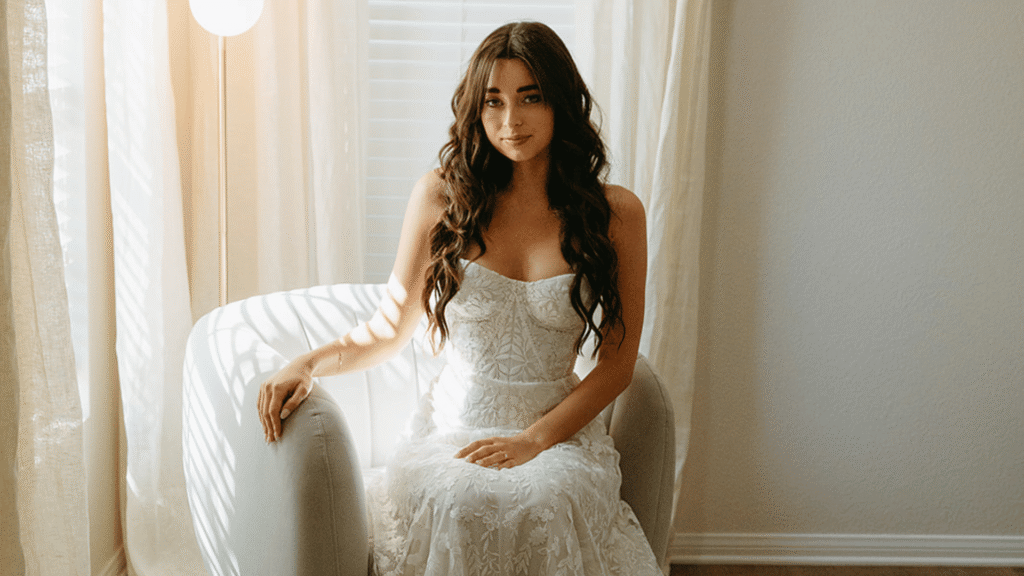
A loose, flowing style with soft cascading curls can look perfect in an editorial shoot with controlled lighting and no wind. The same style at a coastal wedding in the middle of summer can look very different by the time you walk down the aisle, and even more different a few hours into the reception.
Your venue introduces real conditions that affect how your hair behaves. Outdoor settings bring wind, humidity, heat, and direct sunlight. Indoor venues remove weather concerns but introduce lighting differences. Barn weddings often combine both. Estate venues may also involve movement between multiple locations. Each of these factors interacts with your hair type, styling products, and technique.
Weather does not only affect frizz. Heat can break down styling products faster. Humidity can cause hair to expand or lose shape. Wind can shift structured styles and loosen curls. Cold air can create static and make hair harder to control. These are not rare situations. They are normal conditions that need to be planned for.
Photography plays an equally important role. Natural light, indoor lighting, and flash photography all reflect hair differently. A style that looks dimensional outdoors may appear flatter under warm indoor lighting. This plays a key role in choosing hairstyles that stay consistent from the first photo to the last.
That is why your venue should be one of the first things discussed during your bridal hair consultation, not something considered at the end.
Bridal Hairstyles for Beach Weddings
Beach and coastal weddings are some of the most visually striking settings a bride can choose. They are also some of the most demanding environments for bridal hair.
How Ocean Breeze Affects Bridal Hair
Salt air, moisture, and wind are the main challenges at any beach wedding. The ocean constantly moves air across the space. Even on calm mornings, there is usually enough breeze to shift loose hair throughout the day.
Salt in coastal air also draws moisture into the hair, which leads to frizz in many hair types and can reduce curl definition. Over time, this changes how polished or structured a style appears in photos.
Humidity is another factor that often gets overlooked. Beach locations tend to have higher humidity, especially in warmer months. This softens styling products faster, which means a style that feels secure in the morning can loosen or change shape by midday.
Best Hairstyles for Beach Brides
The most reliable beach wedding hairstyles all share one thing. They rely on structure rather than softness alone. They are designed to work with the environment instead of resisting it.
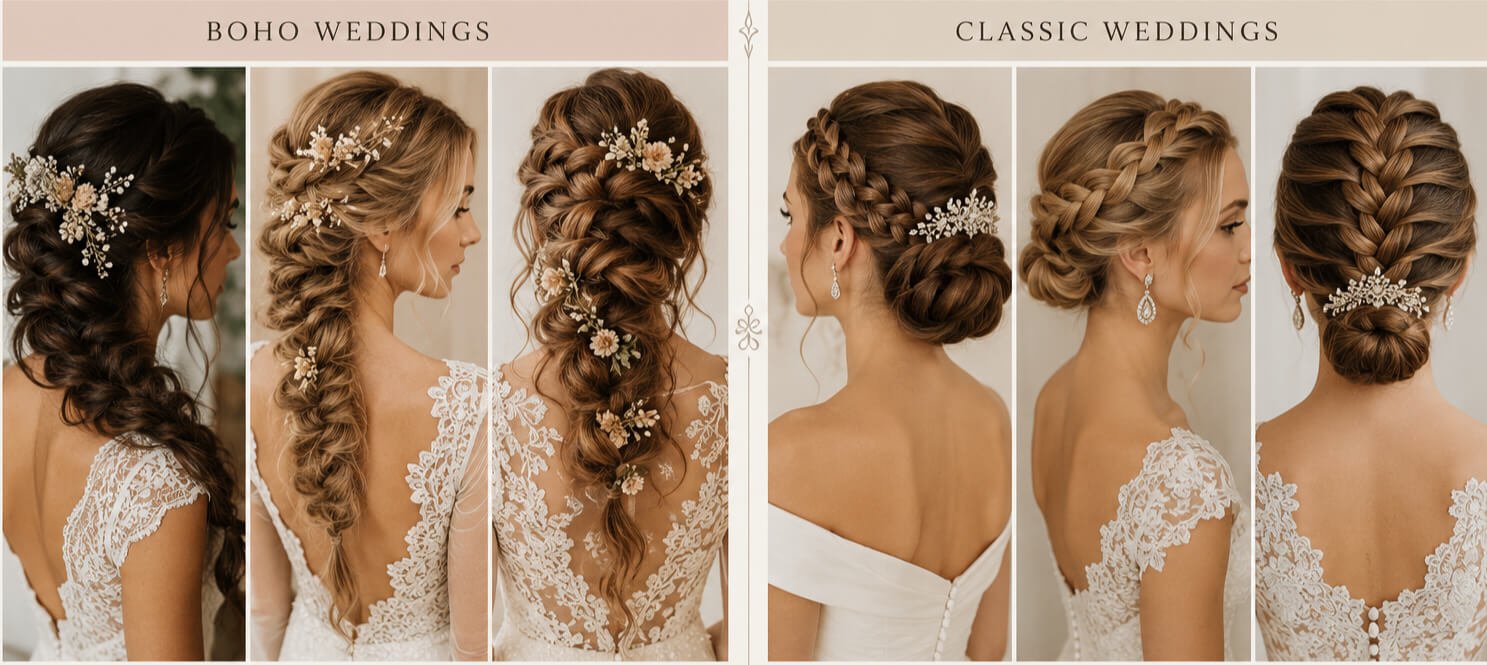
Textured low buns perform especially well. They keep the hair secure, stay comfortable in wind, and photograph well from every angle. When built with the right texture, they still feel relaxed enough to suit a coastal setting without falling apart.
Braided updos are another strong choice. Braids naturally lock the hair in place, which helps the style hold through wind and movement. They also add detail and interest without relying on loose pieces that can shift.
Secure half-up styles are a good middle ground. They keep the top section controlled while allowing some movement through the lengths. This helps balance structure with a softer overall look.
Structured waves can also work, but only when they are properly set with the right products and pinned support. Loose, soft waves without structure are rarely reliable in a coastal setting.
Hairstyles That Often Struggle at Beach Weddings
Fully down hairstyles with loose curls or soft waves are the most common styles that do not hold up well at beach weddings. They look beautiful in controlled photos, but wind quickly separates and lifts the hair once you are outdoors.
Very intricate styles with multiple delicate sections can also become unpredictable in strong wind. While they can be made to work, each loose or detailed element adds more points of movement, which requires careful planning to keep everything secure throughout the day.
Bridal Hairstyles for Garden Weddings
Garden weddings create some of the most romantic wedding settings. Soft natural light, greenery, and flowers naturally frame the bride in a way that feels effortless and timeless. At the same time, garden venues bring their own set of hair considerations that are easy to overlook during planning.
Challenges of Outdoor Garden Venues
Humidity tends to be higher in garden environments compared to open outdoor spaces. Shaded areas, lawns, water features, and dense planting all hold moisture in the air. This affects how well styling products hold and how hair texture behaves as the day goes on.
Temperature changes are another factor. A morning ceremony may start in cool, stable conditions, then shift into warmer, more humid air by midday. Long photo sessions outdoors also expose the hair to repeated changes in light, heat, and movement, which slowly tests the structure of the style.
Movement is often underestimated in garden settings. Walking on grass, uneven ground, and natural terrain creates subtle shifts in posture and balance. Combined with bouquet holding, hugging, and posing, this adds up to more physical movement than most indoor venues.
Hairstyles That Work Best
Romantic updos are a strong match for garden weddings. They suit the softness of the setting while still giving the structure needed to hold up through humidity and movement. A softly textured updo feels relaxed in photos but still stays secure throughout the day.
Soft braided styles also work well in this environment. Braids naturally grip the hair, which helps the style stay in place even when conditions shift. They also complement the organic feel of a garden setting without relying on overly structured shapes.
Half-up styles offer a balance between romance and control. They keep the front and crown secure while allowing some movement through the lengths. When properly pinned and supported with the right products, they hold up well during extended outdoor photo sessions.
Controlled texture usually performs better than overly polished or completely loose styles. It blends more naturally with the environment and adapts better to small changes in weather without losing its shape.
Bridal Hairstyles for Ballroom Weddings
Ballroom weddings give bridal hairstylists the most flexibility. With indoor, climate-controlled settings, many of the challenges that come with outdoor environments are reduced or removed entirely.
Why Indoor Venues Allow More Flexibility
Ballrooms maintain a consistent temperature and humidity level throughout the day. There is no wind, no sudden weather shifts, and no exposure to direct sun. Because of this, styling products perform more predictably and the hairstyle holds its intended shape for longer.
This level of control opens the door to a wider range of hairstyles, including looks that require smoother finishes, softer movement, or more precision in shaping.
Popular Ballroom Bridal Hairstyles
Hollywood waves are one of the most popular choices for ballroom weddings. These polished waves rely on structure and smooth definition, which are easier to maintain in an indoor setting. Under warm ballroom lighting, they also photograph with depth and shine, creating a classic bridal look.
Glamorous down styles also perform well in this environment. Whether it is soft curls, sleek straight hair, or voluminous blowouts, indoor conditions help the style stay consistent from ceremony through reception without breaking down early.
Elegant chignons and polished updos are equally suited to ballroom settings. They hold their shape easily indoors and work beautifully with formal lighting, often appearing clean, refined, and balanced throughout the entire event.
Bridal Hairstyles for Rustic Barn Weddings
Barn weddings have become a popular choice for modern brides. They offer a relaxed, warm atmosphere, but they also bring a mix of conditions that can affect how your hairstyle holds throughout the day.
Unique Challenges of Barn Venues
Most barn weddings involve a combination of indoor and outdoor settings. The ceremony may take place outside in a field or garden, while the reception moves inside the barn. This means your hair often has to perform well across changing environments in a single day.
Inside the barn itself, conditions can vary more than expected. Many barn venues are not fully climate-controlled, so temperatures can rise during the evening once guests arrive, lighting is on, and dancing begins. Airflow from open doors and nearby outdoor spaces can also introduce dust and subtle movement that affects softer styles.
Best Hairstyle Choices
Textured buns work especially well for barn weddings. They suit the relaxed, natural feel of the venue while still providing the structure needed to last through changing conditions. They also transition easily from outdoor ceremonies to indoor receptions without needing adjustments.
Loose braids and relaxed updos are another strong option. They match the informal, rustic aesthetic while still keeping the hair secure. Even when styled to look effortless, braids offer more hold than fully loose styles, which helps them last longer throughout the day.
Soft waves with structure can also work in barn settings, especially when outdoor exposure is limited. The key is in the preparation. Waves need proper setting, product support, and controlled styling so they hold their shape as the day moves between different environments.
Bridal Hairstyles for Luxury Estate and Resort Weddings
Estate and resort weddings often unfold across multiple spaces throughout the day. A ceremony in one garden, cocktail hour on a terrace, dinner inside a main hall, and dancing in a separate space can all be part of a single timeline. Each location introduces slightly different lighting, movement, and environmental conditions.
Why Multi-Location Venues Change the Approach
Versatility becomes the main priority at estate and resort weddings. Your hairstyle needs to move between outdoor natural light and indoor lighting without losing its shape or polish. It also needs to hold up through longer hours and more physical movement than a single-location venue typically requires.
Because of this, the focus shifts from a “single perfect moment” to consistency across the entire day. A style that only looks ideal in one setting often struggles once the environment changes.
Best Hairstyle Approach for Estate and Resort Weddings
Styles that hold their structure across different lighting conditions tend to perform best. Structured updos are a strong choice because they stay intact whether you are outside in natural light or indoors under warm reception lighting.
Half-up styles with secure pinning also work well, especially when they are built with enough structure to handle movement between locations. These styles offer a balance between softness and control, which suits the flow of estate and resort timelines.
Fully down styles can still work, but they require more planning. The key is ensuring they are set with enough internal structure so they do not rely on one specific lighting or weather condition to look their best.
How Wind, Humidity, and Temperature Influence Bridal Hair
Wind, humidity, and temperature all affect how bridal hair behaves, but they do not affect every hair type in the same way. That is why choosing a hairstyle should always take both your hair type and your venue conditions into account.
Fine hair tends to lose volume and shape quickly in humid conditions. It also moves easily in wind, which makes loose styles more vulnerable outdoors. Because of this, fine-haired brides usually get better results from styles with built-in structure, such as pinned updos or styles supported with strong internal setting and product work.
Thick or coarse hair behaves differently. It often holds up well in wind, but humidity can cause it to expand or frizz over time. In warmer outdoor conditions, thick hair usually performs best when smoothing products are applied throughout the styling process, not just at the end. Styles that work with the natural weight and movement of the hair also tend to last longer.
Curly and wavy hair is especially responsive to moisture in the air. Humidity can shift curl patterns, either tightening them or loosening definition depending on the hair type. For outdoor weddings, preparation in the days leading up to the event plays a major role in how controlled or consistent the final style looks throughout the day.
Long hair also brings its own considerations. More length means more surface area exposed to wind and humidity, which increases movement throughout the day. For this reason, long bridal hairstyles often need additional internal support so the style stays secure while still looking soft and natural from the outside.
How Photography Changes Hairstyle Decisions
Your hairstyle does not only exist in real life. It also exists in photos, and the way it photographs depends heavily on the lighting at your venue.
Natural outdoor light is usually the most forgiving for bridal hair. It creates softness, brings out colour depth, and shows texture in a more natural way. At the same time, strong midday sun can reduce dimension and create harsh contrast that flattens certain styles. That is why many photographers plan key portrait sessions for early morning or late afternoon, when the light is softer.
Sunset or golden hour lighting is especially flattering for most bridal hairstyles. The warm direction of the light adds glow and creates natural highlights in the hair. Styles with movement, such as loose waves or soft textured updos, tend to look particularly good in this setting.
Indoor flash photography behaves differently. It can reduce visible texture and make smoother styles appear flatter than they feel in person. On the other hand, styles with structure and volume usually hold up better under flash because they retain shape even when detail is reduced.
Venue lighting also plays a major role. Chandeliers, candles, string lights, and uplighting all shift how hair colour and tone appear in photos. Warm lighting can enhance golden tones in the hair, while cooler lighting may soften contrast and reduce visible depth. Understanding your venue’s lighting helps guide finishing choices so your hairstyle looks consistent across different parts of the day.
Questions to Discuss During Your Bridal Hair Consultation
A bridal hair consultation is not just about reviewing inspiration photos. It is a focused conversation about real conditions, timing, and how your hairstyle will actually perform on the day.
These are the key questions every bride should bring into that discussion.
What is the venue type and what weather conditions should be expected?
Your stylist needs this information to recommend styles that will genuinely last in your environment, not just styles that look good in ideal conditions. Outdoor heat, humidity, wind, and indoor lighting all influence how a hairstyle holds.
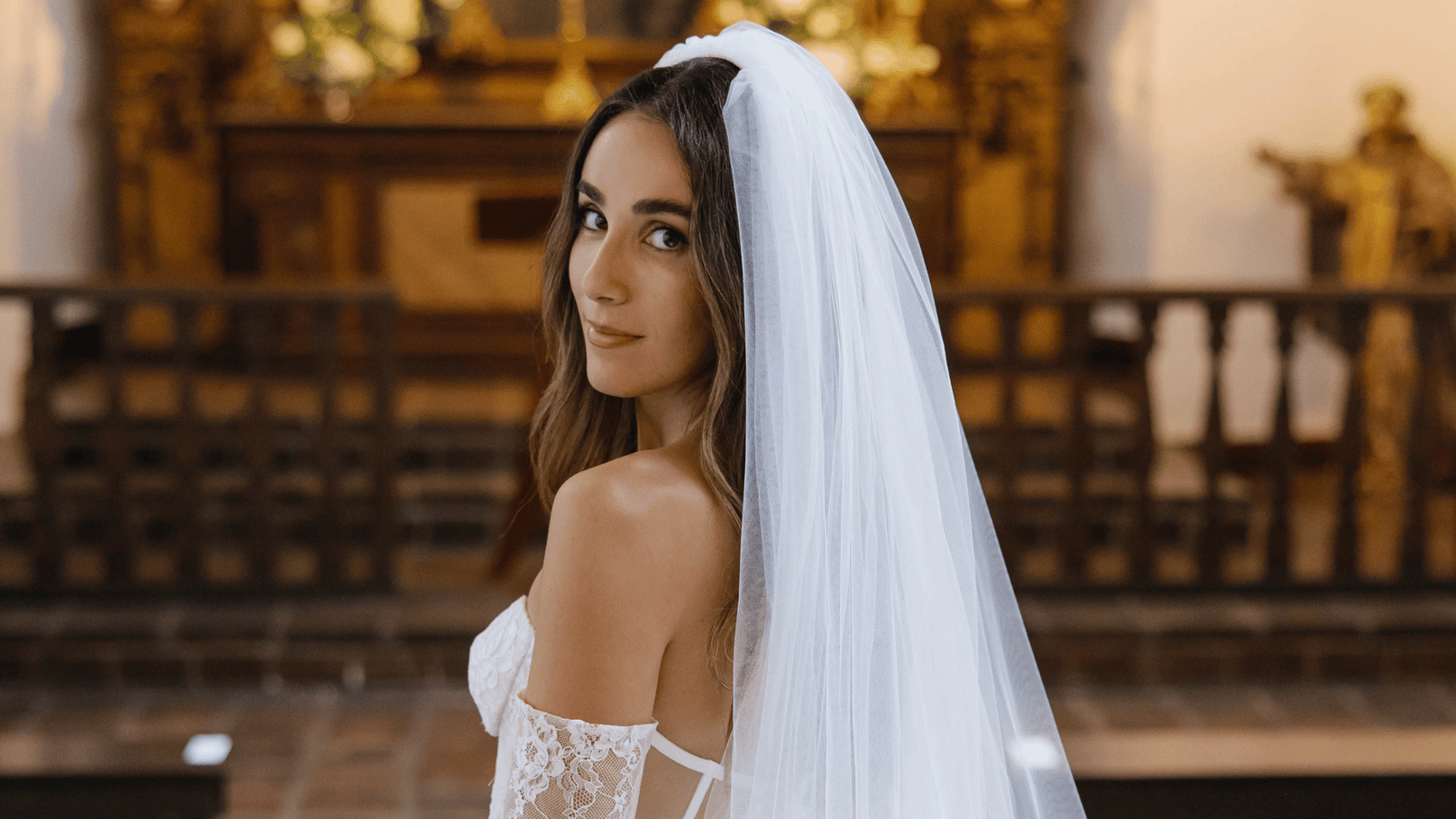
Are you planning to wear a veil?
Veil placement, weight, and attachment point all affect how a hairstyle is built. Some styles work beautifully with veils, while others require structural adjustments. If a veil is part of your look, it should be discussed early so the hairstyle can be designed around it from the start.
What is your current hair care routine, and how is your hair performing right now?
Hair condition on the wedding day is shaped by what happens in the weeks leading up to it. If your hair needs moisture, strength, or improved texture, starting early gives the stylist a better base to work with and leads to more reliable results.
How long will your wedding day run?
A long wedding day with early morning prep and a late-night reception requires more durability planning than a shorter timeline. The hairstyle needs to hold through every stage without constant adjustments.
Are you considering an updo, and what placement feels right for you?
Low buns and high buns behave differently in terms of face framing, comfort, veil placement, and longevity. The placement also changes how the style looks from different angles throughout the day. Having a clear direction before the trial helps the process run more smoothly.
Working With Brittany Brown Beauty
Every bride who works with Brittany Brown Beauty brings a unique mix of hair type, venue, dress, and personal style. No two weddings follow the same approach.
The process starts with the venue. Location, season, lighting, and expected weather shape the hairstyle direction from the beginning.
From there, the focus moves to the dress and overall look. A structured gown in a ballroom needs a different hair approach than a light, flowing dress in a garden setting. The hairstyle fits the full picture instead of sitting on its own.
Hair type comes next. We assess it early so products and techniques match what your hair can actually hold through a long wedding day. This avoids styles that only look good in photos but fail in real conditions.
Timeline also plays a role, especially for weddings with early starts or travel between locations. We plan the style so it holds from prep through to the final moments without constant fixing.
For current inspiration, our article on bridal hair trends for 2026 in Orange County shows how modern styles translate into real wedding settings.
The goal stays the same for every bride: a hairstyle that holds, feels comfortable, and looks consistent from the first photo to the last.
Book Your Bridal Hair Consultation
If you are planning your wedding and want to work with a bridal hairstylist who considers venue, weather, and timeline as much as the final look, Brittany Brown Beauty offers bridal consultations in Orange County and surrounding areas.
A bridal hair consultation gives you space to talk through your venue, your vision, your hair type, and your wedding day schedule. From there, you get a clear plan for how your hairstyle will look and why it will hold through the day.
Contact Brittany Brown Beauty to schedule your bridal hair consultation and start planning a hairstyle built for your wedding day.
Frequently Asked Questions
1. What is the best bridal hairstyle for a beach wedding? For beach weddings, styles with a bit more structure usually hold up best. Textured low buns, braided updos, and secure half-up styles tend to handle ocean breeze and salt air much better than fully down hairstyles. The goal is to choose a style that can move naturally without losing its shape.
2. Can I wear my hair down at an outdoor wedding? Yes, but it depends on the venue and weather conditions. Wearing your hair down outdoors tends to work best when temperatures are moderate, humidity is lower, and there is very little wind. With the right products and styling techniques, your hair can last much longer. However, beach weddings and hot summer weddings can be more challenging for fully down styles.
3. How does humidity affect bridal hair? Humidity adds moisture to the hair, which can lead to frizz or cause curls and waves to lose their shape. It can also reduce the effectiveness of styling products over time. If your wedding venue is near the coast, in a garden setting, or outdoors during summer, your stylist will likely choose products and techniques designed to help your hairstyle last longer.
4. Should my wedding venue influence my hairstyle choice? Absolutely. Your venue affects everything from weather conditions to lighting and how much movement your hairstyle will experience throughout the day. A style that works beautifully in a ballroom may not perform the same way at a windy beach or outdoor garden venue. Thinking about your venue early can help you choose a hairstyle that looks great and holds up throughout the celebration.
5. How do I make my bridal hair last all day? Getting your hair ready for the wedding starts well before the big day itself. Healthy hair and proper preparation give your stylist the best foundation to work with. On the wedding day, long-lasting results come from the right products, strong styling techniques, and a hairstyle that suits both your hair type and venue. When all of those elements work together, your style is much more likely to last from the morning preparations to the final dance.
Related Articles:
- When to Book Your Bridal Hair Stylist in Orange County
- Low Bun vs High Bun for Brides: What Works Best?
- Bridal Hairstyles for Different Face Shapes: What Flatters You Most
- How to Prep Your Hair Before Your Wedding Day
- Bridal Hair Trends 2026 in Orange County
- Trending Long Bridal Hairstyles in 2026
- Best Bridal Hairstyles Based on Your Hair Type