
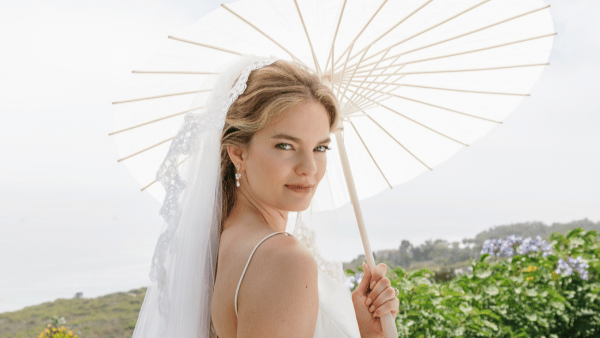
Brides often choose a veil before deciding on their hairstyle, then realize the two do not always work together under real wedding conditions. Weight, placement, humidity, wind, and photography all affect how the veil and hair perform throughout the day. This guide explains how Bridal Hair With a Veil should be planned around veil length, hairstyle structure, and the demands of an Orange County wedding environment.
At Brittany Brown Beauty, we approach Bridal Hair With a Veil by looking at the full environment rather than relying on trend-based styling. Veil weight, coastal weather, movement, hair texture, and photography conditions all influence how the hairstyle holds its shape throughout the ceremony, portraits, and reception.
Why Veil Placement Changes the Hairstyle
Many brides bring inspiration photos without noticing that the hairstyle was designed specifically for the veil placement. A low veil attached beneath a bun creates a different silhouette than a veil secured above the crown. Hair that looks balanced without a veil can appear compressed once fabric and combs are added. At Brittany Brown Beauty, we evaluate where the veil will sit before finalizing the structure of the hairstyle so the proportions remain consistent in person and on camera.
Another common mistake is assuming the veil can simply be inserted after the hairstyle is complete. Veils add weight and tension, especially cathedral lengths. Without reinforcement at the anchor point, curls loosen faster and volume collapses near the crown. Proper preparation matters more than decorative detail.
Bridal Hair With a Veil for Short Veils
Birdcage and shoulder-length veils usually work best with controlled hairstyles that keep facial structure visible. Loose hair can compete with the shorter veil shape, particularly during outdoor ceremonies with wind exposure. Soft waves with tucked sides, structured ponytails, and refined low buns tend to photograph more clearly.
Short veils also reveal more of the face in close photography, which means balance becomes important. Heavy contouring or oversized hair can overpower the proportions. One misconception is that natural makeup and simple hair require less structure. In reality, understated bridal styling still needs definition or features disappear under bright daylight and flash photography.
Mid-Length Veils and Balanced Hair Shapes
Fingertip and elbow-length veils are among the most flexible options because they work with both updos and partially pinned hairstyles. These lengths allow movement while still showing enough hair detail in photographs. Brides who want softness without constant maintenance often choose this combination for coastal Orange County weddings.
Half-up styles are common with mid-length veils, but placement matters. If the pinned section sits too low, the veil can flatten the entire shape from the back. If the crown is too elevated, the hairstyle may look disconnected once the veil is removed during the reception. At Brittany Brown Beauty, we adjust height and pin distribution based on the density of the hair and the weight of the veil rather than relying on standard placement patterns.
Bridal Hair With a Veil for Cathedral Lengths
Cathedral veils create movement in photographs, but they also place the greatest stress on the hairstyle. Brides often focus on the dramatic effect during the ceremony without considering wear time across several hours. Long veils pull continuously against the anchor point, especially during outdoor walks, dancing, and repeated adjustments for photography.
Secure styling becomes essential here. Structured chignons, reinforced low buns, and controlled textured updos generally hold more reliably than loose curls worn completely down. Brides sometimes assume more pins automatically create stronger hold, but excessive pinning can weaken the foundation by forcing sections apart. Stability comes from strategic sectioning and weight distribution.
Hair extensions also require planning with cathedral veils. Extremely long extensions combined with heavy veiling can create tension headaches and reduce style longevity. We often recommend prioritizing density over excessive length so the hairstyle maintains shape throughout the wedding timeline.
Weather, Lighting, and Fabric Matter More Than Trends
Veil material changes how the hairstyle behaves. Lightweight tulle moves easily in coastal wind, while denser fabrics place more pressure on the attachment area. Satin edging and embellishments can also reflect flash photography differently than expected. Brides who copy social media inspiration without considering fabric behavior are often surprised during fittings.
Humidity affects both hair texture and veil control in Orange County, particularly near the coast. Overly soft curls may relax before the ceremony even begins. Over-sprayed hair creates stiffness that becomes more noticeable once the veil is removed at the reception. The goal is controlled flexibility rather than maximum hold.
Ready to Plan Your Bridal Look?
Bridal Hair With a Veil depends on proportion, reinforcement, and realistic styling decisions that account for photography, weather, and wear time. At Brittany Brown Beauty, we design bridal hair and makeup with the full wedding environment in mind so the final look remains balanced from the ceremony through the reception.
Ready to plan your bridal look? Schedule a consultation with Brittany Brown Beauty.
Frequently Asked Questions
The veil should ideally be selected before the hair trial so placement and weight can be tested accurately.
No. Some brides wear long veils with partially pinned styles, but the hairstyle needs enough reinforcement to support the weight.
Many brides remove longer veils after formal photography and the ceremony for easier movement.
The veil changes the silhouette and can compress volume depending on where it is secured.
Yes. Placement and preparation matter more than hair density alone.