Posted on

How Your Wedding Venue Should Influence Your Bridal Hairstyle

How Your Wedding Venue Should Influence Your Bridal Hairstyle

Most brides open Pinterest before they ever look closely at their wedding venue. They save hundreds of hairstyle photos, fall in love with a specific look, and then try to make it work no matter where they are getting married. The issue is that a hairstyle that looks flawless in a controlled studio setting can behave very differently on a breezy oceanfront terrace or in a humid garden space.

Your wedding venue is not just a backdrop. It directly affects how your hair holds throughout the day. Weather, lighting, wind, humidity, and even the amount of movement during your celebration all play a role in how your hairstyle performs over eight to twelve hours.

That is why venue should be one of the first things to consider when choosing your bridal hairstyle. Let’s look at how different wedding settings influence hair and which styles tend to hold up best in each one.

Why Your Wedding Venue Matters More Than You Think

Brides often choose hairstyles based on how something looks in a photo, not how it actually performs in real conditions. That is a natural starting point, but it leaves out an important piece of the decision.

A loose, flowing style with soft cascading curls can look perfect in an editorial shoot with controlled lighting and no wind. The same style at a coastal wedding in the middle of summer can look very different by the time you walk down the aisle, and even more different a few hours into the reception.

Your venue introduces real conditions that affect how your hair behaves. Outdoor settings bring wind, humidity, heat, and direct sunlight. Indoor venues remove weather concerns but introduce lighting differences. Barn weddings often combine both. Estate venues may also involve movement between multiple locations. Each of these factors interacts with your hair type, styling products, and technique.

Weather does not only affect frizz. Heat can break down styling products faster. Humidity can cause hair to expand or lose shape. Wind can shift structured styles and loosen curls. Cold air can create static and make hair harder to control. These are not rare situations. They are normal conditions that need to be planned for.

Photography plays an equally important role. Natural light, indoor lighting, and flash photography all reflect hair differently. A style that looks dimensional outdoors may appear flatter under warm indoor lighting. This plays a key role in choosing hairstyles that stay consistent from the first photo to the last.

That is why your venue should be one of the first things discussed during your bridal hair consultation, not something considered at the end.

Bridal Hairstyles for Beach Weddings

Beach and coastal weddings are some of the most visually striking settings a bride can choose. They are also some of the most demanding environments for bridal hair.

How Ocean Breeze Affects Bridal Hair

Salt air, moisture, and wind are the main challenges at any beach wedding. The ocean constantly moves air across the space. Even on calm mornings, there is usually enough breeze to shift loose hair throughout the day.

Salt in coastal air also draws moisture into the hair, which leads to frizz in many hair types and can reduce curl definition. Over time, this changes how polished or structured a style appears in photos.

Humidity is another factor that often gets overlooked. Beach locations tend to have higher humidity, especially in warmer months. This softens styling products faster, which means a style that feels secure in the morning can loosen or change shape by midday.

Best Hairstyles for Beach Brides

The most reliable beach wedding hairstyles all share one thing. They rely on structure rather than softness alone. They are designed to work with the environment instead of resisting it.

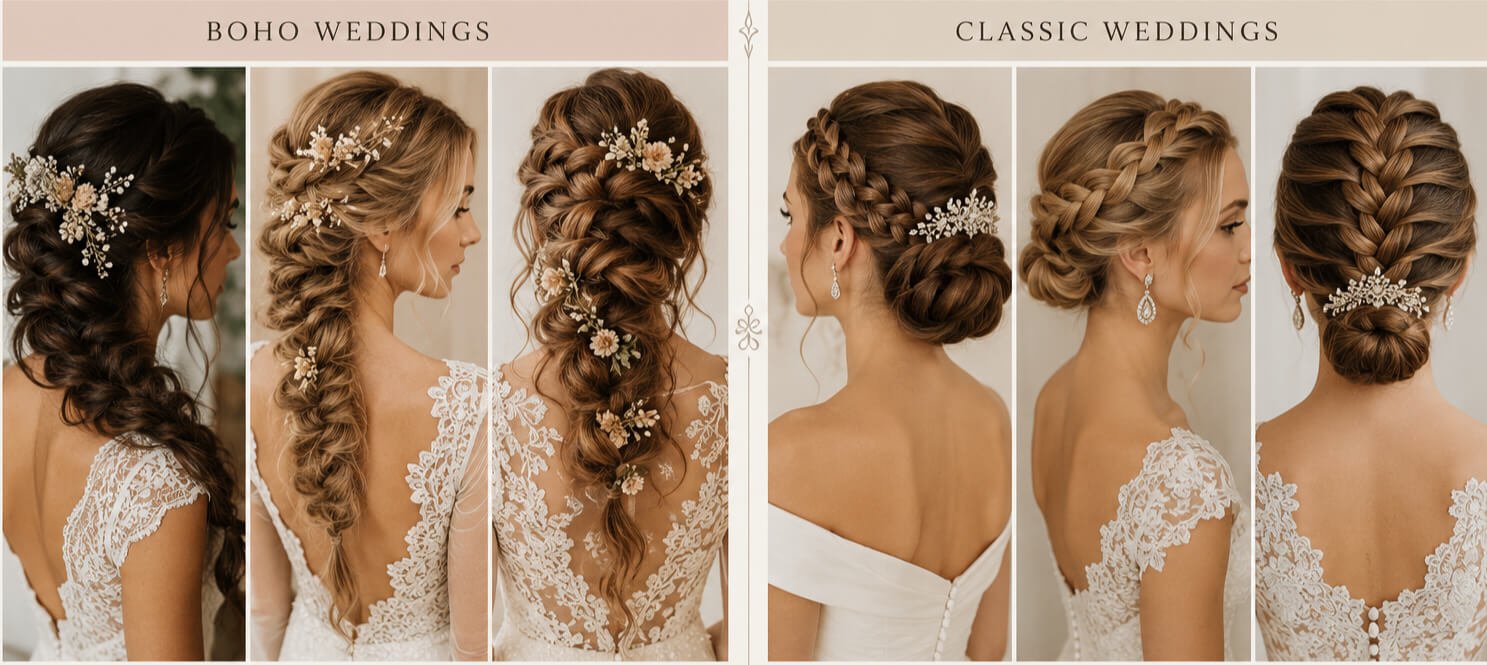
Textured low buns perform especially well. They keep the hair secure, stay comfortable in wind, and photograph well from every angle. When built with the right texture, they still feel relaxed enough to suit a coastal setting without falling apart.

Braided updos are another strong choice. Braids naturally lock the hair in place, which helps the style hold through wind and movement. They also add detail and interest without relying on loose pieces that can shift.

Secure half-up styles are a good middle ground. They keep the top section controlled while allowing some movement through the lengths. This helps balance structure with a softer overall look.

Structured waves can also work, but only when they are properly set with the right products and pinned support. Loose, soft waves without structure are rarely reliable in a coastal setting.

Hairstyles That Often Struggle at Beach Weddings

Fully down hairstyles with loose curls or soft waves are the most common styles that do not hold up well at beach weddings. They look beautiful in controlled photos, but wind quickly separates and lifts the hair once you are outdoors.

Very intricate styles with multiple delicate sections can also become unpredictable in strong wind. While they can be made to work, each loose or detailed element adds more points of movement, which requires careful planning to keep everything secure throughout the day.

Bridal Hairstyles for Garden Weddings

Garden weddings create some of the most romantic wedding settings. Soft natural light, greenery, and flowers naturally frame the bride in a way that feels effortless and timeless. At the same time, garden venues bring their own set of hair considerations that are easy to overlook during planning.

Challenges of Outdoor Garden Venues

Humidity tends to be higher in garden environments compared to open outdoor spaces. Shaded areas, lawns, water features, and dense planting all hold moisture in the air. This affects how well styling products hold and how hair texture behaves as the day goes on.

Temperature changes are another factor. A morning ceremony may start in cool, stable conditions, then shift into warmer, more humid air by midday. Long photo sessions outdoors also expose the hair to repeated changes in light, heat, and movement, which slowly tests the structure of the style.

Movement is often underestimated in garden settings. Walking on grass, uneven ground, and natural terrain creates subtle shifts in posture and balance. Combined with bouquet holding, hugging, and posing, this adds up to more physical movement than most indoor venues.

Hairstyles That Work Best

Romantic updos are a strong match for garden weddings. They suit the softness of the setting while still giving the structure needed to hold up through humidity and movement. A softly textured updo feels relaxed in photos but still stays secure throughout the day.

Soft braided styles also work well in this environment. Braids naturally grip the hair, which helps the style stay in place even when conditions shift. They also complement the organic feel of a garden setting without relying on overly structured shapes.

Half-up styles offer a balance between romance and control. They keep the front and crown secure while allowing some movement through the lengths. When properly pinned and supported with the right products, they hold up well during extended outdoor photo sessions.

Controlled texture usually performs better than overly polished or completely loose styles. It blends more naturally with the environment and adapts better to small changes in weather without losing its shape.

Bridal Hairstyles for Ballroom Weddings

Ballroom weddings give bridal hairstylists the most flexibility. With indoor, climate-controlled settings, many of the challenges that come with outdoor environments are reduced or removed entirely.

Why Indoor Venues Allow More Flexibility

Ballrooms maintain a consistent temperature and humidity level throughout the day. There is no wind, no sudden weather shifts, and no exposure to direct sun. Because of this, styling products perform more predictably and the hairstyle holds its intended shape for longer.

This level of control opens the door to a wider range of hairstyles, including looks that require smoother finishes, softer movement, or more precision in shaping.

Popular Ballroom Bridal Hairstyles

Hollywood waves are one of the most popular choices for ballroom weddings. These polished waves rely on structure and smooth definition, which are easier to maintain in an indoor setting. Under warm ballroom lighting, they also photograph with depth and shine, creating a classic bridal look.

Glamorous down styles also perform well in this environment. Whether it is soft curls, sleek straight hair, or voluminous blowouts, indoor conditions help the style stay consistent from ceremony through reception without breaking down early.

Elegant chignons and polished updos are equally suited to ballroom settings. They hold their shape easily indoors and work beautifully with formal lighting, often appearing clean, refined, and balanced throughout the entire event.

Bridal Hairstyles for Rustic Barn Weddings

Barn weddings have become a popular choice for modern brides. They offer a relaxed, warm atmosphere, but they also bring a mix of conditions that can affect how your hairstyle holds throughout the day.

Unique Challenges of Barn Venues

Most barn weddings involve a combination of indoor and outdoor settings. The ceremony may take place outside in a field or garden, while the reception moves inside the barn. This means your hair often has to perform well across changing environments in a single day.

Inside the barn itself, conditions can vary more than expected. Many barn venues are not fully climate-controlled, so temperatures can rise during the evening once guests arrive, lighting is on, and dancing begins. Airflow from open doors and nearby outdoor spaces can also introduce dust and subtle movement that affects softer styles.

Best Hairstyle Choices

Textured buns work especially well for barn weddings. They suit the relaxed, natural feel of the venue while still providing the structure needed to last through changing conditions. They also transition easily from outdoor ceremonies to indoor receptions without needing adjustments.

Loose braids and relaxed updos are another strong option. They match the informal, rustic aesthetic while still keeping the hair secure. Even when styled to look effortless, braids offer more hold than fully loose styles, which helps them last longer throughout the day.

Soft waves with structure can also work in barn settings, especially when outdoor exposure is limited. The key is in the preparation. Waves need proper setting, product support, and controlled styling so they hold their shape as the day moves between different environments.

Bridal Hairstyles for Luxury Estate and Resort Weddings

Estate and resort weddings often unfold across multiple spaces throughout the day. A ceremony in one garden, cocktail hour on a terrace, dinner inside a main hall, and dancing in a separate space can all be part of a single timeline. Each location introduces slightly different lighting, movement, and environmental conditions.

Why Multi-Location Venues Change the Approach

Versatility becomes the main priority at estate and resort weddings. Your hairstyle needs to move between outdoor natural light and indoor lighting without losing its shape or polish. It also needs to hold up through longer hours and more physical movement than a single-location venue typically requires.

Because of this, the focus shifts from a “single perfect moment” to consistency across the entire day. A style that only looks ideal in one setting often struggles once the environment changes.

Best Hairstyle Approach for Estate and Resort Weddings

Styles that hold their structure across different lighting conditions tend to perform best. Structured updos are a strong choice because they stay intact whether you are outside in natural light or indoors under warm reception lighting.

Half-up styles with secure pinning also work well, especially when they are built with enough structure to handle movement between locations. These styles offer a balance between softness and control, which suits the flow of estate and resort timelines.

Fully down styles can still work, but they require more planning. The key is ensuring they are set with enough internal structure so they do not rely on one specific lighting or weather condition to look their best.

How Wind, Humidity, and Temperature Influence Bridal Hair

Wind, humidity, and temperature all affect how bridal hair behaves, but they do not affect every hair type in the same way. That is why choosing a hairstyle should always take both your hair type and your venue conditions into account.

Fine hair tends to lose volume and shape quickly in humid conditions. It also moves easily in wind, which makes loose styles more vulnerable outdoors. Because of this, fine-haired brides usually get better results from styles with built-in structure, such as pinned updos or styles supported with strong internal setting and product work.

Thick or coarse hair behaves differently. It often holds up well in wind, but humidity can cause it to expand or frizz over time. In warmer outdoor conditions, thick hair usually performs best when smoothing products are applied throughout the styling process, not just at the end. Styles that work with the natural weight and movement of the hair also tend to last longer.

Curly and wavy hair is especially responsive to moisture in the air. Humidity can shift curl patterns, either tightening them or loosening definition depending on the hair type. For outdoor weddings, preparation in the days leading up to the event plays a major role in how controlled or consistent the final style looks throughout the day.

Long hair also brings its own considerations. More length means more surface area exposed to wind and humidity, which increases movement throughout the day. For this reason, long bridal hairstyles often need additional internal support so the style stays secure while still looking soft and natural from the outside.

How Photography Changes Hairstyle Decisions

Your hairstyle does not only exist in real life. It also exists in photos, and the way it photographs depends heavily on the lighting at your venue.

Natural outdoor light is usually the most forgiving for bridal hair. It creates softness, brings out colour depth, and shows texture in a more natural way. At the same time, strong midday sun can reduce dimension and create harsh contrast that flattens certain styles. That is why many photographers plan key portrait sessions for early morning or late afternoon, when the light is softer.

Sunset or golden hour lighting is especially flattering for most bridal hairstyles. The warm direction of the light adds glow and creates natural highlights in the hair. Styles with movement, such as loose waves or soft textured updos, tend to look particularly good in this setting.

Indoor flash photography behaves differently. It can reduce visible texture and make smoother styles appear flatter than they feel in person. On the other hand, styles with structure and volume usually hold up better under flash because they retain shape even when detail is reduced.

Venue lighting also plays a major role. Chandeliers, candles, string lights, and uplighting all shift how hair colour and tone appear in photos. Warm lighting can enhance golden tones in the hair, while cooler lighting may soften contrast and reduce visible depth. Understanding your venue’s lighting helps guide finishing choices so your hairstyle looks consistent across different parts of the day.

Questions to Discuss During Your Bridal Hair Consultation

A bridal hair consultation is not just about reviewing inspiration photos. It is a focused conversation about real conditions, timing, and how your hairstyle will actually perform on the day.

These are the key questions every bride should bring into that discussion.

What is the venue type and what weather conditions should be expected?
Your stylist needs this information to recommend styles that will genuinely last in your environment, not just styles that look good in ideal conditions. Outdoor heat, humidity, wind, and indoor lighting all influence how a hairstyle holds.

Are you planning to wear a veil?
Veil placement, weight, and attachment point all affect how a hairstyle is built. Some styles work beautifully with veils, while others require structural adjustments. If a veil is part of your look, it should be discussed early so the hairstyle can be designed around it from the start.

What is your current hair care routine, and how is your hair performing right now?
Hair condition on the wedding day is shaped by what happens in the weeks leading up to it. If your hair needs moisture, strength, or improved texture, starting early gives the stylist a better base to work with and leads to more reliable results.

How long will your wedding day run?
A long wedding day with early morning prep and a late-night reception requires more durability planning than a shorter timeline. The hairstyle needs to hold through every stage without constant adjustments.

Are you considering an updo, and what placement feels right for you?
Low buns and high buns behave differently in terms of face framing, comfort, veil placement, and longevity. The placement also changes how the style looks from different angles throughout the day. Having a clear direction before the trial helps the process run more smoothly.

Working With Brittany Brown Beauty

Every bride who works with Brittany Brown Beauty brings a unique mix of hair type, venue, dress, and personal style. No two weddings follow the same approach.

The process starts with the venue. Location, season, lighting, and expected weather shape the hairstyle direction from the beginning.

From there, the focus moves to the dress and overall look. A structured gown in a ballroom needs a different hair approach than a light, flowing dress in a garden setting. The hairstyle fits the full picture instead of sitting on its own.

Hair type comes next. We assess it early so products and techniques match what your hair can actually hold through a long wedding day. This avoids styles that only look good in photos but fail in real conditions.

Timeline also plays a role, especially for weddings with early starts or travel between locations. We plan the style so it holds from prep through to the final moments without constant fixing.

For current inspiration, our article on bridal hair trends for 2026 in Orange County shows how modern styles translate into real wedding settings.

The goal stays the same for every bride: a hairstyle that holds, feels comfortable, and looks consistent from the first photo to the last.

Book Your Bridal Hair Consultation

If you are planning your wedding and want to work with a bridal hairstylist who considers venue, weather, and timeline as much as the final look, Brittany Brown Beauty offers bridal consultations in Orange County and surrounding areas.

A bridal hair consultation gives you space to talk through your venue, your vision, your hair type, and your wedding day schedule. From there, you get a clear plan for how your hairstyle will look and why it will hold through the day.

Contact Brittany Brown Beauty to schedule your bridal hair consultation and start planning a hairstyle built for your wedding day.

Frequently Asked Questions

1. What is the best bridal hairstyle for a beach wedding?

For beach weddings, styles with a bit more structure usually hold up best. Textured low buns, braided updos, and secure half-up styles tend to handle ocean breeze and salt air much better than fully down hairstyles. The goal is to choose a style that can move naturally without losing its shape.

2. Can I wear my hair down at an outdoor wedding?

Yes, but it depends on the venue and weather conditions. Wearing your hair down outdoors tends to work best when temperatures are moderate, humidity is lower, and there is very little wind. With the right products and styling techniques, your hair can last much longer. However, beach weddings and hot summer weddings can be more challenging for fully down styles.

3. How does humidity affect bridal hair?

Humidity adds moisture to the hair, which can lead to frizz or cause curls and waves to lose their shape. It can also reduce the effectiveness of styling products over time. If your wedding venue is near the coast, in a garden setting, or outdoors during summer, your stylist will likely choose products and techniques designed to help your hairstyle last longer.

4. Should my wedding venue influence my hairstyle choice?

Absolutely. Your venue affects everything from weather conditions to lighting and how much movement your hairstyle will experience throughout the day. A style that works beautifully in a ballroom may not perform the same way at a windy beach or outdoor garden venue. Thinking about your venue early can help you choose a hairstyle that looks great and holds up throughout the celebration.

5. How do I make my bridal hair last all day?

Getting your hair ready for the wedding starts well before the big day itself. Healthy hair and proper preparation give your stylist the best foundation to work with. On the wedding day, long-lasting results come from the right products, strong styling techniques, and a hairstyle that suits both your hair type and venue. When all of those elements work together, your style is much more likely to last from the morning preparations to the final dance.

Related Articles:

  1. When to Book Your Bridal Hair Stylist in Orange County
  2. Low Bun vs High Bun for Brides: What Works Best?
  3. Bridal Hairstyles for Different Face Shapes: What Flatters You Most
  4. How to Prep Your Hair Before Your Wedding Day
  5. Bridal Hair Trends 2026 in Orange County
  6. Trending Long Bridal Hairstyles in 2026
  7. Best Bridal Hairstyles Based on Your Hair Type
Posted on

Bridal Hair With a Veil: What Works With Every Veil Length

bridal hair with veil

Brides often choose a veil before deciding on their hairstyle, then realize the two do not always work together under real wedding conditions. Weight, placement, humidity, wind, and photography all affect how the veil and hair perform throughout the day. This guide explains how Bridal Hair With a Veil should be planned around veil length, hairstyle structure, and the demands of an Orange County wedding environment.

At Brittany Brown Beauty, we approach Bridal Hair With a Veil by looking at the full environment rather than relying on trend-based styling. Veil weight, coastal weather, movement, hair texture, and photography conditions all influence how the hairstyle holds its shape throughout the ceremony, portraits, and reception.

Why Veil Placement Changes the Hairstyle

Many brides bring inspiration photos without noticing that the hairstyle was designed specifically for the veil placement. A low veil attached beneath a bun creates a different silhouette than a veil secured above the crown. Hair that looks balanced without a veil can appear compressed once fabric and combs are added. At Brittany Brown Beauty, we evaluate where the veil will sit before finalizing the structure of the hairstyle so the proportions remain consistent in person and on camera.

Another common mistake is assuming the veil can simply be inserted after the hairstyle is complete. Veils add weight and tension, especially cathedral lengths. Without reinforcement at the anchor point, curls loosen faster and volume collapses near the crown. Proper preparation matters more than decorative detail.

Bridal Hair With a Veil for Short Veils

Birdcage and shoulder-length veils usually work best with controlled hairstyles that keep facial structure visible. Loose hair can compete with the shorter veil shape, particularly during outdoor ceremonies with wind exposure. Soft waves with tucked sides, structured ponytails, and refined low buns tend to photograph more clearly.

Short veils also reveal more of the face in close photography, which means balance becomes important. Heavy contouring or oversized hair can overpower the proportions. One misconception is that natural makeup and simple hair require less structure. In reality, understated bridal styling still needs definition or features disappear under bright daylight and flash photography.

Mid-Length Veils and Balanced Hair Shapes

Fingertip and elbow-length veils are among the most flexible options because they work with both updos and partially pinned hairstyles. These lengths allow movement while still showing enough hair detail in photographs. Brides who want softness without constant maintenance often choose this combination for coastal Orange County weddings.

Half-up styles are common with mid-length veils, but placement matters. If the pinned section sits too low, the veil can flatten the entire shape from the back. If the crown is too elevated, the hairstyle may look disconnected once the veil is removed during the reception. At Brittany Brown Beauty, we adjust height and pin distribution based on the density of the hair and the weight of the veil rather than relying on standard placement patterns.

Bridal Hair With a Veil for Cathedral Lengths

Cathedral veils create movement in photographs, but they also place the greatest stress on the hairstyle. Brides often focus on the dramatic effect during the ceremony without considering wear time across several hours. Long veils pull continuously against the anchor point, especially during outdoor walks, dancing, and repeated adjustments for photography.

Secure styling becomes essential here. Structured chignons, reinforced low buns, and controlled textured updos generally hold more reliably than loose curls worn completely down. Brides sometimes assume more pins automatically create stronger hold, but excessive pinning can weaken the foundation by forcing sections apart. Stability comes from strategic sectioning and weight distribution.

Hair extensions also require planning with cathedral veils. Extremely long extensions combined with heavy veiling can create tension headaches and reduce style longevity. We often recommend prioritizing density over excessive length so the hairstyle maintains shape throughout the wedding timeline.

Weather, Lighting, and Fabric Matter More Than Trends

Veil material changes how the hairstyle behaves. Lightweight tulle moves easily in coastal wind, while denser fabrics place more pressure on the attachment area. Satin edging and embellishments can also reflect flash photography differently than expected. Brides who copy social media inspiration without considering fabric behavior are often surprised during fittings.

Humidity affects both hair texture and veil control in Orange County, particularly near the coast. Overly soft curls may relax before the ceremony even begins. Over-sprayed hair creates stiffness that becomes more noticeable once the veil is removed at the reception. The goal is controlled flexibility rather than maximum hold.

Ready to Plan Your Bridal Look?

Bridal Hair With a Veil depends on proportion, reinforcement, and realistic styling decisions that account for photography, weather, and wear time. At Brittany Brown Beauty, we design bridal hair and makeup with the full wedding environment in mind so the final look remains balanced from the ceremony through the reception.

Ready to plan your bridal look? Schedule a consultation with Brittany Brown Beauty.

Frequently Asked Questions

1. How early should a bride choose her veil before the wedding?

The veil should ideally be selected before the hair trial so placement and weight can be tested accurately.

2. Do cathedral veils always require an updo?

No. Some brides wear long veils with partially pinned styles, but the hairstyle needs enough reinforcement to support the weight.

3. Should the veil stay in during the reception?

Many brides remove longer veils after formal photography and the ceremony for easier movement.

4. Why does my hairstyle look different once the veil is attached?

The veil changes the silhouette and can compress volume depending on where it is secured.

5. Can fine hair hold a veil securely?

Yes. Placement and preparation matter more than hair density alone.

Related Articles

Posted on

Bridal Makeup Ideas for Brunettes in Orange County, CA

Bridal Makeup for Brunettes

Brides with brunette hair often find that makeup inspiration online either washes them out in photographs or pushes the look too dark for daylight ceremonies. Hair depth changes how foundation, blush, bronzer, and eye makeup register on camera, especially during outdoor weddings in Orange County where bright sun and reflective surfaces intensify contrast. This article explains how bridal makeup for brunettes can be adjusted for lighting, skin tone, and wear time so the final look remains balanced in person and in photographs.

At Brittany Brown Beauty, we approach brunette bridal makeup by looking at the full composition of the face rather than following trend-based looks. Hair color matters because it changes how softness, dimension, and contrast appear in photos.

Understanding Contrast in Bridal Makeup for Brunettes

Brunette hair naturally creates stronger facial contrast, which means makeup placement needs more structure than many brides expect. Soft makeup can still photograph beautifully, but it cannot disappear into the features under professional lighting. One common mistake is copying makeup designed for blondes or lighter contrast faces without adjusting depth around the eyes and cheeks. At Brittany Brown Beauty, we study how hair color, brow density, and skin undertone interact before finalizing a bridal look. This becomes especially important during outdoor ceremonies where direct California sunlight can flatten dimension across the face.

Skin Preparation Matters More Than Product Quantity

Brides often assume heavier makeup creates longer wear, but excess product usually separates faster in heat and humidity. Bridal makeup for brunettes benefits more from balanced skin preparation than additional coverage because darker hair already frames the face strongly. Over exfoliating during the week before the wedding is one of the most common causes of uneven foundation texture. Skin that is irritated reflects light unpredictably and can appear patchy in close photography. At Brittany Brown Beauty, we adjust prep based on oil production, dehydration levels, and ceremony timing rather than using the same routine for every bride.

Choosing Eye Makeup That Holds Definition

Natural Eye Makeup for Brunettes

Natural bridal makeup still requires visible structure around the eyes or the lash line disappears in professional images. Many brides believe neutral makeup means avoiding definition entirely, but cameras reduce depth significantly under soft lighting conditions. Hooded eyes also need shadow placement slightly above the crease so dimension remains visible when the eyes are open. Brown, taupe, and muted bronze tones usually photograph more naturally on brunettes than cool gray shadows. In Orange County venues with ocean reflection or bright open-air lighting, these warmer tones prevent the complexion from looking overly pale.

Soft Glam Without Excess Weight

Soft glam works well for brides who want more polish without the density associated with full editorial makeup. The mistake many brides make is adding shimmer across the entire lid, which can emphasize texture and reflect flash photography unevenly. Strategic satin finishes near the center of the eye usually create more controlled light balance. At Brittany Brown Beauty, we also test lash density carefully because overly dramatic lashes can cast shadows under the eyes during midday ceremonies. Brunettes often need slightly more separation and lift rather than additional thickness.

Full Glam for Evening Ceremonies

Evening weddings allow deeper contrast, but balance still matters. Very dark smoky eyes paired with strong contour can compete with brunette hair instead of complementing it. Brides sometimes assume nighttime makeup must automatically be heavier, though photography lighting often exaggerates saturation after sunset. Controlled depth near the lash line usually translates more cleanly than excessive black shadow. For ballroom receptions and formal venues, we focus on maintaining skin texture so the complexion still resembles real skin under high resolution photography.

Lip and Cheek Balance for Brunette Brides

Brunettes can typically carry richer lip and blush tones without overpowering the face, but undertone matching matters more than intensity alone. Cool brunette tones usually pair better with rose, berry, or neutral mauve shades, while warmer brunettes photograph well with muted terracotta or soft peach tones. One myth worth correcting is the idea that nude lipstick works universally for bridal makeup. Beige shades that are too pale can drain warmth from brunette features under flash photography. At Brittany Brown Beauty, we test lip color in both indoor and outdoor lighting before confirming the final combination for wedding day wear.

Brow Shape and Photography

Brows frame brunette features more prominently because darker hair naturally increases definition around the eyes. Brides often fill brows too heavily after seeing social media tutorials, but excessive density can harden facial expression in photography. Sparse application with shape usually reads more polished on camera than sharp outlines or overly dark pomades. Brow color should also relate to skin undertone rather than matching hair exactly. Cooler brunettes often need softer ash depth, while warmer brunettes benefit from brown tones that prevent redness. At Brittany Brown Beauty, we photograph brow adjustments during trials because asymmetry that looks minor in person becomes more noticeable in resolution images.

Why Trial Sessions Matter

Pinterest references rarely account for face shape, brow structure, or the way professional cameras interpret depth and texture. A bridal trial is less about recreating a single image and more about identifying what translates consistently across different conditions. During trials, we document placement, finish, and wear behavior so adjustments can be made before the wedding day. This process becomes especially valuable for destination weddings and long event timelines common throughout Orange County. Bridal makeup for brunettes works best when the final design is built around the individual bride rather than around trend images alone.

Ready to Plan Your Bridal Look?

Bridal makeup should hold up under real lighting, real photography, and real wear conditions. The most effective bridal makeup for brunettes is balanced, intentional, and customized to your features rather than copied from a trend board.

Ready to plan your bridal look? Schedule a consultation with Brittany Brown Beauty.

Frequently Asked Questions

1.How far in advance should bridal makeup trials be booked?

Most brides schedule trials two to four months before the wedding date so adjustments can be made without rushing decisions.

2.Does bridal makeup for brunettes need darker foundation or contour?

No. Hair depth affects facial contrast, but complexion products should still match natural skin tone and undertone accurately.

3.What makeup finishes photograph best outdoors in Orange County?

Soft satin finishes usually perform better than heavy shimmer because they reflect sunlight more evenly.

4.Can natural bridal makeup still show up in professional photos?

Yes. Natural makeup still needs structure and definition so features remain visible under photography lighting.

5.Should brides change skincare routines before the wedding?

Major skincare changes close to the wedding date often increase irritation, dryness, or unexpected texture issues.

Related Articles:

Posted on

Best Bridal Hairstyles Based on Your Hair Type
Best Bridal Hairstyles Based on Your Hair Type
Your wedding hairstyle should do more than look good for the first hour. It needs to stay comfortable, photograph well, and hold through the ceremony, photos, weather, dancing, and a full day of movement. That is why hair type matters so much when choosing a bridal style.

A hairstyle that works beautifully on thick hair may fall apart on fine hair within a few hours. Likewise, a sleek style that looks polished on dense hair can make thin hair appear flatter in photos. The best bridal hairstyles are not chosen based on trends alone. They are chosen based on how your hair naturally behaves.

At Brittany Brown Beauty, bridal hair is planned around texture, density, weather conditions, dress details, and long-wear performance so the style still looks beautiful long after the ceremony ends.

Why Hair Type Changes Everything for Bridal Styling

Many wedding blogs tell brides to choose a hairstyle that “fits their vibe” or complements their face shape. While those things matter, they miss the technical side of bridal hair.

Hair type determines how a style holds throughout the day.

A hairstyle can look perfect during a morning trial and then slowly collapse by the reception because the structure was never suited to the bride’s actual hair texture or density. Experienced bridal hairstylists think beyond how the style looks at the start of the day. They also think about how it wears after hours of movement, heat, humidity, hugs, dancing, and outdoor photos.

That is why the planning process should always start with the hair itself.

Fine Hair vs. Thin Hair vs. Thick Hair: The Real Differences

These terms often get mixed together, but they describe very different things.

Fine hair refers to the thickness of each individual strand. Fine strands are smaller in diameter, which means they are softer, lighter, and usually less resistant to heat and humidity. Because the strands are so smooth and delicate, curls tend to loosen faster and pins can slide more easily.

Thin hair refers to density, meaning how much hair is actually growing on the scalp. Someone can have fine hair with high density or coarse hair with low density.

Thick hair describes high density. Thick hair usually has more weight and volume, which changes how hairstyles sit and hold throughout the day.

Dense hair simply means there is a large amount of hair overall, regardless of strand texture.

These differences matter because bridal hairstyles rely on structure. The weight, texture, and density of the hair affect how long curls last, how secure pins feel, and how the style photographs under different lighting conditions.

Best Bridal Hairstyles for Fine Hair

Fine hair is extremely common, especially among brides who struggle to keep curls from falling.

Why Fine Hair Loses Curl Faster

Fine strands do not have much internal structure, so curls naturally relax more quickly. Heat tools can create shape temporarily, but once the hair cools and encounters humidity, body heat, or movement, the curl starts dropping.

Outdoor weddings make this even more noticeable. Warm air and moisture soften the hold of styling products, which causes loose curls to relax much faster.

That does not mean fine hair cannot hold a bridal style. It simply means the style has to work with the hair instead of against it.

What Works Best for Fine Hair

Soft low buns and chignons work especially well because they rely on pins and structure rather than volume alone.

Half-up hairstyles can also create a fuller appearance, particularly when the crown is gently backcombed for support. Meanwhile, braided styles are excellent for fine hair because the braid itself creates structure and helps lock the strands into place.

Soft waves can still look beautiful on fine hair, but they usually hold better when the waves are pinned strategically throughout the style instead of left completely loose.

What to Avoid

Large, loose curls that depend on volume often lose shape quickly on fine hair. Very sleek styles can also make fine hair appear flatter in photos, especially in bright outdoor lighting.

Instead of forcing maximum volume, the goal should be creating movement and shape that lasts.

Best Bridal Hairstyles for Thin Hair

Thin hair brings a different challenge. In most cases, the main concern is scalp visibility rather than curl retention.

Why Thin Hair Behaves Differently

When hair density is low, tightly pulled styles can expose the scalp more than expected. This becomes especially noticeable under flash photography or direct sunlight.

Middle parts can also widen throughout the day as the hair relaxes, which may make the style appear less full by the reception.

What Works Best for Thin Hair

Volume-building techniques make a major difference for thin hair. Blowouts with root lift, gentle backcombing, and textured styling all help create the appearance of fuller hair.

Low buns work well because they gather the hair into one concentrated area rather than spreading it thinly across the head.

Side-swept hairstyles are another strong option. Since the hair overlaps itself, the style naturally creates more visual fullness in photos.

Loose braids can also look beautiful when the braid is softly expanded after styling to add width and softness.

Best Bridal Hairstyles for Thick and Dense Hair

Many brides assume thick hair is easier to style, but thick hair comes with its own challenges.

Why Thick Hair Can Become Heavy

Dense hair carries weight. Once that weight is pinned into an updo, gravity starts pulling against the style all day long.

As a result, tightly sculpted styles may begin expanding, shifting, or puffing throughout the event. This is not usually a product issue. It is simply the natural behavior of heavier hair.

What Works Best for Thick Hair

Textured buns, romantic waves, and braided styles tend to perform beautifully because they allow the hair to move naturally instead of forcing it into a rigid shape.

Half-up styles are also popular for thick hair because the weight stays distributed more evenly.

Layering makes a big difference as well. Proper layers remove bulk and help the hair move more softly in photos rather than appearing heavy or blocky.

Bridal Hairstyles for Curly and Naturally Textured Hair

Curly and textured hair should be styled in a way that respects the natural curl pattern instead of trying to erase it.

Why Natural Texture Often Holds Better

When stylists work with the curl pattern rather than against it, the style usually lasts longer and feels more comfortable.

Defined curls worn down or partially pinned back photograph beautifully because the hair already has natural movement and structure. Loose curly updos also create softness without needing excessive teasing or heat styling.

How Humidity Affects Curly Hair

Humidity affects textured hair differently than straight hair. Instead of falling flat, curls often expand as they absorb moisture from the air.

Sometimes this extra volume works beautifully. However, uneven moisture absorption can create frizz or inconsistent curl definition if the prep work was not done properly.

For that reason, bridal hairstyles for textured hair should be designed around the weather from the very beginning. Trying to force naturally curly hair completely straight in a humid environment usually creates more stress than necessary.

How Humidity and Weather Affect Bridal Hair

Even in relatively mild climates like Orange County, weather still affects bridal hair.

Outdoor ceremonies, crowded receptions, heat, and humidity all change how hair behaves over the course of the day.

Fine hair tends to lose volume and go limp in moisture. Meanwhile, coarse or textured hair often expands and frizzes. Because of this, long-lasting bridal hairstyles rely on more than hairspray alone.

A stylist should build internal structure into the hairstyle from the start using proper prep, sectioning, pin placement, and product layering.

The wedding setting matters too. A summer beach ceremony requires a different approach than an indoor ballroom reception with air conditioning.

Why Some Hairstyles Photograph Differently Based on Hair Density

Hair often looks different on camera than it does in person.

Bright outdoor light can make fine or thin hair appear more transparent, especially around the crown or part line. On the other hand, thick hair can appear much fuller in flash photography than the bride expected.

This is why bridal hairstylists should think about photography while designing the style. Lighting, flash, and camera angles all affect how the hairstyle appears in the final images.

The goal is not just to create a hairstyle that looks good in the mirror. It should also look balanced and polished in photos the bride will keep forever.

Hair Extensions: When They Help and When They Hurt

Hair extensions can completely transform some bridal styles, but they are not the right solution for everyone.

For brides with fine or thin hair, extensions can add fullness, length, and extra support for updos or waves. However, the extensions must match the natural hair closely in both color and texture.

If the natural hair is too sparse to cover the attachment points, the extensions may become visible in photos or outdoor lighting.

For brides with very thick hair, extensions are often unnecessary. In fact, adding extra weight can make styling harder and increase the chances of the hairstyle loosening throughout the day.

That is why extension planning should happen during the consultation, not at the last minute.

Why Hair Prep Before the Wedding Matters More Than Most Brides Think

Healthy hair simply styles better.

Hair that has been regularly trimmed, moisturized properly, and protected from excessive heat usually holds styles more reliably. Damaged hair, meanwhile, often struggles to grip pins and maintain shape.

At the same time, overly conditioned hair can become too slippery for styling. Most bridal hairstylists prefer hair that feels clean but not overly soft on the wedding day.

Timing also matters for color appointments and chemical treatments. Fresh color can behave unpredictably under heat styling, which is why most professionals recommend completing major color services at least one to two weeks before the wedding.

How Your Dress Neckline and Veil Affect Hairstyle Choice

Your hairstyle should work with your dress, not compete against it.

High necklines and detailed backs often pair beautifully with updos because the hairstyle keeps the dress visible. Meanwhile, off-the-shoulder gowns usually balance well with soft waves or half-up styles that frame the neckline.

Veils also affect the structure of the hairstyle. The stylist needs to plan exactly where the comb will sit and how the style will look once the veil is removed after the ceremony.

These details may seem small, but they make a major difference in the overall bridal look.

Why Bridal Hair Trials Are Non-Negotiable

A bridal hair trial is not just an extra appointment. It is one of the most important parts of the process.

Trials allow the stylist to test how the hair responds to heat, product, structure, and wear time. They also give the bride a chance to see how the hairstyle feels after several hours instead of just a few minutes in the salon chair.

Most importantly, trials reveal problems early.

The curls may drop faster than expected. The updo might feel heavier than planned. The veil placement could also need adjustment. It is much better to discover these things during the trial than on the wedding morning.

A consultation creates the direction. The trial refines it into a reliable plan.

Book Your Bridal Hair Consultation

Every bride deserves a hairstyle that feels comfortable, photographs beautifully, and lasts from the ceremony to the final dance of the night. At Brittany Brown Beauty, bridal hair is designed with long-lasting wear in mind from the very beginning.

Schedule your bridal hair consultation today and create a wedding hairstyle tailored to your hair type, wedding setting, and overall bridal look.

Frequently Asked Questions

1. How far in advance should I book my bridal hair consultation?

Most bridal hairstylists are booked six to twelve months in advance, especially during peak wedding season. Hair trials are usually scheduled about two to three months before the wedding date.

2. Can fine hair still hold a bridal hairstyle all day?

Yes. Fine hair can absolutely hold a bridal style when the hairstyle is designed properly. Styles with strong internal structure, braiding, pin support, and realistic volume usually perform best.

3. Should I wash my hair the morning of the wedding?

In many cases, washing your hair the night before works best because the hair has slightly more texture and grip by the next day. However, the ideal prep depends on your specific hair type and styling plan.

4. Does humidity affect bridal hairstyles in Orange County?

Yes. Heat and humidity affect every hair type differently. Fine hair often loses volume, while textured hair may expand or frizz. A bridal hairstyle should always be planned around the actual wedding environment.

5. What if I change my mind after the bridal hair trial?

That is completely normal. The trial exists to test ideas and make adjustments. If the first version does not feel right, the stylist can refine the look or explore a different direction before the wedding day.

Related Articles:

  1. When to Book Your Bridal Hair Stylist in Orange County
  2. Low Bun vs High Bun for Brides: What Works Best?
  3. Bridal Hairstyles for Different Face Shapes: What Flatters You Most
  4. How to Prep Your Hair Before Your Wedding Day
  5. Bridal Hair Trends 2026 in Orange County
  6. Trending Long Bridal Hairstyles in 2026
Posted on

Trending Long Bridal Hairstyles in 2026 

Long Bridal Hairstyles

Trending long bridal hairstyles 2026 are all about soft elegance, natural movement and effortless beauty. In 2026, brides are changing away from formal and rigid styles and opting for something more lighthearted, romantic, and individualistic. The hair trend for the year 2026 is about trending long bridal hairstyles that complement your natural beauty without looking cluttered or unkempt on your wedding day.

Long hair offers a wealth of styling opportunities, and the long bridal hairstyles 2026 are demonstrating that the era of strict structure and the addition of softness is the new norm for brides.

1. Soft Hollywood Waves with Modern Movement

Soft Hollywood waves remain a bridal classic, but 2026 updates them with a more relaxed finish. Instead of tight, uniform curls, the waves are loose, flowing, and full of natural movement.

Stylists are focusing on softer partings and less structure at the roots, which gives the hair a more effortless feel. This style works beautifully for brides wearing strapless or off-shoulder gowns because it frames the neckline without overpowering it.

2. Boho Braids with Soft Texture

Boho braids are in vogue, though they’re grown more refined. In 2026, they are not as festival-oriented as earlier but more romantic and editorial.

The tendency is not towards the classic braided look per se, but rather more to small braids integrated into loose waves or a single accent braid.

This is a popular style to use in outdoor weddings and destination weddings.

3. Half-up half-down with volume crown

Half-up half-down is still a very popular bridal style. The emphasis of the 2026 version is on crown volume and soft structure.

The top is raised slightly (not flat or pinned) to provide dimension and balance. Twists or small braids are sometimes incorporated for a subtle detail.

This cut suits practically any face shape and is perfect for hair veils and accessories.

4. Sleek Glass Hair for Modern Brides

For brides who prefer a more minimalist aesthetic, sleek glass hair is a standout trend. This style is ultra-straight, glossy, and sharply finished.

It works best with structured gowns and clean silhouettes. The key is precision: every strand is controlled, and shine treatments are often used to create a reflective surface.

This look is bold but timeless when executed properly.

5. Long Bridal Ponytails with Soft Glam Finish

Bridal ponytails aren’t a thing of the past. In 2026, they are sleek, full and chic.

Hair is typically curled or waved prior to being pulled up into a ponytail or bun. The use of strands of hair wrapped around the base or to add pearl accents adds instant, high-end appeal.

Low ponytails with crown volume are particularly popular for receptions, as they do not get loose all night.

6. Floral-Inspired Long Hairstyles

Floral elements continue to be a staple for weddings, but the focus in 2026 is more on incorporating small pieces of floral design.

A natural and soft appearance is achieved by weaving small fresh flowers into braids or tucking them into waves. The flowers can also complement the bridal bouquet and give the bridal appearance a sense of unity.

This is the perfect style for a garden style wedding or a romantic wedding.

7. Twisted Low Bun with Soft Face Framing

The twisted low bun is one of the most elegant bridal hairstyles trending in 2026. It blends structure with softness, making it perfect for modern brides who want something timeless but not too rigid.

Instead of a tight bun, the hair is loosely twisted and pinned at the nape of the neck. Soft strands are left out to frame the face, adding a natural, flattering effect.

Stylists often incorporate small braids or pearl pins for added detail. It also works beautifully with veils because it provides a secure base without looking heavy.

This is one of the most versatile styles on the list, pairing well with both minimalist and detailed wedding dresses

Also Read: Low Bun vs High Bun for Brides: What Works Best?

Choosing the Right Bridal Hairstyle 

The best bridal makeup finish is the one that stays balanced, comfortable, and natural throughout your wedding day.

At Brittany Brown Beauty, we customize each bridal makeup look based on skin type, lighting, weather, and how you want to feel in your photos. During your consultation and trial, we help you decide what finish actually works for your skin instead of following trends that may not suit you.

Click the button below to schedule your bridal makeup consultation.

Posted on

When to Book Your Bridal Hair Stylist in Orange County

When to Book Your Bridal Hair Stylist in Orange County

Booking your bridal hair stylist is not something you should leave for later. Many brides assume they can decide after dress shopping or closer to the wedding date. In reality, that delay often leads to limited choices, rushed trials, and added stress.

In Orange County, this becomes even more important. Wedding seasons fill up quickly, especially for weekends and popular venues. If you want your preferred stylist and enough time to plan your look properly, timing matters.

This article explains when to book your bridal hair stylist in Orange County, how the timeline actually works, and what happens if you wait too long.

Why Booking Timing Matters More Than Brides Expect

Most brides focus on inspiration first. They save hairstyles, compare looks, and think about what they want. However, the real challenge starts when they try to book.

Good bridal hair stylists often get booked months in advance. This happens especially during peak wedding seasons, which in Orange County usually fall between spring and late summer. Weekends fill up first, and once those dates are gone, your options become limited.

When you book early, you do not just secure a date. You also secure time for trials, adjustments, and proper planning. That time affects how comfortable and confident you feel on your wedding day.

Read: How to Choose the Right Bridal Hairstyle

Ideal Timeline to Book Your Bridal Hair Stylist in Orange County

The best booking timeline depends on how flexible your wedding plans are. However, there are clear windows that work better than others.

9 to 12 Months Before Wedding: Best Time to Book

If your wedding falls on a weekend or during peak season, this is the safest window.

At this stage, you still have access to most experienced stylists in Orange County. You also have enough time to plan your trial without rushing. This gives you space to test different looks, make adjustments, and finalize your bridal style calmly.

Many brides underestimate how quickly popular dates disappear. Once you secure your stylist this early, you avoid most last-minute stress.

6 to 9 Months Before Wedding: Still a Strong Window

This timeline still works well for most weddings. You can usually find a good stylist, but top-tier availability may already be reduced depending on your date.

At this point, you may need to be slightly more flexible with timing or scheduling. However, you still have enough time to plan your trial properly and refine your look before the wedding.

This is often the most common booking period for brides who start planning a little later but still want a smooth experience.

3 to 6 Months Before Wedding: Risk Starts to Increase

Once you move into this range, availability becomes more limited.

You may still find a skilled stylist, but your preferred dates and times might already be taken. This can affect your trial scheduling and may reduce your flexibility for changes.

At this stage, you are no longer choosing freely. Instead, you are selecting from what is still available.

This does not mean you cannot find a good stylist. It just means your decision becomes more time-sensitive.

Under 3 Months: Last-Minute Booking

Booking under three months becomes challenging, especially in Orange County.

You may still find someone available, but your options narrow significantly. Trials may feel rushed, and your ability to adjust your look becomes limited.

In many cases, brides at this stage need to compromise on either timing, stylist preference, or both. While it is still possible to book, it does not offer the same planning comfort as earlier timelines.

Why Orange County Weddings Book Faster Than You Think

Orange County has a high volume of weddings throughout the year. Many couples choose coastal venues, luxury hotels, and outdoor spaces, which often attract multiple bookings on the same dates.

In addition, many brides travel in for destination weddings. This increases demand for experienced stylists who understand different hair types, weather conditions, and long wedding timelines.

Because of this combination, popular stylists often book out earlier than expected. Even weekdays during peak season can fill up quickly.

What Happens If You Book Too Late

When you delay booking, the biggest issue is not just availability. It is control.

You may not get your first-choice stylist. You may also have less time for a proper trial, which can affect how confident you feel about your final look.

In some cases, brides also feel rushed into decisions because there is not enough time to explore different styles or adjust based on feedback.

This often leads to added stress during a time when things should feel more organized and calm.

When Should You Schedule Your Bridal Hair Trial

Your trial should not happen too early or too late.

The ideal timing is usually two to four months before your wedding. By this time, you likely already have your dress, accessories, and overall wedding vision in place.

This helps your stylist design a look that matches everything together. It also gives you enough time to make small adjustments if something does not feel right.

If you schedule your trial too early, your hair length or texture may change before the wedding. If you schedule it too late, you may not have enough time to adjust the style.

Booking vs Trial vs Wedding Day Timeline

To understand the full process, it helps to see how everything connects.

You book your stylist first, ideally 9 to 12 months before your wedding. Then you plan your trial a few months later, once your wedding details become clearer. Finally, you confirm your final styling plan closer to the wedding day.

Each stage builds on the previous one. When the timeline is clear, everything feels more organized and less stressful.

Signs You Should Book Immediately

Some situations require faster action.

If your wedding is on a weekend during peak season, you should not wait. If you already found a stylist whose work you like, it is better to secure your date early rather than risk losing it.

Also, if your venue is in a high-demand Orange County location, bookings often fill faster than expected.

In these cases, waiting usually reduces your options rather than improving them.

Common Mistakes Brides Make When Booking Hair Stylists

One common mistake is waiting until after all other planning decisions are finished. By then, many preferred stylists are already booked.

Another mistake is assuming that availability will always match demand. In busy wedding markets like Orange County, that is rarely the case.

Some brides also skip reviewing real bridal work and rely only on styled photos. This can create unrealistic expectations about how the final result will look in real wedding conditions.

Finally, many brides delay booking because they are unsure of their hairstyle. In reality, booking early gives you more time to figure that out during your trial.

How to Choose the Right Booking Time for You

Your ideal booking time depends on your wedding situation.

If you have a peak-season or weekend wedding, booking 9 to 12 months in advance is the safest choice. If your date is flexible or off-season, 6 to 9 months may still work well.

If you already know the stylist you want, do not wait. Secure your date first, then plan your trial later.

The key is simple. The earlier you book, the more control you keep over your bridal experience.

What to Ask Before You Secure Your Booking

Before confirming your stylist, make sure you understand a few important details.

Ask if your wedding date is fully available. Confirm when your trial should take place. Check what is included in your package, especially for wedding day services and touch-ups.

You should also understand their deposit policy and cancellation terms. This helps you avoid confusion later in the process.

Clear communication at this stage sets the tone for everything that follows.

Secure Your Bridal Hair Booking Early

If you are starting to plan your wedding, now is the best time to check availability and secure your date. This gives you space to plan your trial properly and refine your look without rushing.

A well-planned timeline helps your hair feel like a natural part of your day, not something you are worrying about in the background.

At Brittany Brown Beauty, we guide brides through every step, from booking to trial to wedding day styling, so everything feels clear and organized.

Click the button below to schedule your bridal hair consultation and secure your date.

Frequently Asked Questions

1. How early should I book my bridal hair stylist in Orange County?

Most brides should book 9 to 12 months before the wedding. This works best for weekend dates and peak wedding seasons. It also gives you enough time to plan your trial and make adjustments without rushing.

2. What happens if I book my bridal hair stylist late?

If you book late, your options become limited. Popular stylists may already be taken, and you may have less flexibility with trial dates. In some cases, you may need to adjust your expectations based on availability rather than preference.

3. When should I schedule my bridal hair trial?

The best time is usually 2 to 4 months before your wedding. By then, you likely have your dress and accessories ready, which helps your stylist design a look that matches your full bridal style.

4. Do Orange County bridal hair stylists get booked quickly?

Yes. Orange County has a high volume of weddings throughout the year, especially in spring and summer. Weekend dates often book out first, so early planning is important if you want more choice.

5. Can I still find a good stylist if my wedding is only a few months away?

Yes, but availability will be more limited. You may need to be flexible with timing, and you might not get your first-choice stylist. Booking as soon as possible gives you better control over your options.

Related Articles:

  1. Bridal Hair Trends 2026 in Orange County
  2. How to Prep Your Hair Before Your Wedding Day
  3. Bridal Hairstyles for Different Face Shapes
  4. Low Bun vs High Bun for Brides: What Works Best?
Posted on

Low Bun vs High Bun for Brides: What Works Best?

Low Bun vs High Bun for Brides

Choosing between a low bun and a high bun sounds simple at first. But once you start looking at inspiration photos, it gets confusing fast. Both look elegant. Both show up everywhere. Yet they create very different effects on your face, dress, and overall bridal look.

In reality, the “better” choice depends on balance, comfort, and how your hair behaves throughout the day. This guide breaks down low bun vs high bun for brides in a practical way so you can actually decide what works for you, not just what looks good online.

Why Bun Placement Changes Your Entire Look

Where your bun sits changes more than most brides expect.

A low bun creates a soft, grounded look. It keeps attention on your face and dress without adding height. A high bun lifts everything upward, which creates a more structured and noticeable style.

This placement also affects how your veil sits, how accessories look, and how your neck and shoulders appear in photos.

So even if the bun style is similar, the height alone can change the final result completely.

What Is a Low Bun?

A low bun sits at the nape of your neck or slightly above it. It can be smooth and sleek or soft and textured, depending on your bridal style.

Why Brides Choose It

Most brides choose a low bun because it feels effortless and timeless. It does not overpower the face, and it pairs well with almost every dress style.

It also works well with veils because the placement feels natural and secure. You do not have to worry about it competing with other parts of your look.

Where It Works Best

Low buns work especially well for classic weddings, romantic styles, and indoor venues. They also suit brides who want something elegant without too much height or structure.

Things to Watch

A low bun can sometimes feel too simple if it lacks texture or detail. Without soft pieces or proper shaping, it may fall flat in photos.

What Is a High Bun?

A high bun sits on the crown or upper part of your head. It creates lift and draws attention upward.

Why Brides Choose It

Brides often choose high buns because they create a more dramatic and fashion-forward look. They highlight the neck, shoulders, and jawline, which can look very striking in photos.

It also gives the illusion of added height, which some brides prefer for balance.

Where It Works Best

High buns work well for modern weddings, clean dress designs, and structured bridal looks. They suit brides who want something more defined and noticeable.

Things to Watch

A high bun can feel too strong if it is overly tight or too high for your face shape. It also needs strong structure, or it can lose shape as the day goes on.

Low Bun vs High Bun: Face Shape Guide

Your face shape plays a big role in this decision.

Round Face

A low bun helps soften width and keeps the look balanced. A high bun adds height, which can make the face appear longer.

Oval Face

Both styles work well. The decision depends more on your dress and overall bridal style than face shape.

Square Face

A low bun softens strong angles. A high bun can work too, but it should include soft texture around the face.

Long Face

A low bun adds width and balances length. A high bun can make the face look even longer, so it needs careful styling.

Heart-Shaped Face

A low bun balances a wider forehead. A high bun works only if the sides are softened to avoid emphasizing the top.

How Your Wedding Dress Changes the Decision

Your dress and hairstyle should work together, not compete.

A low bun pairs well with detailed necklines or dresses with open backs. It keeps the focus on the dress while still looking polished.

A high bun works better with structured or minimalist dresses. It creates a clean frame around the neckline and shoulders.

If your dress is very detailed, a low bun often feels more balanced. If your dress is simple, a high bun can add interest.

Weather and Comfort Factors Brides Overlook

Comfort matters more than most brides expect.

Low buns usually feel more secure because they sit closer to the head and move less. This makes them a strong choice for long wedding days or outdoor settings.

High buns can be affected by wind or humidity more easily. They need stronger pins and structure to stay in place.

In warmer climates, both styles can work, but low buns often feel easier to maintain throughout the day.

Veil and Accessories Placement

Your bun choice directly affects veil placement.

Low buns support longer veils and traditional placements. The transition from bun to veil feels smooth and natural.

High buns work better with shorter veils or no veil looks. They also allow accessories to sit more visibly, which can be useful for statement pieces.

Placement is important because it changes how balanced your overall look appears in photos.

Longevity and Hold: Which One Lasts Longer?

Low buns generally last longer because they sit closer to the scalp and require less structural lifting.

High buns can also last well, but they depend more on strong pins, product support, and proper shaping.

However, longevity is not just about style. It also depends on how your hair is prepped and how the stylist builds the foundation.

A well-built high bun can last longer than a poorly prepared low bun.

Common Mistakes Brides Make

One common mistake is choosing a bun based only on inspiration photos without considering face shape or dress style.

Another mistake is assuming high buns always look more “bridal.” In reality, they suit specific face shapes and dresses better than others.

Some brides also skip trials and only realize later that the style feels too heavy, too flat, or too high for their features.

Ignoring comfort is another issue. You will wear this style for many hours, so how it feels matters as much as how it looks.

How to Decide Between Low Bun and High Bun

Start with your dress. If your dress is detailed or romantic, a low bun usually feels more balanced. If your dress is structured or minimal, a high bun may suit it better.

Then think about your face shape. Round or long faces often benefit from more careful placement choices, while oval faces have more flexibility.

Next, consider your venue. Outdoor weddings may require more secure styles. Indoor weddings allow more styling freedom.

Finally, think about comfort. You should be able to move, sit, and enjoy your day without worrying about your hair.

What to Test During Your Bridal Hair Trial

Your trial is where the real decision happens.

Try both low and high bun versions if you are unsure. Look at how each one photographs from different angles, not just the front.

Check how the style feels after a few hours. Movement can change how secure it feels.

Also test your veil or accessories during the trial. Placement can change the entire look more than the bun itself.

Find the Right Bun for Your Bridal Look

Choosing between a low bun and a high bun can feel confusing when you only see perfect photos online.

At Brittany Brown Beauty, we help brides choose styles based on face shape, dress, and real wedding conditions. During your trial, we adjust placement and structure so your hair feels secure and looks right from every angle.

Book your bridal hair consultation to find a bun style that fits your look and holds throughout your wedding day.

Frequently Asked Questions

1. Is a low bun or high bun more bridal?

Both are bridal. The right choice depends on your face shape, dress, and overall style.

2. Which bun lasts longer for weddings?

Low buns usually last longer because they sit lower and require less structural height.

3. Does face shape affect bun choice?

Yes. Face shape influences how balanced a low or high bun looks in photos.

4. Can I wear a veil with a high bun?

Yes, but shorter veils or higher placements usually work better.

5. What bun works best for outdoor weddings?

Low buns often work better because they stay more secure in wind and humidity.

Related Articles:

  1. How to Prep Your Hair Before Your Wedding Day
  2. How to Choose the Right Bridal Hairstyle for Your Wedding Day
  3. Bridal Hair Trends 2026 in Orange County
  4. Bridal Hairstyles for Different Face Shapes: What Flatters You Most
  5. What to Ask Your Bridal Makeup Artist Before Booking
Posted on

Bridal Hairstyles for Different Face Shapes: What Flatters You Most

Many brides save hairstyles they love, then feel something looks “off” when they try it. The style itself isn’t the problem. The fit is.

Your face shape affects how volume, height, and framing show up in photos. The same hairstyle can look balanced on one person and heavy or flat on another.

This guide explains bridal hairstyles for different face shapes and, more importantly, why certain choices flatter your features. When you understand the “why,” it becomes much easier to choose a style that actually works for you.

Why Face Shape Matters More Than Trends

Trends come and go. Your face shape doesn’t.

Hair changes how your face is perceived. A bit of height at the crown can make your face look longer. Volume at the sides can make it look wider. Face-framing pieces can soften or sharpen your features.

The goal is not to fix your face. It is to create balance so your features look natural in both real life and photos.

That’s why copying a trending style without adjusting it often leads to disappointment.

How to Identify Your Face Shape (Simple Method)

You don’t need complicated measurements. You just need to observe a few key points.

Look at the width of your forehead, cheekbones, and jawline. Then compare your face length to its width.

  • If your face is almost equal in width and length with soft edges, it’s likely round
  • If your face is longer than it is wide with balanced proportions, it’s oval
  • If your jawline looks strong and angular, it’s square
  • If your forehead is wider and your chin is narrower, it’s heart-shaped
  • If your face looks noticeably longer than it is wide, it’s long or rectangular

A simple tip is to look at photos of yourself instead of the mirror. Photos give a more accurate view of how others see your face.

Bridal Hairstyles for Round Face Shapes

Key Features

A round face has soft edges and similar width and length. It can appear fuller in photos if the hairstyle adds too much width.

What Works Best

Styles that add height at the crown help elongate the face. Soft waves that fall below the shoulders also create a longer visual line. Half-up styles with volume at the top can work well too.

What to Avoid

Flat hairstyles or tight curls that sit close to the sides can make the face look wider. Very symmetrical styles can also emphasize roundness.

Why These Styles Work

Height draws the eye upward, which visually lengthens the face. At the same time, controlled volume prevents the face from looking too wide.

Bridal Hairstyles for Oval Face Shapes

Key Features

Oval faces are naturally balanced. The length is slightly greater than the width, and the proportions are even.

What Works Best

Most hairstyles suit this face shape. You can wear hair up, down, or half-up without major issues.

What to Be Careful With

Too much height at the crown or very long, flat styles can stretch the face further.

Why Balance Still Matters

Even though oval faces are versatile, extreme styles can still throw off proportions. Keeping the look balanced ensures everything stays harmonious.

Bridal Hairstyles for Square Face Shapes

Key Features

Square faces have strong jawlines and defined angles.

What Works Best

Soft waves, loose curls, and textured updos help soften the structure. Face-framing pieces also reduce the sharpness around the jaw.

What to Avoid

Tight, slicked-back styles or very straight lines can make the face look more angular.

Why Softness Matters

Texture breaks up strong lines. When the hair moves naturally, it softens the overall look and creates a more balanced appearance.

Bridal Hairstyles for Heart-Shaped Faces

Key Features

Heart-shaped faces are wider at the forehead and narrower at the chin.

What Works Best

Styles that add volume near the jawline help balance the face. Side-parted styles and soft half-up looks work well.

What to Avoid

Too much height at the crown can make the forehead look wider.

Balance Strategy

By adding volume lower down, you even out the proportions between the top and bottom of your face.

Bridal Hairstyles for Long or Rectangular Face Shapes

Key Features

Long faces have more length than width, often with straight sides.

What Works Best

Volume at the sides helps create width. Waves, curls, and low buns can shorten the appearance of the face.

What to Avoid

Too much height at the crown or very flat, straight styles can make the face look longer.

Why Width Matters

Adding width balances the length, which creates a more proportioned look in photos.

Face Shape vs Hair Type: Why Both Matter

Face shape gives direction, but hair type decides what’s possible.

For example, a round face may benefit from volume at the crown. However, if your hair is very fine, that volume needs to be built carefully so it holds.

Thick hair can support structured styles more easily, but it may need control to avoid looking too heavy.

Curly hair adds natural volume, which can work well for some face shapes but may need shaping to avoid imbalance.

So, the final hairstyle should match both your face shape and your natural hair behavior.

How Your Dress and Veil Change the Look

Your hairstyle does not exist on its own. It works as part of your full bridal look.

A high neckline pairs better with updos because it keeps the top area clean. A strapless dress allows more flexibility with hair down or soft waves.

Veil placement also changes proportions. A veil placed higher can add height, while a lower placement keeps the look more grounded.

When everything works together, your overall look feels more intentional.

What to Test During Your Bridal Hair Trial

Your trial is where everything comes together.

Try styles that follow your face shape guidelines, then take photos from the front and side. These angles show how balanced the hairstyle looks.

Pay attention to how volume sits. Too much height or width can shift the balance.

Also, check how the style holds after some time. Movement and wear can change how it looks.

Use the trial to refine, not just choose.

Common Mistakes Brides Make

One common mistake is copying a hairstyle without adjusting it to suit their face. Even a small change in volume or parting can make a big difference.

Another mistake is choosing trends over balance. A trending style may not work for your proportions.

Some brides also ignore how hairstyles look in photos. What looks good in person can feel different on camera.

Overdoing volume or flattening the hair too much can also throw off the overall look.

Find a Bridal Hairstyle That Flatters Your Face Shape

Choosing the right hairstyle can feel overwhelming when you’re looking at too many options.

At Brittany Brown Beauty, we help brides choose styles that suit their face shape, hair type, and overall bridal look. During your trial, we adjust the style based on what truly works for you, not just what looks good in photos.

You can also view our portfolio to see real bridal looks we’ve created.

Book your bridal hair consultation to find a look that feels balanced, comfortable, and right for your wedding day.

Frequently Asked Questions

1. How do I know my face shape?

Look at your proportions in photos and compare your forehead, cheekbones, jawline, and face length.

2. What is the most flattering bridal hairstyle?

The most flattering style is one that balances your face shape and works with your hair type.

3. Can I still choose a style I like if it doesn’t match my face shape?

Yes, but it should be adjusted to suit your features so it looks balanced.

4. Do updos suit all face shapes?

Yes, but the structure, volume, and placement need to be adjusted for each face shape.

5. Does hair parting affect face shape?

Yes. A center or side part can change how balanced your face appears, especially in photos.

Related Articles:

  1. How to Prep Your Hair Before Your Wedding Day
  2. How to Choose the Right Bridal Hairstyle for Your Wedding Day
  3. Bridal Hair Trends 2026 in Orange County
  4. What to Ask Your Bridal Makeup Artist Before Booking
  5. Best Bridal Makeup for Oily, Dry, and Acne-Prone Skin
Posted on

How to Prep Your Hair Before Your Wedding Day

Most brides focus on the hairstyle. However, what really determines how your hair looks and holds is the preparation before the wedding.

If your hair is too soft, too oily, too dry, or full of product buildup, even a skilled stylist will struggle to make the style last. On the other hand, well-prepped hair holds better, feels lighter, and looks more polished in photos.

This guide walks you through how to prep your hair before your wedding day, step by step, so your hairstyle not only looks good but also lasts.

Why Hair Prep Matters More Than the Hairstyle

Your hairstyle depends on the condition of your hair.

If your hair is balanced, clean, and properly prepared, it holds shape longer and responds better to styling. If it’s not, you may deal with frizz, flat volume, or styles that fall apart within hours.

Many brides think more product equals better hold. In reality, too much product can make hair too slippery or too heavy.

Good prep creates the right base. That base allows your stylist to build a style that lasts.

4–6 Weeks Before the Wedding: Build the Foundation

This stage is often ignored, but it makes a big difference.

Trim Split Ends (But Don’t Overcut)

A light trim helps your hair look healthier and more even. Split ends can make styles look rough or frizzy, especially in photos.

However, avoid major cuts close to your wedding. Even small length changes can affect how your planned style sits.

Start a Deep Conditioning Routine

Hydrated hair behaves better during styling. It looks smoother, reflects light better, and feels softer without becoming flat.

Focus on consistent conditioning rather than one heavy treatment. Overdoing it can make your hair too soft to hold structure.

Avoid Major Hair Changes

This is not the time to experiment.

Avoid drastic color changes or new haircuts. Even if they look good at first, they can behave differently once styled.

Keep things stable so your stylist knows exactly how your hair will respond.

Plan Color Touch-Ups Properly

If you color your hair, timing matters.

Fresh color done too close to the wedding can look harsh or overly bright in photos. Plan your touch-up about one to two weeks before the wedding so it settles naturally.

1–2 Weeks Before: Final Adjustments

This stage helps you refine everything based on your trial.

Confirm What Worked From Your Trial

Look back at your trial results.

Did your hairstyle hold well? Did anything feel too loose or too heavy? Use that feedback to make small adjustments.

Avoid Trying New Products

It’s tempting to test new shampoos or treatments, but this can backfire.

New products may change how your hair behaves. Stick to what already works for your hair.

Prepare Extensions If You Plan to Use Them

If you’re using extensions, make sure they match your hair color properly.

Test how they feel during your trial and confirm they blend well. Poorly matched or uncomfortable extensions can affect your overall look.

2–3 Days Before: Reset Your Hair Properly

Now your focus should shift to keeping your hair clean and balanced.

Wash Your Hair to Remove Buildup

Use a gentle shampoo to remove product buildup, oils, and residue. This gives your stylist a clean base to work with.

Avoid heavy conditioners that make your hair overly soft or slippery.

Avoid Oils and Heavy Treatments

Oils can weigh your hair down and make it harder for styles to hold.

Even if your hair feels dry, avoid last-minute treatments that can affect texture.

Keep Styling Minimal

Avoid excessive heat styling or tight hairstyles before your wedding.

Let your hair stay close to its natural state so your stylist can work with it more easily.

Should You Wash Your Hair the Day Before or Same Day?

This depends on your hair type and the style you want.

If your hair is fine, washing it the same day can help create volume and freshness.

If your hair is thick or tends to get frizzy, washing it the day before often works better. It gives your hair slight texture, which helps styles hold.

The goal is simple. Your hair should feel clean but not overly soft or oily.

What to Avoid Right Before Your Wedding

Small mistakes here can affect your entire hairstyle.

Avoid overwashing your hair, as it can make it too soft. At the same time, avoid leaving it too oily.

Do not try new products at the last minute. They can change how your hair reacts.

Never sleep with wet hair. It can create uneven texture and dents that are hard to fix.

Also, avoid tight braids or buns before bed, as they can leave marks in your hair.

Morning of the Wedding: Arrive Ready

Your stylist needs the right starting point.

Make sure your hair is completely dry. Damp hair slows down the process and affects results.

Do not apply any extra products unless your stylist tells you to. Clean, product-free hair works best.

Wear something easy to remove, like a button-down shirt or robe. This prevents messing up your hair after styling.

Bring your veil, accessories, and extensions so everything can be styled together.

If You Have Different Hair Types

Hair prep should match your natural hair.

If you have fine hair, avoid heavy conditioners and focus on keeping your roots light. This helps with volume.

If your hair is thick, hydration matters more. However, avoid making it too heavy with products.

If you have curly hair, maintain your natural texture leading up to the wedding. Avoid over-brushing or disrupting your curl pattern.

How Prep Affects the Longevity of Your Hairstyle

Longevity depends on balance.

Hair that is too clean can become too soft and lose structure. Hair that is too oily won’t hold properly.

The right prep creates grip without stiffness. That balance helps your hairstyle last longer, even in heat or humidity.

In many cases, good prep can add several hours to how long your style holds.

Common Hair Prep Mistakes Brides Make

Many brides wash their hair too much right before the wedding. This can make it too soft to hold.

Others apply oils or heavy treatments, which weigh the hair down.

Trying new products last minute is another common mistake. It can change how your hair behaves in unexpected ways.

Skipping the trial or ignoring your stylist’s advice also leads to issues.

Getting Your Hair Wedding-Ready Starts With the Right Plan

Your bridal hairstyle depends on how well you prepare your hair.

At Brittany Brown Beauty, we guide brides through every step, from trials to wedding day prep, so your hair holds well, feels comfortable, and looks right in every photo.

If you want a clear plan based on your hair type and wedding setting, book your bridal hair consultation, and we’ll help you get everything ready the right way.

Frequently Asked Questions

1. When should I start preparing my hair for my wedding day?

It’s best to start at least 2–3 months before your wedding. This gives enough time for trims, treatments, and adjusting your routine so your hair is in its best condition.

2. Do I really need a bridal hair trial?

Yes. A trial helps you test styles, see how your hair holds, and make changes early. It also helps your stylist understand what works best for your hair type and wedding setting.

3. Should I wash my hair on the day of the wedding?

In most cases, it’s better to wash your hair the day before. Slightly lived-in hair holds styles better, but your stylist will guide you based on your specific look.

4. What if my hair doesn’t hold styles well?

This is common. During your trial, your stylist can adjust techniques, products, or suggest prep steps like texture sprays or extensions to improve hold.

5. How do I choose the right bridal hairstyle for me?

The right style depends on your hair type, dress, venue, and weather. A consultation and trial will help match all these factors so your hairstyle looks natural and lasts all day.

Related Articles:

  1. How to Choose the Right Bridal Hairstyle for Your Wedding Day
  2. Bridal Hair Trends 2026 in Orange County
  3. What to Ask Your Bridal Makeup Artist Before Booking
  4. Best Bridal Makeup for Oily, Dry, and Acne-Prone Skin
Posted on

Bridal Hair Trends 2026 in Orange County

Bridal Hair Trends 2026 in Orange County

Bridal hair in 2026 is moving in a clear direction. Brides now want styles that look soft, feel comfortable, and still hold up through a full wedding day.

In Orange County, this matters even more. Beach winds, warm afternoons, and outdoor ceremonies all affect how hair behaves. Because of that, trends here are not just about looks. They are about performance in real conditions.

This guide breaks down the bridal hair trends 2026 in Orange County and explains how each style actually works in real weddings, not just styled photos.

What Is Driving Bridal Hair Trends in 2026?

Several clear shifts shape bridal hair this year.

First, brides now prefer natural movement instead of stiff, overly structured styles. Hair that feels soft and slightly undone looks better in both photos and real life.

Second, comfort matters more than ever. Brides want to enjoy their day without constantly adjusting their hair or worrying about it falling apart.

Finally, real wedding conditions influence choices. Social media photos often show perfect lighting and controlled environments. Weddings in Orange County are different. Wind, heat, and humidity all play a role, so hairstyles must handle those conditions.

Because of this, trends now focus on how hair behaves throughout the entire day, not just how it looks at the start.

Trend #1: Soft, Lived-In Waves

Soft, lived-in waves remain one of the most requested styles in 2026. However, the approach has changed.

Instead of tight, uniform curls, brides now prefer relaxed waves with natural movement. These waves look effortless, but they still need structure to hold their shape.

This style works well for beach and outdoor weddings in Orange County because it feels light and romantic. It also photographs beautifully in natural light.

However, there is a practical side to consider. Without proper preparation and product support, waves can drop or frizz as the day goes on. So, the goal is softness with control, not randomness.

Trend #2: Low, Soft Bun Updos

Low buns continue to evolve into softer versions in 2026. The look stays elegant, but it no longer feels overly tight or severe.

Instead, stylists now leave soft pieces around the face to create balance. This small detail makes the style feel more modern and less rigid.

Low buns also work well for long wedding days. They hold structure, stay secure, and handle movement better than most loose styles. That makes them a strong option for both indoor and outdoor venues.

Trend #3: Half-Up, Half-Down with Volume

Half-up, half-down styles remain popular because they solve a common bridal problem. Many brides cannot decide between wearing their hair up or down.

This style offers both structure and softness. The key trend for 2026 is volume at the crown combined with soft texture through the ends.

That crown lift matters more than most brides realize. It helps the hairstyle show better in photos and keeps the overall shape balanced.

However, in windy or humid conditions, this style needs proper setting to avoid losing shape.

Trend #4: Undone Textured Updos

Undone updos continue to grow in popularity, but they now feel more refined.

Instead of looking messy, these styles use controlled texture. The hair still feels soft, but the structure holds everything in place.

Loose strands frame the face, but they are placed intentionally. Nothing looks accidental.

This style works well for modern weddings where brides want something relaxed but still polished enough for formal photos.

Trend #5: Sleek, Polished Bridal Buns

Sleek buns offer a strong contrast to softer trends. They focus on clean lines, smooth finishes, and controlled shine.

This style works especially well for luxury venues and formal weddings in Orange County. It pairs well with structured dresses and statement accessories.

However, this look depends heavily on preparation. Smooth finishes require proper hydration, product control, and careful styling. Otherwise, flyaways can become noticeable in high-resolution photos.

Trend #6: Bridal Hair Accessories in 2026

Hair accessories are becoming more intentional in 2026. Instead of heavy decoration, brides now choose minimal, well-placed pieces.

Pearl pins, simple clips, and delicate veils are common choices. These accessories do not replace the hairstyle. Instead, they enhance it.

Placement matters more than quantity. One well-placed accessory can elevate a simple style without making it feel overdone.

Because of this, stylists now design hairstyles with accessories in mind from the beginning.

How Orange County Weather Affects Bridal Hairstyles

Orange County weddings come with unique conditions that affect hair throughout the day.

Beach winds can loosen soft styles and shift placement. Heat can increase frizz or cause styles to drop faster. Even humidity can affect how curls and waves hold.

Because of this, structure becomes more important than appearance alone. A hairstyle must look good and also survive real conditions.

Styles with a strong base, such as controlled waves or secure updos, tend to perform better than overly loose designs.

How to Choose the Right Bridal Hair Trend

Choosing the right hairstyle starts with understanding your wedding details, not just current trends.

Your dress plays a major role. A structured dress often pairs better with a sleek bun, while softer dresses work well with waves or half-up styles.

Your hair type also matters. Fine hair may need added support, while thick hair can hold more structured styles.

Your venue ties everything together. Beach weddings need more control, while indoor weddings allow more flexibility.

When you combine all three factors, the right choice becomes much clearer.

What to Test During Your Bridal Hair Trial

A bridal hair trial is not just about seeing how a style looks. It is about testing how it performs.

You should check how your hair holds after a few hours, not just right after styling. Movement matters too. Walking, turning your head, and even light wind can change how the style behaves.

Photography also matters. Take photos in natural light because that reflects real wedding conditions.

If you plan to wear a veil or accessories, test them during the trial as well. Placement can change the entire structure of the hairstyle.

Small adjustments during the trial often lead to much better results on the wedding day.

Common Mistakes Brides Make With Hair Trends

One common mistake is choosing a hairstyle based only on inspiration photos. Those images often use perfect lighting and controlled conditions that do not match real weddings.

Another mistake is ignoring weather. A style that looks soft and romantic may not survive outdoor conditions without adjustments.

Skipping the trial also creates problems. Without testing, you cannot predict how the style will hold or feel over time.

Finally, forcing a trend that does not suit your hair type often leads to discomfort and constant adjustments throughout the day.

Find the Right Bridal Hairstyle for You

Choosing the right bridal hairstyle can feel overwhelming, especially with so many options in 2026.

We help brides in Orange County find styles that match their features, dress, and wedding setting. During your trial, we adjust everything based on how your hair behaves in real conditions so your look stays consistent from start to finish.

Book your bridal hair consultation to find a style that feels natural, holds well, and looks good in every photo.

Frequently Asked Questions

1. What are the top bridal hair trends in 2026?

Soft waves, low buns, half-up styles, and textured updos are the most popular choices this year.

2. Are soft waves still popular for weddings?

Yes. Soft, lived-in waves remain one of the most requested bridal styles in 2026.

3. What bridal hairstyle lasts the longest?

Structured updos usually last the longest, especially in heat or outdoor settings.

4. How does Orange County weather affect bridal hair?

Wind, heat, and humidity can loosen styles or cause frizz, so structure and proper prep matter a lot.

5. Do I need a bridal hair trial for trendy styles?

Yes. A trial helps test how the style looks, feels, and holds over time in real conditions.

Related Articles:

  1. How to Choose the Right Bridal Hairstyle for Your Wedding Day
  2. What Is Commercial Makeup? How It Differs From Bridal and Fashion Makeup
  3. What to Ask Your Bridal Makeup Artist Before Booking
  4. Best Bridal Makeup for Oily, Dry, and Acne-Prone Skin