A destination wedding in Southern California may include an oceanfront ceremony, private estate, luxury resort, vineyard, garden, hotel, or intimate outdoor venue. The location can create a beautiful setting, but it also introduces practical considerations involving travel, weather, photography, scheduling, and wedding-party preparation.
Professional destination wedding hair and makeup in Southern California should be planned around the bride’s features, hair texture, skin type, venue, wedding schedule, climate, and preferred beauty style.
Brittany Brown Beauty provides personalized on-location bridal beauty services for weddings across Orange County and surrounding Southern California destinations. Each look is designed to complement the bride while remaining polished throughout the ceremony, photographs, travel, and reception.
What Is Destination Wedding Hair and Makeup?
Destination wedding hair and makeup refers to professional beauty services provided at or near the wedding location when the bride, bridal party, or artist must travel.
The services may take place at:
- A hotel room
- A bridal suite
- A private residence
- A vacation rental
- A resort
- A coastal venue
- A vineyard
- A garden venue
- A private estate
- A wedding preparation suite
The booking may include only the bride or extend to bridesmaids, mothers, family members, and other wedding participants.
Why Destination Wedding Beauty Requires Extra Planning
Destination weddings often involve more logistics than local appointments.
The beauty plan may need to account for:
- Artist travel time
- Hotel or venue access
- Parking
- Early-morning starts
- Multiple service locations
- Bridal-party service counts
- Weather conditions
- Outdoor photography
- Ceremony travel
- Touch-up requirements
- Additional artists
- Accommodation or travel expenses
Confirming these details early helps create a realistic beauty schedule.
Choose an On-Location Hair and Makeup Artist
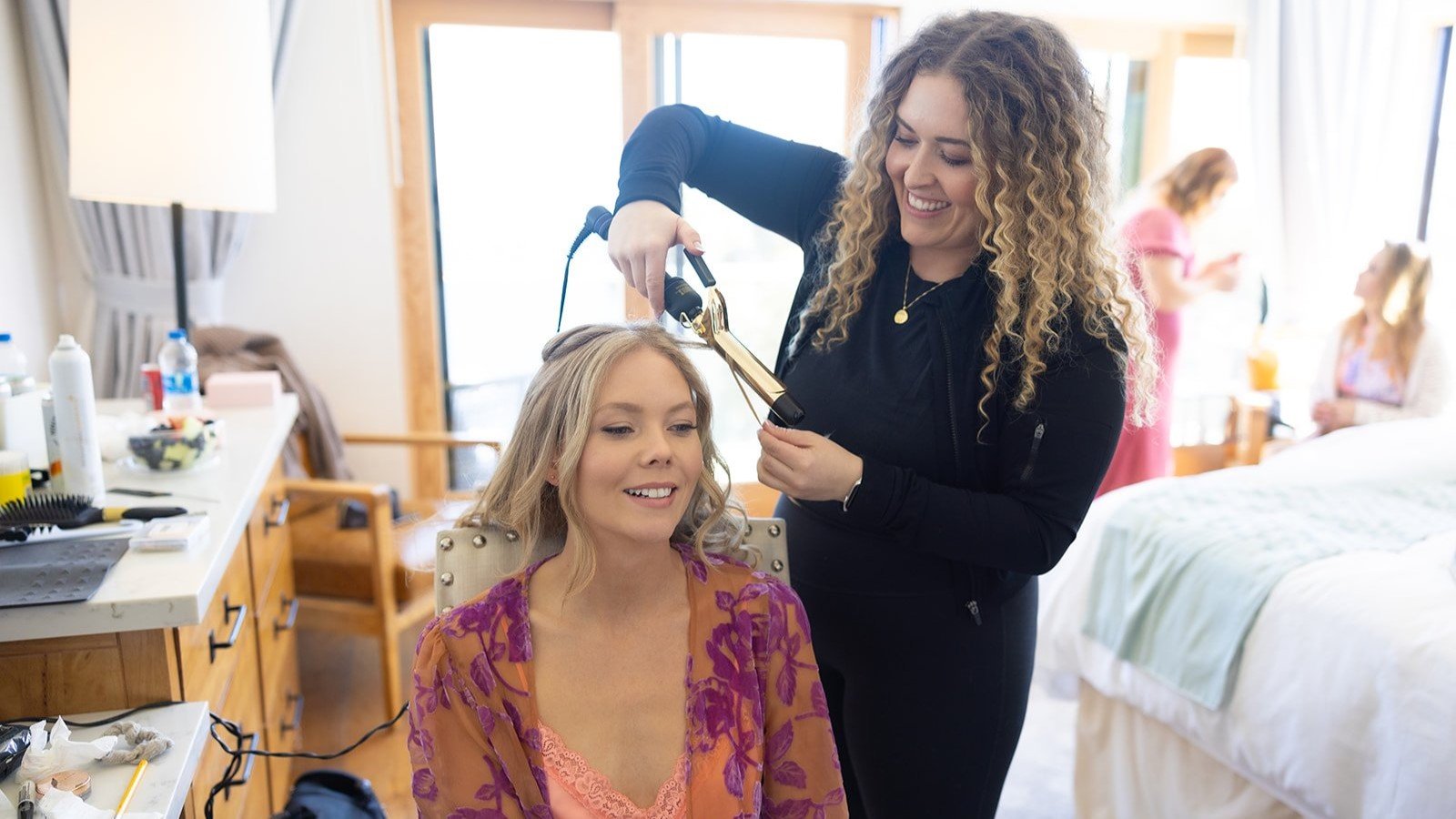
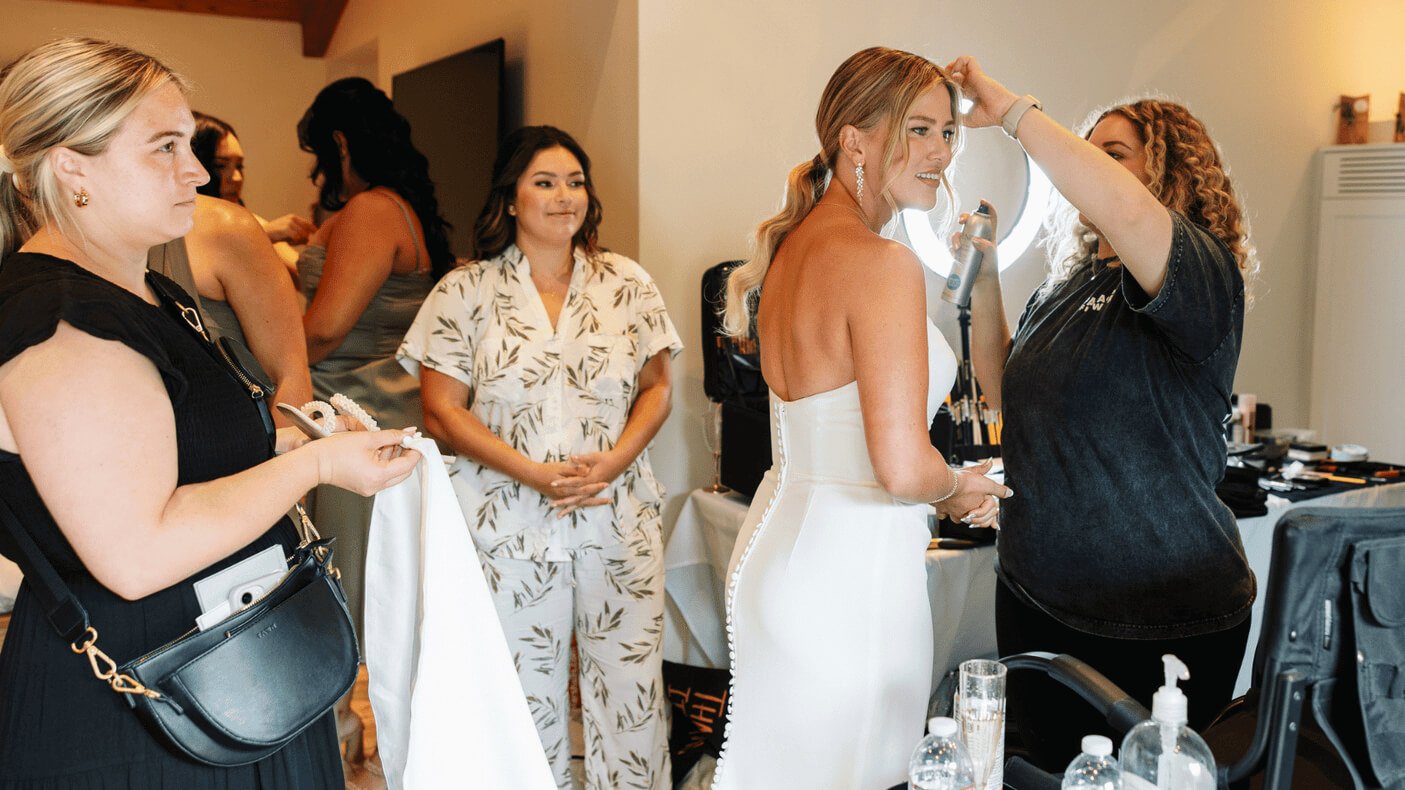
An on-location artist travels to the bride rather than requiring the wedding party to visit a salon.
This can help keep the preparation process organized by allowing the bride and bridal party to remain together at the hotel, venue, estate, or rental property.
On-location services may reduce:
- Unnecessary travel
- Transportation delays
- Parking complications
- Risk of damaging completed hair
- Stress before the ceremony
- Separation between bridal-party members
Review the Orange County bridal makeup services for more information about personalized on-location bridal beauty.
Select a Look That Matches the Destination
The wedding destination should influence the beauty direction.
A beach ceremony may require different products and hairstyling techniques than a formal hotel ballroom, vineyard, garden, or private estate.
The artist may consider:
- Venue style
- Ceremony setting
- Dress design
- Wedding colors
- Photography style
- Time of day
- Expected weather
- Hair accessories
- Veil placement
- Reception formality
The goal is to create a bridal look that feels connected to the location without becoming overly themed.
Natural Destination Wedding Makeup
Natural bridal makeup works well for coastal ceremonies, gardens, outdoor venues, and brides who prefer a softer appearance.
A natural look may include:
- Lightweight or medium foundation
- Softly defined brows
- Neutral eyeshadow
- Thin eyeliner
- Natural-looking lashes
- Warm blush
- Light bronzer
- Controlled highlighter
- Nude, peach, rose, or mauve lips
Natural makeup should still include enough definition for professional photography.
Soft-Glam Destination Wedding Makeup
Soft glam creates a polished appearance while maintaining a refined and wearable finish.
This style may include:
- Medium complexion coverage
- Soft contouring
- Defined brows
- Blended neutral eyeshadow
- Individual or wispy lashes
- Balanced blush
- Controlled highlighting
- Rose, berry, mauve, or neutral lips
Soft glam can work well for resorts, hotels, estates, vineyards, garden venues, and evening receptions.
Full-Glam Destination Wedding Makeup
Some destination brides prefer a stronger beauty look.
A full-glam application may include:
- Higher complexion coverage
- Sculpted contouring
- Detailed eye makeup
- Metallic or smoky eyeshadow
- Fuller lashes
- Defined cheekbones
- Strong blush
- Bold or deeper lip color
The final intensity should reflect the bride’s personal style, outfit, venue, and photography.
Bridal Hairstyles for Destination Weddings
The hairstyle should suit the location, hair texture, weather, veil, and complete wedding schedule.
Popular destination wedding hairstyles include:
- Soft waves
- Hollywood waves
- Half-up, half-down styles
- Textured low buns
- Sleek buns
- Braided updos
- Polished ponytails
- Natural curls
- Romantic loose updos
- Short-hair styling
A secure hairstyle may be more suitable for coastal or windy venues, while softer waves may work well for protected indoor settings.
Browse the bridal hair and makeup portfolio for inspiration from real bridal looks.
Beach Destination Weddings
Southern California beach weddings may involve wind, ocean air, humidity, bright sunlight, sand, and outdoor photography.
A beach wedding beauty plan may include:
- Waterproof eye makeup
- Long-wear foundation
- Controlled setting powder
- Setting spray
- Anti-humidity hair products
- Secure pins
- Flexible-hold hairspray
- Carefully placed veil attachments
- A small touch-up kit
Very loose curls may change in strong coastal wind, so the bride may prefer a half-up style, textured bun, or more controlled waves.
The guide to outdoor wedding makeup in heat and humidity provides additional information for outdoor celebrations.
Resort and Hotel Weddings
Hotels and resorts may provide a controlled indoor environment for preparation, but the wedding may still include outdoor ceremonies, balconies, gardens, pool areas, or coastal photographs.
The artist should confirm:
- Hotel access
- Room number
- Valet or self-parking instructions
- Artist arrival procedures
- Available lighting
- Electrical outlets
- Table space
- Required completion time
- Travel between the hotel and venue
The preparation room should be organized before the artist arrives.
Garden and Estate Weddings
Garden and estate weddings often suit romantic beauty styles.
Possible makeup and hair combinations include:
- Satin-finish skin with soft waves
- Rose-toned makeup with a textured bun
- Natural makeup with a half-up hairstyle
- Soft-glam makeup with romantic curls
- Neutral eyes with floral hair accessories
- Polished skin with a low chignon
The hairstyle should remain secure enough for outdoor movement, photography, and the reception.
Vineyard and Countryside Weddings
Vineyard and countryside weddings may include warm temperatures, sunlight, uneven walking surfaces, and long outdoor photography sessions.
The beauty plan may include:
- Lightweight complexion layers
- Waterproof eye products
- Long-wear lip color
- Shine control
- Secure curls or updos
- Flexible-hold products
- Touch-up powder
- Lip products for reapplication
The bride should also consider how the beauty look will transition from daylight into evening reception lighting.
Foundation Matching for Destination Photography
Foundation should match both the bride’s skin depth and undertone.
A foundation that is too light may appear pale or gray in photographs. A shade that is too warm may appear orange, while a shade that is too cool may create a visible mismatch.
Foundation should blend naturally into the:
- Jawline
- Neck
- Chest
- Ears
- Shoulders
Professional photographs, sunlight, and flash may make small shade differences more noticeable.
Choose the Right Coverage
The best foundation coverage depends on the bride’s skin, comfort level, venue, and preferred finish.
Light Coverage
Light coverage allows more natural skin texture to remain visible. It may suit brides who prefer minimal makeup.
Medium Coverage
Medium coverage creates a polished and even complexion while maintaining a natural appearance.
Full Coverage
Full coverage may help balance noticeable discoloration, acne marks, or uneven areas. It should be applied in lightweight layers to avoid a heavy result.
The artist can customize coverage across different areas of the face instead of applying the same amount everywhere.
Select the Best Complexion Finish
The complexion finish should be selected according to skin type and wedding conditions.
Dewy Finish
A dewy finish creates a luminous appearance. It may suit dry or normal skin but requires controlled application in warm or humid weather.
Satin Finish
A satin finish offers a balance between radiance and shine control. It often photographs naturally and works for many skin types.
Matte Finish
A matte finish can help control oil during outdoor ceremonies or warm-weather weddings. The skin should still maintain natural dimension.
Read the guide to dewy vs. matte bridal makeup when comparing foundation finishes.
Eye Makeup for Destination Weddings
Eye makeup should provide definition without feeling disconnected from the rest of the bridal look.
Popular shades include:
- Soft brown
- Taupe
- Bronze
- Champagne
- Rose gold
- Mauve
- Plum
- Soft gold
- Warm neutral colors
Waterproof mascara, eyeliner, and lash adhesive may be helpful for warm weather, emotional moments, and long wedding schedules.
False Lashes
False lashes are optional, but they can help the eyes remain visible in professional photographs.
Options may include:
- Individual lashes
- Half lashes
- Natural strip lashes
- Wispy lashes
- Graduated lashes
- Fuller lashes
The lash style should be selected according to the bride’s eye shape, makeup intensity, and comfort.
Prepare for Southern California Weather
Southern California weather may vary according to the location, season, elevation, and proximity to the coast.
Possible conditions include:
- Strong sunlight
- Warm temperatures
- Coastal humidity
- Ocean wind
- Dry inland heat
- Cooler evenings
- Sudden temperature changes
The beauty artist may adjust products and techniques based on the expected environment.
Schedule a Bridal Hair and Makeup Trial
A trial allows the bride to test her complete beauty look before the wedding.
During the trial, discuss:
- Foundation coverage
- Complexion finish
- Eye makeup
- Eyeliner
- Lash style
- Blush and contour
- Lip color
- Hairstyle
- Hair texture
- Extensions
- Veil placement
- Hair accessories
- Product sensitivities
- Weather conditions
Bring photographs of the dress, venue, hairstyle ideas, accessories, and makeup inspiration.
The guide explaining what happens during a bridal makeup trial can help the bride prepare.
Plan the Wedding-Day Timeline
Destination wedding beauty schedules should include more time than the application alone.
The timeline may need to account for:
- Artist arrival and setup
- Hair preparation
- Makeup application
- Bridal-party services
- Getting dressed
- Detail photographs
- First-look photographs
- Travel to the ceremony
- Venue access
- Touch-ups
- Unexpected delays
The bride’s hair and makeup should be completed early enough for dressing and photography without creating unnecessary waiting time.
Confirm the Number of Services
The beauty team needs an accurate service count.
Confirm whether services are required for:
- The bride
- Bridesmaids
- Maid or matron of honor
- Mother of the bride
- Mother of the groom
- Sisters
- Family members
- Other wedding participants
A larger group may require additional artists or an earlier start time.
Bridal Party Hair and Makeup
Bridal-party services should complement the wedding style while allowing each person’s features, skin tone, and hair texture to guide the final result.
The bride may select:
- One shared makeup direction
- Several approved hairstyle options
- Coordinated lip colors
- Similar lash intensity
- Matching accessories
- A shared complexion finish
The bridal party does not need to look identical to appear coordinated.
Prepare the Getting-Ready Location
The artist needs a practical workspace.
The preparation area should include:
- Natural or bright lighting
- Tables or clear surfaces
- Comfortable chairs
- Electrical outlets
- Mirrors
- Ventilation
- Access to water
- Enough room for the service team
- A clean floor and workspace
Food, drinks, clothing, and luggage should be kept away from the artist’s tools.
Prepare the Hair
Follow the hairstylist’s preparation instructions.
Depending on the selected style and hair type, the bride may be asked to arrive with:
- Clean, dry hair
- Hair washed the previous day
- No heavy oils
- No wet hair
- Minimal styling products
- Extensions prepared
- Accessories labeled
- Hair detangled
Inform the artist about extensions, recent chemical treatments, natural texture, or difficulty holding curls.
Prepare the Skin
A consistent skincare routine can help makeup apply more smoothly.
Before the wedding:
- Use familiar skincare products
- Keep the skin hydrated
- Avoid aggressive treatments
- Do not over-exfoliate
- Avoid testing strong new products
- Mention allergies or sensitivities
- Follow the artist’s preparation instructions
Visit the bridal beauty resources for more wedding beauty guidance.
Travel and Artist Fees
Destination wedding bookings may involve costs beyond the standard hair and makeup services.
Possible charges may include:
- Travel mileage
- Parking
- Valet fees
- Toll charges
- Early-start fees
- Additional artist fees
- Accommodation
- Flights
- Rental transportation
- Service minimums
All travel and service details should be confirmed in writing before the booking is finalized.
Review the Booking Agreement
The booking agreement should identify:
- Wedding date
- Preparation location
- Ceremony location
- Number of services
- Artist arrival time
- Required completion time
- Deposit
- Final payment date
- Travel expenses
- Parking costs
- Cancellation policy
- Rescheduling policy
- Service minimums
- Additional artist requirements
Clear information helps prevent confusion as the wedding approaches.
Create a Destination Wedding Touch-Up Kit
A practical touch-up kit may include:
- Lip color
- Lip liner
- Blotting papers
- Pressed powder
- Tissues
- Cotton swabs
- Lash adhesive
- Bobby pins
- Mini hairspray
- Small mirror
Blotting excess shine before applying powder can help maintain a natural finish.
Consider Touch-Up Services
Some destination weddings include several locations, extended photography, outdoor ceremonies, or long receptions.
The bride may ask whether the artist offers:
- Final touch-ups before departure
- Veil placement
- Hairstyle changes
- Makeup changes
- Ceremony touch-ups
- Reception touch-ups
- Extended artist attendance
Availability and pricing should be confirmed before booking.
Questions to Ask Before Booking
Useful questions include:
- Do you provide on-location services?
- Which Southern California areas do you serve?
- Are travel fees required?
- Is a service minimum required?
- How many artists will be needed?
- How early will services begin?
- Are false lashes included?
- Can you work with different skin tones?
- Can you style different hair textures?
- Are extensions supported?
- Can the artist stay for touch-ups?
- What workspace is required?
- What happens if the location changes?
- When is the final service count due?
Review the guide on questions to ask a bridal makeup artist for additional booking considerations.
Frequently Asked Questions
How far in advance should destination wedding hair and makeup be booked?
Destination services should be booked after the wedding date and preparation location are confirmed. Popular wedding dates and larger bridal parties may require earlier reservations.
Can the artist travel to a hotel, resort, or rental property?
On-location services may be available depending on the destination, schedule, service count, and booking terms. Confirm access, parking, room details, and workspace requirements.
Is a bridal trial necessary for a destination wedding?
A trial can help finalize the complete beauty look, test products, evaluate wear time, and confirm the hairstyle before travel.
How many artists are needed for a bridal party?
The number depends on the service count, required completion time, hairstyle complexity, and makeup schedule.
What hairstyle works best for a beach destination wedding?
Controlled waves, half-up styles, textured buns, and secure updos may perform well in coastal conditions. The best choice depends on hair texture and expected wind.
Will the makeup last through an outdoor ceremony?
Professional skin preparation, waterproof products, thin complexion layers, targeted powder, and setting spray can support longer wear in outdoor conditions.
Are travel expenses included in the service price?
Travel policies vary. Mileage, parking, accommodation, airfare, or other costs should be reviewed before the booking is confirmed.
Book Destination Wedding Hair and Makeup in Southern California
Destination wedding hair and makeup should complement the bride’s personal style, support the wedding setting, and remain polished throughout travel, photography, the ceremony, and the reception.
Brittany Brown Beauty provides personalized on-location bridal beauty services for weddings across Orange County and surrounding Southern California destinations. Each look is created around the bride’s features, skin type, hair texture, outfit, venue, and wedding schedule.
Explore the bridal hair and makeup portfolio or contact Brittany Brown Beauty to discuss the wedding destination, service count, preparation location, and preferred bridal look.