Posted on

Bridal Makeup for Windy Coastal Ceremonies

Bridal Makeup for Windy Coastal Ceremonies

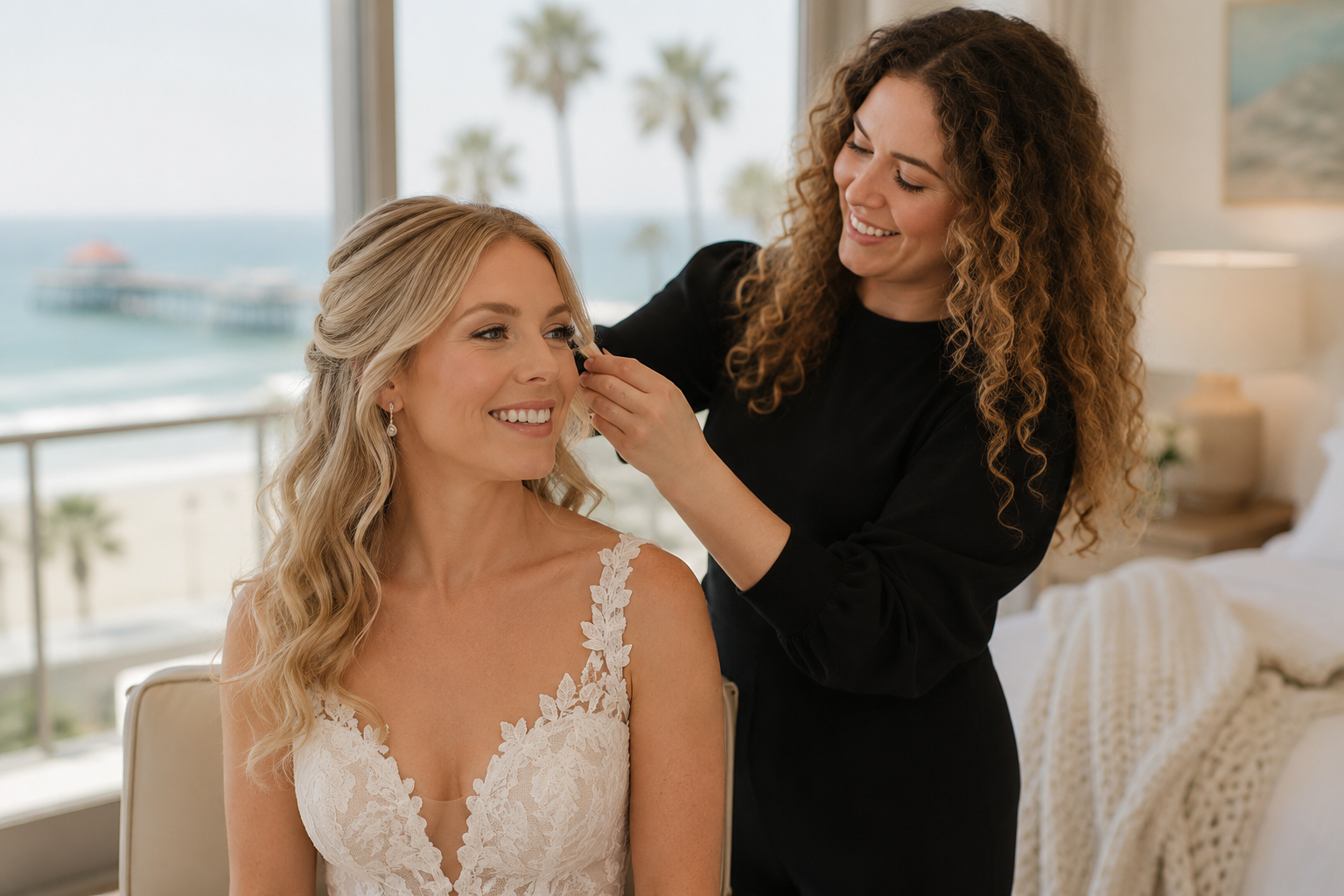
Bluff-top venues, beachfront estates, and harbor-view ceremonies are some of the most beautiful settings Orange County and San Diego have to offer, but they come with a variable a lot of brides don’t think about until the day itself: wind. Between sea breeze, shifting temperatures, and salt air, a coastal ceremony asks more of your makeup than a sheltered indoor venue does. After 11+ years of hands-on bridal work along this coastline, planning around wind is simply part of how I approach any oceanfront wedding.

Quick answer: makeup for a windy coastal ceremony holds up best with proper setting and sealing layers, hair and makeup planned together rather than separately, and extra attention to lips and eyes, which sea air affects first. None of this changes the overall goal, a natural, glowing look that still feels like you. A trial is still the best way to see how it all performs together before the big day. Here’s how it comes together.

How Wind Affects Makeup Application and Wear

Wind does a few things to makeup that stillness doesn’t. It can dry out skin and lips faster, shift hair into the face and onto fresh products, and carry fine salt particles from sea air that interact with makeup over the course of a long day. None of this is dramatic on its own, but combined, it means a coastal ceremony calls for a more deliberate approach to application and setting than an indoor venue would.

This is also where experience with this specific coastline matters. Choosing formulas and techniques that hold up against Southern California’s coastal humidity, ocean air, and wind isn’t generic “long-lasting makeup” marketing, it’s a specific, repeatedly tested skill built from doing this kind of ceremony again and again.

Techniques That Hold Up

Here’s how I build a look that’s meant to handle wind and sea air, not just look good in a still photo.

Setting Spray and Sealing Layers

The final setting and sealing step is what locks a look in place for the day, and it matters even more at a windy coastal venue. Proper layering and sealing help the base, eyes, and lips resist the drying and shifting effects of wind, rather than relying on a single product to do all the work.

Hair-Makeup Coordination in Wind

Wind doesn’t just affect makeup, it affects how hair interacts with makeup throughout the day. If hair is expected to move in the breeze, that’s factored into where products are focused and how the finished look is set, so a few strands blowing across the face during photos doesn’t undo the whole application. Planning hair and makeup together, rather than as two separate services, makes a real difference at oceanfront venues.

Protecting Lips and Eyes From Sea Air

Lips and eyes tend to feel the effects of wind and salt air first, lips from drying out faster, eyes from wind-blown hair or fine particles in the air. Extra attention to hydration and sealing in these areas helps the whole look hold its shape and stay comfortable through a longer outdoor ceremony and reception.

What to Expect at a Coastal Venue

However dramatic the setting, the process on wedding morning stays the same. I arrive with a complete professional setup, including my own lighting and seating, so no venue limits the result, wind or otherwise. From there, it’s skin prep, application, and a setting process built specifically for coastal Southern California conditions rather than a generic approach borrowed from an inland venue.

No formula can promise identical performance for every skin type or every level of wind, which is exactly why a trial matters most for a coastal ceremony. A trial lets us test the look in advance, see how it holds, and adjust anything that needs it, so you’re not learning how your makeup handles wind for the first time on the wedding day itself. The result so many brides describe afterward is the same one I aim for every time, feeling like yourself, but elevated, even with the ocean breeze in your hair.

If you’d like to see real coastal and outdoor bridal looks from Brittany Brown Beauty, take a look at the portfolio, or read more about the experience behind it on the about page. When you’re ready to talk through your own coastal ceremony, reach out through the contact page.

Frequently Asked Questions

1. What’s the best way to prep my skin for bridal makeup for windy coastal ceremonies? 

Good prep starts before the wedding day. Avoiding new skincare products or treatments in the final 10 days before your wedding, keeping a consistent skincare routine for at least four weeks out, and staying well hydrated in the week leading up to the event all help create skin that holds up better against wind and sea air.

2. How long will bridal makeup for windy coastal ceremonies last through the ceremony and reception? 

Longevity depends on skin prep, formula choice, and setting technique working together, and wind is one more variable that’s factored into the plan. A trial is the most reliable way to see how a specific look performs in real coastal conditions before your wedding day.

3. Can bridal makeup for windy coastal ceremonies be adjusted for my specific skin tone or type?

Yes. I choose shade, formula, and technique based on your individual skin, including adjustments for mature skin or other specific concerns, rather than using a single approach for every bride. No formula works identically for all skin types, which is part of why the trial process exists.
Posted on

Waterproof Bridal Makeup for Beach and Outdoor Ceremonies

waterproof bridal makeup for beach and outdoor ceremonies

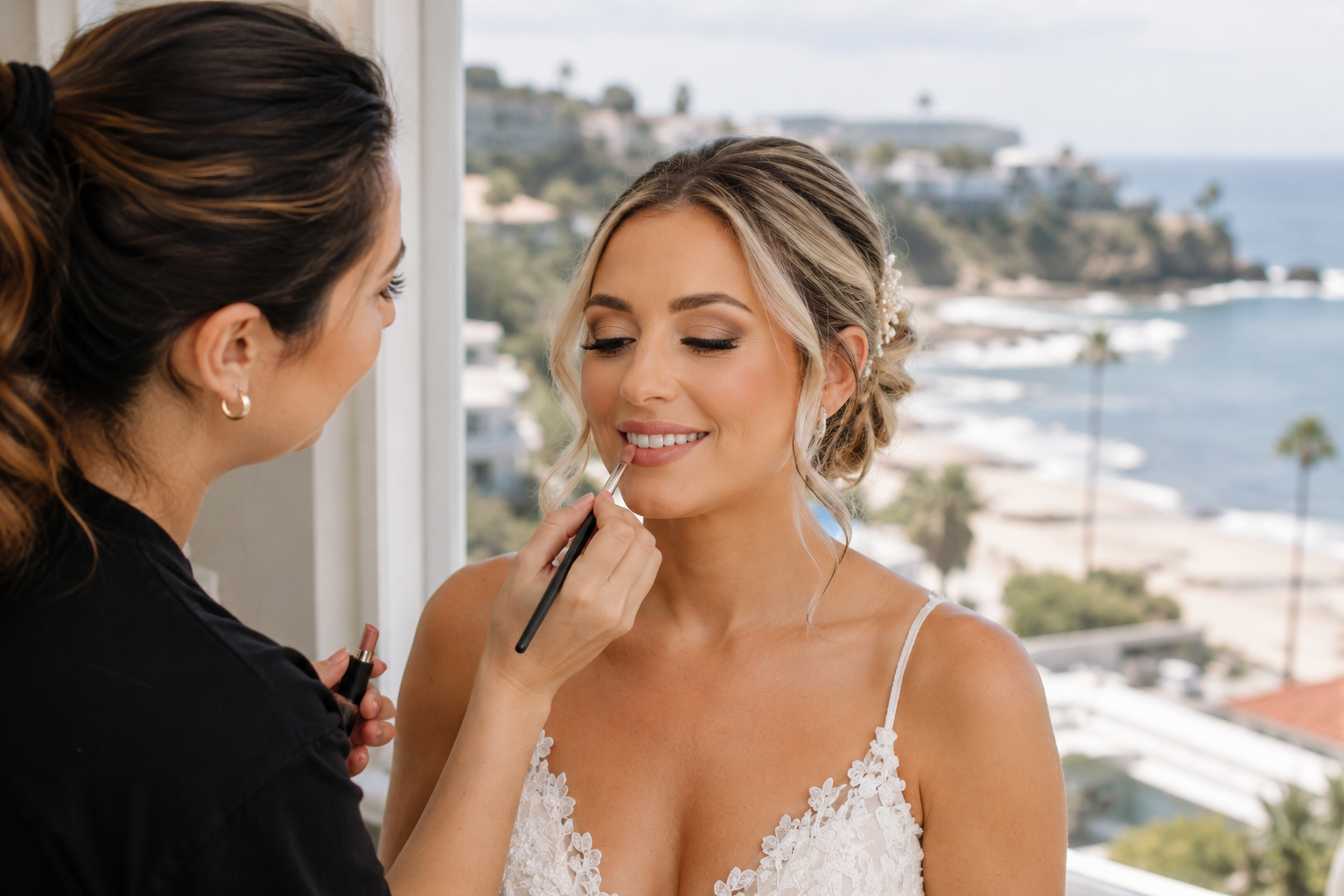
Beach and outdoor ceremonies are some of the most beautiful weddings I get to work on, and they also come with a very real question every bride should ask early: will my makeup actually hold up out here? Between happy tears, sea air, sun, and the occasional coastal breeze, an outdoor Orange County or San Diego ceremony asks a lot more of your makeup than an indoor venue does. After 11+ years of hands-on bridal work along this coastline, building a look that holds up outdoors is something I plan for from the very first consultation.

Quick answer: a truly reliable waterproof bridal look comes down to three things, a waterproof base and concealer, smudge-proof eye makeup, and a long-wear lip formula, all applied with proper skin prep and setting technique. No formula is completely foolproof for every skin type or every condition, which is exactly why a trial run matters. Here’s how I approach it, checklist-style, so you know what to ask about and expect.

Why Waterproof Formulas Matter for Outdoor Ceremonies

Outdoor ceremonies expose your makeup to conditions an indoor venue simply doesn’t have: direct sun, humidity, sea air, wind, and often genuine tears during the vows. Regular formulas can break down faster under that combination, especially around the eyes and along the base. Waterproof and long-wear formulas resist breakdown, which matters most during the moments when you want your makeup to last, walking down the aisle, exchanging vows, and through however many happy tears the day brings.

This is also where the “enhance, don’t mask” philosophy stays front and center. Waterproof doesn’t mean heavier or more done-up. The goal is still a natural, glowing look that feels like you, just built with formulas and techniques that can handle the elements.

Building a Waterproof Look

A waterproof bridal look isn’t one single product decision, it’s a combination of choices across the whole face.

Waterproof Base and Concealer

The base is where durability starts. A properly prepped, well-set base and concealer are formulated to resist moisture and humidity better than standard everyday makeup, which matters most under direct coastal sun or near the water. This is one of the areas where genuine coastal-conditions experience makes a difference, since choosing the right base for Southern California humidity and sea air is different from choosing one for an indoor, climate-controlled venue.

Smudge-Proof Eye Makeup

Eyes are usually the first area to show wear during an emotional ceremony, so smudge-proof eye formulas and careful application matter here more than almost anywhere else on the face. The goal is a look that stays soft and natural through happy tears rather than shifting or smudging the moment emotions run high.

Long-Wear Lip Formulas

Wind, saltwater air, and hours between ceremony and reception can all wear down lip color faster outdoors. A long-wear lip formula, applied and set properly, helps color stay put through the ceremony, the receiving line, and photos, without needing constant reapplication.

What Waterproof Doesn’t Mean

It’s worth being upfront about this: manufacturers create waterproof and long-wear formulas to resist moisture and perform better in humidity and through tears, but no formula can promise the same results for every skin type or under every possible condition. Everyone’s skin behaves a little differently, and factors like oil production, sun exposure, and even how the day unfolds can all play a role. That’s exactly why a bridal trial matters so much for outdoor ceremonies specifically. A trial lets us test the actual formulas on your skin, in advance, so we can see how they perform and make any adjustments before the wedding day itself, rather than hoping for the best.

Brides often describe the result of this kind of prep the same way, feeling like themselves but elevated, confident that their makeup will still look like them by the time they’re dancing at the reception. That’s the outcome this whole process is built around.

If you’d like to see examples of past outdoor and coastal bridal looks, take a look at the portfolio, or read more about the experience behind it on the about page. When you’re ready to talk through your own outdoor ceremony, reach out through the contact page.

Frequently Asked Questions

1. What’s the best way to prep my skin for waterproof bridal makeup for beach and outdoor ceremonies? 

Good prep starts well before the wedding day. Avoiding new skincare products or treatments in the final 10 days before the wedding, keeping a consistent skincare routine for at least four weeks out, and staying well hydrated in the week leading up to the event all help create skin that holds waterproof formulas better and looks smooth under coastal sun.

2. How long will waterproof bridal makeup for beach and outdoor ceremonies last through the ceremony and reception? 

Longevity depends on skin prep, formula choice, and setting technique working together, and it can vary from bride to bride. A trial is the most reliable way to see how a specific look performs on your skin over several hours in real conditions. 

3. Can waterproof bridal makeup for beach and outdoor ceremonies be adjusted for my specific skin tone or type? 

Yes. Shade, formula, and technique are all chosen based on your individual skin, including adjustments for mature skin or other specific concerns, rather than a single fixed approach applied to everyone. No formula is described as working identically for all skin types, which is part of why fittings and trials matter.

Posted on

How Far in Advance Should You Book Hair and Makeup in Orange County

how far in advance should you book hair

One of the most common questions I hear from engaged couples is some version of “when should we actually book hair and makeup?” It’s a fair question, and the honest answer is that it depends on your wedding date, your venue, and how in-demand your specific weekend is. Booking too late can mean losing your first-choice artist entirely, so it’s worth understanding the general timeline before you get too far into vendor research.

Quick answer: For most Orange County and San Diego weddings, reach out as soon as you book your venue, especially if you’re planning a spring or fall wedding. Popular weekends often fill well in advance, while off-peak dates usually offer more flexibility. Your wedding date becomes official once you sign the contract and submit the required deposit. Here’s how to think through the timing.

Why Booking Timelines Vary by Season

Not every wedding date carries the same level of demand. Orange County’s wedding season has clear peaks, and beauty vendors who work with a high volume of brides during those peaks tend to book those weekends earliest. San Diego follows a similar pattern, with its own defined peak season. Outside of those windows, there’s typically more room to book closer to your date without the same pressure.

This is why “how far in advance should I book” doesn’t have one universal answer. A Saturday in peak season and a weekday or off-season date can have very different booking realities, even within the same general area.

Recommended Booking Windows

Here’s a general breakdown of how timing tends to play out across the year.

Peak Spring and Fall Weekends

Spring and fall are peak wedding seasons across Orange County, and popular venues and dates in that window book out well in advance. Once your venue is confirmed, reaching out promptly is the best way to make sure your preferred artist is still available for your date. For San Diego specifically, peak wedding season runs March through June and September through November, and booking a mobile artist six to twelve months ahead is a good general guideline for that market.

Off-Peak Booking Flexibility

Winter and summer weekdays, or dates outside the peak spring and fall windows, generally offer more flexibility. That doesn’t mean there’s no reason to plan ahead, but it does mean there’s often more breathing room if your date falls outside the busiest stretch of the calendar.

What Happens if You Book Last-Minute

Booking close to your wedding date isn’t impossible, but it does narrow your options. Popular dates often fill quickly, and artists with limited weekend availability may no longer have openings. A shorter timeline also leaves less room for a proper trial before the wedding. If you’re working with a shorter runway, it’s still worth reaching out directly to ask about availability instead of assuming nothing is left.

What Secures Your Date Once You Decide

Once you choose your beauty team, sign the contract and submit the required deposit to reserve your wedding date. This standard practice extends across the wedding industry and protects both you and your artist by putting the agreement in writing before anyone reserves the date. Because every vendor sets different deposit amounts, refund timelines, and cancellation policies, confirm those details directly before you book.

Beyond the booking process, take time to read what past clients say about working with the artist. Trustindex collects and verifies the reviews displayed on this site, confirming that they originated on Google. Reading verified third-party reviews gives you a more complete picture of a vendor before you sign a contract.

If you’d like to see examples of Brittany Brown’s work, take a look at the portfolio, or learn more about the artist behind it on the about page. When you’re ready to check availability for your date, reach out through the contact page.

Frequently Asked Questions

1. What should I ask before booking how far in advance should you book hair? 

Ask about availability for your specific date, whether the artist includes or recommends a trial, what the contract and deposit process looks like, and how the artist handles group or bridal party bookings for a larger wedding party. Getting clear answers upfront makes the rest of the planning process much smoother.

2. How far in advance should I secure how far in advance should you book hair? 

For peak spring and fall Orange County weekends, reaching out as soon as your venue is confirmed is the safest approach. For San Diego weddings specifically, six to twelve months ahead is a reasonable guideline during peak season, which runs March through June and September through November. Off-peak dates generally allow more flexibility.

3. What’s included once I sign a contract and pay a deposit? 

Signing a contract and paying a deposit secures your date and puts the working agreement in writing. Before signing, confirm the specific inclusions, payment schedule, and policy details directly with your vendor, since those details can vary.

Posted on

Bridal Makeup for Newport Ridge Estate Weddings

bridal makeup for newport ridge estate weddings

Newport Ridge is one of my favorite areas to work in. Private estate villas and Newport Ridge vacation rentals give couples a level of privacy and flexibility that a traditional hotel or ballroom venue just can’t match, and that flexibility is part of what makes bridal beauty prep here feel so relaxed and personal. If you’re planning a Newport Ridge estate wedding, here’s how I approach makeup for this specific setting, and what to expect from the getting-ready process.

What Estate Weddings in Newport Ridge Typically Involve

Newport Ridge sits within the broader Newport Coast market, alongside nearby favorites like the Resort at Pelican Hill and the Beachcomber at Crystal Cove. What sets a private estate wedding apart is that the entire day, from getting ready to ceremony to reception, often happens on one property. There’s no travel between locations, no hotel checkout to plan around, and often more control over timing and space than a resort property allows.

That kind of setting is a great match for a mobile artist, since it means the whole bridal party can get ready together in one place, without anyone needing to leave for a salon appointment mid-morning. It also tends to mean beautiful natural light, whether that’s soft interior light in a bedroom suite or the kind of golden-hour glow this coastal stretch of Orange County is known for.

Planning Your Makeup Around a Private Estate Setting

Private estates come with their own rhythm, and a big part of getting bridal makeup right here is planning around how the space itself works.

Indoor and Outdoor Lighting Transitions

Estate weddings often move between indoor prep spaces and outdoor ceremony or photo locations, and the lighting in each can look surprisingly different. A look that reads beautifully indoors under soft light needs to hold up just as well outside in direct coastal sun. Part of what I plan for during application is making sure your finished makeup translates cleanly across both, so you look like yourself in every setting, not just the one you got ready in.

Mobile Setup in a Private Home

Because a private estate doesn’t provide a dedicated professional getting-ready space like many bridal suites do, I bring everything required to create one, including studio-quality lighting, professional seating, and a complete makeup kit. Setup typically takes about 15 to 20 minutes. From there, I prep the skin, apply the makeup, and set the finished look using the same reliable process I follow for every bridal client while adapting to the room or space you’ve chosen for the morning.

Coordinating With a Larger Bridal Party

Estate weddings often mean a larger, more relaxed guest list and a bigger bridal party getting ready on-site. For larger parties, I bring in additional artists so everyone is ready on schedule, without cutting corners on the bride’s application. That way the whole group, bridesmaids, mothers, and anyone else getting styled, stays on track without the bride’s own timeline being rushed to accommodate everyone else.

Why Mobility Matters Most at Private Venues

Private estates don’t come with a built-in glam room or professional lighting rig, which is exactly where a fully mobile artist makes the biggest difference. Bringing my own lighting and seating means the quality of your makeup never depends on what the house happens to have available. It also means your entire getting-ready experience, from your bridal party to your family, stays together in one place, with the timeline staying intact instead of being built around a commute to and from a salon.

Newport Coast venues, including private estates in Newport Ridge, tend to book up quickly during peak spring and fall wedding weekends. Once your venue is confirmed, it’s worth reaching out early to secure your date with a signed contract and deposit, especially if you’re hoping to book for a popular weekend.

If you’d like to see examples of past estate and coastal weddings, you can browse the portfolio, or read more about my background on the about page. When you’re ready to talk through your Newport Ridge wedding day, reach out through the contact page.

Frequently Asked Questions

1. What makes bridal makeup for Newport Ridge estate weddings different from other Orange County venues? 

The biggest difference is the setting itself. Private estates give couples a one-property wedding day with more flexibility and privacy than a resort or hotel venue. That flexibility changes how we plan the getting-ready timeline and makes a fully mobile setup especially valuable because private estates rarely provide a dedicated professional styling space.

2. How far in advance should I book for bridal makeup for Newport Ridge estate weddings? 

Newport Coast dates, including Newport Ridge estate weddings, tend to book well in advance during the busy spring and fall wedding seasons. Contact us as soon as you secure your venue to reserve your wedding date with a signed contract and deposit.

3. Does the venue affect my makeup or hair plan? 

Yes. The venue plays an important role in planning, from the way natural light moves through the space to the amount of time a larger bridal party requires. For example, a private estate with indoor and outdoor spaces requires a look that performs well in both environments. We discuss these details before the wedding, and they often help brides decide whether to schedule a pre-wedding trial.

Posted on

Choosing the Right Foundation Shade for Your Wedding Day

right foundation shade for your wedding day

Of all the small decisions that go into your wedding-day makeup, foundation shade might be the one with the biggest impact and the easiest to get wrong if it’s rushed. I’ve been doing bridal makeup for 11+ years now, and shade-matching is one of those things that looks simple until you’re standing in a dim bathroom mirror the morning of, trying to decide if a color reads right. It deserves more care than that, and it’s a big part of why I build shade confirmation into the process well before the wedding day itself.

My approach to foundation has always come back to the same philosophy: enhance, don’t mask. The right shade isn’t the one that changes how you look, it’s the one that disappears into your skin so completely that people just see you, glowing, on one of the most photographed days of your life. That’s the “like yourself, but elevated” feeling so many brides describe after their wedding and it starts with getting the shade right, not with piling on more product.

Why Wedding-Day Lighting Changes Shade-Matching

A shade that looks perfect under one type of lighting can look noticeably different under another. Store lighting, bathroom lighting, and phone-camera flash all render color differently than natural daylight, and natural daylight is what most photographers use throughout your wedding day, whether they’re capturing golden-hour portraits at Crystal Cove, harbor views in Newport Beach, or bright coastal scenes in San Diego.

That’s why I don’t rely on a quick shade match under artificial lighting. Instead, I check your foundation in natural daylight and, whenever possible, under lighting that closely matches your wedding day. That approach ensures the shade looks natural both in person and in your wedding photos.

How to Test and Confirm Your Shade

Getting the shade right isn’t about guessing at a bottle, it’s a process, and it’s one I go through carefully with every bride.

Testing in Natural Daylight

The most reliable way to confirm a shade is to apply a small amount along the jawline and blend it into the neck, then step into natural daylight near a window or outdoors to see how it actually reads against your skin. Artificial lighting can shift how warm, cool, or deep a shade appears, so daylight is the closest thing to a preview of how it will look in your ceremony and reception photos.

Checking Undertone, Not Just Depth

Depth (how light or dark a shade is) is only half the equation. Undertone whether your skin leans warm, cool, or neutral matters just as much, and it’s often where shade-matching goes wrong. A foundation can be the right depth and still look slightly off if the undertone doesn’t match, sometimes reading gray, orange, or pink against your natural skin. Part of what comes from years of hands-on bridal work is being able to spot that mismatch quickly and adjust, rather than defaulting to whatever depth looks “close enough.”

Why This Matters at Your Trial

This is exactly why I strongly recommend a bridal trial before the wedding day. A trial gives us the chance to test shade and formula directly on your skin, in real lighting, with time to adjust if something isn’t quite right instead of discovering an issue the morning of. It also gives us a chance to talk through any skin sensitivities or recent treatments, so the whole look is built around what your skin actually needs, not a guess. A trial isn’t about assuming something will go wrong; it’s about making sure nothing has to be figured out last-minute on a day that’s already full enough.

What Happens If Your Skin Tone Shifts Before the Wedding

It’s common for skin tone to shift a little between your trial and your wedding day a summer tan, more sun exposure, or even seasonal changes in skin can all play a role. This is one of the reasons I like to stay in touch with brides as the wedding date gets closer, especially if there’s been a noticeable change since the trial. If your tone has shifted, we can reassess and adjust the shade accordingly, rather than sticking rigidly to what was tested weeks or months earlier. The goal is always the same: a foundation that matches the skin you actually have on the day itself.

Built to Hold Up, Not Just Look Good at 9 AM

Southern California weddings come with their own conditions: heat, humidity, sea air, and long hours between getting-ready photos and the last dance. Shade matching is only part of the equation. I also apply and set each product to withstand those conditions throughout the day. I want every bride’s makeup to look the same in the reception photos as it did walking down the aisle, so I focus on proper skin prep, the right formulas for the day’s conditions, and a setting process that stands up to the coastal climate of Southern California instead of relying on a generic approach.

If you’d like to see how this comes together, you can browse real bridal looks in the portfolio, or read more about my background on the about page. When you’re ready to talk through your own wedding-day look, reach out through the contact page. I’d love to hear about your plans.

Frequently Asked Questions

1. What’s the best way to prep my skin for the right foundation shade for your wedding day? 

Good shade-matching starts with well-prepped skin. Avoiding new skincare products or treatments in the final 10 days before the wedding, keeping a consistent skincare routine for at least four weeks out, and staying well hydrated in the week leading up to the event all help create a smooth, even canvas for foundation to sit correctly and read true to your natural tone.

2. How long will the right foundation shade for your wedding day last through the ceremony and reception? 

Foundation and shade selection are just one part of longevity proper skin prep, formula choice, and setting techniques suited to Southern California heat and humidity all work together to help your look hold up through the ceremony, photos, and reception. A bridal trial is the best way to see how a specific formula and shade perform on your skin over several hours. 

3. Can the right foundation shade for your wedding day be adjusted for my specific skin tone or type? 

Yes. We select your foundation shade and formula based on your individual skin rather than a fixed package look. We consider your undertone, skin depth, and skin type, then adjust our products and techniques as needed for mature skin or other specific concerns. Every recommendation reflects what works best for your skin instead of following a one-size-fits-all approach.

Posted on

How Many Bridal Trials Do You Actually Need

How Many Bridal Trials Do You Actually Need

One of the most common questions that comes up early in wedding planning is simple on the surface but harder to answer in a generic way: how many bridal trials do you actually need? The honest answer depends on your skin, your look, and how confident you feel walking out of that first session, but there’s a clear framework for making the decision instead of guessing.

Brittany Brown has run bridal trials for more than 11 years across Orange County and San Diego, and in that time a consistent pattern has held true. Most brides need one trial. Some benefit from a second. Very few need more than that, and when they do, it’s usually for a specific reason rather than general uncertainty.

Why One Trial Is Usually Enough

A single trial, done well, covers more ground than most brides expect. It’s where shade matching gets confirmed, where a bride can see how a look photographs versus how it looks in person, and where any skin sensitivities get discussed upfront so the right products are chosen from the start. That sensitive disclosure conversation matters as much as the makeup itself, since it shapes every product decision that follows, both at the trial and on the wedding day.

For most brides, one trial done with enough time before the wedding, ideally a few months out rather than the final weeks, is enough to lock in a formula, a finish, and a look that feels right. It also gives time to build a simple pre-wedding skin routine around what worked, typically a consistent 4-week routine leading into the wedding day, so the skin is in its best, most predictable state by the time makeup goes on.

When a Second Trial Might Be Worth It

A second trial tends to make sense in a few specific situations rather than as a default. Changing a major styling decision, a different hair style, a different dress silhouette, or a significant change in skin tone due to a spray tan or seasonal shift, is a common reason to book a follow-up. A second trial is also worth considering if the first one left any part of the look unresolved, whether that’s a lash style, a lip color, or an overall finish that needed more time to settle than one session allowed.

It’s rarely about the artist getting something wrong the first time. More often it’s about giving a bride the chance to see a look, sit with it, and come back with clearer feedback once she’s had time to think it over.

What Additional Trials Typically Cost and Involve

Additional trials typically have a separate price because each session requires the same time, products, and attention as an initial trial rather than a quick touch-up. What a second or third trial involves depends on the changes the bride wants to make. Sometimes it’s a full redo with a new direction entirely, and sometimes it’s a shorter, more targeted session focused on one or two specific elements from the first trial, like adjusting a highlight placement or trying a different lip finish.

The specifics, cost, timing, and what’s included, are best confirmed directly, since they can vary based on how far out the wedding is and what’s being adjusted.

How to Decide What’s Right for You

A useful way to think about it: if you leave your first trial feeling confident and only want to tweak a few small details, you likely don’t need a second one. Your makeup artist can usually note those adjustments and apply them on your wedding day. If you still feel unsure, can’t decide between two directions, or plan a major styling change after the trial, a second session is worth the investment.

One detail that applies no matter how many trials you book: avoid introducing new skincare or beauty products in the final 10 days before the wedding. Even products that have worked well for years can behave differently when paired with something new, and the final stretch before the wedding isn’t the time to find that out. Keeping the routine steady and familiar in those last 10 days protects the work done in the trial and gives the wedding-day makeup the most predictable base to work with.

Brides working through this decision can look at real trial-to-wedding-day transformations in the portfolio, or read more about Brittany’s approach and background on the About page. If you’re ready to book a first trial or talk through whether a second one makes sense for your situation, reaching out directly is the easiest next step.

Frequently Asked Questions

1. When should I start prepping for how many bridal trials do you actually need? 

Start thinking about it as soon as you book your artist, ideally three to twelve months before the wedding. Booking the first trial with enough lead time, rather than in the final weeks, leaves room for a second trial if one turns out to be worth it, without adding pressure close to the wedding date.

2. What should I avoid in the days leading up to my wedding? 

Avoid trying any new skincare, makeup, or beauty products in the final 10 days before the wedding. Sticking to a familiar, consistent routine, ideally one that’s been in place for about four weeks leading up to the day, keeps the skin predictable and protects the results from the trial.

3. What should I bring up with my artist about how many bridal trials do you actually need? 

Bring up any skin sensitivities, known reactions to specific products, and any major styling changes you’re considering, hair, dress, or tan. This kind of upfront disclosure gives your artist the clearest picture of whether one trial will cover everything or whether a second session makes sense for your specific plans.

Posted on

Bridal Makeup for Deep Skin Tones: Building a Radiant Base

bridal makeup for deep skin tones

Deep skin holds light differently than lighter skin tones, which means the products and techniques that create a radiant, long-wearing base have to be chosen with real intention. A base that looks flawless in the mirror can turn ashy in flash photography, or a highlighter that reads beautifully on one client can leave another looking chalky by the reception. Getting bridal makeup for deep skin tones right isn’t about following a generic formula. It’s about understanding how pigment, undertone, and finish interact with deep skin specifically, and building from there.

Brittany Brown has spent more than 11 years working hands-on with brides of every skin tone, and that experience shapes an approach built around one core idea: enhance the skin that’s already there, don’t mask it. The goal on a wedding day is never to create a different face. It’s to help a bride look like herself, just elevated, with a base that holds up through vows, portraits, and a full night of dancing.

Why Deep Skin Needs the Right Base Formula

Deep skin tones carry a wide range of undertones, from warm and golden to deep red or cool blue-based, and a foundation that ignores that range tends to oxidize poorly or sit gray on the skin within an hour of application. Standard bridal formulas developed with lighter skin in mind often lack the pigment depth or undertone variety needed to match deep skin accurately, which is why shade-matching and formula selection matter more here than almost anywhere else in the bridal makeup process.

Deep skin also tends to reflect and absorb light differently than lighter skin, particularly under the mixed lighting of a wedding day, morning getting-ready light, ceremony lighting, and evening reception lighting. A base built for deep skin needs to hold its true color and finish across all of it, not just look right under one type of light.

Building Radiance Step by Step

Foundation and Concealer Shade Range

Getting the base right starts with a wide enough shade range to actually match deep skin accurately, along with the undertone knowledge to know which formula direction to go. This is also where a trial run becomes valuable, not just for testing a look, but for confirming how a particular formula wears on a bride’s specific skin over several hours before the wedding day itself. A trial gives room to adjust shade, undertone, and coverage level ahead of time rather than guessing on the morning of.

Highlighting Without Ashiness

Highlighter is where a lot of deep skin bridal looks go wrong, since many mainstream formulas are built with a cool, silvery cast that reads as ashy rather than luminous on deeper skin. The fix is choosing warm-toned, finely milled highlighters and placing them with a light hand in areas where the skin naturally catches light, the high points of the cheekbones, the bridge of the nose, the cupid’s bow, rather than applying heavily across the whole face. Done this way, the radiance looks like it’s coming from the skin itself, not sitting on top of it.

Setting Powder Choices That Don’t Gray the Skin

Setting powder matters just as much as foundation choice, since a powder with the wrong undertone can create a gray or ashy film over an otherwise well-matched base, especially when photographers use flash. Finely milled, well-matched setting powders help the base stay in place for hours when makeup artists apply them only where needed instead of covering the entire face. This approach preserves the skin’s natural depth and warmth without creating a dull finish.

Finishing Touches for Photos

A wedding day isn’t captured in one moment, it’s documented across hundreds of photos under constantly changing light, which means the finishing steps matter as much as the base itself. Setting spray, strategic touch-up planning, and a finish that reads as skin rather than product all help a look hold up consistently from the first getting-ready photo through the last dance. This is also where the “enhance, don’t mask” philosophy shows up most clearly in the final result: brides consistently describe the goal as looking like themselves, just elevated, rather than looking like a different person entirely.

Brides curious about how this approach comes together in practice can browse real bridal work in the portfolio, or read more about Brittany’s background and experience on the About page. For anyone ready to start planning, getting in touch is the best next step to talk through a trial and wedding-day details.

Frequently Asked Questions

1. What’s the best way to prep my skin for bridal makeup for deep skin tones? 

Well-moisturized, evenly exfoliated skin gives a base formula the best surface to work with, since dry patches or uneven texture can affect how foundation and highlighter sit on deep skin. Starting a simple hydration routine in the weeks leading up to the wedding, and discussing any specific skin concerns during a trial, helps the makeup artist plan the right base products in advance.

2. How long will bridal makeup for deep skin tones last through the ceremony and reception? 

Durability depends on the products and setting techniques Brittany Brown Beauty selects, which is exactly why a trial run matters. Testing a full look ahead of time under conditions similar to the wedding day shows how each formula performs on a bride’s specific skin over several hours, helping Brittany make any necessary adjustments before the actual event rather than during it.

3. Can bridal makeup for deep skin tones be adjusted for my specific skin tone or type? 

Yes. Deep skin spans a wide range of undertones and skin types, and a trial is the opportunity to fine-tune shade matching, undertone direction, and product choices to a bride’s individual skin rather than relying on a one-size-fits-all approach.

Posted on

Bridal Makeup for Olive Skin Tones: What Works Best

bridal makeup for olive skin tones

Olive skin carries a distinct undertone that most standard bridal makeup approaches don’t account for. Foundation shades that read as neutral on other skin tones can pull gray or ashy on olive skin, while blushes and eyeshadows built for pink or cool undertones can clash instead of complement. Getting bridal makeup right on olive skin comes down to understanding that undertone and choosing products and techniques that work with it, not against it.

Brittany Brown brings more than 11 years of hands-on bridal makeup experience to this exact problem, built around a simple philosophy: enhance the skin you already have, don’t mask it. Brides who’ve worked with her often describe the result as looking like themselves, just elevated, a look that still feels recognizably them, even after hours in front of a mirror and a camera.

Understanding Olive Undertones

Olive skin sits in its own category, distinct from the warm, cool, and neutral undertones that most makeup guides default to. It typically carries a green or golden-green cast beneath the surface, which means colors that flatter warm or cool skin don’t always translate well onto an olive base. This undertone also tends to interact differently with light, sometimes reading warmer in daylight and cooler under artificial or evening lighting.

Because of this shift, olive skin benefits from a more customized approach than a one-size-fits-all bridal look allows. What works beautifully on a warm or cool undertone can look muddy or mismatched on olive skin, which is exactly why matching foundation, bronzer, and eyeshadow to the individual bride matters so much more than following a generic formula.

Foundation and Base Considerations

Avoiding Gray or Pink-Cast Foundations

Foundation matching poses one of the biggest challenges for olive skin, since so many formulas lean either too pink or too gray to blend seamlessly. A foundation with too much pink undertone can look flushed or mismatched against olive skin’s natural green-gold base, while a foundation that’s too gray or ashy can drain the skin’s natural warmth and leave it looking dull instead of radiant.

The right foundation for olive skin usually has a golden or neutral-olive base built into the formula itself, rather than relying on a warm or cool foundation and hoping it blends in. Testing foundation along the jawline in natural light, not just under indoor lighting, helps confirm the match actually holds up once a bride steps outside for photos.

Bronzer and Blush That Complement Olive Skin

Bronzer and blush shades that read as neutral on other skin tones can sometimes clash with olive undertones, especially anything with a strong pink or overly orange base. Terracotta, warm peach, and soft brick tones tend to complement olive skin far more naturally, since they work with the skin’s existing warmth instead of fighting it.

A soft, sculpted bronzer application enhances the skin’s natural dimension without adding unwanted warmth in the wrong places. The goal stays subtle: warmth that looks like it’s coming from the skin itself, not a color sitting visibly on top of it.

Eyeshadow Tones That Flatter

Olive skin pairs especially well with earthy, warm-toned eyeshadows, like copper, bronze, warm brown, and soft gold. These shades pick up on olive skin’s natural undertone rather than competing with it, which creates a cohesive look rather than one where the eye makeup feels disconnected from the rest of the face.

Cooler tones aren’t off the table entirely, but they usually work best in small doses, like a soft taupe in the crease or a cool highlight along the brow bone, balanced by warmer tones elsewhere in the look. This kind of balance takes some testing to get right, which is exactly what a trial appointment allows time for.

Building a Look That Lasts All Day

A wedding day puts makeup through more than a typical evening out: hours under changing light, an emotional ceremony, photos, and a reception that often runs late into the night. Building a look that holds up through all of that starts with the same principle that shapes everything else here, matching products to the bride’s specific skin rather than applying a generic formula and hoping for the best.

A recommended trial appointment plays a key role in this process. Trying a full look ahead of the wedding day reveals exactly how specific products interact with a bride’s skin over several hours, not just how they look freshly applied. It also gives time to catch any skin sensitivity or reaction to a particular product well before the wedding itself, so adjustments can happen with plenty of room to spare rather than under pressure on the big day.

Skin prep matters just as much as the products chosen on the day. Starting a consistent skincare routine in the weeks leading up to a trial helps skin reach a more even, hydrated baseline, which gives foundation and bronzer something smoother to work with from the very first application. Together, the trial and the prep routine build toward the same outcome: a look that still feels like the bride herself by the end of the night, just elevated for the occasion.

Curious how this approach translates across different olive skin tones? Browse the portfolio to see real examples, learn more about Brittany Brown Beauty’s approach to bridal makeup, or get in touch to schedule a consultation or trial.

Frequently Asked Questions

1. What’s the best way to prep my skin for bridal makeup for olive skin tones? 

Starting a consistent skincare routine several weeks before your trial gives your skin time to reach a more hydrated, even baseline, which helps foundation and bronzer blend more smoothly. Avoiding new skincare or beauty products in the final days before your trial or wedding also helps your artist see your skin’s true, consistent condition.

2. How long will bridal makeup for olive skin tones last through the ceremony and reception? 

With the right formulas and application technique, bridal makeup built for olive skin can hold up through a full ceremony, photos, and reception. A trial appointment shows exactly how a specific combination of products wears on your skin over several hours, which helps confirm durability well before the wedding day itself.

3. Can bridal makeup for olive skin tones be adjusted for my specific skin tone or type? 

Yes. Olive undertones vary from bride to bride, and skin type, whether drier, oilier, or more sensitive, also shapes which products and techniques work best. A trial gives the opportunity to fine-tune foundation shade, bronzer warmth, and overall finish specifically for your skin, rather than applying a generic approach.

Posted on

Bridal Makeup for Fair Skin: Product and Shade Guide

Bridal Makeup for Fair Skin

Fair skin has a reputation for being “easy” to work with, but it’s actually one of the more precise tones to get right. Small shade mismatches show up fast. Warmth that’s slightly off reads as orange. Coolness that’s slightly off reads as gray or ashy. And because fair skin often shows undertones more visibly than deeper tones, there’s less room for a product to be “close enough.”

That precision matters even more on a wedding day, where photography, lighting changes throughout the day, and hours of wear all put makeup to the test. A shade that looks right in the mirror during a quick trial swatch can behave differently once it’s been on for six hours under a mix of natural and flash photography.

Brittany Brown has spent more than 11 years building bridal looks for a wide range of skin tones, including fair skin, and has seen firsthand how often shade-matching gets treated as an afterthought when it should be one of the first decisions made. Brittany’s approach stays the same regardless of skin tone: enhance, don’t mask. Here’s how that philosophy translates specifically for fair-skinned brides.

Why Fair Skin Needs a Specific Approach

Fair skin tends to show undertones more visibly than deeper skin tones, which means the difference between a great shade match and a slightly-off one is often more noticeable. A foundation with too much yellow or gold in it can look artificially warm. One with too much pink or blue can look washed out or cool in a way that doesn’t match the rest of the skin.

Fair skin can also be more prone to visible redness, whether from sun exposure, rosacea-prone skin, or simple flushing on wedding-day nerves. That means color-correcting and base work often matter more here than they would on a tone where redness is less visible to begin with.

None of this means fair skin is harder to work with in a bad way. It just means the margin for error is smaller, which makes shade-matching and undertone identification worth getting right from the very first trial.

Building the Base

Foundation and Concealer Shade-Matching

Getting the right shade starts with identifying undertone, not just depth. Two brides can have the exact same fairness of skin but need completely different foundation formulas if one leans pink and the other leans golden.

Testing shades along the jawline, in natural light, is still one of the most reliable ways to catch a mismatch before it becomes a wedding-day problem. This is exactly the kind of detail a trial is built to catch. Seeing a shade in the mirror under trial lighting and seeing it days or weeks later on skin that may have changed slightly with the season are two different things, which is part of why testing everything ahead of time matters.

Avoiding Ashy or Overly Warm Tones

Ashy and overly warm are the two most common shade-matching mistakes on fair skin, and they tend to happen for different reasons. Ashiness often comes from a foundation with too much cool or gray undertone, or from translucent powder that oxidizes strangely against fair skin. Overly warm tones usually come from a foundation that reads fine in the bottle but skews more golden than the actual skin once it’s blended and set.

Avoiding both comes down to testing in the right conditions. A shade that looks accurate under warm indoor lighting can look completely different under daylight or flash photography, which is why testing outdoors or near a window, not just under a bathroom light, tends to catch problems before they show up in wedding photos.

Setting Without Looking Cakey

Fair skin can be more prone to showing texture through a heavy or overly powdered finish, especially in photos. A setting approach that’s too heavy-handed can flatten the skin and make it look more matte and dense than it actually is in person.

A lighter, more targeted approach to setting, focusing on areas that need more control rather than applying an even heavy layer everywhere, tends to hold up better and look more natural through the day. This is another detail worth testing during a trial, since how skin responds to setting products can vary quite a bit from one bride to the next.

Blush, Bronzer, and Lip Shades That Work

Fair skin tends to pair well with softer, more rosy or peachy blush tones rather than deep or heavily pigmented shades, which can look harsh or overly stark against lighter skin. A light hand goes a long way here, building color gradually rather than applying it heavily from the start.

Bronzer is worth using carefully on fair skin. A shade that’s too warm or too dark relative to the natural skin tone can look muddy or create an obvious line of demarcation, especially in photos. A bronzer close to the skin’s natural depth, used mainly for warmth rather than dramatic contouring, tends to look more cohesive.

Lip color has a lot of range on fair skin, from soft rosy nudes to deeper berries, depending on the rest of the look and personal preference. What matters most is testing the actual shade against the skin in person, since lip colors can look different in a tube than they do once applied and blended.

Through all of it, the goal stays consistent: a look that still feels like the bride, just elevated. That’s the outcome most brides describe once their shade-matching and base work come together correctly, and it’s worth treating as the standard rather than the exception.

For examples of how this looks in practice, the portfolio includes bridal looks built for a range of skin tones, including fair skin. Brides ready to talk through their own coloring and vision can find the easiest next step by reaching out directly.

Frequently Asked Questions

1. What’s the best way to prep my skin for bridal makeup on fair skin?

A consistent skincare routine with moisturizer and SPF in the weeks before the wedding helps foundation apply smoothly and evenly. Brides should avoid major skincare changes close to the wedding date, since new products can affect how the skin looks and behaves. A trial gives the bride and artist the best opportunity to confirm that the skin responds well to the products they plan to use.

2. How long will bridal makeup for fair skin last through the ceremony and reception?

With the right prep, shade-matching, and setting technique, a well-built look can hold through a full day of ceremony, photos, and reception. Wear time can vary based on skin type and how prone the skin is to oil or dryness, which is exactly why testing products during a trial matters before the wedding day.

3. Can bridal makeup for fair skin be adjusted for my specific undertone or skin type?

Yes. Every recommendation here is a starting point, not a fixed formula. Undertone, coverage needs, and finish are all assessed and adjusted during the trial, so the final look fits the individual bride rather than a generic approach to fair skin.

Posted on

How to Choose Bridal Makeup That Matches Your Dress Neckline

Choose Bridal Makeup That Matches Your Dress Neckline

The dress usually gets chosen first. The shoes, the veil, the jewelry, all of it tends to build around that one decision. Makeup should follow the same logic, but it’s often the part that gets planned last, sometimes based on a single inspiration photo that has nothing to do with the dress itself.

That disconnect is worth avoiding. A neckline changes how much skin is visible, where the eye naturally lands, and how much visual “space” the face has to work with. A look that’s perfect for a strapless ballgown can feel unbalanced on a high-neck illusion gown, not because either look is wrong, but because they’re solving for different proportions.

Brittany Brown has spent more than 11 years building bridal looks around dresses of every silhouette, and the neckline is one of the first things she considers before a single product goes on the skin. Her approach comes back to the same idea regardless of dress style: enhance, don’t mask. Here’s how that plays out across different necklines, so the makeup and the dress work together instead of competing.

Why Neckline Should Inform Your Makeup Choices

A neckline determines how much skin is on display and, by extension, how much visual weight the face carries in the overall look. A strapless dress puts shoulders, collarbone, and neck fully on display, which spreads the eye across a wider area. A high collar removes all of that, which concentrates attention almost entirely on the face.

Neither is better than the other, but they call for different decisions. More exposed skin can support a bolder, more dramatic makeup moment, since there’s more of the body sharing visual focus. Less exposed skin means the face has to carry more of the look on its own, which usually calls for more intentional, but not necessarily heavier, choices near the eyes and lips.

This is part of why a single “bridal makeup look” doesn’t really exist as a universal formula. What works is understanding the dress first, then building the makeup to complement it.

Matching Makeup to Neckline Type

Strapless and Off-Shoulder

With shoulders, collarbone, and upper chest all visible, strapless and off-shoulder dresses give a look more room to breathe. This is where a slightly bolder lip or a more defined eye tends to feel balanced rather than overdone, since there’s more exposed skin elsewhere to offset it.

Bronzed, glowing skin often works especially well with this silhouette, since the shoulders and chest are part of the overall picture in photos. A cohesive glow from face to shoulders tends to photograph more seamlessly than makeup that stops abruptly at the jawline.

High-Neck and Illusion

High necklines cover the collarbone and often part of the neck, which shifts nearly all the visual focus to the face. Every choice near it, from brow shape to lip color, carries more weight than it would with a more open neckline.

This calls for a bit more intention in the details: a defined eye paired with a softer, luminous base, or an elevated lip shade with more depth than a barely-there nude. Soft glam tends to balance well against the formality of a structured collar or lace neckline, keeping the look polished without competing with all the detail already happening near the face.

Sweetheart and V-Neck

Sweetheart and V-neck styles sit in between the two extremes, showing some skin at the chest while still keeping the shoulders and neck relatively open. This middle ground gives some flexibility, supporting either a soft, romantic look or something with a bit more definition, depending on the rest of the dress and overall styling.

Because these necklines are so common, they’re also where personal preference tends to matter most. There’s rarely a single “correct” answer here, more a range of options that all work, with the final decision coming down to what feels most like the bride herself.

Bringing It Together With Your Dress and Venue

Neckline is one piece of the puzzle, but it doesn’t stand alone. Fabric texture, lace detailing, venue lighting, and even the time of day all factor into a finished look. A lace high-neck dress at an outdoor evening wedding calls for different considerations than a sleek strapless gown at a bright daytime venue, even though both might fall into similar makeup categories on paper.

This is exactly why a trial matters. It’s the opportunity to see how a look actually translates once it’s on, next to the real dress, under lighting similar to the wedding day. Skin can respond differently than expected, colors can read differently in person than in photos, and small adjustments made during a trial often make the biggest difference on the actual day.

The goal through all of it stays the same regardless of neckline: a bride who looks like herself, just elevated. That’s the outcome most brides describe after their makeup comes together the way it’s supposed to, and it’s the standard every look is built around.

For a closer look at how different necklines and silhouettes influence the finished look,explore Brittany Brown Beauty or browse the portfolio. If you’d like personalized guidance on choosing makeup that complements your wedding dress, contact to discuss your vision and wedding day plans.

Frequently Asked Questions

1. What’s the best way to prep my skin before choosing bridal makeup for my dress neckline?

A consistent routine with moisturizer and SPF in the weeks leading up to the wedding gives foundation a smooth, even base to work with, regardless of neckline style. Bigger skincare changes are best avoided close to the wedding date. A trial is the best time to confirm the skin is ready and responding well to the products being used.

2. How long will bridal makeup matched to my neckline last through the ceremony and reception?

With the right prep and setting technique, a well-built look can hold through a full day of ceremony, photos, and reception, regardless of dress style. Wear time can vary based on skin type, venue, and weather, which is part of why testing everything during a trial is worth the time before the wedding day arrives.

3. Can this be adjusted for my specific skin tone or type?

Yes. Every neckline recommendation here serves as a starting point, not a fixed formula. During the trial, the artist selects eye intensity, lip shade, and finish based on the individual bride so the final look complements her coloring and skin needs instead of following a generic template.