
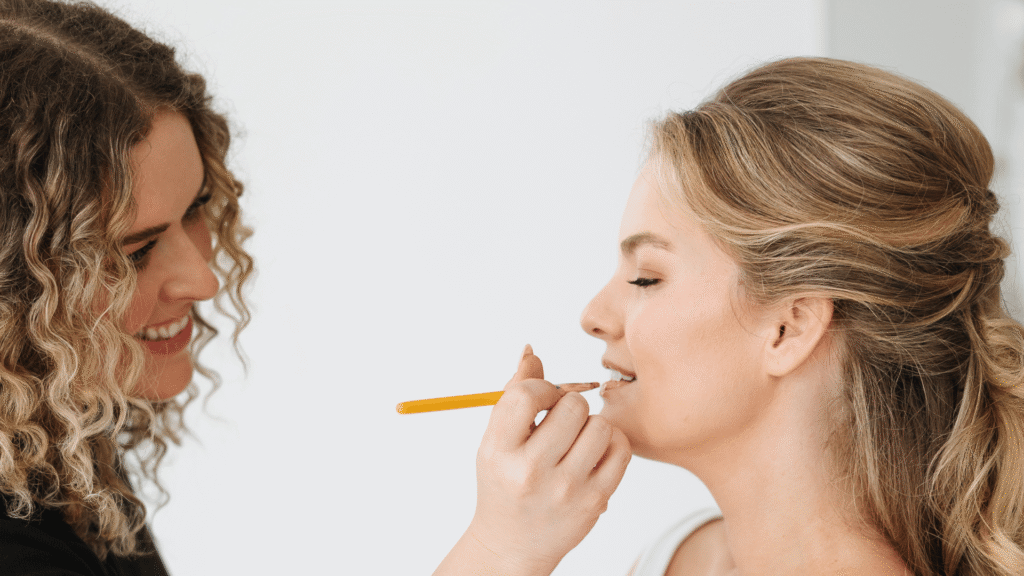
The makeup a bride wears on her wedding day has to do far more than look good for an hour. It needs to hold up through changing temperatures, long photography sessions, emotional moments, ceremony lighting, dancing, and hours of wear without feeling heavy or uncomfortable.
That is why professional bridal makeup follows a very different approach from everyday makeup routines or short-form social media trends. A bridal look needs structure, balance, and longevity while still looking natural in person and polished in photographs.
At Brittany Brown Beauty, bridal makeup starts long before foundation touches the skin. Every step, from skincare preparation to product layering and setting techniques, plays a role in how the final makeup wears throughout the wedding day.
Why Bridal Makeup Requires a Different Routine
Wedding makeup has different expectations than standard event makeup. Brides are photographed continuously from multiple angles, under different lighting conditions, and often over the course of eight to twelve hours. Because of that, products and techniques that work for a quick night out may not perform well during a wedding.
Long-wear bridal makeup focuses on stability rather than excess product. Instead of relying on thick layers for coverage, professional artists build makeup gradually so the skin still looks like skin. This creates a finish that photographs cleanly while remaining comfortable throughout the day.
In addition, bridal makeup must account for several environmental factors. Outdoor ceremonies, humid weather, tears, flash photography, and indoor reception lighting all affect how makeup appears and wears over time. A professional bridal routine prepares for those variables in advance rather than reacting to them afterward.
Skin Preparation Before Makeup Application
Healthy skin creates the foundation for long-lasting bridal makeup. Even the best products struggle to perform properly when the skin is overly dry, textured, irritated, or dehydrated.
For that reason, skin preparation begins weeks before the wedding day. Consistent cleansing, hydration, and barrier support help makeup apply more evenly and last longer. Brides do not necessarily need complicated skincare routines, but they do need consistency.
On the wedding day itself, preparation focuses on balance. Makeup artists assess the skin carefully before deciding how much hydration or oil control the skin actually needs. Over-prepping the skin with excessive skincare products can cause foundation separation later in the day, especially under heat or humidity.
At Brittany Brown Beauty, skin prep is adjusted individually rather than repeated as a fixed routine for every client. Some brides need additional hydration around the eyes, while others require more oil control through the T-zone. Small adjustments during prep often make the biggest difference in how makeup wears several hours later.
Building a Long-Wear Bridal Base
Professional bridal foundation should look refined and natural while remaining stable throughout the day. Achieving that balance depends more on layering technique than heavy coverage.
Instead of applying thick amounts of product at once, professional artists build the complexion gradually using thin, controlled layers. This allows the makeup to move more naturally with the skin while reducing heaviness and creasing.
Primer selection also plays a major role in bridal makeup longevity. However, no single primer works for everyone. Dry skin may need smoothing and hydration, while oily skin often benefits from lightweight oil-control products focused only in specific areas.
Foundation formulas are selected based on both skin type and wedding conditions. For example, outdoor summer weddings often require different textures and finishes than indoor winter ceremonies. The goal is always the same: create makeup that remains balanced in person and in photography without looking overly matte or overly reflective.
Concealer, cream contour, blush, and powder placement are also adjusted carefully to maintain structure without creating unnecessary buildup. When artists apply complexion products strategically, the makeup lasts longer and photographs more naturally.
Eye Makeup Techniques That Last Through the Wedding Day
Bridal eye makeup needs to remain clean and defined for hours without smudging, fading, or creasing. Since the eye area moves constantly throughout the day, product placement and layering become especially important.
Professional artists usually begin by preparing the eyelid properly to prevent oil breakthrough and uneven texture. From there, they layer eye products gradually to create dimension without overwhelming the eye shape.
For weddings, softer transitions often photograph better than overly harsh lines. Even glam bridal looks typically maintain some softness so the makeup still feels timeless years later when couples look back at their photos.
Water-resistant liners, carefully layered mascara, and strategically placed lashes also help maintain structure throughout emotional moments and long wear. Instead of focusing only on intensity, bridal eye makeup focuses on balance, proportion, and durability.
At Brittany Brown Beauty, eye makeup is customized around each bride’s features, dress styling, lighting conditions, and comfort level. Some brides want a more natural definition, while others prefer fuller glam. The approach changes, but the goal stays the same: makeup that still looks beautiful from the first photo to the final dance.
Read: Bridal Eye Makeup Styles: How to Choose the Right Look for Your Wedding
Cream and Powder Layering Strategy
One of the most important parts of long-lasting bridal makeup is understanding how cream and powder products work together.
Cream products create dimension and help makeup maintain a more skin-like finish. However, without proper setting techniques, creams can shift or fade more quickly throughout the day. Powders help stabilize the makeup, but too much powder can create heaviness or dryness, especially in flash photography.
Professional bridal makeup balances both textures carefully. Artists often build soft dimension using cream products first, then selectively set areas that need additional longevity. Rather than covering the entire face in heavy powder, they focus on targeted placement.
This approach helps preserve natural skin movement while still improving wear time. As a result, the complexion appears smoother, lighter, and more refined both in person and on camera.
How Makeup Is Adjusted for Photography and Lighting
Wedding makeup does not exist only in real life. It also has to translate well through professional photography and video throughout the entire event.
Different lighting conditions can completely change how makeup appears. Outdoor ceremonies often soften makeup naturally, while indoor reception lighting can flatten facial dimension or create unwanted shine. Flash photography may also emphasize texture, dryness, or excessive powder if the makeup is not balanced properly.
Because of that, bridal makeup artists constantly consider lighting during the application process. Product finish, placement, and intensity are adjusted to maintain dimension without creating harshness.
At Brittany Brown Beauty, bridal makeup is designed to look polished both in person and through the camera lens. The goal is not overly filtered makeup or trend-based techniques that age quickly in photographs. Instead, the focus stays on timeless balance, skin realism, and clean structure.
Read: Why Bridal Makeup Looks Different in Photos and How to Get It Right
Setting and Touch-Up Techniques
Long-lasting bridal makeup depends just as much on setting techniques as it does on the initial application itself.
Professional artists use setting sprays, powder placement, and layering techniques strategically to lock the makeup into place without making the skin feel tight or dry. Rather than applying excessive product at the end, they build longevity gradually throughout the application process.
Touch-up planning also matters. Brides do not need large makeup bags filled with extra products throughout the wedding day. In most cases, a few essentials work best: blotting papers, the original lip color, and lightweight powder for shine control if necessary.
Simple touch-up routines help maintain the integrity of the original application instead of disturbing it with unnecessary layering later in the evening.
Brittany Brown’s Approach to Bridal Makeup
At Brittany Brown Beauty, bridal makeup focuses on creating looks that feel elevated, comfortable, and wearable rather than overly trend-driven.
Every bridal appointment starts with understanding the bride’s skin type, wedding environment, dress styling, and personal comfort level. Instead of forcing the same makeup style onto every client, the approach is adjusted carefully to suit the individual.
The process also places strong attention on wear time and photography performance. A bridal look may appear beautiful for the first hour, but professional artistry considers how it will look after several more hours of movement, emotion, weather changes, and camera exposure.
The testimonials from our past clients give an honest look into what working with Brittany Brown Beauty actually feels like, from the first consultation to the wedding morning itself.
Plan a Bridal Look That Lasts All Day
Bridal makeup that lasts all day is never accidental. It comes from careful preparation, precise technique, and a clear understanding of what the wedding day demands. Skin prep, layering, product choice, photography considerations, and setting methods all work together to shape how the makeup wears over time.
Confident brides do not rely on chance. Instead, they work with a professional who understands how lighting, weather, timing, and wear time affect the final result. This level of planning keeps the makeup balanced not just during the ceremony, but also through photos, movement, and hours of celebration.
A bridal consultation with Brittany Brown Beauty is often the best starting point when planning your wedding look. We focus on your skin, features, and the overall wedding setting to build a makeup approach that fits the day.
Book your bridal consultation with us to begin planning.
Frequently Asked Questions
Most brides should schedule their makeup trial three to six months before the wedding. This gives enough time to refine the look if adjustments are needed after the trial. It also helps secure availability before peak wedding season schedules fill up, especially during late spring through early fall.
Consistent skincare matters far more than last-minute treatments. In the weeks leading up to the wedding, focus on gentle cleansing, regular moisturizing, and daily hydration. At the same time, avoid introducing strong new active ingredients too close to the event. Retinoids, harsh exfoliants, and strong acids can trigger irritation or peeling, which becomes difficult to manage right before the wedding day.
Professional bridal makeup should feel comfortable when the artist applies it correctly. Makeup artists build long-wear bridal looks through thin, controlled layers rather than heavy product application. As a result, the makeup feels balanced on the skin while still providing enough coverage and structure for photography and long wear. Most brides stop noticing it shortly after the application is complete.
Lighting affects how makeup appears both in person and on camera. Outdoor ceremonies usually have softer, more diffused lighting, while indoor receptions often include warmer or dimmer lighting that can flatten facial dimension. Because of that, makeup artists slightly adjust depth, contrast, and finish depending on the environment. A professional bridal makeup plan considers the entire wedding timeline rather than just one part of the day.
A bridal touch-up kit should stay simple and practical. Most brides only need blotting papers or a lightweight pressed powder for shine control, the original lip product for reapplication, and a clean damp sponge to gently press makeup back into place if needed. Keeping the kit minimal helps preserve the original application instead of disrupting it with too many products.
Related Articles:
- Summer Bridal Makeup Prep: How to Get Your Skin Ready
- Bridal Eye Makeup Styles: How to Choose the Right Look for Your Wedding
- How to Match Bridal Makeup to Your Skin Undertone
- What Happens During a Bridal Makeup Trial? What Brides Should Expect
- Bridal Makeup for Mature Skin: What Works and What to Skip
- Bridal Makeup Trends 2026 in Orange County: What Brides Are Choosing
- What to Ask Your Bridal Makeup Artist Before Booking