Posted on

How Many Bridal Trials Do You Actually Need

How Many Bridal Trials Do You Actually Need

One of the most common questions that comes up early in wedding planning is simple on the surface but harder to answer in a generic way: how many bridal trials do you actually need? The honest answer depends on your skin, your look, and how confident you feel walking out of that first session, but there’s a clear framework for making the decision instead of guessing.

Brittany Brown has run bridal trials for more than 11 years across Orange County and San Diego, and in that time a consistent pattern has held true. Most brides need one trial. Some benefit from a second. Very few need more than that, and when they do, it’s usually for a specific reason rather than general uncertainty.

Why One Trial Is Usually Enough

A single trial, done well, covers more ground than most brides expect. It’s where shade matching gets confirmed, where a bride can see how a look photographs versus how it looks in person, and where any skin sensitivities get discussed upfront so the right products are chosen from the start. That sensitive disclosure conversation matters as much as the makeup itself, since it shapes every product decision that follows, both at the trial and on the wedding day.

For most brides, one trial done with enough time before the wedding, ideally a few months out rather than the final weeks, is enough to lock in a formula, a finish, and a look that feels right. It also gives time to build a simple pre-wedding skin routine around what worked, typically a consistent 4-week routine leading into the wedding day, so the skin is in its best, most predictable state by the time makeup goes on.

When a Second Trial Might Be Worth It

A second trial tends to make sense in a few specific situations rather than as a default. Changing a major styling decision, a different hair style, a different dress silhouette, or a significant change in skin tone due to a spray tan or seasonal shift, is a common reason to book a follow-up. A second trial is also worth considering if the first one left any part of the look unresolved, whether that’s a lash style, a lip color, or an overall finish that needed more time to settle than one session allowed.

It’s rarely about the artist getting something wrong the first time. More often it’s about giving a bride the chance to see a look, sit with it, and come back with clearer feedback once she’s had time to think it over.

What Additional Trials Typically Cost and Involve

Additional trials typically have a separate price because each session requires the same time, products, and attention as an initial trial rather than a quick touch-up. What a second or third trial involves depends on the changes the bride wants to make. Sometimes it’s a full redo with a new direction entirely, and sometimes it’s a shorter, more targeted session focused on one or two specific elements from the first trial, like adjusting a highlight placement or trying a different lip finish.

The specifics, cost, timing, and what’s included, are best confirmed directly, since they can vary based on how far out the wedding is and what’s being adjusted.

How to Decide What’s Right for You

A useful way to think about it: if you leave your first trial feeling confident and only want to tweak a few small details, you likely don’t need a second one. Your makeup artist can usually note those adjustments and apply them on your wedding day. If you still feel unsure, can’t decide between two directions, or plan a major styling change after the trial, a second session is worth the investment.

One detail that applies no matter how many trials you book: avoid introducing new skincare or beauty products in the final 10 days before the wedding. Even products that have worked well for years can behave differently when paired with something new, and the final stretch before the wedding isn’t the time to find that out. Keeping the routine steady and familiar in those last 10 days protects the work done in the trial and gives the wedding-day makeup the most predictable base to work with.

Brides working through this decision can look at real trial-to-wedding-day transformations in the portfolio, or read more about Brittany’s approach and background on the About page. If you’re ready to book a first trial or talk through whether a second one makes sense for your situation, reaching out directly is the easiest next step.

Frequently Asked Questions

1. When should I start prepping for how many bridal trials do you actually need? 

Start thinking about it as soon as you book your artist, ideally three to twelve months before the wedding. Booking the first trial with enough lead time, rather than in the final weeks, leaves room for a second trial if one turns out to be worth it, without adding pressure close to the wedding date.

2. What should I avoid in the days leading up to my wedding? 

Avoid trying any new skincare, makeup, or beauty products in the final 10 days before the wedding. Sticking to a familiar, consistent routine, ideally one that’s been in place for about four weeks leading up to the day, keeps the skin predictable and protects the results from the trial.

3. What should I bring up with my artist about how many bridal trials do you actually need? 

Bring up any skin sensitivities, known reactions to specific products, and any major styling changes you’re considering, hair, dress, or tan. This kind of upfront disclosure gives your artist the clearest picture of whether one trial will cover everything or whether a second session makes sense for your specific plans.
Posted on

2027 Bridal Beauty Trend Predictions

2027 Bridal Beauty Trend Predictions

Every year brings a slightly different bridal beauty mood. Some years lean dramatically. Others lean stripped-back and natural. Predicting where 2027 is headed isn’t about guessing at random, it’s about watching what’s already shifting in real bookings, real trials, and real bridal requests happening right now.

Brittany Brown has spent years sitting across from brides during trials, which puts her in a good position to notice these shifts before they show up anywhere else. The questions brides ask, the reference photos they bring in, and the words they use to describe what they want all change gradually, and those small changes tend to show up in real bridal chairs a season or two before anyone calls them a trend.

Here’s what’s shaping up for 2027, based on patterns already showing up in Brittany’s consultations and trials across Orange County and San Diego weddings.

How These Predictions Were Shaped

These predictions come from actual conversations with brides, not runway shows or industry press releases. Trial requests, reference photos brides share, and the specific words they use to describe their vision all shift gradually from year to year. Those changes usually appear in real bookings a season or two before the industry starts calling them a “trend.”

Pair that with what’s happening more broadly in skincare and beauty, where the emphasis has moved toward healthier-looking skin over heavy coverage, and a clearer picture starts to form. 2027 looks like it’s building on a few threads that have already been gaining momentum through 2025 and 2026, rather than introducing something completely new.

Trends to Watch

Skin-First, Product-Light Application

Brides are asking for their skin to look like skin, just at its best. That’s different from asking for full coverage or a heavily matte finish. The requests coming in more and more sound like “I want to still look like me” rather than “I want a totally different face.”

This shows up as lighter foundation layers, more reliance on skin prep and hydration to do the heavy lifting, and finishes that catch light naturally instead of sitting flat. It’s a continuation of something that’s been building for a few years now, but 2027 looks like the point where it becomes the default rather than the exception.

Personalized Color Over One-Size-Fits-All Looks

Fewer brides are walking into a trial with a single Pinterest photo and asking for it to be recreated exactly. More are bringing in a handful of references and asking how those ideas translate to their own coloring, skin tone, and features.

That shift toward personalization means brides and artists now approach lip and eye color decisions less like a fixed formula and more like a process they customize for each individual bride. Expect more personalized color-matching conversations during trials and fewer requests for a single trending shade applied the same way across every bride.

Explore: The bridal portfolio featuring Brittany Brown Beauty’s work 

Multi-Day Wedding Beauty Planning

Weddings have been stretching across more than one day for a while now, welcome dinners, rehearsal events, farewell brunches, and 2027 looks like the year multi-day beauty planning becomes a standard part of the conversation rather than an add-on request.

That means brides are starting to think about a beauty arc across the whole weekend: something more relaxed for a welcome dinner, full glam for the ceremony, and maybe a lighter refresh for a next-day brunch. Booking a beauty team that can support that full arc, rather than just the one main event, is becoming part of the planning process earlier on.

What’s Likely to Fade

A few looks that have had a long run seem to be losing momentum. Heavily contoured, sculpted makeup that reads more editorial than bridal is being requested less often, especially among brides prioritizing that “still looks like me” feeling. Fully matte, flat finishes are also fading in favor of skin that has some natural light and movement to it.

Ultra-trend-driven requests, chasing whatever look is going viral that month, seem to be giving way to something more personal and less tied to a single viral reference. Brittany has noticed this shift firsthand in trials, where brides increasingly ask her to adapt a trend to suit them rather than asking to copy it exactly. That doesn’t mean trends stop influencing bridal beauty altogether. It just means brides seem to be filtering those trends through what actually suits them, rather than adopting them wholesale.

Schedule your bridal makeup consultation with Brittany Brown Beauty 

Frequently Asked Questions

1. What should I ask before booking a bridal beauty team for 2027?

Ask how the artist approaches personalization during a trial, how they handle multi-day wedding events if that applies, and what their process looks like for adjusting a look based on your specific skin and coloring. It’s also worth asking to see real client work, not just editorial or styled shoots, since that’s a better indicator of how a look will actually translate on a wedding day.

2. How far in advance should I book my wedding-day beauty team? 

Popular dates and peak wedding seasons fill up well in advance, so prioritize booking as early as possible once you confirm your venue and date. Reaching out early also gives you more time to plan around multi-day events if your wedding weekend includes more than just the ceremony.

3. What’s included once I sign a contract and pay a deposit?

That depends on the specific artist or team, since each provider sets different contract terms and service details. Review those details directly with the person you plan to book so you understand exactly what they will provide before your wedding day.

Posted on

The 90-Day Skin Prep Countdown Before Your Wedding

90-Day Skin Prep

Wedding-day skin doesn’t happen by accident. It’s the result of small, consistent decisions made in the weeks and months leading up to the makeup trial and the wedding itself. Ninety days gives enough room to build good habits, test anything new, and settle into a routine well before it matters most.

This isn’t about chasing a dramatic transformation. It’s about giving skin the time it needs to look and feel its best on the day it’s photographed more than any other day of a bride’s life. Here’s how that countdown breaks down, week by week, based on more than 11 years of guiding brides through this exact process.

At Brittany Brown Beauty, healthy, well-prepared skin is the foundation of long-lasting bridal makeup, which is why skin preparation is part of the planning process from the very beginning. 

Why Starting 90 Days Out Gives You Room to Adjust

Skin doesn’t respond to change overnight. A new product, a new routine, or a new treatment can take weeks to show its full effect, and sometimes that effect isn’t the one a bride was hoping for.

Starting the countdown 90 days out means there’s time to notice what’s working and adjust what isn’t. If a product causes irritation, there’s room to stop and recover before the trial. If a routine needs a few more weeks to show results, there’s still time for that to happen before the wedding.

This window also protects the trial itself. A trial is meant to show how makeup will perform on the actual skin a bride will have on her wedding day, not on skin that’s mid-adjustment to something brand new. Giving skin 90 days to settle means the trial reflects reality, not a temporary in-between state. Brittany Brown’s experience in bridal makeup has shown that thoughtful preparation often makes a greater difference than last-minute skincare trends or quick fixes.

The Countdown

90-60 Days: Building Healthy Habits

This early window is about consistency, not intensity. The goal is a simple, steady routine that supports the skin without introducing anything unpredictable.

A few habits worth focusing on during this stretch:

  • A consistent cleansing and moisturizing routine, done daily rather than occasionally.
  • Daily SPF, if it isn’t already part of the routine, since sun protection affects tone and texture over time.
  • Steady hydration and rest, which show up in how skin looks day to day more than most people expect.

This is also the time to start thinking about bigger skin goals, like addressing dryness or uneven texture, so there’s enough runway to see results before decisions need to be finalized.

60-30 Days: Introducing Treatments Carefully

If there’s a facial, treatment, or new product a bride wants to try before the wedding, this is the window to do it. Sixty to 30 days out leaves enough time to see how skin responds and to recover fully if something doesn’t agree with it.

New treatments and products can change how skin feels and looks in ways that aren’t always predictable. Testing them now, rather than closer to the wedding, means there’s time to course-correct if needed. It also means that by the time the trial rolls around, the skin has settled into whatever changes were made.

This is a good window to bring any planned treatments up with a makeup artist as well. Sharing what’s been introduced, and disclosing any known skin sensitivities, helps the artist plan the trial around accurate, current information rather than guessing.

30-0 Days: Simplifying and Protecting

In the final stretch, the goal shifts from building to protecting. This is the time to keep the routine steady and resist the urge to try anything new, no matter how tempting a product recommendation might be.

A well-known rule of thumb here: avoid introducing new products in the final 10 days before the wedding. Skin needs to be in its most stable, predictable state for both the trial and the wedding day itself, and new products are the most common way that stability gets disrupted at the worst possible time.

This window is also when the makeup trial typically happens. Coming in with a consistent routine, ideally one that’s been steady for at least four weeks, gives the most accurate picture of how makeup will perform. It also gives the artist real information to work with, rather than skin that’s reacting to something recent and unfamiliar.

Seeing how healthy, well-prepared skin photographs on real brides can also provide helpful inspiration. Browse our portfolio to explore bridal makeup looks created for a variety of skin tones, skin types, and wedding styles. 

What to Do If You’re Starting Later Than 90 Days

Not every bride finds this guide with a full 90 days to work with, and that’s completely fine. The core principles still apply, just on a shorter timeline.

The most important habit to prioritize first is consistency. Even a few weeks of a steady, simple routine puts skin in a more predictable state than switching products right before the wedding. If there’s less time, it’s better to skip new treatments altogether and focus on stability rather than trying to compress the full countdown into a shorter window.

Whatever the timeline, the same rule holds: nothing new in the final 10 days, and a trial that reflects the skin’s real, current condition. Being upfront about the timeline during a consultation also helps the artist adjust recommendations to fit the time actually available.

If you’re ready to create a skincare and makeup plan tailored to your wedding timeline, contact Brittany Brown Beauty to schedule your bridal makeup consultation or trial.

Frequently Asked Questions

1. When should I start prepping my skin for my wedding? 

Ninety days out is a helpful benchmark because it gives enough time to build habits, test anything new, and let skin settle before the trial. That said, starting later isn’t a problem. The priority at any point is consistency and giving skin enough time to stabilize before the wedding day.

2. What should I avoid in the days leading up to my wedding? 

The final 10 days before the wedding are not the time to try a new product, treatment, or routine change. Skin should stay in a stable, familiar state for both the trial and the big day. Trying new products this close to the wedding can introduce unnecessary unpredictability, so it’s best to stick with a routine that already works.

3. What should I bring up with my artist about my skin prep? 

Share a general overview of the routine you’ve followed over the past few weeks so your artist understands what your skin is accustomed to. Also mention any known sensitivities or past reactions before the trial. That information helps your artist plan around your skin’s specific needs and choose suitable products. Booking a consultation is a good way to start that conversation early.

Posted on

Best Natural Bridal Makeup Looks in 2026

Best Natural Bridal Makeup

The makeup looks for 2026 are increasingly going towards a more natural and subdued appearance. Brides are no longer seeking foundation, dramatic contour or too sharp features. Rather, fresh skin, soft glam eyes and make-up that is comfortable from morning till night.

Natural bridal makeup is all about one thing – adding elegance to your face without changing your appearance. The ideal bridal appearance should look vintage in the pictures and easy in the real world.

Fresh, Glowing Skin Takes Center Stage

Healthy skin is one of the top wedding gown beauty trends this year. Artists are not applying heavy foundation or skin tones to cover faces, but rather using lighter foundation and skin tints that allow for natural texture to be expressed.

The outcome? A radiant soft look that is stunning in the daylight and for indoors, and also for wedding photography. Liquid highlighters, hydrating primers, and even the blushes for cream do the job best, as they melt into the skin and do not sit on top.

Many brides are also increasing their efforts on skin care prior to the big day of the wedding. Soft, hydrated skin will provide a better base for makeup, making it last longer and yet look fresh and natural.

Soft eye makeup, one can create a timeless look.

In 2026, bridal eye make-up is more lighthearted and romantic than in years past. Dramatic smoky eyes and hard traveler eyeliner are being swapped out for warm browns, champagne hues, rose gold and soft taupes.

Many brides are opting for wispy lashes that provide definition without dramatic effect – rather than bold, heavy lashes. Brows are also becoming more natural with softly brushed shapes becoming more popular than overly sculpted brows.

The softer elements go to create a bridal photo style that appears elegant, contemporary and timeless years later.

The Balance of Natural Lips will help keep the makeup in balance.

Lip trends are getting fancier, too. Instead of dominating the look, brides are opting for nude pinks, rosy mauves, peach tones and shiny neutral colors that will match the rest of the makeup.

Comfort matters too. Light weight lipsticks, tinted balms, and lip oils are a great option to keep lips soft during long events such as ceremonies, photoshoots and receptions.

A natural lip color will help to bring the whole look together and make it look polished and easy.

Lightweight makeup looks better all day long.

Natural bridal makeup is growing in popularity, in part because it is lighter and lasts longer. Heavy eye make-up tends to crease, fall out or become uncomfortable after a few hours.

Nowadays, bridal artists prefer to create coverage in thin layers. This technique, when used in conjunction with setting spray and waterproofing products, helps keep make-up looking smooth and prevents it from becoming cakey.

The end result is make-up that doesn’t look as if it had been applied for a purpose, but rather for elegance, and that appears great in emotional photos, outdoors photos, dancing, and late-night recipes.

Also Read: How to Make Bridal Makeup Last All Day Without Touch-Ups

Find a wedding outfit that makes you feel like you

Though the trends are liable to shift annually, the ideal bridal make up is always the one which goes well with you and the way you feel.

Some brides prefer a natural matte finish, while others prefer a softer, glowing finish. The important thing is to discover a style that accentuates your attributes without overpowering you.

If you feel natural and balanced with your makeup, you will definitely look confident in the pictures and throughout the wedding day.

Looking for the perfect natural bridal look?

Each of the brides has her own vision of her wedding day, and this is no exception for their makeup finish either, as it is equally important to select the right makeup finish as it is to select the right style.

Here at Brittany Brown Beauty, we tailor each bridal makeup to your skin tone, lighting, weather and personal style. We assist you in selecting a finish during your consultation and trial that will look great in photos, be comfortable, and will complement your natural beauty rather than just go with the trend.

The idea is the same: to look sexy and professional, yet natural and unput-together, with either a soft glowing effect or a natural matte beauty.

Click the button below to schedule your bridal makeup consultation.

Posted on

Low Bun vs High Bun for Brides: What Works Best?

Low Bun vs High Bun for Brides

Choosing between a low bun and a high bun sounds simple at first. But once you start looking at inspiration photos, it gets confusing fast. Both look elegant. Both show up everywhere. Yet they create very different effects on your face, dress, and overall bridal look.

In reality, the “better” choice depends on balance, comfort, and how your hair behaves throughout the day. This guide breaks down low bun vs high bun for brides in a practical way so you can actually decide what works for you, not just what looks good online.

Why Bun Placement Changes Your Entire Look

Where your bun sits changes more than most brides expect.

A low bun creates a soft, grounded look. It keeps attention on your face and dress without adding height. A high bun lifts everything upward, which creates a more structured and noticeable style.

This placement also affects how your veil sits, how accessories look, and how your neck and shoulders appear in photos.

So even if the bun style is similar, the height alone can change the final result completely.

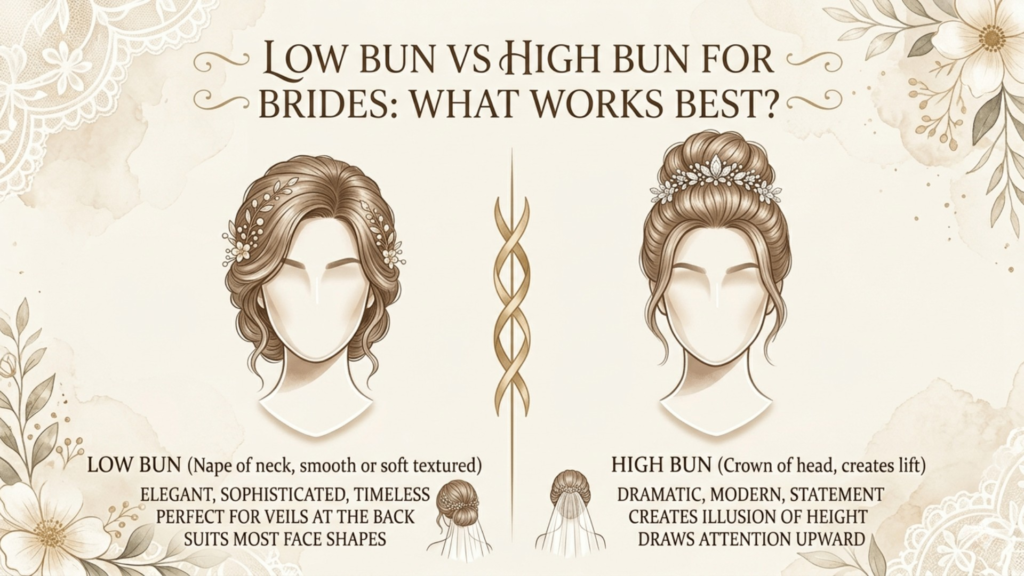
What Is a Low Bun?

A low bun sits at the nape of your neck or slightly above it. It can be smooth and sleek or soft and textured, depending on your bridal style.

Why Brides Choose It

Most brides choose a low bun because it feels effortless and timeless. It does not overpower the face, and it pairs well with almost every dress style.

It also works well with veils because the placement feels natural and secure. You do not have to worry about it competing with other parts of your look.

Where It Works Best

Low buns work especially well for classic weddings, romantic styles, and indoor venues. They also suit brides who want something elegant without too much height or structure.

Things to Watch

A low bun can sometimes feel too simple if it lacks texture or detail. Without soft pieces or proper shaping, it may fall flat in photos.

What Is a High Bun?

A high bun sits on the crown or upper part of your head. It creates lift and draws attention upward.

Why Brides Choose It

Brides often choose high buns because they create a more dramatic and fashion-forward look. They highlight the neck, shoulders, and jawline, which can look very striking in photos.

It also gives the illusion of added height, which some brides prefer for balance.

Where It Works Best

High buns work well for modern weddings, clean dress designs, and structured bridal looks. They suit brides who want something more defined and noticeable.

Things to Watch

A high bun can feel too strong if it is overly tight or too high for your face shape. It also needs strong structure, or it can lose shape as the day goes on.

Low Bun vs High Bun: Face Shape Guide

Your face shape plays a big role in this decision.

Round Face

A low bun helps soften width and keeps the look balanced. A high bun adds height, which can make the face appear longer.

Oval Face

Both styles work well. The decision depends more on your dress and overall bridal style than face shape.

Square Face

A low bun softens strong angles. A high bun can work too, but it should include soft texture around the face.

Long Face

A low bun adds width and balances length. A high bun can make the face look even longer, so it needs careful styling.

Heart-Shaped Face

A low bun balances a wider forehead. A high bun works only if the sides are softened to avoid emphasizing the top.

How Your Wedding Dress Changes the Decision

Your dress and hairstyle should work together, not compete.

A low bun pairs well with detailed necklines or dresses with open backs. It keeps the focus on the dress while still looking polished.

A high bun works better with structured or minimalist dresses. It creates a clean frame around the neckline and shoulders.

If your dress is very detailed, a low bun often feels more balanced. If your dress is simple, a high bun can add interest.

Weather and Comfort Factors Brides Overlook

Comfort matters more than most brides expect.

Low buns usually feel more secure because they sit closer to the head and move less. This makes them a strong choice for long wedding days or outdoor settings.

High buns can be affected by wind or humidity more easily. They need stronger pins and structure to stay in place.

In warmer climates, both styles can work, but low buns often feel easier to maintain throughout the day.

Veil and Accessories Placement

Your bun choice directly affects veil placement.

Low buns support longer veils and traditional placements. The transition from bun to veil feels smooth and natural.

High buns work better with shorter veils or no veil looks. They also allow accessories to sit more visibly, which can be useful for statement pieces.

Placement is important because it changes how balanced your overall look appears in photos.

Longevity and Hold: Which One Lasts Longer?

Low buns generally last longer because they sit closer to the scalp and require less structural lifting.

High buns can also last well, but they depend more on strong pins, product support, and proper shaping.

However, longevity is not just about style. It also depends on how your hair is prepped and how the stylist builds the foundation.

A well-built high bun can last longer than a poorly prepared low bun.

Common Mistakes Brides Make

One common mistake is choosing a bun based only on inspiration photos without considering face shape or dress style.

Another mistake is assuming high buns always look more “bridal.” In reality, they suit specific face shapes and dresses better than others.

Some brides also skip trials and only realize later that the style feels too heavy, too flat, or too high for their features.

Ignoring comfort is another issue. You will wear this style for many hours, so how it feels matters as much as how it looks.

How to Decide Between Low Bun and High Bun

Start with your dress. If your dress is detailed or romantic, a low bun usually feels more balanced. If your dress is structured or minimal, a high bun may suit it better.

Then think about your face shape. Round or long faces often benefit from more careful placement choices, while oval faces have more flexibility.

Next, consider your venue. Outdoor weddings may require more secure styles. Indoor weddings allow more styling freedom.

Finally, think about comfort. You should be able to move, sit, and enjoy your day without worrying about your hair.

What to Test During Your Bridal Hair Trial

Your trial is where the real decision happens.

Try both low and high bun versions if you are unsure. Look at how each one photographs from different angles, not just the front.

Check how the style feels after a few hours. Movement can change how secure it feels.

Also test your veil or accessories during the trial. Placement can change the entire look more than the bun itself.

Find the Right Bun for Your Bridal Look

Choosing between a low bun and a high bun can feel confusing when you only see perfect photos online.

At Brittany Brown Beauty, we help brides choose styles based on face shape, dress, and real wedding conditions. During your trial, we adjust placement and structure so your hair feels secure and looks right from every angle.

Book your bridal hair consultation to find a bun style that fits your look and holds throughout your wedding day.

Frequently Asked Questions

1. Is a low bun or high bun more bridal?

Both are bridal. The right choice depends on your face shape, dress, and overall style.

2. Which bun lasts longer for weddings?

Low buns usually last longer because they sit lower and require less structural height.

3. Does face shape affect bun choice?

Yes. Face shape influences how balanced a low or high bun looks in photos.

4. Can I wear a veil with a high bun?

Yes, but shorter veils or higher placements usually work better.

5. What bun works best for outdoor weddings?

Low buns often work better because they stay more secure in wind and humidity.

Related Articles:

  1. How to Prep Your Hair Before Your Wedding Day
  2. How to Choose the Right Bridal Hairstyle for Your Wedding Day
  3. Bridal Hair Trends 2026 in Orange County
  4. Bridal Hairstyles for Different Face Shapes: What Flatters You Most
  5. What to Ask Your Bridal Makeup Artist Before Booking
Posted on

How to Choose the Best Makeup Artist in San Diego or OC

best makeup artist in san diego

Choosing your wedding makeup artist isn’t just about pretty pictures. It’s about feeling confident, radiant, and stress-free on one of the most important days of your life. Whether you’re tying the knot in San Diego’s coastal charm or planning a luxe affair in Orange County, the right artist makes all the difference.

Here’s what every bride should know before booking a professional makeup artist for your big day.

🎯 Why Hiring a Professional Makeup Artist Matters

Let’s start with the obvious: you want to look and feel your absolute best. But pro artistry goes far beyond applying foundation or lashes.

Here’s why hiring a professional makeup artist in San Diego or Orange County is non-negotiable for many brides:

FeaturePro Artist ✅DIY or Friend ❌
Long-lasting, HD makeupSpecialized for photos & videoMay smudge or fade
Timeline managementKeeps wedding day stress-freeRisk of running behind
Custom skin matchingExpert product & tone selectionTrial-and-error based
Product sanitationUses clean, pro toolsHigher risk of breakouts
Weather/lighting savvyAdjusts for beach, venue, or camera flashMay not translate well on camera

A professional doesn’t just apply makeup. They design a custom experience tailored to your skin type, event timeline, location, lighting, photography needs, and personal preferences.

📍 San Diego vs. Orange County: Does Location Matter?

Both SoCal spots offer incredible venues, but your makeup artist’s travel policy and familiarity with local conditions can impact your experience.

San Diego

  • Often includes more beach weddings, requiring humidity-resistant, SPF-friendly looks
  • Tends to skew more laid-back or boho
  • Morning ceremonies are common, which affects prep timing

Orange County

  • Frequently includes luxury indoor venues with strict vendor requirements
  • Glam bridal looks are more popular – think full glam, lashes, contour
  • May involve working with planners or stylists your artist already knows

Bottom line: Choose an artist who knows your specific area, venue types, and timeline constraints.

👀 What to Look for in a Makeup Artist’s Portfolio

You can learn a LOT by browsing a makeup artist’s past work. Here’s what to look for:

  • Skin diversity: Have they worked with different tones, textures, and ages?
  • Lighting conditions: Do their brides look flawless in natural and flash photography?
  • Style range: Are they flexible, or do all brides look the same?
  • Before & afters: Do they show real transformations, not just retouched photos?

📸 Browse Brittany’s real-world bridal makeup results here:
👉 Bridal Portfolio

❓ 6 Smart Questions to Ask Before You Book

Booking a makeup artist is about more than price. Ask these:

  1. Do you offer mobile makeup services?
    Not all artists will travel to you – check travel fees and availability.
    👉 Learn more about mobile makeup services
  2. How far in advance should I book?
    Top artists book 6–12 months ahead, especially for peak seasons.
  3. Do you work with hair stylists too?
    Coordinated glam teams save time and stress.
  4. What’s included in your bridal package?
    Ask about lashes, touch-up kits, and number of looks.
  5. What’s your experience with weddings?
    You want someone who’s done this many times – not just parties.

🧼 Red Flags to Watch Out For

Trust your gut… but also keep an eye out for these:

🚩 Vague pricing or surprise travel fees
🚩 Lack of portfolio or heavily filtered photos
🚩 Poor communication or delays in replies
🚩 No contract or unclear cancellation policy

✅ Final Checklist: What Makes a Makeup Artist “The One”

Here’s your bridal glam checklist before signing that contract:

  • ✅ Clean, diverse portfolio
  • ✅ Experience with weddings in San Diego or OC
  • ✅ Transparent pricing and packages
  • ✅ Great communication and organization
  • ✅ Strong reviews from real brides
  • ✅ Mobile availability if needed
  • ✅ Matches your preferred glam style

📲 Ready to Look and Feel Your Best?

Whether you’re booking hair and makeup for yourself or your entire bridal party, Brittany Brown Beauty offers mobile, luxury glam tailored to your dream look.✨ Contact us today to book your bridal glam consult. Spots fill fast – don’t wait!