Posted on

Comparing Orange County and San Diego Wedding Markets

comparing orange county and san diego wedding markets

Orange County and San Diego sit about as close as two wedding markets can, and both draw couples who dream of a Southern California coastal wedding. Once you start planning, though, the two markets feel different in their venues, their booking rhythms, and the way the coast shapes your wedding-day beauty plan. This guide compares the two so you can choose with confidence and plan your hair and makeup around the place you pick.

Brittany Brown is a mobile bridal hair and makeup artist with more than 11 years of experience. She is based in Orange County and travels to weddings across Orange County and San Diego, so she plans for both markets throughout the year.

What Defines the Orange County Wedding Market

Orange County weddings cluster around a handful of coastal communities, and each one has its own character. Knowing the differences helps you match a venue to the mood you want.

  • Newport Coast. Upscale resort weddings define this area. Couples often choose the Resort at Pelican Hill, the Beachcomber at Crystal Cove, private estate villas, or Newport Ridge vacation rentals. Crystal Cove is a popular choice for golden-hour portraits. If you are marrying here, see her guides to bridal makeup at the Resort at Pelican Hill, getting ready at Crystal Cove, and her Newport Coast bridal makeup artist page.
  • Newport Beach. Water shapes everything here. Balboa Island, the Peninsula, Fashion Island, Lido Isle, and the Island Hotel all appear in weddings, along with yacht celebrations and waterfront estates. Reflected light off the harbor can change how the day looks through the afternoon.
  • Corona del Mar. Sherman Library and Gardens, private estates along the Flower Streets, and bluff-top venues overlooking the Pacific give this area an intimate, garden-and-ocean feel. Coastal humidity, sea air, and direct sun all affect how makeup wears here, and she has a dedicated page for a bridal makeup artist in Corona del Mar.
  • Laguna Niguel. Monarch Beach and the Ritz-Carlton-area properties anchor this market. The options run from ocean-view resorts to intimate estates, and her post on Monarch Beach wedding makeup covers what brides should know.
  • Irvine. Neighborhoods such as Turtle Rock, Woodbury, Northwood, and Shady Canyon, along with nearby Tustin and Lake Forest, give couples a more inland, hotel-and-estate option.

The Orange County market rewards early planning. Spring and fall weekends in Orange County and the Newport area book out well in advance, so couples who wait until the last few months often find their preferred dates taken. Her guide on how far in advance to book hair and makeup in Orange County goes into more detail.

For hair and makeup, Orange County’s coastal venues share one challenge. Humidity, sea air, and direct sun can all affect makeup, so product choice matters as much as the look itself. Brittany selects products suited to these conditions and to each bride’s skin type, and she plans around the real conditions at your venue instead of using one routine for every wedding. If your ceremony is on a bluff or the sand, read her advice on bridal makeup for windy coastal ceremonies.

What Defines the San Diego Wedding Market

San Diego is a full wedding market of its own, and Brittany treats it that way. She has written dedicated guidance for brides there, including her San Diego wedding makeup guide.

The most useful thing to know about San Diego is its calendar. Peak wedding season runs March through June and September through November. Those months fill quickly, so couples who want a mobile artist for a peak date should reach out early, ideally 6 to 12 months ahead.

San Diego couples face the same core questions as Orange County couples: where will you get ready, how much time does your party need, and how will your look hold through a long day? Brittany’s San Diego clients describe a getting-ready experience that felt comfortable from the first conversation. One San Diego bride called the experience a 10 out of 10 and said her makeup stayed flawless all day, even through happy tears. Another described getting exactly the look she wanted.

Results always depend on skin, weather, and the pace of the day, and Brittany does not promise a fixed number of hours. She does plan for the setting, which is why a clear picture of your venue helps. Share your venue early, whether you marry in San Diego or Orange County, and she can plan product choices and timing around it. If you want to test your look ahead of time, she offers a bridal hair and makeup trial in San Diego.

Head-to-Head: Venues, Season, and Booking Timelines

Here is how the two markets compare on the points that matter most to brides and planners.

  1. Venue variety. Orange County offers a tight cluster of well-known coastal settings, from resort grounds at Newport Coast to bluff-top gardens in Corona del Mar and waterfront estates in Newport Beach. San Diego offers its own range of settings, and the best way to explore them is to tour with your planner and ask each venue about lighting, indoor getting-ready space, and timelines.
  2. Peak season. San Diego’s peak runs March through June and September through November. In Orange County, spring and fall weekends book out well in advance, especially in the Newport area. In both markets, those seasons are the busiest.
  3. Booking timeline. For peak San Diego dates, booking a mobile artist 6 to 12 months ahead is wise. For Orange County, reach out as soon as your venue is confirmed. In both markets, wedding dates are secured with a signed contract and a deposit.
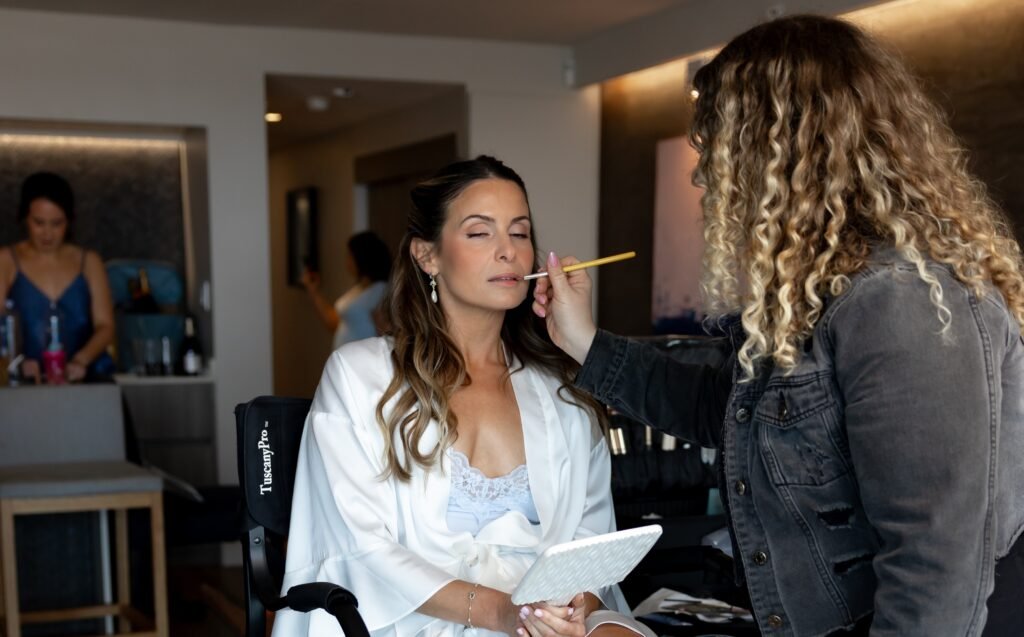
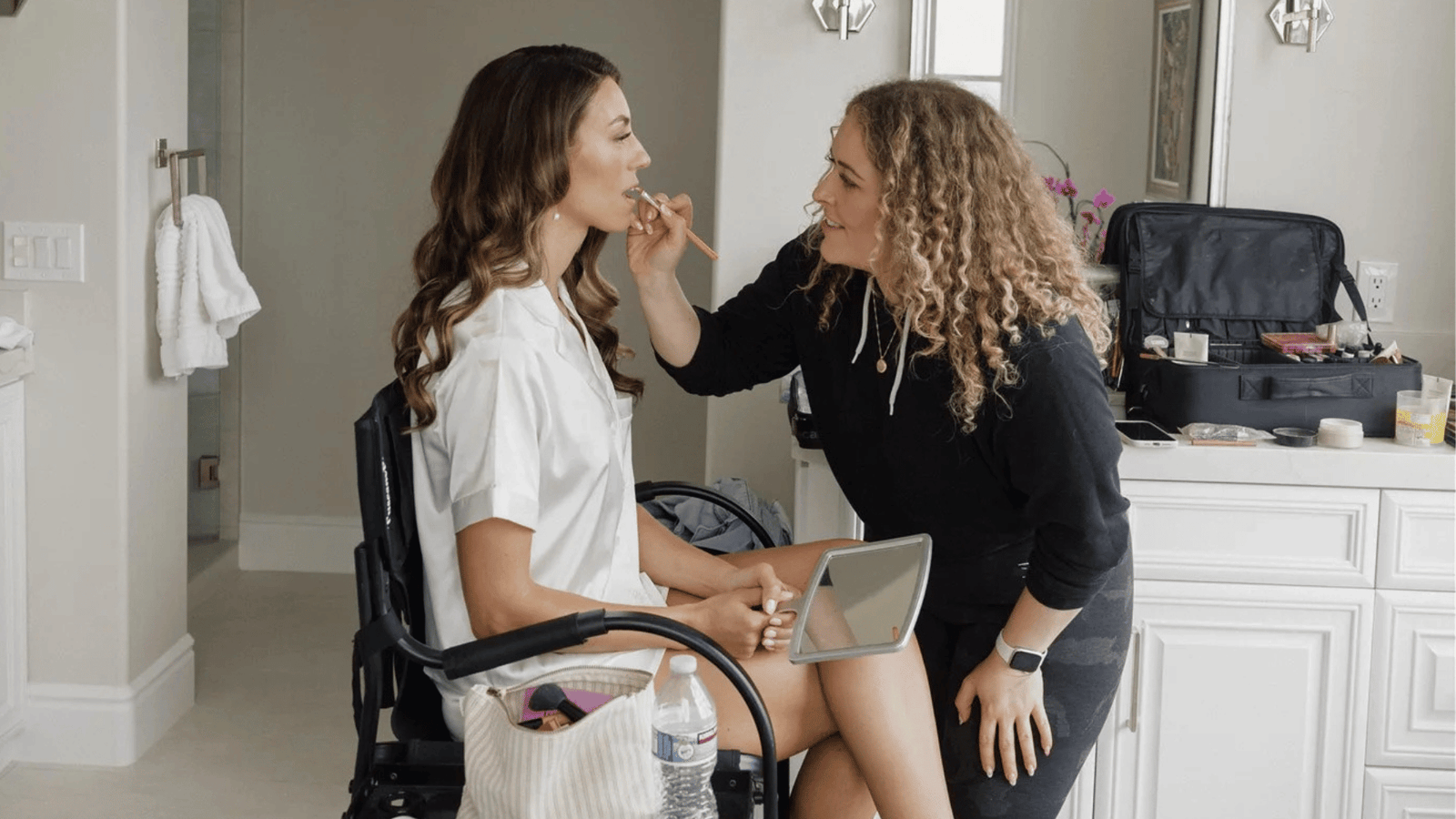
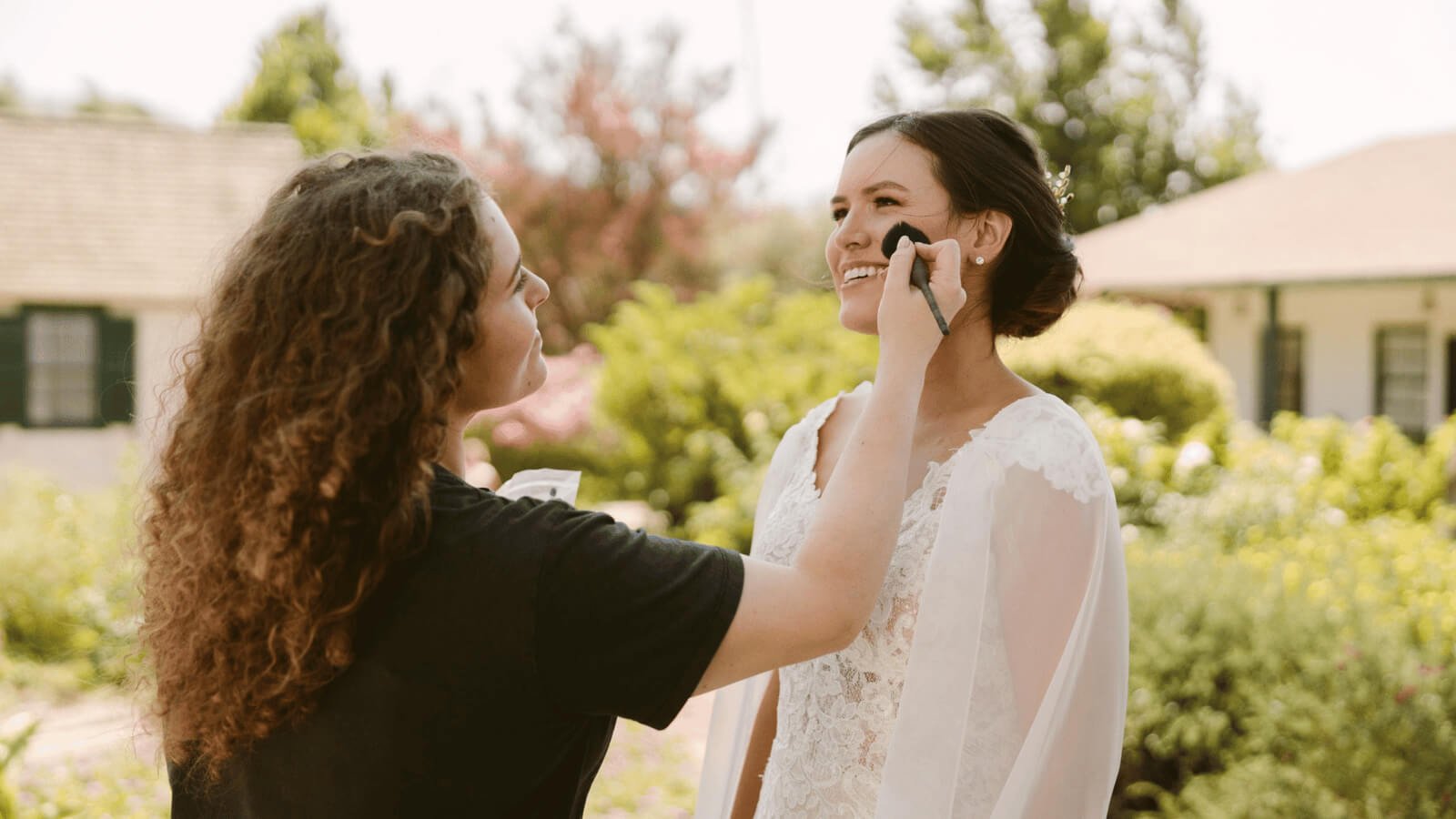
  4. Getting-ready logistics. In both markets, the setup stays the same. Brittany arrives at your hotel suite, private home, resort room, or estate and brings a complete professional kit, including her own studio-quality lighting and seating. Setup takes about 15 to 20 minutes, and her own lighting means the application does not depend on the light in your room.
  5. Coastal conditions. Coastal venues in both markets can bring humidity, sea air, direct sun, and wind, and Brittany plans her product choices around them. When you tour a venue in either market, ask where the bridal party will get ready and what the light looks like in that room.
  6. Timeline planning. Application takes roughly 60 to 90 minutes for the bride. Brittany plans the schedule in advance based on the size of your party, so share your headcount early.

The biggest difference between the two markets often comes down to timing and travel. A couple marrying in San Diego while living in Orange County, or the reverse, benefits from a mobile artist who already works in both places. Brittany comes to you, so you do not need to add a salon commute to an already full morning.

Choosing the Right Fit for Your Wedding

Neither market is better by default. The right choice depends on what you want your day to look and feel like. These questions can help you decide.

What kind of light do you want in your photos? Golden-hour light at Crystal Cove, reflected harbor light in Newport Beach, and bright bluff-top sun in Corona del Mar can each create a different mood. Tell your photographer which look you prefer, and ask your venue about the best times for portraits.

How large is your wedding party? Larger parties need more time and more hands. Brittany coordinates hair and makeup for bridesmaids and other members of the wedding party, so the whole group looks cohesive. If your party is large, share the headcount early so she can plan the schedule.

How much planning time do you have? Peak San Diego dates fill 6 to 12 months ahead. If you are working with a shorter window, flexibility on your date can open more options.

Where will everyone get ready? A hotel suite, a private home, a resort room, and an estate each offer a different amount of space. Because Brittany brings her own lighting and seating, a room with limited natural light is easier to work with for hair and makeup.

What kind of look do you want? Brittany’s signature style is the “no-makeup-makeup” look, built around glowing skin and warm, bronzed contour, and she builds every bridal look around the individual instead of a fixed template. That approach adapts well to different venues. Brides often describe the result as feeling like themselves, but elevated, whether they marry on a coastal bluff or in a garden estate.

Who is in your wedding party? Brittany has experience with mature skin, so moms, aunts, and grandmothers receive the same careful attention as the bride. Formulas that look flawless on younger skin can settle into fine lines or look heavy on a more mature complexion, and she adjusts product and technique accordingly.

Whichever market you choose, a bridal makeup trial helps. Brittany strongly recommends one. During a trial, she tests your chosen look and products on your skin, works through any adjustments, and makes sure you walk into your wedding day knowing exactly what to expect. A trial is also the right time to share any skin sensitivities, reactions, or recent treatments. You can see how her full offering fits together on the bridal hair and makeup services page.

Book Your On-Location Bridal Makeup Artist

Planning a wedding in Orange County or San Diego? Brittany Brown Beauty offers on-location bridal makeup services, making it easier to get ready at your chosen venue. Whether you’re still comparing locations or have already booked your venue, explore Brittany’s training at Empire Academy of Makeup in Orange County and her approach on the About page. You can also browse the portfolio for examples of her bridal work.

When you inquire, include your wedding date, venue, number of people needing hair and makeup, and a few inspiration photos. Brittany secures wedding dates with a signed contract and deposit. Spring and fall weekends can book quickly, so reaching out once your venue is confirmed is a good idea. If you’re planning a San Diego wedding, keep the March through June and September through November peak seasons in mind and aim to book 6 to 12 months ahead.

When you’re ready to discuss your wedding-day makeup and on-location beauty needs, contact Brittany Brown Beauty through the inquiry form. You can also visit the Brittany Brown Beauty website to explore bridal hair and makeup services for you and your wedding party.

Frequently Asked Questions

1. What makes comparing orange county and san diego wedding markets different from other Orange County venues?

Each market has its own wedding seasons and logistical considerations. Orange County venues span coastal communities such as Newport Coast, Newport Beach, Corona del Mar, and Laguna Niguel. San Diego has its own peak months, typically March through June and September through November. A mobile artist who serves both markets can adapt to your chosen location. Brittany brings her own lighting and seating, helping create a consistent getting-ready setup wherever you celebrate.

2. How far in advance should I book for comparing orange county and san diego wedding markets?

Book as soon as your venue is confirmed. A signed contract and deposit secure your date. Early booking also gives you time to schedule a bridal makeup trial before the wedding. Spring and fall weekends are especially popular in both markets.

3. Does the venue affect my makeup or hair plan?

Yes. Coastal venues may bring humidity, sea air, direct sun, and wind. These conditions can affect how makeup and hair hold. Brittany selects products suited to your skin type and Southern California conditions. She also brings studio-quality lighting and seating, so the application doesn’t depend on your room’s natural light. Share your venue and getting-ready location when you inquire to help her plan ahead.

4. What are the main differences between Orange County and San Diego wedding venues for bridal hair and makeup?

The setting and weather can vary from one venue to another. Orange County locations offer everything from golden-hour light at Crystal Cove to harbor reflections in Newport Beach and direct sun along the Corona del Mar bluffs. San Diego has its own coastal settings and seasonal patterns. In both markets, Brittany focuses on skin prep, suitable product choices, and a recommended trial. She adjusts the details to your venue and individual needs.

5. How far in advance should I book a mobile bridal makeup artist for an Orange County or San Diego wedding?

For San Diego weddings during peak months, aim to book 6 to 12 months ahead. Those months typically include March through June and September through November. Orange County spring and fall weekends can fill up quickly too. Contacting Brittany once your venue is confirmed is a good way to secure your preferred date.
Posted on

Bridal Makeup for Freckled Skin: Enhancing, Not Hiding

bridal makeup for freckled skin

Freckles are part of what makes a face yours. They appear in childhood photos, under the summer sun, and in the way your family recognizes you across a crowded room. Still, many brides with freckles feel pressured to cover them on their wedding day. They assume bridal makeup means full coverage, but it doesn’t have to. This guide explores bridal makeup for freckled skin, from the philosophy behind it to the techniques that let your freckles shine through.

Brittany Brown has been a mobile bridal hair and makeup artist for more than 11 years. She serves brides across Orange County and San Diego. Her approach is simple: enhance, don’t mask. If you’re looking for bridal makeup ideas for freckled skin, this guide offers practical tips and a plan for your consultation.

Why “Enhancing, Not Hiding” Matters for Freckled Skin

Brittany believes beauty celebrates your individuality and reflects the confidence that makes you unique. She sees makeup as a way to bring out your natural radiance, not cover it. For brides with freckles, that philosophy has a very practical meaning. Freckles give the skin dimension and personality, and heavy coverage tends to flatten both.

Brittany’s signature style is the “no-makeup-makeup” look: glowing skin, soft shadows, subtle highlights, and warm, bronzed contour. Freckles fit that style naturally. When she builds a sheer, even base and leaves the freckles in place, the skin looks fresh and real, and the result still looks like you, only polished. If you have fair or cool-toned skin that often comes with freckles, her guide to makeup for redheads and fair, cool-toned complexions is a useful companion read.

Here are five reasons this approach works well for freckled brides:

  1. Freckles add natural dimension: A sheer base keeps that depth visible in photos instead of smoothing it away.
  2. Lighter layers look more like skin: Thin product often looks softer and more believable up close.
  3. You recognize yourself: Your partner, your family, and your friends will see the bride they know, only polished.
  4. Your wedding photos can reflect how you really look: Years from now, you may see the same face you see in the mirror today.
  5. The look suits your whole day: A natural finish moves comfortably from the ceremony to portraits to the reception.

Brittany builds every bridal look around the individual, not around a fixed template. She starts with your skin, your features, your dress, and your venue, then decides how much coverage you want and where. That conversation matters most for freckled skin, because the right amount of coverage differs for every bride.

Building Sheer, Breathable Coverage

Because Brittany works on location, the process begins in a space where you already feel comfortable. She arrives at your hotel suite, private home, resort room, or estate with a complete professional kit, including her own studio-quality lighting and seating, so the application does not depend on the light the room happens to have. Setup takes about 15 to 20 minutes. For the bride, application usually takes roughly 60 to 90 minutes, and Brittany plans that time into your schedule in advance.

Skin prep comes first, and Brittany never rushes it. She applies skincare and primer, then builds the base with intention. If you want to get ahead of that step, see how to prep your skin 30 days before your wedding. The three steps below show how she keeps freckles visible while still giving you a polished, camera-ready finish.

Choosing Light-to-Medium Coverage Formulas

The base sets the tone for the whole look, so formula choice matters. For freckled skin, Brittany generally reaches for lighter coverage and builds from there. She can always add more where you want it, but she cannot easily take away a heavy layer once it sits on the skin.

A few principles guide her choices:

  • Start sheer, then build: Brittany adds products in thin layers. Thin layers let her control exactly where coverage goes and keep the skin looking like skin.
  • Match the formula to your skin type: Oily, dry, and combination skin each respond differently to products, so she picks formulas that suit yours instead of using one go-to product for every bride. Her post on dewy vs matte bridal makeup explains how finish and skin type work together.
  • Match the formula to the weather: She chooses products suited to Southern California conditions, including warm weather, humidity, and sea air. Coastal venues in Newport Coast, Newport Beach, and Corona del Mar can bring direct sun and ocean air, so product choice matters as much as the look itself.
  • Adjust for age: Formulas that look flawless on younger skin can settle into fine lines or look heavy on a more mature complexion. Brittany has experience with mature skin and adjusts both product and technique, so a bride of any age can get a finish that looks radiant and not heavy.

Brittany does not claim that any single formula works for every bride or every skin type. She tests products on your actual skin, which is one of the main reasons she recommends a trial (more on that below). Shade accuracy matters just as much as formula, and her guide to choosing the right foundation shade for your wedding day covers what to look for.

Letting Freckles Show Through Concealer

Concealer is where many freckled brides worry most. Standard concealer technique aims to erase marks, which defeats the purpose here. Brittany uses concealer with a lighter, more targeted touch.

She places it only where it helps. Common spots include the inner corners of the eyes, around the nose, and over any area where you feel you need more brightness or evenness. She leaves freckles on the cheeks, nose, and forehead alone, unless you ask her to soften specific spots. A few careful placements often do more than a full coat. If you are curious about when targeted correction makes sense, read corrective makeup: what it is and who it’s for.

Brittany also pays attention to the edges. Hard lines of concealer can catch light and look obvious in photos, so she blends carefully and keeps the transition seamless. The goal is skin that looks even without looking covered.

Here are three questions to think about before your appointment:

  1. Which freckles do you love most? Show Brittany your favorites so she knows what to protect.
  2. Which areas feel uneven or tired to you? Those areas deserve the targeted concealer.
  3. How visible do you want your freckles in photos? Some brides want them front and center, and others prefer a soft, blurred look. Both work, and both fit the brand’s natural approach.

Setting Without Flattening Texture

Setting locks makeup in place, but heavy powder can mute the natural variation in freckled skin and leave it looking flat. Brittany sets the look with care, using setting techniques and sealing products that help the makeup hold through the ceremony, photography, and reception without removing the glow. Her guide to long-wear makeup techniques for textured skin goes deeper on this balance.

She applies setting products only where the skin needs them. Areas that tend to shine, such as the center of the face, get more attention. Areas where you want to keep a healthy glow, such as the tops of the cheeks, stay luminous. That balance keeps your freckles visible and gives your skin a lit-from-within look that can photograph beautifully. If your photographer will deliver both color and black-and-white images, see how to get bridal makeup that photographs well in color and black and white.

A wedding day is long, and you will hug guests, take portraits, and probably shed happy tears. One of Brittany’s San Diego brides described her makeup as staying flawless all day, even through the happy tears. Results still depend on your skin, the weather, and how much you hug and dance, and Brittany does not promise that makeup will last a set number of hours without a refresh. Instead, every bride receives a complimentary touch-up kit with lipstick, powder, and blotting sheets, so a quick refresh stays easy during a long day. For more on how she approaches longevity, read how to make bridal makeup last all day without touch-ups.

If you want your hair done in the same appointment, Brittany also offers bridal hair styling, so your hair and makeup can come together in one timeline.

When Brides Ask to Fully Cover Freckles

Not every bride wants her freckles on display, and that is a completely valid choice. Some brides have always felt self-conscious about them. Others simply want a more polished, airbrushed finish for their wedding photos. Brittany welcomes that conversation and never pushes you toward a look that does not feel right.

Her philosophy shapes how she handles it. She believes makeup should make you feel confident, so she works toward the look you want while staying honest about what each level of coverage will do. A few things help when you are deciding:

  1. Tell her how you feel about your freckles: An honest conversation helps Brittany choose the right level of coverage from the start.
  2. Ask to see options: A trial lets you compare a sheer base with a fuller one on your own skin, so you decide based on what you see, not what you imagine.
  3. Think about the whole look: Fuller coverage can change how the rest of your makeup reads. Brittany balances eyes, cheeks, and lips so the whole face feels cohesive. If you lean toward a bolder finish, fuller coverage can pair well with defined eyes and a polished lip.
  4. Consider a middle path: Many brides land between the two extremes, with a lightly softened base that keeps a hint of freckles showing. You do not have to choose all or nothing.
  5. Trust your gut: If you look in the mirror and feel like the best version of yourself, the look works.

Fuller coverage also means more product on the skin, so the base needs attention to how it wears over a long day. That is one more reason a trial helps. Brittany can see how the coverage looks in different light and how it feels after a few hours, and you can decide whether to keep it, lighten it, or change it.

Plan Your Natural Bridal Makeup Look

Natural bridal makeup should help you look like yourself while feeling confident and radiant on your wedding day. Explore Brittany’s training at Empire Academy of Makeup in Orange County and her approach on the About page. Her portfolio also features bridal looks ranging from soft and natural to polished and bold.

A bridal makeup trial helps you find the look that feels right for you. Brittany tests your preferred products, makes adjustments, and discusses any skin sensitivities, reactions, or recent treatments. If you have skin concerns, her guide on how to talk to your makeup artist about skin sensitivities can help you prepare. Brides with freckles can also use the trial to decide how much coverage they want while keeping their natural features visible. Read what to expect during a bridal makeup trial for more details.

When contacting Brittany, include your wedding date, venue, preferred makeup style, and inspiration photos. A signed contract and deposit secure your date. Spring and fall weekends can book quickly in Orange County and San Diego, so reaching out once your venue is confirmed is a good idea. Booking 6 to 12 months ahead during busy seasons can give you more time to plan.

When you’re ready to discuss your natural bridal makeup look and wedding-day beauty needs, contact Brittany Brown Beauty through the inquiry form. Visit the Brittany Brown Beauty website to explore bridal hair and makeup services for you and your wedding party. If you’re booking for a larger group, mention the party size so Brittany can plan the schedule accordingly.

Frequently Asked Questions

1. What’s the best way to prep my skin for bridal makeup for freckled skin?

Start a consistent skincare routine at least four weeks before your wedding. Keep it simple and stay hydrated in the week leading up to the event, especially in summer. Avoid new skincare products or treatments during the final 10 days. If you want to try something new, do it well before your trial so Brittany can see how your skin responds.

2. How long will bridal makeup for freckled skin last through the ceremony and reception?

Longevity depends on your skin, the weather, and your wedding schedule. Brittany carefully preps your skin and selects products suited to your skin type and Southern California conditions. She also uses setting techniques to help your makeup hold through the ceremony, photos, and reception. While she cannot promise a specific wear time, every bride receives a complimentary touch-up kit with lipstick, powder, and blotting sheets.

3. Can bridal makeup for freckled skin be adjusted for my specific skin tone or type?

Yes. Brittany tailors each look to your skin tone, skin type, features, dress, and venue. She selects products and techniques that suit your complexion, including mature skin. If you have sensitivities or recent skin treatments, share them during your trial so she can plan accordingly.

4. How can I achieve natural-looking bridal makeup while allowing my freckles to show through?

Let Brittany know you want your freckles to remain visible. She applies a sheer base in thin layers and adds concealer only where needed. This helps even out your complexion without hiding your natural features. Bring photos of looks you love to help communicate your preferred coverage. Your trial gives you time to test and refine the result.

5. Should I schedule a bridal makeup trial to test sheer coverage and makeup longevity on freckled skin?

Yes, Brittany strongly recommends a trial. You can compare different coverage levels and see how the makeup looks in various lighting. You’ll also notice how it feels and wears after a few hours. This gives you time to make adjustments before your wedding day and feel more confident about your final look.

Posted on

Slicked-Back Bridal Hairstyles for a Modern Bride

slicked-back bridal hairstyles for a modern bride

A slicked-back bridal hairstyle is clean, confident, and unmistakably modern. It pulls the hair away from the face, lets your features take center stage, and turns an ordinary updo into a fashion statement. If you are collecting wedding hair ideas and wondering how to plan this look for a Southern California wedding, this guide covers what the style involves, how it comes together, and how to keep it sleek from the first photo to the last dance.

Brittany Brown has worked as a mobile bridal hair and makeup artist for more than 11 years, serving brides across Orange County and San Diego. Her approach to hair matches her approach to makeup: enhance, don’t mask. A sleek style should still look like you, only elevated.

What Defines a Slicked-Back Bridal Look

A slicked-back look starts with one idea: smooth hair, brushed back from the forehead, with a polished finish from root to end. Beyond that, the style has plenty of room for personality. The hair can gather into a low bun, a high sleek ponytail, a twisted chignon, or a braided ponytail with a clean, tight finish. Some brides keep a deep side or center part. Others brush everything straight back for a more dramatic effect.

What ties these variations together is texture. The surface of the hair looks smooth and controlled, often with a subtle sheen. The shape stays close to the head, and the lines look intentional. This sets slicked-back styles apart from romantic, loose waves, where movement and softness take the lead.

Many brides choose this style for a few reasons:

  • It shows off your face. With no hair framing the cheeks, your makeup, earrings, and neckline stand out.
  • It pairs well with modern dresses. Minimalist gowns, strapless silhouettes, plunging backs, and clean architectural lines all look sharp with sleek hair.
  • It can suit breezy venues. A close, smooth shape gives wind less to work with than loose hair does.
  • It photographs cleanly. The defined shape reads clearly in portraits, whether the photographer works in bright sun or soft evening light.

Brittany builds each bridal look around the individual rather than a fixed template. Your hair texture, density, length, dress, and venue all shape the final style. That is why two brides who request the same slicked-back bun can leave with two different looks, and why brides often describe the result as feeling like themselves, but elevated. If you are still deciding between styles, her guide on how to choose the right bridal hairstyle for your wedding day can help you narrow it down, and her roundup of modern bridal updo trends for 2026 shows where sleek styles fit in current wedding fashion.

Building the Style

Because Brittany works on location, the process begins before the first comb touches your hair. She arrives at your chosen spot, whether that is a hotel suite, a private home, a resort room, or an estate, and brings a complete professional kit, including her own studio-quality lighting and seating. Setup takes about 15 to 20 minutes. That means your styling does not depend on whatever light the room happens to have, and you skip the salon commute on a morning that already feels full.

Hair styling is available as part of a bridal package and as a standalone service, so you can plan your hair and makeup within one appointment and one timeline. You can see how the pieces fit together on her bridal hair and makeup services page. The steps below show how a slicked-back style typically comes together.

Achieving a Smooth, Wet-Look Finish

A sleek finish depends on preparation. Smooth hair rarely happens by accident, and the work before the final shape matters as much as the shape itself.

Prep comes first. Brittany prepares the hair with products suited to your hair type and texture, works through the strands for evenness, and shapes the hair into the planned silhouette. Fine, straight hair, thick wavy hair, and curly hair each need a different plan, so a consultation before the wedding helps. She asks about your texture, your usual routine, and the look you want, then chooses her approach accordingly.

Sectioning and direction come next. Smooth lines require clean sectioning and a consistent brushing direction. She guides the hair back from the hairline, controls the part, and keeps the surface even as the shape forms. A low bun, for example, depends on a clean base and a secure foundation underneath. A sleek ponytail depends on even tension, so the lines stay straight and the shape sits where you want it. If you are weighing shapes, see low bun vs high bun for brides and her take on low ponytail bridal hairstyles.

The finish comes last. A wet-look finish relies on a clean, even surface and a light, glossy product applied with care. Too much product can make hair look stiff or greasy, particularly in photos. The goal is a finish that looks polished and still looks like hair, which fits Brittany’s broader preference for results that look natural but enhanced.

Bring photos of the looks you love to your consultation. A picture shows the placement of the part, the height of the bun or ponytail, and the level of shine more clearly than words can. Photos of your dress and your accessories help too, so the hairstyle and the outfit work together.

Balancing With Bold Makeup or Jewelry

A slicked-back style puts your face and neckline in the spotlight, so everything near them gets noticed. That makes balance the key design decision.

Pair sleek hair with the right makeup. Sleek hair works beautifully with both soft and bold makeup, and the choice changes the mood completely. With a natural, glowing face, the look reads clean and effortless, close to Brittany’s signature “no-makeup-makeup” style. With deeper eyes, sculpted contour, and a defined lip, the same hairstyle reads dramatic and editorial. If you plan a fuller look, see how Brittany approaches bridal makeup to understand what that application involves. Brittany designs hair and makeup as one picture, so the two never compete.

Think about jewelry and accessories early. Earrings show more with a slicked-back style, since nothing covers them. A statement earring can anchor the whole look, while a delicate stud keeps things quiet. Accessories can also go in the hair. Brides often choose pins, combs, a ribbon, a sleek band, or a veil placement that suits the shape. Choose one focal point instead of several. If you wear dramatic earrings, a simple hair finish usually looks best. If you add a detailed hair accessory, consider quieter earrings.

Plan around your veil. A veil changes the silhouette. A low bun gives a veil a stable place to sit, while a high ponytail may call for a different placement. Tell Brittany your veil style and length during planning, and bring the veil to your appointment so she can test the arrangement.

Consider your neckline. A strapless or open-back dress shows the neck and shoulders, and a slicked-back style frames that area well. A high neckline or a dress with heavy detail at the collar may call for a different bun height so the pieces do not crowd each other.

Setting for All-Day Sleekness

A wedding day is long, and a smooth style has to hold up through the ceremony, photos, hugs, and dancing. Setting is the stage where Brittany secures the shape so it stays in place.

Southern California conditions shape the plan. Coastal weddings in Newport Coast, Newport Beach, Corona del Mar, and Laguna Niguel often bring humidity, sea air, direct sun, and wind. Humidity can encourage frizz and flyaways, wind can loosen pieces around the hairline, and warm weather can affect how products behave. Brittany plans for these conditions in advance, because she knows the local venues and what each setting tends to bring. A bluff-top garden, a resort terrace, and a harborside estate each ask for slightly different choices. Her guides to bridal hairstyles that hold up in Southern California humidity and updo vs down hairstyles for windy coastal venues go deeper on this, and if your wedding is on the sand, see bridal hairstyles for beach weddings.

Several practical steps help a slicked-back style hold:

  • Secure construction. A well-pinned base keeps a bun or ponytail stable during movement.
  • Careful finishing. Final setting products lock the surface smooth and help control flyaways at the hairline.
  • A realistic plan for touch-ups. Brittany does not promise that any style will stay untouched for a set number of hours, because results depend on hair type, weather, and how much you dance.

Every bride also receives a complimentary touch-up kit with lipstick, powder, and blotting sheets, which covers a quick makeup refresh during a long day. For hair, tell your photographer and planner which style you chose, so they know which details to watch during portraits.

Who This Style Suits Best

Slicked-back hair suits more brides than many people expect, but a few questions help you decide whether it fits your day.

Do you want a clean, modern, or editorial feel? If your taste leans toward minimalism, fashion-forward styling, or a sleek city-chic mood, this style matches. If you picture soft curls and a romantic, flowing look, another style may feel more like you.

What does your dress look like? Modern silhouettes, satin gowns, crepe fabrics, and clean lines pair naturally with sleek hair. A heavily embellished or very ornate gown can work too, but you may want the hair to stay simpler so the dress remains the star.

What kind of hair do you have? Most hair textures can create a sleek style with the right preparation, but the plan changes with texture, thickness, and length. Curly and coily hair, fine hair, and thick hair all need different handling. Share your texture with Brittany early so she can plan the approach. If you have had recent color or hair treatments, mention them too.

What is your venue like? Windy bluff-top ceremonies and open-air garden venues often favor a secure, close-to-the-head style. An indoor ballroom gives you more freedom. A sleek bun or ponytail can also feel more comfortable on warm days than a heavy, loose style, which helps if your ceremony takes place in direct sun.

How does the style feel to you? Some brides worry that a pulled-back style looks severe. Soft details can change that. A slightly looser finish, a few face-framing strands, or a softer part can warm the whole look. Brittany adjusts the level of sleekness to match your comfort, because the goal is that you recognize yourself in the mirror.

Brides of every age can wear a slicked-back style, and the bridal party can join in. Brittany coordinates hair and makeup for bridesmaids and other members of the wedding party, so the whole group looks cohesive. If your plans involve travel, she also covers destination wedding hair and makeup in Southern California.

Plan Your Modern Bridal Hairstyle

A sleek, slicked-back bridal hairstyle can create a polished, modern look that complements your wedding dress and personal style. Brittany Brown Beauty offers on-location bridal hairstyling, so you can get ready at your hotel, private home, resort, or wedding venue.

Explore Brittany’s background and approach on the About page and browse the portfolio for examples of her work. Scheduling a trial is also a great way to test your preferred hairstyle before the wedding. Learn more about bridal hair and makeup trials in San Diego.

When reaching out, include your wedding date, venue, hair length and texture, dress style, and any inspiration photos. A signed contract and deposit secure your date. Spring and fall weekends in Orange County and peak wedding seasons in San Diego can book quickly, so contacting Brittany 6 to 12 months ahead is a good idea.

You can also explore the Brittany Brown Beauty website to learn more about bridal hair and makeup services and options for your wedding party.

When you’re ready to discuss your bridal hairstyle and wedding-day styling needs, contact Brittany Brown Beauty through the inquiry form.

Frequently Asked Questions

1. How long does a slicked-back bridal hairstyle typically take on a wedding morning?

The time depends on your hair length, thickness, and texture, and on the exact style you choose. A low bun, a sleek ponytail, and a braided design each take different amounts of time. Brittany plans your hair and makeup timing into your schedule when you book, so the morning follows a clear timeline. If your bridal party also needs hair and makeup, share the group size early so she can plan the schedule.

2. Will a slicked-back bridal hairstyle hold up in Southern California humidity?

A close, smooth shape tends to handle coastal conditions well, but no stylist can promise a style will stay perfect for a set number of hours. Humidity, sea air, wind, and sun all affect hair, and so do your texture and your activity level. Brittany plans for these conditions by preparing the hair carefully, building a secure base, and setting the finished style. Sharing your hair type early helps her plan.

3. What accessories pair well with a slicked-back bridal hairstyle?

Many brides choose a statement earring, a pearl or metallic hair pin, a sleek comb, or a veil placed at the base of a bun or ponytail. Pick one focal point so the look stays balanced. If your earrings are bold, keep hair accessories simple, and if you prefer a detailed hair piece, choose quieter earrings. Bring your accessories and veil to your appointment so Brittany can test the placement.

4. How can I keep a slicked-back bridal hairstyle smooth and in place during an outdoor wedding?

Start by choosing a secure shape, such as a low bun or a firmly anchored ponytail, since close styles resist wind better than loose ones. Tell Brittany whether your ceremony takes place in a breezy or sunny spot, so she can plan the construction and finishing. During the day, avoid pulling or repeatedly touching the hairline. Your photographer and planner can also help by knowing which style you chose and watching for stray pieces during portraits.

5. Do slicked-back bridal hairstyles hold up in Southern California humidity and coastal conditions?

Sleek styles often suit coastal weddings because the smooth, compact shape gives wind and humidity less to work with. Which venue you choose matters here. Brittany knows the conditions at venues across Newport Coast, Newport Beach, Corona del Mar, Laguna Niguel, and San Diego, and she adjusts the preparation and finish for each, such as extra attention to the hairline at a breezy bluff-top or sea-air humidity at a harborside estate. She does not promise a specific duration, but she builds the style so it holds up as well as possible through your ceremony and photos.

Posted on

Full-Glam Bridal Makeup: What to Expect

full-glam bridal makeup

Full-glam bridal makeup sits at the bold end of wedding beauty. It brings fuller coverage, defined eyes, sculpted cheekbones, and a polished finish that photographs beautifully from the aisle to the last dance. If you are gathering bridal makeup ideas and wondering what a glam look involves from start to finish, this guide walks you through it.

As a mobile bridal makeup artist, Brittany Brown has spent more than 11 years working with brides across Orange County and San Diego. Her approach stays the same whether a bride wants a soft, natural finish or a dramatic one: enhance, don’t mask. A glam look should still look like you, only elevated.

What Defines a Full-Glam Bridal Look

Full glam is a step up in intensity from the “no-makeup-makeup” style Brittany is known for. The skin looks smooth and even. The eyes carry more depth and definition. The cheeks, jawline, and nose show sculpted dimensions. The lips are polished and pronounced.

What separates a glam look from a heavy one is balance. A glam bride still needs to recognize herself in the mirror. Brittany builds each full-glam look around the bride’s own features, skin, dress, and venue. She does not apply a fixed template. Soft shadows, subtle highlights, and well-placed contour bring out what is already there, which is why brides often describe the result as feeling like themselves, but elevated.

A full-glam look usually includes these elements:

  • Fuller, even coverage that smooths the look of the complexion for close-up photos
  • Defined eyes with more shadow depth than an everyday or soft bridal look
  • Warm, sculpted contour with highlights placed to catch light
  • A confident lip chosen to suit your skin tone, dress, and bouquet
  • A finish that holds up through the ceremony, portraits, and reception

Many brides pick full glam because they love the look of dramatic makeup in photos and want to feel like the most polished version of themselves. Others choose it because they usually wear bold makeup and want their wedding look to match. Both are great reasons.

Choosing the lip and the overall color story starts with your skin’s undertone, since the same shade can look very different on warm, cool, and neutral skin. Brittany explains how to match bridal makeup to your skin undertone in a separate guide, which is a helpful read before your consultation.

The Application Process

Because Brittany works on location, the process starts before the first brush touches your skin. She arrives at your chosen spot, whether that is a hotel suite, a private home, a resort room, or an estate. She brings a complete professional kit with her own studio-quality lighting and seating, so the application does not depend on whatever light the room happens to have, and you skip the salon commute on a morning that is already full.

Setup takes about 15 to 20 minutes. For the bride, application usually takes roughly 60 to 90 minutes, and Brittany plans that time into your schedule in advance. Each step below builds on the one before it.

Building Coverage in Layers

Skin prep comes first, and Brittany does not rush it. She applies skincare and primer, then builds the base. A full-glam look often calls for more coverage than a natural one, so she adds product in thin layers. Thin layers let her control where coverage goes and keep the skin looking like skin.

Layering matters for a few reasons. It lets Brittany even out areas that need it, such as redness or shadows, without covering your features. It also avoids a heavy, flat look, which tends to show up quickly in photos taken in daylight or with flash. If you are curious how formula choice affects the finish, her guide to the best foundation types for bridal makeup breaks down the options.

Skin type changes the plan. Oily, dry, and combination skin each respond differently to products, and so does mature skin. Formulas that look flawless on younger skin can settle into fine lines or look heavy on a more mature complexion. Brittany adjusts both product and technique for each bride, which is part of why she works so often with the mothers, aunts, and grandmothers in a bridal party too. Brides with texture or visible pores can also read about long-wear makeup techniques for textured skin.

Dramatic Eyes and Defined Contour

Eyes carry most of the drama in a full-glam look. Brittany is known for enhancing natural features through soft shadows that flatter each bride’s eye shape. In a glam application, she deepens that shading and adds more definition while keeping the blend smooth. The goal is depth that frames your eyes without overpowering your face. If you are drawn to a darker, smokier eye, she covers when a smokey eye works and when to skip it.

Contour and highlight follow the same principle. Brittany favors warm, bronzed contour that adds dimension without looking harsh. She places highlight where light naturally hits the face. Small, careful adjustments can change a lot, and in a glam look a few deliberate choices shape the whole face. Her contouring dos and don’ts for brides explain how to keep that sculpting looking natural in photos.

Your dress and the setting guide these choices. A strapless gown, a high neckline, an open back, and a veil each change which features the camera sees first. Bring photos of your dress, hairstyle plans, and any looks you love to your consultation or trial so Brittany can plan eyes, contour, and lips as one cohesive picture. You can also see how she approaches bridal makeup for different wedding dresses.

Setting for All-Day Intensity

A wedding day is long. You will hug dozens of guests, take portraits, and probably cry happy tears. Setting is the final stage of application, where Brittany uses setting techniques and sealing products to help the look hold through the ceremony, photography, and reception. She chooses products suited to Southern California conditions such as warm weather, humidity, and sea air, and to your specific skin type.

One of Brittany’s San Diego brides described her makeup as staying flawless all day, even through the happy tears. Results vary with skin, weather, and how much you hug and dance, and Brittany does not promise that makeup will last without a single refresh. Instead, every bride receives a complimentary touch-up kit with lipstick, powder, and blotting sheets, so a quick refresh is easy during a long day. You can read more about how Brittany’s bridal makeup routine lasts all day.

If hair is part of your plan, Brittany also offers bridal hair styling, so your hair and makeup can come together in one appointment and one timeline.

Is Full Glam Right for Every Venue and Dress Style?

Full glam can work with almost any wedding style, but the best look depends on the setting, your dress, and how you want to feel. A few questions help you decide.

What is your venue’s light like? Outdoor ceremonies in bright sun, seaside venues, and candlelit ballrooms all show makeup differently. Coastal venues in Newport Coast, Newport Beach, and Corona del Mar bring direct sun, ocean air, and humidity, so product choice matters as much as the look itself. A resort setting such as the Resort at Pelican Hill or a bluff-top garden venue can handle a polished, high-definition glam look beautifully. Brittany plans around the real conditions at your venue, and her post on how wedding lighting affects your bridal makeup explains why the same look can read differently from one venue to the next.

What does your dress say? A dramatic ballgown or a structured, formal gown often pairs well with a bolder face. A minimal slip dress or a boho gown can still suit glam, but you may want to keep the lip softer or the eye more blended so the whole look feels like one picture.

How do you want to feel? This question matters most. If you want to look in the mirror and feel dramatic, polished, and camera-ready, full glam may be right for you. If you picture yourself looking fresh and barely-there, a softer look may feel more like you. Some brides land in between, with glam eyes and a soft lip, or a defined face with a natural eye. Brittany builds custom looks, so you can choose a middle path.

What do your photos need? Full glam shows especially well in photography. If large portrait sessions, a formal photographer, or a video team are part of your day, a defined look helps your features hold up on camera. Brittany works well alongside photographers, planners, and other vendors, which keeps the morning running smoothly.

Brides of every age can wear full glam too. Mature skin often benefits from lighter layers and different textures, and Brittany adjusts her technique so the finish looks radiant and not heavy.

The best way to decide is to test it. Brittany strongly recommends a bridal makeup trial. During your trial, Brittany tests your chosen look and products on your skin, then makes adjustments as needed. It’s also the time to discuss skin sensitivities, reactions, or recent treatments so she can plan accordingly. You’ll see how the makeup looks in different lighting and feels after a few hours. If you’d prefer a softer or bolder finish, there’s time to refine it before the wedding day. If you want to know what the appointment looks like, read what happens during a bridal makeup trial.

Book Your Full-Glam Bridal Makeup

Planning a full-glam bridal look for your Orange County or San Diego wedding? Brittany Brown Beauty offers personalized, on-location makeup services to help you achieve a polished look that reflects your style. If you’re looking for an Orange County bridal makeup artist who comes to your getting-ready location, Brittany brings her professional kit and studio-quality lighting to you.

Explore the About page to learn about Brittany’s background and approach, then browse the portfolio for examples of her work, from soft and natural makeup to more defined, full-glam looks.

Wedding dates are secured with a signed contract and deposit. Spring and fall weekends in Orange County, along with peak wedding seasons in San Diego from March through June and September through November, can book quickly. Reaching out 6 to 12 months ahead is a good way to discuss availability before your preferred date is taken.

When you’re ready to get started, contact Brittany Brown with your wedding details and questions. You can also visit the Brittany Brown Beauty to explore bridal hair and makeup, bridal party services, and other offerings.

Frequently Asked Questions

1. What’s the best way to prep my skin for full-glam bridal makeup?

Start a consistent skincare routine at least four weeks before your wedding, and keep it simple. Stay hydrated in the week leading up to the event, especially in summer. Avoid trying new skincare products or treatments during the final 10 days before your wedding. An unexpected reaction is the last thing you want. If you’d like to test something new, do so well before your trial. That way, Brittany can assess how your skin responds. Be sure to share any sensitivities or recent treatments with her during your trial.

2. How long will full-glam bridal makeup last through the ceremony and reception?

Durability depends on your skin, the weather, and your day. Brittany carefully preps your skin and selects products suited to your skin type and Southern California conditions. She uses setting techniques to help your makeup last through the ceremony, photos, and reception. Although she cannot guarantee a specific wear time, every bride receives a complimentary touch-up kit with lipstick, powder, and blotting sheets for quick refreshes. A trial also helps you see how the look holds up before the wedding day.

3. Can full-glam bridal makeup be adjusted for my specific skin tone or type?

Yes. Brittany builds every bridal look around the individual, including your skin tone, skin type, features, dress, and venue. She chooses products and techniques to suit your skin, and she has particular experience with mature skin, where product choice and application differ. If you have sensitivities or have had recent skin treatments, tell her at your trial so she can plan around them.

4. How can I prepare my skin for a full-glam bridal makeup look?

Focus on wedding week and the morning itself. Keep your routine gentle, drink plenty of water, and hold off on new products or treatments. Arrive for your trial and wedding morning with clean, moisturized skin, and Brittany handles the rest, starting with skincare and primer before she builds your look.

5. Should I schedule a bridal makeup trial to make sure my full-glam look lasts throughout the wedding day?

Yes, Brittany strongly recommends one. A trial lets her test products on your skin, work through any adjustments, and make sure you know what to expect on your wedding day. It also gives you time to check the look in different light and decide whether you want it bolder or softer. It is the best way to feel confident that your look suits you and wears well through your day.

Posted on

Eyebrow Techniques for Sparse or Thinning Brows

eyebrow techniques for sparse or thinning brows

Brows frame the face. When they are sparse or have thinned over the years, many people feel the difference in the mirror and in photos. The good news is that a skilled artist can restore definition with soft, natural-looking technique, and the result should still look like you.

This guide covers eyebrow techniques for sparse or thinning brows, why brows change, how an artist builds definition, and what to expect if you plan a brow-focused trial before your wedding or special event in Orange County or San Diego. It is written for brides, mothers of the bride and groom, and anyone who wants a polished, natural finish.

Why Brows Change Over Time

Brows do not stay the same throughout life. Many people notice they look lighter, shorter or less defined than they once did. Over-plucking in earlier years, natural changes in hair growth and everyday habits can all play a part. Whatever the reason, sparse brows are common, and they are not something to feel self-conscious about. If your brows have thinned suddenly or you are concerned about hair loss, talk with a qualified professional. Makeup can change how brows look, but it does not address the cause.

Changes in the brows also change how the whole face reads. Softer, fuller brows can open up the eyes and balance the features. When the brows fade, the eyes can look less defined, and the rest of the makeup can feel like it is missing an anchor.

That is where technique matters. Brittany Brown, the artist behind Brittany Brown Beauty, has more than 11 years of experience in the makeup industry. Her specialties include corrective beauty makeup, bridal makeup, print makeup, and mature makeup. Across these styles, her focus remains on enhancing natural features. Brittany has said corrective beauty makeup comes naturally to her: “I don’t have to think about it; I just do it.” She also believes that “Little subtle changes on the skin can be very powerful.” Brows are a clear example of that idea. A few careful adjustments can change how the whole face looks. If you are new to the idea, corrective makeup: what it is and who it’s for explains how it works.

Brittany also loves working with mature clients. In her words, “I love to make moms, aunts, grandmas…etc feel beautiful and special as well.” Her approach follows the brand’s central idea: enhance natural beauty and do not mask it. For brows, that means building on what you have, not drawing on something that looks like it belongs to someone else. If you are considering mature skin more broadly, mature skin makeup and building coverage without looking heavy is a useful companion read.

Techniques That Add Definition Naturally

The aim with sparse or thinning brows is a look that reads as your own hair, only fuller and more defined. Heavy, solid lines can look harsh, especially on camera and in close-up photos. Soft layering looks more believable and flatters more faces.

Three ideas guide the work: fill the gaps with fine strokes, shape the brow around your current growth, and set the finish so it holds.

Filling With Hair-Like Strokes

The most natural way to fill a sparse brow is to mimic the hair that should be there. Instead of coloring in a solid block, an artist uses light, fine strokes that follow the direction of your natural hair growth.

A few principles shape this technique:

  • Follow the direction of growth. Brow hairs do not grow in one direction. They angle upward near the start of the brow, then flatten and sweep outward toward the tail. Strokes that follow this pattern look like real hair.
  • Use a light touch. Soft pressure creates delicate strokes. Pressing hard creates harsh lines that stand out.
  • Concentrate on the gaps. The goal is to fill sparse areas and leave your own hair visible. Real hair and filled strokes blend together when you build from what is already there.
  • Keep the start of the brow soft. A strong, dark beginning can look drawn on. A softer, fading start looks more natural.
  • Build gradually. Adding a little at a time lets you stop at the point that looks right, and it is easier to add than to remove.
  • Choose a tone that suits your coloring. A shade that fits your hair and skin looks natural, while one that is too dark or too warm can look obvious.

Brittany’s own style leans toward soft shadows and subtle definition, which suits this approach. The result is a brow with depth and shape that still looks like yours.

Shaping to Flatter Current Brow Growth

Shape matters as much as fullness. A well-placed shape lifts and balances the face, while a shape that fights your natural growth can look unnatural. If you are thinking about grooming before the event, eyebrow shaping before your wedding: what to know covers timing and what to avoid.

Instead of forcing a trendy brow shape, a good artist looks at your face and your existing brow first. She considers where your brow naturally begins, where it arches and where it ends. She also considers your eye shape, your forehead and how your features balance.

Consider these points:

  • Work with your natural arch. Your own brow shape is the best guide. Refining it usually looks better than redrawing it.
  • Balance the two brows. Few people have perfectly matching brows. An artist can soften the difference so the pair looks harmonious in photos.
  • Respect the tail. Many people with thinning brows lose density near the outer end. Extending and defining the tail gently can bring balance back to the face.
  • Match the shape to the occasion. A soft, natural brow suits a daytime outdoor ceremony. A slightly more defined brow can work for a formal evening event.
  • Think about mature features. As skin and brow position change over time, a softer, more natural shape often flatters better than a sharp, high arch.

This is a form of corrective makeup. The artist observes what is happening with your brows and adjusts the shape and fill to create balance, all while keeping the look natural. Brows also work together with the eyes, so eye makeup techniques for hooded or mature eyes and bridal eye makeup styles are worth reading if you are deciding on the full look.

Setting for All-Day Hold

A beautiful brow only helps if it stays put. Weddings and special events run for many hours, and Southern California conditions such as heat, humidity, sea air and direct sun can all affect makeup wear.

Setting is the final step. Brittany uses final setting techniques to help the look hold through the ceremony, photography and reception. For brows, that means choosing products that suit your skin and the setting, applying them in layers and locking them in so they stay in place.

No one can promise exactly how long makeup will last, because wear depends on your skin, the weather, the setting and the products. What careful technique can do is give your brows the best chance to look the way they did at the start of the day. A trial helps you see how the look holds up before the wedding, which is a good reason to book one. Because brows read differently on camera, it also helps to understand why bridal makeup looks different in photos and how to get it right.

Clients have shared that their makeup stayed in place all day, even through happy tears. Brittany also gives every bride a complimentary touch-up kit with lipstick, powder and blotting sheets for a quick refresh during a long day.

What to Expect if You Book a Brow-Focused Trial

A bridal makeup trial is strongly recommended, and it is especially useful if your brows are an area you want to get right. During a trial, Brittany tests your look and products on your skin, works through adjustments and helps you know exactly what to expect on the day. For the full picture of the appointment, see what happens during a bridal makeup trial.

For a brow-focused trial, here is what the experience can look like:

  1. A conversation about your brows. You talk through what you like about them now and what you would like to change. Honest feedback is useful, so say what feels right and what does not.
  2. A look at your natural shape and growth. Brittany studies the brow you have, including where it grows, where it thins and how it relates to the rest of your face.
  3. Building the brow. She tests fill, shape and tone, and builds the brow gradually so you can see it take shape.
  4. Seeing it with the full look. The brow works together with the rest of your makeup. Seeing it as part of the whole face helps you decide whether you want more or less definition.
  5. Adjusting until it feels right. You can ask for a little more here or a little less there, and Brittany adjusts it on the spot.
  6. Noticing how it wears. Many brides pay attention to how the look feels and sits over the hours that follow, then share what they notice.

Brittany asks clients to disclose any skin sensitivities, reactions or recent treatments at the trial. If you have had a recent brow service, or if you have any concern about your skin or hair growth, mention it. If you have a concern about hair loss or your skin, talk with a qualified professional about it. A makeup artist can enhance the look of your brows, but she does not diagnose or treat any condition.

Bring a photo of a brow you like and a photo of a brow you do not. Photos from the past that show how your brows used to look can also help, as can photos of the dress, neckline and hairstyle that will go with the final look.

Plan Your Bridal Makeup and Brow Look

Your wedding makeup should reflect your personal style while complementing your features and wedding setting. Brittany Brown Beauty offers mobile, on-location services. Brittany brings her professional kit, studio-quality lighting, and seating directly to your hotel suite, private home, resort room, or estate. This creates a comfortable, well-lit space for your makeup and brow application without the need to travel to a salon.

The process follows a clear order:

  1. Arrival and setup: Brittany prepares her station, which usually takes 15 to 20 minutes.
  2. Skin and base preparation: She begins with skincare, primer, and base preparation.
  3. Makeup application: She creates your chosen look, including your brows, using professional products suited to your skin and the wedding setting.
  4. Final setting: She finishes with setting techniques to help your makeup last through the ceremony, photos, and reception.

Bridal makeup typically takes 60 to 90 minutes, while each wedding party member usually needs about 45 to 60 minutes. Brittany plans the schedule during booking and brings additional artists for larger groups so everyone can finish on time without rushing the bride’s application. Mothers of the bride and groom can also be included in the arrangements. If you’re planning makeup for family members, explore these guides on bridal makeup for the mother of the groom, bridal makeup for the grandmother of the bride, and bridal makeup for mature skin.

Once your venue and date are confirmed, reach out to discuss availability. Spring and fall weekends in Orange County and busy wedding seasons in San Diego can book quickly, so booking 6 to 12 months ahead is a good idea. A signed contract and deposit secure your date.

You can browse the portfolio to see Brittany’s work, visit the About page to learn about her background and training at Empire Academy of Makeup, or explore the Brittany Brown Beauty for bridal hair, makeup, and event services.

When you’re ready to discuss your wedding makeup and bridal party needs, contact Brittany Brown Beauty through the inquiry form.

Frequently Asked Questions

1. How can I create a natural-looking definition for sparse or thinning eyebrows?

Fill the gaps with light, hair-like strokes that follow the direction your brow hairs grow, and leave your own hair visible. Build the color gradually, keep the start of the brow soft and choose a tone that suits your coloring. Then shape the brow around your natural arch and set it so it holds. Soft, layered definition looks more natural than a solid line, and a trial lets you see the result before the big day.

2. When should I schedule a brow-focused makeup trial before my wedding or special event?

Schedule it after your date is secured and once you have a clear idea of your dress, hair and overall look. Booking early leaves you time to adjust anything you want to change. If you are planning a peak-season wedding, reach out as soon as your venue is confirmed, since popular dates book out well in advance. Brittany strongly recommends a trial, and she can talk through timing with you when you inquire.

3. How are eyebrow techniques for sparse or thinning brows different from standard bridal makeup?

Standard bridal makeup covers the whole face. Brow work for sparse or thinning brows is more focused. It involves studying your natural growth, building fullness with fine strokes and shaping the brow to balance your features. This overlaps with corrective beauty makeup, which Brittany describes as coming naturally to her. The rest of the look still follows the same approach: enhance your natural features and help you feel like yourself, but elevated.

4. What products work best for eyebrow techniques for sparse or thinning brows?

The right products depend on your coloring, skin type, and wedding setting. Brittany brings a complete professional kit and selects products suited to your skin and Southern California conditions, including heat, humidity, and sea air. You don’t need to purchase anything in advance.
Since every skin type is different, your trial is the best time to test products and find the combination that works best for you.

5. How far in advance should I book a trial for eyebrow techniques for sparse or thinning brows?

Book your artist once your venue is confirmed and your wedding date is secured with a signed contract and deposit. During busy seasons in Orange County and San Diego, booking a mobile artist 6 to 12 months in advance is a good idea.
Schedule your trial once you have a clearer idea of your desired look. This gives you enough time to test different options and make adjustments well before the wedding day.

Posted on

Natural Bridal Makeup for Brides Who Rarely Wear Makeup

natural bridal makeup for brides who rarely wear

If your everyday routine involves sunscreen, maybe a swipe of mascara and not much else, the idea of wedding-day makeup can feel like a big leap. You may worry about looking heavy, looking unlike yourself or feeling uncomfortable in your own face for the biggest day of your life. Those worries are common, and they are fair.

Natural bridal makeup for brides who rarely wear makeup is built around a simple idea: you should still look like you when you walk down the aisle. This guide explains how that works, what to expect from the process and how to prepare if you are planning your wedding beauty in Orange County or San Diego.

Why ‘Enhance, Don’t Mask’ Works Especially Well Here

Brittany Brown, the artist behind Brittany Brown Beauty, describes her approach this way: beauty is a celebration of your individuality, and her job is to enhance your natural beauty rather than mask it. That philosophy fits a bride who rarely wears makeup better than almost any other approach.

Here is why. A bride who seldom wears makeup already knows what her face looks like and how she feels in it. Heavy coverage can break that connection. When makeup sits thickly on the skin, many brides feel like they are looking at someone else in the mirror and in their photos. An approach that works with your features instead of covering them keeps that familiarity intact.

Brittany has more than 11 years of experience in the makeup industry, and her signature style is the “no-makeup-makeup” look: glowing skin, soft shadows, subtle highlights and warm, bronzed contour in place of heavy coverage. She has said that little subtle changes on the skin can be very powerful, and that idea matters most for brides who prefer a light touch. A few well-placed adjustments often do more than a full face of product.

Brides describe the result in similar words. Several clients have said they felt like themselves, but elevated. That phrase captures the goal well. You are not becoming a different person. You are looking like the best, most polished version of the person you already are.

It also helps in photographs. Your wedding photos will be part of your life for decades, and many brides want to recognize themselves in them years later. A natural, skin-first look tends to feel timeless because it does not depend on a trend. Lighting still plays a role, though, and flash can change how skin and color appear on camera, so it is worth reading about how flash photography changes the way bridal makeup reads before you finalize your look.

Building Confidence With a Light Hand

Wearing makeup for the first time in a long while, or for the first time in a full-day setting, takes some adjustment. The good news is that a natural look is built in layers, and each layer is a chance to say what feels right and what does not.

Starting With Skin, Not Product

Everything begins with the skin. Skin prep, primer and base preparation come first, and they are done without rushing, because a smooth, well-prepared surface helps the rest of the look sit comfortably. For a bride who rarely wears makeup, this stage matters even more. When the skin looks fresh and even, you need far less product on top of it.

You can help by building a consistent skincare routine at least four weeks before the wedding and staying hydrated in the week leading up to the event, especially in summer. Brittany also advises avoiding new skincare products or treatments in the final 10 days before the wedding. New products close to the date can cause surprises, and surprises are the last thing you want on the morning of your wedding. For a week-by-week approach, see how to prep your skin 30 days before your wedding.

If you have any skin sensitivities, reactions or recent treatments, tell your artist. Brittany asks about these during the trial so she can choose products with your skin in mind. If you are not sure how to bring it up, this guide on how to talk to your makeup artist about skin sensitivities can help.

The goal is glowing skin that still looks like skin. Soft, luminous and fresh tends to read as natural, while a heavy matte finish can read as makeup. That said, the right finish depends on your skin, and dewy vs. matte bridal makeup explains how to decide what works best for you. Oily, dry and breakout-prone skin each behave differently under makeup, so the advice on bridal makeup for oily, dry and acne-prone skin is worth a look.

For Southern California weddings, where heat, sea air and humidity can affect how makeup wears, product choices matter too. Brittany selects primers, foundations and setting products with coastal and outdoor conditions in mind.

Introducing Color Gradually

Color is where many makeup-shy brides feel the most nervous, so it helps to approach it slowly. A natural look does not mean no color. It means color that looks like it belongs on your face.

Think in soft steps. Warm, subtle shadow adds definition to the eyes without looking dramatic. A gentle bronzed contour shapes the face the way natural light would. A hint of color on the cheeks and a lip shade close to your natural tone round out the look. Brittany is known for soft shadows, subtle highlights and sculpted, almond-shaped eyes, all of which suit this approach.

If you would like to try more color, you can do it in stages. Start with the lightest version of a look and add intensity only if you want it. Many brides find that a slightly deeper lip or a touch more definition around the eyes feels right once they see it in the mirror. Others decide they love the lightest version best. Either choice is the right one, because the look is yours.

Your dress, your venue and the time of day also shape these choices. A golden-hour ceremony, an indoor reception and a bright outdoor setting each call for slightly different finishes, and your artist can adjust with that in mind.

What a Trial Feels Like for a Makeup-Shy Bride

A bridal makeup trial is strongly recommended, and it can be especially helpful if you rarely wear makeup. It is an appointment before the wedding where Brittany tests your look and products on your skin, works through adjustments and helps you know what to expect on the wedding day. If you want a step-by-step picture of the appointment, read what happens during a bridal makeup trial.

For a bride who is not used to makeup, the trial takes away the unknown. You get to see the look in a mirror, sit with it, and decide how it feels. You can say, “A little less here,” or “I would like more definition there,” and Brittany can adjust right away. There is no pressure to love the first version.

The trial also gives you a chance to see how the look feels on your skin. Because products are tested on your actual skin instead of assumed to work, it is a practical way to notice comfort concerns before the wedding day and to talk through how the look sits and wears. A trial is not an allergy test, so if you have a history of reactions to cosmetics or skincare, check with a dermatologist beforehand. If you wear contacts, have sensitive eyes or simply dislike the feeling of makeup, the trial is the right moment to say so.

You do not need to know makeup terms to have a good trial. Bring photos of looks you like, bring your dress details if you have them, and describe how you want to feel. Words like “fresh,” “calm” and “like me” are more useful than any product name. If you want a checklist, see what to bring to your bridal makeup trial.

What to Communicate to Your Artist

A good artist listens first. The more clearly you describe your preferences, the closer the first application will land. You do not need to be an expert. A few honest answers go a long way.

Consider sharing the following:

  • How you wear makeup now. Tell your artist what you use on an ordinary day, even if the answer is “almost nothing.”
  • What you want to avoid. If you dislike the feeling of foundation, a shimmery eye or a bold lip, say so.
  • What you love about your face. Many brides know exactly which feature they want to keep front and center.
  • Photos of looks you like. Photos you love, and photos you do not, both help.
  • Your skin concerns and sensitivities. Mention any reactions, recent treatments or areas you feel self-conscious about.
  • Your dress, venue and photographer. Details like neckline, setting and lighting help shape the finish.
  • Your wedding-day plans. Let your artist know how long you will be wearing the look and what kind of day it will be.

Brides often say that Brittany’s communication stands out. Reviews describe her as open, honest and thorough throughout the working relationship, and that kind of clear, two-way conversation is what makes a natural look possible. If something feels off during the trial, say it right then. Good artists want that feedback. If putting a vision into words feels hard, how to explain your vision to your makeup artist during a trial offers practical ways to do it.

Mature brides, and brides who have not worn makeup in years, may want to mention that, too. Brittany has particular experience with mature skin and knows that formulas that look lovely on younger skin can settle into fine lines or look heavy on a more mature complexion. She adjusts her technique accordingly.

Plan Your Natural Bridal Makeup

Your wedding makeup should feel comfortable, look like you, and fit naturally into your wedding-day plans. Brittany Brown Beauty offers mobile, on-location services, with Brittany bringing her professional kit, studio-quality lighting, and seating to your hotel suite, private home, resort room, or estate. You can get ready with your wedding party without adding a salon commute to your morning.

Setup usually takes 15 to 20 minutes. Bridal makeup typically takes 60 to 90 minutes, while each bridesmaid or other wedding party member usually needs 45 to 60 minutes. For larger groups, additional artists can help everyone finish on schedule without rushing the bride’s application.

Spring and fall weekends in Orange County book quickly, so reaching out once your venue is confirmed is a good idea. For busy wedding seasons in Orange County and San Diego, booking 6 to 12 months ahead can give you a better chance of securing your date. A signed contract and deposit confirm your booking.

Brittany also provides a complimentary touch-up kit with lipstick, powder, and blotting sheets, giving you a few essentials for refreshing your makeup throughout the day.

You can explore Brittany’s work in the portfolio, learn more about her background and training at Empire Academy of Makeup on the About page, or visit the Brittany Brown Beauty home page to explore bridal and event services.

When you’re ready to discuss your wedding plans, contact Brittany Brown Beauty through the inquiry form. Brittany will get back to you as soon as possible.

Frequently Asked Questions

1. How can I achieve a natural bridal makeup look if I rarely wear makeup?

Start by choosing an artist whose style is built around enhancing, not covering. Then be specific about what you want: glowing skin, soft color and a finish that still looks like you. Share photos, mention what you dislike and say how you usually wear makeup.
Skin prep is the next step. A consistent skincare routine starting at least four weeks out, plenty of water in the week before the wedding and no new products or treatments in the final 10 days all help your skin look its best. From there, a trial lets you test the look and adjust it until it feels right.

2. Should I schedule a bridal makeup trial if I prefer a minimal makeup look?

Yes. Brittany strongly recommends a trial, and it is especially useful for brides who prefer minimal makeup. A light look still involves choices about base, tone, shadow and lip, and the trial lets you make those choices with the product on your own skin. It also helps you know exactly what to expect on the wedding day, so nothing feels unfamiliar when you look in the mirror.

3. What’s the best way to prepare my skin for natural bridal makeup for brides who rarely wear?

Keep it simple and consistent. Begin a steady skincare routine at least four weeks before the wedding, stay hydrated in the week leading up to the event and avoid trying new skincare products or treatments in the final 10 days. Tell your artist about any skin sensitivities, reactions or recent treatments at your trial. If you have specific skin concerns, talk with a qualified skincare professional about them.

4. How long will natural bridal makeup for brides who rarely wear last through the ceremony and reception?

Makeup longevity depends on your skin, the weather, the setting, and the products used. For that reason, no one can guarantee a specific number of hours. Brittany carefully preps your skin and selects products suited to Southern California conditions, including heat, humidity, and sea air. She then sets your makeup to help it last through the ceremony, photos, and reception.
Clients have shared that their makeup stayed in place all day, even through happy tears. A trial lets you see how your look wears and what to expect. You’ll also receive a complimentary touch-up kit for quick refreshes throughout the day.

5. Can natural bridal makeup for brides who rarely wear be adjusted for my specific skin tone or type?

Yes. Bridal makeup here is custom, built around your skin, your dress and your venue instead of a fixed package look. Products are chosen with your individual skin in mind, and the trial gives you a chance to test the look on your own skin and adjust as needed. Brittany also adapts her technique for mature skin. For brides with deeper complexions, bridal makeup for deep skin tones and building a radiant base goes into more detail. If you have particular sensitivities or recent treatments, mention them at your trial so they can be considered.

Posted on

How Makeup Artists Coordinate With Photographers and Planners

how makeup artists coordinate with photographers and planners

A wedding morning moves fast. Hair, makeup, getting-ready photos, a first look, a ceremony start time and a venue schedule all run on the same clock. When the makeup artist, the photographer and the planner each work from a different version of that clock, small delays stack up quickly.

If you are in the vendor-selection phase, it helps to know how makeup artists coordinate with photographers and planners before you sign anything. This guide explains why that coordination matters, what it looks like in practice, and which questions to ask while you hire a bridal makeup artist for your Orange County or San Diego wedding.

Why This Coordination Prevents Wedding-Morning Chaos

Think about what happens during the first few hours of a wedding day. Your photographer needs time to capture the details, candid moments, and final touches of your look. Meanwhile, the planner coordinates with every vendor to keep the schedule on track and ensure the ceremony starts on time. A makeup artist also needs an unhurried window to prep your skin, apply your look, and set everything for the day ahead.

These three needs overlap, and they can compete. A photographer who arrives for getting-ready shots while the bride’s makeup is half finished will miss the moments they came to capture. A planner who builds a timeline without checking how long hair and makeup take for a full bridal party may leave the group short on time. A makeup artist who learns about a schedule change at the last minute has to rush, and rushed application is exactly what a bride wants to avoid.

Good coordination solves these problems before they start. When every vendor knows the plan, the morning feels calm instead of crowded, and that calm tends to carry into your photos.

Timing is the clearest example. A typical bridal application runs about 60 to 90 minutes for the bride and about 45 to 60 minutes per bridesmaid, and the total changes with the size of the group. A planner who knows those numbers can build a realistic schedule, and a photographer who knows them can plan which moments to capture and when. Without that shared information, everyone guesses. If you want to see how these pieces fit together hour by hour, this wedding day beauty timeline for bridal hair and makeup is a useful reference to share with your planner.

Coordination also protects your look. Photographers rely on skin that looks polished and natural in real light. Planners rely on a getting-ready space that stays organized. A makeup artist who works well alongside both can deliver a finish that holds up through the ceremony, the portraits and the reception, without disrupting anyone else’s work.

What Good Coordination Looks Like

You do not need to manage vendor communication yourself. Still, knowing what strong coordination looks like helps you judge whether a makeup artist will fit smoothly into your wedding team. The best artists treat the planner and photographer as partners, not as separate departments.

Sharing the Timeline in Advance

The most useful coordination happens weeks before the wedding. Once your planner builds the day-of schedule, your makeup artist should see it, and your photographer should know when hair and makeup will start and finish. If you are still drafting that schedule, building your wedding morning timeline with your beauty team walks through how to do it.

A few details matter most:

  • Start time. Your artist needs to know when to arrive and how much setup time the space requires.
  • Number of people. A solo bride and a party of eight need very different schedules.
  • Order of application. Many brides choose to go last so their look stays fresh for photos. Others prefer to go first to leave room for portraits. Deciding this early keeps the morning moving.
  • Photo moments. If your photographer plans to capture the final lipstick touch or the first glimpse of your finished look, the schedule should leave room for it.
  • Departure time. Everything works backward from the moment you leave for the ceremony or first look.

When the planner, photographer and makeup artist all see the same timeline, nobody has to ask what happens next.

Location matters too. Mobile artists travel to your hotel suite, private home, resort room, or estate. Make sure the artist, photographer, and planner know where the getting-ready space is and how to reach it.

If you’re comparing this option with a studio, read our guide to mobile vs. salon bridal beauty services. Brittany Brown Beauty brings studio-quality lighting and seating, so the artist doesn’t rely on the venue’s natural light. Setup typically takes 15 to 20 minutes. Sharing the arrival time in advance helps your planner and photographer coordinate their schedules.

Access details deserve a quick check as well. Gated estates, hotel elevators, parking and load-in rules can all affect when the artist is ready to start. If you are getting ready at a coastal property, such as the homes featured in bridal beauty for Corona del Mar’s flower streets and estates, confirm gate codes and parking with your planner so the artist is not waiting outside while the schedule slips. The same applies to bridal makeup artist services in Newport Beach, where narrow streets and limited parking can make arrival times less predictable.

Communicating Day-Of Changes

Even a well-built timeline shifts on the wedding day. A delayed hair appointment, a late shuttle, traffic on the way to the venue or an early first look can all move the schedule. What matters is how quickly and clearly vendors pass along the change.

Strong coordination means the makeup artist hears about a change from the planner right away, and the planner hears about any delay on the makeup side just as fast. If a bridesmaid arrives late, the artist adjusts the order of application without cutting corners on anyone’s look. If the photographer needs ten extra minutes for detail shots, the planner can shift the plan without panic.

Calm communication also matters. A vendor who stays composed when plans change sets the tone for the whole room. A bride who watches her team handle a delay smoothly can stay relaxed and enjoy the moment. It also helps when one person, usually the planner, is the single point of contact for changes, so the artist is not receiving conflicting updates from several people.

Working as a Team, Not in Silos

The last piece is attitude. Some vendors focus only on their own task. Others actively look for ways to help the whole day run better. A makeup artist who works as part of a team respects the photographer’s need for good light and clear space, and respects the planner’s role in keeping the schedule on track.

Practical teamwork looks like this: the artist keeps the getting-ready area tidy so the photographer can capture clean detail shots. The artist steps aside when the photographer needs a specific moment. The artist asks the planner where things stand instead of assuming. And the artist stays flexible when the plan needs a small adjustment.

Brides notice this quality, and they mention it in their reviews. One bride described her makeup artist as someone who “works extremely well with other vendors” and who is kind and communicative. That kind of feedback tells you more than any promise on a website. When you read reviews, look for comments about teamwork, communication and professionalism alongside comments about the makeup itself.

How Brittany Brown Beauty Approaches Vendor Coordination

Brittany Brown Beauty is a mobile bridal hair and makeup business based in Orange County and led by Brittany Brown, who has more than 11 years of experience in the makeup industry. Because the business is owner-led, you work directly with Brittany from your first message through your wedding day. You do not hand your timeline to a front desk and hope it reaches the right person.

That direct relationship shapes how coordination works. Brittany plans timing in advance during booking, including the time each person in your group needs. For larger bridal parties, additional artists help keep everyone on schedule without rushing the bride’s application. This gives your planner a clear timeline to work with. It also helps your photographer plan getting-ready coverage. Before sharing details with your team, explore the full range of bridal hair and makeup services to see what each package includes.

Brittany also keeps communication open. Clients describe Brittany as open, honest, and thorough throughout the working relationship. Verified Google reviews displayed on the site through Trustindex also highlight her professionalism and ability to work well with other vendors. You can read those reviews yourself to see how past brides describe the experience.

The mobile setup supports coordination, too. Brittany brings a complete professional kit to every location. Whether you’re getting ready in a hotel suite, private home, or estate, she has everything needed to create a comfortable setup. You and your bridal party can stay together without disrupting the timeline or adding a salon commute to an already busy morning.

Brittany’s experience also extends beyond weddings. She works on commercial and production shoots, where coordinating with creative directors, photographers and crews is part of the job. That background means working in a team around cameras and tight schedules is familiar territory, not something new.

A bridal makeup trial gives you another chance to talk through the plan. During the trial, Brittany tests your look and products on your skin, works through adjustments and confirms what to expect on the wedding day. If you want to know what the appointment involves, see what happens during a bridal makeup trial. It is also a good time to share details about your venue, your getting-ready location and your photographer’s plans, so the look and the timeline both feel settled before the wedding.

To see the kind of work behind these details, you can browse the portfolio. If you would like to understand the person behind the business first, the About page shares Brittany’s background, training at Empire Academy of Makeup and personal story. You can also explore the full range of bridal and event services on the Brittany Brown Beauty home page.

Plan Your Wedding-Day Beauty Timeline

Your wedding morning involves several vendors working toward the same schedule. Coordinating your hair and makeup artist with your photographer and planner can help keep preparations organized and leave enough time for getting-ready photos, portraits, and the ceremony.

Brittany Brown Beauty plans timing in advance, taking into account your bridal party size, application order, getting-ready location, and departure time. Brittany also communicates with your vendor team and stays flexible when the schedule changes. For larger bridal parties, additional artists can help everyone finish on time without rushing the bride’s application.

With more than 11 years of makeup industry experience, Brittany understands the importance of teamwork, clear communication, and a well-organized wedding morning. A bridal trial is also an opportunity to discuss your preferred look and go over details of your wedding-day schedule.

To discuss your wedding plans and availability, contact Brittany Brown Beauty.

Frequently Asked Questions

1. How Do Makeup Artists Coordinate With Photographers and Wedding Planners?

A professional makeup artist should communicate with your planner and photographer to keep the getting-ready schedule on track. Ask how they manage timing, accommodate schedule changes, and prepare for larger bridal parties.

2. How Far in Advance Should I Book a Wedding Makeup Artist?

It’s best to book 6 to 12 months ahead, especially for popular spring and fall wedding dates in Orange County and San Diego. Booking early also gives you time to schedule a trial and coordinate with other vendors.

3. What’s Included After I Sign the Contract and Pay the Deposit?

Your signed contract and deposit secure your wedding date. The agreement should outline the services, pricing, payment schedule, and cancellation terms. Ask about any details that are not clearly explained before booking.

4. Should I Schedule a Bridal Hair and Makeup Trial?

Yes. A trial lets you discuss your preferred look, test different styles, and make adjustments before the wedding. It also helps you understand how much time to allow for your wedding-day preparation.

5. Can My Bridesmaids and Other Wedding Guests Book Services Too?

Yes. Many bridal makeup artists offer hair and makeup services for bridesmaids, mothers, and other wedding guests. Share your group size early so the artist can plan the schedule and arrange additional artists if needed.

Posted on

San Diego Wedding Season: Booking Your Mobile Makeup Artist Early

San Diego Wedding Season

Planning a San Diego wedding involves more than choosing a venue and setting a date. Hair and makeup also need a place in the early planning. The getting-ready location, bridal party size and first photo time all affect the morning schedule.

San Diego’s busy wedding periods make early inquiries especially helpful. Popular dates attract couples planning coastal ceremonies, garden weddings and hotel celebrations. Booking hair and makeup early gives you more time to coordinate the details.

Brittany Brown Beauty provides mobile bridal hair and makeup across Orange County and San Diego. Brittany travels to the getting-ready location and brings suitable lighting for makeup application. The venue, preparation space and wedding schedule all help shape the plan.

Why San Diego’s Peak Season Books Up Fast

Certain dates attract more wedding bookings than others. Coastal weather, guest travel and venue availability all influence these choices.

Coastal Weather and Popular Wedding Dates

San Diego’s coastal climate attracts couples to beaches, bluffs and gardens. However, coastal conditions can change throughout the day. UC San Diego describes a marine stratus layer often called May Gray or June Gloom. It usually occurs from May through June and affects coastal areas. Cloud cover often clears into hazy afternoon sunshine, although conditions vary each year.

Weekends and long weekends also attract couples with traveling guests. These dates make it easier for people coming from other cities to attend. As a result, many couples compete for the same weekends.

Venue Availability and Setting

Each venue can host only a limited number of weddings each weekend. Popular dates can fill quickly, affecting the availability of other wedding vendors. The venue setting also affects the preparation plan.

These San Diego venues offer examples of different wedding settings:

  • Hotel del Coronado: The hotel lists wedding spaces on private sections of Coronado Beach. It also offers a bridal dressing room. Beach weddings bring sea air, wind and strong light into the preparation plan.
  • Scripps Seaside Forum: This oceanfront venue sits steps from La Jolla Shores. Its facilities include a garden plaza. Marine air and changing light can affect hair, makeup and wedding photos.
  • Rancho Valencia in Rancho Santa Fe: The resort offers lawns, a rose garden and a courtyard for ceremonies. These garden settings bring shade, dappled light and changing outdoor conditions.

The preparation plan should also account for the type of venue:

  • Coastal: Wind, sea air and strong sunlight can affect makeup finish and hairstyle hold.
  • Inland: Temperature and available shade are worth checking.
  • Hotel: Shared rooms and suites require coordination around access and preparation times.
  • Private estate or rental: Available space, lighting and access depend on the property. Photos of the preparation area can help the artist plan.
  • Garden: Shade and dappled sunlight can change how makeup looks outdoors. Check the makeup in lighting similar to the ceremony setting.

Each property has its own spaces, rules and schedule. The preparation plan should reflect the actual venue and getting-ready location.

Coordinating With Other Wedding Vendors

Photographers, planners, florists and hair and makeup artists may need the same room. Their schedules can overlap during the morning. A clear preparation schedule helps everyone work around the available space. Hair and makeup timing also affects when photos and other tasks can begin.

Understanding the Booking Timeline

Check hair and makeup availability while the venue and schedule are still taking shape. Confirming the venue date does not secure an artist. Party size, travel and preparation location also affect availability.

Consider a late-afternoon ceremony at a coastal venue. The bridal party may be getting ready at a hotel across town. The schedule needs time for hair, makeup, preparation photos and travel. Each part depends on knowing who is available and when.

When San Diego’s Wedding Season Peaks

San Diego weddings take place throughout the year. Brittany Brown Beauty’s local guidance identifies March through June and September through November as busier periods. These are general patterns, not fixed booking seasons.

Weather also varies by location and date. A coastal ceremony in May may begin under cloud cover. A location just a few miles inland may have brighter skies. Conditions also change from year to year. Avoid basing an outdoor plan on one expected forecast. Ask your stylist how the hairstyle and makeup can suit changing conditions.

How Far in Advance to Secure Your Date

Brittany recommends booking a mobile artist six to twelve months ahead. This is especially helpful during San Diego’s busier wedding periods. Treat this timeframe as general guidance, not a deadline. Availability depends on the date and other booking details.

Earlier inquiries can help in several situations:

  • Popular weekends and holiday dates: More couples may want the same wedding dates.
  • Large bridal parties: More people need preparation time. The schedule also has less room for delays.
  • Well-known venues: Popular venues may book early. Vendors working those dates may also receive more inquiries.
  • A separate getting-ready location: The schedule needs to include travel between the preparation space and ceremony venue.
  • Travel between Orange County and San Diego: Longer journeys require additional planning. Discuss the locations early.

Contact the artist once your date and location are confirmed. You do not need a complete wedding schedule before making an inquiry. The article on how far in advance to book hair and makeup in Orange County offers more booking advice.

What Happens If You Book Late

Waiting too long can limit your choices. Your preferred artist may already have another booking. Larger bridal parties can also be harder to accommodate. Travel, preparation time and ceremony schedules need to fit together. A shorter planning window leaves less room for changes.

However, a late inquiry does not always mean no artist is available. Some dates may still be open. Smaller parties may also fit more easily into an artist’s schedule. Ask about your date before ruling out your preferred artist. Brides traveling from elsewhere can read about booking a bridal trial as an out-of-town bride.

Why Mobile Artists Are in Especially High Demand This Season

San Diego weddings often involve several locations throughout the day. The bridal party may get ready at a hotel or private rental before traveling to the venue. A mobile artist can provide hair and makeup at the preparation location.

  • Getting ready where the bridal party stays: Brittany travels to hotels, venue suites, private homes and rental properties. The bridal party can prepare at its chosen location.
  • No salon trip before the ceremony: The group can stay together instead of making another journey before photos and the ceremony.
  • Suitable lighting for makeup: Brittany brings lighting for makeup application. This reduces reliance on the room’s existing lights. Some hotel rooms and venue suites have limited or uneven lighting. A single window or overhead fixture can create unwanted shadows. Other rooms may already have suitable lighting. Bringing additional lighting gives the artist another option. The article on how wedding lighting affects bridal makeup explains the difference.
  • A schedule built around the wedding day: Arrival, preparation, styling and finishing times can account for photos and the ceremony.
  • Planning for coastal conditions: Humidity, sea air and wind can affect makeup and hairstyle hold. The article on bridal makeup for windy coastal ceremonies offers related advice.
  • A suitable preparation location: The schedule should account for travel time, access and parking. These details matter when the preparation space differs from the ceremony venue.

Mobile service removes the need for a separate salon visit. However, travel times, room conditions and weather can still affect the schedule. Leave enough time for these details when planning the morning.

You can view examples of Brittany’s work in the Bridal Hair and Makeup Portfolio. Brittany has worked in the makeup industry for more than 11 years. Her About Brittany page shares more about her background.

Planning a San Diego Wedding?

Share your wedding date, venue, getting-ready location and approximate bridal party size with Brittany. These details help her discuss the arrangements and check availability. Brittany provides mobile bridal hair and makeup across San Diego, Orange County and surrounding areas. Click the button below to schedule a consultation online.

Frequently Asked Questions

1. What makes San Diego wedding season different from other Orange County venues?

Neither area is one uniform market. Both offer beaches, gardens, hotels and estates, so the differences come from specific venues more than county lines. San Diego examples include beach ceremonies on Coronado and oceanfront spaces in La Jolla. Orange County wedding venues include resorts such as Pelican Hill. They also include garden settings such as Sherman Library and Gardens in Corona del Mar. Travel and preparation logistics differ by venue. Read about bridal makeup at the Resort at Pelican Hill for an Orange County example.

2. How far in advance should I book for San Diego wedding season?

Brittany’s guidance is 6 to 12 months ahead for busier periods. Think of it as guidance, not a cutoff. Popular dates, large parties and well-known venues call for earlier inquiries. Dates fill at different rates, so ask about yours.

3. Does the venue affect my makeup or hair plan?

Yes. Lighting in the getting-ready space, the room itself, coastal exposure, ceremony timing and travel between locations all shape the plan. A beachfront ceremony may call for different hold and finish choices than an indoor ballroom. Read how your wedding venue influences your bridal hairstyle for hair examples.

4. Can a mobile makeup artist get ready with the bridal party at a hotel or private home?

Yes. Mobile service means the artist comes to you. That might be a hotel room, a venue suite, a home or a rental. Access, space and parking vary by location, so confirm them with the hotel or host. Share the location in your inquiry so the arrangements can be discussed.

5. Should I book my bridal makeup artist before finalizing the wedding-day timeline?

Yes. Availability depends on your date and location, not on a final timeline. Early contact lets the schedule form around the artist’s calendar, the party size and the ceremony start. The plan can adjust as details settle. The wedding day beauty timeline shows how the morning typically fits together.

Posted on

Getting-Ready Photo Makeup: What Photographers Look For

getting-ready photo makeup

Getting-ready photos capture a different side of the wedding. The camera moves in close on your eyes, your lips and your skin. It also catches candid moments, such as a mother zipping a dress or a bridesmaid handing you a bouquet. All of this happens before you leave for the ceremony.

Getting-ready photo makeup has to work in those frames and still look natural in the room. Lighting, timing and the photographer’s schedule all shape how the application is planned. Makeup is one piece of the picture, not the only thing that decides how the photos turn out.

Brittany Brown Beauty approaches bridal makeup with one idea: enhance the bride’s features instead of masking them. For getting-ready photos, that means a finish that still looks like you, with your features defined thoughtfully for the camera. This article shows how to plan for it.

Why Getting-Ready Photos Have Their Own Makeup Considerations

Ceremony and reception photos are usually taken at a distance, with movement and planned lighting. Getting-ready photos are often closer and quieter. The camera stays near your face while the light does most of the work.

Several things make this stage distinct:

  • Close-up shots: The photographer may capture your eyes, lips, hands and skin finish in detail.
  • Candid moments: Photographs may include the application itself and the final touch-ups.
  • Soft window light: Natural light from a window reveals blending, coverage and finish clearly.
  • Mixed lighting: A getting-ready room might combine window light, overhead bulbs and lamps.
  • Changing light: Light shifts as the sun moves. A bright corner at the start may look softer later.

The finish needs to look right in person and on camera. A look that seems balanced across the room can read differently in a close portrait. The article on why bridal makeup looks different in photos explains why. For that reason, the bride, makeup artist, photographer and schedule work best together.

Photographers have different styles and shot lists. Some photograph the entire application. Others prefer detail shots first and portraits after the makeup is complete. No single lighting setup or makeup look suits every photographer. Ask yours how they plan to work.

What Photographers Ask For

Photographers communicate different needs before and during the getting-ready session. The points below are common possibilities, not universal requirements. Your photographer’s plan comes first.

Skin That Reads Well in Soft, Indirect Light

Natural window light shows skin honestly. It can reveal how foundation was blended, how much coverage was applied and what the finish looks like up close. That makes careful application more useful than extra product.

A few approaches help makeup read well in this kind of light:

  • Build coverage in controlled layers: Apply a thin layer, check it, then add more only where the skin needs it. Adding product automatically can look heavy in close-ups.
  • Blend around the face and jawline: Side light from a window can show edges. Careful blending at the hairline, jaw and neck helps the base look continuous.
  • Choose a finish for your skin and plans: Matte, satin and dewy finishes all work for some brides. The right choice depends on your skin, your preferences, the lighting and the photography plan.
  • Use powder selectively: Set the areas that need it, such as the center of the face. Not every face needs heavy powder.
  • Check near a window when practical: Natural light is a useful test. Do not rely on one lighting condition alone, since the wedding day includes several.

Consider a bride with dry patches near the jawline. In window light, a thick base could emphasize them, while a lighter, well-blended layer lets her skin look like skin. Natural texture, pores and fine lines are part of real skin. They are not problems to hide. The goal is a smooth, even finish that still looks like skin. No one can promise a flawless result. The article on how wedding lighting affects bridal makeup shows how different light changes the same makeup.

Avoiding Heavy Product Buildup Before Application Finishes

Repeated layers over existing makeup can change the final finish. Extra product on top of product can look cakey and may shift when you move.

  • Let skincare settle: Give moisturizer and other products a few minutes to absorb before makeup begins, where appropriate.
  • Apply complexion products in manageable layers: Thin passes are easier to blend and adjust than one thick coat.
  • Use concealer and powder selectively: Place them where they are needed, not across the whole face.
  • Avoid unnecessary touch-ups early: Wait until the makeup is complete before fixing small things. Early fixes can add buildup.
  • Keep hands, brushes and tools clean: Clean tools apply product more evenly and are more comfortable on the skin.

Freshly applied makeup also needs protection. Wear a robe or a button-up top while you wait, so you do not pull anything over your face. Handle accessories gently. Ask the artist when it is a good time to put on jewelry or veils. Try not to touch your face while chatting or checking your phone.

Candid photographs are part of the day. A photographer can capture real behind-the-scenes moments during application. The completed look is then photographed after the final check. You do not need to avoid all candid photos while makeup is in progress.

If you have sensitive skin, keep your pre-wedding routine familiar. Raise any product concerns during your trial. A trial helps assess comfort and the planned look, but it cannot guarantee that a reaction will never occur. The overview of what happens during a bridal makeup trial explains what to expect.

Timing Application Around the Shot List

The makeup schedule works best when it accounts for the photographer’s planned images. Ask your photographer a few things in advance:

  • When do detail shots happen? Photographers may shoot the dress, rings or invitations before makeup, during it or afterward.
  • When should the makeup be finished? Plan time for final checks and touch-ups before portraits.
  • How much time do you need to dress? Allow time to change outfits, put on jewelry and prepare for photographs.
  • What are the key times? Share the ceremony time, the departure time and any important photo moments in advance.

Here is one example of how a morning might flow. It is an illustration, not a standard. Detail shots come first, then makeup application, then a final check near the window. You then get dressed, add jewelry and move to portraits. Your photographer and artist can reorder these steps to suit the day.

A rushed final application is easy to avoid. Build in extra time in case dressing or photography runs long. A short delay early on can push the makeup finish later than planned.

The schedule depends on the wedding timeline and the complexity of the makeup. It also depends on party size and the photographer’s plan. It is not a fixed formula. The guide to building your wedding morning timeline with your beauty team shows how to plan backward from the ceremony.

How Brittany Brown Beauty Coordinates With Photographers

Clear communication between the bride, the makeup artist and the photographer makes the morning smoother. A few details are worth sharing ahead of time. Useful details include the ceremony schedule, the planned getting-ready photos and the light in the room. Add the time the bride needs to be ready.

With those details, the artist can plan the application and final checks around the agreed schedule. The bride’s preferred look stays at the center. Brittany provides mobile bridal hair and makeup across Orange County, San Diego and surrounding areas. Planning getting-ready photo makeup in Orange County starts with the room where you will get ready.

Brittany’s photoshoot work offers a useful reference point. On commercial shoots, she reviews the lighting setup and the photographer’s direction. She then adapts her technique to how light falls on the face. Her article on commercial makeup for photoshoots describes that approach. Weddings are different, so the bridal plan comes from the details you share.

Bridal makeup ideas for the camera do not need to look dramatically different from your everyday style. The aim is a finish that suits your features, your preferences and the photographic conditions. Read more about Brittany on the About page. Browse the portfolio to see finished looks. As an Orange County bridal makeup artist, Brittany can use a few saved looks to understand the finish you want.

Preparing for Your Getting-Ready Makeup

A little preparation makes the wedding morning calmer. Treat this list as guidance, not strict rules.

  • Keep your skincare routine familiar. Unfamiliar products just before the wedding can change how makeup sits or cause a reaction.
  • Share sensitivities at your trial. Tell the artist about known sensitivities and product concerns early.
  • Bring reference photos. Choose photos that show the finish you like, and stay open to adjustments for lighting and your own features.
  • Confirm the key details. Check the ceremony time, the getting-ready location and the photo schedule.
  • Set aside a clean space. A table near good light gives the artist a place to work.
  • Keep the area organized. A tidy room lets the photographer work without interruptions.
  • Leave time for final checks. Check the makeup before you put on accessories or pose for completed-look photographs.

Avoid aggressive treatments or new skincare steps right before the wedding. They add variables close to the wedding. For longer-term preparation, see the guide to prepping your skin 30 days before your wedding. If you have questions about any of this, send them through the contact page.

Planning Your Wedding Makeup

During a consultation, share your wedding date, venue, getting-ready location, ceremony time and preferred makeup style. These details help Brittany assess availability and understand what your day needs. Click the button below to schedule a consultation online.

Frequently Asked Questions

1. What’s the best way to prep my skin for getting-ready photo makeup?

Keep your routine familiar and gentle. Use the products you already know, and give them time to settle before makeup begins. Skip new products and harsh treatments close to the wedding. Mention any sensitivities at your trial. The skin prep timeline covers longer-term planning.

2. How long will getting-ready photo makeup last through the ceremony and reception?

Application time and wear time are different things. How long makeup lasts depends on the products, your skin, the weather and how active the day is. No specific duration can be promised. Plan a few touch-ups. The article on making bridal makeup last without touch-ups explains the factors.

3. Can getting-ready photo makeup be adjusted for my specific skin tone or type?

Yes. Shade, finish and coverage can be adjusted to your skin and your preferences. Dry, oily and combination skin may call for different products or amounts. No single product suits everyone, so share your usual routine and any sensitivities.

4. Should my makeup be finished before getting-ready photos begin?

Not always. Photographers capture different stages, such as details before makeup, candid moments during application and portraits after. Discuss the shot list ahead of time, so you and the artist know which stage each photo covers.

5. Does natural window light change how bridal makeup should be applied?

It can. Window light shows blending, coverage and finish clearly, so careful blending at the edges matters. Check the look in other light too, since a finish that suits one setup may not suit another.

Posted on

Bridal Makeup for Second-Day Brunch and Post-Wedding Events

bridal makeup for second-day brunch and post-wedding events

The wedding is over, and a brunch table is waiting. Maybe a farewell breakfast, time with family or a few more photos with the guests who traveled to see you. You want to look like yourself, a little more polished, without sitting through a second full makeup application.

Bridal makeup for second-day brunch and post-wedding events can be lighter and quicker without feeling unfinished. The plan comes down to a few choices. Think about skin preparation, products you already own, softer definition and the time you have that morning.

Brittany Brown Beauty approaches makeup with one idea: enhance natural features instead of masking them. The same idea works the day after the wedding. This article gives you specific ways to build that look.

Why Day-Two Makeup Should Feel Different

A post-wedding event has a different setting, schedule and mood than the wedding. Those differences shape the makeup plan.

Start with light. Brunch usually happens in daylight, which shows color and texture more honestly than evening reception lighting. The article on morning ceremonies versus evening receptions explains how time of day changes what makeup looks like. A base that felt right under warm reception lights may look heavier at a sunny table.

Next, consider the occasion. A relaxed gathering may call for less coverage or softer definition around the eyes and lips. Some brides enjoy that. Others want a bold lip at brunch, and that is fine. Neither choice is more correct.

Your outfit, hairstyle and accessories give useful direction. A crisp white sundress, a casual knit and a hat each suggest a different level of polish. Photo plans matter too. If a photographer is joining you, plan for a little more definition.

You do not have to recreate your wedding-day makeup or follow a trend. A familiar style can still feel special with a few deliberate changes. Try a different lip shade or a lighter eye. Lighter makeup does not mean less polished makeup. It means makeup chosen for the setting.

Building a Lighter Day-Two Look

These five bridal makeup ideas cover the practical decisions. Use the ones that fit your morning.

  1. Reuse suitable wedding-day products, carefully.
  2. Soften your eyes and lips for daylight, or keep them bold if you prefer.
  3. Follow a short application order to save time.
  4. Match the look to the venue and the schedule.
  5. Prepare a small touch-up kit for photos and conversation.

1. Reusing Wedding-Day Products

By the wedding, most brides have a go-to foundation, concealer, blush and lipstick. Reusing what you know can save time and money. Choose items that still suit your skin today, not only the ones you used yesterday.

A product that felt comfortable on the wedding day may not feel the same the next morning. A long day, travel, salty air, and changes in sleep and hydration can all affect how skin responds. Check how your skin feels before you commit to a full application.

Use a smaller amount of foundation. Spread it thinly, then add coverage only where you want it, such as around the nose or over a blemish. Concealer can do the targeted work, so the rest of the face needs less.

Do not layer new product over yesterday’s makeup residue. Cleanse gently first. Then reapply cream or powder products with a light touch, since extra layers can look heavier in daylight.

Check your products and tools before reuse. Look at the texture and smell of each item. Wash brushes and sponges, or use clean ones. Skip any product that has touched something unclean, and skip disposable applicators used on the wedding day. Stop using anything that has caused irritation. No product is suitable for every person, and your skin is the best guide.

2. Softening Eyes and Lips for Daytime

If your wedding look included strong liner or a smoky eye, you can soften it instead of starting over. Use a lighter hand. Blend the edge so the color diffuses outward. A smudged lash line with a neutral shadow can keep the shape of the look without the intensity.

You can also keep what you love. Lashes, mascara and defined eyes are not off-limits during the day. If you enjoyed how you looked in them, keep them. The guide to dewy and matte bridal makeup can help you choose a finish that suits the light.

For lips, choose a shade that suits your outfit and the polish you want. With a pale outfit, a warm rose can look fresh. With a darker outfit, a deeper berry holds its own. A wedding-day lip color may work just as well at brunch if it still flatters your outfit. A bride who wore a classic red can wear it again with a lighter eye. The article on red lip bridal makeup covers how to wear it.

Adjust cheek color to match the light. Blush in a slightly softer tone can look fresh in daylight. Bronzer and highlight depend on your preferred finish. Shimmer is fine if you like it. Just keep it where light naturally hits, such as the tops of the cheeks.

3. Quick Application for a Relaxed Morning

A short order of application keeps the morning calm. This sequence works for many people.

  • Skin first: Cleanse, then use the moisturizer you normally use.
  • Complexion: Even it out where you want it. Use a thin layer of foundation or only concealer.
  • Cheeks: Add color next. Cream blush blends quickly and looks soft.
  • Eyes: Define them with mascara, a soft liner or both.
  • Lips: Apply color, then blot once if you like a lighter finish.
  • Final check: Look at the result in natural light, near a window if you can.

Prepare your products and tools the night before. Lay them out on a clean surface. Put a mirror near the best light. Then the morning is about application, not searching.

Know the difference between a quick refresh and a complete application. A refresh cleans the skin, adds a little coverage and brings back color. A complete application builds each step. Pick the one that matches your event. Time varies by person, so there is no fixed number to aim for.

4. Adjusting Makeup to the Venue and Schedule

The venue changes the plan. Think through how you will see and be seen.

  • Outdoor brunch: Direct sun shows texture and any heavy base. A lighter base and softer cheek color often look natural. Shade and bright light can look different, so check both. Wind can blow hair across your lips, so choose a lip finish that stays comfortable near your hair. See natural bridal makeup in outdoor photography for more on this.
  • Restaurant gathering: Indoor light is often warmer and dimmer. A little more definition on the eyes or lips can keep your face from looking washed out.
  • Hotel event: Hotels often mix daylight with warm bulbs. Look at your makeup in more than one spot before you leave.
  • Casual family breakfast: There may be little time and little formal lighting. A quick refresh with cheek color and lip color can be enough.

Think about the schedule as well. A short brunch needs less planning than a long afternoon of photos and visiting. No one can say exactly how makeup will wear. The setting, your skin and the hours involved all affect it.

5. Keeping the Look Comfortable Through Photos and Socializing

Plan your touch-ups without carrying a full kit. A few items go a long way. A lip color, a small mirror and blotting papers, if they suit your skin, cover most needs.

What you need depends on the products you used, your skin and the weather. It also depends on how long the event runs. A two-hour brunch may need one lip touch-up. A full day of photos and visiting may need more. The article on making bridal makeup last without touch-ups covers the factors that affect wear.

Do not plan around a set number of hours. Instead, choose products you trust and check in with a mirror at natural pauses, such as before photos.

What to Skip the Day After

Day two does not need strict rules. A few habits are worth rethinking, though.

  • The full wedding-day routine out of habit: Prefer a lighter finish? Then skip the steps you do not need.
  • More foundation or powder over buildup: Refresh the skin first. Extra layers over residue can look heavy.
  • Unfamiliar products right before the event: New products can change how makeup sits or cause a reaction. Save experiments for another day.
  • Aggressive exfoliation or a new skincare routine: Do not compensate for the previous day with harsh treatments. Gentle and familiar is a safer choice.
  • Assuming sensitive-skin labels guarantee comfort: A product labeled for sensitive skin can still cause a reaction in some people.
  • Packing too many products: A few planned touch-ups are usually enough.

If you notice persistent or significant irritation, stop using the suspected product. Seek appropriate professional advice if you need it. A makeup trial helps assess product comfort and the planned look. It cannot guarantee that a reaction will never occur. An overview of what happens during a bridal makeup trial explains what a trial involves.

Planning Makeup for Your Post-Wedding Event

If you are planning bridal makeup for second-day brunch and post-wedding events in Orange County, mention it at your consultation. Share your wedding-day makeup preferences, the second-day events, your outfit, the location and the preparation time you will have. That helps your Orange County bridal makeup artist suggest products and a lighter plan that fit you.

Browse the portfolio to see finished looks and note which finishes you like. The About page explains Brittany’s collaborative approach to consultations. You can also reach us through the contact page. Click the button below to schedule a consultation online.

Frequently Asked Questions

1. What’s the best way to prep my skin for bridal makeup for second-day brunch and post-wedding events?

Keep it gentle and familiar. Cleanse off the previous day’s makeup, then use the moisturizer and other products you normally use. Give them a few minutes to settle before makeup. Skip new products or harsh treatments. The guide to prepping your skin 30 days before your wedding covers longer-term routines.

2. How long will bridal makeup for second-day brunch and post-wedding events last through the ceremony and reception?

The ceremony and reception belong to the wedding day. Day-two makeup is a separate application for a different event. Wear time depends on the products, your skin, the environment and the length of the event. No set number of hours can be promised. Plan touch-ups based on how the day unfolds.

3. Can bridal makeup for second-day brunch and post-wedding events be adjusted for my specific skin tone or type?

Yes. Shade, finish and coverage can all be adjusted to your skin. Dry skin, oily skin and everything between may need different products or amounts. Share your usual routine and any sensitivities. Do not assume any single product works for every skin type.

4. Do brides need a separate makeup artist appointment for a day-after brunch?

Many brides apply a lighter look themselves using products from the wedding day. The available information does not confirm that Brittany offers day-after appointments. If you want an artist for a second-day event, ask at your consultation. Availability depends on the date, schedule and booking terms.

5.Can brides reuse wedding-day lipstick and other makeup products?

Often, yes. Check that each product is clean, unchanged in texture and smell, and has not caused irritation. Use a clean applicator, not a disposable one from the wedding day. Colors can look different in daylight, so check in a window before you leave.