
Choosing between a low bun and a high bun sounds simple at first. But once you start looking at inspiration photos, it gets confusing fast. Both look elegant. Both show up everywhere. Yet they create very different effects on your face, dress, and overall bridal look.
In reality, the “better” choice depends on balance, comfort, and how your hair behaves throughout the day. This guide breaks down low bun vs high bun for brides in a practical way so you can actually decide what works for you, not just what looks good online.
Why Bun Placement Changes Your Entire Look
Where your bun sits changes more than most brides expect.
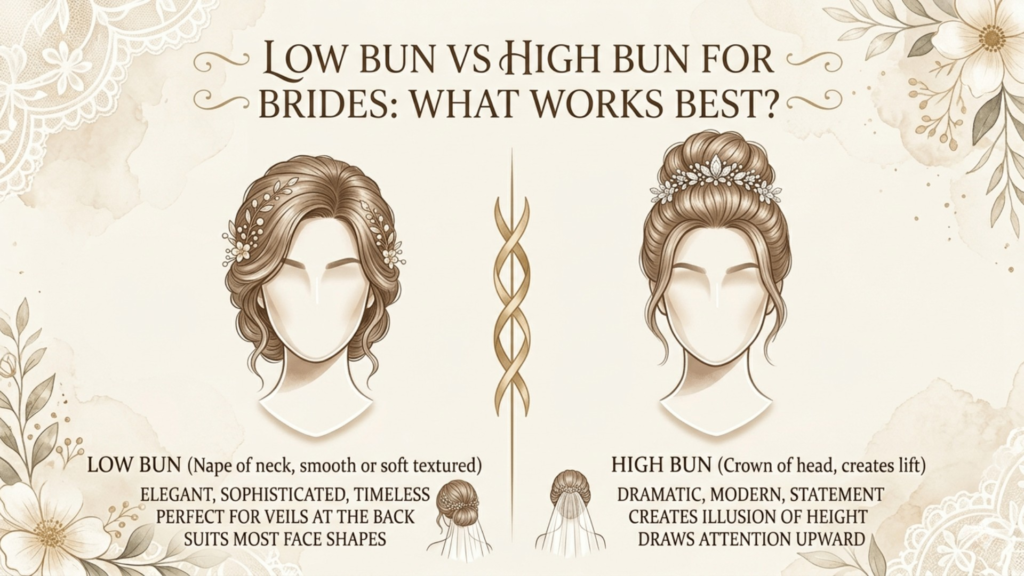
A low bun creates a soft, grounded look. It keeps attention on your face and dress without adding height. A high bun lifts everything upward, which creates a more structured and noticeable style.
This placement also affects how your veil sits, how accessories look, and how your neck and shoulders appear in photos.
So even if the bun style is similar, the height alone can change the final result completely.
What Is a Low Bun?
A low bun sits at the nape of your neck or slightly above it. It can be smooth and sleek or soft and textured, depending on your bridal style.
Why Brides Choose It
Most brides choose a low bun because it feels effortless and timeless. It does not overpower the face, and it pairs well with almost every dress style.
It also works well with veils because the placement feels natural and secure. You do not have to worry about it competing with other parts of your look.
Where It Works Best
Low buns work especially well for classic weddings, romantic styles, and indoor venues. They also suit brides who want something elegant without too much height or structure.
Things to Watch
A low bun can sometimes feel too simple if it lacks texture or detail. Without soft pieces or proper shaping, it may fall flat in photos.
What Is a High Bun?
A high bun sits on the crown or upper part of your head. It creates lift and draws attention upward.
Why Brides Choose It
Brides often choose high buns because they create a more dramatic and fashion-forward look. They highlight the neck, shoulders, and jawline, which can look very striking in photos.
It also gives the illusion of added height, which some brides prefer for balance.
Where It Works Best
High buns work well for modern weddings, clean dress designs, and structured bridal looks. They suit brides who want something more defined and noticeable.
Things to Watch
A high bun can feel too strong if it is overly tight or too high for your face shape. It also needs strong structure, or it can lose shape as the day goes on.
Low Bun vs High Bun: Face Shape Guide
Your face shape plays a big role in this decision.
Round Face
A low bun helps soften width and keeps the look balanced. A high bun adds height, which can make the face appear longer.
Oval Face
Both styles work well. The decision depends more on your dress and overall bridal style than face shape.
Square Face
A low bun softens strong angles. A high bun can work too, but it should include soft texture around the face.
Long Face
A low bun adds width and balances length. A high bun can make the face look even longer, so it needs careful styling.
Heart-Shaped Face
A low bun balances a wider forehead. A high bun works only if the sides are softened to avoid emphasizing the top.
How Your Wedding Dress Changes the Decision
Your dress and hairstyle should work together, not compete.
A low bun pairs well with detailed necklines or dresses with open backs. It keeps the focus on the dress while still looking polished.
A high bun works better with structured or minimalist dresses. It creates a clean frame around the neckline and shoulders.
If your dress is very detailed, a low bun often feels more balanced. If your dress is simple, a high bun can add interest.
Weather and Comfort Factors Brides Overlook
Comfort matters more than most brides expect.
Low buns usually feel more secure because they sit closer to the head and move less. This makes them a strong choice for long wedding days or outdoor settings.
High buns can be affected by wind or humidity more easily. They need stronger pins and structure to stay in place.
In warmer climates, both styles can work, but low buns often feel easier to maintain throughout the day.
Veil and Accessories Placement
Your bun choice directly affects veil placement.
Low buns support longer veils and traditional placements. The transition from bun to veil feels smooth and natural.
High buns work better with shorter veils or no veil looks. They also allow accessories to sit more visibly, which can be useful for statement pieces.
Placement is important because it changes how balanced your overall look appears in photos.
Longevity and Hold: Which One Lasts Longer?
Low buns generally last longer because they sit closer to the scalp and require less structural lifting.
High buns can also last well, but they depend more on strong pins, product support, and proper shaping.
However, longevity is not just about style. It also depends on how your hair is prepped and how the stylist builds the foundation.
A well-built high bun can last longer than a poorly prepared low bun.
Common Mistakes Brides Make
One common mistake is choosing a bun based only on inspiration photos without considering face shape or dress style.
Another mistake is assuming high buns always look more “bridal.” In reality, they suit specific face shapes and dresses better than others.
Some brides also skip trials and only realize later that the style feels too heavy, too flat, or too high for their features.
Ignoring comfort is another issue. You will wear this style for many hours, so how it feels matters as much as how it looks.
How to Decide Between Low Bun and High Bun
Start with your dress. If your dress is detailed or romantic, a low bun usually feels more balanced. If your dress is structured or minimal, a high bun may suit it better.
Then think about your face shape. Round or long faces often benefit from more careful placement choices, while oval faces have more flexibility.
Next, consider your venue. Outdoor weddings may require more secure styles. Indoor weddings allow more styling freedom.
Finally, think about comfort. You should be able to move, sit, and enjoy your day without worrying about your hair.
What to Test During Your Bridal Hair Trial
Your trial is where the real decision happens.
Try both low and high bun versions if you are unsure. Look at how each one photographs from different angles, not just the front.
Check how the style feels after a few hours. Movement can change how secure it feels.
Also test your veil or accessories during the trial. Placement can change the entire look more than the bun itself.
Find the Right Bun for Your Bridal Look
Choosing between a low bun and a high bun can feel confusing when you only see perfect photos online.
At Brittany Brown Beauty, we help brides choose styles based on face shape, dress, and real wedding conditions. During your trial, we adjust placement and structure so your hair feels secure and looks right from every angle.
Book your bridal hair consultation to find a bun style that fits your look and holds throughout your wedding day.
Frequently Asked Questions
Both are bridal. The right choice depends on your face shape, dress, and overall style.
Low buns usually last longer because they sit lower and require less structural height.
Yes. Face shape influences how balanced a low or high bun looks in photos.
Yes, but shorter veils or higher placements usually work better.
Low buns often work better because they stay more secure in wind and humidity.
Related Articles:
- How to Prep Your Hair Before Your Wedding Day
- How to Choose the Right Bridal Hairstyle for Your Wedding Day
- Bridal Hair Trends 2026 in Orange County
- Bridal Hairstyles for Different Face Shapes: What Flatters You Most
- What to Ask Your Bridal Makeup Artist Before Booking
Ready to book your date?
Book a quick bridal beauty connection call and we will walk through your timeline, look, and availability.