Your wedding hairstyle should do more than look good for the first hour. It needs to stay comfortable, photograph well, and hold through the ceremony, photos, weather, dancing, and a full day of movement. That is why hair type matters so much when choosing a bridal style.
A hairstyle that works beautifully on thick hair may fall apart on fine hair within a few hours. Likewise, a sleek style that looks polished on dense hair can make thin hair appear flatter in photos. The best bridal hairstyles are not chosen based on trends alone. They are chosen based on how your hair naturally behaves.
At Brittany Brown Beauty, bridal hair is planned around texture, density, weather conditions, dress details, and long-wear performance so the style still looks beautiful long after the ceremony ends.
Why Hair Type Changes Everything for Bridal Styling
Many wedding blogs tell brides to choose a hairstyle that “fits their vibe” or complements their face shape. While those things matter, they miss the technical side of bridal hair.
Hair type determines how a style holds throughout the day.
A hairstyle can look perfect during a morning trial and then slowly collapse by the reception because the structure was never suited to the bride’s actual hair texture or density. Experienced bridal hairstylists think beyond how the style looks at the start of the day. They also think about how it wears after hours of movement, heat, humidity, hugs, dancing, and outdoor photos.
That is why the planning process should always start with the hair itself.
Fine Hair vs. Thin Hair vs. Thick Hair: The Real Differences
These terms often get mixed together, but they describe very different things.
Fine hair refers to the thickness of each individual strand. Fine strands are smaller in diameter, which means they are softer, lighter, and usually less resistant to heat and humidity. Because the strands are so smooth and delicate, curls tend to loosen faster and pins can slide more easily.
Thin hair refers to density, meaning how much hair is actually growing on the scalp. Someone can have fine hair with high density or coarse hair with low density.
Thick hair describes high density. Thick hair usually has more weight and volume, which changes how hairstyles sit and hold throughout the day.
Dense hair simply means there is a large amount of hair overall, regardless of strand texture.
These differences matter because bridal hairstyles rely on structure. The weight, texture, and density of the hair affect how long curls last, how secure pins feel, and how the style photographs under different lighting conditions.
Best Bridal Hairstyles for Fine Hair
Fine hair is extremely common, especially among brides who struggle to keep curls from falling.
Why Fine Hair Loses Curl Faster
Fine strands do not have much internal structure, so curls naturally relax more quickly. Heat tools can create shape temporarily, but once the hair cools and encounters humidity, body heat, or movement, the curl starts dropping.
Outdoor weddings make this even more noticeable. Warm air and moisture soften the hold of styling products, which causes loose curls to relax much faster.
That does not mean fine hair cannot hold a bridal style. It simply means the style has to work with the hair instead of against it.
What Works Best for Fine Hair
Soft low buns and chignons work especially well because they rely on pins and structure rather than volume alone.
Half-up hairstyles can also create a fuller appearance, particularly when the crown is gently backcombed for support. Meanwhile, braided styles are excellent for fine hair because the braid itself creates structure and helps lock the strands into place.
Soft waves can still look beautiful on fine hair, but they usually hold better when the waves are pinned strategically throughout the style instead of left completely loose.
What to Avoid
Large, loose curls that depend on volume often lose shape quickly on fine hair. Very sleek styles can also make fine hair appear flatter in photos, especially in bright outdoor lighting.
Instead of forcing maximum volume, the goal should be creating movement and shape that lasts.
Best Bridal Hairstyles for Thin Hair
Thin hair brings a different challenge. In most cases, the main concern is scalp visibility rather than curl retention.
Why Thin Hair Behaves Differently
When hair density is low, tightly pulled styles can expose the scalp more than expected. This becomes especially noticeable under flash photography or direct sunlight.
Middle parts can also widen throughout the day as the hair relaxes, which may make the style appear less full by the reception.
What Works Best for Thin Hair
Volume-building techniques make a major difference for thin hair. Blowouts with root lift, gentle backcombing, and textured styling all help create the appearance of fuller hair.
Low buns work well because they gather the hair into one concentrated area rather than spreading it thinly across the head.
Side-swept hairstyles are another strong option. Since the hair overlaps itself, the style naturally creates more visual fullness in photos.
Loose braids can also look beautiful when the braid is softly expanded after styling to add width and softness.
Best Bridal Hairstyles for Thick and Dense Hair
Many brides assume thick hair is easier to style, but thick hair comes with its own challenges.
Why Thick Hair Can Become Heavy
Dense hair carries weight. Once that weight is pinned into an updo, gravity starts pulling against the style all day long.
As a result, tightly sculpted styles may begin expanding, shifting, or puffing throughout the event. This is not usually a product issue. It is simply the natural behavior of heavier hair.
What Works Best for Thick Hair
Textured buns, romantic waves, and braided styles tend to perform beautifully because they allow the hair to move naturally instead of forcing it into a rigid shape.
Half-up styles are also popular for thick hair because the weight stays distributed more evenly.
Layering makes a big difference as well. Proper layers remove bulk and help the hair move more softly in photos rather than appearing heavy or blocky.
Bridal Hairstyles for Curly and Naturally Textured Hair
Curly and textured hair should be styled in a way that respects the natural curl pattern instead of trying to erase it.
Why Natural Texture Often Holds Better
When stylists work with the curl pattern rather than against it, the style usually lasts longer and feels more comfortable.
Defined curls worn down or partially pinned back photograph beautifully because the hair already has natural movement and structure. Loose curly updos also create softness without needing excessive teasing or heat styling.
How Humidity Affects Curly Hair
Humidity affects textured hair differently than straight hair. Instead of falling flat, curls often expand as they absorb moisture from the air.
Sometimes this extra volume works beautifully. However, uneven moisture absorption can create frizz or inconsistent curl definition if the prep work was not done properly.
For that reason, bridal hairstyles for textured hair should be designed around the weather from the very beginning. Trying to force naturally curly hair completely straight in a humid environment usually creates more stress than necessary.
How Humidity and Weather Affect Bridal Hair
Even in relatively mild climates like Orange County, weather still affects bridal hair.
Outdoor ceremonies, crowded receptions, heat, and humidity all change how hair behaves over the course of the day.
Fine hair tends to lose volume and go limp in moisture. Meanwhile, coarse or textured hair often expands and frizzes. Because of this, long-lasting bridal hairstyles rely on more than hairspray alone.
A stylist should build internal structure into the hairstyle from the start using proper prep, sectioning, pin placement, and product layering.
The wedding setting matters too. A summer beach ceremony requires a different approach than an indoor ballroom reception with air conditioning.
Why Some Hairstyles Photograph Differently Based on Hair Density
Hair often looks different on camera than it does in person.
Bright outdoor light can make fine or thin hair appear more transparent, especially around the crown or part line. On the other hand, thick hair can appear much fuller in flash photography than the bride expected.
This is why bridal hairstylists should think about photography while designing the style. Lighting, flash, and camera angles all affect how the hairstyle appears in the final images.
The goal is not just to create a hairstyle that looks good in the mirror. It should also look balanced and polished in photos the bride will keep forever.
Hair Extensions: When They Help and When They Hurt
Hair extensions can completely transform some bridal styles, but they are not the right solution for everyone.
For brides with fine or thin hair, extensions can add fullness, length, and extra support for updos or waves. However, the extensions must match the natural hair closely in both color and texture.
If the natural hair is too sparse to cover the attachment points, the extensions may become visible in photos or outdoor lighting.
For brides with very thick hair, extensions are often unnecessary. In fact, adding extra weight can make styling harder and increase the chances of the hairstyle loosening throughout the day.
That is why extension planning should happen during the consultation, not at the last minute.
Why Hair Prep Before the Wedding Matters More Than Most Brides Think
Healthy hair simply styles better.
Hair that has been regularly trimmed, moisturized properly, and protected from excessive heat usually holds styles more reliably. Damaged hair, meanwhile, often struggles to grip pins and maintain shape.
At the same time, overly conditioned hair can become too slippery for styling. Most bridal hairstylists prefer hair that feels clean but not overly soft on the wedding day.
Timing also matters for color appointments and chemical treatments. Fresh color can behave unpredictably under heat styling, which is why most professionals recommend completing major color services at least one to two weeks before the wedding.
How Your Dress Neckline and Veil Affect Hairstyle Choice
Your hairstyle should work with your dress, not compete against it.
High necklines and detailed backs often pair beautifully with updos because the hairstyle keeps the dress visible. Meanwhile, off-the-shoulder gowns usually balance well with soft waves or half-up styles that frame the neckline.
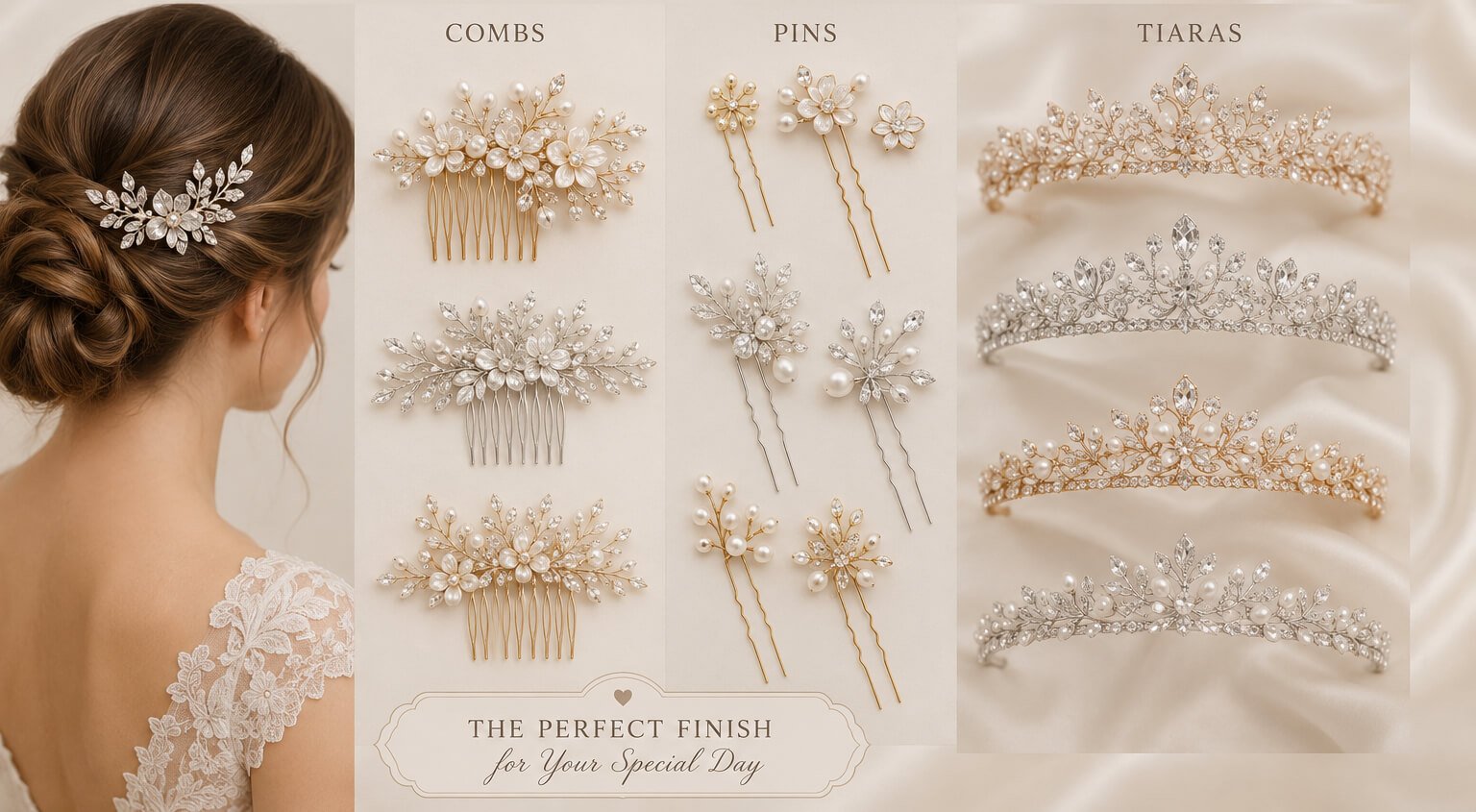
Veils also affect the structure of the hairstyle. The stylist needs to plan exactly where the comb will sit and how the style will look once the veil is removed after the ceremony.
These details may seem small, but they make a major difference in the overall bridal look.
Why Bridal Hair Trials Are Non-Negotiable
A bridal hair trial is not just an extra appointment. It is one of the most important parts of the process.
Trials allow the stylist to test how the hair responds to heat, product, structure, and wear time. They also give the bride a chance to see how the hairstyle feels after several hours instead of just a few minutes in the salon chair.
Most importantly, trials reveal problems early.
The curls may drop faster than expected. The updo might feel heavier than planned. The veil placement could also need adjustment. It is much better to discover these things during the trial than on the wedding morning.
A consultation creates the direction. The trial refines it into a reliable plan.
Book Your Bridal Hair Consultation
Every bride deserves a hairstyle that feels comfortable, photographs beautifully, and lasts from the ceremony to the final dance of the night. At Brittany Brown Beauty, bridal hair is designed with long-lasting wear in mind from the very beginning.
Schedule your bridal hair consultation today and create a wedding hairstyle tailored to your hair type, wedding setting, and overall bridal look.
Frequently Asked Questions
1. How far in advance should I book my bridal hair consultation? Most bridal hairstylists are booked six to twelve months in advance, especially during peak wedding season. Hair trials are usually scheduled about two to three months before the wedding date.
2. Can fine hair still hold a bridal hairstyle all day? Yes. Fine hair can absolutely hold a bridal style when the hairstyle is designed properly. Styles with strong internal structure, braiding, pin support, and realistic volume usually perform best.
3. Should I wash my hair the morning of the wedding? In many cases, washing your hair the night before works best because the hair has slightly more texture and grip by the next day. However, the ideal prep depends on your specific hair type and styling plan.
4. Does humidity affect bridal hairstyles in Orange County? Yes. Heat and humidity affect every hair type differently. Fine hair often loses volume, while textured hair may expand or frizz. A bridal hairstyle should always be planned around the actual wedding environment.
5. What if I change my mind after the bridal hair trial? That is completely normal. The trial exists to test ideas and make adjustments. If the first version does not feel right, the stylist can refine the look or explore a different direction before the wedding day.
Related Articles:
- When to Book Your Bridal Hair Stylist in Orange County
- Low Bun vs High Bun for Brides: What Works Best?
- Bridal Hairstyles for Different Face Shapes: What Flatters You Most
- How to Prep Your Hair Before Your Wedding Day
- Bridal Hair Trends 2026 in Orange County
- Trending Long Bridal Hairstyles in 2026