Posted on

Second-Look Bridal Hair Transformations for the Reception

second-look bridal hair transformations for the reception

Second-look bridal hair transformations for the reception give brides a way to move from a polished ceremony style to something more relaxed once the dancing starts. Picture a bride who walks down a bluff-top aisle with a secure updo and a veil, then lets her hair down for the reception. The idea is simple, but the plan behind it matters, especially at coastal venues where wind, humidity, and sea air shape how hair behaves.

At Brittany Brown Beauty, Brittany Brown plans hair styling around your hair, your dress, and your venue instead of a fixed package look. The goal is a style that feels like you, but elevated.

This guide shows how to plan a second look for a wedding in Orange County or San Diego.

Why Some Brides Choose a Second Hair Look

A wedding day asks hair to do several jobs. The ceremony often calls for a style that stays put in wind and holds a veil. The reception is in a different mood, with dinner, toasts, and dancing. A second look lets the style match each part of the day. If you’re still deciding which hairstyle best suits your wedding, how to choose the right bridal hairstyle for your wedding day offers a helpful starting point.

Brides may choose a change for a few reasons:

  • Comfort: Removing pins, a veil, or heavy accessories can feel like a relief after the ceremony and portraits.
  • Movement: A looser style suits dancing and a relaxed reception.
  • Variety in photos: A second look adds a different feel to the evening images.
  • Coastal conditions: A secure ceremony style helps in wind, and a softer reception style suits a more sheltered or indoor space.

Because Brittany plans each look around the individual, the best second look depends on your hair length, thickness, texture, and the style you start with.
Making the Transition Work

A good transformation starts with the first style. The ceremony look needs to hold up through photos and also come apart or adjust without leaving hair flat or tangled. Three planning areas help.

Simple Updo-to-Down Transformations

  • Start with a style that can release: Some updos and half-up styles take down more easily than others, so tell Brittany early that you want a second look.
  • Think about texture: Texture affects how a style transitions, so tell Brittany about your hair texture and thickness.
  • Consider a half-up first look: A half-up style keeps hair off the face for the ceremony while allowing the remaining length to move naturally. These half-up, half-down bridal hairstyles offer inspiration if you want a style that can be adapted for the reception.
  • Compare up and down options: If your ceremony is outdoors, consider how much control you need before deciding which style to start with. This comparison of updo vs. down hairstyles for windy coastal venues can help you weigh the trade-offs.
  • Bring photos of both looks: Images of the ceremony style and the reception style give Brittany a clear picture.
  • Ask about a bridal trial: Brittany strongly recommends a bridal trial. She tests the look directly on you, works through any adjustments, and makes sure you know what to expect on your wedding day. Mention your second-look idea so you can talk it through with her.

Removing Accessories for a Relaxed Reception Look

  • Choose accessories that are easy to remove: Pins, combs, and clips should come out without pulling or disturbing the style.
  • Plan your veil removal: Veils catch wind, so anchor placement matters for the ceremony and for taking it out afterward. This guide to bridal hair with a veil and what works with every veil length explains how veil placement can work with different hairstyles.
  • Keep a few accessories for the reception: A simple clip or pin can add polish to the second look.
  • Assign a helper: A bridesmaid or your planner can hold the pieces you remove so nothing gets lost.
  • Share your accessories with Brittany: Letting her know which pieces you plan to wear helps her plan the style around them.

Timing the Change Between Ceremony and Reception

  • Share the timeline with your planner and photographer: A clear schedule shows when portraits end and when the reception begins.
  • Build in a quiet window: Choose a time and place for the change, such as a getting-ready suite or a private room at the venue.
  • Decide who will help: Settle ahead of time who will make the change, and ask Brittany about her availability at the reception when you book.
  • Plan around the rest of the party: Brittany plans the schedule in advance during booking. Plan on roughly 60 to 90 minutes for the bride and 45 to 60 minutes per bridesmaid. For larger bridal parties, she brings additional artists so everyone finishes on schedule without cutting corners on the bride’s application.

Hair length and natural texture can affect how easily one style becomes another. Brides with longer hair may have more options for wearing their hair down, while extensions may help create extra length or fullness when needed. Explore hair extensions for brides and when and how to use them if you are considering them for either look.
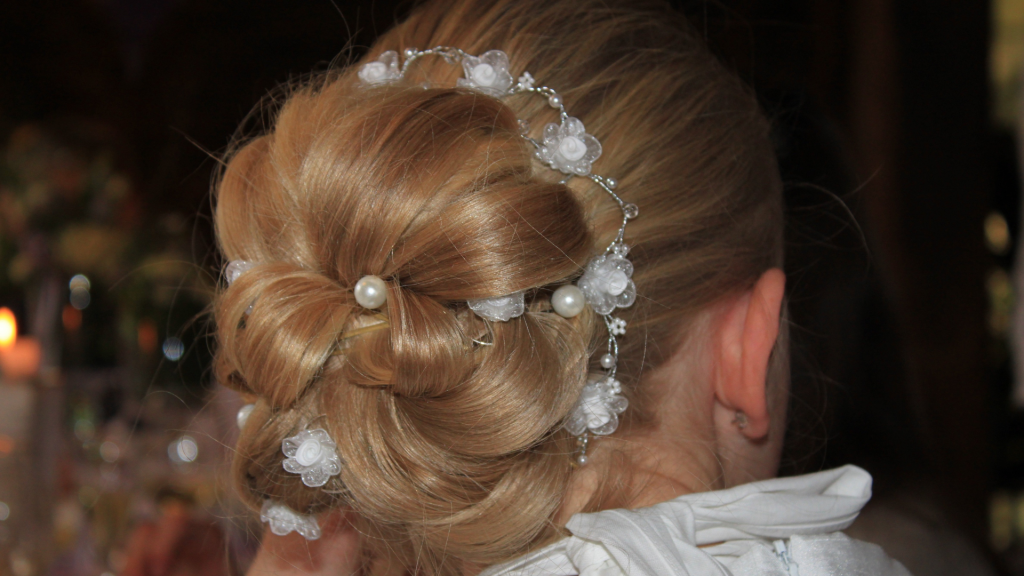
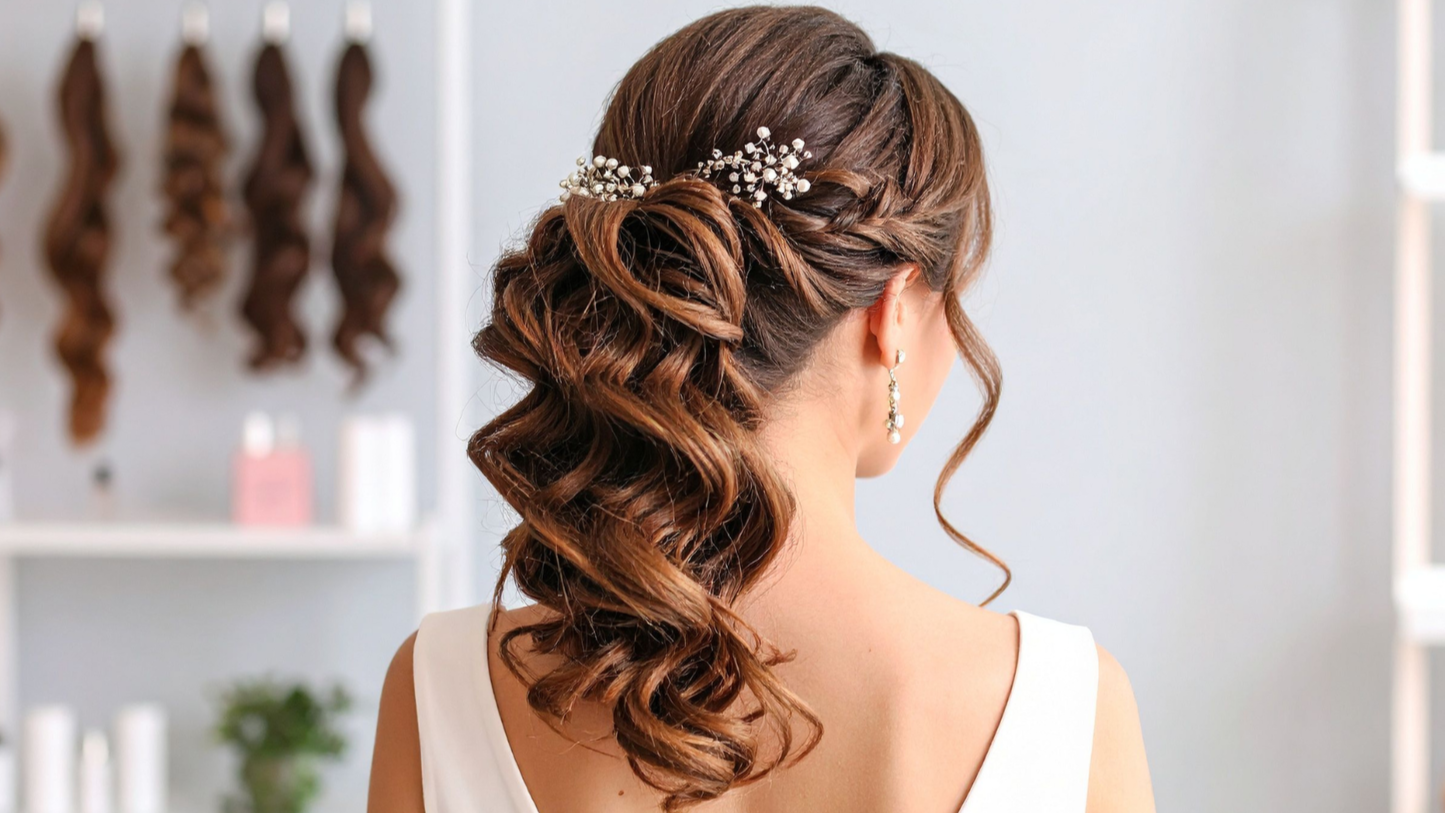
hair style brittany brown beauty

Is a Second Look Worth the Extra Time?

A second look suits some brides more than others. Ask yourself a few questions:

  • Do you want a different feel at the reception? If you love your ceremony style all night, a second look may not be necessary.
  • Will you wear a veil or heavy accessories? Removing them already changes the look, and sometimes that is enough.
  • How much time does your day allow? A packed schedule may favor one style that works from start to finish.
  • How does your hair behave in humidity and wind? Sea air can soften a style on its own, so a single, well-planned style sometimes does the job. These suggestions for bridal hairstyles that hold up in Southern California humidity can help you consider which styles suit your venue.
  • What feels right to you? The best choice is the one that helps you feel relaxed and confident.

Your natural texture also matters when choosing a transformation. For curls and textured hair, the first style may need to preserve the curl pattern so it can look intentional when released. These ideas for styling curly and textured hair for your wedding day can help you plan around your hair’s natural behavior.

Fine or thin hair may need a different approach to create volume in both styles, particularly if the reception look involves loose waves. Consider these bridal hairstyles for fine or thin hair when discussing which options are realistic for your hair.

Braids can also provide a practical starting point for a second look. Depending on how the style is constructed, details can be retained for the reception or released for a softer finish. These braided bridal hairstyles for boho and classic weddings offer further inspiration.

Talk through the options with Brittany when you book.

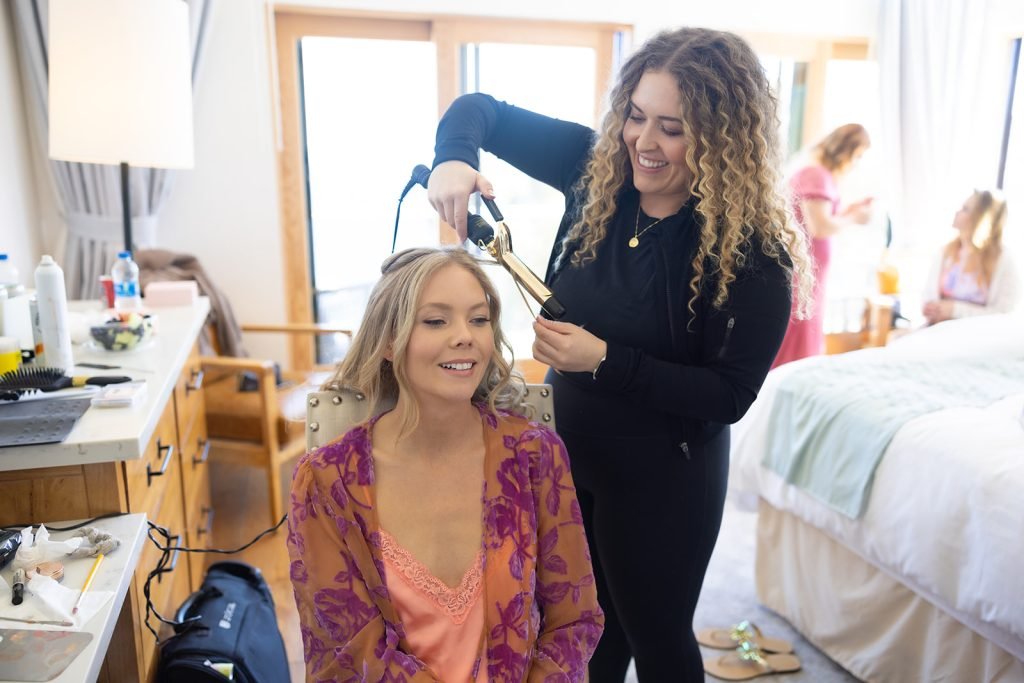
Because Brittany is fully mobile, the process happens where you are getting ready. She arrives with a complete professional kit, including studio-quality lighting and seating, and sets up in about 15 to 20 minutes. You skip the salon commute, and your getting-ready party stays together. No one can promise how any style will wear after a full day at the coast.

Brittany has worked in the makeup industry for more than 11 years and trained at Empire Academy of Makeup in Orange County. You can see examples of her work in the portfolio and read more about her background on the About page.

Plan Your Ceremony and Reception Hairstyles

A second hairstyle can give your reception look a fresh feel while complementing your ceremony style. Brittany can discuss your hair type, veil, and reception plans to help you decide whether a hairstyle change is right for your wedding day. Spring and fall weekends in Orange County can book quickly, so reach out once your venue is confirmed. A signed contract and deposit secure your date. Schedule a free consultation to discuss your wedding hair plans and availability.

Frequently Asked Questions

1. How long does second-look bridal hair transformations for the reception typically take on a wedding morning?

Timing depends on the style, the length and thickness of your hair, and the size of the bridal party. Plan on roughly 60 to 90 minutes for the bride and 45 to 60 minutes per bridesmaid. Setup takes about 15 to 20 minutes. Brittany plans the schedule in advance during booking, and a trial helps confirm how long your chosen style needs.

2. Will second-look bridal hair transformations for the reception hold up in Southern California humidity?

A style planned for your hair and venue, plus a trial to see how your hair responds, gives you the best chance of a look that holds through the ceremony and photography. Humidity, sea air, and wind still affect every style, so no one can promise an exact result. Tell Brittany about your venue and hair type early so she can plan accordingly.

3. What accessories pair well with second-look bridal hair transformations for the reception?

Choose accessories that stay secure in the wind and come out easily when you change styles. Pins, combs, and clips can sit within an updo or hold back the sides of a half-up style. Veils work with most styles when anchored securely. Tell Brittany about your veil and any accessories you plan to wear so she can plan the style around them.

4. Can I change from an updo to loose waves without washing my hair between looks?

Sometimes. The result depends on how the updo is secured, your hair’s natural texture, and how long the style has been in place. Planning the transformation with your stylist beforehand helps determine whether the hair can be released and reshaped without washing it. A trial is a useful time to discuss what is achievable for your chosen styles.

5. Should I book a second hair look if I am wearing extensions?

Extensions can offer extra length or fullness for a reception style, but they also need to be considered when planning the initial hairstyle and the transition. Discuss the type of extensions you plan to wear and whether they will remain in place during the change. Your stylist can then help you decide whether a second look is practical for your hair and schedule.
Posted on

Styling Curly and Textured Hair for Your Wedding Day

styling curly and textured hair for your wedding

Styling curly and textured hair for your wedding starts with understanding how your hair behaves. Then, plan around your dress, venue, and desired look. Every curl pattern and texture has its own volume and response to weather. That means no single approach works for everyone.

At Brittany Brown Beauty, Brittany Brown plans hair styling around the individual instead of a fixed package look. The goal is a style that feels like you, but elevated.

This guide covers how to prepare for a wedding in Orange County or San Diego, where sea air, humidity, and wind can all affect hair.

Why Curly and Textured Hair Deserves a Specialized Approach

Curly and textured hair differs from straight hair in pattern, density, and moisture response. Even two brides with curls may need different styling plans. Curl size, length, and thickness all affect how a style looks and holds. Explore the best bridal hairstyles based on your hair type to find options that work with your natural texture.

Southern California coastal conditions add another layer. Humidity and sea air can change how curls look through the day, and wind can move loose styles around at bluff-top, beachfront, and waterfront venues. A good plan accounts for your texture and for where you will be photographed.

Brittany builds each look around your hair, your dress, and your venue. Bring photos of your natural hair on a good day, along with photos of styles you love, so the conversation starts from what is real for your hair. You can also use this guide on how to choose the right bridal hairstyle for your wedding day to help narrow down the styles that suit your preferences.

Styling Techniques

Three planning areas shape a curly or textured wedding style. Each one starts with a clear conversation about your hair.

Defining Curls Without Frizz

Some brides with curls want a definition that looks soft and natural, not stiff. The best starting point is a clear picture of what you like about your hair.

  • Describe your natural pattern: Tell Brittany how your curls look and behave on a normal day.
  • Share your routine: Mention the products you use and how your hair responds to them, along with any skin sensitivities, reactions, or recent treatments.
  • Decide how defined you want to look: Some brides want polished, uniform curls, while others prefer a relaxed, natural texture.
  • Share your reference photos: Images of styles you love help Brittany understand the finish you want.

No one can promise how any style will wear after a full day, so share your concerns early and plan for natural movement.

Updos That Celebrate Natural Texture

An updo can showcase your natural texture rather than hide it. Curls add volume and shape when pinned up. An updo also keeps hair off your face and neck, making it practical for windy conditions. A low or high bun creates a different silhouette. Consider your curl pattern and dress when choosing. Compare a low bun vs. high bun for brides to find your preferred style.

  • Consider a textured updo: A relaxed style that keeps your natural pattern can look full and romantic.
  • Think about half-up styles: A half-up look keeps hair off the face while the rest of your curls stay loose. Half-up, half-down bridal hairstyles offer another option when you want to show off your curls without pulling all your hair away from your face.
  • Plan for your neckline and veil: Your dress shape and veil placement influence which style works best, so bring photos of both. The guide to bridal hair with a veil and what works with every veil length can help you consider how the veil will sit with your chosen style.
  • Bring your accessories: Pins, combs, clips, and veils work best when you plan them together with the style.

Braids can also work beautifully with natural curls, adding detail while letting your texture remain part of the finished look. Depending on your preference, braided bridal hairstyles for boho and classic weddings can provide inspiration for a more detailed updo or a softer, romantic style.

Down styles can work beautifully too. They move more in wind and humidity, so plan for natural movement in your photos. Brides with longer curls have additional options for showing off their length, and these ideas for long bridal hairstyles can help you explore different ways to wear your hair.

Managing Humidity on Curly Hair

Humidity affects every hair type, and it can change how curls look through a long day. Planning ahead helps you feel relaxed about it.

  • Choose a style that suits the setting: Outdoor and waterfront venues bring more wind and moisture than indoor spaces.
  • Keep your natural texture in the plan: A style that works with your hair often looks better than one that fights it.
  • Share your venue early: Brittany plans each look around your hair, your dress, and your venue.
  • Plan for the finish: Brittany finishes the style so it is ready for the ceremony, photography, and reception, though no one can promise how any style will wear after a full day.

For additional guidance on selecting a style for coastal conditions, explore bridal hairstyles that hold up in Southern California humidity. It can help you think through how the venue and weather may affect your styling choices before the wedding day.

Finding a Stylist Experienced With Your Texture

bridal hair stylist

Hair texture is personal, so it helps to ask questions before you book. Strong answers are specific and open.

  • Ask about experience with your texture: Share photos of your hair and ask how the artist plans a style for your curl pattern.
  • Ask how the plan comes together: Find out how the style will be planned before the wedding day.
  • Ask how the plan fits your venue: Coastal, outdoor, and indoor settings each affect hair differently.
  • Ask how the morning will run: A clear schedule helps your whole getting-ready party stay on time.

Brittany offers hair styling as part of her bridal services and as a standalone service. She has worked in the makeup industry for more than 11 years and trained at Empire Academy of Makeup in Orange County. One bride describes her as open, honest, and thorough in her communication, so you can talk through your hair with her at your consultation.

Because Brittany is fully mobile, the process happens where you are getting ready. She arrives with a complete professional kit, sets up in about 15 to 20 minutes, preps the hair, styles the chosen look, and finishes it so it is ready for the ceremony, photos, and reception. You skip the salon commute, and your getting-ready party stays together. For larger bridal parties, she brings additional artists so everyone finishes on schedule without cutting corners on the bride’s application. Brides also receive a complimentary makeup touch-up kit with lipstick, powder, and blotting sheets.

You can see examples of her work in the portfolio and read more about her background on the About page.

Plan Your Wedding Hairstyle

Your hair texture, preferred style, and wedding venue all play a role in choosing the right hairstyle for your day. Contact Brittany to discuss your plans, share inspiration photos, and explore your options. Spring and fall weekends in Orange County can book quickly, so it’s best to reach out once your venue is confirmed. Your date is secured with a signed contract and deposit. Schedule a consultation to discuss your wedding hairstyle.

Frequently Asked Questions

1. How long does styling curly and textured hair for your wedding typically take on wedding morning?

Timing depends on your hair length, thickness, texture, and the style you choose, along with the size of the bridal party. Brittany’s general guidance is roughly 60 to 90 minutes for the bride and 45 to 60 minutes per bridesmaid. Setup takes about 15 to 20 minutes. She plans the schedule in advance during booking so each person has enough time.

2. Will styling curly and textured hair for your wedding hold up in Southern California humidity?

Careful prep and a style planned for your texture and venue help a look hold through the ceremony, photography, and reception. Humidity, sea air, and wind still affect every hair type, so no one can promise an exact result. Sharing your hair type and venue early helps Brittany plan for the conditions.

3. What accessories pair well with styling curly and textured hair for your wedding?

Accessories should add to the look and stay secure with your texture. Pins, combs, and clips can sit within an updo or hold back the sides of a half-up style. Veils work with most styles when anchored securely. Bring any accessories you plan to wear so Brittany can style everything together.

4. Should I wear my natural curls down or choose an updo for my wedding?

Both options can work beautifully. Wearing your curls down shows their natural shape and length, while an updo keeps hair away from your face and neck. Your decision can depend on your preferred look, dress, and the conditions at your venue. Discussing both options with your stylist helps you find a style that feels comfortable and suits your wedding plans.

5. How should I prepare my curly or textured hair before my bridal styling appointment?

Keep to a hair routine that you already know works for you, and let your stylist know which products you use and how your curls normally behave. Bring reference photos of your natural texture and preferred wedding hairstyles. Sharing these details ahead of time helps your stylist plan a look that complements your curl pattern and desired finish.

Posted on

Hair Extensions for Brides: When and How to Use Them

hair extensions for brides

Extensions come up in almost every bridal hair consultation I do, usually with some version of the same question: do I actually need them? The honest answer is that it depends entirely on your hair, the style you’re picturing, and what you want your wedding-day look to feel like. Extensions aren’t a requirement for a beautiful bridal look, but for the right bride and the right style, they can make a real difference.

Quick answer: extensions tend to make the most sense when a bride wants length or volume her natural hair can’t currently support, especially for certain updos or fuller styles. They’re not necessary for every bride or every look, and the right call really comes down to a conversation about your hair, your dress, and your venue. Here’s how I walk brides through that decision.

Why Brides Consider Extensions for Their Wedding

Wedding hair often asks for a bit more than everyday styling, whether that’s a fuller updo, more dramatic length for down styles, or extra volume that photographs well under any lighting. Natural hair doesn’t always have the length or density to support certain looks on its own, and that’s usually where the extension conversation starts. It’s less about “fixing” anything and more about giving a style room to do what it’s meant to do.

This ties back to the same philosophy I bring to every service: enhance what’s already there, rather than forcing hair into something it isn’t. Extensions, when used thoughtfully, are a tool for that, not a departure from it.

When Extensions Make Sense

Not every bride needs extensions, but there are a few situations where they genuinely help.

Adding Length for an Updo

Certain updo styles rely on length to create fullness, texture, or a certain silhouette, things like a low chignon with soft volume or a style with cascading pieces. If your natural hair is shorter or finer, extensions can help an updo achieve that finished shape without looking flat or thin, especially in photos taken in bright Southern California daylight.

Adding Volume for Thin Hair

Extensions aren’t only about length. For brides with finer or thinner hair, extensions can add body and volume throughout, which helps a style hold its shape better over a long wedding day and photographs with more dimension.

Matching and Blending Extensions

The most important part of using extensions well is making sure they blend seamlessly with your natural hair, in color, texture, and placement. Well-matched, well-placed extensions should be undetectable once styled, supporting the look rather than becoming the focal point. This is something best assessed in person, since color and texture matching depends on your actual hair, not a general guess.

What to Discuss With Your Stylist Beforehand

If you’re considering extensions, the best time to bring it up is during your consultation or trial, not the morning of the wedding. A trial gives us the chance to test the style on your actual hair, see how extensions blend and hold, and make adjustments well before the big day. It’s also the right time to talk through your venue and any Southern California coastal conditions, humidity, sea air, and wind, that might affect how a style holds throughout the day.

On wedding morning, the process stays the same whether or not extensions are involved. I arrive with a complete professional setup, including my own lighting and seating, so no venue limits the result. From there it’s skin and hair prep, styling, and a final setting step designed to help your look hold up through ceremony, photos, and reception.

If you’d like to see real examples of extension-supported bridal styles, you can browse the portfolio, or read more about the approach behind it on the about page. When you’re ready to talk through your own wedding-day hair, reach out through the contact page.

Frequently Asked Questions

1. How long does hair extensions for brides typically take on wedding morning? 

Styling time with extensions depends on the specific look and how much length or volume you want to add. During booking, Brittany Brown Beauty builds extensions into your wedding-morning timeline so you have enough time for setup and styling. Setup itself takes about 15 to 20 minutes before styling begins.

2. Will hair extensions for brides hold up in Southern California humidity? 

Every style, with or without extensions, is finished using setting techniques suited to coastal Orange County and San Diego conditions, including heat, humidity, sea air, and wind. A trial is the best way to see exactly how extensions and your chosen style hold up together in real conditions.

3. What accessories pair well with hair extensions for brides? 

It depends on the style. Extensions used for a fuller updo pair well with delicate combs or pins that won’t compete with the added volume, while extensions used for length in a down style often work beautifully with a simple veil attachment or a few scattered pins. The right choice comes down to your dress, venue, and personal style, which we can talk through together during your consultation.