Posted on

Hair Extensions for Brides: When and How to Use Them

hair extensions for brides

Extensions come up in almost every bridal hair consultation I do, usually with some version of the same question: do I actually need them? The honest answer is that it depends entirely on your hair, the style you’re picturing, and what you want your wedding-day look to feel like. Extensions aren’t a requirement for a beautiful bridal look, but for the right bride and the right style, they can make a real difference.

Quick answer: extensions tend to make the most sense when a bride wants length or volume her natural hair can’t currently support, especially for certain updos or fuller styles. They’re not necessary for every bride or every look, and the right call really comes down to a conversation about your hair, your dress, and your venue. Here’s how I walk brides through that decision.

Why Brides Consider Extensions for Their Wedding

Wedding hair often asks for a bit more than everyday styling, whether that’s a fuller updo, more dramatic length for down styles, or extra volume that photographs well under any lighting. Natural hair doesn’t always have the length or density to support certain looks on its own, and that’s usually where the extension conversation starts. It’s less about “fixing” anything and more about giving a style room to do what it’s meant to do.

This ties back to the same philosophy I bring to every service: enhance what’s already there, rather than forcing hair into something it isn’t. Extensions, when used thoughtfully, are a tool for that, not a departure from it.

When Extensions Make Sense

Not every bride needs extensions, but there are a few situations where they genuinely help.

Adding Length for an Updo

Certain updo styles rely on length to create fullness, texture, or a certain silhouette, things like a low chignon with soft volume or a style with cascading pieces. If your natural hair is shorter or finer, extensions can help an updo achieve that finished shape without looking flat or thin, especially in photos taken in bright Southern California daylight.

Adding Volume for Thin Hair

Extensions aren’t only about length. For brides with finer or thinner hair, extensions can add body and volume throughout, which helps a style hold its shape better over a long wedding day and photographs with more dimension.

Matching and Blending Extensions

The most important part of using extensions well is making sure they blend seamlessly with your natural hair, in color, texture, and placement. Well-matched, well-placed extensions should be undetectable once styled, supporting the look rather than becoming the focal point. This is something best assessed in person, since color and texture matching depends on your actual hair, not a general guess.

What to Discuss With Your Stylist Beforehand

If you’re considering extensions, the best time to bring it up is during your consultation or trial, not the morning of the wedding. A trial gives us the chance to test the style on your actual hair, see how extensions blend and hold, and make adjustments well before the big day. It’s also the right time to talk through your venue and any Southern California coastal conditions, humidity, sea air, and wind, that might affect how a style holds throughout the day.

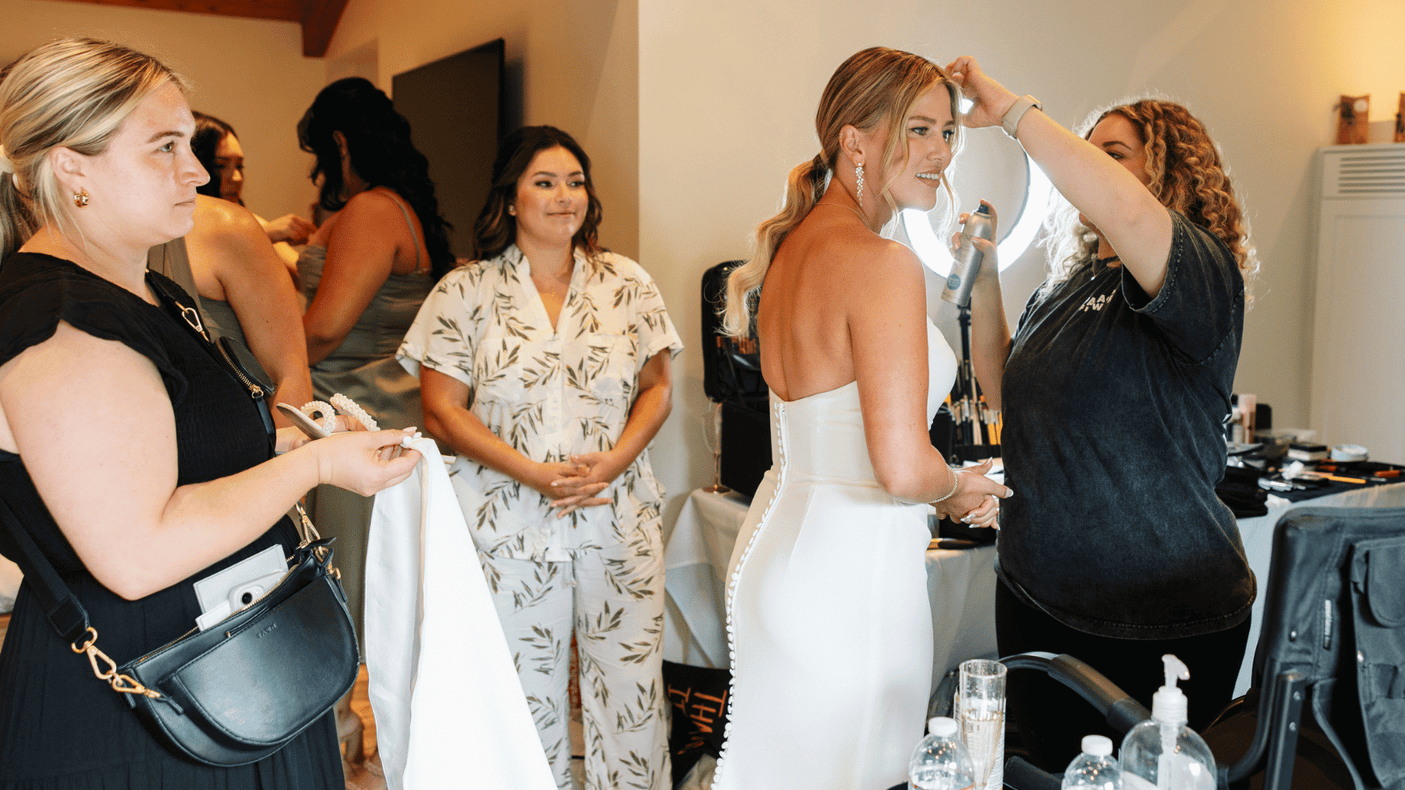
On wedding morning, the process stays the same whether or not extensions are involved. I arrive with a complete professional setup, including my own lighting and seating, so no venue limits the result. From there it’s skin and hair prep, styling, and a final setting step designed to help your look hold up through ceremony, photos, and reception.

If you’d like to see real examples of extension-supported bridal styles, you can browse the portfolio, or read more about the approach behind it on the about page. When you’re ready to talk through your own wedding-day hair, reach out through the contact page.

Frequently Asked Questions

1. How long does hair extensions for brides typically take on wedding morning? 

Styling time with extensions depends on the specific look and how much length or volume you want to add. During booking, Brittany Brown Beauty builds extensions into your wedding-morning timeline so you have enough time for setup and styling. Setup itself takes about 15 to 20 minutes before styling begins.

2. Will hair extensions for brides hold up in Southern California humidity? 

Every style, with or without extensions, is finished using setting techniques suited to coastal Orange County and San Diego conditions, including heat, humidity, sea air, and wind. A trial is the best way to see exactly how extensions and your chosen style hold up together in real conditions.

3. What accessories pair well with hair extensions for brides? 

It depends on the style. Extensions used for a fuller updo pair well with delicate combs or pins that won’t compete with the added volume, while extensions used for length in a down style often work beautifully with a simple veil attachment or a few scattered pins. The right choice comes down to your dress, venue, and personal style, which we can talk through together during your consultation.
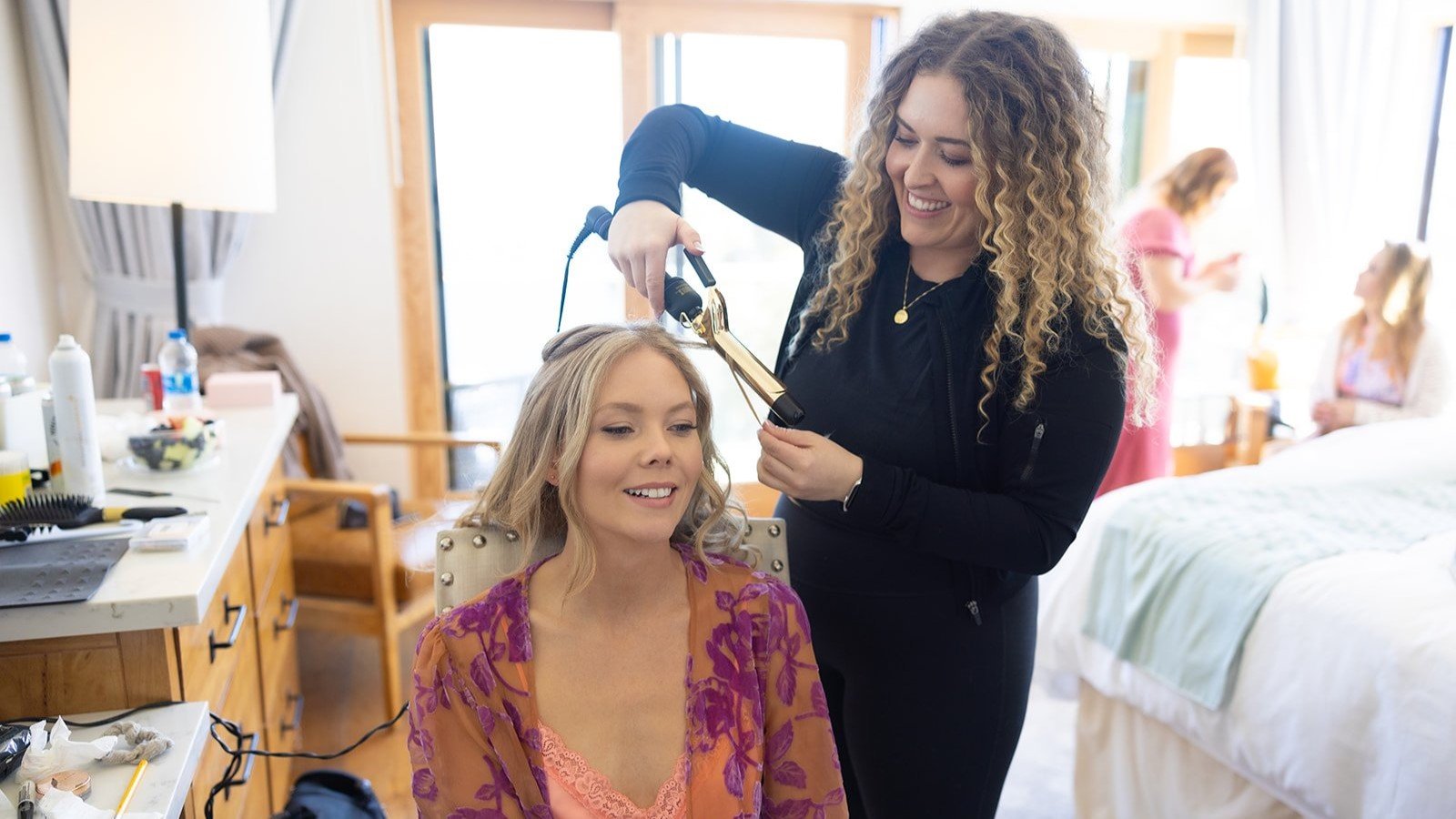
Posted on

Bridal Hairstyles for Short Hair Brides

bridal hairstyles for short hair brides

If you’ve got short hair and you’re planning your Orange County or San Diego wedding, you may have run into a lot of bridal inspiration that assumes long, flowing locks are the only option. That’s just not true. Short hair brides have plenty of beautiful, personal, and completely wearable options and honestly, some of the prettiest bridal looks I’ve styled have been on shorter cuts.

As a mobile, on-location bridal hair and makeup artist here in Orange County, I get to work with every hair type and length imaginable, and I always start the same way: by looking at what your hair naturally does well, then building a style around that. Short hair isn’t a limitation to work around, it’s a different set of tools to work with.

Why Short Hair Opens Up Different Style Options

Short hair moves differently than long hair, and that’s actually an advantage on a wedding day. Shorter cuts tend to hold curl and texture beautifully, show off the neckline and shoulders, and let your face and features take center stage which pairs well with a soft, natural-but-enhanced makeup look. There’s also less hair to manage in Southern California’s coastal humidity and sea air, which can be a real relief when you’re getting ready near the water in Newport Beach, Corona del Mar, or along the coast in San Diego.

Because a shorter cut has less length to fight against wind and moisture, styles often hold their shape more predictably through the ceremony, photos, and reception. That doesn’t mean zero prep is needed, it just means the approach is different, and it’s one more reason a trial run before the big day is worth considering (more on that below).

Style Ideas for Short Hair

There’s no single “short hair bridal look.” The right style depends on your cut, your dress neckline, your venue, and how you want to feel walking down the aisle. Here are a few directions I often work with.

Sleek Pixie Styling

For brides with a pixie or cropped cut, a sleek, polished finish can look incredibly elegant and modern. This approach leans into clean lines, smoothed sides, defined texture on top, and a finish that photographs beautifully whether you’re getting married at a Newport Coast estate or a Laguna Niguel resort. A sleek pixie also pairs naturally with a statement earring or a delicate hair accessory near the ear or temple, since there’s no length competing for attention.

Textured Bob Waves

If you’re working with a bob or lob (long bob), soft waves can add romance and movement without needing extensions. Loose, textured waves give a bob some lift and softness, and they tend to hold up well through an outdoor Southern California ceremony. This is a popular option for brides who want that “undone but intentional” bridal look soft, natural, a little effortless, but still finished.

Accessorizing Short Styles

Accessories do a lot of heavy lifting for short hair brides. A delicate comb tucked above the ear, a simple pin at the crown, or a fine headband can add bridal polish without overwhelming a shorter cut. If your venue and dress lean more romantic, a small floral clip or vintage-inspired pin can be a lovely detail. The goal is always the same philosophy I bring to every service: enhance what’s already there, rather than covering it up or forcing your hair into something it’s not.

When Extensions Might Be Worth Considering

Extensions aren’t required for a beautiful bridal look, but for some brides they’re worth a conversation especially if you’re hoping for a style with more length, volume, or an updo-style silhouette than your natural short hair can currently support on its own. This is something best discussed during a consultation or trial appointment, where we can look at your specific hair, your dress, and the style you’re picturing, and talk through whether extensions make sense for your particular goals. There’s no one-size-fits-all answer here, and I’d rather talk it through with you directly than guess from a list.

On-Location, Built for Southern California Conditions

However you decide to wear your hair, the process on wedding morning stays consistent. I arrive at your chosen location home, hotel suite, resort room, or venue with a complete professional setup, including my own lighting and seating, so nothing about the space limits the result. From there, it’s skin and hair prep, then styling, then a final setting step designed to help your look hold up through ceremony, photos, and reception, even with Orange County or San Diego’s humidity, sea air, and wind in the mix.

Because coastal conditions can affect any hairstyle, short or long, I always recommend a bridal trial before the wedding day. A trial lets us test the style on your actual hair, in advance, so there are no surprises and so you walk into your wedding morning already knowing exactly what to expect.

If you’d like to see examples of past bridal looks, you can browse the portfolio, and if you want to learn more about my background and approach, the about page is a good place to start. When you’re ready to talk through options for your own wedding day, you can reach out through the contact page. I’d love to hear about your plans.

Frequently Asked Questions

1. How long does bridal hairstyles for short hair brides typically take on wedding morning? 

Styling time varies based on your desired look and your hair’s length, thickness, and texture. During the booking process, we create a personalized wedding-day timeline that allows enough time for setup, styling, and finishing touches without feeling rushed. Because setup alone takes about 15–20 minutes before styling begins, we schedule every appointment with plenty of time to style your hair carefully and perfect every detail.

2. Will bridal hairstyles for short hair brides hold up in Southern California humidity?

Every appointment ends with setting techniques tailored to the coastal conditions of Orange County and San Diego, including heat, humidity, sea air, and wind. A pre-wedding trial lets you see exactly how your haircut and chosen style hold up in real conditions, so you can feel confident on your wedding day.

3. What accessories pair well with bridal hairstyles for short hair brides? 

Delicate combs, fine pins, small headbands, and understated florals or vintage-inspired clips all tend to work beautifully with shorter cuts, since there’s less length competing with the accessory. The right choice really comes down to your dress neckline, venue, and personal style, which is something we can talk through together during your consultation or trial.

Posted on

How Many Bridal Trials Do You Actually Need

How Many Bridal Trials Do You Actually Need

One of the most common questions that comes up early in wedding planning is simple on the surface but harder to answer in a generic way: how many bridal trials do you actually need? The honest answer depends on your skin, your look, and how confident you feel walking out of that first session, but there’s a clear framework for making the decision instead of guessing.

Brittany Brown has run bridal trials for more than 11 years across Orange County and San Diego, and in that time a consistent pattern has held true. Most brides need one trial. Some benefit from a second. Very few need more than that, and when they do, it’s usually for a specific reason rather than general uncertainty.

Why One Trial Is Usually Enough

A single trial, done well, covers more ground than most brides expect. It’s where shade matching gets confirmed, where a bride can see how a look photographs versus how it looks in person, and where any skin sensitivities get discussed upfront so the right products are chosen from the start. That sensitive disclosure conversation matters as much as the makeup itself, since it shapes every product decision that follows, both at the trial and on the wedding day.

For most brides, one trial done with enough time before the wedding, ideally a few months out rather than the final weeks, is enough to lock in a formula, a finish, and a look that feels right. It also gives time to build a simple pre-wedding skin routine around what worked, typically a consistent 4-week routine leading into the wedding day, so the skin is in its best, most predictable state by the time makeup goes on.

When a Second Trial Might Be Worth It

A second trial tends to make sense in a few specific situations rather than as a default. Changing a major styling decision, a different hair style, a different dress silhouette, or a significant change in skin tone due to a spray tan or seasonal shift, is a common reason to book a follow-up. A second trial is also worth considering if the first one left any part of the look unresolved, whether that’s a lash style, a lip color, or an overall finish that needed more time to settle than one session allowed.

It’s rarely about the artist getting something wrong the first time. More often it’s about giving a bride the chance to see a look, sit with it, and come back with clearer feedback once she’s had time to think it over.

What Additional Trials Typically Cost and Involve

Additional trials typically have a separate price because each session requires the same time, products, and attention as an initial trial rather than a quick touch-up. What a second or third trial involves depends on the changes the bride wants to make. Sometimes it’s a full redo with a new direction entirely, and sometimes it’s a shorter, more targeted session focused on one or two specific elements from the first trial, like adjusting a highlight placement or trying a different lip finish.

The specifics, cost, timing, and what’s included, are best confirmed directly, since they can vary based on how far out the wedding is and what’s being adjusted.

How to Decide What’s Right for You

A useful way to think about it: if you leave your first trial feeling confident and only want to tweak a few small details, you likely don’t need a second one. Your makeup artist can usually note those adjustments and apply them on your wedding day. If you still feel unsure, can’t decide between two directions, or plan a major styling change after the trial, a second session is worth the investment.

One detail that applies no matter how many trials you book: avoid introducing new skincare or beauty products in the final 10 days before the wedding. Even products that have worked well for years can behave differently when paired with something new, and the final stretch before the wedding isn’t the time to find that out. Keeping the routine steady and familiar in those last 10 days protects the work done in the trial and gives the wedding-day makeup the most predictable base to work with.

Brides working through this decision can look at real trial-to-wedding-day transformations in the portfolio, or read more about Brittany’s approach and background on the About page. If you’re ready to book a first trial or talk through whether a second one makes sense for your situation, reaching out directly is the easiest next step.

Frequently Asked Questions

1. When should I start prepping for how many bridal trials do you actually need? 

Start thinking about it as soon as you book your artist, ideally three to twelve months before the wedding. Booking the first trial with enough lead time, rather than in the final weeks, leaves room for a second trial if one turns out to be worth it, without adding pressure close to the wedding date.

2. What should I avoid in the days leading up to my wedding? 

Avoid trying any new skincare, makeup, or beauty products in the final 10 days before the wedding. Sticking to a familiar, consistent routine, ideally one that’s been in place for about four weeks leading up to the day, keeps the skin predictable and protects the results from the trial.

3. What should I bring up with my artist about how many bridal trials do you actually need? 

Bring up any skin sensitivities, known reactions to specific products, and any major styling changes you’re considering, hair, dress, or tan. This kind of upfront disclosure gives your artist the clearest picture of whether one trial will cover everything or whether a second session makes sense for your specific plans.

Posted on

Braided Bridal Hairstyles for Boho and Classic Weddings

braided bridal hairstyles for boho and classic weddings

Braids show up across nearly every bridal style category, from relaxed beach ceremonies to formal ballroom receptions, because the technique itself adapts so easily to different moods. A loose, textured braid reads completely differently than a sleek, structured one, even though both start with the same basic technique. Choosing the right braid comes down to matching the style, the hold, and the finish to your specific wedding.

Brittany Brown builds every braided bridal style around the bride’s venue, timeline, and hair type, factoring in arrival, prep, and setting time so the braid holds its shape from the first walk down the aisle through the last dance.

Braids for Boho Weddings

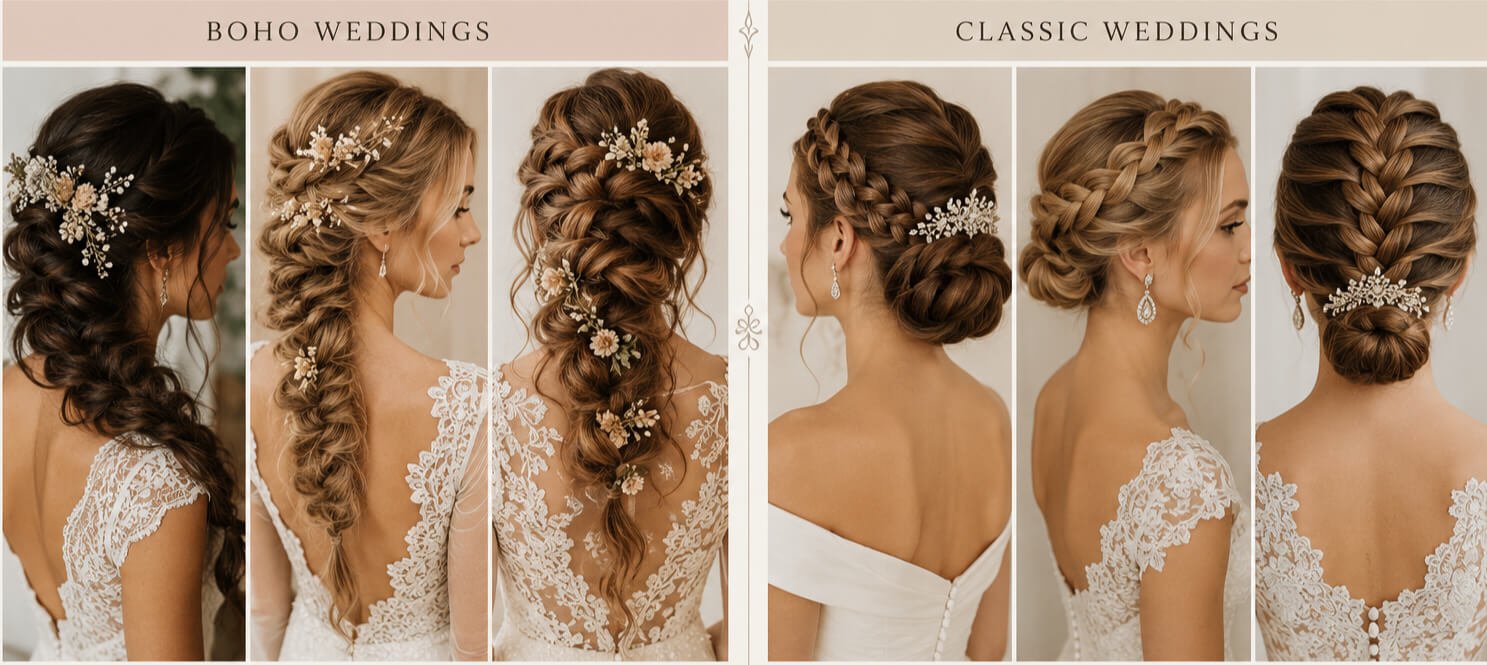
Boho bridal hair leans into texture, movement, and a relaxed, undone quality, and braids fit naturally into that aesthetic. Loose Dutch braids, fishtail braids, and braided crowns all work well here, especially when paired with soft waves, face-framing pieces, or a few strategically pulled sections that keep the style from looking too tight or precise.

This category tends to favor braids with visible texture rather than a flawless, uniform weave. Slightly loosened strands along the edges of a braid, a bit of volume at the crown, and soft baby hairs left down around the face all contribute to that effortless boho feel without looking unfinished.

Boho styles also pair especially well with outdoor coastal weddings around Orange County and San Diego, since braids naturally resist wind and sea air better than fully loose styles. A braided crown or a low, loose side braid can hold its shape through an entire beachfront ceremony without needing constant readjustment.

Braids for Classic, Formal Weddings

Classic bridal hair calls for a more structured, polished approach, and braids adapt well to that formality too. A sleek braided updo, a tightly woven French braid leading into a low bun, or a precise braided halo all bring in texture and detail without sacrificing the clean, elegant finish a formal wedding calls for.

Here, the braid tends to sit closer to the head, with less deliberate texture pulled loose along the edges. Smooth, controlled sections and a polished finish keep the overall look feeling refined, which suits ballroom receptions, formal churches, and black-tie evening weddings especially well.

Classic braided styles also tend to hold up beautifully through a long reception, since the tighter weave and structured base give the style a strong foundation that resists movement over several hours of dancing and celebrating.

Head-to-Head: Texture, Formality, and Hold

Boho and classic braided hairstyles share the same foundation, but they create distinctly different looks. Boho braids embrace softness, texture, and movement, making them a natural choice for outdoor ceremonies and destination weddings. Classic braids focus on smoothness and structure, offering a refined finish that complements formal venues and black-tie celebrations. Regardless of the style, braids provide more grip and stability than fully loose hairstyles, helping them maintain their shape throughout a Southern California wedding day. 

Both styles rely on the same underlying principle: a woven structure gives hair more to hold onto than a fully loose style does, which makes braids a practical choice for Southern California weddings regardless of which aesthetic a bride chooses.

Choosing the Right Braid for Your Venue

Venue and setting play a bigger role in braid selection than many brides expect going in. An outdoor beach ceremony calls for a different approach than an indoor ballroom, mostly because of how each environment interacts with humidity, wind, and sea air over the course of the day.

For outdoor, coastal, or garden venues, a looser boho braid tends to perform best, since the woven structure holds its shape even as wind and moisture move through the hair. These settings also tend to suit softer, more textured finishes that don’t rely on being perfectly smooth to look intentional.

For indoor, formal, or evening venues, a tighter classic braid gives a more polished, camera-ready finish that holds up well through hours of movement on the dance floor. Because indoor venues typically shield hair from direct wind and coastal humidity, a sleeker braid has an easier time holding its precise shape from ceremony through reception.

Whichever direction a bride leans, the styling process itself matters just as much as the braid style chosen. Backcombing at the base, securing the braid with enough hidden pins, and testing the placement ahead of time all help a braided style survive a full Southern California wedding day, not just the first hour of photos.

Browse the portfolio to see braided styles across both boho and classic weddings, learn more about Brittany Brown Beauty’s approach to bridal hair, or contact the team to schedule a consultation or trial for your wedding day.

Frequently Asked Questions

1. How long do braided bridal hairstyles for boho and classic weddings typically take on wedding morning? 

Braided styles generally take a bit longer than simple updos, since the braiding itself adds time beyond building volume or curling hair. Most braided bridal styles take about 45 minutes to an hour, factoring in arrival and prep time before styling begins.

2. Will braided bridal hairstyles for boho and classic weddings hold up in Southern California humidity? 

Yes, and braids tend to hold up especially well compared to fully loose styles. The woven structure gives humidity and sea air less opportunity to loosen the overall shape, though a well-prepped base underneath and a few supporting pins still help any braided style stay secure through a full outdoor ceremony and reception.

3. What accessories pair well with braided bridal hairstyles for boho and classic weddings? 

It depends on the style. Boho braids pair naturally with floral accents, hair vines, and delicate pins tucked along the woven sections. Classic braids pair well with tiaras or structured combs, since the tighter, more polished base gives an accessory a stable, even surface to sit against.

Posted on

Half-Up Half-Down Bridal Hairstyles for 2026

Half-Up Half-Down Bridal Hairstyles for 2026

The half-up half-down style has stayed a bridal favorite for a simple reason: it gives brides the best of both worlds. Hair is pulled back enough to feel intentional and photograph well from every angle, while the length left down keeps the look soft, romantic, and true to a bride’s everyday hair. For 2026 weddings, that balance is exactly what’s drawing brides back to this style again and again.

In Orange County and San Diego, that balance has to hold up against more than just a long reception. Coastal humidity, sea air, and ocean breeze all put pressure on a hairstyle over the course of a wedding day. A half-up style that looks perfect during a morning trial needs a foundation strong enough to survive an outdoor ceremony, a windy beach photo session, and hours of dancing after that.

At Brittany Brown Beauty, every half-up, half-down style starts with the bride’s hair type, venue, and timeline in mind. Brittany factors in arrival, prep, and styling time to create a look that holds from the first walk down the aisle to the last song of the night.

Why This Style Remains a Bridal Favorite

Part of what makes half-up half-down styling so popular is its flexibility. It works with straight hair, waves, or curls, and it adapts easily to veils, tiaras, combs, and florals without competing with any of them. Because a portion of the hair stays down, the style also tends to read as more relaxed and natural than a full updo, which appeals to brides who want a polished look without feeling overly formal.

It also photographs beautifully from behind, which matters more than many brides expect. Photographers capture ceremony moments, veil reveals, and dance floor celebrations from multiple angles, and a half-up style keeps the back of the hairstyle visually interesting instead of looking flat or disappearing beneath the veil.

Because this style relies on gathering and securing a defined section of hair, the setting process matters just as much as the initial styling. A strong foundation beneath the top section keeps the style secure throughout the day and helps prevent slipping, especially in humid or breezy conditions.

Variations to Consider

Braided Half-Up

A braided half-up style incorporates a simple three-strand, fishtail, or Dutch braid into the pulled-back section before securing it. The braid adds texture and visual interest without requiring heavy curls or elaborate styling through the rest of the hair. That makes this style a strong choice for boho, garden, and outdoor coastal weddings.

Braids also tend to hold up especially well in humidity and wind, since the woven structure keeps hair contained even as sea air moves through loose strands. That makes this variation a practical choice for beachfront ceremonies or venues with extended outdoor photo time.

Voluminous Half-Up With Curls

This variation leans into fullness, with soft curls throughout and extra volume added at the crown before the top section is gathered. It suits brides who want a more romantic, glamorous finish, and it pairs especially well with tiaras or hair vines, since the curled, voluminous base gives an accessory something substantial to sit against.

Because this style relies on volume and curl pattern to hold its shape, backcombing at the base and setting the curls properly are what keep it looking full through the evening rather than falling flat by the reception.

Sleek, Minimal Half-Up

For brides drawn to a cleaner, more modern look, a sleek half-up style keeps the hair smooth and closer to the head, with minimal texture and a simple, precise pulled-back section. This variation works well for brides who want their hairstyle to feel understated, letting a veil, earrings, or the dress itself stand out instead.

Sleek styles can be more sensitive to humidity than textured ones, since smooth hair has less to grip onto. A well-prepped base and the right finishing products help this look stay polished rather than frizzing or losing its shape outdoors.

Who This Style Works Best For

Half-up half-down hairstyles suit a wide range of hair lengths and textures, from shoulder-length lobs to hair well past the shoulders, though the exact approach shifts depending on what a bride is working with. For brides with thinner hair, adding volume at the crown before securing the top section creates a fuller look. Brides with thick or curly hair usually need careful weight distribution to keep the pulled-back section light, comfortable, and securely in place.

This style also tends to suit brides who want a hairstyle that transitions well from ceremony to reception without much intervention. Because a portion of the hair stays down, minor movement throughout the day tends to read as natural rather than undone, which gives the style more forgiveness than a fully polished updo.

It’s a strong fit for outdoor, coastal, and destination weddings across Orange County and San Diego, where the style holds its shape through wind and humidity while still looking soft in photos. Browse our portfolio to see how half-up half-down styling looks across different hair types, lengths, and wedding settings.

Whether you’re drawn to a braided detail, a voluminous curled crown, or a sleek and minimal finish, contact Brittany Brown to schedule a bridal hair consultation or trial and find the half-up half-down style that fits your 2026 wedding day.

Frequently Asked Questions

1. How long does a half-up half-down bridal hairstyle typically take on a wedding morning?

Most half-up half-down styles take longer than a simple updo because they involve curling or texturizing the hair that stays down, in addition to securing the pulled-back section. Depending on hair length and the specific variation, this style generally takes about 45 minutes to an hour, factoring in arrival and prep time before styling begins.

2. Will half-up half-down bridal hairstyles hold up in Southern California humidity?

Yes, with the right preparation. Humidity and ocean breeze can loosen curls or cause the down sections to lose shape faster than they would indoors, especially at coastal venues. Backcombing the base of the pulled-back section, using enough supporting pins, and choosing a variation suited to the hair type all help the style hold through ceremony, photos, and reception.

3. What accessories pair well with half-up half-down bridal hairstyles?

It depends on the specific variation. Combs work well tucked into the gathered section at the crown, especially with voluminous or curled styles. Pins are a natural fit for braided half-up looks, where there’s already a defined structure to anchor into. Tiaras pair especially well with voluminous half-up styles, since the fuller base at the crown gives the tiara a stable, level surface to sit against.

Posted on

Bridal Hair Accessories: Combs, Pins, and Tiaras Explained

Bridal Hair Accessories

Bridal hair accessories do more than add sparkle. They shape how a hairstyle holds, how it photographs, and how it survives an entire wedding day. Choosing the right one starts with understanding what each type is actually built to do.

In Orange County and San Diego, that decision carries extra weight. Coastal humidity, sea air, and ocean breeze all affect how an accessory sits in the hair over several hours. An accessory that looks secure standing still in a quiet room can shift the moment a bride steps outside for photos or walks along the water.

At Brittany Brown Beauty, accessory selection is considered alongside the hairstyle itself, ensuring every comb, pin, or tiara complements the finished look and stays secure throughout the wedding day. 

Here’s how combs, pins, and tiaras each work, and which hairstyles they’re best suited for.

Why the Right Accessory Depends on Your Hairstyle

Every accessory needs something to hold onto. A comb needs enough hair volume to grip. A pin needs a defined section to anchor into. A tiara needs a base structure that keeps it level and secure.

That means the choice of accessory depends on more than personal style. The hairstyle underneath also determines what it can comfortably support. A delicate pin might disappear in a full, voluminous updo, while a large statement comb could overwhelm a soft half-up style.

For that reason, stylists usually discuss accessories at the beginning of the styling process rather than after they finish the hairstyle. Knowing which accessory a bride wants helps the stylist build the right foundation, decide which sections need extra teasing for hold, and place pins where they’ll stay hidden.

Brittany Brown’s experience in bridal hairstyling has shaped an approach that considers every detail of the hairstyle from the beginning, helping accessories look beautiful while staying secure throughout the celebration. 

Accessory Breakdown

Combs for Texture and Hold

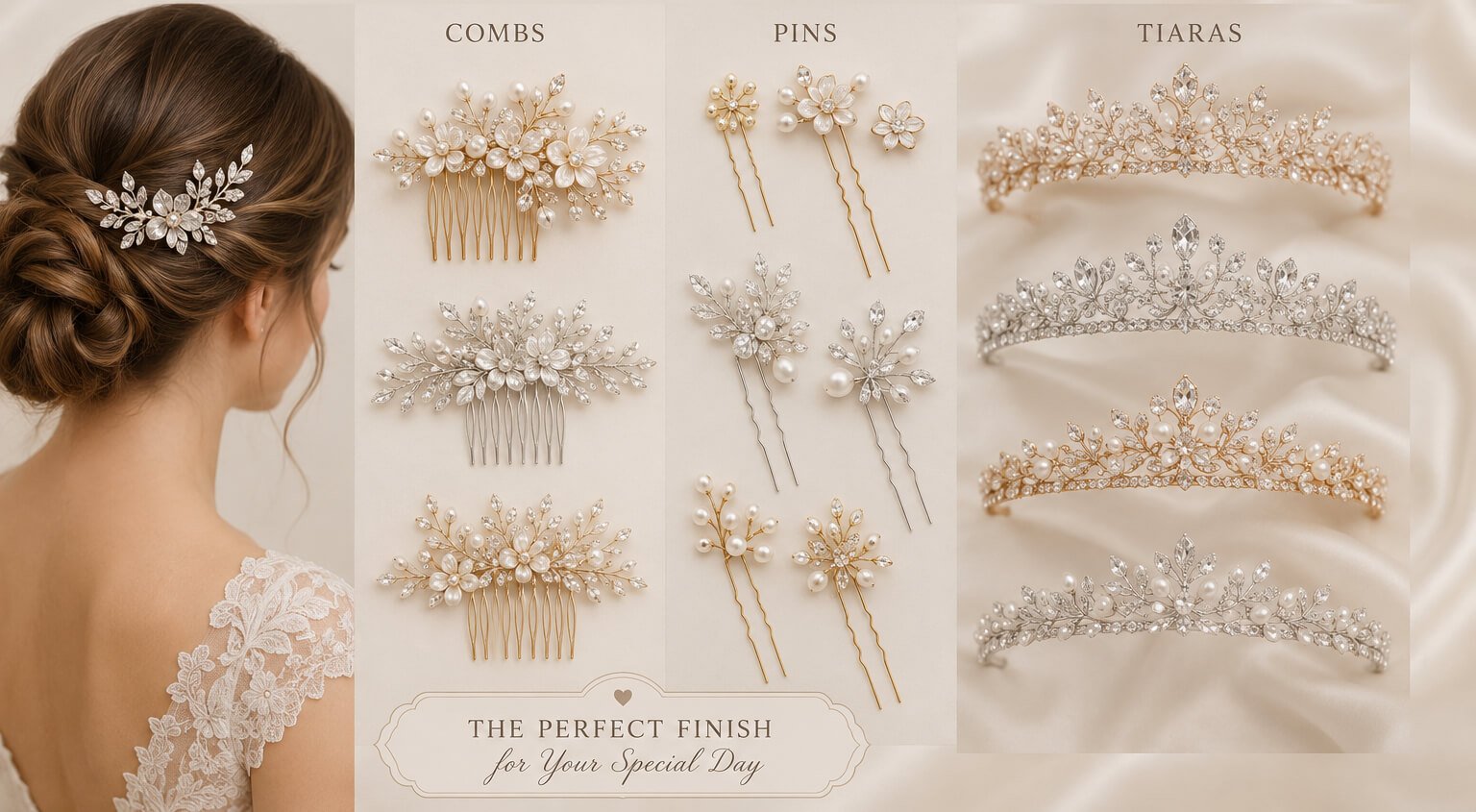
Combs are one of the most versatile bridal hair accessories. They slide into the hair and use their own teeth to grip, which makes them a strong choice for styles with enough texture or volume to hold onto.

They work especially well tucked into buns, twists, or the base of a half-up style, where there’s a defined section of hair to slide into. A comb placed at the crown can also add a finished, intentional detail to loose, down styles, as long as the hair underneath is backcombed slightly for extra grip.

Because combs rely on friction rather than pins alone, they tend to hold up well through movement. That makes them a practical option for outdoor ceremonies where wind and sea air are part of the day.

Pins for Structure and Detail

Pins offer more precision than combs. Instead of gripping a whole section, they attach one small point at a time, which makes them ideal for adding scattered detail across an updo or along a hairline.

A single decorative pin can highlight one specific area, like the side of a bun or a section of braided hair, without adding bulk. Multiple pins, spaced intentionally, can create a fuller, more layered look across a larger style.

Pins generally need a secure base to hold into, which means they work best with hairstyles that already have some structure, like braids, twists, or gathered sections. On fully loose, down hairstyles, pins have less to anchor into and may need extra backcombing underneath to stay secure through the day.

Tiaras and Their Best Hairstyle Pairings

Tiaras add a clear focal point, and they tend to work best with hairstyles that offer a stable, level base across the crown. Updos and half-up styles are natural pairings, since the gathered section of hair gives the tiara something even to sit against.

With fully down hairstyles, a tiara can still work, but it usually needs a little more structure built in underneath, like a supportive base of pins or a light foundation of teased hair, so it doesn’t tilt or shift as the hair moves.

Because a tiara sits higher and more visibly than a comb or pin, it also tends to be more noticeable if it shifts out of place. That makes secure placement, tested ahead of time, especially important for this accessory.

Every hairstyle and accessory combination creates a different look, and seeing them on real brides can make choosing the right option much easier. Browse our portfolio to explore bridal hairstyles featuring combs, decorative pins, tiaras, and other carefully selected accessories. 

Securing Accessories for an All-Day Hold

Southern California weddings often come with conditions that test even a well-placed accessory. Humidity can loosen curls around a comb’s base. Wind off the coast can lift a lightweight pin. A full day of ceremony, photos, and dancing adds hours of movement on top of all that.

A few things help accessories hold up through those conditions:

  • A well-prepped base. Backcombing or teasing the section where an accessory will sit gives it something secure to grip, rather than smooth, slippery hair.
  • Enough supporting pins. Even combs and tiaras often benefit from a few hidden bobby pins nearby, placed to reinforce the accessory without being visible.
  • Testing placement before the big day. Trying the accessory during a hair trial shows how it holds up under real movement, not just how it looks standing still.

Accounting for these details during the styling and setting process, rather than after the hairstyle is finished, is what keeps an accessory looking as intentional at the reception as it did that morning.

Whether you’re envisioning a classic updo with a timeless tiara or soft waves accented with delicate pins, contact Brittany Brown Beauty to schedule your bridal hair consultation or trial and find the accessories that best complement your wedding hairstyle.

Frequently Asked Questions

1. How long does adding hair accessories typically take on a wedding morning? 

Placing accessories is usually one of the last steps in the styling process, often adding just ten to fifteen minutes once the hairstyle itself is complete. Most of the time goes into building a secure base underneath, so the accessory has something solid to anchor into before it’s ever added.

2. Will bridal hair accessories hold up in Southern California humidity? 

Yes, with the right prep. Coastal humidity and ocean breeze can affect how long a style holds, especially with looser hairstyles or lightweight accessories. Backcombing the base, using enough supporting pins, and choosing an accessory suited to the hairstyle all help it stay secure through ceremony, photos, and reception.

3. What accessories pair well with different bridal hairstyles? 

It depends on the style. Combs tend to pair best with buns, twists, and half-up looks that have enough volume to grip. Pins work well on braided or gathered styles where a defined base is already in place. Tiaras look most secure on updos and half-up styles, though they can work with down hairstyles when extra structure is built in underneath.