
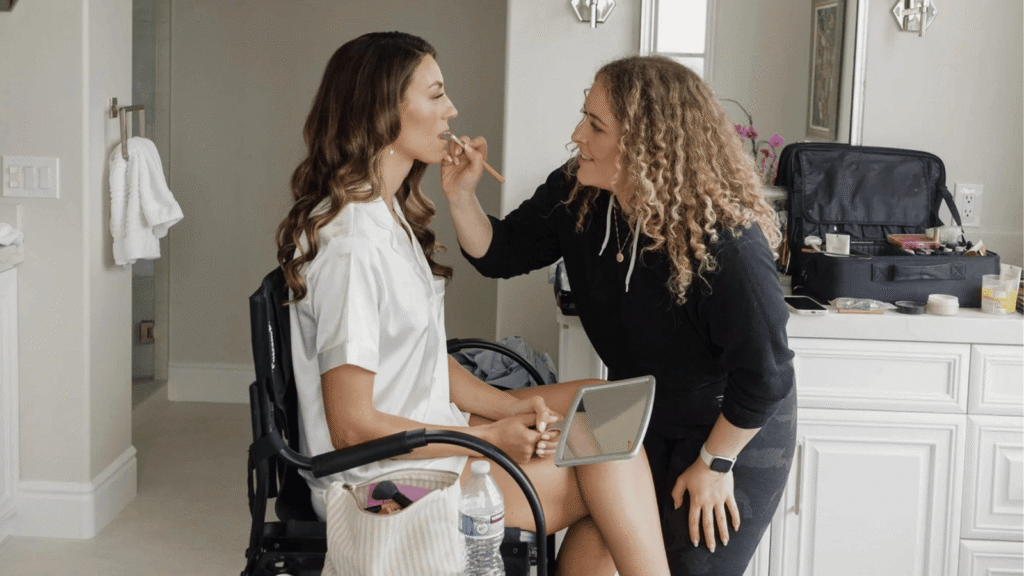
Getting-ready photos capture a different side of the wedding. The camera moves in close on your eyes, your lips and your skin. It also catches candid moments, such as a mother zipping a dress or a bridesmaid handing you a bouquet. All of this happens before you leave for the ceremony.
Getting-ready photo makeup has to work in those frames and still look natural in the room. Lighting, timing and the photographer’s schedule all shape how the application is planned. Makeup is one piece of the picture, not the only thing that decides how the photos turn out.
Brittany Brown Beauty approaches bridal makeup with one idea: enhance the bride’s features instead of masking them. For getting-ready photos, that means a finish that still looks like you, with your features defined thoughtfully for the camera. This article shows how to plan for it.
Why Getting-Ready Photos Have Their Own Makeup Considerations
Ceremony and reception photos are usually taken at a distance, with movement and planned lighting. Getting-ready photos are often closer and quieter. The camera stays near your face while the light does most of the work.
Several things make this stage distinct:
- Close-up shots: The photographer may capture your eyes, lips, hands and skin finish in detail.
- Candid moments: Photographs may include the application itself and the final touch-ups.
- Soft window light: Natural light from a window reveals blending, coverage and finish clearly.
- Mixed lighting: A getting-ready room might combine window light, overhead bulbs and lamps.
- Changing light: Light shifts as the sun moves. A bright corner at the start may look softer later.
The finish needs to look right in person and on camera. A look that seems balanced across the room can read differently in a close portrait. The article on why bridal makeup looks different in photos explains why. For that reason, the bride, makeup artist, photographer and schedule work best together.
Photographers have different styles and shot lists. Some photograph the entire application. Others prefer detail shots first and portraits after the makeup is complete. No single lighting setup or makeup look suits every photographer. Ask yours how they plan to work.
What Photographers Ask For
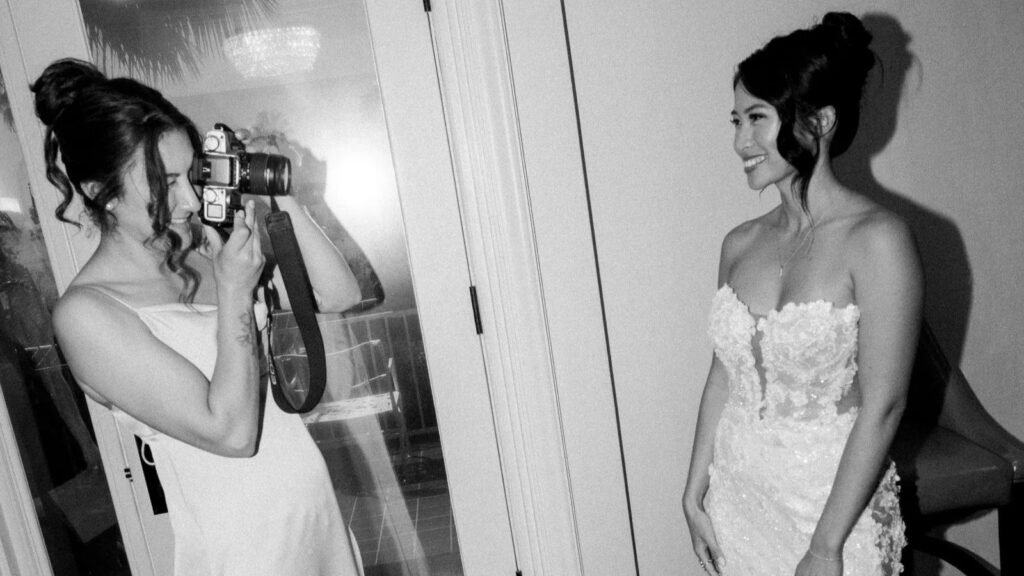
Photographers communicate different needs before and during the getting-ready session. The points below are common possibilities, not universal requirements. Your photographer’s plan comes first.
Skin That Reads Well in Soft, Indirect Light
Natural window light shows skin honestly. It can reveal how foundation was blended, how much coverage was applied and what the finish looks like up close. That makes careful application more useful than extra product.
A few approaches help makeup read well in this kind of light:
- Build coverage in controlled layers: Apply a thin layer, check it, then add more only where the skin needs it. Adding product automatically can look heavy in close-ups.
- Blend around the face and jawline: Side light from a window can show edges. Careful blending at the hairline, jaw and neck helps the base look continuous.
- Choose a finish for your skin and plans: Matte, satin and dewy finishes all work for some brides. The right choice depends on your skin, your preferences, the lighting and the photography plan.
- Use powder selectively: Set the areas that need it, such as the center of the face. Not every face needs heavy powder.
- Check near a window when practical: Natural light is a useful test. Do not rely on one lighting condition alone, since the wedding day includes several.
Consider a bride with dry patches near the jawline. In window light, a thick base could emphasize them, while a lighter, well-blended layer lets her skin look like skin. Natural texture, pores and fine lines are part of real skin. They are not problems to hide. The goal is a smooth, even finish that still looks like skin. No one can promise a flawless result. The article on how wedding lighting affects bridal makeup shows how different light changes the same makeup.
Avoiding Heavy Product Buildup Before Application Finishes
Repeated layers over existing makeup can change the final finish. Extra product on top of product can look cakey and may shift when you move.
- Let skincare settle: Give moisturizer and other products a few minutes to absorb before makeup begins, where appropriate.
- Apply complexion products in manageable layers: Thin passes are easier to blend and adjust than one thick coat.
- Use concealer and powder selectively: Place them where they are needed, not across the whole face.
- Avoid unnecessary touch-ups early: Wait until the makeup is complete before fixing small things. Early fixes can add buildup.
- Keep hands, brushes and tools clean: Clean tools apply product more evenly and are more comfortable on the skin.
Freshly applied makeup also needs protection. Wear a robe or a button-up top while you wait, so you do not pull anything over your face. Handle accessories gently. Ask the artist when it is a good time to put on jewelry or veils. Try not to touch your face while chatting or checking your phone.
Candid photographs are part of the day. A photographer can capture real behind-the-scenes moments during application. The completed look is then photographed after the final check. You do not need to avoid all candid photos while makeup is in progress.
If you have sensitive skin, keep your pre-wedding routine familiar. Raise any product concerns during your trial. A trial helps assess comfort and the planned look, but it cannot guarantee that a reaction will never occur. The overview of what happens during a bridal makeup trial explains what to expect.
Timing Application Around the Shot List
The makeup schedule works best when it accounts for the photographer’s planned images. Ask your photographer a few things in advance:
- When do detail shots happen? Photographers may shoot the dress, rings or invitations before makeup, during it or afterward.
- When should the makeup be finished? Plan time for final checks and touch-ups before portraits.
- How much time do you need to dress? Allow time to change outfits, put on jewelry and prepare for photographs.
- What are the key times? Share the ceremony time, the departure time and any important photo moments in advance.
Here is one example of how a morning might flow. It is an illustration, not a standard. Detail shots come first, then makeup application, then a final check near the window. You then get dressed, add jewelry and move to portraits. Your photographer and artist can reorder these steps to suit the day.
A rushed final application is easy to avoid. Build in extra time in case dressing or photography runs long. A short delay early on can push the makeup finish later than planned.
The schedule depends on the wedding timeline and the complexity of the makeup. It also depends on party size and the photographer’s plan. It is not a fixed formula. The guide to building your wedding morning timeline with your beauty team shows how to plan backward from the ceremony.
How Brittany Brown Beauty Coordinates With Photographers
Clear communication between the bride, the makeup artist and the photographer makes the morning smoother. A few details are worth sharing ahead of time. Useful details include the ceremony schedule, the planned getting-ready photos and the light in the room. Add the time the bride needs to be ready.
With those details, the artist can plan the application and final checks around the agreed schedule. The bride’s preferred look stays at the center. Brittany provides mobile bridal hair and makeup across Orange County, San Diego and surrounding areas. Planning getting-ready photo makeup in Orange County starts with the room where you will get ready.
Brittany’s photoshoot work offers a useful reference point. On commercial shoots, she reviews the lighting setup and the photographer’s direction. She then adapts her technique to how light falls on the face. Her article on commercial makeup for photoshoots describes that approach. Weddings are different, so the bridal plan comes from the details you share.
Bridal makeup ideas for the camera do not need to look dramatically different from your everyday style. The aim is a finish that suits your features, your preferences and the photographic conditions. Read more about Brittany on the About page. Browse the portfolio to see finished looks. As an Orange County bridal makeup artist, Brittany can use a few saved looks to understand the finish you want.
Preparing for Your Getting-Ready Makeup
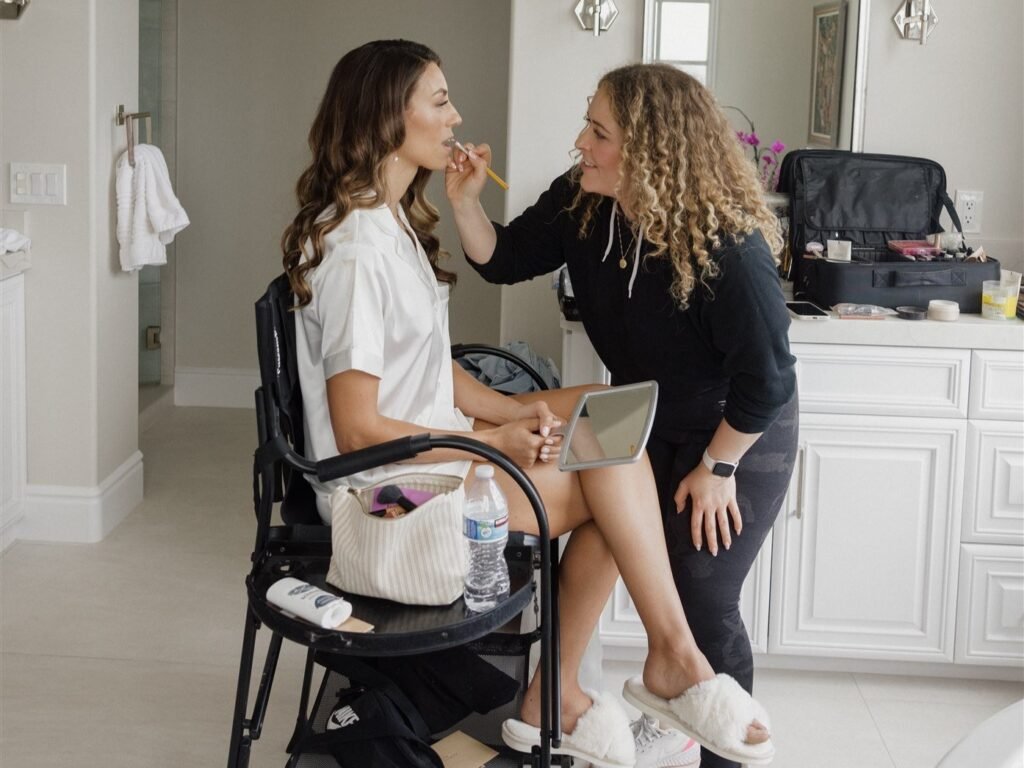
A little preparation makes the wedding morning calmer. Treat this list as guidance, not strict rules.
- Keep your skincare routine familiar. Unfamiliar products just before the wedding can change how makeup sits or cause a reaction.
- Share sensitivities at your trial. Tell the artist about known sensitivities and product concerns early.
- Bring reference photos. Choose photos that show the finish you like, and stay open to adjustments for lighting and your own features.
- Confirm the key details. Check the ceremony time, the getting-ready location and the photo schedule.
- Set aside a clean space. A table near good light gives the artist a place to work.
- Keep the area organized. A tidy room lets the photographer work without interruptions.
- Leave time for final checks. Check the makeup before you put on accessories or pose for completed-look photographs.
Avoid aggressive treatments or new skincare steps right before the wedding. They add variables close to the wedding. For longer-term preparation, see the guide to prepping your skin 30 days before your wedding. If you have questions about any of this, send them through the contact page.
Planning Your Wedding Makeup
During a consultation, share your wedding date, venue, getting-ready location, ceremony time and preferred makeup style. These details help Brittany assess availability and understand what your day needs. Click the button below to schedule a consultation online.
Frequently Asked Questions
Keep your routine familiar and gentle. Use the products you already know, and give them time to settle before makeup begins. Skip new products and harsh treatments close to the wedding. Mention any sensitivities at your trial. The skin prep timeline covers longer-term planning.
Application time and wear time are different things. How long makeup lasts depends on the products, your skin, the weather and how active the day is. No specific duration can be promised. Plan a few touch-ups. The article on making bridal makeup last without touch-ups explains the factors.
Yes. Shade, finish and coverage can be adjusted to your skin and your preferences. Dry, oily and combination skin may call for different products or amounts. No single product suits everyone, so share your usual routine and any sensitivities.
Not always. Photographers capture different stages, such as details before makeup, candid moments during application and portraits after. Discuss the shot list ahead of time, so you and the artist know which stage each photo covers.
It can. Window light shows blending, coverage and finish clearly, so careful blending at the edges matters. Check the look in other light too, since a finish that suits one setup may not suit another.