
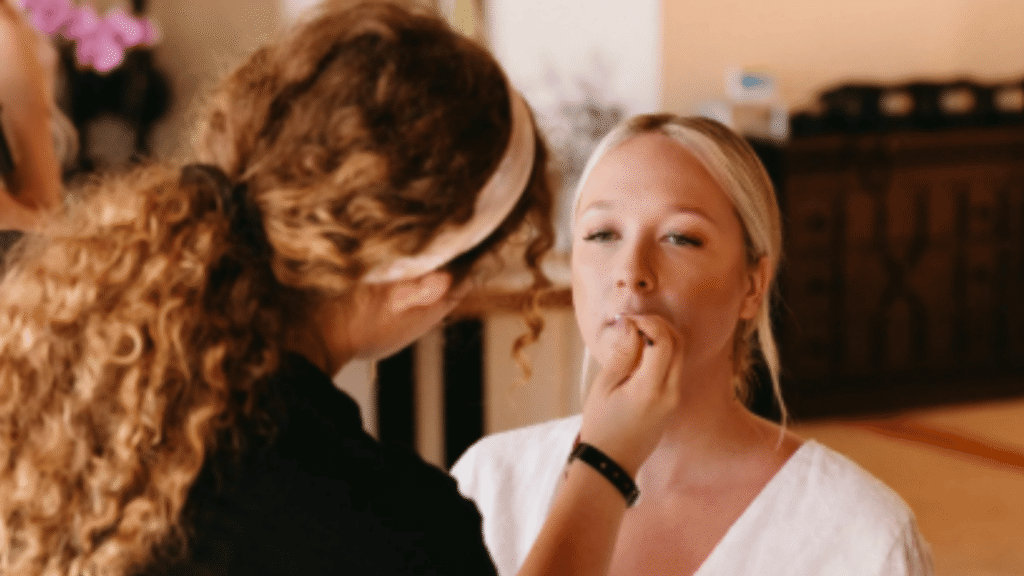
Corrective makeup focuses on specific areas of the face that may need more coverage, balance, or color correction. Instead of applying heavy coverage everywhere, the goal is to use the right technique and product where it is actually needed. This can include adjusting discoloration, softening the appearance of scarring, balancing redness, or creating a more even base.
At Brittany Brown Beauty, corrective makeup is a named specialty. Brittany Brown has 12 years of experience in bridal and print makeup, with a particular focus on corrective beauty and mature makeup. Her approach is about working with the skin rather than covering the entire face with layers of makeup.
Corrective makeup can be especially useful for mature brides, mothers of the bride or groom, and anyone who wants a more even complexion while keeping the finished makeup looking natural.
Defining Corrective Makeup
Corrective makeup starts with observation. Before any product goes on, the artist looks closely at the skin in good light. The goal is to see which areas are already even and which need extra attention, such as redness around the nose, shadowing under the eyes, or uneven tone along the cheeks.
From there, five elements work together:
- Color correction: A corrector in an opposing shade cancels out unwanted tones. A green-toned corrector can offset redness. A peach or orange-toned corrector can offset blue or purple tones, such as shadowing under the eyes. Deeper skin tones often call for deeper orange or red-toned correctors.
- Coverage: Coverage goes where it is needed. Everything else stays light.
- Blending: Soft, well-blended edges keep corrected areas from looking like patches.
- Texture: Thin layers and careful skin prep help makeup sit smoothly instead of settling into lines.
- Placement: Placing a small amount of product in the right spot does more than spreading a lot of it everywhere.
For example, a bride with redness around her nose and cheeks does not need a full-coverage foundation over her whole face. A small amount of corrector on the red areas, a thin layer of foundation over it, and light blending outward usually look more natural. The rest of her skin keeps its softness.
That is why corrective makeup does not mean heavy or cakey makeup. The aim is a balanced, even-looking complexion that still suits the client and the occasion. The finish should look like her skin on a very good day.
Who Benefits Most
Corrective makeup suits anyone who wants a more even-looking complexion without heavy coverage. That includes brides with scarring, discoloration, or redness, and mature clients such as mothers of the bride or groom. It does not belong to one age group. A bride in her twenties may want help with uneven tone. A mother of the groom may want a smooth, comfortable base that holds up in photographs. The common thread is a client who wants her skin to look even without looking made up.
Brides With Scarring or Discoloration
Makeup can visually soften the appearance of areas such as acne scarring, marks left behind after breakouts, or uneven pigmentation, often called hyperpigmentation. The key word is appearance. Makeup does not change the skin itself, and results vary from person to person.
A corrective approach layers color correction and concealing only over those areas, then blends the edges so the rest of the face stays natural. Texture is handled with restraint, because piling on product tends to draw more attention to it. Our article on how corrective makeup approaches scarring and hyperpigmentation walks through this in more detail.
Brides With Redness or Uneven Tone
Visible redness is one of the most common reasons clients ask about a corrective approach. The artist usually works in stages. First comes careful skin prep. Then a small amount of color corrector goes on the red areas, followed by a base chosen for the client’s undertone. A final light blend ties everything together.
Product choice matters here. A formula that is too thick can stand out on the face, especially in photos. Redness can usually be softened in appearance, but it cannot always be hidden completely. Some may still show through, and a natural finish matters more than total coverage. The goal is a calmer-looking, more even tone, not a flawless mask.
Anyone Wanting a More Even, Confident Base
Corrective makeup is not only for significant discoloration or visible scarring. Many clients simply want a more balanced base. They may notice a little shadowing, a few uneven patches, or areas where makeup tends to look patchy by midday.
Applying the same techniques on a smaller scale helps the makeup look refined on camera while staying natural in person. For clients who prefer a “no-makeup-makeup” finish, this precision is often what makes the look work.
How a Corrective Approach Differs From Heavy Coverage
Corrective makeup is about where and how products are applied, not about using more of them. Heavy coverage means putting more makeup across the whole face. A corrective approach means using the right product only where it is needed.
| Approach | Heavy coverage | Corrective approach |
| Product placement | Even layer over the entire face | Targeted areas only |
| Layering | Many layers to hide concerns | Coverage built gradually, in thin layers |
| Facial structure | Flat, because dimension is covered | Natural highlights and shadows stay visible |
| Finish | Can look cakey or mask-like | Looks like skin, only more even |
| In photos | Can look heavy under flash and bright light | Looks balanced and natural |
Heavy foundation can flatten the face. When the same product goes everywhere, the natural dimension of the cheekbones, forehead, and jawline disappears. Extra layers can also settle into fine lines and look heavier as the day goes on. This is especially true for mature skin, where formulas that look good on younger skin can sit differently.
A corrective approach works in the opposite order. The artist applies a light base first, then adds coverage only where it is needed. If an area still needs more, the artist builds it gradually. In coastal Orange County, humidity and sea air add another reason to work in thin layers, because the makeup has to hold up through a long day.
Choosing the right shade matters too. A base that is too light or too dark creates the very unevenness the makeup is meant to soften. Our article on choosing the right foundation shade for your wedding day explains how to check undertone and depth.
These principles are at the center of mature skin bridal makeup. We explain them further in Bridal Makeup for Mature Skin: What Works and What to Skip.
Planning Corrective Makeup for Your Wedding
Corrective makeup is best planned during a consultation or bridal trial, especially for clients with specific concerns about discoloration, scarring, redness, mature skin, or coverage. Seeing the makeup on real skin, in real light, allows Brittany to discuss the finish you want and determine the right approach before the wedding day.
Brittany Brown Beauty is a mobile bridal hair and makeup service based in Orange County and serving San Diego. For clients searching for a corrective makeup artist in Orange County, Brittany comes to your location, whether that is a home, hotel suite, or venue. To discuss your makeup needs and plan a trial, click the button below to schedule a consultation online.
Frequently Asked Questions
Bridal makeup at Brittany Brown Beauty is already built around the bride’s skin, dress, and venue. Bridal corrective makeup adds a closer assessment of specific areas, such as redness, discoloration, or shadowing, and treats them with targeted color correction before the base goes on. The finish still looks natural and suits the overall bridal look.
A corrective makeup routine may include a color corrector, lightweight concealer, buildable foundation, and a light setting product. The best choices depend on your skin type and concerns. See our best foundations for mature skin in 2026 for ideas. A trial helps identify what works best for your skin.
Schedule your bridal makeup trial 2 to 4 months before the wedding, and contact Brittany Brown Beauty once your venue is confirmed. For corrective makeup, an earlier trial allows more time for adjustments. Share any skin sensitivities or recent treatments, and avoid new skincare products or treatments during the final 10 days. Read What Happens During a Bridal Makeup Trial and what to bring to your bridal makeup trial to prepare.
Corrective makeup can visually soften the appearance of both, but it cannot erase them or change the skin underneath. For hyperpigmentation, color correction and careful blending can help even out the look of the area. For acne scarring, makeup can reduce how noticeable the color differences are, though raised or indented texture may still be visible up close. The result depends on the skin, the product choices, and the finish the client wants.
Yes. Mature skin often benefits from a corrective approach because it uses less product and places it with care. Lightweight formulas, thin layers, and precise placement help the makeup sit comfortably and stay natural-looking. Mature makeup is one of Brittany’s named specialties, and she works with brides, mothers of the bride, and mothers of the groom.