
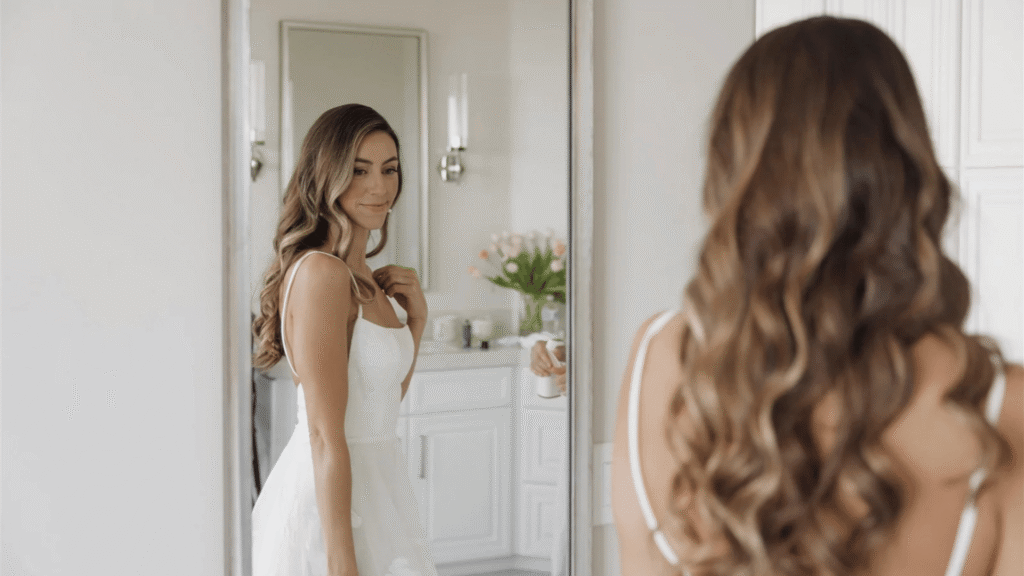
Monarch Beach weddings can involve bright coastal sunlight, an ocean-view ceremony, and a ballroom reception with flash photography. Each setting affects how makeup looks in person and in photos.
Brittany Brown Beauty provides mobile bridal hair and makeup across Orange County, San Diego, and surrounding areas. The venue, lighting, coastal weather, and wedding schedule all influence how we plan your makeup and prepare at your chosen getting-ready location.
Why Couples Choose Monarch Beach for Their Wedding
Monarch Beach is a small coastal neighborhood in Dana Point, California, near the Laguna Niguel border. It includes two resorts with wedding spaces and a golf course, Monarch Beach Golf Links.
That mix explains the appeal. Among Orange County wedding venues, it stands out for its variety. The ceremony, cocktail hour and reception can sit in different settings on one property. Ocean views, landscaped grounds and indoor ballrooms are all close together.
Two Resorts With Ocean-View Wedding Spaces
The Waldorf Astoria Monarch Beach Resort & Club lists several outdoor ceremony spaces. The Grand Lawn has Pacific horizon views. The Pacific Lawn is a private, oval lawn with a gazebo. The Botanical Garden has ocean and golf course views and a marble gazebo. Botanical Lawn North overlooks Monarch Beach Golf Links.
Indoors, the resort’s Pacific Ballroom has chandeliers and natural light. The Pacific Promenade, a cocktail space inspired by a hall of mirrors, is described as a backdrop for wedding photos.
The Ritz-Carlton, Laguna Niguel is also in Dana Point. Its listed spaces include The Bluff, an oceanfront ceremony site. The Monarch Lawn is a private courtyard on a 150-foot bluff. The Pacific Promenade Lawn has panoramic ocean views.
Inside, the Pacific Promenade Ballroom has floor-to-ceiling windows. The Pavilion has crystal chandeliers, domed ceilings and a private terrace. Weddings in the area are not limited to these two properties. Spaces and rules can change, so confirm current options with your venue.
Outdoor Ceremony or Indoor Reception: How Preparation Differs
Many resort weddings include both. An outdoor ceremony exposes makeup to sun, breeze and long stretches on camera. An indoor reception brings steadier air and very different light. The table below shows how common settings change the plan.
| Setting | What changes | How the makeup plan adjusts |
| Oceanfront lawn or bluff ceremony, such as The Bluff or the Grand Lawn | Open sun, reflected light and sea breeze | Thin, semi-matte base, soft contour and extra setting around the lips and eyes |
| Window-lined ballroom, such as the Pacific Promenade Ballroom | Daylight early, then warm lamps as evening arrives | A base that photographs well in both, with more eye definition after dark |
| Chandeliered ballroom, such as the Pacific Ballroom or The Pavilion | Warm artificial light and photographer flash | Warm-toned blush and contour that stay visible, with flash-safe products |
| Terrace at dusk, such as the Monarch Bay Sunset Terrace | Low, warm light that fades quickly | Soft definition so features still read as the light drops |
Most resort weddings pass through several of these settings in one day. Plan the base for the longest stretch, usually the ceremony and portraits. Then ask your artist how to adjust for the evening. Some brides add a little more eye definition for the reception.
Planning Your Makeup Around the Setting
Light, weather and timing each need their own plan. Start with the light, since it changes how every product looks.
Ocean Light, Shade and Flash Photos
An artist adjusts three things for each condition. Those are product placement, coverage and finish.
Direct sun. Midday sun shows texture and uneven blending. It can also wash out color, so blush needs enough pigment to show. A thin, semi-matte foundation looks even without looking heavy. Concealer sits only where it is needed, because extra product under the eyes can crease and catch light. Contour stays soft, since sun makes hard lines easy to see.
Open shade. Shade removes glare but cools the skin tone. Faces can look flatter than they do in person. Warmer blush and lip color bring life back. A satin finish keeps skin from looking dull.
Indoor resort lighting. Warm bulbs and chandeliers can mute cool-toned blush and contour. Warmer shades stay visible. Evening photos usually call for more definition around the eyes and a slightly deeper lip. A very pale look can disappear in a dim ballroom.
Flash. Flash exposes shine and anything that reflects light. Some sunscreens, shimmer and reflective concealers photograph white. Powder goes where shine builds, and highlighter stays small, on the highest points of the cheeks. Wear your usual sunscreen to the trial so the artist can test it with flash.
Picture a midday lawn ceremony followed by an evening ballroom reception. One look can serve both. It needs more definition than sun requires and less than a dark ballroom wants. Our guide to how wedding lighting affects bridal makeup walks through more settings. Our portfolio shows how finished looks read in photos.
Sea Air, Humidity and Wind
Coastal Southern California often has a marine layer in late spring and early summer. Clouds usually roll in overnight and thin out between mid-morning and early afternoon. A morning ceremony in those months may have soft, overcast light. Afternoon photos can be much brighter. Plan the makeup for both.
Moist air and warm skin soften makeup, and each finish reacts differently. A dewy base shows moisture sooner and can slide on oily areas. A fully matte base can look flat or cling to dry patches, especially in wind. Many brides do well with a semi-matte base and glow on the high points. Skin type and preferred finish decide the balance. For the full routine in humid weather, see bridal makeup for humid summer weddings in Orange County.
Wind dries lips and eyes, blows hair across fresh product and carries fine salt. Lips and eyes need extra hydration and sealing. Our guide to makeup for windy coastal ceremonies explains the layers.
Hair faces the same conditions. Humid air can relax curls and add frizz. Loose pieces blow across the face, while pinned styles stay put. Hair type matters here, since fine, straight hair and thick, wavy hair behave differently. Talk through the hairstyle at the trial so the hair and makeup plans work together.
Preparation starts weeks earlier. Keep a steady skin routine for at least 30 days and skip new products in the final ten days. Setting steps then go on in layers instead of one heavy coat. A week-by-week plan is in our 30-day skin prep guide.
Your skin, hair, preferences and expected conditions all shape the plan. Oily skin needs control in the T-zone. Dry skin needs hydration underneath. A bride who dislikes the feel of powder needs a different approach. No product can promise the same result in every wind or humidity level. A trial, plus a few hours of wear afterward, is the most reliable test.
Building the Morning Around Your Ceremony Time
Work backward from the ceremony. Add time for dressing, the photographer’s arrival, family portraits and a buffer. That sets when makeup should start.
A first look moves portraits before the ceremony. Makeup then has to be finished earlier and look right through hours of photos. Without a first look, the start time can run later.
Travel adds time. If the bride gets ready in one place and marries in another, count the drive, parking and walk. A suite and a lawn on the same resort still need a buffer.
Party size changes the plan most. The bride’s application takes about 90 minutes, and each bridesmaid takes 45 to 60 minutes. Five bridesmaids add about four to five hours for a single artist. Larger groups may need a second artist. The wedding day beauty timeline shows how makeup and hair fit around the rest of the morning.
Gather these details before you ask about availability or pricing:
- Wedding date and ceremony start time
- First look and portrait times, plus when the photographer arrives
- How many people need makeup, including the bride, bridesmaids and family
- The getting-ready address and the travel time to the ceremony
- Hair services, if you want them as well
- Skin type, concerns and any products you already use
- Your planner’s contact details, if you have one
What to Know Before You Book Mobile Makeup
How a Mobile Appointment Works
As a mobile makeup artist in Orange County and San Diego, we come to your getting-ready location. We set up a station there. Appointments then run in order, one after another. A late start for one person moves everyone, so the schedule matters.
Allow time before the first appointment for setup, and confirm the arrival time when you book. Tell us how much open space the room has and where the windows are. That helps us plan the station before the day.
Why Professional Lighting Matters in a Hotel Room
A bright suite with a large window gives good light. That light changes as the sun moves and shifts in color through the day. A room with limited natural light may have only warm lamps and a bathroom mirror. Neither matches the light at the ceremony.
Makeup judged under one lamp can look heavier or lighter outdoors. We bring professional lighting and a complete makeup setup, so every appointment has the same steady light. Shade matching and blending then hold from the first bridesmaid to the bride. We still use window light as a final check when the room has it. Weighing this against a salon visit? Read our comparison of mobile and salon wedding makeup.
Booking Early for Peak Season
Peak wedding season is busy for makeup artists, as it is for every vendor. We suggest inquiring six to twelve months before the wedding. Send the date and venue as soon as they are set. Guest counts and the final timeline can follow.
We also recommend a trial. Brides unsure what to expect can read what happens during a bridal makeup trial. Brittany’s background is on the About page. Planners can send timelines through the contact page.
Planning Your Monarch Beach Wedding?
Share your wedding date, venue, ceremony time, and getting-ready location so we can check availability. If you’re a wedding planner, you can also share the day-of timeline to help us plan the makeup schedule.
Click the button below to schedule a consultation online.
Frequently Asked Questions
The setting changes the conditions. The resorts sit along the Pacific coast, so ceremonies often face open sun, sea breeze and reflected light. Receptions then move indoors, where chandeliers and warm lamps change how makeup reads. The look has to work in both. An inland venue may skip the sea air but can have its own heat and lighting. The plan always starts with the venue.
Six to twelve months ahead is a good target, especially for peak-season weddings. You do not need a final schedule to inquire. The date and venue are enough to start.
Yes. The ceremony spot decides how much sun, shade and wind your look faces. A bluff ceremony needs more weather planning than a ballroom ceremony. The reception room decides the lighting. Share which spaces you will use, and the artist can adjust the base finish, setting steps and eye definition. Hair follows the same logic, since secured styles suit open, breezy spaces.
Our own lighting covers this, so the room’s lamps matter much less. A small or dark room is still worth mentioning when you inquire. That lets us plan where the station goes.
Aim to finish at least 30 to 60 minutes before the first photos or departure. That buffer covers delays, travel and final touches. A first look moves the deadline earlier, so share the photographer’s schedule. Travel between locations adds more time.