
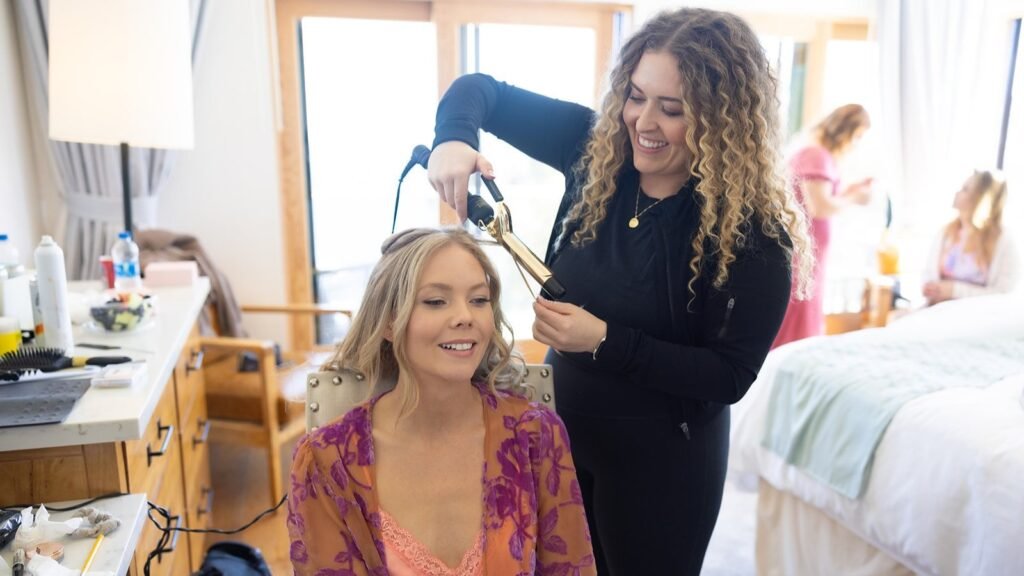
Choosing between updo vs down hairstyles for windy coastal venues is a common decision for brides once the venue is booked. Ocean air, humidity, and steady breezes all change how hair behaves over a long wedding day.
At Brittany Brown Beauty, hair styling is planned around the venue, the dress, and the bride’s own hair, so the choice never comes from a fixed template.
This guide compares both options for brides planning a wedding in Orange County or San Diego.
How Wind Affects Updos
An updo keeps hair off the face and neck, so wind has less length to catch. That is the main reason many brides at bluff-top and waterfront venues lean toward pinned styles. A secure low bun, a sleek chignon, or a twisted style sits close to the head, and a gust moves only the small pieces left out around the face.
Updos still respond to coastal conditions. Sea air and humidity can soften a polished finish, and loose face-framing strands can blow across the lips or eyes during the ceremony. A well-built updo accounts for this with strong prep, secure pinning, and a finish designed for the setting.
Updos also work well for brides who want their neckline, earrings, or veil placement on full display. A softer, textured updo often handles wind better than a very smooth one, because small movement looks intentional instead of messy. Since the veil needs to stay secure throughout the ceremony and photos, reviewing this veil placement guide for every bridal hairstyle can help you understand how placement may vary between styles.
How Wind Affects Down Hairstyles
Down styles such as loose waves, soft curls, and a half-up, half-down look are popular for the relaxed feel they bring to coastal weddings. They also move the most in the wind. Long hair can blow across the face, tangle against a veil, or lose its shape between the ceremony and photos.
Humidity adds another factor. Moist ocean air can relax curls and add frizz, especially on hair that was styled without a plan for the setting. Brides who love the down look often choose styles with some structure, like a half-up section that keeps hair off the face while the length stays loose.
Down hair can still work well at the coast. It takes a clear plan for how the style will hold, and it helps to be comfortable with some natural movement in photos. Your natural hair texture, length, and thickness can all influence which styles will work best, so exploring these best bridal hairstyles based on your hair type can help you narrow down your options before your trial.
Head-to-Head: Which Holds Up Better at the Coast
In windy settings, an updo generally gives the most control. Pinned hair leaves less length for gusts to catch, keeps the face and neckline clear, and gives a veil a secure place to anchor. Humidity has less effect on the overall shape, though loose face-framing pieces can still soften.
A down style gives the softer, more romantic look, with larger movement in photos. The trade-off is more exposed length, which can blow across the face, relax in humid air, and call for more careful veil placement. It is still a fine choice when the bride loves it and the plan accounts for movement.
A half-up style often works as a middle ground, since it keeps hair off the face while the rest stays loose.
Making the Final Call for Your Venue
The best choice depends on a few details. Think through these questions before deciding:
- Where will the ceremony take place? Bluff-top, beachfront, and open waterfront spaces tend to see more wind than a sheltered garden or indoor ballroom.
- What is the dress neckline? A high neck, open back, or detailed shoulder line can shape which style looks best.
- Will you wear a veil? Veils catch wind, so the anchor point matters for both styles.
- How does your hair behave in humidity? Your natural texture and length affect how each style holds.
- Do you want extra length or volume? Extensions can help create fuller updos or add length to loose waves, but they should be chosen and secured with the planned hairstyle in mind. This guide to hair extensions for brides and when to use them explains how they can support your bridal look.
- How do you want to feel? Hair should suit the look you imagine, so the final choice should feel like you.
A bridal trial is the best way to settle the decision. Brittany strongly recommends a trial so the look can be tested before the wedding day and any adjustments can be made. Bringing photos of your venue and your dress helps the conversation.
Because Brittany is a fully mobile artist, the process happens where you are getting ready, with no salon commute. She arrives and sets up, preps the hair, styles the chosen look, and finishes it so it is ready for the ceremony, photos, and reception.
Brittany has worked in the makeup industry for more than 11 years and offers bridal hair styling for coastal Orange County and San Diego weddings. You can see examples of her work in the portfolio and learn more about her background on the About page.
To plan hair for your wedding,Contact Brittany Brown to talk through your venue and style.
Frequently Asked Questions
Timing depends on the style, the length and thickness of the hair, and the size of the bridal party. Brittany plans the schedule in advance during booking, so each person has enough time. Her general guidance for the bride is roughly 60 to 90 minutes, and setup takes about 15 to 20 minutes. A trial helps confirm how long your chosen style needs.
Both styles can hold up well with proper prep and the right plan, but neither is immune to humidity and wind. An updo generally has an advantage because pinned hair has less loose length exposed to the air. A down style can work with enough structure and some acceptance of natural movement. A trial lets you see how your hair responds before the wedding day.
Accessories should add to the look and stay secure in the wind. Pins, combs, and clips can sit within an updo or hold back the sides of a half-up style. Veils work with both styles when anchored well, and the placement should be tested at the trial. Bring any accessories you plan to wear so they can be styled together.
Yes, a half-up, half-down hairstyle can be a good choice for a windy beach wedding. Securing the upper sections keeps hair away from the face while allowing the remaining length to move naturally. Using secure pins and styling products suited to the hair type can help maintain the look. A bridal trial is the best way to check how well it holds up in coastal conditions.
Hair extensions can add length and volume to both updos and down hairstyles, especially when natural hair is fine or shorter than the desired look. However, wind and humidity can affect how the finished style behaves, so extensions should be securely attached and incorporated into the hairstyle during the trial. The best choice depends on the bride’s natural hair, preferred style, and the conditions at the venue.