
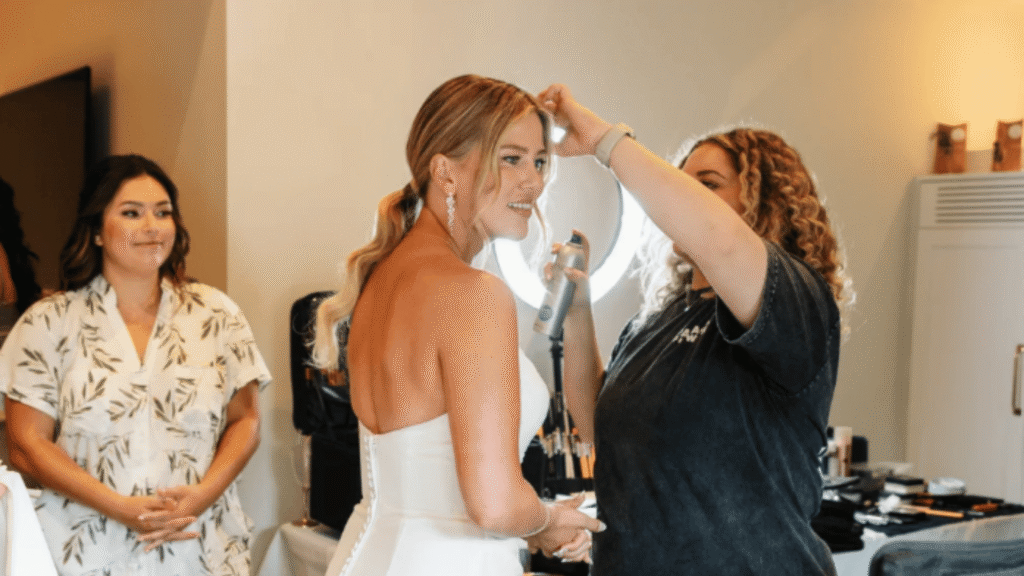
Foundation does not hide dry skin. It sits on top of it. A rough patch beside the nose, a flaky area near the brows, or tight skin across the cheeks can look minor in the mirror and still catch light, grab powder, and break up foundation once makeup goes on. Skin prep for dry or flaky patches before a wedding works best as a slow, steady habit, not a last-minute rescue.
Dry patches can affect how foundation blends, where powder settles, and how the finished makeup looks in photos. At Brittany Brown Beauty, we consider skin condition alongside product choice when planning bridal makeup. Starting your skin prep several weeks before the wedding gives you time to maintain a consistent routine and identify anything that leaves your skin feeling uncomfortable.
Getting your skin ready does not mean trying to change it before the wedding. The goal is comfortable, well-prepared skin. Dry patches may not disappear completely, and no routine can promise how makeup will look. Steady care over several weeks, a short list of things to avoid, and honest information for your artist can still help makeup sit more evenly.
Why Dry Patches Show Up More Under Makeup
Makeup sits on the surface of the skin, so surface texture matters. Smooth skin lets foundation spread evenly. Where skin feels rough or looks like it is lifting, foundation can gather in small ridges or look uneven, and concealer can settle into dry areas and draw attention to them.
Powder adds to the problem. It sets makeup and softens shine, but over a dry area it can make the skin look drier and make flakes more noticeable. Makeup can also catch on loose texture. A sponge or brush that drags across a rough spot can lift product or leave streaks.
Layering is the other common issue. When a dry patch shows, the natural reaction is to add more foundation, more concealer, and more powder. Thicker layers usually make texture more visible, not less, and close-up photos and flash tend to show it clearly.
An artist can adjust products and placement, but the skin on the day sets the starting point. Skin that has been cared for consistently gives the artist more to work with. That is why preparation matters before the makeup begins.
Building a Hydration-First Routine for Dry or Flaky Patches
Consistency matters more than variety. Skin that knows its routine tends to be easier to work with than skin that has seen three new products in a month. When a bride switches cleansers, adds new creams, and tries masks all at once, it becomes hard to tell what is helping and what is causing trouble. A familiar routine, kept steady, is easier on the skin and easier for an artist to read.
A useful benchmark is a routine that stays consistent for roughly four weeks before your trial. Many brides schedule a trial two to four months before the wedding, so that four-week window often starts earlier than expected.
Brides who begin several months ahead have the most flexibility. Our 90-day skin prep timeline shows how to pace changes. Anything new belongs in that early window, not close to the wedding.
Weeks Out: Gentle Exfoliation
Some brides already include gentle exfoliation in their routine. If that is you, keep doing what you already do with the products you already use. The wedding period is not the time to experiment with a stronger scrub, a new acid, a peel, or an unfamiliar tool. These can leave skin tight, red, or flakier than before, which works against the goal.
If you do not exfoliate now, the weeks before a wedding are not the time to start. And if your skin starts to feel tight or irritated, pull back rather than push through, and mention it to your artist.
For a closer look at the final month, see our 30-day skin prep guidance.
Days Out: Layering Hydration
In the days before the wedding, keep the same routine morning and night. Layering hydration here means using the hydrating steps already in your routine, such as a moisturizer you know well, and applying them consistently. It does not mean adding more products. Skin that feels comfortable often takes makeup more evenly than skin that feels tight.
The final 10 days should be a particularly low-experiment period. Skip new products and routine changes. If something starts bothering your skin, tell your artist rather than swapping in something unfamiliar.
Day-Of: Priming Dry Areas
On the morning of the wedding, arrive with clean, comfortable skin and follow any skin-prep instructions your artist has given you. Keep the morning simple. There is no need to add steps.
Your artist handles priming. Based on how your skin looks and feels that day, the artist may adjust the primer, foundation, concealer, and powder placement. To make those choices well, your artist needs accurate information about dry spots, reactive or sensitive areas, and any products that have irritated your skin before.
The best time to share that information is at your bridal makeup trial. Your artist can see how makeup behaves on your skin and plan the wedding-day application around it.
On the day, avoid piling extra product onto areas that already show texture. Lighter layers and careful placement usually look better than heavier coverage. For makeup choices that suit dry skin, see our guidance on bridal makeup for dry skin.
What to Avoid If Your Skin Is Prone to Dryness
Most of the mistakes are avoidable, and most come from trying to fix too much too late:
- New skincare products shortly before the wedding. Skin needs time to show how it reacts.
- Aggressive exfoliation. Harsh scrubbing can leave skin flakier and less comfortable.
- Last-minute skincare experiments. Masks, treatments, and new steps close to the wedding add risk without a chance to adjust.
- Products that have caused irritation before. Tell your artist about them so they can be avoided in your makeup too.
- Excess powder on dry-looking areas. Powder can emphasize dryness, so it works better in small amounts and in the right places.
- Trying to completely change your skin right before the wedding. Comfortable and well prepared is a realistic goal. A new complexion is not.
These points share one rule: avoid new products during the final 10 days. Familiar products and a steady routine give you and your artist the clearest picture of how your skin will take makeup.
Plan Your Bridal Makeup Trial
A trial is the right time to talk through your skin condition, your skincare routine, any sensitivities, and your makeup preferences. That conversation helps your artist plan the application before the wedding. Brittany Brown Beauty provides mobile bridal hair and makeup in Orange County, San Diego, and surrounding areas. Click the button below to schedule a consultation online.
Frequently Asked Questions
Start thinking about it three to twelve months ahead, but focus on consistency rather than a start date. Aim for a steady routine for about four weeks before your trial, and give yourself extra time if you want to introduce anything new. If you are closer to the wedding, simplify and keep to products you already use.
Avoid anything unfamiliar. That includes new skincare products, new tools, and stronger exfoliation than you normally use. During the final 10 days, hold your routine steady so your skin looks and feels as predictable as possible on the day.
Tell your artist where you notice dryness, which areas feel sensitive, and which products have caused irritation in the past. Share your current routine and anything you have used recently. This helps your artist choose products and placement that suit your skin that day.
Yes. Texture can change how foundation spreads and settles, and powder over dry areas can make them more visible. A comfortable, well-cared-for base gives your artist more room to work, although no routine can promise a particular result.
In most cases, no. One of the most useful bridal makeup trial tips is to arrive with your usual routine, because the trial shows how makeup behaves on your real skin. If you want to change something, do it early and tell your artist what you added.