Bridal makeup should enhance the bride’s complexion, features, and personal style without making her skin look dull, gray, overly orange, or lighter than her natural tone.
For Black brides, professional foundation matching, undertone selection, color balance, and long-wear preparation are especially important. Black skin includes a wide range of light, medium, deep, and rich complexions with warm, cool, neutral, golden, olive, red, and blue undertones.
Brittany Brown Beauty creates personalized bridal makeup based on each bride’s individual complexion, skin type, facial features, wedding style, venue, and preferred level of coverage.
Bridal Makeup Should Be Personalized
There is no single makeup style that works for every Black bride.
Some brides prefer lightweight, natural makeup with glowing skin. Others want soft glam, defined eyes, sculpted cheeks, or a bold lip color. The final look should reflect the bride rather than follow a standard formula.
A personalized bridal consultation may consider:
- Skin depth
- Skin undertone
- Skin type
- Areas of discoloration
- Face shape
- Eye shape
- Brow structure
- Wedding dress
- Hairstyle
- Venue lighting
- Photography style
- Personal makeup preferences
Browse the Brittany Brown Beauty bridal portfolio to explore different wedding makeup styles and finishes.
Understanding Skin Tone and Undertone
Skin tone describes how light or deep the complexion appears. Undertone refers to the color beneath the skin’s surface.
Two brides may have a similar skin depth but require completely different foundation shades because their undertones are different.
Common undertones include:
- Warm
- Cool
- Neutral
- Golden
- Olive
- Red
- Blue
- A combination of tones
Undertone affects the appearance of foundation, concealer, blush, bronzer, eyeshadow, and lipstick.
The guide to matching bridal makeup to your skin undertone explains how undertones influence wedding makeup choices.
Why Foundation Matching Matters
Foundation should match the bride’s natural complexion across the face, neck, chest, shoulders, and ears.
A shade that is too light may appear gray or ashy. A foundation that is too warm may look orange, while one that is too red may create an uneven finish.
A professional artist may evaluate the bride’s skin in:
- Natural daylight
- Indoor lighting
- Professional photography lighting
- Flash photography
- The expected venue environment
The foundation should look consistent from different angles and under different lighting conditions.
Avoiding an Ashy or Gray Finish
An ashy finish can occur when complexion products are too light, too cool, or not correctly matched to the skin.
Some setting powders, sunscreens, primers, and concealers can also create a pale or gray cast in photographs.
To reduce this risk, the makeup application may include:
- Correctly matched foundation
- Concealer selected for the intended area
- Setting powder tested on deeper skin
- Products without an obvious white cast
- Careful blending into the neck and chest
- Flash photography testing during the trial
Powder should control shine without removing the natural depth and warmth of the complexion.
Correcting Discoloration
Some brides may have areas of hyperpigmentation, acne marks, darkness around the mouth, under-eye discoloration, or an uneven complexion.
Color correction can help balance these areas before foundation is applied.
Depending on the bride’s complexion, a makeup artist may use:
- Peach corrector
- Orange corrector
- Red-orange corrector
- Warm concealer
- Neutralizing complexion products
The corrector should be applied in controlled amounts. Heavy layers may create texture or affect how the foundation wears.
The goal is not to cover every natural variation in the skin. It is to create a balanced complexion while maintaining realistic dimension.
Choosing the Right Foundation Coverage
Bridal foundation does not always need to be full coverage.
The best coverage level depends on the bride’s skin, comfort, photography plans, and preferred appearance.
Light Coverage
Light coverage allows more natural skin texture to remain visible. It may suit brides with relatively even complexions or those who rarely wear foundation.
Medium Coverage
Medium coverage creates a more polished finish while still allowing the skin to look natural. It is a popular option for soft-glam bridal makeup.
Full Coverage
Full coverage may help balance more noticeable discoloration, acne marks, or uneven areas. It should be applied in thin layers to avoid a heavy appearance.
The article on the best foundation types for bridal makeup provides additional guidance on selecting complexion products.
Dewy, Satin, or Matte Bridal Makeup
The right foundation finish depends on the bride’s skin type, wedding location, and preferred style.
Dewy Finish
A dewy finish creates a luminous and fresh appearance. It may suit dry or normal skin but requires careful placement to prevent excessive shine.
Satin Finish
A satin finish provides a balance between radiance and shine control. It often photographs naturally and works across many skin types.
Matte Finish
A matte finish can help control oil during warm weather, outdoor ceremonies, and long wedding days. It should not make the skin look flat or dry.
Black skin reflects light beautifully, so the complexion should maintain natural dimension rather than being covered with excessive matte powder.
Brides can compare the options in the guide to dewy vs. matte bridal makeup.
Natural Bridal Makeup for Black Brides
Natural bridal makeup focuses on even skin, soft definition, and colors that enhance the bride’s natural features.
This look may include:
- Lightweight or medium foundation
- Softly defined brows
- Neutral eye makeup
- Natural lashes
- Warm blush
- Subtle bronzer
- Controlled highlighting
- Nude, rose, brown, or berry lips
Natural makeup should still provide enough definition for professional photography.
The complexion, eyes, cheeks, and lips should remain visible under bright venue lighting and camera flash.
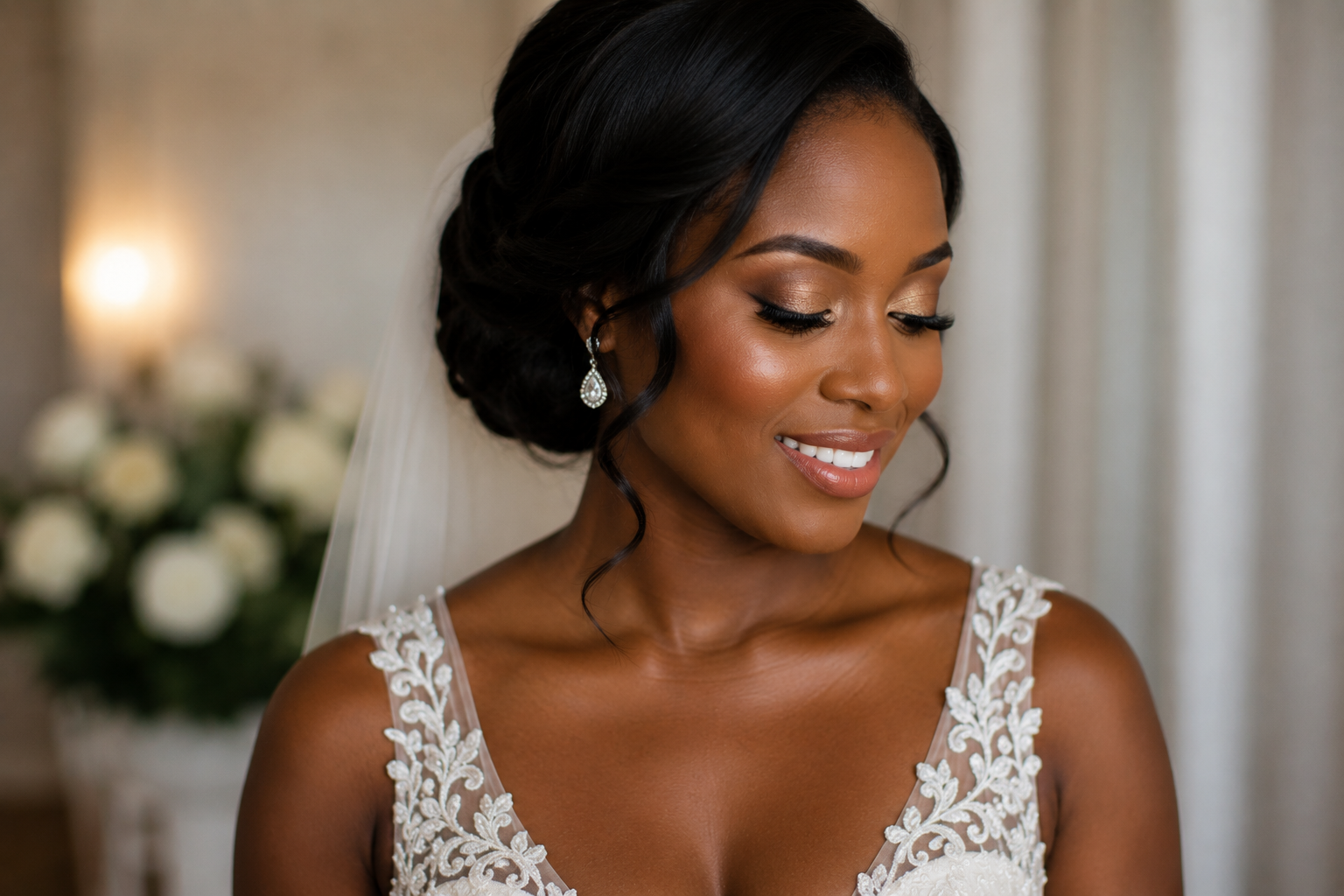
Soft-Glam Bridal Makeup
Soft glam adds more definition while maintaining a refined and wearable finish.
This style may include:
- Medium complexion coverage
- Soft contouring
- Defined brows
- Blended neutral eyeshadow
- Controlled shimmer
- Eyeliner
- Wispy or individual lashes
- Defined blush and bronzer
- Nude, mauve, rose, or berry lips
Soft glam works well for many indoor, outdoor, hotel, garden, and coastal weddings.
It provides a polished appearance without requiring heavy eye makeup or dramatic contouring.
Full-Glam Bridal Makeup
Full glam is suitable for brides who prefer stronger definition and a more dramatic finish.
A full-glam look may include:
- Higher complexion coverage
- Sculpted contouring
- Defined eye makeup
- Metallic or smoky eyeshadow
- Fuller lashes
- Highlighted cheekbones
- Strong blush
- Bold or deep lip color
Full glam should still preserve the bride’s natural skin tone and facial structure.
The complexion should not be lightened, flattened, or covered with products that remove its natural richness.
Blush Colors for Black Brides
Blush should remain visible and vibrant on the bride’s complexion.
Very pale or chalky colors may disappear or create an ashy appearance. Richer shades often provide better balance and dimension.
Flattering bridal blush options may include:
- Terracotta
- Warm coral
- Burnt orange
- Deep peach
- Berry
- Plum
- Brick
- Cranberry
- Rich rose
- Warm red
The correct shade depends on the bride’s undertone, eye makeup, lip color, and desired intensity.
Blush should be tested in photographs because camera lighting may reduce its appearance.
Bronzer and Contour
Bronzer and contour serve different purposes.
Bronzer adds warmth to the complexion, while contour creates depth and structure.
On deeper skin tones, contour products should be deep enough to create visible definition without appearing gray or muddy. Bronzer should add warmth without turning orange.
Application may focus on:
- Cheekbones
- Forehead
- Jawline
- Temples
- Nose
- Collarbone
- Shoulders
The placement should complement the bride’s natural face shape rather than changing it completely.
Highlighter for Deeper Skin Tones
Highlighter can add dimension to the complexion, but the shade should blend naturally with the bride’s skin.
Possible options include:
- Warm gold
- Bronze
- Copper
- Rose gold
- Deep champagne
- Golden peach
Very pale silver or icy highlighters may appear chalky on some deeper complexions.
Highlighter should be applied carefully to areas such as the cheekbones, brow bone, inner corners of the eyes, and collarbone.
The final effect should look radiant rather than glittery or textured.
Eye Makeup Colors
Black brides can wear a wide range of bridal eye makeup colors.
Popular options include:
- Bronze
- Copper
- Gold
- Champagne
- Chocolate brown
- Burgundy
- Plum
- Berry
- Emerald
- Navy
- Rose gold
- Black
Neutral tones can create natural or soft-glam looks, while jewel tones and metallic shades can add more drama.
The color selection should complement the bride’s dress, accessories, eye shape, skin undertone, and wedding setting.
Eyeliner and Lashes
Eyeliner can add definition and help the eyes remain visible in photographs.
Options may include:
- Soft brown liner
- Black liner
- Tightlining
- Winged eyeliner
- Smudged outer-corner liner
- Defined lower lash line
False lashes should suit the bride’s eye shape and comfort level.
Possible lash styles include:
- Individual lashes
- Half lashes
- Wispy lashes
- Natural strip lashes
- Graduated lashes
- Fuller dramatic lashes
The lashes should enhance the eyes without hiding the eyeshadow or feeling excessively heavy.
Lip Colors for Black Brides
Black brides can wear natural, soft, bright, or deep lip colors depending on their style.
Popular bridal lip shades include:
- Caramel nude
- Brown nude
- Rose brown
- Mauve
- Terracotta
- Berry
- Plum
- Burgundy
- Brick red
- Classic red
- Deep red
- Wine
A nude lip should provide enough contrast to prevent the mouth from disappearing into the complexion.
Lip liner can add definition and help adjust the depth of lighter lipstick shades.
For extended wear, the bride may receive a touch-up color for use after dining.
Long-Wear Makeup Preparation
Wedding makeup should remain polished through photographs, tears, heat, dining, dancing, and several hours of celebration.
Long-lasting makeup begins with skin preparation.
The process may include:
- Cleansing
- Lightweight hydration
- Skin-specific primer
- Controlled color correction
- Thin complexion layers
- Waterproof eye products
- Long-wear lip products
- Setting powder
- Setting spray
Products should be selected according to the bride’s actual skin type rather than using the same routine for everyone.
Long-Wear Tips for Oily Skin
For oily skin, the artist may focus on shine control without making the complexion look dry.
Techniques may include:
- Lightweight moisturizer
- Oil-controlling primer
- Thin foundation layers
- Targeted setting powder
- Waterproof eye makeup
- Long-wear lip products
- Blotting products
Powder may be concentrated around the forehead, nose, chin, and other areas where oil appears first.
Long-Wear Tips for Dry Skin
Dry skin requires preparation that supports a smooth complexion.
The artist may use:
- Hydrating skincare
- Lightweight moisturizer
- Smoothing primer
- Flexible foundation
- Cream complexion products
- Limited powder
- Hydrating setting spray
Excessive powder can emphasize dryness and texture, so it should be applied only where needed.
Long-Wear Tips for Combination Skin
Combination skin may require different products across different parts of the face.
For example, the artist may use:
- Hydrating products on dry areas
- Oil-control primer through the center of the face
- Flexible foundation
- Targeted setting powder
- Controlled highlighter placement
This customized approach can help the complexion remain balanced throughout the day.
Makeup for Flash Photography
Professional flash can reveal foundation mismatch, powder buildup, discoloration, or products that create a white cast.
During the bridal trial, take photographs using:
- Natural daylight
- Indoor lighting
- Phone flash
- Professional-style flash
- Side lighting
- Direct front lighting
Review the face, neck, chest, and shoulders together.
The makeup should look consistent without visible lines, gray areas, or overly bright under-eye concealer.
Matching the Face, Neck, and Body
The face should not appear lighter or warmer than the rest of the visible skin.
Depending on the wedding dress, the makeup artist may blend or balance complexion products across the:
- Jawline
- Neck
- Chest
- Shoulders
- Ears
- Upper back
Body makeup may be considered for visible discoloration or uneven areas, but it should be transfer-resistant and suitable for the dress fabric.
Preparing the Skin Before the Wedding
A consistent skincare routine can help makeup apply more smoothly.
In the weeks before the wedding:
- Use products suitable for your skin
- Keep the skin hydrated
- Avoid unfamiliar treatments near the wedding
- Do not over-exfoliate
- Mention allergies and sensitivities
- Follow professional preparation instructions
- Protect the skin from excessive sun exposure
Avoid aggressive facials, peels, or new products immediately before the wedding because they may cause irritation, dryness, or breakouts.
Schedule a Bridal Makeup Trial
A bridal makeup trial allows the bride and artist to test foundation shades, complexion products, eye makeup, lashes, and lip colors before the wedding.
During the trial, discuss:
- Skin concerns
- Foundation shade
- Undertone
- Coverage level
- Complexion finish
- Color correction
- Eye makeup
- Lash style
- Blush
- Bronzer
- Highlighter
- Lip color
- Product sensitivities
Bring photographs of the dress, hairstyle, accessories, venue, and preferred makeup looks.
Read more about what happens during a bridal makeup trial.
Questions to Ask Your Makeup Artist
Before booking, ask questions that help you understand the artist’s experience and approach.
Useful questions include:
- Do you carry foundation shades for deep complexions?
- How do you identify undertones?
- Can you correct hyperpigmentation without heavy coverage?
- Which setting powders do you use on deeper skin tones?
- Can we test the makeup with flash photography?
- Can you customize blush, bronzer, and highlighter shades?
- Is a bridal trial available?
- Do you provide makeup for bridesmaids and family members?
- Are lashes included?
- Do you provide on-location services?
Clear communication helps the artist understand the bride’s expectations before the wedding day.
Frequently Asked Questions
What foundation finish is best for Black brides?
The best finish depends on the bride’s skin type, preferences, venue, and expected weather. Dewy, satin, and matte finishes can all work when correctly matched and applied.
How can bridal makeup avoid looking ashy?
Foundation, concealer, powder, and sunscreen should be matched and tested carefully. Products that are too light or create a white cast should be avoided.
What blush colors look good on deeper skin?
Terracotta, coral, berry, plum, brick, cranberry, and rich rose shades can provide visible color. The best choice depends on the bride’s undertone and complete makeup look.
Should under-eye concealer be much lighter?
Under-eye concealer can be slightly brighter than the foundation, but an excessively light shade may appear gray or create a visible contrast in photographs.
How can makeup last through a long wedding day?
Skin-specific preparation, thin product layers, waterproof formulas, targeted powder, and professional setting techniques can improve wear time.
Is a bridal makeup trial necessary?
A trial allows the bride to test foundation matching, undertone, coverage, lashes, colors, comfort, and flash photography before the wedding day.
Personalized Bridal Makeup for Black Brides
Bridal makeup for Black brides should protect the natural depth, warmth, and dimension of the complexion while enhancing the bride’s individual features.
Brittany Brown Beauty creates personalized bridal makeup based on each bride’s skin tone, undertone, skin type, preferred style, wedding venue, and photography plans.
Explore bridal makeup services in Orange County or contact Brittany Brown Beauty to discuss your wedding date, bridal party, location, and preferred makeup look.