
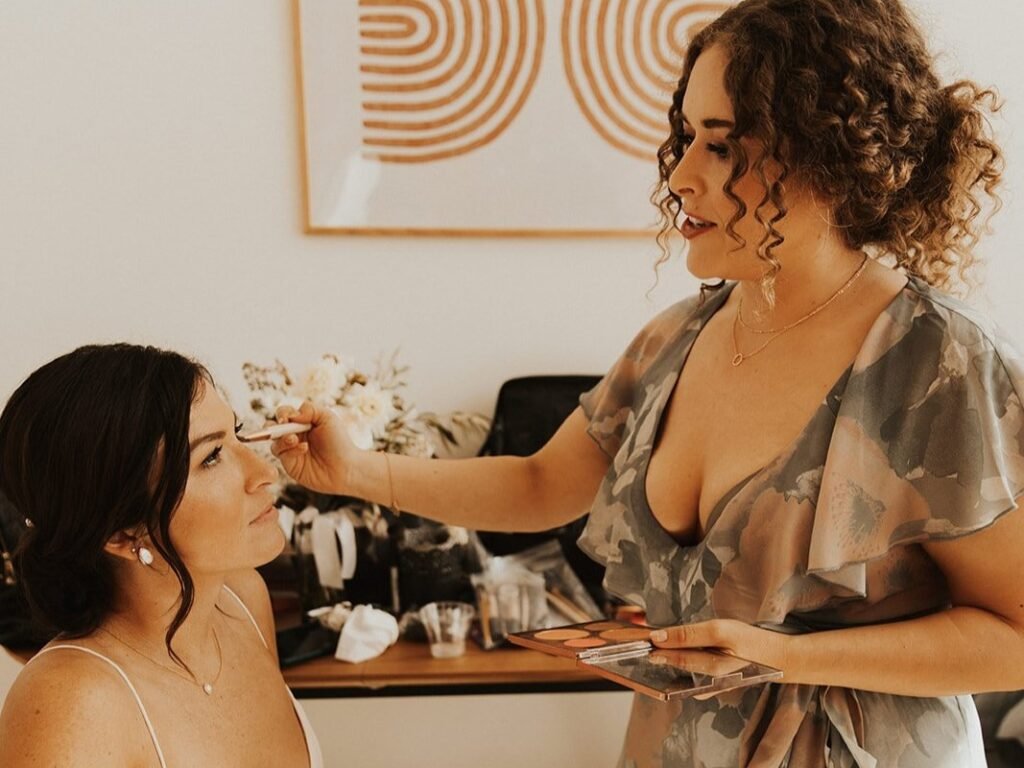
Some brides worry about how acne scarring and uneven skin texture will look on their wedding day, especially in close-up photographs. That concern is understandable, but it does not have to take over your planning. With more than 11 years of hands-on bridal experience in Orange County, I have worked with many skin types and complexion concerns, and I approach each look with technique rather than heavy coverage.
At Brittany Brown Beauty, I believe in enhancing your natural beauty rather than masking it, so you look like yourself, but elevated.
This guide explains how makeup techniques can soften the appearance of discoloration and uneven texture while creating a natural-looking finish. It focuses on appearance and comfort rather than treating skin conditions. If you have questions about your skin or are considering a treatment, consult your doctor or a qualified skincare professional.
Why Texture Changes How Foundation Should Be Applied
Acne scarring and uneven texture can affect how light moves across your face. Raised or indented areas may catch light or create small shadows, while foundation can settle into certain areas and make them more noticeable. Applying more coverage everywhere does not necessarily solve the problem.
I take a different approach. Instead of covering your entire face with thick layers of product, I build coverage gradually and place it where it helps most. Corrective beauty makeup is a technique I particularly enjoy because small, targeted adjustments can make a meaningful difference to the overall finish.
The goal is skin that still looks like skin, only more even and polished. This is the no-makeup-makeup approach at work.
Here is what I keep in mind:
- Avoid unnecessary layers: Heavy coverage can emphasize texture rather than soften its appearance.
- Be selective with shimmer: Strong shimmer and glitter can draw attention to uneven areas under certain lighting conditions.
- Build coverage gradually: Thin, deliberate layers give me more control over the finish.
- Prepare the skin carefully: The way makeup sits on the skin depends partly on the preparation underneath.
- Adjust for each person: Every complexion is different, so I do not use one fixed approach for everyone.
I do not promise that makeup will make acne scars or uneven texture disappear. What I focus on is a carefully planned application that helps you feel confident in person and in photographs.
For more information about targeted coverage, read my guide to corrective makeup and who it is for. It explains how specific makeup techniques can help address the appearance of uneven tone and other complexion concerns without automatically applying heavy coverage everywhere.
Techniques That Help Create a More Even Finish
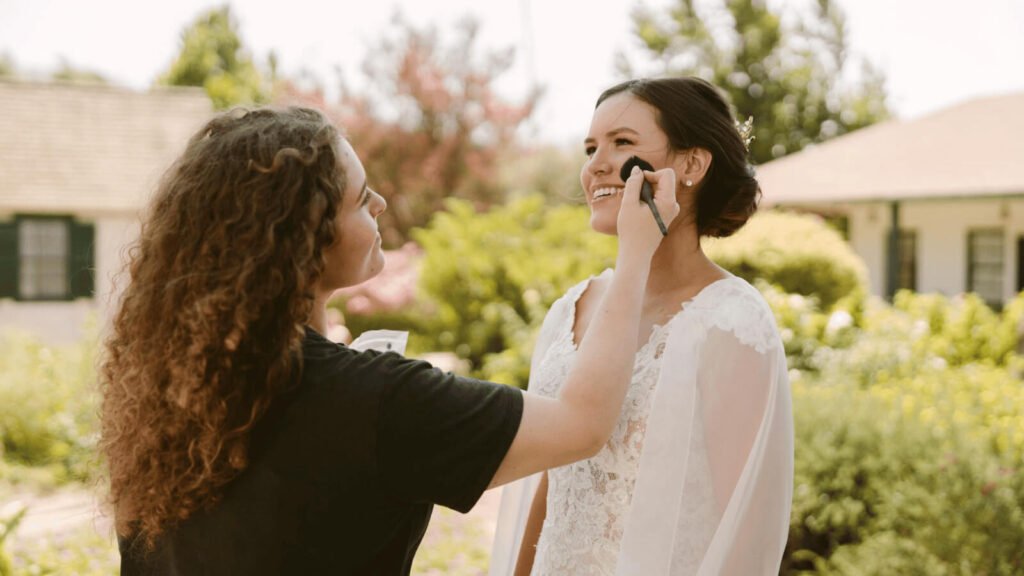
These three techniques form the core of how I approach uneven texture. Each helps me balance coverage and finish while keeping the makeup looking natural.
Priming for Smoother Application
A polished base starts with preparation. On your wedding morning, I begin with skincare, primer, and base preparation, and I take that step slowly on purpose. A well-prepared surface can help foundation apply more evenly and reduce the appearance of patchiness.
You can start preparing your skin well before your wedding. My guide to the 90-day skin prep countdown before your wedding walks through a longer preparation timeline.
These basics are useful for many brides:
- Maintain a consistent skincare routine in the weeks before your wedding.
- Stick with products your skin already tolerates comfortably.
- Stay hydrated, especially in the week leading up to the event.
- Avoid introducing new skincare products or treatments during the final 10 days.
- Avoid picking at scars or breakouts, which can irritate the skin.
I choose primers and foundations based on your skin, preferred finish, and wedding conditions, including Southern California heat, humidity, and sea air. I do not claim that any single product suits every skin type. Testing products on your skin and assessing the finish at your trial help us make more informed choices.
Color-Correcting Acne Scarring
Acne scarring can involve discoloration as well as changes in skin texture. Marks may appear red, pink, or darker than the surrounding skin, and uneven color can draw attention even when foundation is otherwise well blended.
Color correction can help neutralize the appearance of discoloration before foundation is applied.
Here is how I approach it:
- Assess the area: I look at where discoloration appears and how its color compares with the surrounding skin.
- Choose a suitable correcting shade: The appropriate color depends on the complexion and the discoloration being addressed.
- Apply sparingly: A small, precise application gives me more control than spreading a large amount of product across the area.
- Blend the edges: The corrector should blend into the surrounding skin without a visible line.
- Build the base gradually: Once the color looks more balanced, I use thin layers of foundation where additional coverage is helpful.
The shade and amount vary from bride to bride. I choose them based on the skin in front of me rather than following a universal formula.
If you have fair skin and want more guidance on choosing complementary shades, read my bridal makeup for fair skin: product and shade guide.
It is also important to distinguish between discoloration and physical texture. Color correction can soften the appearance of uneven color, but it cannot fill indentations or remove raised scars. My approach accounts for both concerns without promising that either will disappear completely.
Setting Without Emphasizing Texture
Setting products help makeup wear well, but excessive powder can create a dry finish or make uneven texture more noticeable. I prefer to set selectively rather than automatically covering the entire face with powder.
My approach looks like this:
- Focus on areas that need it: The T-zone and areas prone to creasing or excess shine may need more attention.
- Keep the high points soft: Cheekbones and other areas where light naturally falls can retain a gentle glow.
- Use a light hand: I apply only as much product as the finish requires.
- Finish thoughtfully: Appropriate setting techniques help support the makeup through the ceremony, photographs, and reception.
Your skin’s response to products and the conditions of your wedding day both influence the finished look. I do not promise that makeup will last for a specific number of hours, since skin, weather, and activity all play a part.
I do plan each application carefully, and every bride receives a complimentary touch-up kit containing lipstick, powder, and blotting sheets for a quick refresh when needed.
What to Discuss at Your Bridal Makeup Trial
Your trial is the best place to talk through your skin concerns and decide how much coverage feels right. I strongly recommend one because it lets me test products on your skin, make adjustments, and help you understand what to expect before the wedding day.
It also gives us an opportunity to assess the finished makeup in natural light and photographs, where uneven texture may appear different from how it looks in a mirror.
Please bring up the following:
- Areas of your skin you would like softened and features you want to highlight.
- Any skin sensitivities, previous reactions, or recent treatments.
- Past experiences with makeup that felt heavy, cakey, or uncomfortable.
- Your preferred level of coverage and finish.
- Photos of your dress, hairstyle, and makeup looks you admire.
- Any questions about products, techniques, or how the makeup may appear in photographs.
Honest feedback helps most. If something feels heavy or does not look like you, tell me so we can discuss adjustments. I would rather address a concern during your trial than leave you uncertain on your wedding morning.
If you are unsure how to explain the look you have in mind, my guide to what to explain to your makeup artist during a trial offers tips for communicating your preferences with reference photos and clear feedback.
You may also find my article on avoiding makeup that settles into fine lines useful. Although acne scarring and fine lines are different concerns, both illustrate why product placement, application technique, and the amount of coverage matter when creating a natural-looking finish.
After the trial, pay attention to how the makeup looks and feels. If you notice a concern, contact me so we can discuss adjustments before the wedding.
What to Expect on Your Wedding Morning
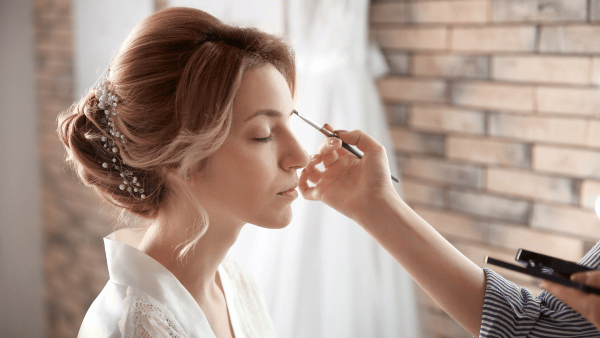
Because I am fully mobile, I come to you with a complete professional kit, including studio-quality lighting and seating. This allows me to assess your complexion clearly, even when the room’s lighting is not ideal.
You avoid the salon commute, your getting-ready party can stay together, and your morning can follow the schedule you have planned.
My process begins with skin and base preparation, followed by foundation, targeted coverage, and finishing techniques suited to your look. I adjust the application as needed rather than applying the same amount of product across every area of your face.
I generally plan around 60 to 90 minutes for the bride’s makeup and 45 to 60 minutes for each bridesmaid’s makeup, adjusting for the size of the group and the services required. For larger parties, I can bring additional artists so everyone is ready on schedule without cutting corners on the bride’s application.
I trained at Empire Academy of Makeup in Orange County, and my work has been featured in Voyage LA Magazine and SDVoyager. You can learn more about my background and see examples of my soft, natural style in the Brittany Brown Beauty portfolio.
Plan Your Bridal Makeup
Acne scarring and uneven texture do not mean you have to abandon the bridal makeup look you love. The goal is to find an approach that balances coverage, finish, and your personal preferences without adding unnecessary products.
During a consultation, we can discuss your skin concerns, the level of coverage you prefer, your wedding venue, and the look you want to achieve. We can also talk about whether a bridal trial would help you assess the makeup in person and in photographs before the big day.
If you are planning other wedding-day beauty services, you can explore my bridal hair and makeup services to learn more about the options available for your wedding party.
Spring and fall weekends in Orange County book out well in advance, so I encourage you to get in touch once your venue and date are confirmed. Your date is secured with a signed contract and a deposit. To discuss your wedding plans and availability, contact Brittany Brown Beauty.
Frequently Asked Questions
Maintain a consistent skincare routine in the weeks before your wedding and stick with products your skin already tolerates comfortably. Avoid introducing unfamiliar products and treatments during the final 10 days. On your wedding morning, I begin with skincare, primer, and base preparation to help create a more even-looking surface for makeup.
Wear time depends on your skin, the weather, and how active your day is, so I do not promise a set number of hours. I plan carefully with appropriate preparation, product choices, and finishing techniques to support the overall look. Every bride also receives a complimentary touch-up kit with lipstick, powder, and blotting sheets for a quick refresh.
Yes. I adjust the amount of coverage, correcting shades, and finishing techniques according to your complexion, skin, and preferences. I do not use one fixed look for everyone. Your bridal trial lets me assess how the makeup looks on your skin and make adjustments before the wedding day.
Makeup can soften the appearance of discoloration and help create a more even-looking complexion, but it cannot guarantee that physical texture will disappear. I use targeted color correction, thin layers, and selective setting to create a natural-looking finish. Reviewing the makeup in photographs during your trial helps you understand what to expect.
That is a question for your doctor or a qualified skincare professional, since I do not provide medical advice or treatment recommendations. Avoid experimenting with unfamiliar skincare products or treatments during the final 10 days before your wedding. If you have had a recent treatment, tell me during your trial so I can plan your makeup carefully.