Posted on

Corrective Makeup for Scarring and Hyperpigmentation

corrective makeup for scarring and hyperpigmentation

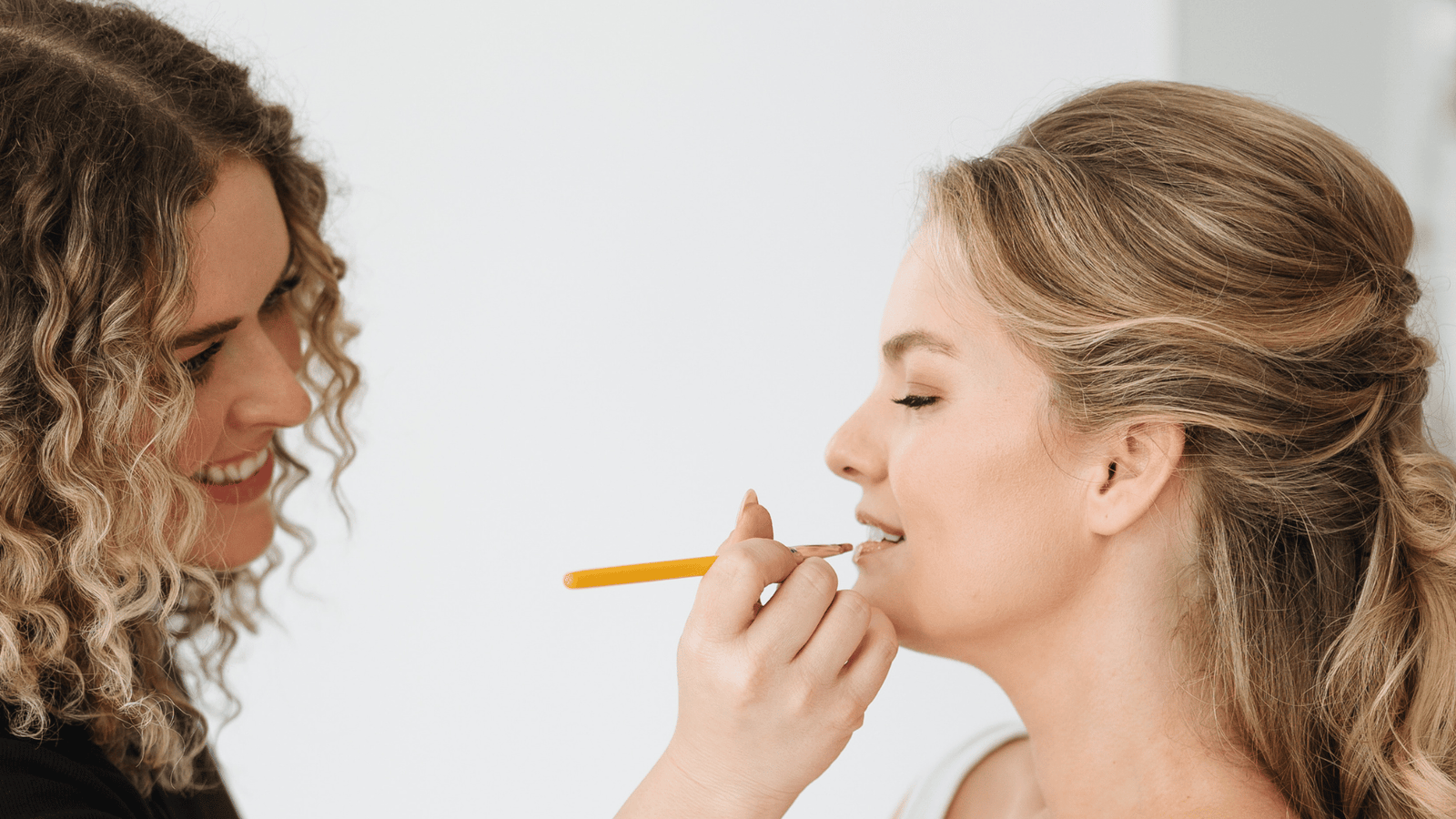
Every bride, mother of the bride, and client I sit down with has different skin, and I mean that beyond just tone or type. Scarring, hyperpigmentation, redness, and uneven texture are all things I work with regularly, and they’re areas I genuinely enjoy working in. Corrective beauty makeup comes naturally to me, I don’t have to think about it, I just do it. It’s one of the parts of this work that feels most rewarding.

Quick answer: corrective makeup for scarring and hyperpigmentation is a technique-based approach, built on color theory, layering, and setting, that visually evens out tone and texture for the day without masking your natural features. It’s not a medical treatment and it doesn’t change your skin permanently, it’s about how light and color are managed on the surface for however long your event lasts. Here’s how the process actually works.

What Corrective Makeup Actually Means

Corrective makeup isn’t about covering skin up or hiding it under layers of heavy product. It’s a more deliberate, technique-driven approach to evening out visible tone and texture, things like scarring, hyperpigmentation, redness, or discoloration, so the skin looks smooth and balanced in person and in photos. Little subtle changes on the skin can be very powerful, and that’s really the guiding idea behind corrective work: small, precise adjustments rather than broad, heavy coverage.

This is also where the enhance, don’t mask philosophy applies directly. The goal is never to erase who you are or flatten your natural features. It’s to bring balance to the skin so your features, not the areas you’re self-conscious about, are what stand out.

How Correction Works

Corrective makeup relies on a specific set of techniques, not just a heavier hand with foundation.

Color-Correcting Theory Basics

Color correction uses the color wheel to neutralize specific tones before foundation goes on. Certain shades are used to counteract redness, others to soften darker discoloration or hyperpigmentation, depending on what the skin actually needs. This step happens before base makeup, not instead of it, and it’s what allows the final coverage to stay lighter overall.

Layering for Even Coverage Without Heaviness

Once I neutralize the skin tone, I build coverage in thin layers rather than applying it all at once in a thick single pass. This keeps the final result looking like skin, not like a mask, while still achieving even, balanced coverage over scarring or uneven pigmentation. I use layering to create precise coverage, concentrating product only where it’s actually needed instead of applying it uniformly across the whole face.

Setting to Prevent Breakthrough

The final step is setting the work so it holds through the day, without discoloration or redness breaking back through as hours pass. This matters especially for long events like weddings, where makeup needs to look consistent from getting-ready photos through the reception, not just in the first hour.

Why This Is One of Brittany’s Named Specialties

Corrective beauty makeup is one of my named specialties, alongside bridal, print, and mature-skin makeup, and it’s an area I’ve built real depth in over 11+ years of hands-on bridal and print work. I also love to do mature makeup. I love to make moms, aunts, grandmas, and everyone in between feel beautiful and special too. Formulas and techniques that work beautifully on younger skin don’t always translate the same way to more mature complexions, and corrective work for scarring or hyperpigmentation often overlaps with that same skill set, adjusting technique to what a specific client’s skin actually needs rather than defaulting to one approach for everyone.

If you’d like to see how Brittany Brown Beauty approaches this kind of work, take a look at the portfolio, or read more about the background behind it on the about page. When you’re ready to talk through your own skin and what you’re hoping for, reach out through the contact page.

Frequently Asked Questions

1. How is corrective makeup for scarring and hyperpigmentation different from standard bridal makeup? 

Standard bridal makeup focuses on an overall look built around skin, dress, and venue. Corrective makeup adds a specific technical layer to that process, using color-correcting theory and precise layering to address particular areas of concern like scarring or hyperpigmentation, so the artist targets coverage instead of applying it uniformly.

2. What products work best for corrective makeup for scarring and hyperpigmentation? 

The right approach depends entirely on the individual’s skin, the type of discoloration or scarring, and the client’s skin type. Rather than relying on a single product recommendation that works for everyone, I assess your needs in person, since what works well for one skin concern may not be the right choice for another.

3. How far in advance should I book a trial for corrective makeup for scarring and hyperpigmentation? 

A trial is especially valuable for corrective work, since it’s the appointment where I test color correction and layering directly on your skin and adjust the approach as needed. Reaching out as soon as you confirm your date is the best way to make sure there’s time for a proper trial before the event itself.
Posted on

Waterproof Bridal Makeup for Beach and Outdoor Ceremonies

waterproof bridal makeup for beach and outdoor ceremonies

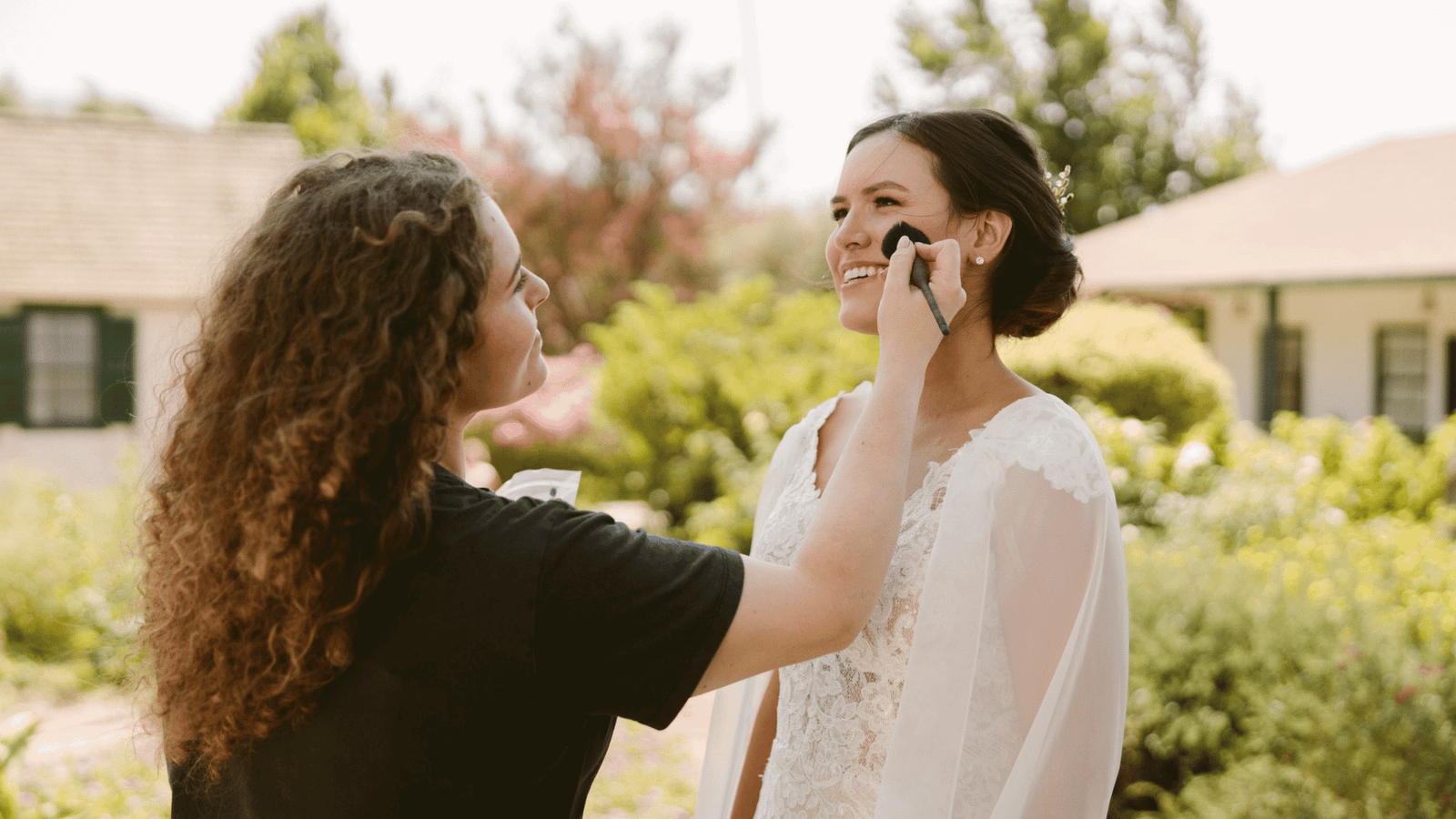
Beach and outdoor ceremonies are some of the most beautiful weddings I get to work on, and they also come with a very real question every bride should ask early: will my makeup actually hold up out here? Between happy tears, sea air, sun, and the occasional coastal breeze, an outdoor Orange County or San Diego ceremony asks a lot more of your makeup than an indoor venue does. After 11+ years of hands-on bridal work along this coastline, building a look that holds up outdoors is something I plan for from the very first consultation.

Quick answer: a truly reliable waterproof bridal look comes down to three things, a waterproof base and concealer, smudge-proof eye makeup, and a long-wear lip formula, all applied with proper skin prep and setting technique. No formula is completely foolproof for every skin type or every condition, which is exactly why a trial run matters. Here’s how I approach it, checklist-style, so you know what to ask about and expect.

Why Waterproof Formulas Matter for Outdoor Ceremonies

Outdoor ceremonies expose your makeup to conditions an indoor venue simply doesn’t have: direct sun, humidity, sea air, wind, and often genuine tears during the vows. Regular formulas can break down faster under that combination, especially around the eyes and along the base. Waterproof and long-wear formulas resist breakdown, which matters most during the moments when you want your makeup to last, walking down the aisle, exchanging vows, and through however many happy tears the day brings.

This is also where the “enhance, don’t mask” philosophy stays front and center. Waterproof doesn’t mean heavier or more done-up. The goal is still a natural, glowing look that feels like you, just built with formulas and techniques that can handle the elements.

Building a Waterproof Look

A waterproof bridal look isn’t one single product decision, it’s a combination of choices across the whole face.

Waterproof Base and Concealer

The base is where durability starts. A properly prepped, well-set base and concealer are formulated to resist moisture and humidity better than standard everyday makeup, which matters most under direct coastal sun or near the water. This is one of the areas where genuine coastal-conditions experience makes a difference, since choosing the right base for Southern California humidity and sea air is different from choosing one for an indoor, climate-controlled venue.

Smudge-Proof Eye Makeup

Eyes are usually the first area to show wear during an emotional ceremony, so smudge-proof eye formulas and careful application matter here more than almost anywhere else on the face. The goal is a look that stays soft and natural through happy tears rather than shifting or smudging the moment emotions run high.

Long-Wear Lip Formulas

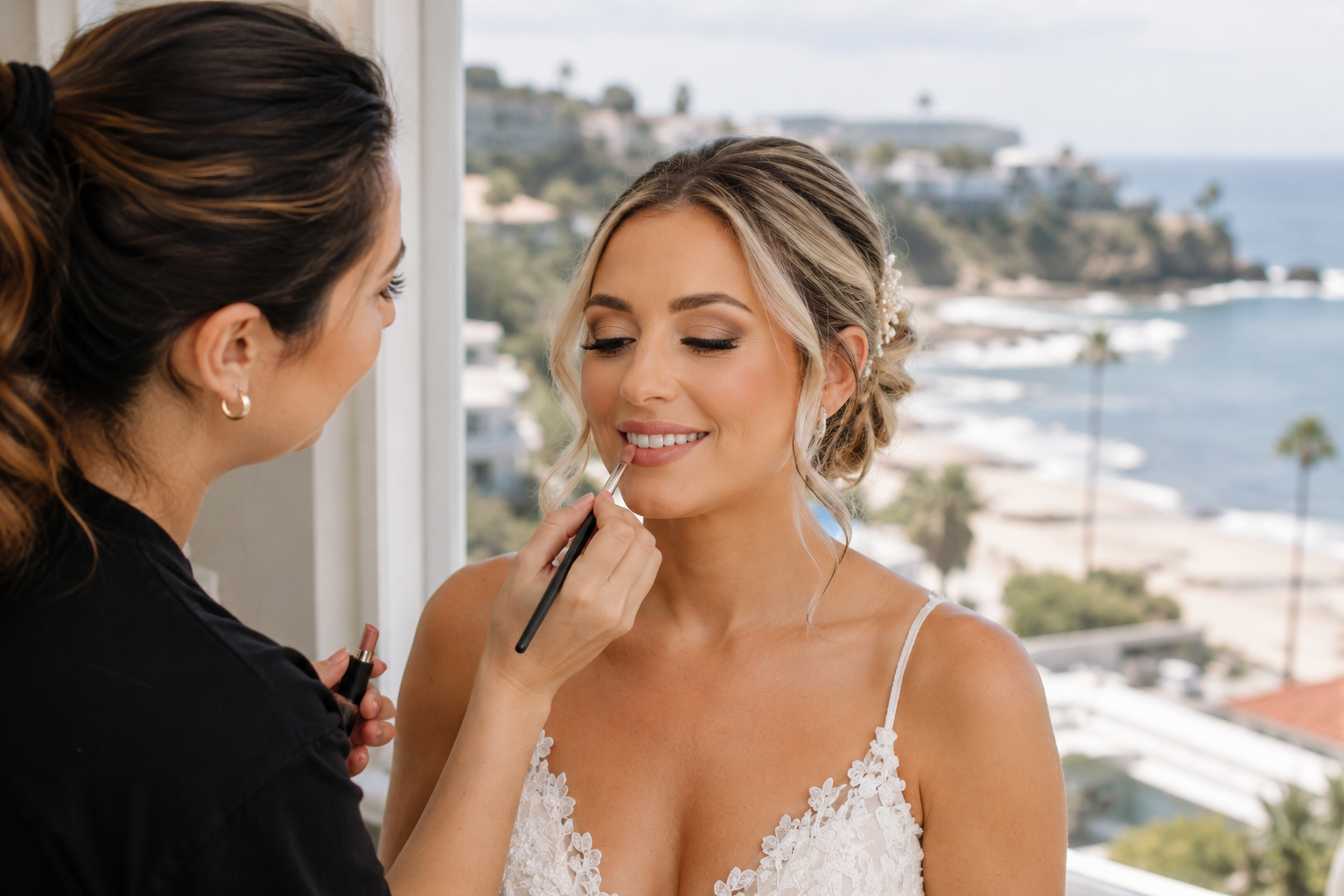
Wind, saltwater air, and hours between ceremony and reception can all wear down lip color faster outdoors. A long-wear lip formula, applied and set properly, helps color stay put through the ceremony, the receiving line, and photos, without needing constant reapplication.

What Waterproof Doesn’t Mean

It’s worth being upfront about this: manufacturers create waterproof and long-wear formulas to resist moisture and perform better in humidity and through tears, but no formula can promise the same results for every skin type or under every possible condition. Everyone’s skin behaves a little differently, and factors like oil production, sun exposure, and even how the day unfolds can all play a role. That’s exactly why a bridal trial matters so much for outdoor ceremonies specifically. A trial lets us test the actual formulas on your skin, in advance, so we can see how they perform and make any adjustments before the wedding day itself, rather than hoping for the best.

Brides often describe the result of this kind of prep the same way, feeling like themselves but elevated, confident that their makeup will still look like them by the time they’re dancing at the reception. That’s the outcome this whole process is built around.

If you’d like to see examples of past outdoor and coastal bridal looks, take a look at the portfolio, or read more about the experience behind it on the about page. When you’re ready to talk through your own outdoor ceremony, reach out through the contact page.

Frequently Asked Questions

1. What’s the best way to prep my skin for waterproof bridal makeup for beach and outdoor ceremonies? 

Good prep starts well before the wedding day. Avoiding new skincare products or treatments in the final 10 days before the wedding, keeping a consistent skincare routine for at least four weeks out, and staying well hydrated in the week leading up to the event all help create skin that holds waterproof formulas better and looks smooth under coastal sun.

2. How long will waterproof bridal makeup for beach and outdoor ceremonies last through the ceremony and reception? 

Longevity depends on skin prep, formula choice, and setting technique working together, and it can vary from bride to bride. A trial is the most reliable way to see how a specific look performs on your skin over several hours in real conditions. 

3. Can waterproof bridal makeup for beach and outdoor ceremonies be adjusted for my specific skin tone or type? 

Yes. Shade, formula, and technique are all chosen based on your individual skin, including adjustments for mature skin or other specific concerns, rather than a single fixed approach applied to everyone. No formula is described as working identically for all skin types, which is part of why fittings and trials matter.

Posted on

Choosing the Right Foundation Shade for Your Wedding Day

right foundation shade for your wedding day

Of all the small decisions that go into your wedding-day makeup, foundation shade might be the one with the biggest impact and the easiest to get wrong if it’s rushed. I’ve been doing bridal makeup for 11+ years now, and shade-matching is one of those things that looks simple until you’re standing in a dim bathroom mirror the morning of, trying to decide if a color reads right. It deserves more care than that, and it’s a big part of why I build shade confirmation into the process well before the wedding day itself.

My approach to foundation has always come back to the same philosophy: enhance, don’t mask. The right shade isn’t the one that changes how you look, it’s the one that disappears into your skin so completely that people just see you, glowing, on one of the most photographed days of your life. That’s the “like yourself, but elevated” feeling so many brides describe after their wedding and it starts with getting the shade right, not with piling on more product.

Why Wedding-Day Lighting Changes Shade-Matching

A shade that looks perfect under one type of lighting can look noticeably different under another. Store lighting, bathroom lighting, and phone-camera flash all render color differently than natural daylight, and natural daylight is what most photographers use throughout your wedding day, whether they’re capturing golden-hour portraits at Crystal Cove, harbor views in Newport Beach, or bright coastal scenes in San Diego.

That’s why I don’t rely on a quick shade match under artificial lighting. Instead, I check your foundation in natural daylight and, whenever possible, under lighting that closely matches your wedding day. That approach ensures the shade looks natural both in person and in your wedding photos.

How to Test and Confirm Your Shade

Getting the shade right isn’t about guessing at a bottle, it’s a process, and it’s one I go through carefully with every bride.

Testing in Natural Daylight

The most reliable way to confirm a shade is to apply a small amount along the jawline and blend it into the neck, then step into natural daylight near a window or outdoors to see how it actually reads against your skin. Artificial lighting can shift how warm, cool, or deep a shade appears, so daylight is the closest thing to a preview of how it will look in your ceremony and reception photos.

Checking Undertone, Not Just Depth

Depth (how light or dark a shade is) is only half the equation. Undertone whether your skin leans warm, cool, or neutral matters just as much, and it’s often where shade-matching goes wrong. A foundation can be the right depth and still look slightly off if the undertone doesn’t match, sometimes reading gray, orange, or pink against your natural skin. Part of what comes from years of hands-on bridal work is being able to spot that mismatch quickly and adjust, rather than defaulting to whatever depth looks “close enough.”

Why This Matters at Your Trial

This is exactly why I strongly recommend a bridal trial before the wedding day. A trial gives us the chance to test shade and formula directly on your skin, in real lighting, with time to adjust if something isn’t quite right instead of discovering an issue the morning of. It also gives us a chance to talk through any skin sensitivities or recent treatments, so the whole look is built around what your skin actually needs, not a guess. A trial isn’t about assuming something will go wrong; it’s about making sure nothing has to be figured out last-minute on a day that’s already full enough.

What Happens If Your Skin Tone Shifts Before the Wedding

It’s common for skin tone to shift a little between your trial and your wedding day a summer tan, more sun exposure, or even seasonal changes in skin can all play a role. This is one of the reasons I like to stay in touch with brides as the wedding date gets closer, especially if there’s been a noticeable change since the trial. If your tone has shifted, we can reassess and adjust the shade accordingly, rather than sticking rigidly to what was tested weeks or months earlier. The goal is always the same: a foundation that matches the skin you actually have on the day itself.

Built to Hold Up, Not Just Look Good at 9 AM

Southern California weddings come with their own conditions: heat, humidity, sea air, and long hours between getting-ready photos and the last dance. Shade matching is only part of the equation. I also apply and set each product to withstand those conditions throughout the day. I want every bride’s makeup to look the same in the reception photos as it did walking down the aisle, so I focus on proper skin prep, the right formulas for the day’s conditions, and a setting process that stands up to the coastal climate of Southern California instead of relying on a generic approach.

If you’d like to see how this comes together, you can browse real bridal looks in the portfolio, or read more about my background on the about page. When you’re ready to talk through your own wedding-day look, reach out through the contact page. I’d love to hear about your plans.

Frequently Asked Questions

1. What’s the best way to prep my skin for the right foundation shade for your wedding day? 

Good shade-matching starts with well-prepped skin. Avoiding new skincare products or treatments in the final 10 days before the wedding, keeping a consistent skincare routine for at least four weeks out, and staying well hydrated in the week leading up to the event all help create a smooth, even canvas for foundation to sit correctly and read true to your natural tone.

2. How long will the right foundation shade for your wedding day last through the ceremony and reception? 

Foundation and shade selection are just one part of longevity proper skin prep, formula choice, and setting techniques suited to Southern California heat and humidity all work together to help your look hold up through the ceremony, photos, and reception. A bridal trial is the best way to see how a specific formula and shade perform on your skin over several hours. 

3. Can the right foundation shade for your wedding day be adjusted for my specific skin tone or type? 

Yes. We select your foundation shade and formula based on your individual skin rather than a fixed package look. We consider your undertone, skin depth, and skin type, then adjust our products and techniques as needed for mature skin or other specific concerns. Every recommendation reflects what works best for your skin instead of following a one-size-fits-all approach.

Posted on

Eye Makeup Techniques for Hooded or Mature Eyes

eye makeup techniques for hooded or mature eyes

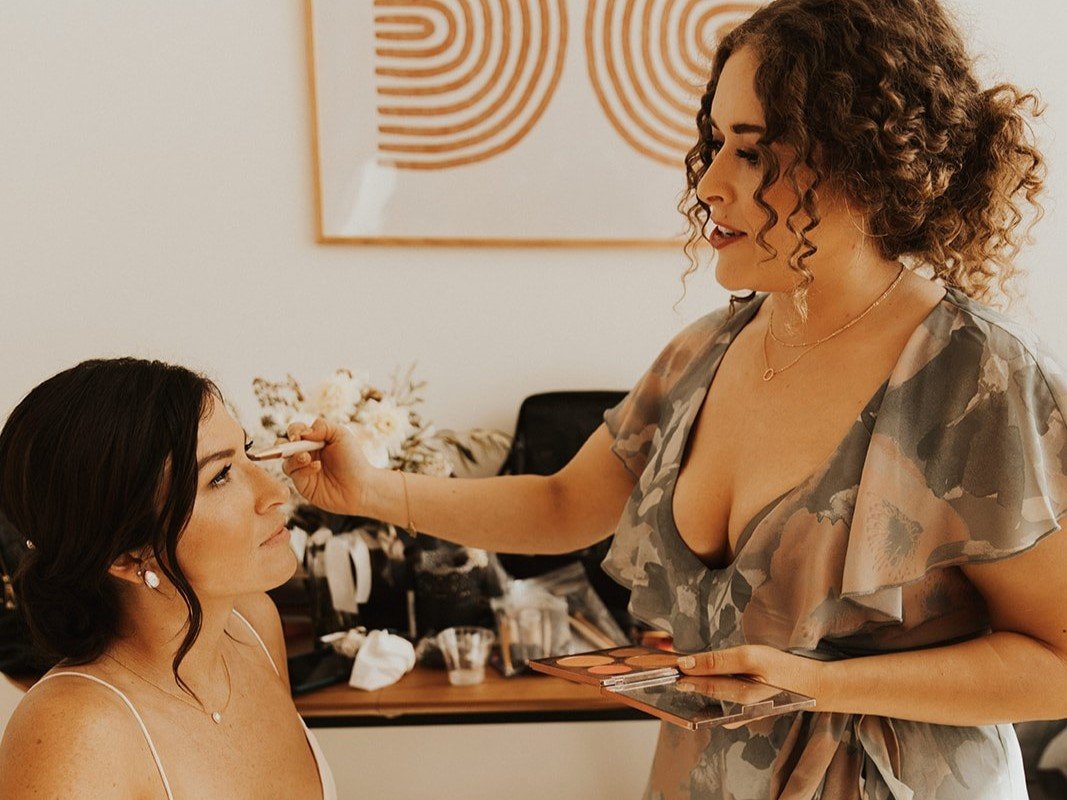
Eye makeup that looks stunning on a flat, taut lid often behaves completely differently on hooded or mature eyes, where the eyelid space shifts, folds, and moves in ways standard tutorials rarely account for. Rather than treating this as a limitation, it’s simply a different set of techniques, ones built around placement, product choice, and an understanding of how the eye actually looks when open, blinking, and in motion.

Mature and hooded-eye makeup is a specialty Brittany Brown has refined deliberately over 11+ years of hands-on bridal and print work. It’s an area she’s passionate about, requiring precision and a true understanding of corrective technique, and it’s become one of the strengths clients specifically seek her out for.

Why Standard Eye Techniques Change With Age

Most mainstream eye makeup tutorials are built around a flat, visible lid space, where color placed close to the lash line stays visible when the eyes are open. On hooded or mature eyes, that same placement can disappear entirely into a fold the moment the eyes open, which is why a technique that looks perfect with eyes closed can look unfinished or muddled the moment a bride or client is actually looking forward.

Skin texture and movement patterns shift too, which affects how long products stay put and how they read in photos. None of this is about correcting a flaw. It’s about adjusting technique to match how the eye actually functions, so the final look holds up in motion, in conversation, and in every photo taken throughout the day.

Techniques That Work

Placement for Visibility When Eyes Are Open

The most important adjustment is building color and definition based on where the eye reads when open, not where it looks best with eyes shut. That often means shifting the darkest values slightly higher and further out than a standard tutorial would suggest, so the depth and shape stay visible instead of vanishing into a hood. Makeup artists check the eyes throughout the application and blend with them open instead of waiting until the final step.

Avoiding Product Creasing

Hooded and mature lids tend to fold and move more than flatter lids, which makes creasing a common issue when makeup artists use the wrong products or apply too much product. Applying lightweight, longwear formulas in thin layers and pairing them with an eye primer suited to the individual’s skin helps color stay smooth and even instead of settling into the fold throughout the day. Powder products generally hold up better in this area than heavier cream formulas because they are less likely to shift.

Softening Rather Than Sharpening Lines

Hard, sharply defined lines tend to emphasize the fold rather than the eye shape itself, while softer, diffused edges let the eye’s natural shape lead the look. This is a deliberate technique choice rather than a workaround, soft transitions read as polished and intentional rather than undefined, and they photograph with more depth than a harsh line tends to on this eye shape.

What to Test at Your Trial

A trial is the right place to see exactly how these techniques translate to an individual’s specific eye shape and skin, since hooded and mature eyes vary enough from person to person that no single formula works universally. It’s worth testing how a chosen liner or shadow placement looks both with eyes open and through natural blinking and expression, not just in a single still pose, and checking how the finish holds up over a few hours rather than just the first ten minutes.

This is also where the “enhance, don’t mask” approach matters most. The goal isn’t to impose a one-size-fits-all technique, but to find the placement, formula, and finish that work with an individual’s eye shape rather than against it, so the final look feels natural, polished, and entirely her own.

Anyone curious about how this specialty comes together in real client work can look through examples in the portfolio, or read more about Brittany’s background and approach on the About page. For those ready to book a trial focused specifically on hooded or mature eye techniques, getting in touch directly is the best way to start that conversation.

Frequently Asked Questions

1. How is eye makeup techniques for hooded or mature eyes different from standard bridal makeup? 

The core difference is placement and product choice rather than a completely different overall look. Makeup artists place color and definition where they remain visible with the eyes open, using lightweight, longwear formulas and soft blending instead of techniques designed for a flat, fully visible lid.

2. What products work best for eye makeup techniques for hooded or mature eyes? 

Lightweight, longwear eyeshadow formulas, a proper eye primer, and powder-based products tend to perform more reliably than heavy cream formulas, since they’re less likely to settle into creases or shift throughout the day. The right specific products depend on individual skin and eye shape, which is exactly what a trial is for.

3. How far in advance should I book a trial for eye makeup techniques for hooded or mature eyes? 

Booking a trial a few months ahead of a wedding or event, rather than in the final weeks, gives enough time to test placement, product wear, and finish, and to make any adjustments before the actual day. This is especially helpful for hooded and mature eyes, since it can take a little extra time to dial in the exact placement that works best.

Posted on

Preparing Makeup for 4K Video and Close-Up Content

preparing makeup for 4k video and close-up content

4K resolution changes what a camera captures at the skin level. Texture, product buildup, and pigment shifts that read as invisible in standard photography become fully visible in high-resolution video, especially in close-up or macro shots where the lens sits inches from the face. Preparing makeup for this kind of content requires a different technical approach than standard bridal or event work, one built around light absorption, pigment control, texture smoothing, and sustained durability across take after take.

Brittany Brown works with photographers, brands, and production teams across Southern California who need makeup that holds up to this level of scrutiny, applying techniques developed specifically for how skin behaves under high-resolution lenses and continuous lighting setups.

Why 4K Video Reveals What Photos Don’t

Still photography captures a single frame under a single lighting setup, which gives an artist and a photographer some margin for how skin texture or product finish reads in the final image. Video removes that margin. A 4K camera captures continuous motion under sustained lighting, often across multiple angles and takes, which means any texture, shine, or product inconsistency gets recorded repeatedly rather than in one controlled instant.

Light absorption becomes a critical factor here. Certain formulas reflect light in ways that read as a subtle glow in a still photo but appear as visible shine or a flat, product-heavy finish once captured on video and played back at full resolution. Pigment can shift too, since some formulas that look neutral under a photography flash pick up warm or cool casts under continuous LED or tungsten lighting used on video sets.

Close-up and macro shots amplify all of this further. Any unevenness in texture, any visible edge where foundation meets skin, or any buildup around fine lines or pores becomes far more apparent when a lens sits close enough to capture individual skin details rather than a full-face composition.

Techniques for Extreme Close-Ups

Texture-Smoothing Without Looking Filtered

Close-up video calls for smoothing skin texture without creating the flat, artificial look that comes from over-applying products. The goal is a natural, even surface that still reads as real skin under a macro lens, not a heavily filtered or masked appearance that looks disconnected from the rest of the face and body on camera.

This usually comes down to product choice and application technique working together. Lightweight, buildable formulas applied in thin layers smooth texture more effectively than a single heavy application, since thin layers sit closer to the skin’s actual surface rather than sitting on top of it in a way that reads as separate from the skin underneath.

Avoiding Visible Product Buildup

Product buildup tends to collect in predictable places: around the nose, along the hairline, in fine lines, and anywhere touch-ups happen repeatedly across a long shoot day. In 4K resolution, this buildup shows up as a visibly different texture or color from the surrounding skin, which pulls attention away from whatever the shot is actually meant to showcase.

Minimizing buildup means applying product with control from the start and managing touch-ups carefully throughout a shoot, rather than layering more product on top of what’s already there each time the camera stops rolling. A light touch during retouching, focused only on areas that actually need it, keeps the overall look consistent from the first take to the last.

Monitoring Playback During the Shoot

Because video reveals issues that aren’t always visible to the naked eye standing a few feet away, checking playback on set matters as much as the initial application. Reviewing footage on a monitor during breaks in filming shows exactly how makeup reads under the production’s actual lighting and camera setup, not just how it looks in person.

This step catches issues early, whether that’s a slight sheen building up under hot lights, a color shift under a particular lighting setup, or texture that needs additional smoothing before the next take. Adjusting in real time, based on what the camera actually captures, keeps the look consistent across an entire shoot rather than only in the first few minutes.

What Changes Between Video and Still Photography Makeup

Still photography makeup and video makeup share a foundation, but several key differences separate the two once cameras and lighting setups come into play.

Durability requirements shift significantly. A still photography session might involve a shorter shoot window with breaks between setups, while video work, especially close-up and macro content, often means continuous filming under hot lights for extended periods. Makeup needs to hold its finish and pigment consistency across that entire span, not just for a few individual frames.

Lighting interaction changes too. Photography flash freezes a single moment, while video lighting stays constant and often includes movement, whether that’s a subject turning their head or a camera repositioning for a different angle. Makeup needs to read consistently across every angle that constant lighting hits, not just one flattering position.

Finish expectations also differ. A slightly heavier, more sculpted finish can work well in a still photograph, where a single frame gets chosen and edited from dozens of options. Video doesn’t offer that same selectivity, since every frame gets seen in sequence, which puts more pressure on a natural, consistent finish that holds up in motion rather than one built around a single, static best angle.

Photographers, brands, and production teams interested in working with Brittany Brown Beauty can review commercial and editorial work in the portfolio, learn more about her background in print and production makeup, or get in touch to discuss an upcoming shoot.

Frequently Asked Questions

1. How does preparing makeup for 4K video and close-up content differ from bridal makeup applications? 

Bridal makeup focuses on a full day of wear across natural light shifts and emotional moments like a ceremony or first look. Video and close-up production work focuses on sustained durability under continuous lighting, pigment consistency across multiple takes and camera angles, and texture that holds up to the scrutiny of a macro lens, which calls for a more technical, camera-specific application approach.

2. What should a brand or photographer expect when booking preparing makeup for 4k video and close-up content? 

Expect a consultation ahead of the shoot to understand lighting setup, shot list, and the level of close-up or macro work involved, since these details shape product and technique choices. On set, expect attention to texture smoothing, minimal product buildup, and monitoring of how makeup reads on playback throughout the shoot, not just during initial application.

3. How is makeup adjusted for lighting during preparing makeup for 4k video and close-up content? 

Adjustments typically account for how each lighting setup, whether LED, tungsten, or natural light, affects pigment and light absorption on camera. Brittany Brown Beauty selects formulas and finishes based on how they perform under the specific lighting conditions, while playback monitoring during the shoot helps identify and correct any color shifts or unwanted shine in real time.