Posted on

How Makeup Artists Coordinate With Photographers on a Shot List

how makeup artists coordinate with photographers on a

A strong shoot depends on the makeup artist and photographer working from the same plan. In short, the artist reviews the shot list and lighting plan before the shoot, builds the makeup around what the camera will capture, and stays on set to check and refresh the look. This guide explains how makeup artists coordinate with photographers on a shot list, and it draws on the commercial, editorial, and production approach of Brittany Brown, an Orange County makeup artist with 11+ years of hands-on experience. It is written for photographers, brands, and production teams who want makeup that supports the camera and keeps the schedule on track.

Brittany Brown Beauty offers commercial, editorial, and production makeup as its own service line, separate from bridal work. The approach is technical and camera-first: manage light, control pigment, keep texture smooth, and keep the result consistent from the first frame to the last. If you are wondering how that differs from wedding work, this breakdown of makeup for brand campaigns vs. bridal makeup explains what changes.

Why the Shot List Should Shape the Makeup Plan

A shot list tells the makeup artist what the camera will see. Wide lifestyle frames, tight beauty close-ups, and outdoor sequences each ask for different things from skin and color. When the artist knows the list in advance, she can plan the base, the finish, and the touch-up approach before anyone arrives on set.

Four technical areas guide that planning:

  • Light absorption: Brittany works to neutralize shine and redness so high-resolution stills look clean and retouching stays simpler.
  • Light management: The finish is planned so digital sensors do not over-highlight oily areas.
  • Pigment control: Colors stay accurate under varying studio and natural light temperatures, so a shade reads the same way across setups.
  • Texture smoothing: Skin texture is smoothed so it holds up in extreme close-up 4K video.

A fifth area, sustained durability, matters most for long sessions. Formula layering helps prevent makeup breakdown during extended outdoor shoots. Brittany cannot promise an exact wear time, so she provides continuous touch-ups on set rather than relying on the makeup alone.

Each of these depends on knowing what the camera will capture, and the shot list is where that information lives. A brand’s visual identity matters here too, since the palette, mood, and finish of the campaign shape what “right” looks like on camera. Her guide to matching makeup to brand identity in commercial projects covers that side of the planning.

What Coordination Looks Like
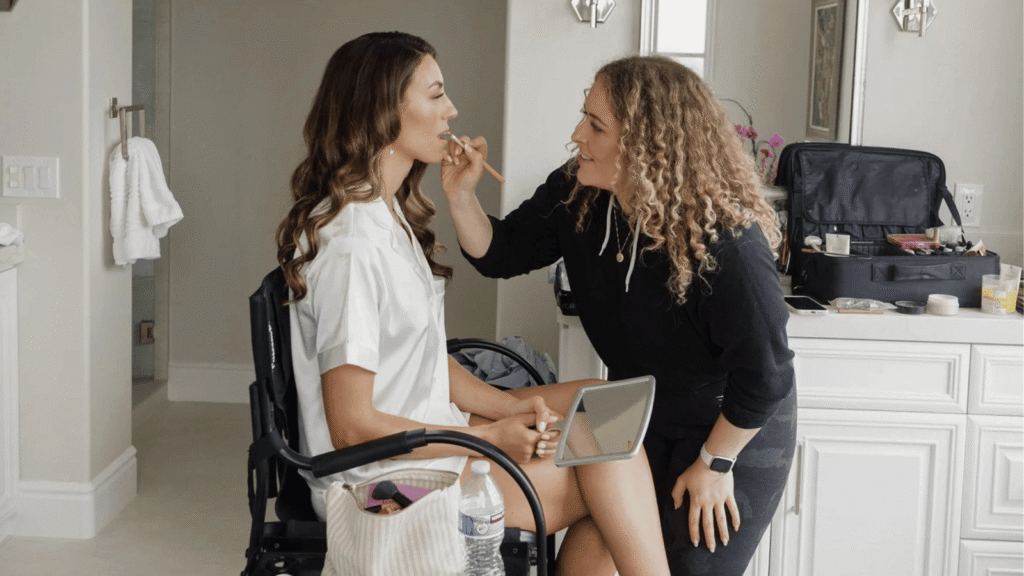
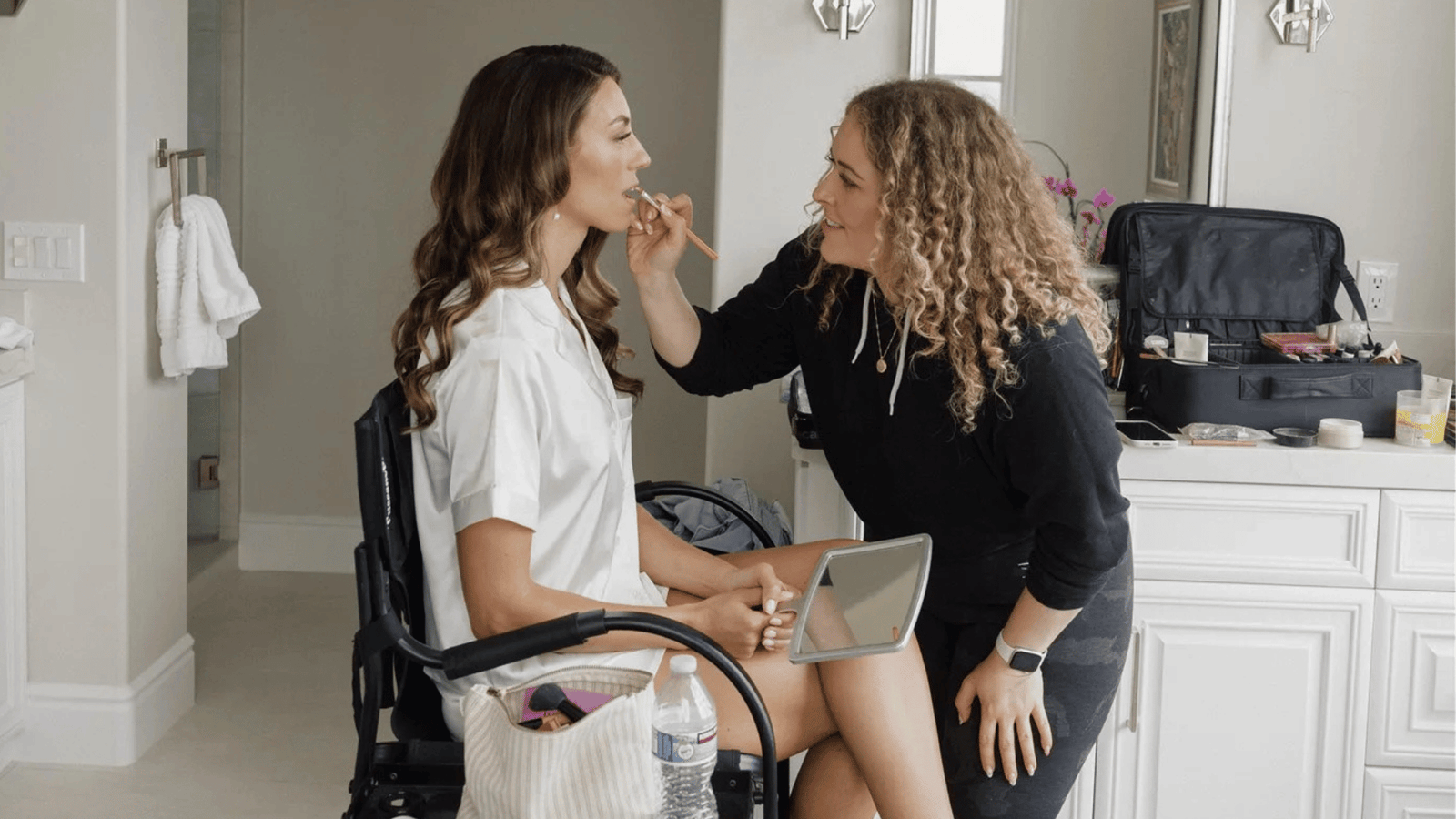
Good coordination starts before the shoot day. Brittany works with creative directors and photographers to understand the concept, the lighting, and the sequence of looks. On the day, she brings a complete professional station, including lighting and seating, so the makeup area does not depend on what the location provides.

Photographers often know the lighting better than anyone else on set, and sharing that knowledge helps the artist plan. For a photographer’s view of what is useful to share, see what photographers wish makeup artists knew about lighting.

Reviewing the List Before the Shoot Begins

The first step is a review of the shot list and the lighting plan. Brittany looks at the number of setups, the order of the frames, and the type of light in each one. She asks whether the shoot is in a studio or outdoors, and whether the frames are wide, mid, or tight.

That review shapes product choices. A close-up beauty frame needs smoother texture and tighter shine control. An outdoor lifestyle sequence needs a formula built to last through changing light and temperature. Photographers who share lighting diagrams, reference images, or mood boards give the artist more to work with.

Two topics come up often at this stage. For studio work, managing shine and light absorption for studio photography explains how skin responds under controlled lights. If color accuracy is a priority, pigment control and keeping makeup colors true under studio lighting goes deeper.

Planning Touch-Ups Around Shot Transitions

Touch-ups are easiest to fit in at natural pauses, such as a lighting change, a wardrobe change, or a move to a new location, so the crew does not lose time. During shooting, Brittany provides continuous touch-ups and monitors playback to confirm the makeup looks accurate on camera.

Playback matters because a mirror often does not show what the sensor sees. Checking the monitor lets her catch shine, color shifts, or texture issues early and correct them between frames.

Long days call for extra planning. If your shoot runs for many hours or spends a lot of time outside, long-wear techniques used in commercial makeup for full-day productions explains how layering supports the look. For location work specifically, see makeup for outdoor commercial and lifestyle shoots.

Flagging Continuity Needs in Advance

Continuity keeps a campaign cohesive. If a shoot spans several hours or several locations, the look needs to match from the first frame to the last. That is easier to manage when the artist knows about any look changes, repeated looks, or scenes that may be shot out of order before the day begins.

Photographers and creative directors can help by sharing the full sequence early. When the artist knows that a look will return later in the day, she can plan for it and keep it consistent.

How This Saves Time on Set
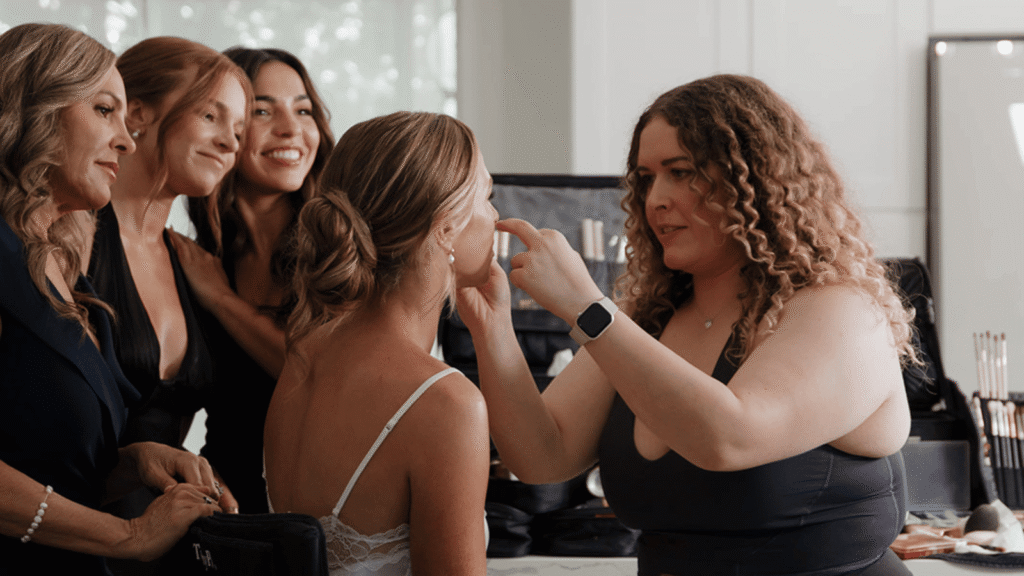
Coordination pays off in fewer interruptions. When the artist has reviewed the shot list, planned for touch-ups, and understood the continuity needs, the crew spends less time stopping to fix issues and more time shooting. Cleaner skin on camera also means simpler retouching afterward.

Close-up and video work benefit most from this kind of planning, because small texture or shine issues show up quickly at high resolution. Her guide to preparing makeup for 4K video and close-up content explains how she approaches it.

Logistics help too. Brittany arrives with a complete professional station and coordinates with the creative director on the lighting plan and shot list. At wrap, she handles talent cleanup and kit teardown efficiently, so the team can move on. Good set habits matter as much as technical skill, and on-set etiquette for makeup artists working with creative directors covers how that collaboration works.

Brittany’s work spans bridal, print, editorial, and production makeup, and one client has described her as someone who “does it all” for shoots and special events. You can see examples of her range in the portfolio, or read about her background and training.

Book Your Commercial Makeup Artist

If you are planning a lifestyle campaign, editorial shoot, or commercial production in Orange County and the surrounding area, bring Brittany in early. Share your concept, your shot list, your lighting plan, and your schedule, and she will build a makeup plan around them. To start the conversation, contact Brittany with your project details.

Frequently Asked Questions

1. How do makeup artists coordinate with photographers on a differ from bridal makeup applications?

Commercial and editorial work is camera-first and technical. The focus is on light absorption, pigment control, texture smoothing, and durability across a planned sequence of shots. Bridal makeup centers on a single person’s look and experience across one day. Brittany keeps these as separate services with different priorities.

2. What should a brand or photographer expect when booking how makeup artists coordinate with photographers on a?

Expect a review of the shot list and lighting plan before the shoot, and a complete professional station on set. During the shoot, Brittany provides continuous touch-ups and checks playback for visual accuracy. At wrap, she handles talent cleanup and kit teardown efficiently.

3. How is makeup adjusted for lighting during how makeup artists coordinate with photographers on a?

Brittany adjusts products and finishes to the lighting plan. She manages light absorption to control shine and redness, and uses pigment control so colors stay accurate under different light temperatures. Playback checks on set confirm the result before the next setup.

4. How does makeup application change for close-ups, product shots, and full-body photography?

Close-ups call for texture smoothing that stays invisible in extreme close-up 4K video, along with tighter shine control. Product shots and full-body frames each bring their own priorities, such as color accuracy where skin sits near the product, or consistency across a wider view. Share what each frame will show, and Brittany will plan the makeup from the shot list.

5. What information should photographers share with a makeup artist before a commercial shoot?

Share the concept, the shot list, the lighting plan, and whether the shoot is in a studio or outdoors. Include the number of looks, any wardrobe changes, the expected length of the day, and reference images or mood boards. Flag any scenes that will be shot out of order so continuity can be planned.
Posted on

Texture-Smoothing Techniques for Extreme Close-Up Shots

texture-smoothing techniques for extreme close-up shots

A complexion that reads as smooth at conversation distance can look different once the camera moves in tight. Foundation edges show along the jaw. Powder settles into a fine line beside the eye. A forehead that looked balanced in the studio develops a hot spot when the key light is set. In an extreme close-up, small inconsistencies in the makeup become visible, and the result depends on far more than foundation.

Texture-smoothing techniques for extreme close-up shots rely on controlled preparation and thin, deliberate layers. The artist prepares the skin for the chosen products, builds coverage only where needed, and adjusts pigment and finish to suit the lighting. They apply powder selectively and check the makeup on camera at the intended viewing size. The aim is to manage how texture and shine appear on screen, not to remove natural skin texture, which makeup cannot do.

For commercial, editorial, and brand shoots, makeup has to work with the camera setup rather than in isolation. At Brittany Brown Beauty, that means considering how skin, product, lighting, and camera settings interact. The closer the lens gets, the more important those choices become.

Why Close-Ups Demand a Different Level of Precision

Close-up photography and high-resolution video change what the camera can show. Product edges, uneven blending, excess powder, and patchy coverage may go unnoticed at a normal viewing distance but become more visible in close-up shots of the skin.

It helps to separate two kinds of texture. Natural skin texture, including pores, fine lines, and surface variation, belongs to the person and is part of how skin looks. Makeup texture is what the application adds: patchy foundation, powder that has collected in lines, product that has dragged or lifted, and edges that stop abruptly. Close-up work manages natural texture to suit the brief and works to minimize makeup texture. Pores and lines are not defects that must disappear.

Lighting decides how much of either becomes visible. Four variables matter most:

  • Angle. Light that skims across the face from the side tends to emphasize surface relief, while light from closer to the lens tends to flatten it.
  • Intensity. Stronger light reveals more detail and makes shine and product edges easier to see.
  • Color temperature. Warmer or cooler light shifts how skin tone and pigment read, so a complexion can look different from one setup to the next.
  • Diffusion. Soft, diffused light is generally more forgiving of texture than hard, direct light, although neither is better for every brief.

Shine, reflection, pigment, and perceived texture are connected. Shine is light reflecting directly off the surface, and on skin with natural texture, that reflection can catch the edges of pores and lines and make them look more pronounced. How much light a surface absorbs, scatters, or reflects depends on the finish and the pigment. Matte finishes tend to scatter more light, and luminous finishes tend to reflect more of it. That is why light absorption matters in practice: the finish changes how texture reads on camera.

None of this means close-up work calls for heavy coverage or a matte finish. Matte, satin, and luminous looks can all work when the products and technique suit the creative brief.

Lighting affects how makeup appears, so artists should check the look under conditions that match the actual shoot. The final output also matters. Large still images, close-up videos, and 4K footage each place different demands on skin preparation and makeup application. Knowing how the final images or footage will be viewed helps the artist plan the right approach.

Techniques That Hold Up

The principles below manage texture while keeping a finish that suits the brief. Each one depends on the skin, the products, and the production conditions, and none of them replaces testing.

Priming for a Smooth Canvas

Primer can support makeup application in close-up work by giving foundation a more even surface to spread over. It does not erase skin texture and cannot guarantee a fully smooth result. What it can do is help the next product apply and sit more consistently.

  • Match preparation to the skin and the finish. Skin condition and the planned makeup finish should guide what goes on the skin, not a fixed routine.
  • Watch the amount and placement. The amount of primer and its placement affect how foundation spreads and sits, and too much primer can leave a slippery surface.
  • Avoid stacking products. Layering several skincare and priming products can create an inconsistent surface or interfere with the product that follows.
  • Let products settle. Give each layer appropriate time to settle before adding foundation, adjusted to the products being used.
  • Test the combination. Primer should be tried with the intended foundation and under the planned lighting, since no single primer type suits every skin or every look.

Layering Product Without Building Texture

Controlled application keeps the complexion even under magnification. Foundation goes on in thin, controlled layers instead of one heavy application, and coverage is built only where it is needed. A thin layer is easier to blend, shows fewer edges, and leaves areas that already look balanced alone.

  • Blend every edge. Transitions that look soft in person can show as visible lines at close range, so the edges of foundation and concealer need particular attention.
  • Choose coverage and finish for the brief. Skin condition, the creative direction, and the planned lighting should decide how much coverage is used and what finish it has.
  • Use corrective makeup selectively. Targeted correction works best where it is needed, without covering areas that already look balanced.
  • Check how products interact. Concealer, foundation, and other complexion products affect each other, so they should be assessed together instead of one at a time.

Pigment control is part of this. The amount, placement, and blending of pigment influence how a complexion reads under different lighting. Too much pigment in one place can look dense, while too little can leave areas uneven. Pigment is only one factor, though. Lighting, lens, exposure, and processing also affect how cameras reproduce color, so no layering method can guarantee identical results across cameras and lighting setups or eliminate texture.

Setting Without Emphasizing Pores or Fine Lines

Setting helps hold complexion makeup in place, and it is where close-up problems can begin. The artist applies powder selectively, according to where shine is a problem, where they place product, and what finish the brief calls for, instead of applying it across the whole face by default.

  • Use powder only where it is needed. Too much powder can become visible or emphasize texture in certain lighting.
  • Consider what is underneath. Setting products interact with the foundation and concealer below them, so the combination needs to be checked together.
  • Control shine without removing luminosity. Reducing unwanted shine is different from removing every trace of natural skin glow, and many briefs want some luminosity to remain.
  • Evaluate on camera. The amount and placement of setting product should be judged through the lens, not only by eye.
  • Touch up for the real issue. A touch-up should address what is actually happening, whether that is shine, a displaced edge, or dryness, instead of automatically adding more powder.


Durability across a shoot day depends on the skin, products, conditions, and length of the day, so the artist plans for sustained durability but cannot guarantee it under every circumstance, including heat, sweat, or changing lighting.

What This Looks Like on 4K Playback

A makeup check that ends at the makeup chair or at the camera’s standard preview can miss problems that appear at full size. The review needs to happen at a viewing size and under lighting that match the intended output.

A practical camera-review checklist:

  • Review test images or footage at an appropriate viewing size, not only on a small monitor.
  • Check foundation edges, uneven texture, visible powder, unwanted shine, and color consistency.
  • Evaluate the complexion under the planned lighting, not just the room’s ambient light.
  • Compare a still image with moving footage, since expression and movement can change how makeup looks.
  • Make targeted adjustments instead of adding more product automatically.
  • Talk with the photographer, cinematographer, or creative team if the finish needs to change for the intended output.

There are technical limits worth stating clearly. High resolution does not make every skin detail equally visible in every shot. Lens choice, focus, lighting, exposure, image processing, and viewing conditions all influence what shows. Makeup alone cannot compensate for unsuitable lighting, camera settings, or post-production requirements, so it works best as one part of a coordinated plan.

Production clients assessing an artist can start with finished work. The portfolio shows finished work, and a conversation about the project fills in how Brittany Brown’s approach would apply to a specific brief.

Discuss Your Production Requirements

The makeup approach for a close-up project starts with the details: the creative brief, the lighting, the camera output, the complexion finish you want, and the production schedule. Sharing those early lets the makeup plan address texture, shine, and finish before the shoot. The commercial makeup services from Brittany Brown Beauty cover Orange County and surrounding areas, and clients can send project details through the contact page.Click the button below to discuss your project.

Frequently Asked Questions

1. How do texture-smoothing techniques for extreme close-up shots differ from bridal makeup application?

Artists build them around a camera, lighting setup, and output, then check makeup against them. Artists plan bridal makeup around in-person viewing and photographs across a long day. Close-up production work emphasizes edge blending, controlled product amounts, and on-camera review.

2. What should a brand or photographer expect when booking a makeup artist for close-up production work?

Expect a discussion of the brief, output, lighting setup, schedule, and required finish before the shoot day. Those details shape the makeup approach, and sharing them early helps the artist plan. Confirm specific rates, requirements, and inclusions directly with the artist.

3. How should makeup be adjusted for lighting during extreme close-up photography?

Adjustments follow how light affects the skin. Hard or angled light may call for careful blending and less powder, while diffused light may allow a different finish. Test under the planned lighting and review on camera, because room light does not show what the lens will.

4. Can makeup completely hide pores, fine lines, or uneven skin texture in 4K footage?

No. Makeup can soften texture and shine through preparation, thin layers, and controlled setting, but cannot remove natural skin texture. Lens, focus, lighting, exposure, and processing also affect what the camera shows, so no one can promise texture-free skin.

5. How does an artist balance texture smoothing with natural skin detail and sustained durability?

The brief sets the balance. The artist keeps product thin enough to avoid visible makeup texture, sets selectively to control shine, and leaves natural detail where the creative direction calls for it. Durability over a shoot day depends on skin, products, and conditions, and we plan touch-ups around what the camera shows.

Posted on

Makeup for Outdoor Commercial and Lifestyle Shoots

makeup for outdoor commercial and lifestyle shoots

Outdoor production days leave little room for guesswork. Light shifts by the hour, wind moves hair and makeup, and talent may be on camera for long stretches. For photographers, brands, and production teams, makeup has to hold up technically as well as look good. Brittany Brown Beauty is a mobile artistry business based in Orange County, California, and Brittany Brown brings more than 11 years of professional experience to commercial, editorial, and lifestyle work. This guide explains how outdoor shoots differ from studio sessions and how makeup is planned around them.

How Outdoor Shoots Differ From Studio Work


A studio gives you control over lighting, temperature, and setup, making it easier to maintain consistency from frame to frame. Outdoor shoots present different challenges. The sun shifts throughout the day, clouds change the quality of natural light, and wind and heat affect both the talent and how makeup performs on their skin.

That changes how makeup is built. Studio makeup can be tailored to a specific lighting plan. Outdoor makeup needs to work across different lighting conditions while remaining consistent from the first frame to the last. A look that reads well in open shade can look different in direct sunlight, so the base, finish, and color choices all need to account for those changes.

The intended format matters, too. High-resolution stills and close-up 4K video reveal details that may be less noticeable in person. Makeup for this kind of work is camera-first, meaning decisions about finish and texture must account for how the skin will appear on screen, not just how it looks in a mirror. My guide to preparing makeup for 4K video and close-up content explains why precision matters when the camera captures fine details.

Eye makeup deserves particular attention during close-up work. Placement, blending, and definition can look different on camera, especially when working with hooded or mature eyes. My guide to eye makeup techniques for hooded or mature eyes explores ways to adapt application to different eye shapes and features.

The creative brief also influences the approach. Makeup for a brand campaign needs to support the intended visual identity, while bridal makeup is generally planned around an individual’s preferred look and the demands of a wedding day. For a closer comparison, read makeup for brand campaigns vs. bridal makeup: what changes.

Brittany’s approach to commercial work is covered in more detail in her post on commercial makeup for photoshoots. The core technical priorities remain consistent across studio and outdoor jobs:

  • Light absorption: Managing shine and redness so skin reads cleanly in high-resolution stills and requires less corrective work in post-production. This is explored further in managing shine and light absorption for studio photography.
  • Light management: Controlling unwanted shine so oily areas do not appear excessively reflective on camera.
  • Pigment control: Keeping makeup colors accurate as lighting conditions and color temperatures change. Read more about pigment control under studio lighting.
  • Texture smoothing: Building a finish that looks natural in close-up 4K video without unnecessary product buildup.
  • Sustained durability: Layering formulas and using finishing techniques suited to long outdoor sessions.

Building a Look That Holds Up Outdoors

Makeup for Outdoor Commercial and Lifestyle Shoots
Outdoor production days leave little room for guesswork. Light shifts by the hour, wind moves hair and makeup, and talent may be on camera for long stretches. For photographers, brands, and production teams, makeup has to hold up technically as well as look good. Brittany Brown Beauty is a mobile artistry business based in Orange County, California, and Brittany Brown brings more than 11 years of professional experience to commercial, editorial, and lifestyle work. This guide explains how outdoor shoots differ from studio sessions and how makeup is planned around them.
How Outdoor Shoots Differ From Studio Work
A studio gives you control. Lighting can be adjusted and repeated, temperatures are easier to manage, and the setup can remain consistent from frame to frame. Outdoors, none of that is guaranteed. Sun angle changes through the day, clouds diffuse or sharpen light without warning, and conditions such as wind and heat affect both the talent and the products on their skin.
That changes how makeup is built. Studio makeup can be tailored to a specific lighting plan. Outdoor makeup needs to work across different lighting conditions while remaining consistent from the first frame to the last. A look that reads well in open shade can look different in direct sunlight, so the base, finish, and color choices all need to account for those changes.
The intended format matters, too. High-resolution stills and close-up 4K video reveal details that may be less noticeable in person. Makeup for this kind of work is camera-first, meaning decisions about finish and texture must account for how the skin will appear on screen, not just how it looks in a mirror. My guide to preparing makeup for 4K video and close-up content explains why precision matters when the camera captures fine details.
Eye makeup deserves particular attention during close-up work. Placement, blending, and definition can look different on camera, especially when working with hooded or mature eyes. My guide to eye makeup techniques for hooded or mature eyes explores ways to adapt application to different eye shapes and features.
The creative brief also influences the approach. Makeup for a brand campaign needs to support the intended visual identity, while bridal makeup is generally planned around an individual's preferred look and the demands of a wedding day. For a closer comparison, read makeup for brand campaigns vs. bridal makeup: what changes.
Brittany's approach to commercial work is covered in more detail in her post on commercial makeup for photoshoots. The core technical priorities remain consistent across studio and outdoor jobs:
Light absorption: Managing shine and redness so skin reads cleanly in high-resolution stills and requires less corrective work in post-production. This is explored further in managing shine and light absorption for studio photography.
Light management: Controlling unwanted shine so oily areas do not appear excessively reflective on camera.
Pigment control: Keeping makeup colors accurate as lighting conditions and color temperatures change. Read more about pigment control under studio lighting.
Texture smoothing: Building a finish that looks natural in close-up 4K video without unnecessary product buildup.
Sustained durability: Layering formulas and using finishing techniques suited to long outdoor sessions.
Building a Look That Holds Up Outdoors
Outdoor durability is not about one product or one step. It comes from preparation, layering, and a plan for how conditions may change throughout the day. The creative brief, talent's skin, and intended camera work all influence how the makeup is built.
Brand identity is another important consideration. Colors, finishes, and the overall makeup direction should support the campaign rather than distract from it. My guide to matching makeup to brand identity in commercial projects explains how the creative direction can inform makeup choices.
The three areas below are where many outdoor production challenges begin.
Managing Natural Light Changes Through the Day
Natural light is one of the biggest variables on an outdoor set. Morning, midday, and late-afternoon conditions can differ in intensity and color, while cloud cover can change the appearance of the scene within minutes. These shifts can affect how skin tone, shine, and makeup pigment appear on camera.
Pigment control is an important part of managing these changes. Makeup colors need to remain appropriate for the lighting so the complexion does not appear unexpectedly warmer, cooler, or flatter between setups. Shine control addresses the other side of the problem. Oily areas can catch the light and appear over-highlighted on a camera sensor, so I manage the finish with the intended image in mind.
Communication with the production team makes this work more manageable. Reviewing lighting plans and shot lists before the day helps me prepare for the actual schedule instead of relying on last-minute adjustments. Photographers often have specific considerations about lighting, and Brittany's post on what photographers wish makeup artists knew about lighting explores that working relationship.
Clear communication also extends to creative directors. Understanding the visual brief, taking direction professionally, and communicating any practical concerns helps the beauty team work efficiently alongside the rest of production. For more on this, see on-set etiquette for makeup artists working with creative directors.
During the shoot, makeup can be checked against camera playback when available. This helps the team assess the actual recorded image rather than relying solely on how the makeup looks in person. Touch-ups between setups can then address visible changes and help maintain consistency.
Sustained Durability for Long Shoot Days
Long days put steady demands on makeup. Talent may be outdoors for hours, changing wardrobe, moving between locations, and working under warm or shifting light. Durability comes from selecting suitable products, layering them carefully, and planning for touch-ups.
The process starts with the skin. Skincare, primer, and base preparation come first, and I do not rush that step because it creates the surface everything else depends on. Thin, deliberate layers follow, with finishing and setting techniques applied last to support the overall look.
The right approach depends on the individual. A product that works well for one person's skin may not be the best option for another. I take the talent's skin, the shoot conditions, and the intended finish into account when planning the application.
No honest artist can promise a specific number of hours of wear because skin, weather, and activity all play a part. What I can provide is a plan built around the job, thoughtful product selection, and touch-ups during the day to help maintain the intended appearance.
For a deeper look at this part of the process, see Brittany's post on long-wear techniques used in commercial makeup for full-day productions.
Adjusting for Wind and Temperature
Wind and temperature affect outdoor makeup in different ways. Heat can increase shine and influence how products wear. Cooler or dry conditions can make skin texture more noticeable. Wind moves hair across the face, carries dust and debris, and can contribute to discomfort during a long session.
Southern California adds its own conditions. Coastal humidity, sea air, and direct sun are part of working in Orange County and San Diego, and product selection should reflect the setting. Primers, bases, and finishing products are chosen to suit the individual's skin and the conditions expected on the day rather than relying on one fixed routine for every shoot.
A few practical details help the production team prepare:
Share the location and expected conditions ahead of time, including shade, sun exposure, and wind.
Flag wardrobe changes and location moves that may affect touch-up timing.
Communicate any known skin sensitivities, previous reactions, or recent treatments for talent so products can be selected carefully.
Confirm the call time, shooting schedule, and expected wrap time so the makeup plan matches the production.
Allow time between setups for checking makeup and making necessary adjustments.
These details help keep the work organized without assuming that outdoor conditions will remain unchanged throughout the day.
What Brittany Brown Beauty Brings to Outdoor Production Days
Because the business is fully mobile, the artist and a complete professional kit travel to the set. That includes a professional station with lighting and seating, so the makeup area does not depend entirely on whatever infrastructure the location happens to offer. The station provides a consistent place to prepare skin, apply makeup, and check the work, even on an uncontrolled outdoor set.
The production workflow covers several stages, from preparation through wrap. If you are planning your first commercial beauty shoot, what happens behind the scenes of a commercial beauty shoot offers additional insight into how the process fits together.
On the day, the workflow includes:
Pre-production coordination: Reviewing the creative brief, shot list, lighting plans, schedule, and relevant direction from the production team.
Skin and base preparation: Preparing the skin carefully before the first setup.
Application and setting: Building the look around the talent, creative direction, and expected conditions.
Ongoing touch-ups: Checking the makeup between setups and reviewing playback when available.
Wrap: Coordinating any agreed talent cleanup and packing away the kit efficiently.
This process helps align makeup with the production's creative and practical needs. It also provides a clear structure for communication when the schedule, lighting, or conditions change.
Brittany's background supports this work. She has more than 11 years of professional experience, trained at Empire Academy of Makeup in Orange County, and has specialized in print makeup and corrective beauty makeup. Her work has been featured in Voyage LA Magazine and SDVoyager.
You can read more about her background on the About page and see examples of her work in the portfolio.
Plan Your Commercial Makeup 
Planning an outdoor commercial or lifestyle shoot? Let's discuss the creative brief, location, talent, and production schedule so the makeup approach fits the demands of the project.
During the initial conversation, it helps to share your shoot date, location, call time, expected wrap time, number of talent, and any planned wardrobe or location changes. Lighting references, a shot list, and brand guidelines can also help clarify the intended finish and how the makeup needs to appear on camera.
With more than 11 years of professional experience across bridal, print, commercial, and editorial work, Brittany Brown takes a considered approach to makeup preparation and application. The goal is to support your creative direction while taking the talent, shooting conditions, and camera requirements into account.
For production inquiries, contact Brittany Brown Beauty with your shoot details and schedule to discuss availability and the requirements of your project.
Frequently Asked Questions

Outdoor durability is not about one product or one step. It comes from preparation, layering, and a plan for how conditions may change throughout the day. The creative brief, talent’s skin, and intended camera work all influence how the makeup is built.

Brand identity is another important consideration. Colors, finishes, and the overall makeup direction should support the campaign rather than distract from it. My guide to matching makeup to brand identity in commercial projects explains how the creative direction can inform makeup choices.

The three areas below are where many outdoor production challenges begin.

Managing Natural Light Changes Through the Day

Natural light is one of the biggest variables on an outdoor set. Morning, midday, and late-afternoon conditions can differ in intensity and color, while cloud cover can change the appearance of the scene within minutes. These shifts can affect how skin tone, shine, and makeup pigment appear on camera.

Pigment control is an important part of managing these changes. Makeup colors need to remain appropriate for the lighting so the complexion does not appear unexpectedly warmer, cooler, or flatter between setups. Shine control addresses the other side of the problem. Oily areas can catch the light and appear over-highlighted on a camera sensor, so I manage the finish with the intended image in mind.

Communication with the production team makes this work more manageable. Reviewing lighting plans and shot lists before the day helps me prepare for the actual schedule instead of relying on last-minute adjustments. Photographers often have specific considerations about lighting, and Brittany’s post on what photographers wish makeup artists knew about lighting explores that working relationship.

Clear communication also extends to creative directors. Understanding the visual brief, taking direction professionally, and communicating any practical concerns helps the beauty team work efficiently alongside the rest of production. For more on this, see on-set etiquette for makeup artists working with creative directors.

During the shoot, makeup can be checked against camera playback when available. This helps the team assess the actual recorded image rather than relying solely on how the makeup looks in person. Touch-ups between setups can then address visible changes and help maintain consistency.

Sustained Durability for Long Shoot Days

Long days put steady demands on makeup. Talent may be outdoors for hours, changing wardrobe, moving between locations, and working under warm or shifting light. Durability comes from selecting suitable products, layering them carefully, and planning for touch-ups.

The process starts with the skin. Skincare, primer, and base preparation come first, and I do not rush that step because it creates the surface everything else depends on. Thin, deliberate layers follow, with finishing and setting techniques applied last to support the overall look.

The right approach depends on the individual. A product that works well for one person’s skin may not be the best option for another. I take the talent’s skin, the shoot conditions, and the intended finish into account when planning the application.

No honest artist can promise a specific number of hours of wear because skin, weather, and activity all play a part. What I can provide is a plan built around the job, thoughtful product selection, and touch-ups during the day to help maintain the intended appearance.

For a deeper look at this part of the process, see Brittany’s post on long-wear techniques used in commercial makeup for full-day productions.

Adjusting for Wind and Temperature

Wind and temperature affect outdoor makeup in different ways. Heat can increase shine and influence how products wear. Cooler or dry conditions can make skin texture more noticeable. Wind moves hair across the face, carries dust and debris, and can contribute to discomfort during a long session.

Southern California adds its own conditions. Coastal humidity, sea air, and direct sun are part of working in Orange County and San Diego, and product selection should reflect the setting. Primers, bases, and finishing products are chosen to suit the individual’s skin and the conditions expected on the day rather than relying on one fixed routine for every shoot.

A few practical details help the production team prepare:

  • Share the location and expected conditions ahead of time, including shade, sun exposure, and wind.
  • Flag wardrobe changes and location moves that may affect touch-up timing.
  • Communicate any known skin sensitivities, previous reactions, or recent treatments for talent so products can be selected carefully.
  • Confirm the call time, shooting schedule, and expected wrap time so the makeup plan matches the production.
  • Allow time between setups for checking makeup and making necessary adjustments.

These details help keep the work organized without assuming that outdoor conditions will remain unchanged throughout the day.

What Brittany Brown Beauty Brings to Outdoor Production Days

Because the business is fully mobile, the artist and a complete professional kit travel to the set. That includes a professional station with lighting and seating, so the makeup area does not depend entirely on whatever infrastructure the location happens to offer. The station provides a consistent place to prepare skin, apply makeup, and check the work, even on an uncontrolled outdoor set.

The production workflow covers several stages, from preparation through wrap. If you are planning your first commercial beauty shoot, what happens behind the scenes of a commercial beauty shoot offers additional insight into how the process fits together.

On the day, the workflow includes:

  • Pre-production coordination: Reviewing the creative brief, shot list, lighting plans, schedule, and relevant direction from the production team.
  • Skin and base preparation: Preparing the skin carefully before the first setup.
  • Application and setting: Building the look around the talent, creative direction, and expected conditions.
  • Ongoing touch-ups: Checking the makeup between setups and reviewing playback when available.
  • Wrap: Coordinating any agreed talent cleanup and packing away the kit efficiently.

This process helps align makeup with the production’s creative and practical needs. It also provides a clear structure for communication when the schedule, lighting, or conditions change.

Brittany’s background supports this work. She has more than 11 years of professional experience, trained at Empire Academy of Makeup in Orange County, and has specialized in print makeup and corrective beauty makeup. Her work has been featured in Voyage LA Magazine and SDVoyager.

You can read more about her background on the About page and see examples of her work in the portfolio.

Plan Your Commercial Makeup 

Planning an outdoor commercial or lifestyle shoot? Let’s discuss the creative brief, location, talent, and production schedule so the makeup approach fits the demands of the project.

During the initial conversation, it helps to share your shoot date, location, call time, expected wrap time, number of talent, and any planned wardrobe or location changes. Lighting references, a shot list, and brand guidelines can also help clarify the intended finish and how the makeup needs to appear on camera.

With more than 11 years of professional experience across bridal, print, commercial, and editorial work, Brittany Brown takes a considered approach to makeup preparation and application. The goal is to support your creative direction while taking the talent, shooting conditions, and camera requirements into account.

For production inquiries, contact Brittany Brown Beauty with your shoot details and schedule to discuss availability and the requirements of your project.

Frequently Asked Questions

1. How does makeup for outdoor commercial and lifestyle shoots differ from bridal makeup?

Commercial makeup focuses on how the skin, colors, and textures appear on camera across a production. Changing outdoor light can influence photographs and video, so shine, pigment, and consistency need close attention. Bridal makeup usually centers on one person’s preferred look and the wedding-day conditions, while commercial makeup must also meet the creative brief and maintain consistency across multiple shots and lighting setups.

2. What should a brand or photographer expect when booking makeup for an outdoor shoot?

Expect a professional setup and coordination around the production requirements. Before the shoot, share the lighting plan, shot list, location, schedule, wardrobe changes, and creative direction. During production, makeup may need checks and touch-ups between setups. Clear communication in advance helps the artist prepare for the day’s demands.

3. How is makeup adjusted for changing outdoor lighting?

Lighting conditions influence how makeup appears on camera. I consider color accuracy as the light changes and manage shine to help prevent oily areas from looking overly reflective. Product choice and application also take the talent’s skin and the intended finish into account. When playback is available, it can help assess the makeup in the recorded image throughout the shoot.

4. Can makeup hold up through a full day of outdoor shooting?

Careful preparation, layered application, appropriate finishing techniques, and regular touch-ups can help makeup maintain a consistent appearance during a long shoot. However, wear varies with skin type, weather, and activity. I plan the approach around the schedule and expected conditions rather than promising a specific number of hours.

5. What information should I send when requesting makeup for an outdoor shoot?

Please share the shoot date, location, call time, and expected wrap time. Include the number of talent, planned wardrobe or location changes, and any lighting references or shot lists available. Details about sun exposure, wind, and other outdoor conditions are helpful, too. Finally, communicate any known skin sensitivities, previous reactions, or recent treatments that are relevant to product selection and application.

Posted on

Managing Shine and Light Absorption for Studio Photography

managing shine and light absorption for studio photography

Managing shine and light absorption for studio photography is an important technical part of makeup artistry on a commercial set. Studio lights, high-resolution sensors, and close-up lenses can reveal areas where skin reflects too much light. A finish that looks balanced in person may appear noticeably shiny on camera, so makeup needs to be planned around the lighting and the intended images.

At Brittany Brown Beauty, Brittany Brown has worked in the makeup industry for more than 11 years, including print and production work. She offers commercial makeup for photoshoots for photographers, brands, and production clients, with an approach tailored to each project’s lighting, creative direction, and on-camera needs.

This guide explains how shine behaves under studio lighting and how an experienced artist manages it throughout a shoot.

Why Shine Reads Differently Under Studio Lights

managing shine and light absorption for studio photography

Studio lighting is concentrated and controlled. Strobes, continuous lights, and reflectors direct light onto the face, and the camera records how that light interacts with the skin. Shine that looks minor in person can stand out in a high-resolution still or a close-up video.

Redness can behave similarly. Under strong or directional light, uneven color can become more visible. Managing shine and skin tone helps create a consistent appearance on camera and can reduce the need for extensive retouching.

Light temperature adds another variable. Studio and natural light can render color differently, so a shade that looks accurate under one setup may shift under another. Brittany plans for these conditions by reviewing the lighting plan and shot list with the creative director before applying makeup. Understanding what photographers wish makeup artists knew about lighting can also help explain why makeup choices need to account for the camera and lighting setup, not just the mirror.

Techniques for Light Absorption

Brittany’s commercial work centers on five technical points: light absorption, light management, pigment control, texture smoothing, and sustained durability. Light absorption is the focus of this guide, while the other techniques support an even, camera-ready finish.

Mattifying Without Losing Skin’s Natural Look

The goal is to manage excess shine and visible redness while keeping the skin looking natural. The finish should work in high-resolution stills without looking overly flat or heavily powdered in person.

  • Control shine and redness: Managing both helps maintain a more even appearance in high-resolution images.
  • Manage light: The makeup finish should suit the lighting setup, helping reduce excessive reflections from oily areas.
  • Keep texture looking natural: Texture smoothing supports a clean finish in close-up images and video. When the project includes detailed footage, preparing makeup for 4K video and close-up content requires particular attention to how skin texture and product layers appear on screen.
  • Keep the skin looking like skin: Brittany’s approach to enhancing natural features with soft shadows and subtle highlights carries into her commercial work. Her “enhance, don’t mask” philosophy guides each look.

Product Choices That Absorb, Not Reflect, Studio Light

Product selection depends on the skin, the lighting plan, and the creative direction. Brittany chooses products and finishes for each project rather than relying on one formula or approach for every subject.

  • Match the approach to the lighting plan: Brittany reviews the lighting plan and shot list with the creative director before applying makeup.
  • Use pigment control: Careful color choices help maintain a consistent appearance under varying studio and natural light temperatures.
  • Layer formulas deliberately: Thoughtful layering supports durability and helps reduce makeup breakdown during long sessions.
  • Consider the project’s purpose: Commercial makeup requirements can vary depending on whether the final images are intended for product advertising, editorial work, or another use. Understanding what commercial makeup is and how it differs from bridal and fashion makeup helps clarify why the approach needs to fit the assignment.

Touch-Ups Between Shots

Shine can build during a long shoot, so touch-ups need to be part of the production plan. Brittany brings a complete professional station with lighting and seating and stays close to the set.

  • Provide touch-ups between setups: Regular checks and refreshes help keep the skin’s appearance consistent from the first setup to the last.
  • Monitor playback: Reviewing playback lets Brittany see how the makeup reads on screen and identify areas that may need adjustment.
  • Coordinate with the team: Clear communication about the next setup helps the makeup artist prepare for changes in lighting, framing, or talent needs.
  • Handle wrap efficiently: At the end of the day, Brittany manages talent cleanup and kit teardown so the crew can move on.

Knowing what happens behind the scenes of a commercial beauty shoot can help clients understand how preparation, coordination, and touch-ups fit into the production workflow. Professional conduct matters just as much as technical skill, particularly when several departments work under a tight schedule. Good on-set etiquette when working with creative directors helps keep communication and collaboration on track.

What This Simplifies for Retouching

managing shine and light absorption for studio photography

Managing shine is intended to help skin look balanced and consistent on camera. Texture smoothing and pigment control support that goal by helping skin look even and colors appear accurate. Makeup cannot eliminate every need for post-production, but a well-planned application can give the retoucher a cleaner starting point.

  • More consistent skin tones: Managing visible redness supports an even appearance across images.
  • Color accuracy: Pigment control helps maintain the intended look under varying light temperatures.
  • Close-up detail: A carefully applied base supports a natural-looking finish in close-up photography and 4K video.
  • Consistency across a series: Matching the finish between setups can help create a cohesive collection of images.

Commercial projects also need makeup to align with the client’s visual direction. A campaign might call for a fresh, minimal finish, while another might require a more polished or dramatic look. Matching makeup to the intended message is part of aligning makeup with brand identity in commercial projects.

The requirements can also differ from those of a wedding. Bridal makeup is built around the individual bride, her preferences, and her wedding-day setting, while campaign makeup follows the needs of a specific brand and production. See how makeup for brand campaigns differs from bridal makeup for more on how those priorities affect the approach.

Brittany coordinates with creative directors and reviews lighting plans and shot lists before applying makeup. She trained at Empire Academy of Makeup in Orange County and has been featured in Voyage LA Magazine and SDVoyager. One client who hired Brittany for shoots and special events described her as a pro who created many of her favorite hair and makeup looks.

You can see examples of her work in the portfolio and read more about her background on the About page.

Discuss Your Production Makeup Needs

For studio photoshoots, commercial campaigns, and other productions, makeup should suit the lighting, creative direction, and intended use of the final images. Brittany can discuss your project requirements and how her commercial makeup services fit your production. Schedule a consultation to discuss your shoot and availability.

Frequently Asked Questions

1. How does managing shine and light absorption for studio photography differ from bridal makeup application?

Studio makeup focuses on the camera, lighting plan, and creative director’s vision. Techniques include managing light absorption, controlling shine and pigment, smoothing texture, and maintaining durability. Touch-ups help keep the look consistent between setups. Bridal makeup focuses on the individual bride. The look is planned around her skin, dress, preferences, and venue. A bridal trial is also recommended to test and adjust the look before the wedding day.

2. What should a brand or photographer expect when booking studio makeup services?

Expect a discussion of the project, shot list, and lighting plan before makeup begins. Brittany brings a complete professional station with lighting and seating. She coordinates with creative directors and provides touch-ups throughout the shoot. She also monitors how the makeup appears on screen. At wrap, she handles talent cleanup and kit teardown efficiently.

3. How is makeup adjusted for different studio lighting setups?

The artist considers the light source, its direction, camera framing, and desired finish when choosing products and techniques. Brittany manages shine and visible redness while considering how colors appear under different light temperatures. She layers formulas to support durability during long sessions. Reviewing playback also helps her assess how the makeup looks on screen.

4. Why are touch-ups important during a long commercial shoot?

Lighting, camera angles, and production length can affect how makeup looks over time. Touch-ups help manage shine and makeup movement between setups. They also maintain a more consistent finish throughout the shoot. The exact touch-up plan depends on the production schedule and the talent’s needs.

5. Should makeup be tailored to a brand’s identity for a commercial campaign?

Yes. Makeup should support the project’s visual direction and intended audience. A campaign may call for a natural finish, a polished look, or a more defined style. The choice depends on the brand and creative brief. Discussing the desired look before the shoot helps the makeup artist prepare for the production’s specific needs.

Posted on

Makeup for Brand Campaigns vs Bridal Makeup: What Changes

makeup for brand campaigns vs bridal makeup

Makeup for brand campaigns vs bridal makeup can seem similar from the outside, but the goals, the technique, and the working relationship are very different. Photographers, brands, and production clients need makeup that holds up under lights, lenses, and long shooting days. At Brittany Brown Beauty, Brittany Brown has worked in the makeup industry for more than 11 years, including print and production work, and she offers commercial, editorial, and production makeup as a service line separate from her bridal work.

Understanding what commercial makeup is and how it differs from bridal and fashion makeup helps clarify why the artist’s approach changes depending on the purpose of the shoot.

This comparison explains what changes between the two, so you know what to expect when booking an artist for a campaign.

What Brand Campaign Makeup Prioritizes

Campaign makeup is built for the camera first. The artist works from the creative director’s vision, the shot list, and the lighting plan, and the finished image is the measure of success. Makeup must also support the brand’s visual identity, so the products, colors, and finish should fit the intended look. Brittany’s approach to matching makeup to brand identity in commercial projects reflects the importance of aligning technical decisions with the client’s creative direction.

Brittany’s commercial work centers on five technical points:

  • Light absorption: Neutralizing shine and redness so high-resolution stills look clean and retouching stays simple.
  • Light management: Keeping digital sensors from over-highlighting oily areas, which protects the final images. Understanding what photographers wish makeup artists knew about lighting also helps explain why the lighting plan matters before application begins.
  • Pigment control: Keeping colors accurate under the varying light temperatures of studio and natural light.
  • Texture smoothing: Creating a finish that stays invisible even in extreme close-up 4K video.
  • Sustained durability: Layering formulas so makeup helps prevent breakdown during long outdoor sessions. These long-wear techniques used in commercial makeup for full-day productions address the need for a consistent finish through extended shoots.

On-set logistics are part of the job. Brittany brings a complete professional station with lighting and seating, coordinates with creative directors, and reviews lighting plans and shot lists before applying makeup. During the shoot, she provides continuous touch-ups while monitoring playback for visual accuracy. Her approach to commercial makeup for photoshoots includes adapting the makeup process to the needs of the production rather than relying on a fixed application routine.

Communication is just as important as technique. Following on-set etiquette when working with creative directors helps an artist respect the approved look, time touch-ups appropriately, and coordinate with the crew without interrupting the shoot. At wrap, Brittany handles talent cleanup and kit teardown efficiently so the crew can move on.

What Bridal Makeup Prioritizes

Bridal makeup is built around a person and a day. The look is planned around the bride’s skin, her dress, and her venue, and it has to feel right in person as well as in photos. Brittany’s “enhance, don’t mask” approach and her no-makeup-makeup style, with glowing skin and warm, bronzed contour instead of heavy coverage, guide the work.

The bridal process is personal and paced. Brittany recommends a trial, where she tests the look and formulas on the bride’s skin and works through adjustments before the wedding. On the wedding day, she travels to the getting-ready location, sets up with studio-quality lighting and seating, preps the skin, applies the look, and finishes it with setting techniques. She also offers coordinated hair and makeup for the bridal party, and brides receive a complimentary touch-up kit.

Head-to-Head: Technique, Timeline, and Client Relationship

The primary goal is the biggest difference. Campaign makeup aims for accurate, clean results on camera, so the creative director and the shot list shape the look. Bridal makeup aims for a look that feels natural and personal to the bride, planned around her skin, her dress, and her venue.

The technical focus differs too. Campaign work leans on light absorption, light management, pigment control, texture smoothing, and sustained durability. Bridal work leans on careful skin prep, a natural glow, and a look planned for the dress and venue.

Timelines and touch-ups also work differently. A campaign day runs through the shoot, with touch-ups timed around takes and playback. A bridal morning is planned in advance during booking, with Brittany’s general guidance at roughly 60 to 90 minutes for the bride, and brides receive a complimentary touch-up kit for the day.

Pre-event preparation is different as well. For a campaign, it means a review of the shot list and lighting plan. For a wedding, it is a recommended bridal trial. As for the working relationship, campaign work happens alongside the creative team and crew, while bridal work is one-on-one with the bride and her party.

For a closer look at how commercial teams coordinate before, during, and after production, this overview of what happens behind the scenes of a commercial beauty shoot provides more context about the collaboration involved.

How Brittany Brown Beauty Moves Between Both

makeup for brand campaigns vs bridal makeup

Brittany’s range covers bridal, print, production, corrective, and mature makeup. That mix lets her switch between a personal, relationship-driven bridal morning and a technical, fast-moving set. Her training at Empire Academy of Makeup in Orange County and 11+ years in the makeup industry support that range.

For campaigns and productions, expect a review of your lighting plan and shot list before makeup begins, a complete on-set station, steady touch-ups timed to the flow of the shoot, and a clean, efficient wrap. Brittany is based in Orange County and serves Orange County and San Diego, and she has been featured in Voyage LA Magazine and SDVoyager.

One past client who hired Brittany for shoots and special events described her as a pro who has created many of her favorite hair and makeup looks. You can see her range in the portfolio and read more about her background on the About page.

Discuss Your Project

Whether you’re planning a commercial campaign, editorial shoot, or wedding, start by discussing your goals and the look you want to achieve. Share your creative references, production requirements, or wedding details so Brittany can recommend the appropriate service and discuss the next steps. Schedule a consultation to discuss your project and availability.

Frequently Asked Questions

1. How does makeup for brand campaigns vs bridal makeup differ from bridal makeup application?

Campaign makeup focuses on the camera, lighting, and creative director’s vision. Artists manage shine, pigments, and skin texture for consistent results. They also perform touch-ups between setups. Bridal makeup focuses on the bride’s preferences, skin, dress, and venue. A trial helps finalize the look before the wedding.

2. What should a brand or photographer expect when booking makeup for brand campaigns vs bridal makeup?

The artist reviews the shot list and lighting plan before starting. Brittany brings a professional station with lighting and seating. She coordinates with creative directors and provides touch-ups throughout the shoot. She also monitors playback to check how makeup appears on camera. At wrap, she handles talent cleanup and kit teardown.

3. How is makeup adjusted for lighting during makeup for brand campaigns vs bridal makeup?

The artist selects products and finishes to suit the lighting. Brittany manages shine and redness while keeping colors accurate under different light temperatures. She layers products for lasting wear during long outdoor shoots. Playback monitoring helps her check skin texture and shine on screen. Bridal makeup, meanwhile, must look good in person and across different wedding settings.

4. What information should I provide before booking makeup for a brand campaign?

Share the creative brief, shot list, lighting plan, and brand references. Explain the intended visual style and content format, such as high-resolution photography or close-up video. Include the expected shoot duration. These details help the artist select suitable products, application techniques, and touch-up plans.

5. Can the same makeup artist handle both commercial campaigns and bridal makeup?

An experienced artist may offer both services but should adapt the approach to each project. Commercial campaigns require teamwork, lighting awareness, and brand consistency. Bridal makeup requires personal consultation and preparation for a full wedding day. Ask about the artist’s experience with both services and how each process differs.

Posted on

Pigment Control: Keeping Makeup Colors True Under Studio Lighting

Pigment Control Keeping Makeup Colors True Under Studio Lighting

A lip color that looks like a clean, neutral rose in the makeup chair can read closer to orange under a warm tungsten light and noticeably cooler under a cool-balanced LED panel. The product did not change. The light did. Pigment control means managing how much color a makeup look delivers and how that color appears under specific lighting and camera conditions. For photographers, creative directors, and brands, that control can make a real difference when an approved color needs to stay consistent in the final image.

With 12 years of hands-on makeup experience, Brittany Brown brings this attention to color and finish to commercial, editorial, brand, and production work. Each look needs to account for the lighting setup, camera, product formula, pigment intensity, and finish. A color that looks right in person still needs to be checked under the actual production conditions before the makeup is considered final.

Why Color Can Shift Under Different Light Temperatures

Light has a color of its own. Warmer sources lean toward yellow and orange, and cooler sources lean toward blue. Skin and makeup reflect whatever light reaches them, so the same product can look different under each. Reds and pinks can drift warmer or cooler, and neutral skin tones can lean yellow or gray.

Color also bounces. Paper backdrops, painted walls, wardrobe, reflectors, and glossy surfaces all send color back onto the face. A saturated backdrop can add a cast to skin, and a reflective surface can bring out shine or intensify a product’s finish. Skin is not a flat surface either. Its texture and natural oils catch light in different ways, which changes how a pigment reads.

The makeup chair is rarely the final environment. A vanity mirror, a dressing room, and a set each have different light, so a look that is balanced in one place can need adjustment in another. That is why teams benefit from considering the final lighting before makeup is finalized. When we know whether a shoot uses strobes, continuous light, or LED panels, and whether the setup runs warm or cool, we can plan shades and formulas ahead instead of correcting on set.

Several factors decide how color reads under studio lighting:

  • The color and quality of the light source.
  • The direction and strength of the light on the face.
  • Camera settings and exposure.
  • Backdrops, wardrobe, and other surfaces that reflect color onto skin.
  • Skin texture and the finish of each product.
  • Pigment concentration and how many layers are applied.

Techniques for Accurate Pigment

Accurate pigment depends on several factors, including product amount, layering, blending, opacity, formula, placement, texture, and finish. These editorial makeup tips reflect our work on set and apply to most commercial projects.

When color looks weak under studio lights, adding more product may seem like the easiest fix. However, extra layers can create heavy texture, visible buildup, and inconsistent results between frames. Instead, adjust the shade, formula, finish, or placement to improve color without adding unnecessary product. Thin, controlled layers keep the skin looking smooth and make touch-ups easier to repeat consistently.

Light absorption and reflection also affect color accuracy. Some finishes absorb light and appear flat, while others reflect light and look shiny. Balancing the finish helps the pigment appear true to its intended color, without looking too matte or too glossy.

Testing Color Under the Actual Shoot Lighting

The most reliable check is the shoot lighting itself. When access allows, we test key colors under the lighting the production will use, or review early test frames on set, and adjust before the full schedule begins. Close-up and high-resolution work raises the stakes because texture, buildup, and pigment shifts show more clearly. Our article on preparing makeup for 4K video and close-up content covers that in more detail. When a pre-shoot test is not possible, we review the first frames and correct early, and we keep notes on products and steps so the look can be repeated.

Choosing Formulas With Stable Pigment

Formula choice shapes how stable a color stays. Pigment concentration decides how much color a product delivers in a single pass. Sheer formulas often build gradually and blend easily, while opaque formulas deliver more color at once and leave less room for adjustment. Cream and powder products behave differently on skin and under light, and neither category is better in every situation. The right choice depends on the skin, the finish the brand wants, and the lighting.

Formulas also interact. A cream under a powder, or a glossy product over a matte one, can change both the color and the finish. Products that do not sit well together can shift pigment or create texture the camera picks up. Sustained durability depends on these choices too, because color that is built carefully tends to hold more evenly through a long session.

Our article on long-wear techniques used in commercial makeup explains how formulas are chosen and layered for full-day work, and the same thinking applies to color stability.

Adjusting for Warm vs. Cool Studio Setups

Warm and cool setups push the same products in different directions. The table below shows common tendencies by product area. These are patterns, not rules, and the result always depends on the specific light, the camera, and the skin.

AreaUnder warmer lightUnder cooler light
Foundation and complexionSkin can drift yellow or orange, and a base with extra warmth may look heavier.Skin can look paler or grayer, and a base with too little warmth may look flat.
BlushPeach and coral can intensify, and rosy shades can warm up.Pinks and berries can look sharper, and peach can look muted.
ContourA warm contour can read orange.A cool contour can read ashy or heavy.
EyeshadowBrowns and bronzes can deepen, and cool taupes can warm up.Cool shades can look stronger, and warm neutrals can look muddy.
Lip colorReds can lean orange.Reds can lean pink or blue.

In practice, we adjust the shade, undertone, or intensity ahead of time to match the setup. The goal is to anticipate the final look, not to make every color look identical under every light.

Why This Matters for Brand Color Accuracy

For a brand, color is part of the identity. Beauty, product, and e-commerce campaigns depend on makeup that matches what the product is meant to look like, and a shift on camera can misrepresent a shade. Advertising, editorial, corporate, video, and social content for brands depend on color as well. Small differences in skin tone, highlights, or lip color from one image to the next can weaken a unified look.

Consistency is where pigment control earns its place. A campaign may include multiple lighting setups, a mix of video and stills, close-up and wide frames, and more than one production day. The makeup has to read the same way across all of them. We do not set a brand’s colors. We work to make sure the makeup carries the direction the team has approved.

That direction usually starts with the brand itself. Our article on matching makeup to brand identity in commercial projects explains how a brand’s visual language shapes the finish and color choices.

Pigment control is one part of a larger on-set workflow that runs from the brief through monitoring frames and keeping records. Our article on what happens behind the scenes of a commercial beauty shoot walks through that process.

Discuss Your Project

Brittany Brown Beauty provides commercial makeup services for photography, editorial, brand, and production work in Orange County and surrounding areas. If your project depends on accurate, consistent color, we can talk through your lighting, camera setup, and creative direction before the shoot. Click the button below to discuss your project.

Frequently Asked Questions

How does pigment control differ from bridal makeup application?

Bridal makeup must look good in person and in photos under changing light throughout the day. Commercial makeup is tailored to a specific lighting setup and camera, with colors tested for that environment. The techniques overlap, but the lighting conditions differ.

What should a brand or photographer expect when booking commercial makeup for a production?

The process starts with the brand’s desired look, finish, and colors. We choose products, test them under the shoot lighting when possible, and adjust them on set as needed. We confirm the project’s scope and timing before the shoot.

How is makeup adjusted for different studio lighting setups?

We adjust shade, undertone, intensity, finish, and placement based on the setup. A warmer setup may call for neutralizing certain tones, and a cooler setup may call for a little more warmth so skin does not look flat. Strobes, continuous lights, and LED panels also affect texture and shine differently, so we check the look under the actual lights when possible and refine as the shoot progresses.

Can makeup color look different on camera than it does in person?

Yes. The eye and a camera do not record a scene in the same way. Lighting color, camera settings, and exposure all affect how a color is captured, and the image is then viewed on a screen or in print. Skin texture, finish, and pigment intensity matter as well, because a glossy or shimmery product can reflect light differently in an image than it does in the room. The captured image can represent color and texture differently from what the eye sees, which is why we judge the makeup against the image whenever possible.

Why is pigment control important for close-up commercial photography?

In close-ups, color, texture, blending, and buildup are all more visible. A heavy layer that looks fine at conversation distance can show edges, texture, or uneven pigment in a tight frame. Controlled application keeps the look polished without excessive coverage, so skin still reads as skin and the product color stays accurate.

Posted on

On-Set Etiquette for Makeup Artists Working With Creative Directors

on-set etiquette for makeup artists working with creative

On-set etiquette for makeup artists working with creative directors shapes how smoothly a shoot runs from the first call time to the final frame. Photographers, brands, and production clients hire a makeup artist for skin that photographs well. They also expect someone who fits into a fast-moving set without adding friction.

At Brittany Brown Beauty, commercial and editorial makeup follows a clear set of habits that protect the schedule, the look, and the working relationship.

This guide explains those habits for anyone booking an artist for lifestyle campaigns, editorial shoots, or commercial productions in Orange County and San Diego.

Why On-Set Etiquette Affects the Whole Production

A makeup artist touches nearly every part of a shoot. Talent sits in the chair before the first frame. The same talent returns between setups for touch-ups. The artist also stands close to the camera, the lighting, and the creative director’s monitor for most of the day.

Because of that position, small communication habits carry real weight. A touch-up at the wrong moment can break a take. A look that drifts from the approved reference can mean redoing setups. Clear, calm communication keeps the crew focused and gives the creative director confidence that the look will stay consistent from the first setup to the last.

Experience also matters here. Brittany has worked in the makeup industry for more than 11 years, including print and production work. That time on set teaches an artist when to speak up, when to wait, and how to stay useful without becoming a distraction. You can see the range of this work in the portfolio.

Best Practices

The habits below separate a smooth on-set experience from a stressful one. Each one comes down to preparation, clear communication, and respect for the people leading the shoot.

Reviewing the Shot List Before Applying Makeup

Good on-set work starts before the artist opens a kit. Reviewing the shot list and the lighting plan with the creative director shows which setups come first, which angles land closest to the lens, and where the talent will stand in relation to the light.

That review shapes real product decisions. Studio strobes, natural daylight, and mixed light all treat skin differently, so each calls for its own approach. Brittany’s commercial work focuses on five technical points:

  • Light absorption: Neutralizing shine and redness so high-resolution stills look clean and retouching stays simple.
  • Light management: Keeping digital sensors from over-highlighting oily areas, which protects the final images.
  • Pigment control: Keeping colors accurate across the different light temperatures of studio and outdoor settings.
  • Texture smoothing: Creating a finish that stays invisible even in extreme close-up 4K video.
  • Sustained durability: Layering formulas so the makeup holds up through long outdoor sessions.

Asking questions at this stage saves time later. Is the look clean and natural or more graphic? Will the shoot move between indoor and outdoor locations? Are there close-up or video deliverables? The answers guide every step that follows.

Communicating Touch-Ups Without Disrupting Flow

Touch-ups matter on a long shoot, but timing matters just as much. An artist who rushes in during a take interrupts the photographer and the talent. An artist who stays out of reach lets shine and fading build up unnoticed.

The best approach is to stay near the set, watch the playback, and step in during natural pauses. Monitoring playback lets the artist check how the makeup reads on camera instead of guessing from across the room. Brittany provides continuous touch-ups through the day and uses the monitor to confirm that the skin still looks accurate on screen.

Short, quiet signals help too. A brief glance or a one-line check-in with the photographer or first assistant tells everyone that a touch-up is coming. The set keeps its rhythm, and the talent stays comfortable.

Respecting the Creative Director’s Vision

The creative director owns the look. The makeup artist brings technical skill, and the creative director sets the direction. Respecting that division is the most important rule of on-set etiquette.

In practice, that means following the approved references, raising concerns privately instead of in front of the crew, and offering alternatives only when a technical issue affects the image. If the lighting makes a chosen shade read differently on camera, a good artist explains the problem briefly and proposes a fix. The creative director then makes the final call.

This approach reflects Brittany’s broader belief that makeup is an art form and a way to express individual style. On a commercial set, that creative range serves the client’s vision first.

What Sets an Experienced On-Set Artist Apart

Experienced artists make a set feel easier. Several qualities show up again and again:

  • A complete professional station: Brittany arrives with lighting and seating, so the work does not depend on whatever the location offers.
  • Coordination with the creative team: She reviews lighting plans and shot lists with creative directors before the first application.
  • Technical range: Her work covers print, production, and editorial looks, along with corrective and mature-skin makeup. Each requires a different eye for skin and light.
  • Efficient wrap: At the end of the day, she handles talent cleanup and kit teardown quickly so the crew can move on.
  • A public track record: Brittany has been featured in Voyage LA Magazine and SDVoyager.

Clients also describe the experience in their own words. One reviewer, who hired Brittany for shoots and special events, called her a pro who has created many of her favorite hair and makeup looks. Another client, a bride, said Brittany works extremely well with other vendors, a quality that matters on any set where several teams work side by side.

If your next campaign, editorial shoot, or production needs a makeup artist who understands set flow, Contact Brittany Brown to discuss your project. You can learn more about her training and background on the About page.

Frequently Asked Questions

1. How does on-set etiquette for makeup artists differ from bridal makeup application?

Bridal makeup centers on the client’s feelings and a look that feels like herself, but elevated. Commercial and editorial work centers on the camera, the lighting plan, and the creative director’s vision. The artist also works around other crew members, shares space with the photographer, and touches up in short windows between setups. The emphasis shifts toward light absorption, pigment control, and texture smoothing, because the final judge is the lens and the creative director’s approved look.

2. What should a brand or photographer expect when booking a makeup artist for a commercial shoot?

Expect a review of the shot list and lighting plan before makeup begins. Brittany brings a complete professional station with lighting and seating. She stays close to set, monitors playback, and handles continuous touch-ups without interrupting the flow of the shoot. At wrap, she handles talent cleanup and kit teardown efficiently.

3. How is makeup adjusted for lighting on a commercial set?

The artist chooses products and finishes based on the lighting plan. Studio strobes, natural light, and mixed light all affect how skin and color appear on camera. Brittany manages light absorption to control shine and redness, uses pigment control to keep colors accurate across different light temperatures, and layers formulas for sustained durability during long outdoor sessions. She also uses playback to confirm how the skin reads on screen and adjusts as needed.

4. How should makeup artists prepare for 4K video and close-up content?

Makeup artists should focus on texture smoothing and a finish that stays invisible in extreme close-ups. They should also consider how skin appears under the lighting used for the production and check playback to confirm that the makeup reads well on screen. 

5. How can makeup artists match makeup to a brand’s identity in commercial projects?

Makeup artists should review the approved references and understand the creative director’s vision before applying makeup. The look should support the brand’s intended style while accounting for the lighting plan, camera angles, and type of content being produced. Any technical concerns should be communicated clearly so the creative director can make the final decision. 

Posted on

Eye Makeup Techniques for Hooded or Mature Eyes

Brittany Brown Bridal Makeup Routine

Eye makeup that looks stunning on a flat, taut lid often behaves completely differently on hooded or mature eyes, where the eyelid space shifts, folds, and moves in ways standard tutorials rarely account for. Rather than treating this as a limitation, it’s simply a different set of techniques, ones built around placement, product choice, and an understanding of how the eye actually looks when open, blinking, and in motion.

Mature and hooded-eye makeup is a specialty Brittany Brown has refined deliberately over 11+ years of hands-on bridal and print work. It’s an area she’s passionate about, requiring precision and a true understanding of corrective technique, and it’s become one of the strengths clients specifically seek her out for.

Why Standard Eye Techniques Change With Age

Most mainstream eye makeup tutorials are built around a flat, visible lid space, where color placed close to the lash line stays visible when the eyes are open. On hooded or mature eyes, that same placement can disappear entirely into a fold the moment the eyes open, which is why a technique that looks perfect with eyes closed can look unfinished or muddled the moment a bride or client is actually looking forward.

Skin texture and movement patterns shift too, which affects how long products stay put and how they read in photos. None of this is about correcting a flaw. It’s about adjusting technique to match how the eye actually functions, so the final look holds up in motion, in conversation, and in every photo taken throughout the day.

Techniques That Work

Placement for Visibility When Eyes Are Open

The most important adjustment is building color and definition based on where the eye reads when open, not where it looks best with eyes shut. That often means shifting the darkest values slightly higher and further out than a standard tutorial would suggest, so the depth and shape stay visible instead of vanishing into a hood. Makeup artists check the eyes throughout the application and blend with them open instead of waiting until the final step.

Avoiding Product Creasing

Hooded and mature lids tend to fold and move more than flatter lids, which makes creasing a common issue when makeup artists use the wrong products or apply too much product. Applying lightweight, longwear formulas in thin layers and pairing them with an eye primer suited to the individual’s skin helps color stay smooth and even instead of settling into the fold throughout the day. Powder products generally hold up better in this area than heavier cream formulas because they are less likely to shift.

Softening Rather Than Sharpening Lines

Hard, sharply defined lines tend to emphasize the fold rather than the eye shape itself, while softer, diffused edges let the eye’s natural shape lead the look. This is a deliberate technique choice rather than a workaround, soft transitions read as polished and intentional rather than undefined, and they photograph with more depth than a harsh line tends to on this eye shape.

What to Test at Your Trial

A trial is the right place to see exactly how these techniques translate to an individual’s specific eye shape and skin, since hooded and mature eyes vary enough from person to person that no single formula works universally. It’s worth testing how a chosen liner or shadow placement looks both with eyes open and through natural blinking and expression, not just in a single still pose, and checking how the finish holds up over a few hours rather than just the first ten minutes.

This is also where the “enhance, don’t mask” approach matters most. The goal isn’t to impose a one-size-fits-all technique, but to find the placement, formula, and finish that work with an individual’s eye shape rather than against it, so the final look feels natural, polished, and entirely her own.

Anyone curious about how this specialty comes together in real client work can look through examples in the portfolio, or read more about Brittany’s background and approach on the About page. For those ready to book a trial focused specifically on hooded or mature eye techniques, getting in touch directly is the best way to start that conversation.

Frequently Asked Questions

1. How is eye makeup techniques for hooded or mature eyes different from standard bridal makeup? 

The core difference is placement and product choice rather than a completely different overall look. Makeup artists place color and definition where they remain visible with the eyes open, using lightweight, longwear formulas and soft blending instead of techniques designed for a flat, fully visible lid.

2. What products work best for eye makeup techniques for hooded or mature eyes? 

Lightweight, longwear eyeshadow formulas, a proper eye primer, and powder-based products tend to perform more reliably than heavy cream formulas, since they’re less likely to settle into creases or shift throughout the day. The right specific products depend on individual skin and eye shape, which is exactly what a trial is for.

3. How far in advance should I book a trial for eye makeup techniques for hooded or mature eyes? 

Booking a trial a few months ahead of a wedding or event, rather than in the final weeks, gives enough time to test placement, product wear, and finish, and to make any adjustments before the actual day. This is especially helpful for hooded and mature eyes, since it can take a little extra time to dial in the exact placement that works best.

Posted on

Preparing Makeup for 4K Video and Close-Up Content

4K resolution changes what a camera captures at the skin level. Texture, product buildup, and pigment shifts that read as invisible in standard photography become fully visible in high-resolution video, especially in close-up or macro shots where the lens sits inches from the face. Preparing makeup for this kind of content requires a different technical approach than standard bridal or event work, one built around light absorption, pigment control, texture smoothing, and sustained durability across take after take.

Brittany Brown works with photographers, brands, and production teams across Southern California who need makeup that holds up to this level of scrutiny, applying techniques developed specifically for how skin behaves under high-resolution lenses and continuous lighting setups.

Why 4K Video Reveals What Photos Don’t

Still photography captures a single frame under a single lighting setup, which gives an artist and a photographer some margin for how skin texture or product finish reads in the final image. Video removes that margin. A 4K camera captures continuous motion under sustained lighting, often across multiple angles and takes, which means any texture, shine, or product inconsistency gets recorded repeatedly rather than in one controlled instant.

Light absorption becomes a critical factor here. Certain formulas reflect light in ways that read as a subtle glow in a still photo but appear as visible shine or a flat, product-heavy finish once captured on video and played back at full resolution. Pigment can shift too, since some formulas that look neutral under a photography flash pick up warm or cool casts under continuous LED or tungsten lighting used on video sets.

Close-up and macro shots amplify all of this further. Any unevenness in texture, any visible edge where foundation meets skin, or any buildup around fine lines or pores becomes far more apparent when a lens sits close enough to capture individual skin details rather than a full-face composition.

Techniques for Extreme Close-Ups

Texture-Smoothing Without Looking Filtered

Close-up video calls for smoothing skin texture without creating the flat, artificial look that comes from over-applying products. The goal is a natural, even surface that still reads as real skin under a macro lens, not a heavily filtered or masked appearance that looks disconnected from the rest of the face and body on camera.

This usually comes down to product choice and application technique working together. Lightweight, buildable formulas applied in thin layers smooth texture more effectively than a single heavy application, since thin layers sit closer to the skin’s actual surface rather than sitting on top of it in a way that reads as separate from the skin underneath.

Avoiding Visible Product Buildup

Product buildup tends to collect in predictable places: around the nose, along the hairline, in fine lines, and anywhere touch-ups happen repeatedly across a long shoot day. In 4K resolution, this buildup shows up as a visibly different texture or color from the surrounding skin, which pulls attention away from whatever the shot is actually meant to showcase.

Minimizing buildup means applying product with control from the start and managing touch-ups carefully throughout a shoot, rather than layering more product on top of what’s already there each time the camera stops rolling. A light touch during retouching, focused only on areas that actually need it, keeps the overall look consistent from the first take to the last.

Monitoring Playback During the Shoot

Because video reveals issues that aren’t always visible to the naked eye standing a few feet away, checking playback on set matters as much as the initial application. Reviewing footage on a monitor during breaks in filming shows exactly how makeup reads under the production’s actual lighting and camera setup, not just how it looks in person.

This step catches issues early, whether that’s a slight sheen building up under hot lights, a color shift under a particular lighting setup, or texture that needs additional smoothing before the next take. Adjusting in real time, based on what the camera actually captures, keeps the look consistent across an entire shoot rather than only in the first few minutes.

What Changes Between Video and Still Photography Makeup

Still photography makeup and video makeup share a foundation, but several key differences separate the two once cameras and lighting setups come into play.

Durability requirements shift significantly. A still photography session might involve a shorter shoot window with breaks between setups, while video work, especially close-up and macro content, often means continuous filming under hot lights for extended periods. Makeup needs to hold its finish and pigment consistency across that entire span, not just for a few individual frames.

Lighting interaction changes too. Photography flash freezes a single moment, while video lighting stays constant and often includes movement, whether that’s a subject turning their head or a camera repositioning for a different angle. Makeup needs to read consistently across every angle that constant lighting hits, not just one flattering position.

Finish expectations also differ. A slightly heavier, more sculpted finish can work well in a still photograph, where a single frame gets chosen and edited from dozens of options. Video doesn’t offer that same selectivity, since every frame gets seen in sequence, which puts more pressure on a natural, consistent finish that holds up in motion rather than one built around a single, static best angle.

Photographers, brands, and production teams interested in working with Brittany Brown Beauty can review commercial and editorial work in the portfolio, learn more about her background in print and production makeup, or get in touch to discuss an upcoming shoot.

Frequently Asked Questions

1. How does preparing makeup for 4K video and close-up content differ from bridal makeup applications? 

Bridal makeup focuses on a full day of wear across natural light shifts and emotional moments like a ceremony or first look. Video and close-up production work focuses on sustained durability under continuous lighting, pigment consistency across multiple takes and camera angles, and texture that holds up to the scrutiny of a macro lens, which calls for a more technical, camera-specific application approach.

2. What should a brand or photographer expect when booking preparing makeup for 4k video and close-up content? 

Expect a consultation ahead of the shoot to understand lighting setup, shot list, and the level of close-up or macro work involved, since these details shape product and technique choices. On set, expect attention to texture smoothing, minimal product buildup, and monitoring of how makeup reads on playback throughout the shoot, not just during initial application.

3. How is makeup adjusted for lighting during preparing makeup for 4k video and close-up content? 

Adjustments typically account for how each lighting setup, whether LED, tungsten, or natural light, affects pigment and light absorption on camera. Brittany Brown Beauty selects formulas and finishes based on how they perform under the specific lighting conditions, while playback monitoring during the shoot helps identify and correct any color shifts or unwanted shine in real time.

Posted on

What Photographers Wish Makeup Artists Knew About Lighting

What Photographers Wish Makeup Artists Knew About Lighting

Good on-set makeup isn’t just about technique. It’s about understanding what a specific light source is going to do to skin, pigment, and texture before the shutter ever clicks.

A lot of makeup artists learn shade-matching, blending, and application technique without ever learning how that work translates under a ring light versus a softbox versus direct sun. That gap shows up in dailies. It shows up in retouching notes. And it’s usually the difference between a makeup artist a photographer wants to rebook and one they don’t.

Brittany Brown works commercial, editorial, and production sets across Orange County, and lighting knowledge is one of the first things that separates a makeup artist who understands the camera from one who’s only thinking about the face in the mirror.

Why Lighting Knowledge Separates Good From Great On-Set Makeup

Makeup that looks flawless to the naked eye can behave completely differently once lighting and photography come into play. Pigment can shift. Texture can flatten out or, worse, appear more pronounced. A finish that looks natural in person can appear flat or overly shiny under continuous or strobe lighting.

That’s why commercial makeup artists need a strong understanding of lighting. An artist who understands how light interacts with skin can make real-time adjustments on set instead of discovering issues during post-production and correcting them later.

Photographers notice this immediately, even if they don’t always describe it in technical terms. They notice when a makeup artist studies the lighting setup before starting the application. They also notice when the artist schedules touch-ups around lighting changes instead of following a fixed schedule without considering how the light affects the final result.

What Photographers Wish More Artists Understood

How Different Light Sources Read on Skin

Different light sources don’t just change brightness. They change color temperature, shadow behavior, and how texture reads on camera.

Warm tungsten lighting tends to be forgiving on texture but can shift foundation shades warmer than they appear in daylight. Cooler LED panels do the opposite, often making skin look more neutral or slightly cool, and can make any redness or unevenness more visible. Direct sunlight, especially midday sun, tends to expose texture and shine more aggressively than diffused studio light.

Understanding these differences ahead of time changes product choices, not just application technique. A foundation and setting combination built for a softbox-lit studio session may not hold up the same way outdoors under direct sun, even if the shade match is technically correct in both settings.

Avoiding Products That Cause Flashback

Flashback is one of the more frustrating problems a photographer can run into, and it’s almost always a makeup issue rather than a camera issue. It happens when products containing SPF or certain light-reflecting particles cause skin to appear washed out, gray, or unnaturally pale when hit with flash photography.

This matters more on commercial and editorial sets than almost anywhere else, since flash and strobe lighting are common tools in those environments. An experienced makeup artist knows which formulas are prone to this and builds the base accordingly, rather than finding out after a photographer flags washed-out shots partway through a shoot.

Testing products under the actual lighting being used, before the shoot starts, is one of the simplest ways to avoid this. It’s a small step that saves significant time once the shoot is underway.

Communicating About the Shot Before Applying

Makeup decisions should follow the shot, not the other way around. A tight beauty close-up calls for a different level of texture-smoothing and finish than a full-body editorial shot under harsher lighting. A print campaign has different retouching tolerances than a social or digital-first shoot.

That means it’s worth talking with the photographer or reviewing the shot list before makeup application begins. Knowing whether the photographer plans to heavily retouch the final images or keep them close to their original look influences decisions about coverage, finish, and how much texture control matters compared with preserving the skin’s natural appearance.

Artists who skip this step tend to make good-looking makeup that isn’t necessarily right for the shot. Artists who ask the right questions upfront tend to make makeup that photographs the way the team actually needs it to.

How Brittany Brown Beauty Works With Photographers

Working on commercial and editorial sets means treating lighting as part of the makeup plan from the start, not an afterthought handled during touch-ups. That includes checking the lighting setup before application, choosing products with predictable behavior under strobe or continuous light, and staying available for adjustments as setups change throughout a shoot.

Durability matters differently on these sets too. A commercial shoot can run for hours under hot lights, with multiple wardrobe or setup changes in between. Makeup needs to hold its finish and coverage through all of that, not just look good in the first ten minutes.

Successful commercial makeup is built on collaboration. Years of experience working alongside photographers, hairstylists, and production teams have shaped an approach that focuses on preparation and consistency. Coordinating makeup with the creative team before shoot day helps ensure it complements the lighting, styling, and intended final images. If you’re planning a commercial or editorial project, explore Brittany Brown Beauty’s Commercial Makeup services to learn how shoots are planned, or contact to discuss your production before scheduling.  

Frequently Asked Questions

1. How does what photographers wish makeup artists knew about lighting differ from bridal makeup application?

Commercial and editorial makeup follows a specific camera setup and lighting environment, often using strobes or continuous lighting that behaves very differently from natural daylight. Bridal makeup must perform throughout an entire day of changing light and real-world conditions. For that reason, commercial work focuses more heavily on technical priorities such as flashback prevention and texture control under strobes.

4. What should a brand or photographer expect when booking this kind of work?

A collaborative approach that starts before application begins, including conversation about the shot list, lighting setup, and retouching expectations. Durability and consistency across a full shoot day are also priorities, since commercial sets often run longer and involve more setup changes than a typical bridal timeline.

3. How is makeup adjusted for lighting during a shoot?

By testing products under the venue’s actual lighting, choosing formulas that won’t cause flashback under flash or strobe lighting, and providing touch-ups whenever lighting conditions change throughout the day.