Posted on

Bridal Makeup for Acne Scarring and Uneven Texture

Schedule a Consultation

Some brides worry about how acne scarring and uneven skin texture will look on their wedding day, especially in close-up photographs. That concern is understandable, but it does not have to take over your planning. With more than 11 years of hands-on bridal experience in Orange County, I have worked with many skin types and complexion concerns, and I approach each look with technique rather than heavy coverage.

At Brittany Brown Beauty, I believe in enhancing your natural beauty rather than masking it, so you look like yourself, but elevated.

This guide explains how makeup techniques can soften the appearance of discoloration and uneven texture while creating a natural-looking finish. It focuses on appearance and comfort rather than treating skin conditions. If you have questions about your skin or are considering a treatment, consult your doctor or a qualified skincare professional.

Why Texture Changes How Foundation Should Be Applied

Acne scarring and uneven texture can affect how light moves across your face. Raised or indented areas may catch light or create small shadows, while foundation can settle into certain areas and make them more noticeable. Applying more coverage everywhere does not necessarily solve the problem.

I take a different approach. Instead of covering your entire face with thick layers of product, I build coverage gradually and place it where it helps most. Corrective beauty makeup is a technique I particularly enjoy because small, targeted adjustments can make a meaningful difference to the overall finish.

The goal is skin that still looks like skin, only more even and polished. This is the no-makeup-makeup approach at work.

Here is what I keep in mind:

  • Avoid unnecessary layers: Heavy coverage can emphasize texture rather than soften its appearance.
  • Be selective with shimmer: Strong shimmer and glitter can draw attention to uneven areas under certain lighting conditions.
  • Build coverage gradually: Thin, deliberate layers give me more control over the finish.
  • Prepare the skin carefully: The way makeup sits on the skin depends partly on the preparation underneath.
  • Adjust for each person: Every complexion is different, so I do not use one fixed approach for everyone.

I do not promise that makeup will make acne scars or uneven texture disappear. What I focus on is a carefully planned application that helps you feel confident in person and in photographs.

For more information about targeted coverage, read my guide to corrective makeup and who it is for. It explains how specific makeup techniques can help address the appearance of uneven tone and other complexion concerns without automatically applying heavy coverage everywhere.

Techniques That Help Create a More Even Finish
Schedule a Consultation

These three techniques form the core of how I approach uneven texture. Each helps me balance coverage and finish while keeping the makeup looking natural.

Priming for Smoother Application

A polished base starts with preparation. On your wedding morning, I begin with skincare, primer, and base preparation, and I take that step slowly on purpose. A well-prepared surface can help foundation apply more evenly and reduce the appearance of patchiness.

You can start preparing your skin well before your wedding. My guide to the 90-day skin prep countdown before your wedding walks through a longer preparation timeline.

These basics are useful for many brides:

  • Maintain a consistent skincare routine in the weeks before your wedding.
  • Stick with products your skin already tolerates comfortably.
  • Stay hydrated, especially in the week leading up to the event.
  • Avoid introducing new skincare products or treatments during the final 10 days.
  • Avoid picking at scars or breakouts, which can irritate the skin.

I choose primers and foundations based on your skin, preferred finish, and wedding conditions, including Southern California heat, humidity, and sea air. I do not claim that any single product suits every skin type. Testing products on your skin and assessing the finish at your trial help us make more informed choices.

Color-Correcting Acne Scarring

Acne scarring can involve discoloration as well as changes in skin texture. Marks may appear red, pink, or darker than the surrounding skin, and uneven color can draw attention even when foundation is otherwise well blended.

Color correction can help neutralize the appearance of discoloration before foundation is applied.

Here is how I approach it:

  1. Assess the area: I look at where discoloration appears and how its color compares with the surrounding skin.
  2. Choose a suitable correcting shade: The appropriate color depends on the complexion and the discoloration being addressed.
  3. Apply sparingly: A small, precise application gives me more control than spreading a large amount of product across the area.
  4. Blend the edges: The corrector should blend into the surrounding skin without a visible line.
  5. Build the base gradually: Once the color looks more balanced, I use thin layers of foundation where additional coverage is helpful.

The shade and amount vary from bride to bride. I choose them based on the skin in front of me rather than following a universal formula.

If you have fair skin and want more guidance on choosing complementary shades, read my bridal makeup for fair skin: product and shade guide.

It is also important to distinguish between discoloration and physical texture. Color correction can soften the appearance of uneven color, but it cannot fill indentations or remove raised scars. My approach accounts for both concerns without promising that either will disappear completely.

Setting Without Emphasizing Texture

Setting products help makeup wear well, but excessive powder can create a dry finish or make uneven texture more noticeable. I prefer to set selectively rather than automatically covering the entire face with powder.

My approach looks like this:

  1. Focus on areas that need it: The T-zone and areas prone to creasing or excess shine may need more attention.
  2. Keep the high points soft: Cheekbones and other areas where light naturally falls can retain a gentle glow.
  3. Use a light hand: I apply only as much product as the finish requires.
  4. Finish thoughtfully: Appropriate setting techniques help support the makeup through the ceremony, photographs, and reception.

Your skin’s response to products and the conditions of your wedding day both influence the finished look. I do not promise that makeup will last for a specific number of hours, since skin, weather, and activity all play a part.

I do plan each application carefully, and every bride receives a complimentary touch-up kit containing lipstick, powder, and blotting sheets for a quick refresh when needed.

What to Discuss at Your Bridal Makeup Trial

Your trial is the best place to talk through your skin concerns and decide how much coverage feels right. I strongly recommend one because it lets me test products on your skin, make adjustments, and help you understand what to expect before the wedding day.

It also gives us an opportunity to assess the finished makeup in natural light and photographs, where uneven texture may appear different from how it looks in a mirror.

Please bring up the following:

  • Areas of your skin you would like softened and features you want to highlight.
  • Any skin sensitivities, previous reactions, or recent treatments.
  • Past experiences with makeup that felt heavy, cakey, or uncomfortable.
  • Your preferred level of coverage and finish.
  • Photos of your dress, hairstyle, and makeup looks you admire.
  • Any questions about products, techniques, or how the makeup may appear in photographs.

Honest feedback helps most. If something feels heavy or does not look like you, tell me so we can discuss adjustments. I would rather address a concern during your trial than leave you uncertain on your wedding morning.

If you are unsure how to explain the look you have in mind, my guide to what to explain to your makeup artist during a trial offers tips for communicating your preferences with reference photos and clear feedback.

You may also find my article on avoiding makeup that settles into fine lines useful. Although acne scarring and fine lines are different concerns, both illustrate why product placement, application technique, and the amount of coverage matter when creating a natural-looking finish.

After the trial, pay attention to how the makeup looks and feels. If you notice a concern, contact me so we can discuss adjustments before the wedding.

What to Expect on Your Wedding Morning
Schedule a Consultation

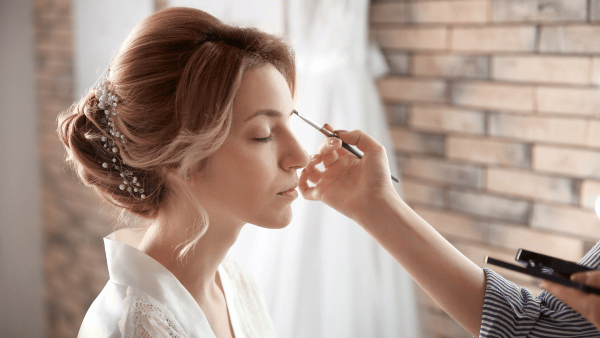
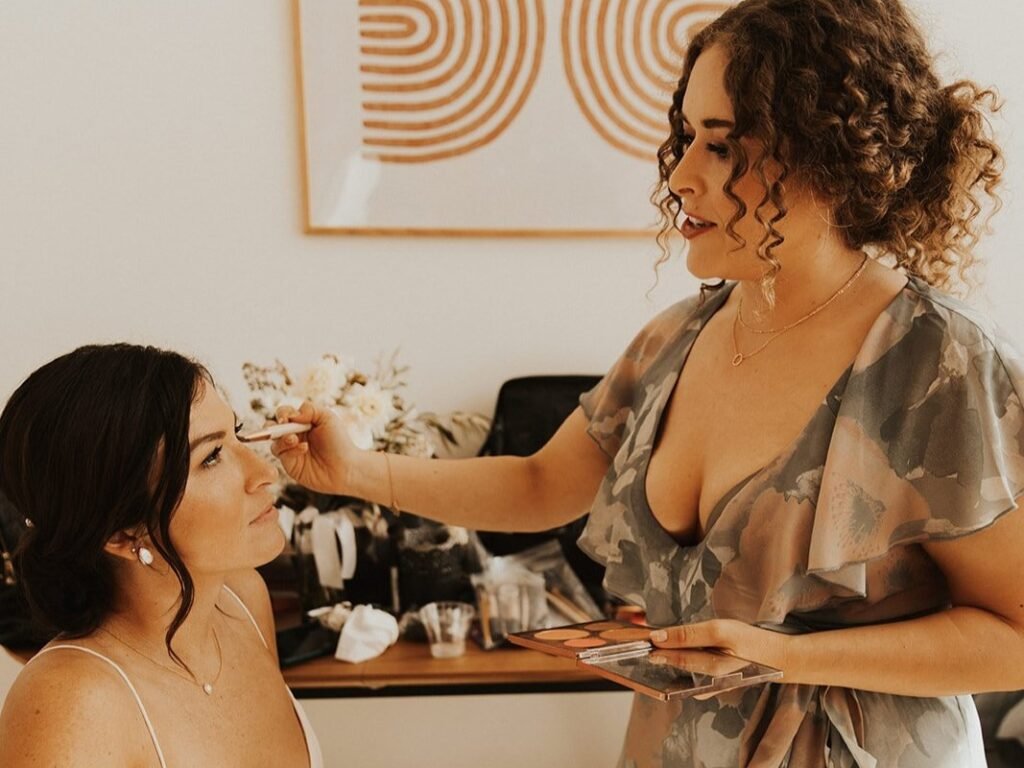
Because I am fully mobile, I come to you with a complete professional kit, including studio-quality lighting and seating. This allows me to assess your complexion clearly, even when the room’s lighting is not ideal.

You avoid the salon commute, your getting-ready party can stay together, and your morning can follow the schedule you have planned.

My process begins with skin and base preparation, followed by foundation, targeted coverage, and finishing techniques suited to your look. I adjust the application as needed rather than applying the same amount of product across every area of your face.

I generally plan around 60 to 90 minutes for the bride’s makeup and 45 to 60 minutes for each bridesmaid’s makeup, adjusting for the size of the group and the services required. For larger parties, I can bring additional artists so everyone is ready on schedule without cutting corners on the bride’s application.

I trained at Empire Academy of Makeup in Orange County, and my work has been featured in Voyage LA Magazine and SDVoyager. You can learn more about my background and see examples of my soft, natural style in the Brittany Brown Beauty portfolio.

Plan Your Bridal Makeup

Acne scarring and uneven texture do not mean you have to abandon the bridal makeup look you love. The goal is to find an approach that balances coverage, finish, and your personal preferences without adding unnecessary products.

During a consultation, we can discuss your skin concerns, the level of coverage you prefer, your wedding venue, and the look you want to achieve. We can also talk about whether a bridal trial would help you assess the makeup in person and in photographs before the big day.

If you are planning other wedding-day beauty services, you can explore my bridal hair and makeup services to learn more about the options available for your wedding party.

Spring and fall weekends in Orange County book out well in advance, so I encourage you to get in touch once your venue and date are confirmed. Your date is secured with a signed contract and a deposit. To discuss your wedding plans and availability, contact Brittany Brown Beauty.

Frequently Asked Questions

1. How should I prepare my skin before bridal makeup for acne scarring and uneven texture?

Maintain a consistent skincare routine in the weeks before your wedding and stick with products your skin already tolerates comfortably. Avoid introducing unfamiliar products and treatments during the final 10 days. On your wedding morning, I begin with skincare, primer, and base preparation to help create a more even-looking surface for makeup.

2. How long will bridal makeup for acne scarring and uneven texture last through the ceremony and reception?

Wear time depends on your skin, the weather, and how active your day is, so I do not promise a set number of hours. I plan carefully with appropriate preparation, product choices, and finishing techniques to support the overall look. Every bride also receives a complimentary touch-up kit with lipstick, powder, and blotting sheets for a quick refresh.

3. Can the makeup be adjusted for my skin tone and type?

Yes. I adjust the amount of coverage, correcting shades, and finishing techniques according to your complexion, skin, and preferences. I do not use one fixed look for everyone. Your bridal trial lets me assess how the makeup looks on your skin and make adjustments before the wedding day.

4. Will my acne scars show in wedding photographs?

Makeup can soften the appearance of discoloration and help create a more even-looking complexion, but it cannot guarantee that physical texture will disappear. I use targeted color correction, thin layers, and selective setting to create a natural-looking finish. Reviewing the makeup in photographs during your trial helps you understand what to expect.

5. Should I get a skin treatment before my wedding to improve texture?

That is a question for your doctor or a qualified skincare professional, since I do not provide medical advice or treatment recommendations. Avoid experimenting with unfamiliar skincare products or treatments during the final 10 days before your wedding. If you have had a recent treatment, tell me during your trial so I can plan your makeup carefully.
Posted on

Setting Spray Guide for Orange County Brides

setting spray guide for orange county brides

Setting spray is one of the most talked-about products in bridal makeup, and also one of the most misunderstood. Some brides think it works like a magic seal. Others skip it completely. The truth sits in the middle. A setting spray can help your look sit more smoothly and hold up better, but it works best as one step in a plan. With 11+ years of hands-on bridal experience in Orange County, I have learned that the plan matters more than any single product. 

At Brittany Brown Beauty, I believe in enhancing your natural beauty rather than masking it, and every step I take, including setting, supports a look that feels like you, but elevated.

Why Setting Spray Matters for Coastal Weddings

Southern California weddings come with real conditions. Coastal humidity, sea air, direct sun, and wind all affect how makeup wears. A look that stays put in a cool, dry room can behave differently on a bluff-top terrace or a sunny patio near the water. If your ceremony will be on the sand or in the open air, my guide to waterproof bridal makeup for beach and outdoor ceremonies goes into more detail.

Waterfront venues require their own considerations, too. Reflective light, open-air settings, and coastal breezes can affect how your makeup appears in photographs. For a location-specific example, read my guide to Lido Isle bridal makeup for waterfront weddings in Newport Beach.

That is why I treat setting as part of the whole process instead of a last-second spritz. When I arrive at your getting-ready location, I set up my station with studio-quality lighting and seating, then start with skincare, primer, and base preparation. I take that first step slowly on purpose, because a well-prepared base gives every later layer a better surface to sit on. After I apply your look, I finish with setting techniques and sealants that help it hold through the ceremony, photos, and reception.

Setting spray is a finishing mist applied over makeup, and it plays a role in that final stage. It can soften the look of powder, help layers blend together, and give your skin a more unified finish. It does not replace good prep, thoughtful product choice, or a bridal trial.

Choosing the Right Setting Spray

setting spray guide for orange county brides

No single setting spray suits every bride. Skin, weather, venue, and personal style all shape the choice, and I never promise that one product works for everyone. Instead, I choose based on what I see on your skin and what your day will involve. Here is how I think it through.

Matte vs. Dewy Finish Sprays

The finish you want drives this choice more than anything else. A matte-leaning finish gives a softer, more velvety look and can suit brides who notice shine early in the day. A dewy-leaning finish keeps skin looking fresh and luminous, which fits the no-makeup-makeup look I love to create.

Neither option is better. The right choice depends on your skin and your taste. If your forehead and nose tend to shine, I may use a more controlled finish there while keeping a soft glow on your cheekbones. If your skin runs dry, I lean toward a finish that looks comfortable and fresh instead of flat. Glowing skin and shiny skin are different things, and finishing products help me keep that line clear.

Your preferred makeup style also influences the finish. Some brides prefer a natural, softly defined look, while others want stronger color and more dramatic definition. If you are still deciding between these approaches, my guide to bold bridal makeup vs. soft glam can help you work out how much definition you want.

If you are unsure which finish you prefer, bring photos of looks you love to your trial. We can test your options and compare them on your skin, in natural light and in photographs.

Layering Technique for All-Day Wear

Many brides picture a single heavy spray over the whole face. I prefer a layered approach. Each step in my process supports the next one: skincare, primer, base, soft color, powder where needed, and then setting. Applying thin layers in the right order gives me more control and keeps your skin looking like skin. You can read more about my full process in my bridal makeup routine and how it lasts all day.

A few principles guide my layering:

  • Prep first: Hydrated, prepared skin gives makeup a better foundation.
  • Thin layers: Building gradually keeps the finish soft and helps avoid a heavy look.
  • Light touch with powder: I place it where it helps and skip it where it does not.
  • Setting last: The spray ties the layers together instead of trying to fix them.

I do not guarantee how long any makeup will last, since skin, weather, and activity all play a part. What I can promise is a carefully built look. One San Diego bride shared that her makeup stayed beautiful through her happy tears, and that is the kind of real-day performance I plan for.

You can help your skin, too. Start a consistent skincare routine at least four weeks before your wedding, drink plenty of water in the week leading up to it, and avoid new skincare products and treatments in the final 10 days.

Reapplying During the Reception

With proper prep and product choice, the goal is for you to enjoy your day without checking your face every hour. Still, a long celebration deserves a safety net, so I give every bride a complimentary touch-up kit with lipstick, powder, and blotting sheets.

When you want a quick refresh, keep these tips in mind:

  • Blot before you add: Press a blotting sheet gently on shiny areas first. Adding more product over oil can look heavy.
  • Use powder sparingly: A small amount on the T-zone is usually enough.
  • Refresh your lips: Lipstick is a common spot to touch up after dinner and toasts.
  • Skip extra layers of spray: More spray may not help and can disturb the finish you already have.

Ask a bridesmaid or a trusted friend to hold the kit, so you can step away for a minute between photos and dancing.

Some brides also plan a different hairstyle for the reception, especially if they want a change from a formal ceremony look to something more relaxed for dancing. If that is part of your plan, my guide to second-look bridal hair transformations for the reception explains how to prepare for a hairstyle change. Coordinating your makeup touch-ups with the transition helps keep your overall look feeling cohesive.

What Setting Spray Can’t Fix

Setting spray has limits, and I would rather tell you that now than let you expect too much. It cannot rescue skin that did not get prepped, and it cannot make a heavy base look light. It also cannot predict how your skin will respond to a new product on your wedding morning.

Here is what setting spray cannot do:

  • Replace skin prep or a consistent skincare routine.
  • Fix a base that is too heavy or does not suit your skin.
  • Protect against every condition, including strong wind or heat.
  • Guarantee a specific number of hours of wear.

Skin reactions deserve a mention, too. Skin is personal, and I do not make blanket claims about any product being right for everyone. That is exactly why I strongly recommend a bridal makeup trial. A trial lets me test products on your skin, work through any adjustments, and make sure you walk into your wedding day knowing what to expect.

If you want a preview of the appointment, read what happens during a bridal makeup trial. Please tell me about any skin sensitivities, reactions, or recent treatments at your trial so I can plan around them.

Preparing for Your Bridal Makeup Trial

setting spray guide for orange county brides

Your trial is also the best time to explain the finish you want, discuss your concerns about makeup wear, and make adjustments before the wedding. You do not need professional makeup terminology to communicate your preferences. Reference photos and clear feedback about what you like or dislike are often enough to get the conversation started.

My guide to how to explain your vision to your makeup artist during a trial offers practical advice for making that conversation productive.

It helps to arrive prepared. Bring inspiration photos, details about your dress and venue, and any products you already use and enjoy. My checklist on what to bring to your bridal makeup trial explains what to gather before your appointment.

Mature skin deserves a mention here as well. Some formulas settle into fine lines or look heavy on more mature complexions, so I adjust my technique and setting approach for brides and mothers of the bride and groom who want a soft, natural finish.

Because I am fully mobile, I come to you, whether that is a private home, hotel suite, resort room, or estate. You skip the salon commute, your whole getting-ready party stays together, and your timeline stays intact.

For larger bridal parties, I bring additional artists so everyone is ready on schedule without cutting corners on the bride’s application. You can see my soft, glowing style in my portfolio, and you can learn more about my background and training before you book.

Plan Your Wedding-Day Makeup

Your wedding makeup should look polished from the ceremony through the reception while still feeling like you. Brittany can discuss your skin type, preferred finish, venue, and wedding-day schedule to help plan a look that suits your needs. A bridal trial can also help you test your makeup and make adjustments before the big day.

If you’re comparing artists, review these questions to ask before hiring a bridal makeup artist to help you prepare for your consultation.

With more than 11 years of experience in the beauty industry, Brittany takes a personalized approach to bridal makeup, focusing on enhancing your natural features and reflecting your personal style.

Spring and fall weekends in Orange County can book quickly, so reach out once your venue is confirmed. A signed contract and deposit secure your date. Contact Brittany Brown Beauty to discuss your wedding plans and availability.

Frequently Asked Questions

1. How should I prepare my skin before using setting spray on my wedding day?

Start a consistent skincare routine at least four weeks before your wedding. Drink plenty of water, especially during the final week. Avoid new skincare products or treatments in the last 10 days. On your wedding morning, I begin with skincare and primer. This creates a smooth base for your makeup and setting products.

2. How long can setting spray help my bridal makeup last?

Wear time depends on your skin, the weather, and your activity level. I cannot promise a set number of hours. Instead, I focus on proper preparation and products suited to your skin and setting. Finishing techniques also help your makeup hold up. Every bride receives a complimentary touch-up kit with lipstick, powder, and blotting sheets.

3. Can setting spray be adjusted for my specific skin type?

Yes. I tailor my setting approach to your skin and preferred finish. Your features and personal style also guide my choices. I never rely on one fixed routine for everyone. During your bridal trial, we can test products and refine the finish before your wedding day.

4. Should I choose a matte or dewy setting spray for a coastal wedding?

Your skin type and preferred look can help guide the decision. A matte finish may suit brides who notice shine early. A dewy finish creates a fresh, luminous look. Coastal humidity, sea air, and sun can also affect your makeup. During your trial, we can test different options and choose what feels and looks best on you.

5. Can I bring my own setting spray to my bridal makeup trial?

Absolutely. Bring any products you already use and love. Photos of your favorite makeup looks are helpful, too. Please mention any skin sensitivities, previous reactions, or recent treatments. This information helps me assess which products work well with your skin. Together, we can plan a finish that suits your preferences.

Posted on

Bridal Makeup for Windy Coastal Ceremonies

Bluff-top venues, beachfront estates, and harbor-view ceremonies are some of the most beautiful settings Orange County and San Diego have to offer, but they come with a variable a lot of brides don’t think about until the day itself: wind. Between sea breeze, shifting temperatures, and salt air, a coastal ceremony asks more of your makeup than a sheltered indoor venue does. After 11+ years of hands-on bridal work along this coastline, planning around wind is simply part of how I approach any oceanfront wedding.

Quick answer: makeup for a windy coastal ceremony holds up best with proper setting and sealing layers, hair and makeup planned together rather than separately, and extra attention to lips and eyes, which sea air affects first. None of this changes the overall goal, a natural, glowing look that still feels like you. A trial is still the best way to see how it all performs together before the big day. Here’s how it comes together.

How Wind Affects Makeup Application and Wear

Wind does a few things to makeup that stillness doesn’t. It can dry out skin and lips faster, shift hair into the face and onto fresh products, and carry fine salt particles from sea air that interact with makeup over the course of a long day. None of this is dramatic on its own, but combined, it means a coastal ceremony calls for a more deliberate approach to application and setting than an indoor venue would.

This is also where experience with this specific coastline matters. Choosing formulas and techniques that hold up against Southern California’s coastal humidity, ocean air, and wind isn’t generic “long-lasting makeup” marketing, it’s a specific, repeatedly tested skill built from doing this kind of ceremony again and again.

Techniques That Hold Up

Here’s how I build a look that’s meant to handle wind and sea air, not just look good in a still photo.

Setting Spray and Sealing Layers

The final setting and sealing step is what locks a look in place for the day, and it matters even more at a windy coastal venue. Proper layering and sealing help the base, eyes, and lips resist the drying and shifting effects of wind, rather than relying on a single product to do all the work.

Hair-Makeup Coordination in Wind

Wind doesn’t just affect makeup, it affects how hair interacts with makeup throughout the day. If hair is expected to move in the breeze, that’s factored into where products are focused and how the finished look is set, so a few strands blowing across the face during photos doesn’t undo the whole application. Planning hair and makeup together, rather than as two separate services, makes a real difference at oceanfront venues.

Protecting Lips and Eyes From Sea Air

Lips and eyes tend to feel the effects of wind and salt air first, lips from drying out faster, eyes from wind-blown hair or fine particles in the air. Extra attention to hydration and sealing in these areas helps the whole look hold its shape and stay comfortable through a longer outdoor ceremony and reception.

What to Expect at a Coastal Venue

However dramatic the setting, the process on wedding morning stays the same. I arrive with a complete professional setup, including my own lighting and seating, so no venue limits the result, wind or otherwise. From there, it’s skin prep, application, and a setting process built specifically for coastal Southern California conditions rather than a generic approach borrowed from an inland venue.

No formula can promise identical performance for every skin type or every level of wind, which is exactly why a trial matters most for a coastal ceremony. A trial lets us test the look in advance, see how it holds, and adjust anything that needs it, so you’re not learning how your makeup handles wind for the first time on the wedding day itself. The result so many brides describe afterward is the same one I aim for every time, feeling like yourself, but elevated, even with the ocean breeze in your hair.

If you’d like to see real coastal and outdoor bridal looks from Brittany Brown Beauty, take a look at the portfolio, or read more about the experience behind it on the about page. When you’re ready to talk through your own coastal ceremony, reach out through the contact page.

Frequently Asked Questions

1. What’s the best way to prep my skin for bridal makeup for windy coastal ceremonies? 

Good prep starts before the wedding day. Avoiding new skincare products or treatments in the final 10 days before your wedding, keeping a consistent skincare routine for at least four weeks out, and staying well hydrated in the week leading up to the event all help create skin that holds up better against wind and sea air.

2. How long will bridal makeup for windy coastal ceremonies last through the ceremony and reception? 

Longevity depends on skin prep, formula choice, and setting technique working together, and wind is one more variable that’s factored into the plan. A trial is the most reliable way to see how a specific look performs in real coastal conditions before your wedding day.

3. Can bridal makeup for windy coastal ceremonies be adjusted for my specific skin tone or type?

Yes. I choose shade, formula, and technique based on your individual skin, including adjustments for mature skin or other specific concerns, rather than using a single approach for every bride. No formula works identically for all skin types, which is part of why the trial process exists.

Posted on

Waterproof Bridal Makeup for Beach and Outdoor Ceremonies

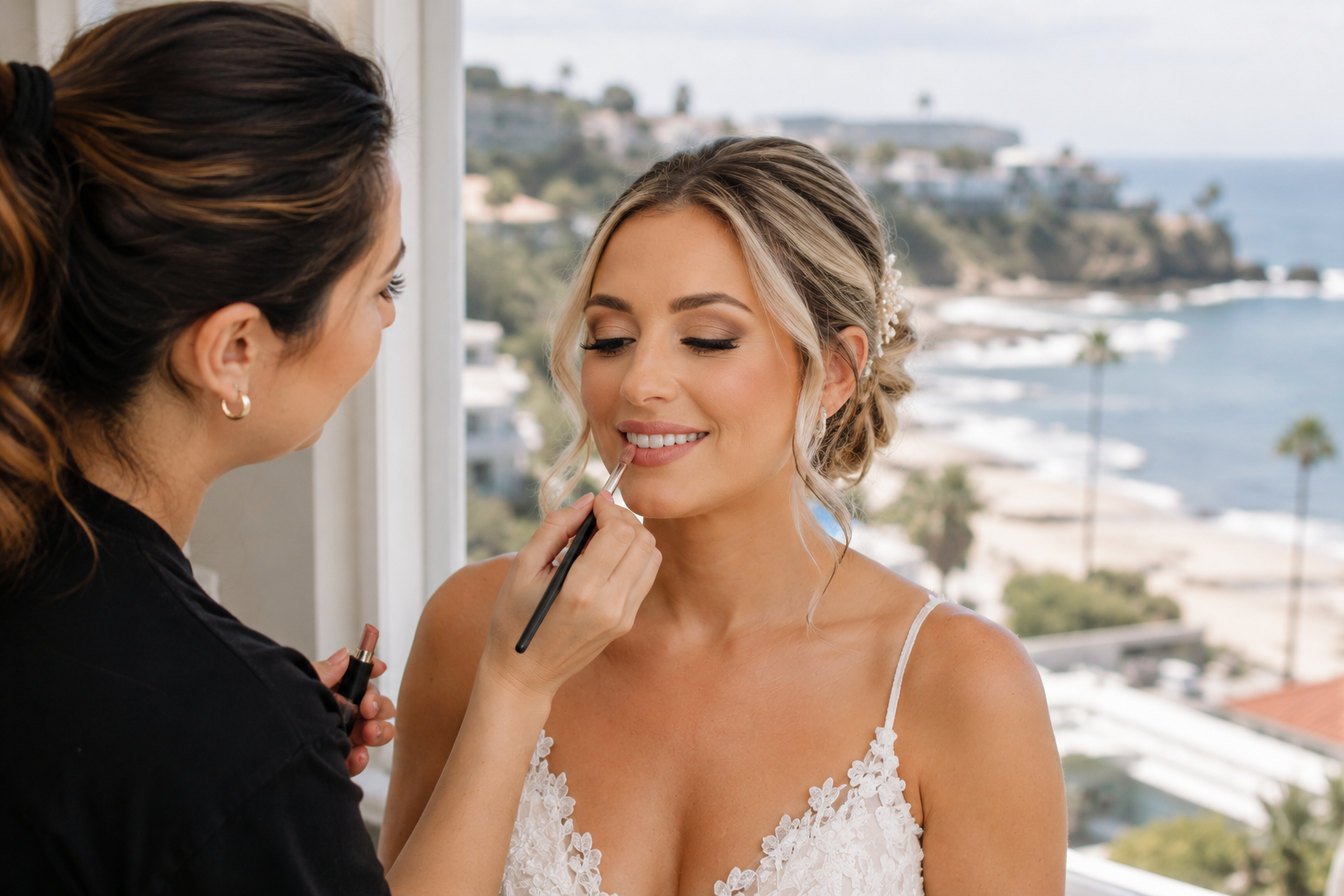
Bride receiving professional bridal makeup in Laguna Beach, California

Beach and outdoor ceremonies are some of the most beautiful weddings I get to work on, and they also come with a very real question every bride should ask early: will my makeup actually hold up out here? Between happy tears, sea air, sun, and the occasional coastal breeze, an outdoor Orange County or San Diego ceremony asks a lot more of your makeup than an indoor venue does. After 11+ years of hands-on bridal work along this coastline, building a look that holds up outdoors is something I plan for from the very first consultation.

Quick answer: a truly reliable waterproof bridal look comes down to three things, a waterproof base and concealer, smudge-proof eye makeup, and a long-wear lip formula, all applied with proper skin prep and setting technique. No formula is completely foolproof for every skin type or every condition, which is exactly why a trial run matters. Here’s how I approach it, checklist-style, so you know what to ask about and expect.

Why Waterproof Formulas Matter for Outdoor Ceremonies

Outdoor ceremonies expose your makeup to conditions an indoor venue simply doesn’t have: direct sun, humidity, sea air, wind, and often genuine tears during the vows. Regular formulas can break down faster under that combination, especially around the eyes and along the base. Waterproof and long-wear formulas resist breakdown, which matters most during the moments when you want your makeup to last, walking down the aisle, exchanging vows, and through however many happy tears the day brings.

This is also where the “enhance, don’t mask” philosophy stays front and center. Waterproof doesn’t mean heavier or more done-up. The goal is still a natural, glowing look that feels like you, just built with formulas and techniques that can handle the elements.

Building a Waterproof Look

A waterproof bridal look isn’t one single product decision, it’s a combination of choices across the whole face.

Waterproof Base and Concealer

The base is where durability starts. A properly prepped, well-set base and concealer are formulated to resist moisture and humidity better than standard everyday makeup, which matters most under direct coastal sun or near the water. This is one of the areas where genuine coastal-conditions experience makes a difference, since choosing the right base for Southern California humidity and sea air is different from choosing one for an indoor, climate-controlled venue.

Smudge-Proof Eye Makeup

Eyes are usually the first area to show wear during an emotional ceremony, so smudge-proof eye formulas and careful application matter here more than almost anywhere else on the face. The goal is a look that stays soft and natural through happy tears rather than shifting or smudging the moment emotions run high.

Long-Wear Lip Formulas

Wind, saltwater air, and hours between ceremony and reception can all wear down lip color faster outdoors. A long-wear lip formula, applied and set properly, helps color stay put through the ceremony, the receiving line, and photos, without needing constant reapplication.

What Waterproof Doesn’t Mean

It’s worth being upfront about this: manufacturers create waterproof and long-wear formulas to resist moisture and perform better in humidity and through tears, but no formula can promise the same results for every skin type or under every possible condition. Everyone’s skin behaves a little differently, and factors like oil production, sun exposure, and even how the day unfolds can all play a role. That’s exactly why a bridal trial matters so much for outdoor ceremonies specifically. A trial lets us test the actual formulas on your skin, in advance, so we can see how they perform and make any adjustments before the wedding day itself, rather than hoping for the best.

Brides often describe the result of this kind of prep the same way, feeling like themselves but elevated, confident that their makeup will still look like them by the time they’re dancing at the reception. That’s the outcome this whole process is built around.

If you’d like to see examples of past outdoor and coastal bridal looks, take a look at the portfolio, or read more about the experience behind it on the about page. When you’re ready to talk through your own outdoor ceremony, reach out through the contact page.

Frequently Asked Questions

1. What’s the best way to prep my skin for waterproof bridal makeup for beach and outdoor ceremonies? 

Good prep starts well before the wedding day. Avoiding new skincare products or treatments in the final 10 days before the wedding, keeping a consistent skincare routine for at least four weeks out, and staying well hydrated in the week leading up to the event all help create skin that holds waterproof formulas better and looks smooth under coastal sun.

2. How long will waterproof bridal makeup for beach and outdoor ceremonies last through the ceremony and reception? 

Longevity depends on skin prep, formula choice, and setting technique working together, and it can vary from bride to bride. A trial is the most reliable way to see how a specific look performs on your skin over several hours in real conditions. 

3. Can waterproof bridal makeup for beach and outdoor ceremonies be adjusted for my specific skin tone or type? 

Yes. Shade, formula, and technique are all chosen based on your individual skin, including adjustments for mature skin or other specific concerns, rather than a single fixed approach applied to everyone. No formula is described as working identically for all skin types, which is part of why fittings and trials matter.