Posted on

Makeup for Redheads and Fair, Cool-Toned Complexions

makeup for redheads and fair cool-toned complexions

Makeup for redheads with fair, cool-toned skin depends more on skin undertone than hair color. Red hair can have warm copper, auburn, or deeper tones, while fair skin may lean pink, neutral, or warm.

Choosing foundation based on hair color alone can lead to a poor match. Blush that echoes copper hair may also look too strong against fair skin. Checking the skin’s undertone and testing shades in natural light can help you find more balanced colors.

Brittany Brown Beauty offers mobile bridal hair and makeup across Orange County, San Diego, and surrounding areas. Brittany specializes in mature makeup and corrective techniques, with an approach that keeps skin looking like skin. These tips can help redheaded brides, mature clients, and mothers of the bride or groom choose makeup that feels comfortable without relying on heavy coverage.

Why Red Hair and Fair Skin Need Individual Color Choices

Red hair describes the hair. Undertone describes the color beneath the skin’s surface. The two can agree or differ. A redhead can have cool, neutral or warm undertones, and each one changes which products look natural.

Undertone is also separate from skin depth. Depth is how light or deep the skin looks, and it shifts with sun and season. Undertone stays the same. Our guide to matching bridal makeup to your skin undertone explains the difference in more detail.

  • Cool undertones often read pink, rosy or blue-leaning.
  • Neutral undertones sit between the two, with no clear lean.
  • Warm undertones often read golden, peachy or yellow.

Treat these as starting points. Vein color, jewelry and sun reactions give hints, but none settles it alone. An artist compares shades on your skin in daylight.

Surface redness and freckles are not undertone either. Redness can come from sun, warmth, nerves or sensitivity, and it can sit on any undertone. Freckles are surface pigment and can appear over any undertone. Reading undertone means looking past both.

Here is how a mismatch can show up. A yellow-based foundation on pink-leaning skin may look disconnected, with a visible edge along the jaw. A very pink foundation may push natural redness forward. A warm coral blush may look soft on a neutral complexion and heavy on a cool one. None of this is guaranteed. It depends on the skin, the product and the light.

That is why we assess the complexion first and the hair second. Hair still matters for contrast, but it does not set the undertone.

Choosing Colors That Work With Your Complexion

Foundation sets the base, and every other color builds on it. Start there, then move to the cheeks and eyes.

Finding the Right Foundation Undertone

Shade testing takes a few minutes and saves a lot of guessing. Follow these steps:

  1. Swatch two or three close shades along the jawline, blending toward the neck.
  2. Wait at least ten minutes. Some formulas oxidize and drift orange as they settle.
  3. Check the swatches in natural light, near a window or outdoors. Bathroom lighting can mislead.
  4. Look at the face, neck and chest together. A shade matched to the neck alone can leave the face looking gray if the neck runs cooler.
  5. Take a phone photo in daylight and another with flash. Flash can show color differently.
  6. Choose the shade that seems to disappear into the skin.

Surface redness can complicate matching. If the cheeks and nose run pink, matching that redness can make the whole base look too pink. The calmer skin near the jaw often gives a better guide to undertone. Redness then gets handled separately. Fair skin leaves little room for an almost-right shade. The fair skin product and shade guide explains why.

Corrective makeup works in small, targeted areas. A little green-toned corrector can offset redness. Peach tones can offset bluish shadows under the eyes. A thin layer of foundation then blends outward from there. Redness can often be softened, though not always fully hidden. Heavy layers can stand out in photos. For the techniques, read corrective makeup and who it suits.

Not every variation needs correcting. Freckles, natural flush and small color changes are part of the face. Many clients want them left visible. Tell your artist what you want softened and what you want left alone.

Mature skin bridal makeup starts from the same questions. Hydrated skin, thin layers and precise placement usually look more natural than full coverage. Powder works best only where the base creases or shines. Texture and dryness vary at every age. The artist works from your skin on the day, not an assumption. For more, see bridal makeup for mature skin.

Eyeshadow and Blush for Red Hair

Red hair covers a range. Strawberry blonde, copper and deep auburn each set a different backdrop. The same eyeshadow can look soft against one and faint against another.

  • Strawberry blonde or light red hair: Soft palettes often keep the face balanced. Muted rose, light taupe and soft champagne are options. A deep shadow may look sharp.
  • Copper or bright red hair: The hair already carries strong warmth. Mauve, taupe and soft plum can add contrast. Warm browns also work for a more matching look.
  • Auburn or deep red hair: Berry, plum and chocolate brown often hold their own against rich color. Some clients like more definition here.

These are tendencies, not rules. Skin depth, natural hair color and personal taste can all change the result.

On fair, cool-toned skin, muted rose, soft berry and mauve blush often look natural. Soft peach or light apricot can suit golden undertones. Fair skin shows color quickly, so start small and build. Our article on choosing a blush shade for your skin tone lists more options.

Eye color shapes the palette too. Blue eyes often stand out next to copper and warm brown shadow, while soft taupe gives a quieter option. Green eyes may look brighter with mauve or plum. Brown and hazel eyes can carry bronze, soft brown or berry.

Outfit colors and intensity matter as well. A bright green dress beside a berry cheek can compete. A bold dress often suits soft cheeks and neutral eyes. A muted dress can take richer eyes. Daytime events usually suit a soft wash of color, while evening and long photo sessions can handle deeper definition.

If your lids have texture or creasing, matte or satin shadows blend more easily than heavy shimmer or large-particle glitter. Lip colors need the same care. Muted rose, soft berry and rosy nude suit many fair, cool-toned complexions. A true orange-red can look sharp on some and striking on others, so test it at the trial. Browse the portfolio to note which finished looks appeal to you.

Keeping Warm Tones From Looking Orange

Warmth is not the problem. Orange is. Warmth looks like soft color that belongs to the skin. Orange looks like a separate layer sitting on top. On fair skin, the gap between the two is small.

Orange usually comes from one of these sources:

  • Foundation: a yellow- or orange-leaning formula, or one that oxidizes as it settles.
  • Bronzer: a shade too deep, or one swept across the whole face.
  • Blush: an orange-based coral applied heavily on cool-toned cheeks.
  • Eyeshadow: copper shades that sit close to copper hair, so the face and hair read as one warm block.

Three adjustments help. First, change the undertone. Neutral or pink-leaning foundation and blush often replace orange ones. Second, lower the intensity. Start sheer and build only if needed. Third, move the placement. Keep bronzer close to your natural skin depth and apply it only where sun would touch. For highlighter, pearl, icy pink or rose gold often looks softer than heavy gold, which can turn brassy.

Warm shades are not off limits. A soft peach blush or golden-brown shadow can suit neutral and warm undertones. Some cool complexions can wear them at low intensity. Test small amounts instead of ruling them out.

Light changes the result. Warm indoor bulbs can push colors toward orange, while daylight and flash show them differently. A shade that looks balanced in the trial room may shift at the venue. Check swatches and photos in daylight, indoors and with flash. Read more on how wedding lighting affects bridal makeup.

The rest of the face affects color as well. A deeper lip can make a soft blush look paler. A pale lip can make the same blush look stronger. Judge cheek, lip and eye colors together, not one at a time.

What to Bring to Your Makeup Trial

A trial works best with a little preparation. This checklist shows what to gather and why each item helps. You do not need to buy new products or change your skincare routine to attend. For a longer list, see what to bring to a bridal makeup trial.

  • Photos of looks you like. Include examples with similar coloring when you have them. Coloring differs between faces, so note which part you like, such as the eyes, lips or finish.
  • Photos of your usual makeup, if you wear it. They show the colors and intensity you are comfortable with, and what you want changed.
  • Your outfit, accessories or photos of them. Fabric colors and necklines affect how bold the eyes and lips can be.
  • Event details. Share the venue, time of day, lighting and photography plan. Outdoor daylight, a candlelit room and flash can each shift color.
  • Products you prefer or found unsuitable. A shade that turned orange or a formula that settled into texture tells the artist what to avoid.
  • Skin sensitivities and concerns. Mention reactions, plus areas you want softened or left alone.
  • Your usual sunscreen, if you wear one. The artist can check how it behaves with the makeup and under flash.

Arrive with clean or lightly made-up skin when you can. It lets the artist see your natural color and texture clearly.

Brittany’s interest in mature makeup and her corrective strength both come into play at a trial. If you want a corrective makeup artist in Orange County, say so when you share your photos. You can learn more on the About page or send your details through the contact page.

Planning Your Makeup Trial?

Frequently Asked Questions

1. How is makeup for redheads and fair, cool-toned complexions different from standard bridal makeup?

The structure is the same, but the color choices are more individual. Fair skin has less room for a shade that is close but not quite right. The artist reads undertone first, then tests foundation, blush and eye colors against your hair and eyes. Corrective steps, such as softening redness, are used only where needed.

2. What products work best for makeup for redheads and fair, cool-toned complexions?

Product types matter more than names. Many clients do well with a light-to-medium, buildable foundation in a neutral or pink-leaning undertone, plus a lightweight concealer. A small amount of green-toned corrector can soften redness. Cream blush in soft rose or peach often looks natural. The right choice still depends on your skin, so the trial confirms it.

3. How far in advance should I book a trial for makeup for redheads and fair, cool-toned complexions?

Most brides schedule a trial two to four months before the wedding. Reserve the wedding date earlier, ideally six to twelve months ahead, and ask about trial timing then. A trial a few months out leaves room for a second look if a color needs adjusting. Other events can follow the same pattern.

4. How can I tell if a foundation is too yellow or too pink for my skin?

Check it along the jawline in daylight after ten minutes. A yellow-leaning shade may leave a visible edge and look flat beside the neck. A pink-leaning shade may push natural redness forward. A good match seems to disappear into the skin. If you are unsure, ask the artist to compare two shades side by side.

5. Will corrective makeup cover my freckles or redness?

Corrective makeup is selective. Freckles are part of your natural coloring, so they usually stay visible unless you ask for more coverage. Redness can often be softened, but results vary with the skin and the amount of redness. Tell the artist what you want softened and what you want left alone. A trial photo shows how far to go before the wedding.

Posted on

Red Lip Bridal Makeup: Is It Right for Your Wedding?

red lip bridal makeup

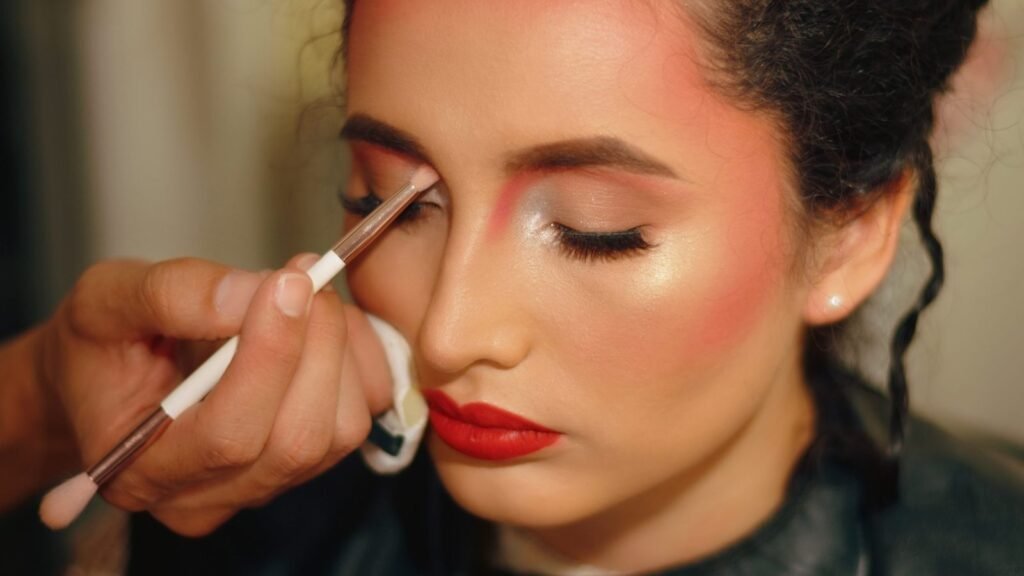
Red lip bridal makeup is a classic choice that can look striking in person and in photos. It is also a bold decision, so it helps to think it through before the wedding day.

At Brittany Brown Beauty, Brittany Brown draws on more than 11 years in the makeup industry and her “enhance, don’t mask” approach. Whether you choose red or something softer, the goal stays the same: you look like yourself, but elevated.

This guide covers what to consider so you can decide with confidence.

Why Red Lips Are Making a Bridal Comeback

A red lip gives a bridal look a clear focal point. It can pair with simple skin and eye makeup, and for brides who already love color, it can be a way to express personal style.

Brittany sees makeup as an art form and a way to express individual style, so a statement lip can be a beautiful choice. When the skin looks fresh and the eyes stay soft, the lip becomes the feature that stands out. Her signature no-makeup-makeup look is built on glowing skin and warm, bronzed contour instead of heavy coverage.

Brittany builds each bridal look around your skin, your dress, and your venue instead of a fixed package look. A red lip becomes one more detail in that plan. You can explore her bridal makeup and hair services to learn more about the options available for your wedding.

What to Consider Before Choosing Red

red lip bridal makeup

Three areas shape whether red feels right for you. Brittany strongly recommends a bridal trial. She tests the look and product formulas directly on your skin, works through adjustments, and helps you understand what to expect on your wedding day. A trial is a good place to talk through red shades and see how the look feels.

Skin Tone and Undertone Matching

Red comes in many shades, and the best one depends on your skin and how you want the look to feel. Understanding how to match bridal makeup to your skin undertone can help you compare shades and identify colors to try.

  • Talk through more than one shade: A color that looks right in the tube can look different on your lips.
  • Share what you love: Reference photos of red lips you like give Brittany a clear starting point.
  • Check the look in different lighting: Natural light and indoor light can show color differently.
  • Plan the shade with Brittany: She builds the look around your features, so the plan is chosen for you.
  • Share your skin details: Tell Brittany about any skin sensitivities, reactions, or recent treatments so she can plan around them.
  • Check your foundation too: A balanced complexion helps the lip color work with the rest of your look. These tips for choosing the right foundation shade for your wedding day can help you consider how your base will appear in person and in photos.

Balancing the Rest of the Face

A red lip works best when the rest of the face supports it instead of competing with it.

  • Keep the skin glowing and light: Thin, even layers let your natural skin show through.
  • Keep the eyes soft: Soft shadows and subtle highlights add definition without pulling attention from the lip.
  • Think about your dress: Your neckline and fabric color shape how a red lip reads, so bring photos of your gown. You can also explore ideas for bridal makeup that complements different wedding dresses.
  • Consider your flowers and palette: Your bouquet and wedding colors appear in the same photos, so share them with Brittany.
  • Think about your hair: Brittany offers hair styling as part of her bridal services, so talk through your hair plan with her.
  • Consider your overall coloring: Your hair color and preferred style can also influence how bold lipstick looks. For inspiration, see these bridal makeup ideas for brunettes in Orange County.

Your skin finish matters, too. Some brides prefer a dewy complexion, while others feel more comfortable with a matte finish. Comparing dewy versus matte bridal makeup can help you decide what works best for your skin and the rest of your look.

Longevity Through Eating, Drinking, and Kissing

A wedding day includes toasts, dinner, and plenty of kisses, so it helps to have a plan for your lip color.

  • Start with careful prep: Brittany begins with unrushed skincare and base preparation and uses professional products suited to Southern California conditions and your skin type.
  • Finish with setting techniques: Final setting techniques help the look wear through the ceremony, photography, and reception, though no one can promise exactly how any lip color will perform after a full day.
  • Keep your touch-up kit close: Brides receive a complimentary touch-up kit with lipstick, powder, and blotting sheets, so a quick refresh is easier.
  • Pass the kit to a helper: A bridesmaid or your planner can hold it during portraits and the reception.
  • Plan refreshes around big moments: Decide in advance when you may want a quick refresh, such as after dinner.

Weather can affect makeup wear, too. If you are having a summer wedding, these tips for bridal makeup at humid summer weddings in Orange County offer additional considerations when planning your look.

Alternatives if Red Feels Like Too Much

red lip bridal makeup

If you love the idea of red but feel unsure, you have options.

  • Ask about a softer red: Talk through how much intensity feels right for you.
  • Ask about other lip colors: A rosy, berry, or soft pink tone can add color while feeling gentler.
  • Consider a nude lip: A softer shade keeps the focus on glowing skin and defined eyes.
  • Talk through your whole look: Brittany can plan the lip together with your skin, eyes, dress, and overall wedding style.
  • Discuss options at your trial: Talking through choices makes the decision easier.

Brides have described Brittany’s work as natural and “you but elevated,” which is a helpful guide whether you pick red or something softer.

Prepare your skin on schedule, too. Start a consistent skincare routine at least four weeks before the wedding, skip new skincare products or treatments in the final 10 days, and stay hydrated in the week leading up to the event, especially in summer. If you have specific concerns about fine lines, dryness, or how makeup settles on your skin, discuss them during your trial. Brittany also shares guidance on bridal makeup for mature skin.

Because Brittany is fully mobile, she comes to your home, hotel suite, resort room, or estate with a complete professional kit, including studio-quality lighting and seating. Setup takes about 15 to 20 minutes. You skip the salon commute, and your getting-ready party stays together.

Her general guidance is roughly 60 to 90 minutes for the bride and 45 to 60 minutes per bridesmaid. For larger bridal parties, she brings additional artists so everyone finishes on schedule without cutting corners on the bride’s application.

Brittany trained at Empire Academy of Makeup in Orange County. You can see examples of her bridal work in the portfolio and read more about her background on the About page.

Plan Your Red Lip Bridal Look

Choosing a red lip for your wedding comes down to finding a shade that complements your complexion, dress, and overall bridal style. Brittany can discuss your makeup preferences and wedding plans to help you explore the right look. If you’re comparing artists, review these questions to ask before hiring a bridal makeup artist to prepare for your consultation.

Spring and fall wedding dates in Orange County can book quickly, so reach out once your venue is confirmed. A signed contract and deposit secure your date. Schedule a free consultation to discuss your bridal makeup and availability.

Frequently Asked Questions

1. What’s the best way to prep my skin for red lip bridal makeup?

Start a consistent skincare routine at least four weeks before your wedding. Avoid new skincare products or treatments during the final 10 days. Stay hydrated during the week leading up to the event, especially in summer. At your trial, tell Brittany about any skin sensitivities, reactions, or recent treatments. This helps her plan your makeup accordingly.

2. How long will red lip bridal makeup last through the ceremony and reception?

Wear time depends on your skin, the weather, and how much you eat, drink, and kiss. Exact results cannot be guaranteed. Careful preparation, professional products suited to the conditions, and proper setting techniques can help your look last through the ceremony, photography, and reception. A trial lets you test the approach on your own skin. Brittany also provides a complimentary touch-up kit with lipstick for quick refreshes.

3. Can red lip bridal makeup be adjusted for my skin tone or type?

Yes. Brittany builds each look around your skin, dress, and venue. She also adjusts her techniques for different ages and skin types, including mature skin. Some formulas can settle into fine lines or create a heavy finish. Your trial is a good time to compare red shades and choose a look that feels like you.

4. Does red lipstick work with a natural bridal makeup look?

Yes. Red lipstick can be the main statement in an otherwise natural look. Soft eye makeup and a balanced complexion help keep the overall result polished. Choosing a shade you feel comfortable wearing also helps. This approach lets your lips stand out without making every feature compete for attention.

5. What should I bring to a bridal makeup trial if I am considering a red lip?

Bring reference photos of red lipstick shades and makeup looks you like. Photos of your dress and wedding color palette are also helpful. Tell Brittany about your usual makeup preferences and any skin sensitivities. Trying different shades during your trial lets you see how they look in various lighting conditions. You can then decide between a bold red and a softer alternative.

Posted on

Bridal Makeup for Newport Ridge Estate Weddings

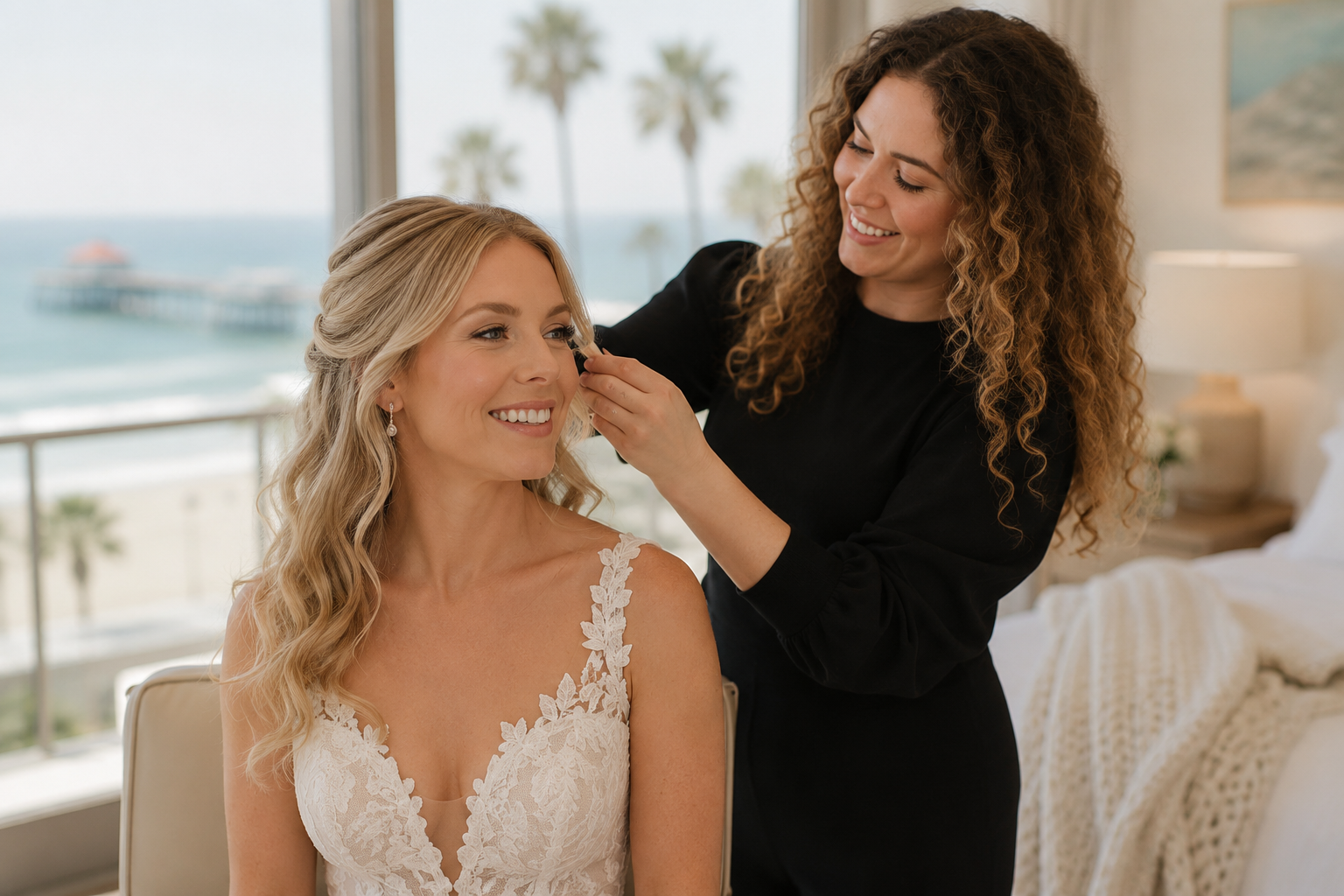
Bride receiving professional wedding hair and makeup in Huntington Beach, California

Newport Ridge is one of my favorite areas to work in. Private estate villas and Newport Ridge vacation rentals give couples a level of privacy and flexibility that a traditional hotel or ballroom venue just can’t match, and that flexibility is part of what makes bridal beauty prep here feel so relaxed and personal. If you’re planning a Newport Ridge estate wedding, here’s how I approach makeup for this specific setting, and what to expect from the getting-ready process.

What Estate Weddings in Newport Ridge Typically Involve

Newport Ridge sits within the broader Newport Coast market, alongside nearby favorites like the Resort at Pelican Hill and the Beachcomber at Crystal Cove. What sets a private estate wedding apart is that the entire day, from getting ready to ceremony to reception, often happens on one property. There’s no travel between locations, no hotel checkout to plan around, and often more control over timing and space than a resort property allows.

That kind of setting is a great match for a mobile artist, since it means the whole bridal party can get ready together in one place, without anyone needing to leave for a salon appointment mid-morning. It also tends to mean beautiful natural light, whether that’s soft interior light in a bedroom suite or the kind of golden-hour glow this coastal stretch of Orange County is known for.

Planning Your Makeup Around a Private Estate Setting

Private estates come with their own rhythm, and a big part of getting bridal makeup right here is planning around how the space itself works.

Indoor and Outdoor Lighting Transitions

Estate weddings often move between indoor prep spaces and outdoor ceremony or photo locations, and the lighting in each can look surprisingly different. A look that reads beautifully indoors under soft light needs to hold up just as well outside in direct coastal sun. Part of what I plan for during application is making sure your finished makeup translates cleanly across both, so you look like yourself in every setting, not just the one you got ready in.

Mobile Setup in a Private Home

Because a private estate doesn’t provide a dedicated professional getting-ready space like many bridal suites do, I bring everything required to create one, including studio-quality lighting, professional seating, and a complete makeup kit. Setup typically takes about 15 to 20 minutes. From there, I prep the skin, apply the makeup, and set the finished look using the same reliable process I follow for every bridal client while adapting to the room or space you’ve chosen for the morning.

Coordinating With a Larger Bridal Party

Estate weddings often mean a larger, more relaxed guest list and a bigger bridal party getting ready on-site. For larger parties, I bring in additional artists so everyone is ready on schedule, without cutting corners on the bride’s application. That way the whole group, bridesmaids, mothers, and anyone else getting styled, stays on track without the bride’s own timeline being rushed to accommodate everyone else.

Why Mobility Matters Most at Private Venues

Private estates don’t come with a built-in glam room or professional lighting rig, which is exactly where a fully mobile artist makes the biggest difference. Bringing my own lighting and seating means the quality of your makeup never depends on what the house happens to have available. It also means your entire getting-ready experience, from your bridal party to your family, stays together in one place, with the timeline staying intact instead of being built around a commute to and from a salon.

Newport Coast venues, including private estates in Newport Ridge, tend to book up quickly during peak spring and fall wedding weekends. Once your venue is confirmed, it’s worth reaching out early to secure your date with a signed contract and deposit, especially if you’re hoping to book for a popular weekend.

If you’d like to see examples of past estate and coastal weddings, you can browse the portfolio, or read more about my background on the about page. When you’re ready to talk through your Newport Ridge wedding day, reach out through the contact page.

Frequently Asked Questions

1. What makes bridal makeup for Newport Ridge estate weddings different from other Orange County venues? 

The biggest difference is the setting itself. Private estates give couples a one-property wedding day with more flexibility and privacy than a resort or hotel venue. That flexibility changes how we plan the getting-ready timeline and makes a fully mobile setup especially valuable because private estates rarely provide a dedicated professional styling space.

2. How far in advance should I book for bridal makeup for Newport Ridge estate weddings? 

Newport Coast dates, including Newport Ridge estate weddings, tend to book well in advance during the busy spring and fall wedding seasons. Contact us as soon as you secure your venue to reserve your wedding date with a signed contract and deposit.

3. Does the venue affect my makeup or hair plan? 

Yes. The venue plays an important role in planning, from the way natural light moves through the space to the amount of time a larger bridal party requires. For example, a private estate with indoor and outdoor spaces requires a look that performs well in both environments. We discuss these details before the wedding, and they often help brides decide whether to schedule a pre-wedding trial.

Posted on

Bridal Makeup for Deep Skin Tones: Building a Radiant Base

bridal makeup for deep skin tones

Deep skin holds light differently than lighter skin tones, which means the products and techniques that create a radiant, long-wearing base have to be chosen with real intention. A base that looks flawless in the mirror can turn ashy in flash photography, or a highlighter that reads beautifully on one client can leave another looking chalky by the reception. Getting bridal makeup for deep skin tones right isn’t about following a generic formula. It’s about understanding how pigment, undertone, and finish interact with deep skin specifically, and building from there.

Brittany Brown has spent more than 11 years working hands-on with brides of every skin tone, and that experience shapes an approach built around one core idea: enhance the skin that’s already there, don’t mask it. The goal on a wedding day is never to create a different face. It’s to help a bride look like herself, just elevated, with a base that holds up through vows, portraits, and a full night of dancing.

Why Deep Skin Needs the Right Base Formula

Deep skin tones carry a wide range of undertones, from warm and golden to deep red or cool blue-based, and a foundation that ignores that range tends to oxidize poorly or sit gray on the skin within an hour of application. Standard bridal formulas developed with lighter skin in mind often lack the pigment depth or undertone variety needed to match deep skin accurately, which is why shade-matching and formula selection matter more here than almost anywhere else in the bridal makeup process.

Deep skin also tends to reflect and absorb light differently than lighter skin, particularly under the mixed lighting of a wedding day, morning getting-ready light, ceremony lighting, and evening reception lighting. A base built for deep skin needs to hold its true color and finish across all of it, not just look right under one type of light.

Building Radiance Step by Step

Foundation and Concealer Shade Range

Getting the base right starts with a wide enough shade range to actually match deep skin accurately, along with the undertone knowledge to know which formula direction to go. This is also where a trial run becomes valuable, not just for testing a look, but for confirming how a particular formula wears on a bride’s specific skin over several hours before the wedding day itself. A trial gives room to adjust shade, undertone, and coverage level ahead of time rather than guessing on the morning of.

Highlighting Without Ashiness

Highlighter is where a lot of deep skin bridal looks go wrong, since many mainstream formulas are built with a cool, silvery cast that reads as ashy rather than luminous on deeper skin. The fix is choosing warm-toned, finely milled highlighters and placing them with a light hand in areas where the skin naturally catches light, the high points of the cheekbones, the bridge of the nose, the cupid’s bow, rather than applying heavily across the whole face. Done this way, the radiance looks like it’s coming from the skin itself, not sitting on top of it.

Setting Powder Choices That Don’t Gray the Skin

Setting powder matters just as much as foundation choice, since a powder with the wrong undertone can create a gray or ashy film over an otherwise well-matched base, especially when photographers use flash. Finely milled, well-matched setting powders help the base stay in place for hours when makeup artists apply them only where needed instead of covering the entire face. This approach preserves the skin’s natural depth and warmth without creating a dull finish.

Finishing Touches for Photos

A wedding day isn’t captured in one moment, it’s documented across hundreds of photos under constantly changing light, which means the finishing steps matter as much as the base itself. Setting spray, strategic touch-up planning, and a finish that reads as skin rather than product all help a look hold up consistently from the first getting-ready photo through the last dance. This is also where the “enhance, don’t mask” philosophy shows up most clearly in the final result: brides consistently describe the goal as looking like themselves, just elevated, rather than looking like a different person entirely.

Brides curious about how this approach comes together in practice can browse real bridal work in the portfolio, or read more about Brittany’s background and experience on the About page. For anyone ready to start planning, getting in touch is the best next step to talk through a trial and wedding-day details.

Frequently Asked Questions

1. What’s the best way to prep my skin for bridal makeup for deep skin tones? 

Well-moisturized, evenly exfoliated skin gives a base formula the best surface to work with, since dry patches or uneven texture can affect how foundation and highlighter sit on deep skin. Starting a simple hydration routine in the weeks leading up to the wedding, and discussing any specific skin concerns during a trial, helps the makeup artist plan the right base products in advance.

2. How long will bridal makeup for deep skin tones last through the ceremony and reception? 

Durability depends on the products and setting techniques Brittany Brown Beauty selects, which is exactly why a trial run matters. Testing a full look ahead of time under conditions similar to the wedding day shows how each formula performs on a bride’s specific skin over several hours, helping Brittany make any necessary adjustments before the actual event rather than during it.

3. Can bridal makeup for deep skin tones be adjusted for my specific skin tone or type? 

Yes. Deep skin spans a wide range of undertones and skin types, and a trial is the opportunity to fine-tune shade matching, undertone direction, and product choices to a bride’s individual skin rather than relying on a one-size-fits-all approach.