
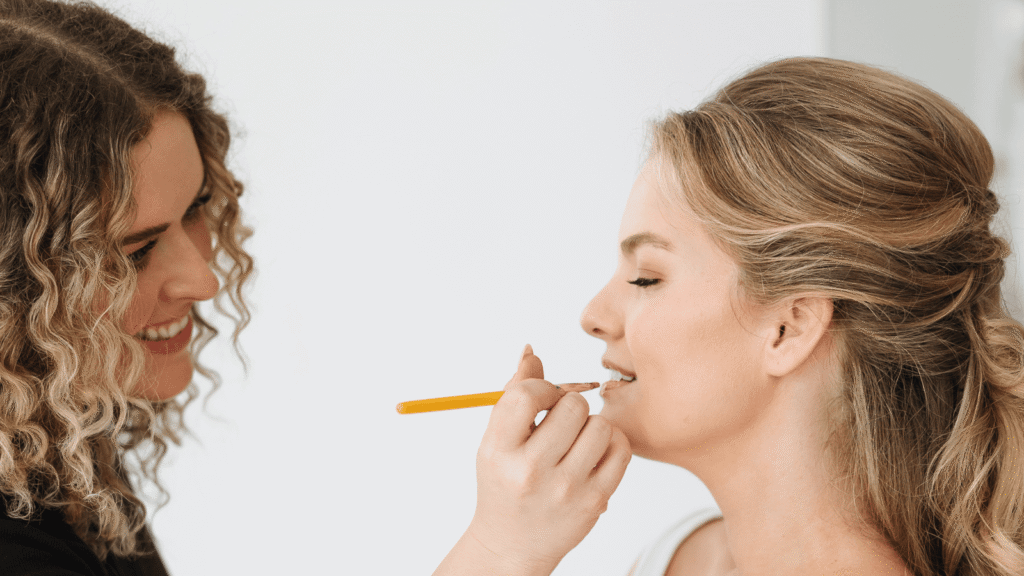
Fair skin has a reputation for being “easy” to work with, but it’s actually one of the more precise tones to get right. Small shade mismatches show up fast. Warmth that’s slightly off reads as orange. Coolness that’s slightly off reads as gray or ashy. And because fair skin often shows undertones more visibly than deeper tones, there’s less room for a product to be “close enough.”
That precision matters even more on a wedding day, where photography, lighting changes throughout the day, and hours of wear all put makeup to the test. A shade that looks right in the mirror during a quick trial swatch can behave differently once it’s been on for six hours under a mix of natural and flash photography.
Brittany Brown has spent more than 11 years building bridal looks for a wide range of skin tones, including fair skin, and has seen firsthand how often shade-matching gets treated as an afterthought when it should be one of the first decisions made. Brittany’s approach stays the same regardless of skin tone: enhance, don’t mask. Here’s how that philosophy translates specifically for fair-skinned brides.
Why Fair Skin Needs a Specific Approach
Fair skin tends to show undertones more visibly than deeper skin tones, which means the difference between a great shade match and a slightly-off one is often more noticeable. A foundation with too much yellow or gold in it can look artificially warm. One with too much pink or blue can look washed out or cool in a way that doesn’t match the rest of the skin.
Fair skin can also be more prone to visible redness, whether from sun exposure, rosacea-prone skin, or simple flushing on wedding-day nerves. That means color-correcting and base work often matter more here than they would on a tone where redness is less visible to begin with.
None of this means fair skin is harder to work with in a bad way. It just means the margin for error is smaller, which makes shade-matching and undertone identification worth getting right from the very first trial.
Building the Base
Foundation and Concealer Shade-Matching
Getting the right shade starts with identifying undertone, not just depth. Two brides can have the exact same fairness of skin but need completely different foundation formulas if one leans pink and the other leans golden.
Testing shades along the jawline, in natural light, is still one of the most reliable ways to catch a mismatch before it becomes a wedding-day problem. This is exactly the kind of detail a trial is built to catch. Seeing a shade in the mirror under trial lighting and seeing it days or weeks later on skin that may have changed slightly with the season are two different things, which is part of why testing everything ahead of time matters.
Avoiding Ashy or Overly Warm Tones
Ashy and overly warm are the two most common shade-matching mistakes on fair skin, and they tend to happen for different reasons. Ashiness often comes from a foundation with too much cool or gray undertone, or from translucent powder that oxidizes strangely against fair skin. Overly warm tones usually come from a foundation that reads fine in the bottle but skews more golden than the actual skin once it’s blended and set.
Avoiding both comes down to testing in the right conditions. A shade that looks accurate under warm indoor lighting can look completely different under daylight or flash photography, which is why testing outdoors or near a window, not just under a bathroom light, tends to catch problems before they show up in wedding photos.
Setting Without Looking Cakey
Fair skin can be more prone to showing texture through a heavy or overly powdered finish, especially in photos. A setting approach that’s too heavy-handed can flatten the skin and make it look more matte and dense than it actually is in person.
A lighter, more targeted approach to setting, focusing on areas that need more control rather than applying an even heavy layer everywhere, tends to hold up better and look more natural through the day. This is another detail worth testing during a trial, since how skin responds to setting products can vary quite a bit from one bride to the next.
Blush, Bronzer, and Lip Shades That Work
Fair skin tends to pair well with softer, more rosy or peachy blush tones rather than deep or heavily pigmented shades, which can look harsh or overly stark against lighter skin. A light hand goes a long way here, building color gradually rather than applying it heavily from the start.
Bronzer is worth using carefully on fair skin. A shade that’s too warm or too dark relative to the natural skin tone can look muddy or create an obvious line of demarcation, especially in photos. A bronzer close to the skin’s natural depth, used mainly for warmth rather than dramatic contouring, tends to look more cohesive.
Lip color has a lot of range on fair skin, from soft rosy nudes to deeper berries, depending on the rest of the look and personal preference. What matters most is testing the actual shade against the skin in person, since lip colors can look different in a tube than they do once applied and blended.
Through all of it, the goal stays consistent: a look that still feels like the bride, just elevated. That’s the outcome most brides describe once their shade-matching and base work come together correctly, and it’s worth treating as the standard rather than the exception.
For examples of how this looks in practice, the portfolio includes bridal looks built for a range of skin tones, including fair skin. Brides ready to talk through their own coloring and vision can find the easiest next step by reaching out directly.
Frequently Asked Questions
A consistent skincare routine with moisturizer and SPF in the weeks before the wedding helps foundation apply smoothly and evenly. Brides should avoid major skincare changes close to the wedding date, since new products can affect how the skin looks and behaves. A trial gives the bride and artist the best opportunity to confirm that the skin responds well to the products they plan to use.
With the right prep, shade-matching, and setting technique, a well-built look can hold through a full day of ceremony, photos, and reception. Wear time can vary based on skin type and how prone the skin is to oil or dryness, which is exactly why testing products during a trial matters before the wedding day.
Yes. Every recommendation here is a starting point, not a fixed formula. Undertone, coverage needs, and finish are all assessed and adjusted during the trial, so the final look fits the individual bride rather than a generic approach to fair skin.