
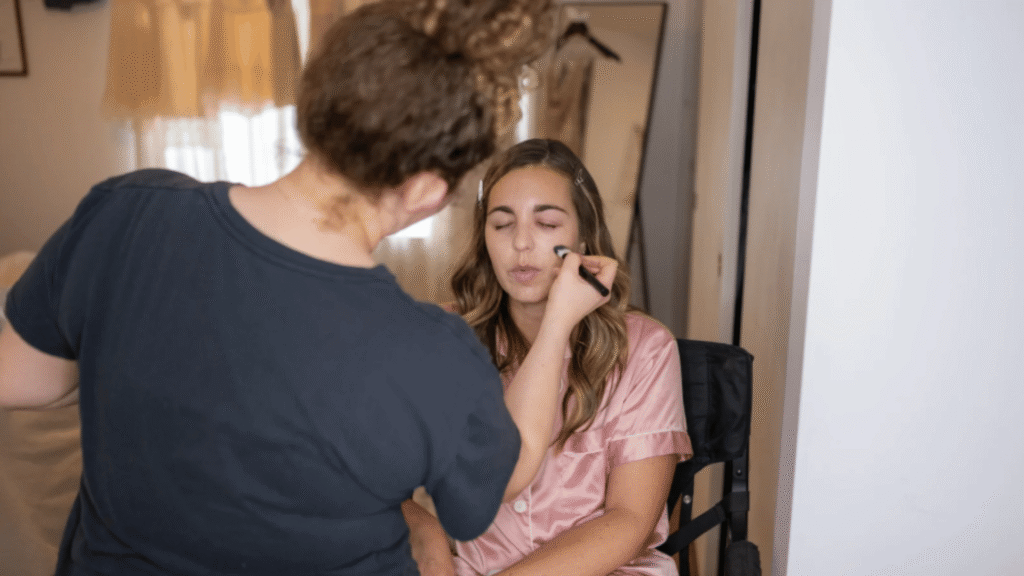
To choose the right blush shade for your skin, start with the color your cheeks turn naturally after a brisk walk. Look for a blush in that same color family, then consider your undertone, skin depth, and the rest of your wedding makeup. The goal is to recreate your natural flush with a little more definition.
Blush can look different depending on your complexion, the lighting, and the other shades in your makeup. At Brittany Brown Beauty, we consider these details when choosing a blush color and deciding how much to apply. A shade that complements your natural coloring can bring warmth and dimension to your face without overpowering the rest of your look.
The best blush shade should feel like a natural fit, working with your skin tone and tying your bridal makeup together.
Why Blush Shade Is Easy to Get Wrong
A blush that looks right in the pan can look completely different on your face. Natural coloring and undertone come first: the same blush can look rosy on one person and dull on another. The foundation underneath matters too, because a base that is slightly too light, too heavy, or too matte can mute the blush on top. Light changes the result again, since daylight, warm indoor bulbs, and camera flash each show color differently. Finally, the rest of the makeup and the way the blush is applied decide whether the color looks natural or out of place.
Most blush mistakes follow a few patterns:
- Too gray. Muted mauves and browns with a gray cast can look flat or dusty on the cheeks.
- Too bright. Very bright pinks and corals can sit on top of the skin instead of blending in, and they can stand out more under flash.
- Too warm. A strongly orange shade can look like a patch of bronzer, and on a cool or pink undertone it can turn orange.
- Too cool. Blue-leaning pinks can look chalky or ashy on some skin, especially with golden or olive undertones.
- Too strong for the rest of the look. Heavy color on the cheeks pulls attention away from soft eyes and lips.
None of these shades is wrong on its own. The mistake is a mismatch with the person wearing it and the makeup around it.
Matching Blush to Undertone
Skin tone and undertone are different things. Skin tone is how light or deep your skin looks on the surface, and it can shift with the seasons or a little sun. Undertone is the subtle color beneath the surface, and it stays the same. Two brides with the same skin depth can have different undertones, which is why one blush can look natural on one and off on the other.
Undertones usually fall into three groups:
- Warm: a golden, yellow, or peachy cast. Peach, coral, warm rose, and terracotta blushes often sit comfortably.
- Cool: a pink, red, or bluish cast. Soft pink, rose, berry, and cooler mauve often look natural.
- Neutral: a mix of the two. Neutral undertones often have a wide range, including dusty rose and soft peach-pink.
Undertone is a starting point, not a rule. Skin depth, the finish you want, your dress, the lighting at your venue, and your own taste all affect the final choice. If you are not sure which undertone you have, our article on matching bridal makeup to your skin undertone explains how to find out.
Overall coloring plays a part, too. Hair color, brow depth, and eye color change how much contrast the face carries, and that affects how much color the cheeks can hold before blush looks faint or heavy. Darker hair, for example, creates stronger contrast around the face, so a bride with dark brown hair may need a little more pigment on the cheeks to keep the look balanced. Undertone should still lead the choice. Brides with dark hair can find more ideas in our bridal makeup ideas for brunettes in Orange County.
Fair and Light Skin
Soft pinks, delicate peach, muted rose, and light apricot tend to look natural on fair and light skin because they add warmth without overpowering. Undertone helps narrow it down. A fair bride with a pink undertone may look best in soft rose, while one with a golden undertone may prefer peach or apricot.
Intensity matters more than the exact shade. Fair skin shows color quickly, so a highly pigmented blush usually needs a light hand. Start with a small amount, blend it outward, and add more only where the cheeks still look flat. Deeper or brighter shades can still work when they are sheer and well blended, but they take more care.
Medium and Olive Skin
Medium and olive complexions often look good in peach, warm rose, terracotta, soft coral, and mauve with a little warmth in it. These shades add color without turning gray or too pink against the skin. Medium skin with a cool undertone can still look lovely in rose and softer berry tones, since undertone still guides the choice.
Olive skin deserves a note. It often carries a subtle green or golden cast, so cool, blue-leaning pinks can look gray or muted instead of fresh. A warm rose or a terracotta-leaning peach often looks more natural. Swatch on the cheek rather than the hand, because the hand rarely matches the face.
Deep Skin Tones
Deeper skin tones often look best in blush with enough pigment and richness to show up without looking harsh. Light, chalky, or very frosted shades can sit on top of the skin and look gray, while a richly pigmented shade blends in and reads as color.
Berry, rich rose, coral, plum, deep peach, and terracotta are all good places to start. Undertone still matters. Warm undertones often suit coral and terracotta, while cool undertones may lean toward berry and plum.
This is about pigment, color balance, and placement, not about using more makeup. A small amount of well-pigmented blush, blended with soft edges, gives color without heaviness.
Placement Tips for a Natural Flush
Where blush sits changes the feel of the whole makeup look. On the apples of the cheeks, it looks fresh and soft. Swept a little higher toward the temples, it looks more lifted and defined.
Face shape can guide placement, but it is not a rule. On a longer face, blush placed a little more horizontally across the cheeks can add width. On a rounder face, angling it up toward the temples can add lift. Rounder, softer placement can also flatter more angular features.
How Much Blush to Use
Build blush in thin layers. Start with less than you think you need, blend the edges until no line shows, and stop when the cheeks look like a natural flush. Blush can look stronger up close than it does from a few feet away, so check it from a distance as you go.
Blush, Bronzer, and Highlighter Together
Each product has a separate job. Blush adds color, bronzer adds warmth and dimension around the edges of the face, and highlighter adds light to the high points. When all three land in the same spot, the color turns muddy. Keep the blush where the color should sit, the bronzer slightly lower and further out, and the highlighter on top of the cheekbone. Brides who skip bronzer or highlighter can let blush do more of the work.
Keeping Blush in Balance With the Rest of the Look
Blush should support the other products, not compete with them. A soft eye and a natural lip can handle a little more color on the cheeks. A bold lip or a dramatic eye usually calls for a softer cheek. If you are still weighing your options, our article on soft glam vs. natural bridal makeup shows how each style photographs, and it is a good source of bridal makeup ideas. Either way, the finished look should still feel like you, just more polished.
How Lighting and Photos Change Blush
Lighting changes how visible blush looks. Bright daylight at an outdoor ceremony can wash out a soft shade, while flash and warm reception lighting can make the same shade look stronger. That is why it helps to see your blush in daylight, indoors, and in photographs before the wedding.
Testing Your Blush at a Bridal Makeup Trial
A bridal makeup trial is a reliable way to settle a blush choice. It lets you and your artist see the shade on your actual skin, next to the rest of the makeup, and adjust before the wedding day. If you are planning a wedding in Orange County, a trial also helps you choose the right blush shade for your skin with your dress and overall look in mind.
Testing is especially useful when:
- You are trying a new product.
- You are choosing between noticeably different shades, such as a soft peach and a deeper rose.
- You have concerns about skin sensitivity. Tell your artist about any sensitivities, reactions, or recent treatments so products can be chosen with that in mind.
- You want to confirm how the color looks in photographs and different lighting.
- Longevity matters because you have a long wedding day ahead.
No blush can be promised to look the same throughout the ceremony and reception. Wear depends on your skin type, the products used, the weather, and how active the day is. At a trial, you can wear the makeup for a few hours, see how the blush settles, and change the product or placement if needed. Our article on what to expect during a bridal makeup trial explains how the appointment works and what to bring.
Schedule a Consultation
Brittany Brown Beauty provides mobile bridal hair and makeup services for weddings and special events, with a strong presence in Orange County and surrounding areas. A consultation or bridal makeup trial is a good way to find the blush shade that suits your coloring, your dress, and your wedding-day look. Click the button below to schedule a consultation online.
Frequently Asked Questions
Skin prep helps blush apply evenly and look its best. Keep your routine consistent before the wedding and avoid new products or treatments in the final 10 days. Arrive at your trial with minimal makeup so your artist can assess your natural skin and coloring.
There is no set wear time we can promise. How long blush lasts depends on your skin type, the products used, how they are applied, the weather, and how active your day is. Heat, humidity, hugs, and happy tears all play a part. A trial helps you see how the makeup approach holds up over several hours, so any adjustments can be made before the wedding day.
Blush can appear softer or more noticeable depending on the lighting, camera, foundation, and overall makeup. A shade that looks subtle in person may photograph differently under bright outdoor light or flash. Testing the blush during your trial helps you see how the color works on your actual skin and alongside the rest of your makeup.
Your blush does not need to exactly match your lipstick, but the colors should work together. A warm peach or coral blush can complement warm-toned lips, while rose, mauve, or berry shades may work well with cooler lip colors. The overall makeup should feel balanced rather than having one color compete with another.
Yes. Blush selection can be adjusted for your skin tone, undertone, and skin type, along with the finish you prefer, your overall makeup, and your personal taste. A cream formula and a powder can behave differently on dry or oily skin, and a matte and a satin finish can change how defined the color looks. A trial lets you compare options on your own skin.