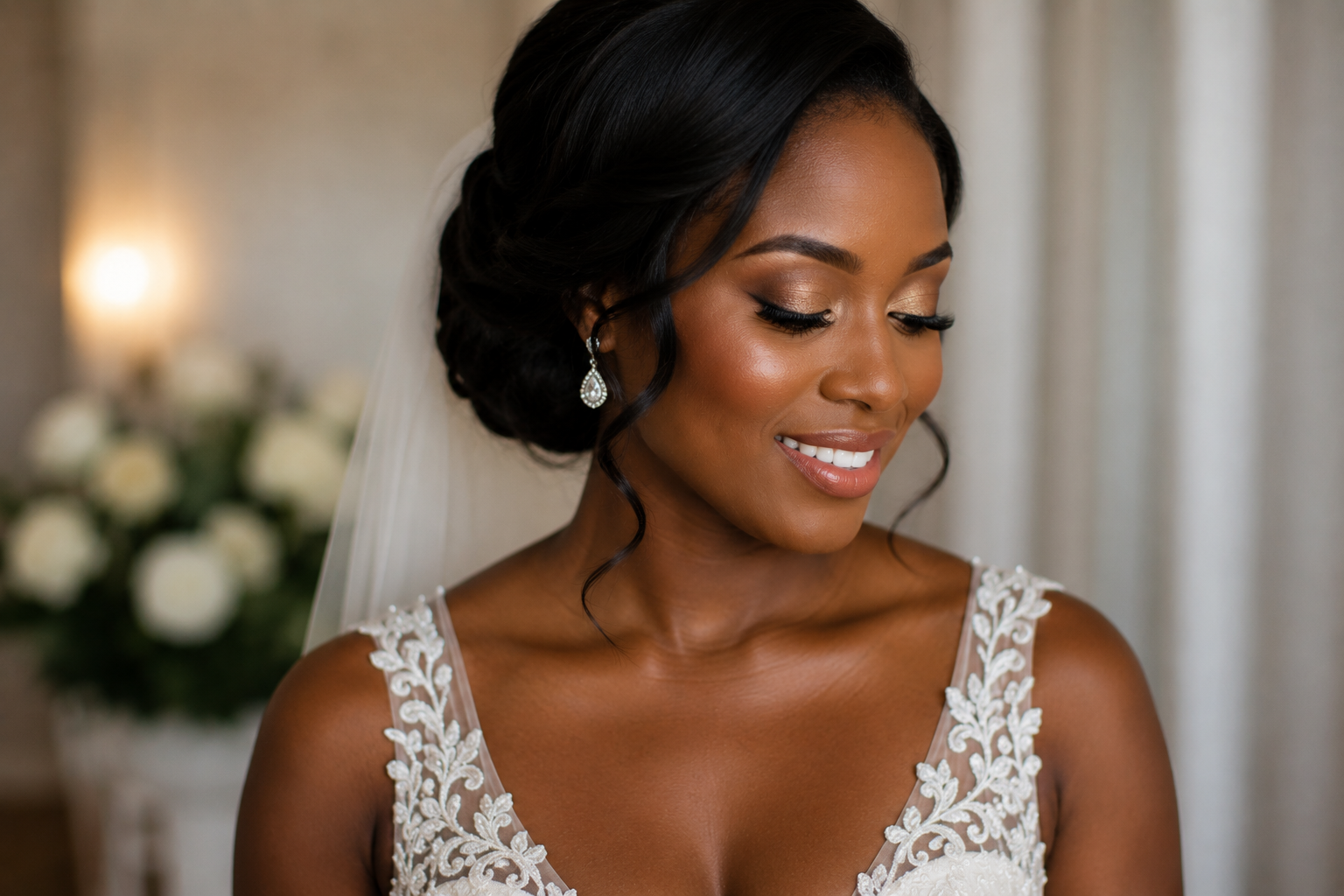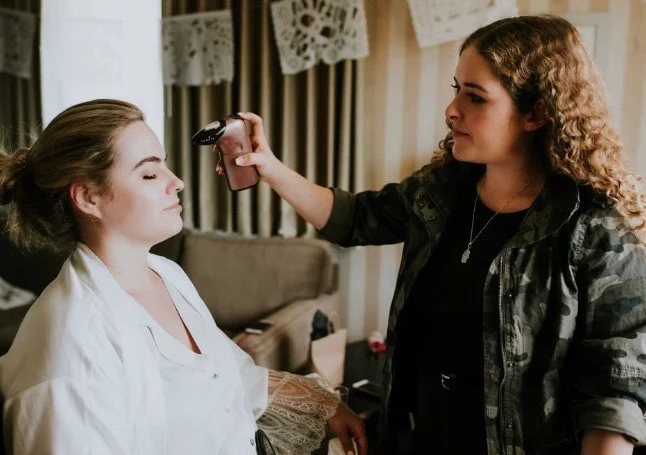
Natural bridal makeup for an outdoor wedding should look soft and effortless while still providing enough definition for professional photography. Bright sunlight, changing weather, wind, heat, humidity, and long photography sessions can all affect how makeup appears and wears throughout the wedding day.
A successful natural bridal look does not mean avoiding makeup or using only a small amount of product. It involves carefully selected complexion products, balanced eye definition, natural-looking lashes, controlled highlighting, and colors that remain visible in outdoor photographs.
Brittany Brown Beauty creates personalized bridal makeup based on the bride’s features, skin type, wedding location, photography conditions, and preferred level of coverage.
What Is Natural Bridal Makeup?
Natural bridal makeup enhances the bride’s features without creating a heavy or overly dramatic appearance.
The look may include:
- Lightweight or medium foundation
- Natural skin texture
- Softly defined eyebrows
- Neutral eyeshadow
- Thin or softly blended eyeliner
- Natural-looking lashes
- Warm blush
- Light bronzer
- Controlled highlighting
- Nude, peach, rose, or mauve lips
The finished makeup should feel like an elevated version of the bride’s everyday appearance.
Natural bridal makeup can still include professional complexion correction, waterproof eye products, false lashes, setting powder, and long-wear techniques. The difference is that each product is applied in balanced layers.
Why Outdoor Photography Changes the Makeup Plan
Outdoor wedding photography can include bright sunlight, shaded portraits, golden-hour images, cloudy conditions, sunset photographs, and professional flash.
Each lighting condition affects how makeup appears.
Bright natural light may make skin texture, foundation matching, powder, and highlighting more noticeable. It can also reduce the visible contrast around the eyes, cheeks, and lips.
For this reason, natural outdoor bridal makeup usually needs:
- Even complexion coverage
- Subtle eye definition
- Visible blush
- Balanced bronzer
- Controlled shine
- A defined lip color
- Proper foundation matching
The look should remain natural at close range while still showing clearly in photographs.
Natural Does Not Mean Invisible
Very minimal makeup may look attractive in a mirror but appear less defined in professional photographs.
Outdoor sunlight can reduce facial contrast. Without enough definition, the eyes may appear smaller, the cheeks may lose color, and pale lip shades may blend into the complexion.
A natural camera-ready look may use slightly more:
- Blush
- Eyeliner
- Lash definition
- Brow structure
- Lip color
- Complexion correction
The application should still be softly blended so the makeup does not appear heavy.
Match the Look to the Outdoor Venue
The wedding location should influence the makeup plan.
Beach Weddings
Beach ceremonies may involve ocean air, wind, humidity, direct sunlight, and sand.
A beach bridal look may include:
- Lightweight foundation
- Waterproof eye products
- Natural lashes
- Controlled powder
- Soft bronzer
- Peach or rose blush
- Long-wear lip color
- Setting spray
Brides planning a coastal ceremony can review the guide to outdoor wedding makeup that lasts in heat and humidity.
Garden Weddings
Garden weddings often suit fresh skin, neutral eye makeup, warm blush, natural lashes, and softly defined lips.
The makeup should remain polished during outdoor portraits while complementing flowers, greenery, and natural surroundings.
Estate Weddings
Private estates may include both outdoor and indoor settings.
The makeup should work across:
- Bright ceremony light
- Shaded portraits
- Indoor preparation
- Flash photography
- Evening reception lighting
A satin or natural complexion finish can provide balance across these conditions.
Vineyard Weddings
Vineyard weddings may involve warm temperatures, dry air, long outdoor periods, and photography during changing daylight.
Long-wear complexion products, waterproof eye makeup, controlled powder, and a defined lip color can support the full schedule.
Outdoor Resort Weddings
Resort weddings may combine poolside areas, gardens, terraces, coastal views, indoor ballrooms, and evening receptions.
The makeup should transition naturally between each setting.
Choose the Right Foundation Coverage
Foundation coverage should be selected according to the bride’s skin, comfort level, and photography preferences.
Light Coverage
Light coverage allows more natural skin texture to remain visible.
It may suit brides who:
- Rarely wear foundation
- Have relatively even skin
- Prefer a minimal appearance
- Want freckles to remain visible
- Feel uncomfortable in heavier products
Spot concealing can be used where additional correction is needed.
Medium Coverage
Medium coverage creates an even complexion while maintaining a natural appearance.
It is often suitable for outdoor wedding photography because it can balance redness, discoloration, or uneven areas without looking overly heavy.
Full Coverage
Full coverage may help balance acne marks, visible discoloration, or uneven skin tone.
For a natural result, full coverage should be built in lightweight layers rather than applied heavily across the entire face.
The artist may customize coverage by using more product only where needed.
Foundation Matching in Natural Light
Foundation must match both the bride’s skin depth and undertone.
A shade that is too light may appear pale or gray in photographs. A foundation that is too warm may look orange, while an overly cool shade may create a visible difference between the face and body.
Foundation should blend naturally into the:
- Jawline
- Neck
- Ears
- Chest
- Shoulders
Outdoor sunlight may make small foundation mismatches more visible than indoor lighting.
The artist should also consider whether the bride will wear a strapless dress, low neckline, open back, or another style that exposes more skin.
Dewy, Satin, or Matte Finish
The correct complexion finish depends on the bride’s skin type, wedding location, expected temperature, and preferred appearance.
Dewy Finish
A dewy finish creates a luminous and fresh appearance.
It may work well for dry or normal skin, but excess shine should be controlled carefully during outdoor photography.
Highlighting products should be applied strategically rather than across the entire face.
Satin Finish
A satin finish balances radiance and shine control.
It often works well for outdoor weddings because the skin can look healthy without appearing overly glossy in sunlight.
Matte Finish
A matte finish can help control oil during warm weather or long outdoor ceremonies.
The skin should still maintain natural dimension through blush, bronzer, and carefully placed highlighting.
Brides comparing complexion options can read the guide to dewy vs. matte bridal makeup.
Prepare the Skin for Outdoor Makeup
Skin preparation affects how naturally the makeup applies and how well it lasts.
In the weeks before the wedding:
- Follow a consistent skincare routine
- Use products suitable for the skin type
- Keep the skin hydrated
- Avoid aggressive treatments near the wedding
- Do not over-exfoliate
- Avoid testing strong unfamiliar products
- Mention allergies and sensitivities
- Follow the artist’s preparation instructions
The goal is calm, balanced skin rather than introducing several new treatments immediately before the wedding.
Visit the bridal beauty resources for additional preparation guidance.
Use Lightweight Complexion Layers
Natural bridal makeup usually looks more realistic when complexion products are applied in thin layers.
The artist may use:
- Lightweight moisturizer
- Skin-specific primer
- Color corrector
- Thin foundation layers
- Targeted concealer
- Carefully placed powder
- Setting spray
Layering allows the artist to add coverage where needed without hiding the bride’s natural skin texture.
Heavy foundation applied in one layer may become more visible in bright sunlight.
Control Shine Without Flattening the Skin
Outdoor heat and sunlight can increase visible shine, especially around the forehead, nose, upper lip, and chin.
Shine control may involve:
- Lightweight primer
- Oil-control products
- Targeted setting powder
- Blotting papers
- Long-wear foundation
- Setting spray
Powder should be applied strategically.
Too much powder can make the skin look dry or textured in close-up photographs. The goal is to control unwanted shine while preserving a healthy finish.
Natural Eye Makeup for Outdoor Photography
Natural bridal eye makeup should define the eyes without looking overly dark or dramatic.
Popular shades include:
- Soft brown
- Taupe
- Champagne
- Bronze
- Rose gold
- Mauve
- Soft peach
- Warm neutral shades
The artist may use:
- A light base shade
- Soft crease definition
- A slightly deeper outer corner
- Subtle shimmer
- Thin eyeliner
- Waterproof mascara
- Natural-looking lashes
The eye makeup should be adjusted according to the bride’s eye shape.
Eyeliner That Looks Soft on Camera
Eyeliner can help the eyes remain visible in outdoor photographs.
Possible options include:
- Thin brown eyeliner
- Soft black eyeliner
- Smudged pencil liner
- Tightlining
- Small outward extension
- Dark eyeshadow used as liner
A thick or sharply defined line may feel too dramatic for some natural bridal looks.
Softly blended eyeliner can add definition without overpowering the eyes.
False Lashes for a Natural Bridal Look
False lashes are optional, but they can provide additional definition in photographs.
Natural options may include:
- Individual lashes
- Half lashes
- Wispy lashes
- Lightweight strip lashes
- Graduated lashes
The lashes should suit the bride’s eye shape and comfort level.
Very heavy lashes may hide the eyes or make the look feel less natural.
Define the Brows Softly
Brows frame the face and affect how the eyes appear in photographs.
The artist may:
- Fill sparse areas
- Improve symmetry
- Define the natural shape
- Set the hairs in place
- Match the brow color to the bride’s features
The brows should look polished without appearing overly dark, square, or sharply drawn.
Blush for Outdoor Wedding Photography
Blush is important because bright sunlight can reduce visible facial color.
Suitable shades may include:
- Soft peach
- Warm rose
- Dusty pink
- Mauve
- Coral
- Soft berry
The correct shade depends on the bride’s skin tone, undertone, lip color, and wedding style.
Blush may appear slightly stronger in person than expected but become more balanced in photographs.
Bronzer and Contour
Bronzer can add warmth to the complexion, while contour can create subtle structure.
For natural bridal makeup, these products should be softly blended.
Bronzer may be applied around the:
- Forehead
- Cheekbones
- Jawline
- Sides of the face
Contour should not create harsh lines that become visible in bright outdoor light.
The goal is natural dimension rather than dramatic sculpting.
Use Highlighter Carefully
Highlighter can create a fresh glow, but outdoor sunlight may intensify reflective products.
Excess highlighter may look oily or overly shiny in photographs.
A natural application may focus on:
- Upper cheekbones
- Inner corners of the eyes
- Brow bone
- A small amount on the bridge of the nose
- Cupid’s bow
Highly glittery or metallic highlighters may be less suitable for a soft natural look.
Choose a Lip Color That Remains Visible
Very pale nude lip colors may disappear in outdoor photographs.
Natural bridal lip options include:
- Pink nude
- Peach nude
- Rose
- Mauve
- Soft berry
- Warm brown
- Muted coral
Lip liner can help define the shape and improve wear time.
The final lip color should complement the bride’s complexion, blush, eye makeup, dress, and flowers.
Waterproof and Long-Wear Products
Outdoor ceremonies may involve heat, humidity, wind, happy tears, and extended photography.
Long-wear preparation may include:
- Waterproof mascara
- Waterproof eyeliner
- Long-wear foundation
- Transfer-resistant lip color
- Secure lash adhesive
- Targeted setting powder
- Setting spray
Waterproof does not mean the makeup should feel heavy. The artist can still maintain a soft finish through lightweight application.
Plan for Heat and Humidity
Heat may increase oil production and perspiration, while humidity can affect both complexion products and eye makeup.
The artist may adjust:
- Primer
- Foundation formula
- Powder placement
- Eye products
- Lash adhesive
- Setting spray
- Lip products
Heavy skincare and thick makeup layers may move more easily in warm conditions.
Thin, controlled layers often create a more flexible finish.
Plan for Wind
Wind can affect both the bride’s hair and makeup experience.
Strong wind may cause:
- Hair to move across the face
- Eyes to water
- Lashes to lift
- Veils to shift
- Dust or sand to contact the skin
- Lip products to transfer onto hair
A secure hairstyle, waterproof eye products, strong lash adhesive, and balanced lip texture may help reduce these issues.
Consider the Time of Day
Outdoor lighting changes throughout the wedding day.
Morning Weddings
Morning light may appear cool, soft, or bright depending on the location.
Natural makeup with balanced skin, soft eyes, and warm blush can photograph well.
Midday Weddings
Midday sunlight can be strong and create sharper shadows.
Complexion matching, shine control, and enough eye and cheek definition become especially important.
Golden-Hour Weddings
Golden-hour light is warm and soft.
Bronze, champagne, rose, peach, and warm neutral tones can complement this lighting.
Sunset and Evening Weddings
Makeup may need slightly stronger definition if the ceremony transitions into darker evening photography.
The look should work under both natural light and flash.
Coordinate With the Photographer
The photographer’s lighting style can influence how the makeup appears.
Useful details include:
- Whether most photographs will be outdoors
- Whether flash will be used
- Whether portraits are planned at midday
- Whether golden-hour photography is scheduled
- Whether indoor reception portraits are included
- Whether the editing style is bright, warm, moody, or natural
The makeup should remain balanced across the expected photography conditions.
Schedule a Bridal Makeup Trial
A bridal trial allows the bride to test the natural outdoor makeup look before the wedding.
During the trial, discuss:
- Foundation coverage
- Complexion finish
- Eye definition
- Eyeliner
- False lashes
- Brow shape
- Blush
- Bronzer
- Highlighter
- Lip color
- Product sensitivities
- Venue conditions
- Photography schedule
Bring photographs of the dress, venue, flowers, hairstyle, and makeup inspiration.
The guide explaining what happens during a bridal makeup trial can help with preparation.
Test the Makeup in Different Lighting
After the trial, review the makeup in:
- Natural window light
- Direct outdoor light
- Shade
- Indoor lighting
- Phone photographs
- Professional camera photographs
- Flash photography
A makeup look may appear different as the lighting changes.
Testing it in several conditions can help identify whether more definition or shine control is needed.
Wear the Trial Makeup for Several Hours
The bride should observe how the trial makeup wears over time.
Review:
- Foundation separation
- Shine
- Dryness
- Creasing
- Lash comfort
- Lip color wear
- Blush visibility
- Overall comfort
The bride can then discuss any adjustments with the artist before the wedding day.
Plan the Wedding-Day Timeline
The beauty schedule should include:
- Artist arrival and setup
- Skin preparation
- Makeup application
- Hairstyling
- Getting dressed
- Detail photography
- First-look photographs
- Travel to the ceremony
- Final touch-ups
- Unexpected delays
The bride’s makeup should be completed early enough for dressing and photography without feeling rushed.
Prepare a Suitable Getting-Ready Space
The artist needs a clean and practical workspace.
The preparation area should include:
- Natural or bright lighting
- A table or clear surface
- A comfortable chair
- Electrical outlets
- Ventilation
- Access to water
- Enough room for equipment
- A clean floor
Food, drinks, clothing, and personal items should be kept away from the artist’s tools.
Create a Touch-Up Kit
A small touch-up kit may include:
- Lip color
- Lip liner
- Blotting papers
- Pressed powder
- Tissues
- Cotton swabs
- Lash adhesive
- Small mirror
Blot excess shine before applying additional powder.
Repeatedly adding heavy powder can create visible texture.
Mistakes to Avoid
Common outdoor bridal makeup mistakes may include:
- Selecting the wrong foundation shade
- Applying too much powder
- Using excessive highlighter
- Wearing an extremely pale lip color
- Skipping waterproof eye products
- Applying heavy skincare before makeup
- Trying unfamiliar products close to the wedding
- Ignoring the weather forecast
- Choosing makeup without considering photography
- Skipping the bridal trial
Planning around the actual venue and schedule can help avoid these issues.
Questions to Ask the Makeup Artist
Useful questions include:
- How will the makeup be adjusted for outdoor photography?
- Which foundation finish suits my skin?
- Will the products withstand heat and humidity?
- Are waterproof eye products used?
- Are false lashes included?
- How much coverage is recommended?
- How should I prepare my skin?
- What should I bring to the trial?
- Will I receive a touch-up lip color?
- Can the makeup work in both daylight and flash?
- Do you provide on-location services?
- How long will the appointment take?
Brittany Brown Beauty provides on-location bridal makeup services in Orange County for beach, garden, resort, estate, hotel, and other wedding settings.
Frequently Asked Questions
Will natural bridal makeup show in outdoor photographs?
Yes, when the complexion, eyes, brows, cheeks, and lips include enough balanced definition. Natural makeup should still be structured for photography.
Should outdoor bridal makeup be matte?
Not necessarily. Dewy, satin, and matte finishes can all work. The correct choice depends on the bride’s skin type, weather, lighting, and preferred appearance.
Is foundation necessary for a natural bridal look?
Foundation is optional, but lightweight or medium coverage may help create an even complexion for photography. Spot concealing may also be used.
Should I wear false lashes outdoors?
False lashes are optional. Individual, half, or lightweight lashes can add definition without making the look appear overly dramatic.
How can bridal makeup last in heat?
Skin-specific preparation, thin complexion layers, waterproof products, controlled powder, and setting spray can support longer wear.
Will highlighter look too shiny outdoors?
It can if applied heavily. Strategic placement and a subtle formula can create glow without excessive reflection.
What lip color works best for outdoor photography?
Rose, peach, mauve, warm nude, soft berry, and muted coral shades can create natural definition. Very pale nude shades may appear less visible.
Is a bridal trial important for an outdoor wedding?
A trial can help test coverage, finish, lashes, colors, product comfort, and wear time under lighting similar to the wedding environment.
Book Natural Bridal Makeup for an Outdoor Wedding
Natural bridal makeup for outdoor photography should enhance the bride’s features, remain comfortable in real weather conditions, and create enough definition for professional photographs.
Brittany Brown Beauty provides personalized on-location bridal makeup throughout Orange County. Each look is planned around the bride’s skin type, features, wedding venue, photography conditions, and preferred level of coverage.
Explore the bridal hair and makeup portfolio or contact Brittany Brown Beauty to discuss the wedding date, outdoor venue, beauty preferences, and photography schedule.