
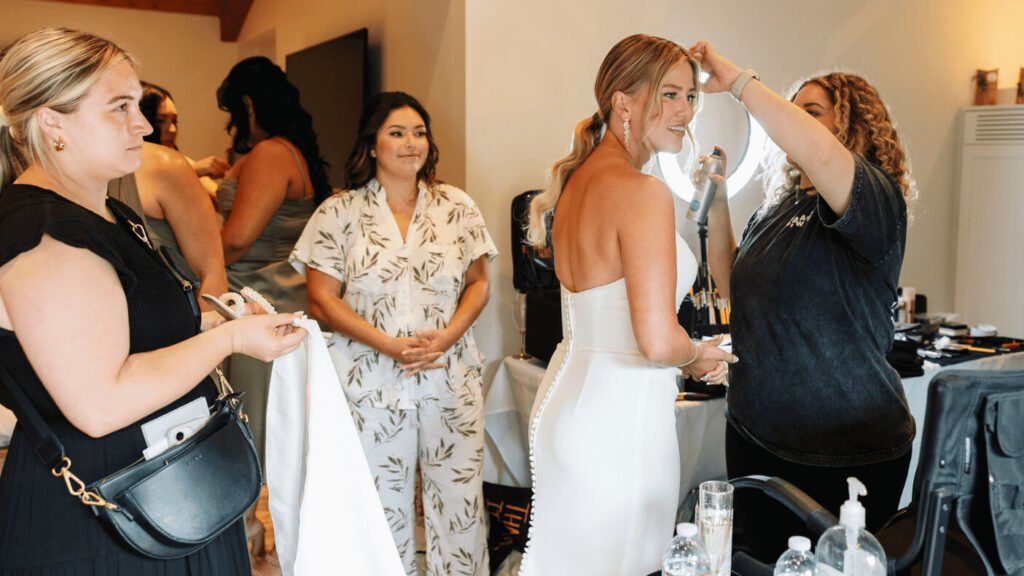
Textured bridal waves have defined bends and visible movement. The finish is less uniform than a row of matching curls. Some waves are tighter, some looser, and the ends may fall in different directions. The result looks polished without looking rigid.
Brides often choose this style for its balance. The waves give structure for photographs, and the texture keeps the hair soft around the face. It can also support a veil or accessory without looking stiff.
Brittany Brown Beauty provides mobile bridal hair and makeup across Orange County, San Diego and surrounding areas. This article explains what shapes textured waves, how a stylist builds them and what to consider for a coastal wedding. Use it to collect wedding hair ideas and plan bridal hairstyles in Orange County before your trial.
What Defines Textured Waves vs Smooth Curls
Smooth curls are uniform. Each curl has the same size, the same spacing and the same direction. They look sleek and matched. Textured waves keep the bend but vary the details.
Four elements separate the two looks:
- Wave shape: Smooth curls repeat the same spiral. Waves form broader, S-shaped bends.
- Spacing and definition: Waves can sit at different depths along the hair. Some are crisp and some are soft.
- Direction: Alternating curl directions create a more relaxed finish. Matching directions create a polished, uniform one.
- Volume: Texture adds body and lift. A tightly defined curl pattern adds less movement between curls.
What happens after curling matters as much as the curling itself. Brushing, separating and arranging the hair can change the pattern completely. A stylist may brush through cooled curls to turn them into waves, then reshape pieces by hand.
Textured waves do not have to look messy. They can look polished and intentional. A defined wave with a neat part and controlled ends reads as styled. Texture does not mean a lack of definition.
The result depends on your natural hair texture, length, density and cut. It also depends on the styling technique. No single method works equally well for every hair type, so the plan adjusts to your hair.
Achieving the Look
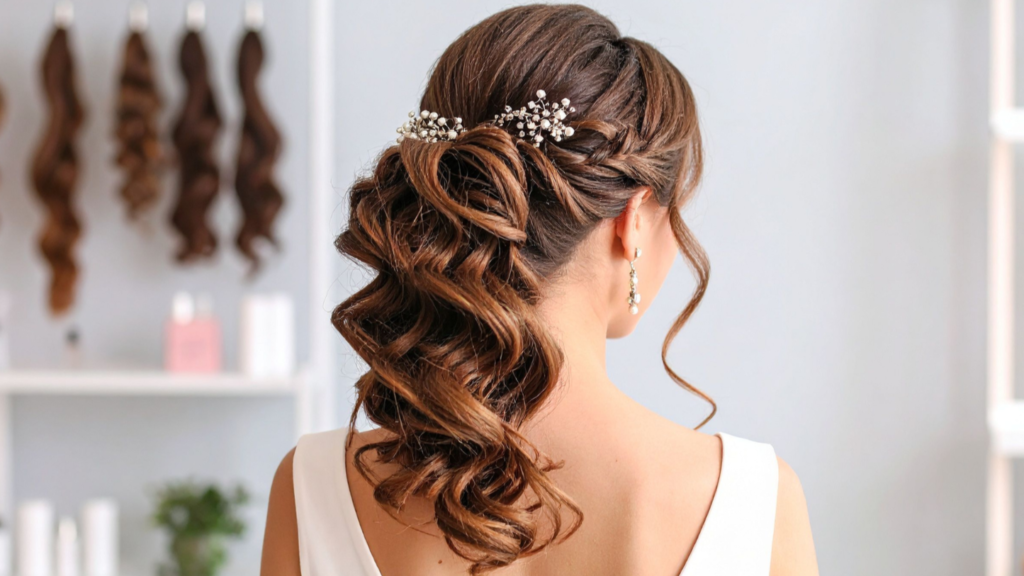
A stylist may follow a sequence like this one. The steps can change with your hair and your venue, so treat it as a framework, not a formula.
- Prepare the hair. Preparation helps the hair take a shape and hold it.
- Section the hair. Section size controls how defined or loose each wave becomes.
- Curl in varied directions. Mixed directions create movement and a relaxed finish.
- Let the curls cool. Cooling helps the shape settle before it is handled.
- Separate and arrange. This step softens the pattern and builds the final silhouette.
- Add support. Pins and finishing products give the style structure where it needs it.
- Check every angle. Front, sides and back each need to look balanced.
Tools and Techniques for Texture
The stylist selects curling tools and section sizes for the wave pattern you want. Hair length and natural texture guide the choice. A curling iron, a wand or hot rollers can all produce waves. Each leaves a slightly different shape.
Section size is one of the biggest controls. Smaller sections tend to produce tighter, more defined waves. Larger sections give broader, looser bends. Mixing section sizes in one head of hair creates a natural, irregular look.
Direction adds movement. Curling some sections toward the face and others away breaks up the pattern. It stops the waves from lining up like a row. It also changes how light moves across the hair.
Two examples show how the plan shifts. A bride with fine, straight hair who wants a loose look may need larger sections and more support. That helps the waves keep their shape. A bride with thick, naturally wavy hair may need less shaping. The stylist defines her existing pattern and refines the pieces around the face.
The ends can go either way. A stylist may leave them curled for a fuller finish. Or the ends may be reshaped and softened for a more relaxed look. The choice depends on your hair and the finish you want.
Brushing or gently separating the curls softens the pattern and opens the waves into larger shapes. The setting stage below explains when to do it.
The final shape also has to suit your outfit, veil and accessories. A veil may need a firm area to attach, so the stylist may leave a section less loose. Use the trial to find that balance.
Products That Enhance Natural Movement
Styling products each have a general role. Which ones a stylist uses depends on your hair’s condition, texture and density, and the finish you want.
- Preparation products: These add grip or help hair take a curl. Some brides need more help here than others.
- Heat protection: This goes on before hot tools. It is a standard part of styling with heat.
- Volume or grip products: These add body and give pins something to hold. They matter most on fine or silky hair.
- Finishing products: These set the final shape. A light application keeps movement. A heavier one makes waves stiffer.
Too much product can weigh the hair down and reduce movement. Too little support may make the style harder to shape. The right amount is different for each person. A trial helps the stylist find it.
No product prevents frizz or humidity changes, and none suits every hair type. Brand choice and ingredients vary, so ask your stylist what they plan to use and why.
Setting for the Best Possible Hold
Setting the waves before final shaping gives the stylist more control. Warm hair is still pliable. Cooled hair keeps the pattern the tool created. Handling it too soon can pull the waves apart.
- Cool first: Allow curls or sections to cool before separating them, where appropriate.
- Arrange after the shape forms: Position the waves once the pattern is set.
- Add discreet pins: Place them where the style needs extra structure.
- Finish selectively: Use finishing products only where they help.
- Check all sides: View the style from the front, sides and back.
How well the style holds depends on your hair’s natural characteristics and the styling method. Products, weather and activity matter too. No one can guarantee that waves will last all day or remain unchanged.
Adapting Textured Waves to Southern California Coastal Conditions
Weddings in Orange County and San Diego often involve coastal air. Humidity can change definition, volume and frizz. Waves that looked crisp indoors may relax or spread outdoors. The article on bridal hairstyles that hold up in Southern California humidity covers more of these effects.
Sea air and wind affect loose waves in particular. A breeze lifts and tangles them. Salt in the air can add a slightly rougher feel. These changes can look natural in photos, but they do change the shape. The article on bridal hairstyles for beach weddings looks at shoreline settings.
A beach ceremony needs different planning than an indoor reception. A moving breeze suggests firmer sectioning and more structure. A controlled indoor setting may allow looser, softer waves. Many weddings include both, so the plan often needs to cover each.
The stylist can adjust the preparation, sectioning, setting and finishing choices based on your hair and your venue. Brittany’s on-location process, as described on the site, covers arrival, preparation, styling to your vision and setting the look. The details change with each bride.
Share your ceremony location, outdoor photography plans and getting-ready schedule before the appointment. These details let the stylist plan for textured bridal waves in Orange County conditions, not general ones. No technique or product eliminates humidity or wind effects, and no one can promise the hairstyle will stay intact.
Who This Style Works Best For
Textured waves suit brides who want movement without tightly defined curls. They can work across a range of lengths and natural textures. Each changes the final shape.
- Shoulder-length hair: Waves sit as soft bends near the shoulders and can look light.
- Long hair: Length adds weight, which pulls waves down. A stylist may add support or create larger bends.
- Naturally wavy or curly hair: The stylist often works with the existing pattern, shaping instead of building it.
- Straight hair: Waves may need more support to hold their shape.
Layers, density and curl pattern all affect the result. Layers add volume and movement. Dense hair carries more weight and often holds a shape well. Fine hair may need extra lift. The guide to bridal hairstyles by hair type offers more on how texture and density shape the options.
The style also works with veils, hairpins, combs and other accessories. A comb or pin can sit in a section with a bit more structure while the rest stays loose. The explainer on combs, pins and tiaras helps you choose.
A trial helps establish realistic expectations for your own hair. Textured waves are not unsuitable for any age, face shape or hair type, but results vary. See how they look on your hair before the wedding day. The portfolio shows finished hairstyles you can use as references.
What to Bring to Your Hair Trial
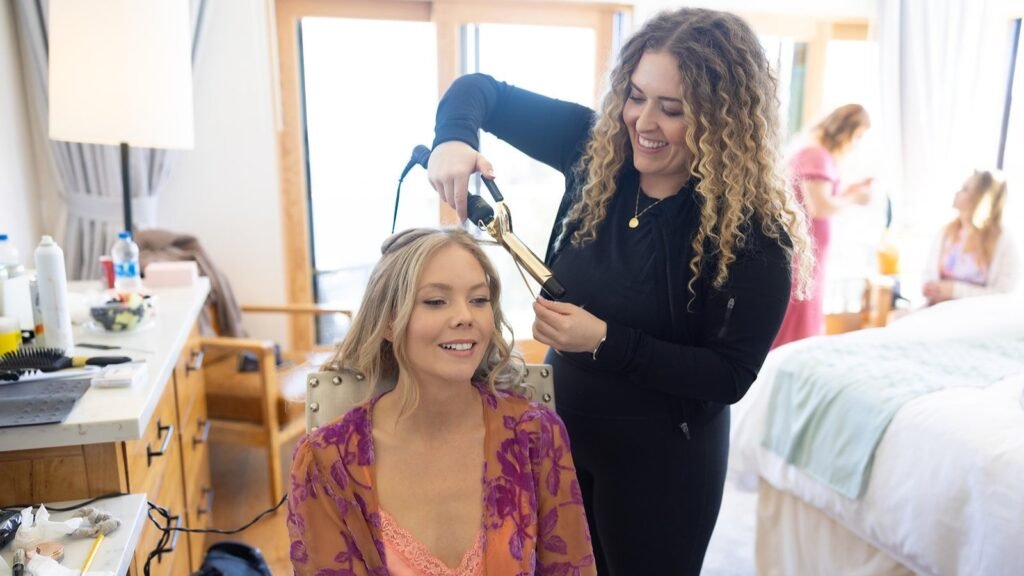
A trial helps the stylist assess the desired shape, product needs, accessory placement and practical options. Prepare these items:
- Reference images: Show the wave pattern and overall finish you like. Results depend on your own hair.
- Your veil and hair accessories: Bring them if you have them, so the stylist can test placement.
- Outfit and neckline details: The neckline affects how the style sits and which angles show.
- Venue and weather information: Share the setting, outdoor photography and local conditions.
- Notes about your hair: Describe your natural texture, your usual routine and any concerns about keeping a style in place.
The trial is also where you test how the style feels and how the veil attaches. It cannot guarantee identical results in different weather. You can read more about Brittany’s approach on the About page. The article on how many bridal trials you need can help you plan.
Planning Your Wedding Hairstyle
When you inquire, share your wedding date, venue, getting-ready location, ceremony time and preferred hairstyle. These details help Brittany assess availability and understand the day’s requirements. Questions can go through the contact page. Click the button below to schedule a consultation online.
Frequently Asked Questions
Brittany typically schedules about 90 minutes for the bride. Hair is one part of that time, and its share varies. Length, density, texture and the amount of support the style needs all affect it. Accessories matter too. Ask for your own estimate at the trial.
They can hold up well with planning, but humidity may soften the pattern or add frizz. Setting, sectioning and finishing choices help. The venue, time of day and your hair type still affect the result. No style is immune to coastal weather.
Combs, pins, clips and veils all work with waves. They usually sit best in a section with more structure. Heavy pieces may need extra support. Test each one at the trial to see how it moves with your hair.
It depends on your hair and your stylist’s recommendations. Some hair holds a style better with a little texture. Others need a fresh wash. Ask what to do before your trial, then repeat it on the wedding day. See the guide to prepping your hair before your wedding.
Yes, with adjustments. Fine hair may need more support. Naturally curly hair is often shaped instead of rebuilt. The article on styling curly and textured hair for your wedding covers that approach. No single technique works for every hair type.