
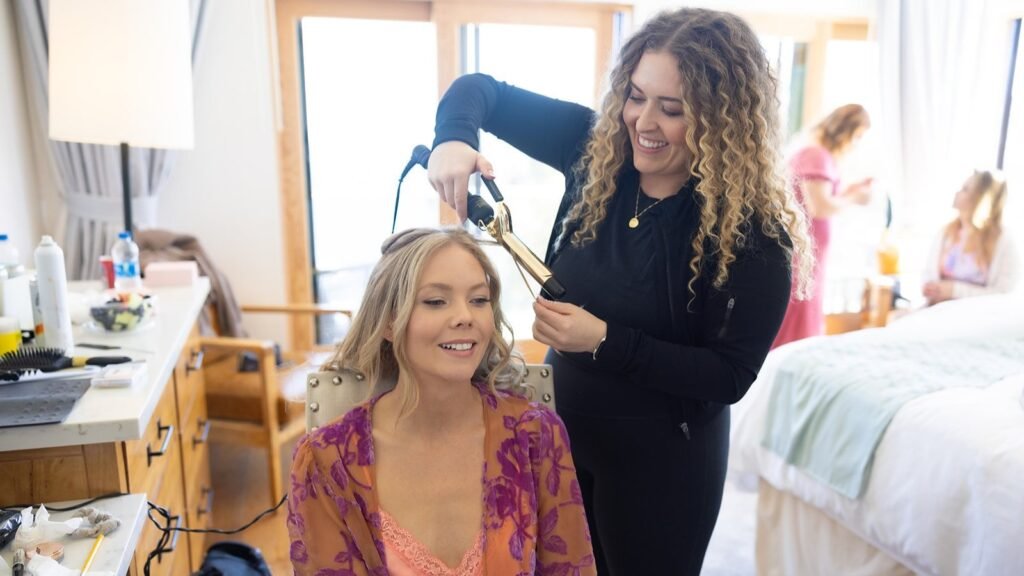
Your wedding hair frames your face in every portrait, works with your veil and dress, and has to handle a full day of hugs, dancing, and Southern California weather. A bridal hair trial lets you see how all of that comes together before the day arrives.
This guide covers what to bring, what to ask, and how to plan the appointment so you walk into your wedding morning knowing what to expect. Brittany Brown is a mobile bridal hair and makeup artist based in Orange County with 11+ years of experience. She serves weddings across Orange County and San Diego, and her approach stays the same for every bride: natural, radiant looks that help you feel like yourself, but elevated. If you are still deciding on a direction, her guide on how to choose the right bridal hairstyle for your wedding day is a good place to start before your trial.
Why a Hair Trial Is as Important as a Makeup Trial
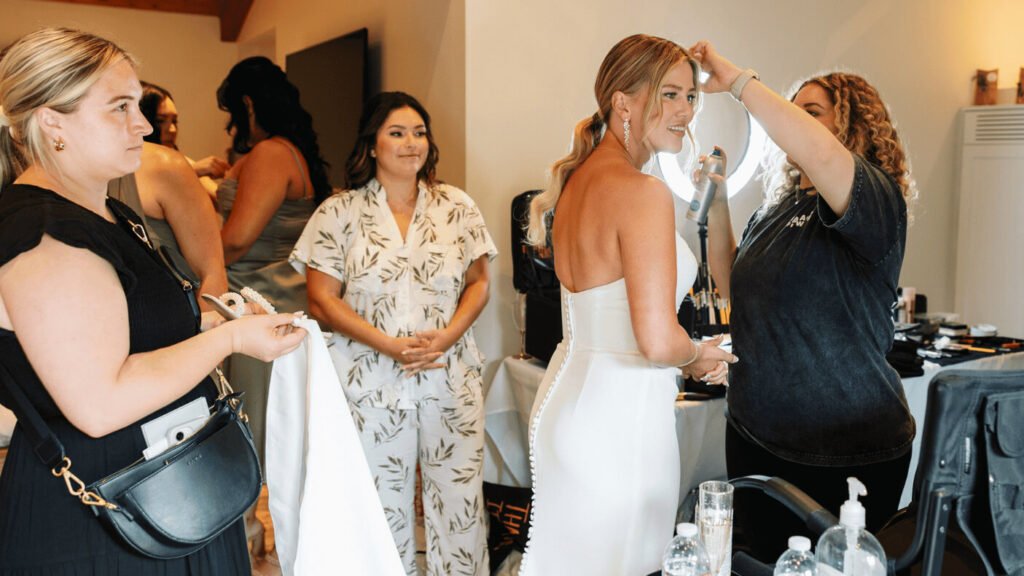
Many brides book a makeup trial without a second thought and assume hair will work itself out. Hair deserves the same attention. A trial works the same way for both services. Your artist tests the look you chose, works through any adjustments, and confirms everything holds up as expected. Brittany strongly recommends a trial for exactly this reason: you step into your wedding day with no surprises.
A hair trial answers questions a Pinterest board cannot:
- How the style looks on your hair. Inspiration photos show someone else’s texture, length, and density. A trial shows how the style behaves on yours.
- How the style works with your veil, headpiece, and dress. You see the full picture instead of imagining it.
- How the style handles coastal conditions. Humidity, sea air, and wind all affect hair, especially at waterfront and bluff-top venues. Brittany plans every look with those conditions in mind. You can read more in her guide to bridal hairstyles that hold up in Southern California humidity.
- How long the style takes. Your artist can plan your wedding morning timeline around real numbers instead of guesses.
A trial also lets you get to know the person who will stand behind you on one of the most photographed mornings of your life. You can speak up, change your mind, and ask questions in a relaxed setting, and that time together helps you feel at ease in the chair before the wedding day.
What to Bring
A few items turn a trial from a general styling session into a rehearsal for your actual wedding day. Gather these before you go.
Inspiration Photos
Bring three to five photos of hairstyles you love. Choose images that show the style from the front, side, and back, because your guests will see all three angles. Look for photos of hair with a similar texture and length to yours, since that gives your stylist a realistic target.
Bring photos of styles you do not like, too. Knowing what to avoid saves time and helps your stylist understand your taste. A photo of your own hair worn naturally also helps. Brittany’s philosophy is to enhance your natural beauty rather than mask it, so seeing how your hair falls on a normal day guides every choice she makes.
Your Veil or Headpiece
If you have your veil or headpiece, bring it. Placement, weight, and attachment all change how a style looks and how securely it stays in place. A heavy cathedral veil sits differently than a light fingertip veil, and a headpiece can change where your stylist builds volume or places pins. For a longer veil, see Brittany’s notes on bridal hair for cathedral length veils.
Still deciding on your accessory? Bring a similar option to your trial or describe what you have in mind. Brittany’s comparison of flower crowns vs veils can also help you decide which one to test.Wind matters here too. A veil catches coastal breezes, so test how your style and veil work together before the ceremony.
Your Dress Neckline Photo
Your neckline shapes your hairstyle. A strapless gown, a deep V, a high neck, and an open back all pair differently with an updo or soft waves. Bring a clear photo of the front and back of your dress. If you are still waiting on alterations, bring the best image you have.
With that photo, your stylist can balance your silhouette, show off the details you chose, and avoid a style that competes with your gown.
Questions to Ask Your Stylist
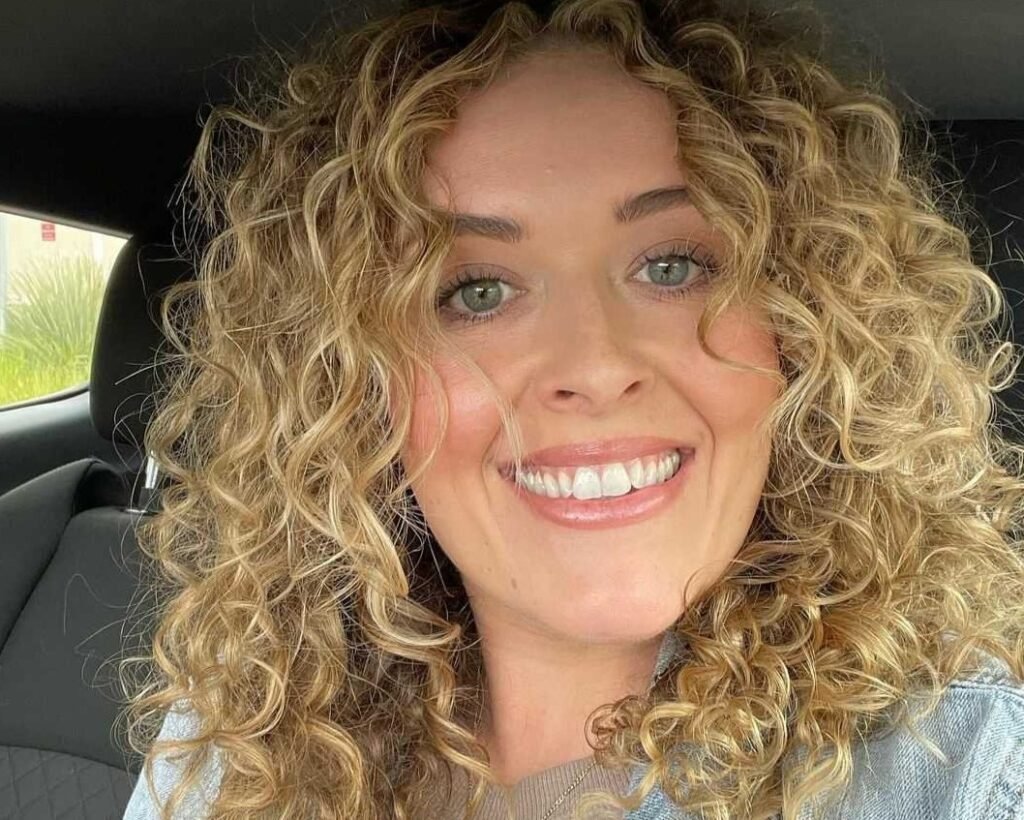
A trial is the best time to ask questions. These will help you decide with confidence:
- How will you plan my style for coastal humidity, sea air, and wind? Your stylist should explain how she chooses techniques and products for your venue and the time of year. If wind is your main concern, it helps to understand the tradeoffs in updo vs down hairstyles for windy coastal venues.
- What style suits my hair type and length? A good stylist will tell you honestly what works best, even if it differs from your inspiration photo. You can also browse the best bridal hairstyles based on your hair type beforehand, and if your hair is dense, her guide to bridal hairstyles for thick, heavy hair covers what to expect.
- How will this style work with my veil or headpiece? Ask where your stylist will place it and how she will secure it.
- How long will this style take on the wedding morning? Use the answer to build your getting-ready timeline.
- What happens if I want to adjust the style? A trial exists so you can make changes, so say what you would like to see differently.
- Do you travel to my location? Brittany brings a complete professional kit, including studio-quality lighting and seating, to your home, hotel suite, resort room, or estate. You skip the salon commute and your whole party stays together.
- Can you style my bridal party too? For larger parties, Brittany brings additional artists so everyone finishes on schedule without cutting corners on the bride’s application.
- How do I secure my date? Brittany books wedding dates with a signed contract and a deposit.
Write your answers down or take notes on your phone. Wedding planning moves fast, and details you hear at the trial will matter weeks later.
Plan Your Bridal Hair Trial
Once your venue is confirmed, it’s a good time to start planning your bridal hair trial. Spring and fall weekends in Orange County book well in advance, while San Diego’s peak wedding seasons typically run from March through June and September through November. Booking a mobile artist 6 to 12 months ahead can give you more flexibility during these busy periods. If you’re planning an Orange County wedding, explore bridal hair in Irvine. For San Diego brides, the bridal hair and makeup trial in San Diego page offers more information.
Scheduling your trial a few weeks to a couple of months before the wedding gives you time to finalize your hairstyle and make adjustments if your dress, veil, or accessories change. Wear a top with a neckline similar to your wedding dress, if possible, and prepare your hair according to your stylist’s instructions. Take photos from different angles during your trial and note any changes you’d like so your final look is easier to recreate on your wedding day.
On your wedding morning, your artist arrives 15 to 20 minutes early to set up their professional kit and lighting. Skin and base preparation follow before your bridal hair and makeup application, which typically takes 60 to 90 minutes. Your look is then set and sealed to help it last throughout the day, with a complimentary touch-up kit included. Brittany also offers additional artists to accommodate larger bridal parties.
Browse the portfolio to see Brittany’s bridal work or learn more about her training and experience on the About page. When you’re ready to discuss your trial, wedding date, venue, and hairstyle inspiration, click below to schedule an online consultation and start planning your bridal look.
Frequently Asked Questions
A trial gives you the most accurate answer, because it shows how long your specific style takes on your specific hair. As a general guide, a bride’s getting-ready appointment runs roughly 60 to 90 minutes, and each bridesmaid takes about 45 to 60 minutes. Larger parties and detailed styles with veils or accessories can shift those numbers, so ask your artist to confirm the timeline for your group when you book.
A trial shows you how a style looks and feels, and it gives your stylist a chance to plan for coastal conditions. No one can promise how hair will behave in every kind of weather, but a style built with humidity, sea air, and wind in mind gives you the strongest foundation. Ask whether you can wear your trial style for a few hours afterward and take photos at the end of the day. That simple test shows you how the style settles. Share your venue with your stylist too, since a bluff-top ceremony and an indoor ballroom call for different choices.
Bring every piece you plan to wear. That includes your veil, headpiece, and any hair accessories such as combs, vines, or fresh flowers. Earrings matter too, because they share space with your hairstyle and can change the balance of your look. Your neckline also affects which accessories work best, so bring your dress photo. Trying everything together at the trial shows you what feels elegant and what feels like too much. If an accessory competes with your style, you can swap it before the wedding.
Arrive with your hair in its natural state unless your stylist gives you other instructions, and ask ahead of time whether she prefers clean or previously styled hair. Avoid major changes close to the trial, such as a big cut or a new color, because the trial works best when your hair matches what you will have on your wedding day. Tell your stylist about any recent hair color or treatments, and mention any sensitivities you have. For a longer routine leading up to the wedding, see Brittany’s tips on how to prep your hair before your wedding day. Bring your inspiration photos, veil or headpiece, and dress neckline photo so you can use the whole appointment well.
Start with your venue. Tell your stylist where you are getting married and whether the ceremony happens indoors or outdoors, near the water or inland. Then talk through your hair type and how your hair behaves in humid or breezy weather. Styles with secure structure, thoughtful pin placement, and a finish that suits your texture give you the most confidence. Ask your stylist how she would adjust your favorite inspiration photo to handle wind and sea air. Brittany focuses on natural, enhanced looks that help you feel like yourself, so the right style should feel polished and comfortable at the same time.