

A cathedral-length veil changes how a hairstyle is built. It is long, often heavy and always moving. Bridal hair for cathedral-length veils works best when the style and the veil are planned as one look. This article covers attachment, hairstyle choices, Southern California weather, trial prep and removal at the reception. It works as a planning guide for bridal hairstyles in Orange County and San Diego.
Brittany Brown Beauty provides mobile bridal hair and makeup across Orange County, San Diego and surrounding areas. Brittany styles brides where they get ready. The plan can include your real room, schedule and veil. The advice below is general. Your veil, hair and venue decide the details. You can read more about Brittany’s background on the About page.
How a Cathedral-Length Veil Affects Your Hairstyle
A cathedral veil usually reaches roughly three yards, and some run longer. It extends past the hem of the gown and often trails behind it. That length changes four things a stylist has to plan for.
- Length: The veil pulls backward and downward from the point where it is attached. A longer veil means more leverage on that point.
- Weight: Layers of tulle, a lace edge, beading or pearls all add weight. Two veils of the same length can behave very differently.
- Movement: A long veil catches air, swings during a walk and shifts when someone steps on it. Each movement tugs the hair underneath.
- Coverage: Sheer tulle shows hair through it, but the veil still softens or hides parts of the style. Detail at the back may read differently once the veil is placed.
A shorter veil rests lightly and moves less. Our look at bridal hair with a veil for every length covers those options. A cathedral veil asks more of the hairstyle. The hair under it needs a firm base, and the base needs a place for the comb to sit.
That is why the hairstyle and the veil should be planned together. A style chosen first may leave no good spot for the comb. A veil chosen first may be too heavy for a loose, soft style. Bring both into the same conversation, ideally before the trial, so the stylist can test them as a pair.
Some decisions depend on the individual veil. The comb size, the fabric and the trim all matter. Some depend on the hair, such as length, density and texture. Brittany treats these as questions to answer at the trial, not rules to apply to every bride.
Choosing a Hairstyle That Works With Your Veil
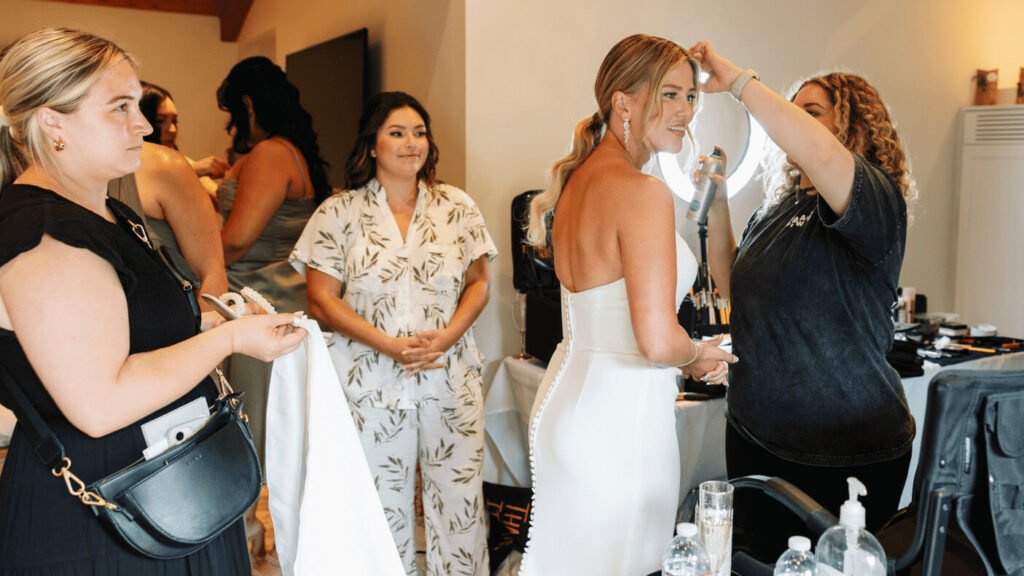
Collect wedding hair ideas that show the back and sides. Then check that the veil and the hairstyle can both deliver the look. A sleek, polished back needs a different plan than soft movement near the face.
Where to Attach a Heavier Veil
Attachment placement affects three things. It affects stability, the hairstyle’s look from behind and how easily the veil comes out. No single position is right for every bride.
Most veils attach with a small comb. Some use a loop, a clip or a double comb. Look at yours before the trial. Note how wide the comb is, how long the teeth are and if it is sewn to the tulle. Those details tell the stylist which placements are realistic.
A higher placement near the crown can give lift and lets the veil fall from the top of the head. It also puts the comb in view from some angles, so the stylist may need to cover it with hair. A lower placement just above or below a bun can hide the comb. It can also pull on the bun as the veil moves.
Stability comes from what the comb is anchored to, not only where it sits. A comb pushed into loose, smooth hair can slide. A comb set into a firm section often grips better. Stylists commonly build that section with a small twisted or braided base, then pin through and around the comb. Hair type changes the method, so test it.
Placement also changes the picture. A comb set too high can flatten crown volume. One set too low may drag the style downward. The veil placement guide for every bridal hairstyle shows how position shifts with each style.
Hairstyles That Can Support a Long Veil
Several styles can work with a cathedral veil. None is always the most secure. Each has trade-offs you can discuss at the trial.
- Structured updo: Hair is pinned up in sections, which gives the comb firm material to grip. Sections also spread the veil’s weight. Removal is straightforward when the comb sits in an accessible spot.
- Low bun: A bun at the nape gives the veil a clear place just above it. The veil falls behind the bun, so the bun stays visible from the side. Weight can pull on the bun, so the base needs real support. The comparison of low buns and high buns for brides explains the difference.
- Chignon: A chignon is a smooth, folded style, often low. Its clean lines show through tulle, which suits brides who want a polished back. The smoothness leaves less texture for pins to grip, so the stylist plans the anchor carefully.
- Half-up style: The top section is secured and the rest falls loose. The comb goes into the pinned section. The loose lengths soften the look but move freely, so they react more to wind and weight.
- Fully down: Loose waves are possible with this length. They are the most demanding option, because the veil has less structure to attach to. This option needs the most testing at the trial.
Your hair shapes the choice. Long hair gives room for a substantial base but adds its own weight. Shoulder-length hair may limit how much can be pinned. Dense hair holds pins well and can hide a comb easily. Fine hair needs a different approach, since pins may slip and volume can drop.
Texture and natural movement matter too. Curly hair may need its pattern preserved while still creating a stable base. Straight, slippery hair may need added grip. Wavy hair often bends into a style with less effort. The stylist adjusts preparation and setting to the texture rather than using one routine for everyone.
You can keep visible detail even with a long veil over the top. A braid or a textured twist at the back still reads through sheer tulle. Attach the veil above the detail and it falls behind the style, leaving the detail in view. Attach it below the detail and the tulle covers more of it. Look at photos of the style from the back before deciding. The portfolio shows finished looks from several angles.
Weather and Setting Choices in Southern California
Conditions vary a lot across Orange County and San Diego. A bluff above the ocean can be breezy. A garden a few miles inland may be warm and still. A hotel ballroom may be air conditioned, and stepping outside changes things quickly. For bridal hair for cathedral-length veils in Orange County, ask the venue about ceremony time and exposure. Conditions differ by location.
Sea air and humidity can soften curls and add frizz. Heat can make hair feel heavy and cause structured styles to settle. Wind can lift a long veil and tug it sideways. None of these conditions means trouble is certain. They are reasons to plan the structure.
Several choices help. A firmer, sectioned base resists loosening better than a soft one. Curls that cool before they are pinned often hold their shape longer than curls brushed out hot. A veil attached to a stable section moves less in wind. A stylist may add pins in places that carry the veil’s pull. The right amount of support depends on the day.
Wind is worth its own plan. Read how updos and down styles compare at windy coastal venues before you decide. Ask the photographer or planner where the ceremony faces and when the wind usually rises.
Moving between indoor and outdoor spaces matters as well. Temperature and humidity can shift within minutes. Plan veil checks after the move, not before it. No style stays untouched through every condition. The goal is a hairstyle that handles the likely conditions and a clear plan for small fixes.
Removing the Veil After the Ceremony
Decide how the veil comes off before the wedding day. A removal that was never tested can disturb the style, bend the comb or snag the tulle. Many brides remove a cathedral veil after the ceremony and formal photos so they can move freely. The reception hairstyle then has to stay intact.
The stylist can show how the attachment releases. In many cases the helper first removes any pins that cross the comb, then lifts the comb out. The order matters. Removing the wrong pin first can pull hair out of place. Ask the stylist to point out which pins to take out and which to leave.
Afterward, the hairstyle may need small tweaks. The crown may be flatter after hours under weight. A few strands may have loosened. Matching pins on hand allow quick repairs. Some brides want a second look with a different accessory. Our article on second-look bridal hair for the reception covers that idea.
Choose a helper before the day. A bridesmaid, a mother or the planner can handle it. Bring that person to the trial if possible, so that person can practice the release. Ask the stylist to leave brief written notes or a photo of the pinned arrangement. Confirm who stores the veil afterward and where it goes. The tulle should stay away from food, shoes and chairs.
Test removal at the trial, especially if you plan to keep the hairstyle for the reception. If the style loosens when the veil comes out, the stylist can adjust the base. That is far easier to fix at a trial than on the wedding day.
What to Bring to Your Hair Trial
A trial is where the veil and the hairstyle meet. Brittany strongly recommends one, though it is not required. Bring these items so the stylist can test the whole look.
- The cathedral-length veil, if available: Its weight and fabric set the level of support the hair needs. A substitute veil can mislead the test.
- The comb, pins or other attachments: The design of the attachment determines where and how it can anchor.
- Photos of hairstyles from several angles: The back view matters most under a long veil. Side and top views show shape.
- Photos of the gown, neckline and back details: The neckline affects how high or low the style sits. Back details, such as buttons or lace, can snag a veil.
- Hair accessories: Combs, pins and decorative pieces compete with the veil for space. Test them together.
- Ceremony and reception details: Outdoor exposure, the venue and reception plans shape the setting and the removal plan.
- The expected wedding-day schedule and removal plan: This shows how long the style must hold and who handles the veil.
Ask what to do with your hair beforehand, and follow that plan. The trial then matches the wedding day more closely.
Brittany’s wedding-day process starts with early arrival and setup of her kit and lighting. She then preps, styles to your vision and sets the look. The trial lets you rehearse the styling and the veil. You see how the veil goes in, how long placement takes and how the style looks after movement.
Using the Trial to Plan Wedding-Morning Timing
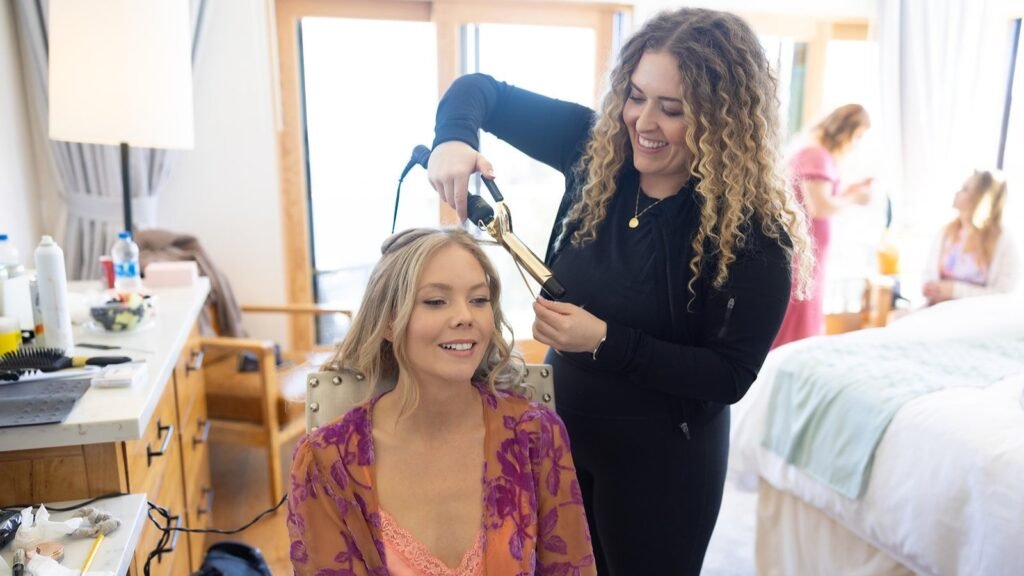
Use the trial to map the morning. The bride’s appointment typically runs about 90 minutes. The hair portion varies. Length, density, texture, the style and any extensions all affect it. Ask how long your hair took at the trial.
Veil placement comes last. It follows the hair and makeup and works best after the gown is on. That keeps lace and buttons from catching the tulle. Allow a few minutes after placement for the stylist to smooth the veil before photos.
Work backward from the first photographs. Set the start time so the style has time to settle. Give the photographer the removal time, so veil shots happen before the comb comes out. Share the plan with the planner too. A written schedule helps everyone involved.
Planning Your Wedding Hairstyle?
Share your wedding date, venue, veil details and getting-ready location. Brittany Brown Beauty will check availability and talk through the hairstyle. If you have a photo of the veil or its comb, send it along. You can also reach us through the contact page. Click the button below to schedule a consultation online.
Brittany plans about 90 minutes for the bride’s appointment, and the hair portion varies. Hair length, density and texture matter, as does the style. An updo with a reinforced base can take longer than a simple half-up. Veil placement is a short final step. Confirm your own timing at the trial, then build the morning schedule around it.
It can hold up well with planning, but no style is immune. Humidity softens curls and adds frizz, particularly near the coast. A firm base, curls cooled before pinning and a well-anchored comb all help. The Southern California humidity article covers more. Venue, time of day and your hair type still affect the result.
Simple pieces usually work best. A small pin or a slim headpiece can sit in front of the veil comb without crowding it. Heavy embellishments add weight and compete for space. Keep decorative pieces away from the comb area. Bring any accessory to the trial. The explainer on combs, pins and tiaras shows how each one works.
Often yes, if the removal is planned and practiced. The helper releases the comb and removes only the pins the stylist points out. The crown may need a quick touch-up afterward. Keep a few matching pins nearby. Ask to rehearse the release at the trial, so the style is tested without the veil.
Wait if you can. The veil’s weight and comb change the plan. If the trial must happen first, ask the seller for the comb type, the fabric and the trim. A veil of similar length and weight is better than none, but treat that test as a rough draft. Plan a short follow-up check once yours arrives.