
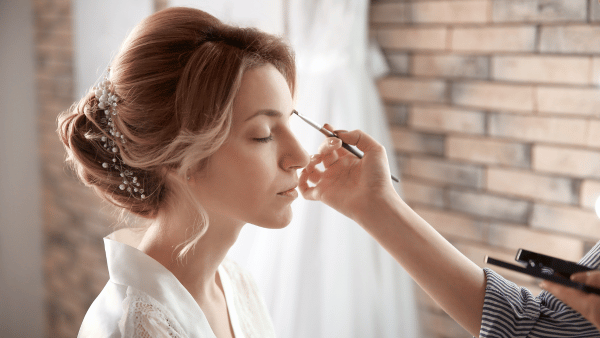
Your eyes will be in nearly every photo from your wedding day. They show up in the close-up before the ceremony, in the first look, and in the quiet candid moments during the reception. If you have monolids or hooded eyes, you may have noticed that the eye makeup tutorials you see online do not always work on your eye shape. That is normal, and it has a simple explanation.
Brittany Brown Beauty is a mobile bridal hair and makeup business based in Orange County, California. Brittany has worked in the makeup industry for more than a decade, and her approach is to enhance natural beauty rather than cover it up. This guide explains how eye shape changes the way makeup behaves, which techniques tend to work, and what to test at your trial. If you are searching for an Orange County bridal makeup artist who understands your eye shape, this is a good place to start.
Why Standard Eye Techniques Don’t Always Translate
Most eye makeup instructions assume a visible crease and a mobile lid, which is the part of the lid that shows when your eyes are open. That assumption shapes everything from where the shadow goes to how the liner sits.
Monolids and hooded eyes work differently.
- Monolids have little or no visible crease. The lid appears as one smooth surface from the lash line up toward the brow bone.
- Hooded eyes have a fold of skin that falls over the crease, so some or all of the mobile lid disappears when the eyes are open.
When a technique assumes a visible crease, the result can look different from the tutorial. Shadow blended into a crease may sit out of sight behind the fold. Color placed on the center of the lid may vanish the moment you open your eyes. Liner may smudge onto the fold and leave marks that were not there when the eyes were closed.
None of this means your eyes are harder to do. It means the application has to follow your actual eye shape instead of a template. That is where hands-on experience matters. Brittany’s philosophy is simple: enhance your natural beauty rather than cover it up. Your eyes already have a shape worth highlighting, and the goal is to work with it.
The goal is a result that feels like you, just elevated, and that is the standard Brittany applies to eye makeup too. If you would like to see her work before you book, the portfolio page shows a range of looks.
Monolids are common among many Asian brides, and every bride’s eyes are still unique in lid space, fold, and lash direction. If you want to see how Brittany approaches these features for brides in the area, the guide to bridal makeup for Asian brides in Orange County is a useful companion to this article.
Techniques That Work
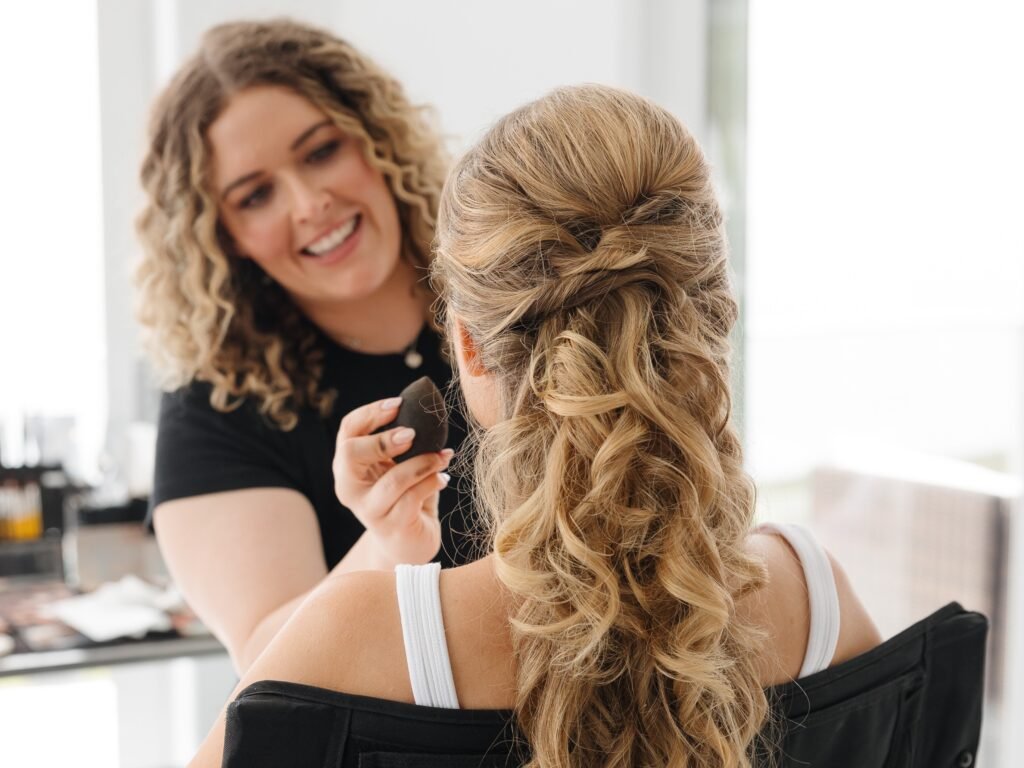
Every face is different, so no single method fits every monolid or hooded eye. The techniques below are common starting points that an artist adjusts once she sees your eyes in person.
Placement for Visible Color When Eyes Are Open
The most useful habit for these eye shapes is to check the makeup with your eyes open. Your photographer will capture your eyes open, so that is the view that counts.
With hooded lids, color applied only on the mobile lid can disappear under the fold. To keep it visible, an artist may place soft shadow slightly higher than usual, so the color shows when the eyes are open and looks sculpted instead of hidden. With monolids, a gradient that fades from deeper tones at the lash line to lighter tones higher on the lid can create dimension without relying on a crease.
A few ideas for visible color:
- Soft shadows over harsh contrast. Gentle, blended tones add depth without making the eye look heavy. This fits Brittany’s soft, natural-but-enhanced approach.
- Highlights placed with intention. A subtle highlight at the inner corner or brow bone can brighten the eye area without drawing attention to the fold.
- Warm, flattering tones. Warm neutrals and soft bronze shades suit the natural, radiant look Brittany creates.
Because each person’s fold and lid space are different, the exact placement is something to confirm in person. This is one of the main reasons a bridal trial is so useful, which the next section covers.
How bold or soft you go also affects how the look reads on camera. If you are deciding between a defined look and a more understated one, the comparison of soft glam vs. natural bridal makeup and what actually photographs better can help you picture the difference. Flash can also change how shadow and shimmer appear, which is covered in how flash photography changes the way bridal makeup reads.
Liner Techniques for Monolids
Liner can define the eye beautifully on a monolid, and it can also be the product that causes the most frustration. Thick lines can disappear, smudge, or transfer onto the lid.
Here are some approaches that tend to work well:
- Keep the line close to the lashes. A thin, soft line near the lash line can add definition without competing with the lid space.
- Consider a smudged or softened finish. A softly smoked line can look more forgiving than a sharp, graphic one, and it suits a romantic bridal look.
- Think about the outer corner. A slight lift at the outer edge can open the eye. The angle and length should follow the natural shape of your eye so the result feels balanced.
- Match the intensity to the dress and venue. A very defined line can look striking in some settings, while a softer finish may suit a garden or coastal ceremony better.
Whichever style you prefer, a good artist adjusts liner to your eye instead of forcing one shape onto every client. Brittany builds each look around your features, your dress, and your venue.
If you are still sorting out which overall style feels right, the guide to choosing the right bridal eye makeup look for your wedding walks through the options. For weddings held outdoors, natural bridal makeup for outdoor photography explains how daylight changes the way liner and shadow appear.
Avoiding Creasing on Hooded Lids
Creasing happens when the product settles into the folds of the eyelid. Hooded eyes can be more prone to it because the lid and the fold touch each other when the eyes are open, which can transfer product from one surface to the other.
An artist can reduce the chance of creasing by planning around that contact. Common strategies include:
- Careful prep and base work. Prepping the lid properly gives eye products a stable surface to sit on. Skin and base prep is the first step of Brittany’s application.
- Using less product, applied thoughtfully. Thin, blended layers often look more natural and settle less than thick layers.
- Choosing formulas that suit your lids. Some formulas behave differently from others on certain lids, which is a good reason to test your products before the wedding.
- Setting the look carefully. Final setting techniques help lock the look in place for the ceremony, photography, and reception.
Hooding can also become more noticeable over time, so brides who are older or whose lids have softened may want a slightly different approach to placement and texture. The guide to eye makeup techniques for hooded or mature eyes goes deeper on that topic.
No artist can promise that makeup will never move, because weather, tears, hugging, and a long day all play a role. That is why a trial and a plan are valuable. Brittany also provides a complimentary touch-up kit, so a quick refresh is possible if you need one. One bride shared that it poured rain on her wedding day and her hair and makeup did not budge.
What to Test at Your Trial
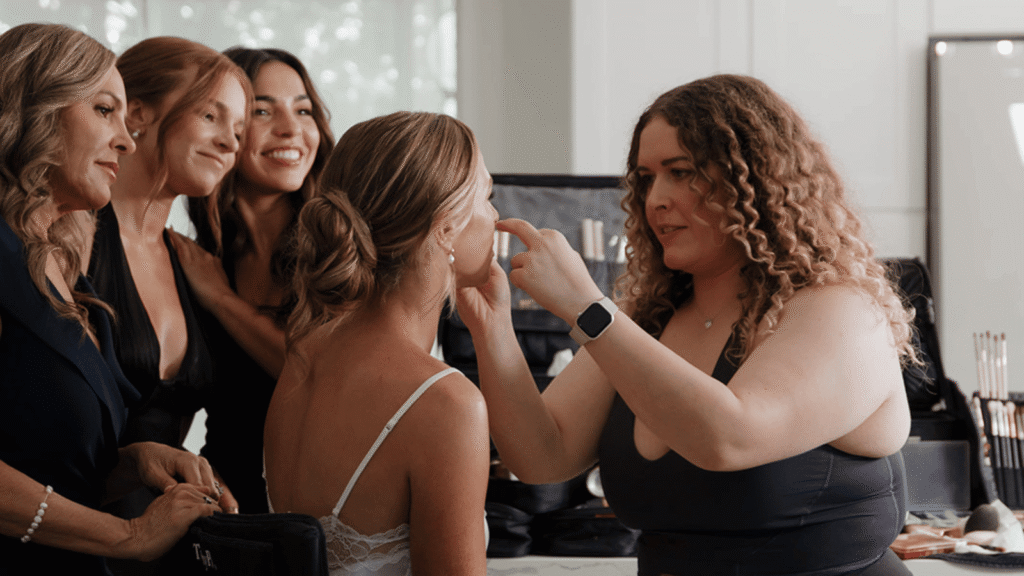
A bridal trial is the best way to find out how your eye makeup looks and feels before the wedding. A trial is not required, but Brittany strongly recommends it. It lets her test your look and products on your real skin in real-life lighting, fine-tune the details, and reduce surprises.
For monolids and hooded eyes, the trial is especially useful because so much depends on how the look appears when your eyes are open. Here is what to pay attention to.
- Look in the mirror with your eyes open and relaxed. Check where the color sits and whether it stays visible. Then glance down and look straight ahead, since both views matter.
- Take photos in different lighting. Eye makeup can look different in a bathroom mirror, near a window, and in a flash photo. Take a few pictures so you can compare.
- Notice comfort. Pay attention to whether your eyes feel comfortable and whether anything feels heavy or irritating as the hours pass. Tell your artist if something does.
- Share any sensitivities. The trial is also the time to mention sensitivities or recent treatments so your artist can plan around them. Eyelids are delicate, so bring up anything that matters.
- Check the look against your dress and hair. Wear or bring ideas that show your neckline, hairstyle, and accessories, so the eye look works with the whole picture.
- Bring inspiration photos. Pictures help you and your artist discuss the style you like, whether that is soft and romantic or more defined.
If you have never had a trial, it helps to know the flow in advance. What happens during a bridal makeup trial outlines what brides can expect, and what to bring to your bridal makeup trial offers a practical packing list. If putting your vision into words feels hard, how to explain your vision to your makeup artist during a trial gives simple ways to describe what you like and what you want to avoid.
Skin comfort matters around the eyes, so avoid trying brand-new products or treatments close to the wedding without checking how your skin reacts. This is general advice about appearance and comfort, not medical guidance. If you have concerns about your skin, talk with a qualified professional.
Brides often mention the comfort of the experience as much as the result. Reviews describe feeling calm, listened to, and taken care of. That comfort starts at the trial, where you can ask questions and speak up about what you want.
Plan Your Bridal Eye Makeup Look
Brittany Brown Beauty is a mobile bridal service, so Brittany travels to your chosen location with her professional kit and lighting. Your hair and makeup are done right where you’re getting ready, without a salon commute or unnecessary disruption to your schedule. She serves Orange County and San Diego and can bring additional artists to accommodate bridesmaids and other members of your wedding party.
A signed agreement and retainer secure your wedding date, and peak dates tend to book quickly, so reaching out early is recommended. Learn more about Brittany’s training, background, and approach on the About page or explore her full range of services at Brittany Brown Beauty.
When you’re ready to discuss your eye makeup preferences, wedding style, and date, click below to schedule an online consultation and start planning your bridal look.
Frequently Asked Questions
On the wedding day, skin and base prep comes first, which gives eye products a stable surface. Before then, keep your routine simple and avoid trying brand-new products or treatments close to the wedding. If you have sensitive skin or recent treatments, mention them at your trial so Brittany can plan around them. For specific skin concerns, check with a qualified professional.
Durability depends on several factors, including prep, product choice, weather, and how emotional the day gets. Brittany preps the skin, chooses products for coastal heat, humidity, and sea air, and finishes with a setting step to lock in the look. Because no one can promise a specific result for every eye and every day, a trial is the best way to test how your look wears. A complimentary touch-up kit is also included for a quick refresh if needed.
Yes. Brittany builds each look around your features, your dress, and your venue instead of using a fixed look for everyone. She works with mature and sensitive skin and chooses products to feel comfortable and look natural all day. Share your preferences and any sensitivities at your trial so the products and colors can be adjusted before the big day.
Tailoring starts with how your eyes look when they are open. An artist places color, liner, and highlight to follow your lid space and fold instead of relying on a crease that may not be visible. That can mean soft shadow placed a little higher, a thin liner kept close to the lashes, or a gradient that adds depth without depending on a crease. Brittany’s approach is to enhance natural beauty rather than mask it, so the finished look suits your shape and still looks like you.
Check the look with your eyes open, relaxed, and looking in different directions. Take photos in different kinds of light, and notice whether your eyes feel comfortable as time passes. Bring inspiration photos, ideas for your dress and hairstyle, and tell your artist about any sensitivities or recent treatments. A trial lets Brittany test your look in real lighting and adjust it before your wedding day.