
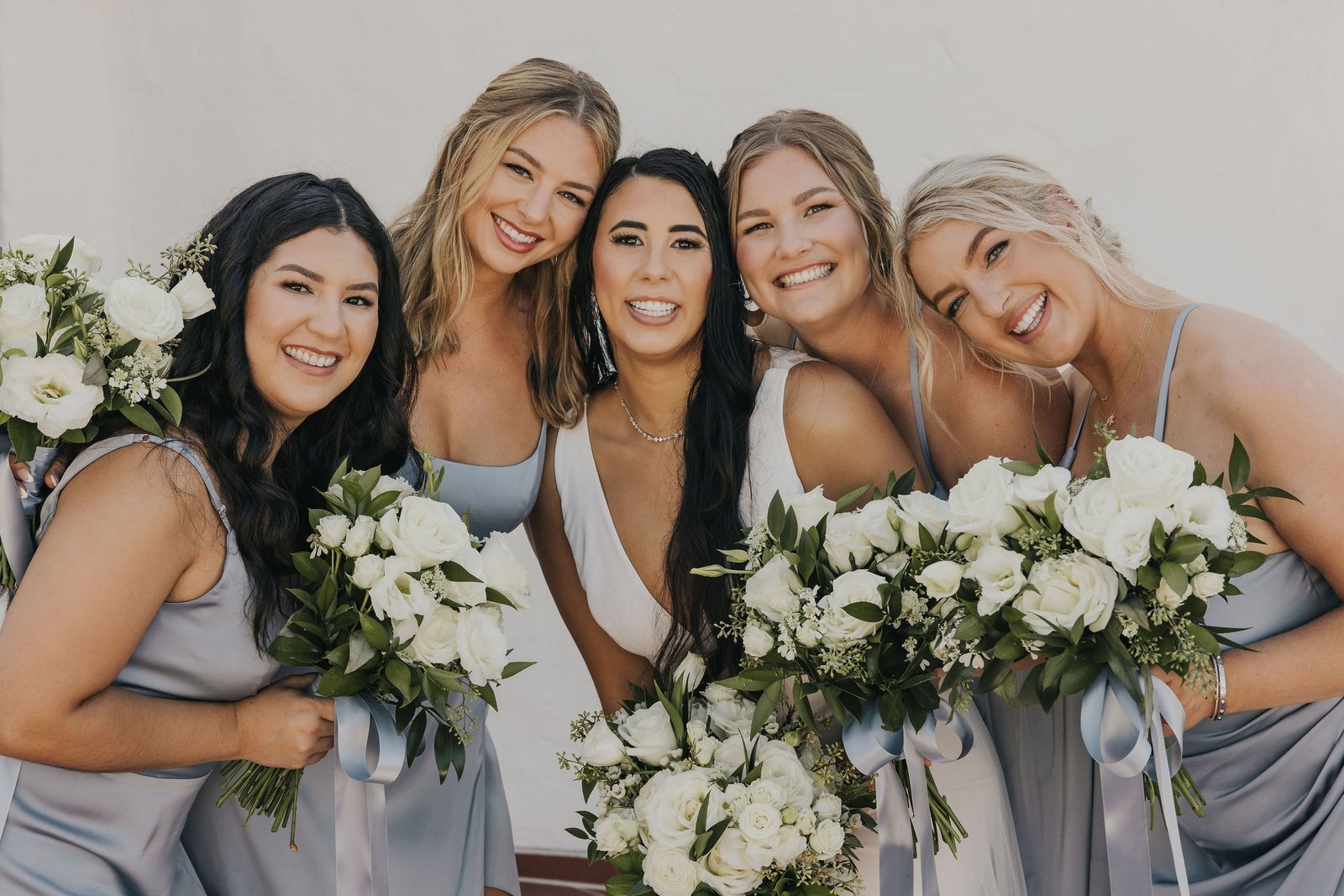
Olive skin carries a distinct undertone that most standard bridal makeup approaches don’t account for. Foundation shades that read as neutral on other skin tones can pull gray or ashy on olive skin, while blushes and eyeshadows built for pink or cool undertones can clash instead of complement. Getting bridal makeup right on olive skin comes down to understanding that undertone and choosing products and techniques that work with it, not against it.
Brittany Brown brings more than 11 years of hands-on bridal makeup experience to this exact problem, built around a simple philosophy: enhance the skin you already have, don’t mask it. Brides who’ve worked with her often describe the result as looking like themselves, just elevated, a look that still feels recognizably them, even after hours in front of a mirror and a camera.
Understanding Olive Undertones
Olive skin sits in its own category, distinct from the warm, cool, and neutral undertones that most makeup guides default to. It typically carries a green or golden-green cast beneath the surface, which means colors that flatter warm or cool skin don’t always translate well onto an olive base. This undertone also tends to interact differently with light, sometimes reading warmer in daylight and cooler under artificial or evening lighting.
Because of this shift, olive skin benefits from a more customized approach than a one-size-fits-all bridal look allows. What works beautifully on a warm or cool undertone can look muddy or mismatched on olive skin, which is exactly why matching foundation, bronzer, and eyeshadow to the individual bride matters so much more than following a generic formula.
Foundation and Base Considerations
Avoiding Gray or Pink-Cast Foundations
Foundation matching poses one of the biggest challenges for olive skin, since so many formulas lean either too pink or too gray to blend seamlessly. A foundation with too much pink undertone can look flushed or mismatched against olive skin’s natural green-gold base, while a foundation that’s too gray or ashy can drain the skin’s natural warmth and leave it looking dull instead of radiant.
The right foundation for olive skin usually has a golden or neutral-olive base built into the formula itself, rather than relying on a warm or cool foundation and hoping it blends in. Testing foundation along the jawline in natural light, not just under indoor lighting, helps confirm the match actually holds up once a bride steps outside for photos.
Bronzer and Blush That Complement Olive Skin
Bronzer and blush shades that read as neutral on other skin tones can sometimes clash with olive undertones, especially anything with a strong pink or overly orange base. Terracotta, warm peach, and soft brick tones tend to complement olive skin far more naturally, since they work with the skin’s existing warmth instead of fighting it.
A soft, sculpted bronzer application enhances the skin’s natural dimension without adding unwanted warmth in the wrong places. The goal stays subtle: warmth that looks like it’s coming from the skin itself, not a color sitting visibly on top of it.
Eyeshadow Tones That Flatter
Olive skin pairs especially well with earthy, warm-toned eyeshadows, like copper, bronze, warm brown, and soft gold. These shades pick up on olive skin’s natural undertone rather than competing with it, which creates a cohesive look rather than one where the eye makeup feels disconnected from the rest of the face.
Cooler tones aren’t off the table entirely, but they usually work best in small doses, like a soft taupe in the crease or a cool highlight along the brow bone, balanced by warmer tones elsewhere in the look. This kind of balance takes some testing to get right, which is exactly what a trial appointment allows time for.
Building a Look That Lasts All Day
A wedding day puts makeup through more than a typical evening out: hours under changing light, an emotional ceremony, photos, and a reception that often runs late into the night. Building a look that holds up through all of that starts with the same principle that shapes everything else here, matching products to the bride’s specific skin rather than applying a generic formula and hoping for the best.
A recommended trial appointment plays a key role in this process. Trying a full look ahead of the wedding day reveals exactly how specific products interact with a bride’s skin over several hours, not just how they look freshly applied. It also gives time to catch any skin sensitivity or reaction to a particular product well before the wedding itself, so adjustments can happen with plenty of room to spare rather than under pressure on the big day.
Skin prep matters just as much as the products chosen on the day. Starting a consistent skincare routine in the weeks leading up to a trial helps skin reach a more even, hydrated baseline, which gives foundation and bronzer something smoother to work with from the very first application. Together, the trial and the prep routine build toward the same outcome: a look that still feels like the bride herself by the end of the night, just elevated for the occasion.
Curious how this approach translates across different olive skin tones? Browse the portfolio to see real examples, learn more about Brittany Brown Beauty’s approach to bridal makeup, or get in touch to schedule a consultation or trial.
Frequently Asked Questions
Starting a consistent skincare routine several weeks before your trial gives your skin time to reach a more hydrated, even baseline, which helps foundation and bronzer blend more smoothly. Avoiding new skincare or beauty products in the final days before your trial or wedding also helps your artist see your skin’s true, consistent condition.
With the right formulas and application technique, bridal makeup built for olive skin can hold up through a full ceremony, photos, and reception. A trial appointment shows exactly how a specific combination of products wears on your skin over several hours, which helps confirm durability well before the wedding day itself.
Yes. Olive undertones vary from bride to bride, and skin type, whether drier, oilier, or more sensitive, also shapes which products and techniques work best. A trial gives the opportunity to fine-tune foundation shade, bronzer warmth, and overall finish specifically for your skin, rather than applying a generic approach.