
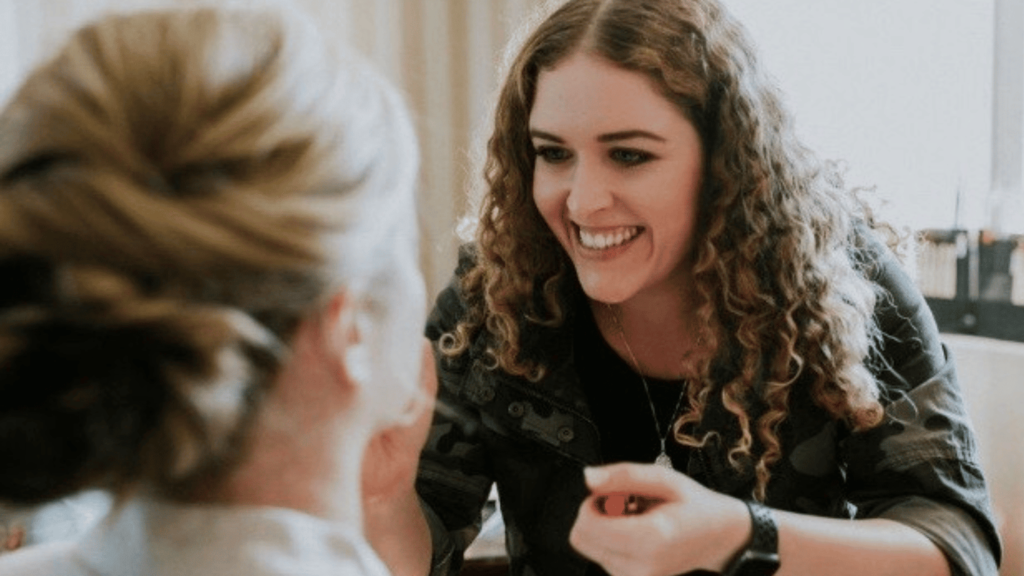
Your makeup can look flawless in the mirror and still surprise you in a flash photo. A pale cast across the forehead, a glowing patch on the cheekbone, or a lip that looks flatter than it did a minute earlier all happen because a camera flash behaves very differently from the light in your getting-ready room.
In short, makeup that reads well under flash uses a light, skin-like base, selective powder, and a soft glow instead of shimmer, and it gets tested with flash before the wedding. I am Brittany Brown, a mobile bridal hair and makeup artist based in Orange County and serving San Diego. After 11 years of working with brides, models, and everyday women, I have watched how the same look changes between natural light, studio light, and a photographer’s flash. This guide explains what flash does to makeup, how I adjust for flash-heavy receptions, and what to test before the wedding.
Why Flash Can Wash Out or Overexpose Makeup
A flash delivers a short, bright burst of light aimed straight at your face. Natural light wraps around you and softens as it moves across your features. Flash does the opposite. It flattens shadows, bounces off anything reflective, and shows every product on the skin exactly as it sits.
That direct burst creates a few common surprises:
- Washed-out color: Strong light can fade blush, bronzer, and soft contour, so a look that feels balanced in the mirror can read pale on camera.
- Flat dimension: Flash fills in shadow, and subtle sculpting can disappear.
- Hot spots: Shine on the forehead, nose, and cheekbones can turn into bright patches.
- Visible texture and edges: Heavy layers, uneven blending, and powder buildup show more clearly under direct light.
- A pale or ashy cast: Some ingredients reflect light back at the lens and can lighten the skin in a photo.
Flash matters most at receptions. Many ceremonies take place in daylight, and golden-hour light in places like Crystal Cove in Newport Coast can be very flattering. After sunset, the photographer often relies on flash for dancing, toasts, and candid moments. Your makeup has to look beautiful in both kinds of light, which means planning for the harder one. For a wider view of how venue light changes your look, see how wedding lighting affects your bridal makeup, and why bridal makeup looks different in photos and how to get it right covers the topic beyond flash.
My approach to bridal beauty has always been to enhance, not mask. That philosophy helps here, because thick, heavy coverage often reads worse under flash than a soft, natural-but-enhanced finish. A light, skin-like base with glowing skin and warm, bronzed contour holds up well under direct light and keeps you looking like yourself, but elevated. If you are choosing between a polished finish and a softer one, soft glam vs natural bridal makeup compares how each tends to photograph.
Adjusting for Flash-Heavy Reception Photography
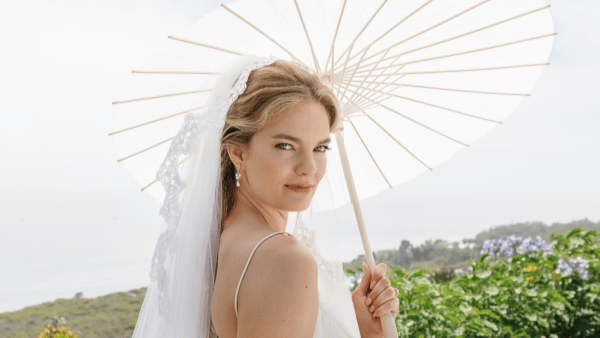
When a couple tells me the reception will include a lot of flash, I adjust the plan before the wedding morning. I do not use one fixed formula for every bride, because the right choices depend on your skin, your dress, your venue, and your photographer’s style. These three areas deserve the most attention.
Avoiding SPF Flashback
Flashback is the pale, ghostly cast that appears in flash photos when certain ingredients reflect light straight back to the camera. Some sunscreens and some powders can cause it. You will not see it in the mirror, and you may not see it in photos taken without flash, which is why it surprises so many brides.
I do not give medical or dermatological advice, and I never tell a bride to skip sun protection. Decisions about sunscreen belong to you and your own skincare professional, and sun protection matters for outdoor ceremonies in Southern California. What I can do is plan the makeup around it. My post on sunscreen under makeup for outdoor Southern California ceremonies covers the daytime side of this in more detail.
- Tell me what you wear. Share the sun protection and skincare products you use, so we can include them in your trial.
- Test them under flash. Take flash photos with your phone while wearing your real routine, which removes the guesswork.
- Let each layer settle. A short pause between skincare and makeup helps the base sit more like skin.
- Adjust the rest of the look. If we see a pale cast at the trial, we change the makeup products around it, and you can discuss your skincare choices with your own professional.
Avoid introducing new skincare products or treatments in the final 10 days, so the trial and the wedding day use the same routine.
Setting Powder and Flash Interaction
Setting powder keeps makeup comfortable and controls shine, but it plays a big role under flash. Too much powder, or a powder that reflects light, can leave the face looking pale, dry, or heavy in photos. Too little can leave shine that glows white under direct light.
I set selectively:
- Place powder where shine appears. The center of the face usually needs the most setting product, and drier areas need less.
- Press instead of sweeping. Pressing product into the skin helps it sit smoothly, and sweeping can leave a visible layer.
- Keep the finish soft. A completely matte face can look flat and chalky under flash, so I leave the skin looking alive.
- Seal the look. Final setting and sealing techniques lock everything in place for durability through the ceremony, photography, and reception.
I cannot promise that any look will last without a single touch-up, because no honest artist can make that guarantee. However, professional products suited to Southern California conditions and your skin, careful preparation, and long-wear techniques can all help your makeup stay in place longer. Every bride also receives a complimentary touch-up kit with lipstick, powder, and blotting sheets, so a quick refresh stays easy between photo moments. If you want to see how I think about wear time from start to finish, my bridal makeup routine and how it lasts all day walks through it.
Highlighter Placement Under Flash
Highlighter adds glow, and glow is central to the no-makeup-makeup look. Under flash, though, highlighter works differently. A product with large flecks of shimmer can catch the burst and show up as a bright, uneven patch on the cheekbone, nose, or brow bone.
Here is how I handle it:
- Choose a glow, not a glitter. I pick finishes that look like healthy skin, and I keep shimmer minimal.
- Place it on the high points only. A small amount on the cheekbones and the inner corners of the eyes adds dimension without drawing the lens.
- Blend the edges. Soft, diffused edges look natural. Hard lines show up under direct light.
- Build in thin layers. I add a little, look at the result, and add more only if the skin asks for it.
I specialize in enhancing natural features through soft shadows and subtle highlights, and those small choices matter most when a flash removes every shadow. As I have found, little subtle changes on the skin can be very powerful.
Contour follows the same rule. Flash fills in shadow, so a soft, blended contour keeps some shape while heavy sculpting can look harsh or patchy. My contouring dos and don’ts for brides explains how I keep it subtle.
What to Test Before the Big Day
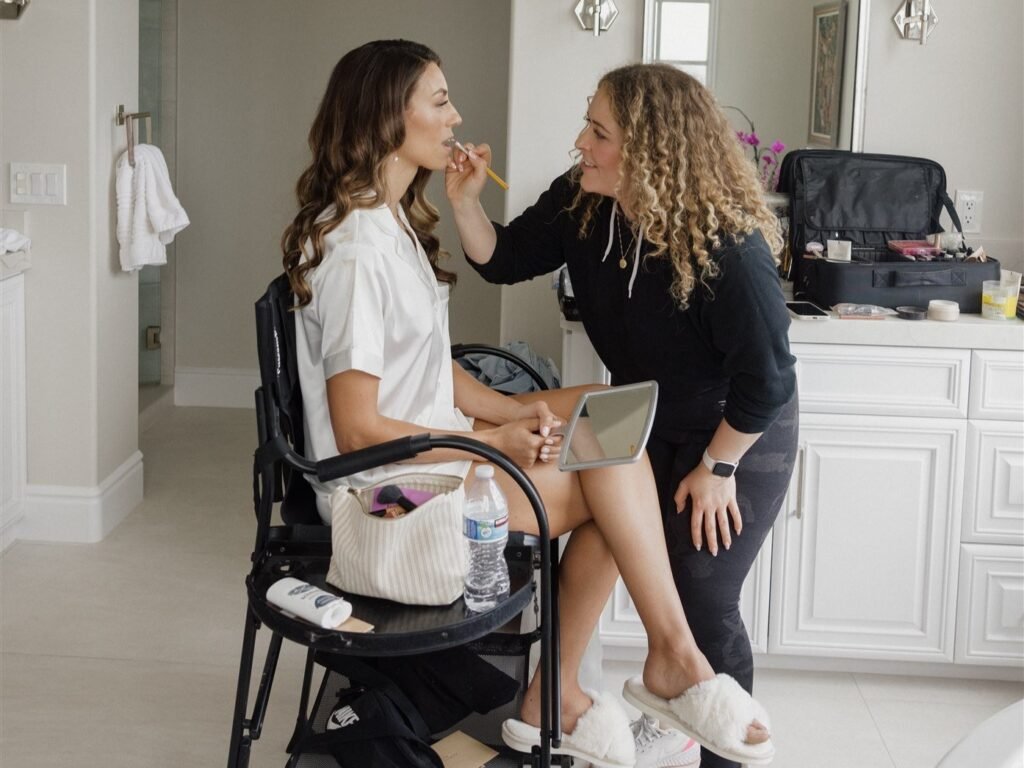
The most reliable way to know how your makeup reads under flash is to test it. I strongly recommend a bridal makeup trial. A trial lets us test products on your skin, work through any adjustments, and make sure you walk into your wedding day knowing exactly what to expect. If you want to know how the appointment runs, what happens during a bridal makeup trial walks through it.
For a bride who expects flash-heavy photography, the trial does extra work. Bring these ideas with you:
- Take flash photos. Use your phone’s flash and photograph your face straight on, from the side, and from a slight angle. Compare the results with photos taken in natural light.
- Look for a pale cast. Check your forehead, cheeks, and under-eye area for any lightening that does not appear in the mirror.
- Check shine and highlight. See whether your highlighter reads as a glow or as a bright patch.
- Test your skincare and sun protection. Wear the products you plan to use on the wedding day, so the photos show your real routine.
- Review color. See whether your lip and cheek color stay visible or fade under the flash.
- Wear the look for a couple of hours. Notice how it feels and how it holds up as time passes.
- Share any skin concerns. Tell me about any skin sensitivities, reactions, or recent treatments, so we plan around them. Testing products directly on your skin also lets us notice how your skin responds before the wedding.
Many brides get more from the trial when they arrive prepared, and bridal makeup trial mistakes that change your final look points out what to avoid so the result carries over to the wedding day.
Then talk with your photographer. Ask whether they use direct flash, bounce flash, or off-camera lighting at the reception, and ask for sample photos from past weddings. A photographer who bounces light off a ceiling creates a very different effect from one who aims a flash straight at the face, and that detail helps me choose the right depth and finish. Clients often mention in their reviews that I work well alongside photographers, planners, and other wedding vendors, and I am happy to coordinate directly with your team. If you want to understand the photographer’s side, what photographers wish makeup artists knew about lighting is a useful read.
Camera-first work shapes my bridal approach. In commercial and production work, I manage shine, keep color accurate under changing light, and keep texture looking smooth, even in close-up images. Those habits carry into every bridal look. You can see how a natural, glowing look translates on camera in my portfolio.
Plan Your Bridal Makeup
Start planning once your wedding date and venue are confirmed. Brittany Brown Beauty offers mobile bridal makeup services throughout Orange County and San Diego, bringing professional products, lighting, and seating to your getting-ready location. For larger bridal parties, additional artists can help keep your schedule on track.
Learn more about Brittany’s experience and training on the About page or explore all available services on the Brittany Brown Beauty homepage. If you’re getting married in Irvine, Tustin, or Lake Forest, visit the page for a bridal makeup artist in Irvine, CA.
Ready to plan your wedding-day look? Contact Brittany Brown Beauty with your date and venue to discuss your plans and check availability. Your date is secured with a signed contract and deposit.
Frequently Asked Questions
Start a consistent skincare routine at least four weeks before the wedding, avoid new skincare products or treatments in the final 10 days, and drink plenty of water in the week before, especially in summer. These are everyday care habits, not medical advice, so check with your own skincare professional if you have specific concerns. On the wedding morning, I prep your skin without rushing, and I ask you to share the products you use so we can test them under flash at your trial.
I cannot promise that any look will last without a touch-up, because no honest artist can. I prep your skin carefully, choose professional products suited to Southern California conditions and your skin, and finish the look with setting and sealing techniques designed for durability through the ceremony, photos, and reception. Your trial shows us how the look holds up before the wedding. Every bride also receives a complimentary touch-up kit with lipstick, powder, and blotting sheets for a quick refresh.
Yes. I build every look around your individual skin, your dress, and your venue instead of a fixed package look. Different skin tones, undertones, ages, and skin types call for different product and technique choices, and flash can show each of them differently. That includes mature skin, where some formulas settle into fine lines or feel heavy, so I choose textures and techniques that suit more mature complexions. Your trial lets us test the look under flash on your real skin and refine it.
Keep the look natural and enhanced rather than heavy, with a skin-like base, soft contour, and minimal shimmer for a glowing finish. Set selectively to avoid excess powder. Test your skincare and sun protection under flash during your trial to catch any pale cast early. Then discuss the reception lighting with your photographer so I can adjust the depth and finish accordingly.
Yes, I recommend it. A trial already gives us a chance to test products on your skin and make adjustments, and adding flash photos takes only a few extra minutes. You take photos with your phone straight on and from several angles, compare them with natural light photos, and check for a pale cast, uneven highlight, or faded color. If anything looks off, we change it before the wedding day.