
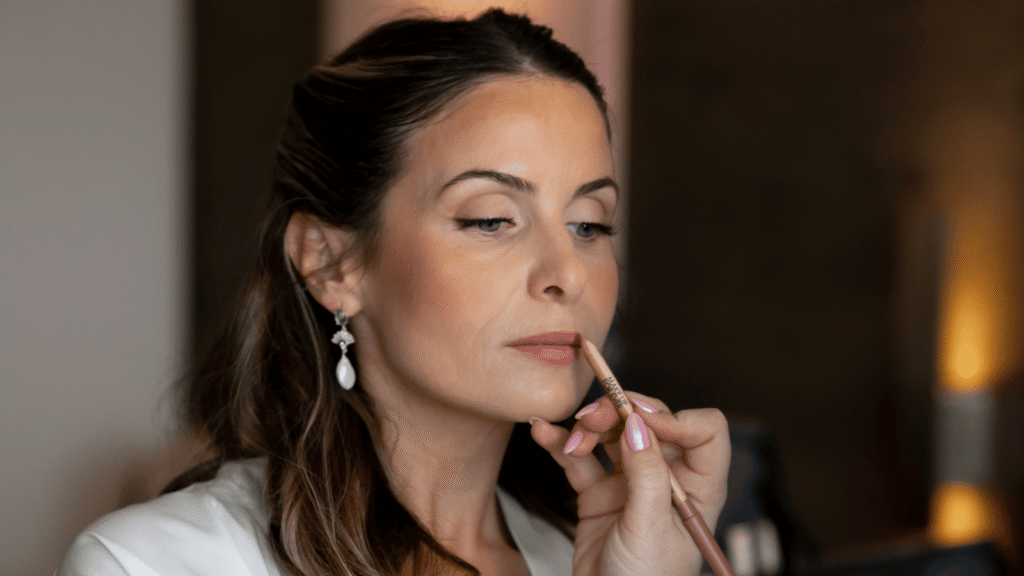
Some women reach a point where they want a little more coverage, but they do not want to look like they are wearing makeup. That worry is fair. Heavy layers can emphasize texture, settle into fine lines, and age a face instead of freshening it.
As a mobile bridal makeup artist in Orange County, I love working with mature clients. I love making moms, aunts, and grandmas feel beautiful and special, and I do it with technique instead of guesswork. At Brittany Brown Beauty, I believe in enhancing your natural beauty rather than masking it, so you look like yourself, but elevated.
This guide shares the techniques I rely on most, drawn from more than 11 years of hands-on bridal and print experience. It is educational and focuses on appearance and comfort. It does not replace advice from your doctor or a qualified skincare professional.
Why More Coverage Doesn’t Have to Mean Heavier Makeup
Coverage and heaviness are not the same thing. Coverage describes how much a product evens out your skin. Heaviness describes how much the product shows. A skilled makeup artist can give you the first without the second.
Formulas that look beautiful on younger skin can settle into fine lines or look thick on a more mature complexion. I explore this in my guide to avoiding makeup that settles into fine lines.
Skin can also change with age and hormonal shifts. Some women notice dryness, changes in texture, or increased sensitivity, which can affect how makeup sits on the skin. My article on makeup for menopausal skin changes on your wedding day explains how adjusting preparation and application techniques can help create a comfortable, natural-looking finish.
The fix often does not involve adding more products. It involves placing the right amount in the right spot and letting your skin do the rest.
Here are three ideas that guide my approach:
- Skin should still look like skin: A soft, glowing finish can look fresh, while a flat, opaque finish can look mask-like.
- Small changes matter: Subtle adjustments can make a difference, so I focus on specific areas instead of covering everything.
- Preparation sets the stage: Comfortable, well-prepared skin gives makeup a better surface to sit on.
Corrective beauty makeup comes naturally to me, and I use it to even out areas you want softened without making your complexion look unnecessarily covered. If you want a wider look at this topic, my guide to bridal makeup for mature skin: what works and what to skip covers it in more detail.
Building Coverage the Right Way
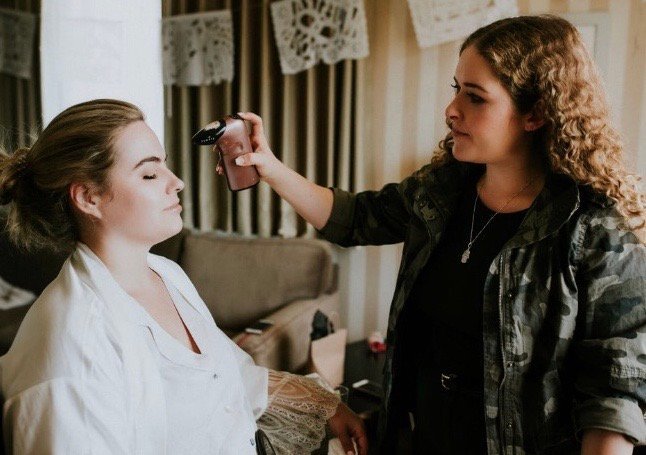
These three techniques form the core of how I build coverage on mature skin. Each one helps keep the look light while still giving you the polish you want.
Color-Correcting Before Foundation
Color correction addresses specific areas of discoloration so your foundation does not have to do all the work. Instead of covering a dark area or redness with a thick layer of base, I use a small amount of an appropriate correcting shade before applying foundation more lightly over the top.
Here is how I approach this step:
- Identify the area: I look at where your skin shows redness, shadows, or uneven tone, such as around the nose, under the eyes, or on the cheeks.
- Use a small amount: A precise application often works better than spreading a large patch of product over the area.
- Blend the edges: The corrector should blend into your skin without leaving a visible line.
- Apply foundation selectively: Once the tone looks more balanced, less foundation may be needed to achieve the desired result.
This is where corrective makeup experience matters. Color correction can be easy to overdo, so placement and a light hand are important. My guide to corrective makeup and who it is for explains how targeted techniques can help address specific complexion concerns.
Layering Thin Coats Instead of One Heavy Layer
One thick layer of foundation can sit on top of the skin and collect in lines. Several thin layers give me more control. I apply a little, observe how it behaves, and add more only where your skin needs it.
A few principles shape my layering:
- Start with a prepared base: On your wedding morning, I begin with skincare, primer, and base preparation, and I never rush this step. Well-prepared skin can help makeup look smoother.
- Apply less than you think you need: You can always build coverage gradually. Removing excess products is harder.
- Concentrate where it counts: I apply more coverage where it helps, such as around the nose or on uneven areas, while keeping the rest of the face lighter.
- Choose a suitable finish: A soft glow can look fresh, while strong shimmer may emphasize texture.
I also adjust formulas and application techniques for each client because skin is personal. I do not claim that any single product suits every skin type. That is why I test your makeup on your actual skin before the big day.
Setting Selectively, Not Everywhere
Powder and setting products help makeup stay in place, but too much can look dry or dull on mature skin. I set selectively, concentrating on areas where makeup needs support while allowing other areas to retain a softer, more natural finish.
My approach looks like this:
- Set the areas that need it: Areas prone to creasing or excess shine receive more attention.
- Keep the high points fresh: Cheekbones and other areas where light naturally falls can retain a gentle glow.
- Use a light hand: A small amount of product can be enough.
- Finish thoughtfully: I use appropriate setting techniques to help your makeup wear well through the ceremony, photographs, and reception.
I do not promise that makeup will last a specific number of hours, since skin, weather, and activity all affect wear. I plan each look carefully and provide every bride with a complimentary touch-up kit containing lipstick, powder, and blotting sheets for a quick refresh.
What Mature Makeup Looks Like in Photos
Camera lenses capture detail, and wedding photography often happens in strong sunlight, soft shade, and indoor light within the same day. A look that seems fine in the mirror can appear different in a close portrait. That is why I consider photography from the beginning.
My goal is camera-ready skin that looks even, soft, and natural without appearing heavily covered.
In photographs, a well-built mature makeup look has a few important qualities:
- Even tone without a mask: Your complexion looks balanced, without an obvious layer of product.
- Soft dimension: Warm contour, subtle shadows, and carefully placed highlights give your face definition without heaviness.
- A comfortable expression: When you feel good in your makeup, that confidence can show in your expression.
- A recognizable you: Friends and family should look at your photographs and see you, only more polished.
My print and editorial makeup experience has also shaped how I approach complexion, definition, and lighting. For a closer look at how these makeup styles differ, read what print and editorial makeup is and how it is different.
Clients often tell me they want to feel like themselves after their makeup is finished. That is exactly what I want for every client, whether she is the bride, the mother of the bride, or the mother of the groom.
Your trial is the best way to assess the complete look before the event. I strongly recommend one. A trial allows me to test products on your skin, work through adjustments, and help you understand what to expect.
Please tell me about any skin sensitivities, previous reactions, or recent treatments, and bring photos of looks you love. If you are wondering how many appointments make sense, read my guide to how many bridal trials you actually need.
Some simple preparation helps, too. Start a consistent skincare routine at least four weeks before your wedding, stay hydrated in the week before, and avoid introducing new skincare products or treatments during the final 10 days.
If you are traveling to Orange County for a wedding, coordinating your trial with your other plans may take extra care. My guide to booking a bridal trial as an out-of-town bride offers practical advice for planning your appointment around your travel schedule.
Makeup for Mothers and Grandmothers at Weddings
Mature makeup is not just for brides. Mothers of the bride and groom, grandmothers, and other family members deserve a look that reflects their preferences and helps them feel comfortable throughout the day.
I take the same personalized approach with each person. Some clients prefer soft, natural definition, while others want a little more coverage or a more polished finish for photographs. Neither preference is better. The goal is to create a look that suits the individual rather than applying the same technique to everyone.
If you are attending your child’s wedding, my guide to bridal makeup for the mother of the groom discusses considerations for creating a flattering look for the occasion. I also share additional guidance in bridal makeup for the grandmother of the bride.
For a wedding party that includes several generations, coordinated makeup does not mean everyone needs identical coverage or the same colors. Each person’s look can complement the overall wedding style while accounting for her skin, features, outfit, and preferences.
Why Experience With Mature Makeup Matters
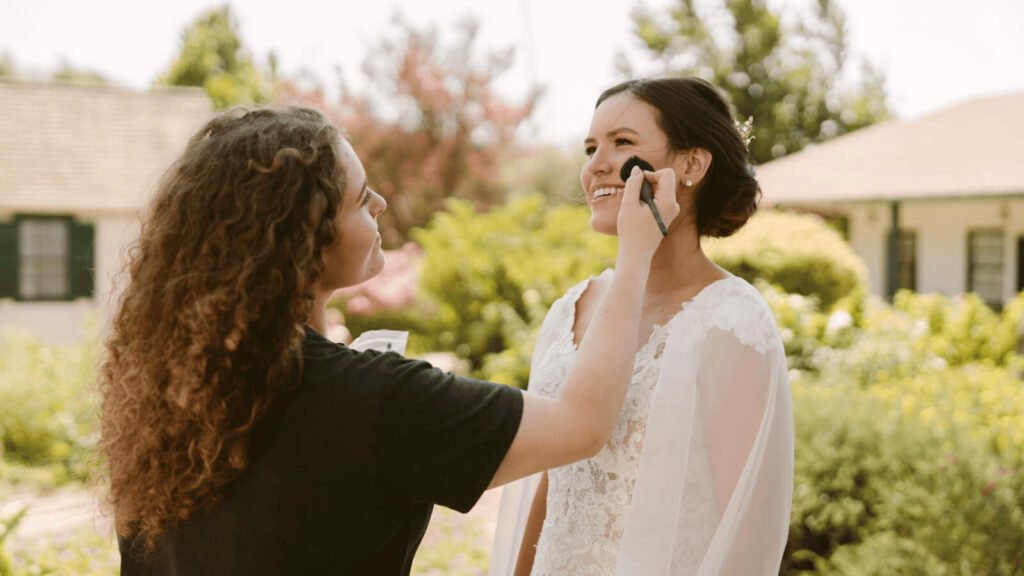
Mature makeup is a specialty I genuinely enjoy, not an afterthought. I have more than 11 years of professional experience, with work in corrective beauty makeup, bridal makeup, print makeup, and mature makeup.
I trained at Empire Academy of Makeup in Orange County, and my work has been featured in Voyage LA Magazine and SDVoyager. Experience matters because different skin types respond differently to products and techniques. Knowing how to adapt an application comes from understanding those differences and assessing each client individually.
A bridal trial is especially valuable when you have concerns about fine lines, dryness, texture, or how foundation has looked on your skin in the past. It gives us time to test the approach, adjust the finish, and discuss any areas you would prefer to emphasize or soften.
Because I am fully mobile, I come to you with a complete professional kit, including studio-quality lighting and seating, so I can assess your skin clearly even when the room’s lighting is not ideal. You skip the salon commute, and your getting-ready party can stay together.
I also offer coordinated hair and makeup services for bridesmaids and mothers of the bride and groom. For larger parties, I can bring additional artists so everyone finishes on schedule without cutting corners on the bride’s application.
You can read more about my experience and training on the Brittany Brown Beauty About page and explore examples of my work in the portfolio.
Plan Your Mature Makeup Look
Your makeup should complement your features, suit your personal style, and help you feel confident at every stage of life. Brittany Brown Beauty offers personalized makeup services for weddings and special occasions, with attention to your preferred finish, coverage, and comfort.
Ready to plan your look? Contact Brittany Brown Beauty with your event date and details to discuss your makeup needs and check availability. Your date is secured with a signed contract and deposit.
Frequently Asked Questions
Mature skin can respond differently to certain makeup formulas. I focus on careful preparation, lighter layers, and precise placement rather than automatically using heavy coverage. My goal is a natural, radiant finish that still feels like you.
The right products depend on your skin, the occasion, and the finish you prefer. I select primers, foundations, and setting products to suit your needs. During your trial, we test the formulas together and make adjustments based on how the makeup looks and feels on your skin.
Contact me as soon as your venue or event date is confirmed. Spring and fall weekends often book early. Scheduling your trial in advance gives us time to refine your look and make adjustments well before the event. It also gives you time to maintain a consistent skincare routine in the weeks leading up to your wedding.
Yes. I build coverage with thin layers and correct color selectively where needed. Rather than applying powder everywhere, I set specific areas as appropriate. This approach helps create an even finish without unnecessary product buildup. Your trial lets us see how the makeup sits on your skin and makes adjustments.
Yes. I offer coordinated hair and makeup services for mothers of the bride and groom, bridesmaids, and other wedding party members. Mature makeup is one of my favorite services, and I want every woman in your family to feel beautiful, confident, and special.