
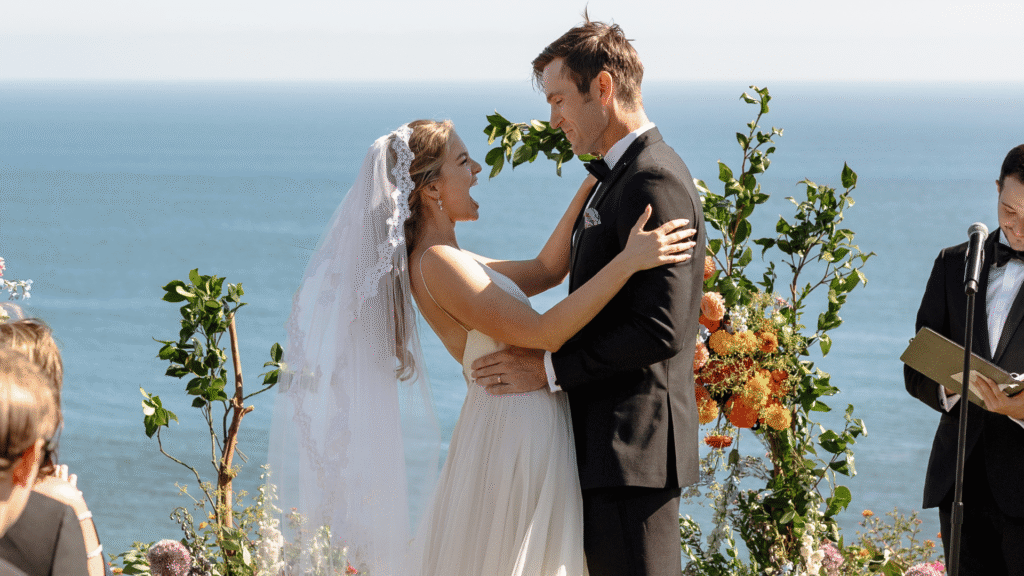
A bride books her makeup trial on a Tuesday afternoon. The artist works in a well-lit studio, the mirror says the foundation is flawless, the contour looks sculpted, and the skin has the most beautiful glow. Wedding day arrives. The ceremony is held inside a candlelit church. By the time the couple walks back down the aisle, the same makeup that looked polished and dimensional in the studio reads flat and washed out. The photographs confirm it.
This is not uncommon. Bridal makeup is designed to be worn in a specific environment, under specific lighting conditions, often captured by a camera that sees light very differently from the human eye. Most brides select a makeup look based on how it appears in a trial room or on a Pinterest board, without ever stopping to consider how that look will behave in the venue where they will spend eight or more hours of their wedding day.
Lighting is not a finishing detail. It is one of the primary factors that determines whether bridal makeup looks stunning or falls flat, both in person and in photographs.
Why Lighting Changes the Appearance of Bridal Makeup
Light does not simply illuminate a face. It interacts with every product applied to the skin, changing color, texture, and finish in ways that can dramatically alter the final result.
Natural light reveals everything. Outdoors, sunlight shows skin texture, product buildup, and blending edges with unforgiving clarity. A foundation that looks smooth inside can show pore texture, fine lines, and cakey patches the moment a bride steps outside. Natural light is also directional, especially at midday, which creates shadows and highlights that exaggerate any imperfections in the makeup.
Artificial light manipulates color. Most indoor wedding venues use warm-toned bulbs. Those warm tones absorb cool and neutral shades and can make certain blush colors, lip shades, and contour products disappear entirely. A cool-toned taupe contour that photographs beautifully in daylight can become invisible under warm ballroom lighting. Conversely, warm-toned bronzers may read as muddy orange in daylight but appear rich and natural under warm bulbs.
Flash photography is its own category of challenge. Camera flash is a burst of bright white light that hits the face at close range and bounces off whatever it encounters. Products with reflective particles, high-shine finishes, or SPF compounds can cause flashback, where certain areas of the face appear unnaturally bright or white in photographs. A dewy highlight that looks luminous to the eye can blow out entirely in a flash photo.
The human eye adjusts constantly to ambient light. Cameras do not adjust the same way. This is why makeup that appears balanced in a mirror can look uneven, washed out, too heavy, or patchy in professional photographs. The makeup artist is essentially working for two audiences simultaneously: the guests who see the bride in real life and the camera that captures everything in still images. Both require thoughtful product choices.
Bridal Makeup for Outdoor Weddings
Outdoor weddings present some of the most demanding conditions for bridal makeup, and the time of day matters as much as the setting itself.
Midday Sun
Harsh midday light is the least flattering for almost every skin type. It comes directly from above, creating shadows under the nose, chin, and eyes, while simultaneously flattening facial features. It also exposes texture more than any other light source.
Foundation selection becomes critical here. Heavy, full-coverage formulas can look thick and obvious outdoors, particularly when skin begins to warm up and move throughout the day. A foundation that provides strong coverage with a semi-matte or natural finish tends to perform better in full sun than one with a dewy or satin finish, which can start to look greasy quickly once warmth is added.
Powder placement should be precise rather than all-over. Setting powder on high-movement areas like the center of the forehead, the nose, and the chin helps control shine without making the rest of the skin look flat. Over-powdering in full sunlight can make skin appear dry and textured in photos even when it looks fine to the naked eye.
Blending matters more outdoors than anywhere else. Foundation edges along the jaw and hairline, any transition from contour to skin, and the edges of eye shadow are all visible in bright daylight in a way they simply are not indoors.
Golden Hour Ceremonies
Ceremonies timed around golden hour, typically the 60 minutes before sunset, are among the most photographically beautiful conditions for bridal portraits. The light is warm, soft, and flattering. It also strongly shifts color perception.
Under golden light, cool tones disappear. Blushes in rose, berry, or mauve can wash out completely, making the cheeks look flat in photos. Warm peachy-coral blushes and bronzer work with golden light rather than against it. Lip colors with warm undertones, such as terracotta, warm nude, and brick red, photograph more richly in golden light than cooler pink or berry shades.
One consideration many brides miss: because golden hour light is so flattering, there is a temptation to apply less makeup assuming the light will do the work. In practice, golden light can reduce the visible definition of eye makeup and brow shaping. Eyes that appear defined in neutral studio light may look softer and less distinct under warm golden tones. A slightly deeper eye look tends to remain visible.
Beach Weddings
Beach settings introduce two lighting challenges that do not exist in most other venues: reflective light and humidity.
Water and white sand act as natural reflectors, bouncing light upward onto the face from below. This underlight is completely opposite to how makeup is typically applied and can reveal the underside of the chin, the lower lids, and facial features in unflattering ways if the makeup is not adjusted for it. It can also create a washed-out effect across the face by eliminating natural shadow.
Humidity accelerates the breakdown of almost every makeup product. Foundations slide, powders dissolve, and anything with a liquid or cream formula may not last the ceremony without proper setting. A beach wedding in Orange County, where marine layer, salt air, and summer humidity all factor in, requires a completely different product approach than an inland or mountain wedding. This article on beach wedding makeup covers the specific product strategies and application techniques worth reviewing before planning a coastal ceremony look.
Long-wear primer, waterproof eye products, and a strong-hold setting spray are not optional in these conditions. Shine control products also need to be chosen for longevity rather than appearance alone. A powder that looks matte in a studio may not remain effective when skin is warm, humid, and exposed to ocean air.
Bridal Makeup for Indoor Weddings
Indoor venues are not automatically easier to work with than outdoor settings. The type of artificial lighting used varies significantly between venues, and each creates distinct challenges.
Hotel Ballrooms
Most hotel ballrooms use warm-toned overhead lighting with occasional uplighting for ambiance. Under warm artificial light, makeup can look different from how it appeared in daylight. Cool-toned foundations may look slightly ashy. Cool-toned contour can disappear. Blushes that looked vibrant in natural light may appear muted.
Foundation undertone becomes particularly important here. A bride who selects a cool-neutral foundation in a studio may find it reads differently once she is surrounded by warm amber lighting for several hours. Warm or neutral-warm foundations tend to look more natural under warm ballroom light than purely cool ones.
The intensity of the lighting also matters. If the ballroom uses dimmer switches and keeps the reception atmosphere low and moody, makeup needs slightly more definition than it would in a bright environment. What reads as natural in a well-lit space can look faded and undefined in dim warm light.
Churches
Church lighting is perhaps the most varied of any venue category. Some churches have large windows that flood the space with natural light during a daytime ceremony. Others rely entirely on stained glass, candles, or overhead fixtures. Some older churches use fluorescent lighting, which is one of the harshest environments for bridal makeup.
Fluorescent or cool-toned overhead lighting tends to wash out skin tones and make makeup appear flat. It accentuates redness, can make certain foundations appear slightly pink or gray, and reduces the dimensional effect of contouring and highlighting. In churches with this type of lighting, slightly more defined contouring and a warmer foundation undertone can help maintain dimension and warmth.
Stained glass light is unpredictable. Colored light from church windows can cast tints across the face during photographs, and the effect varies throughout the ceremony as the sun moves. This is a case where working with a photographer who has experience in that specific venue makes a significant difference.
Luxury Venues
Estate properties, historic buildings, and upscale event spaces often feature a combination of natural light, chandeliers, and layered ambient lighting. The effect is usually warm and luxurious, which favors warm-toned makeup across the board. If the venue relies heavily on candlelight, the same principles apply as for evening weddings, discussed below.
Bridal Makeup for Evening and Night Weddings
Evening weddings shift the lighting environment entirely toward artificial sources. Candlelight, string lights, chandeliers, and dim venue lighting all behave in ways that require specific makeup adjustments.
Candlelight is among the most romantic lighting conditions, but it is also very dim and very warm. Under candlelight, faces can appear soft to the point of losing definition. Contouring that appears subtle in the afternoon can fade to near-invisible in a candlelit ballroom. This is why brides marrying in the evening often benefit from slightly stronger definition than they might choose for a daytime ceremony. Not heavier in the sense of dramatic or theatrical, but more intentional in placement and blending.
String lights, while beautiful in photographs, create uneven pools of light and shadow. Depending on their placement, they can create a flattering glow or an unpredictable dappled effect. The safe approach is makeup that remains readable in both lit and shadowed areas, which tends to favor slightly warmer tones and more defined eye work.
Evening weddings almost always involve flash photography during the reception. Guests use phone cameras, venue photographers work in lower light, and flash becomes the primary light source for many of the candid images from the night. This brings flashback risk back into the equation. SPF-containing products and highly reflective highlighters need to be used with caution. A subtle, press-powder highlighter placed only on the highest points of the cheekbones and brow bone tends to photograph better under flash than liquid or loose highlighters applied broadly across the face.
Foundation intensity also behaves differently at night. A natural or light-coverage foundation that looks polished in daylight may not hold up as the night goes on and flash photography takes over as the dominant lighting condition. Medium-coverage formulas with a semi-matte finish tend to remain consistent across more hours and lighting shifts.
How Wedding Photography Influences Makeup Choices
Photography is where bridal makeup is most often misunderstood. The camera does not see what the eye sees. It processes light differently, captures differently, and produces results that can diverge dramatically from what appeared perfect during application.
Flashback is one of the most discussed issues, and for good reason. It occurs when a product reflects camera flash in a way that creates an unnaturally bright or white appearance in photographs. The most common culprit is SPF. Many foundations, primers, and setting powders contain broad-spectrum SPF, which is genuinely useful for skin protection but can cause significant flashback under direct flash. Physical sunscreen ingredients, particularly titanium dioxide and zinc oxide, are highly reflective compounds. In daylight photographs, this is less of an issue because the light is diffuse. Under direct camera flash, those same compounds can make a bride’s face appear washed out or patchy white in photos.
This does not mean SPF products should be avoided entirely on the wedding day. It means they need to be selected carefully and layered strategically. A moisturizer with SPF worn under a flash-safe foundation with no physical SPF is a different outcome than layering multiple SPF-containing products on top of each other. The cumulative effect of layered SPF is where flashback risk increases most significantly.
HD photography and video are standard at modern weddings. High-definition cameras capture texture, blending lines, and product buildup with much greater accuracy than standard cameras. Makeup that looks smooth to the eye can show visible texture or cakey patches in high-resolution photographs. This is one of the reasons airbrush foundation has remained popular for bridal work. The compressed air application creates an even, thin film of product with no brush marks or buildup zones, which performs consistently in HD photography. That said, airbrush is not automatically the right choice for every skin type. Understanding the difference between airbrush and traditional foundation for bridal use comes down to skin type, coverage needs, and venue conditions.
The camera captures more honestly than the human eye in other ways too. Blush that appears healthy and flushed in real life can appear as a patch of color in photographs if placement is too concentrated. Contour that looks subtle in person can read as a dark stripe if the shade is too cool or the blending is not extended far enough. These differences between real-life and camera perception are exactly why bridal makeup looks different in photos even when application was flawless in person. The relationship between makeup and photography is not about applying more product. It is about applying the right products in the right formulas with placement and blending adapted for how a camera reads the face.
Why Makeup Trials Should Replicate Wedding Conditions
The makeup trial is one of the most valuable tools a bride has, but only if it reflects the actual wedding day conditions. Most trials happen in a studio or well-lit home, while weddings take place in very different environments.
A trial that ignores venue lighting is essentially testing a different version of the final look. The makeup might translate well, or it might not. Without seeing it in real conditions, there is no clear answer.
After the trial, the most useful step is taking photos in lighting similar to the venue. For outdoor weddings, step into natural daylight. For evening ballroom settings, use indoor warm lighting with flash. These images give a more accurate idea of how the makeup will appear on the wedding day.
Ceremony timing also plays a role. A midday outdoor wedding needs makeup that holds under harsh light. An evening reception requires a softer, more controlled approach that works with low warm lighting and flash photography. These adjustments affect intensity, finish, and sometimes color choices.
What actually happens during a bridal makeup trial goes beyond testing shades. It is a process of observing how the skin reacts to products over time and how the final look reads in real lighting conditions. Brides who treat it as a final result instead of a test phase often run into trial mistakes that can change the final look without realizing it until the wedding day.
Venue walkthroughs with the photographer can also make a difference. Seeing the ceremony space, light sources, and portrait areas helps both bride and artist make more accurate decisions instead of guessing.
Common Lighting Mistakes Brides Make
Choosing Pinterest Looks Without Considering Venue Lighting
Many brides choose a look from Pinterest without thinking about where the wedding takes place. A dewy studio look photographed under controlled lighting will not behave the same in midday sun or an outdoor garden ceremony. Lighting changes everything, so the same makeup can look completely different in real life.
The better approach is to match inspiration images with similar lighting conditions. Look for photos taken in bright outdoor light, warm indoor venues, or candlelit evening settings. This gives a more realistic expectation of how makeup will appear on the wedding day.
Ignoring Photography Requirements
Wedding photos capture the day more than mirrors ever will. Makeup that looks good in person can still fail under flash, lose definition, or create unwanted shine on camera.
At the trial, test the look using flash photography. Review the images and check how skin, eyes, and overall balance appear under camera lighting.
Relying Only on Indoor Lighting for Foundation Choice
Bathroom and vanity lighting do not reflect real wedding conditions. A foundation that looks perfect indoors can shift in outdoor light or flash photography.
If the wedding is outdoors, test foundation near natural light. If it is an evening event, test under warm indoor lighting with flash. Lighting should guide the final shade and finish decision.
Overusing Glow Products for Outdoor Weddings
Highlighters and dewy finishes that look fresh indoors can turn overly shiny in strong natural light, especially in warm weather.
Outdoor weddings work better with controlled glow. A soft, targeted highlight on high points of the face creates dimension without excess shine.
Going Too Matte for Evening Weddings
A fully matte finish can look flat under dim lighting and flash photography. It removes depth from the face and can appear lifeless in photos.
Evening makeup works best with a balanced finish. Controlled glow placed in specific areas helps the face stay defined without looking shiny.
Book a Bridal Makeup Consultation
Lighting is one of the most overlooked factors in bridal makeup planning. Many brides choose a look based on inspiration photos or how it appears during a trial, without considering how it will perform under their actual wedding lighting.
Venue lighting, ceremony timing, photography style, and skin type all influence which products, finishes, and colors work best. A daytime outdoor ceremony requires a different approach than an evening reception, and makeup that looks beautiful in person may not always translate the same way in photographs.
At Brittany Brown Beauty, these details are considered from the start. During consultations and trials, venue conditions, timing, photography, and skin type help guide makeup decisions so the final look performs well both in person and on camera.
If you have not tested your bridal look under conditions similar to your wedding day, schedule a consultation and makeup trial to create a look suited for your venue, lighting, and photography style.
Frequently Asked Questions
Yes. Outdoor weddings place makeup under natural light, which reveals texture and blending more than indoor settings. Foundations should focus on long wear and a natural finish rather than high-shine or overly dewy looks. Powder placement, blending, and product choice all need more precision outdoors. In heat or humidity, waterproof primer and setting spray also help maintain makeup through the day.
Cameras process light differently than the human eye. Camera flash creates bright, direct light that can cause certain products to reflect unusually, particularly those containing SPF or fine shimmer. HD photography also captures texture and blending more precisely than what appears in a mirror. Shade choices, product finish, and placement that look correct in person may read differently once photographed under flash or in natural light.
A semi-matte or natural finish usually works better for outdoor ceremonies than a fully dewy look. Direct sunlight can break down dewy products faster, which may turn shiny or greasy over time. On the other hand, a full matte finish can look flat in outdoor photos. A natural to semi-matte base with controlled highlighter on key areas tends to hold up best in outdoor conditions.
Flash creates a burst of bright white direct light that bounces off reflective surfaces. Products containing physical SPF ingredients, glitter, or high concentrations of shimmer can reflect flash abnormally, appearing white or overexposed in photographs. This is called flashback. Avoiding heavy SPF layering in foundation and setting products and choosing finely-milled pressed highlighters over liquid or loose formulas significantly reduces this risk.
Yes. The trial is most useful when it tests the makeup in conditions similar to the actual wedding. After the trial, photograph the look in lighting that resembles the ceremony venue, whether outdoors in sun or indoors under warm or cool artificial light. Review those photographs before finalizing the look. Adjustments made after seeing how the makeup performs in context are far more effective than changes made based only on mirror appearance.
Related Articles:
- How to Match Bridal Makeup to Your Skin Undertone
- Bridal Eye Makeup Styles: How to Choose the Right Look for Your Wedding
- Bridal Makeup Trends 2026 in Orange County
- How to Make Bridal Makeup Last All Day Without Touch-Ups
- Brittany Brown Bridal Makeup Routine: How It Lasts All Day
- Bridal Makeup for Mature Skin: What Works and What to Skip
- Best Foundation Types for Bridal Makeup
- Bridal Makeup Trial Mistakes That Change Your Final Look