
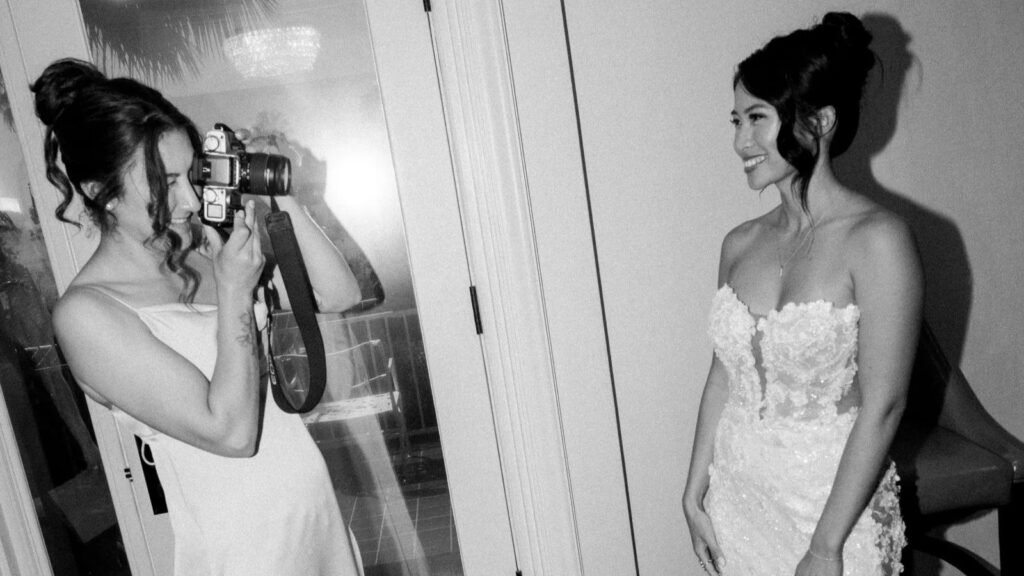
Your wedding photos will live far longer than your wedding day. You will print them, frame them, and share them for decades, and many photographers deliver a gallery in full color along with a set of black-and-white favorites. A makeup look that glows in color can read very differently once the color disappears, so it helps to plan for both from the start.
In short, makeup that works in both formats keeps a real dimension in the face, uses lip and cheek colors with different depths, and gets tested in both color and black-and-white before the wedding. I am Brittany Brown, a mobile bridal hair and makeup artist based in Orange County and serving San Diego. After 11 years of hands-on work with brides, I have seen how the same look can change from one frame to the next. This guide explains why makeup reads differently in black-and-white, how I build a look that works in both formats, and what to ask your photographer before the wedding.
Why Some Makeup Reads Differently in Black-and-White
Color photos show hue, which is the actual shade of your lip, cheek, and eye color. Black-and-white photos remove hue and keep only value, which is how light or dark each area appears. Two shades that look completely different in color can turn into almost the same gray tone once the color drops out. If you want a broader look at this, my post on why bridal makeup looks different in photos and how to get it right covers the topic beyond black-and-white.
That shift explains most of the surprises brides notice in their galleries. Here are the most common ones:
- Blush and lip color can blend together. A soft pink cheek and a rosy lip may share a similar depth, so they can merge into one flat tone instead of reading as two distinct features.
- Bronzers can look heavy. Warm color that looks like a gentle glow in color can read as a dark smudge when only value remains.
- Shimmer can look uneven. Light-reflecting finishes catch the light and can show as bright patches in black-and-white, especially in direct sun.
- Flat, matte coverage can lose dimension. Without enough variation in light and shadow, the face can look two-dimensional.
The setting adds another layer. Southern California light is bright, and coastal venues add reflected light, sea air, and breeze. Golden-hour light at Crystal Cove in Newport Coast, direct sun at a bluff-top venue in Corona del Mar, and harbor-reflective light in Newport Beach all change how skin and color appear on camera. The same conditions apply at San Diego waterfront venues. Because I bring my own studio-quality lighting and seating to every appointment, I apply your makeup in consistent, controlled light and then plan the look around the light your photographer will use.
Building a Look That Works in Both
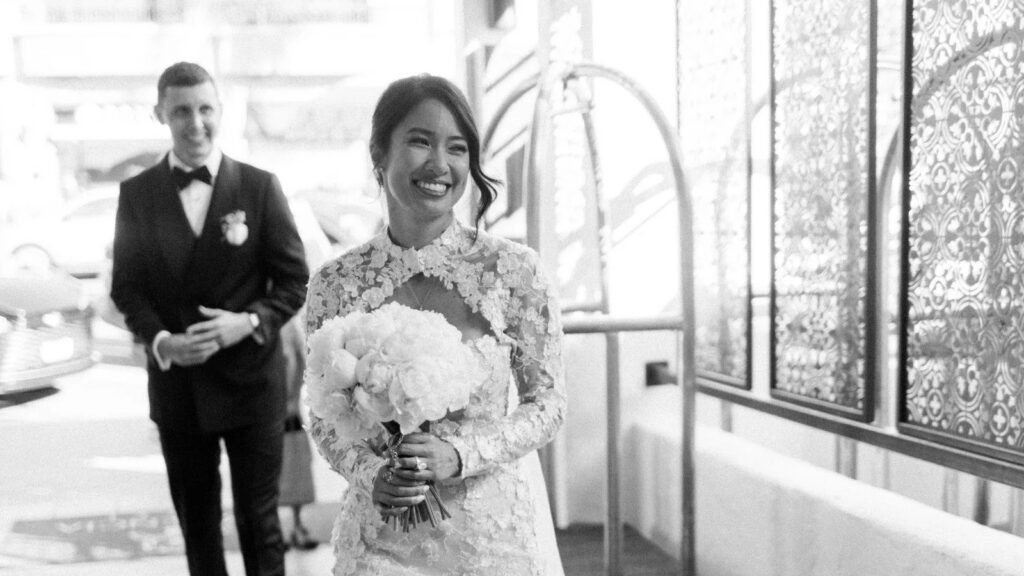
My approach to bridal beauty has always been to enhance, not mask. That philosophy helps most here. A soft, natural-but-enhanced look, with glowing skin and warm, bronzed contour in place of heavy coverage, tends to translate well because it keeps real dimension in your face. It is the no-makeup-makeup look, and it supports what my brides say most often: they look like themselves, but elevated. If you are weighing a more polished finish against a softer one, soft glam vs natural bridal makeup compares how each tends to photograph.
Each of the following ideas shapes my work on a bride who wants her photos to look beautiful in both formats.
Contrast and Depth Without Over-Contouring
Black-and-white photography depends on light and shadow, so a little depth helps. A face with no variation can look flat, and a face with too much can look harsh. I aim for the middle: soft shadows, subtle highlights, and gentle sculpting that follows your natural bone structure.
Here is how I approach depth:
- Start with skin that looks like skin. Glowing, even skin photographs well in both formats. I prep your skin without rushing, because a smooth surface helps every product that follows sit more naturally.
- Sculpt softly. Warm, blended contour adds shape without creating hard lines. Heavy contour can be photographed as a dark stripe in black-and-white, so I keep the edges diffused.
- Place highlights with care. A subtle highlight on the high points of the face adds dimension. I choose a finish that glows rather than glitters, since large flecks of shimmer can show as bright spots under strong light.
- Define the eyes with soft shadows. I specialize in enhancing natural features through soft shadows and subtle highlights, which gives the eyes depth without a heavy, dark frame.
- Balance the brows. Well-shaped brows add structure to the face in both color and black-and-white.
Strong sculpting that looks dramatic in a mirror can look severe on camera, so over-contouring is a mistake worth avoiding. Little subtle changes on the skin can be very powerful, and a lighter hand usually photographs better. My contouring dos and don’ts for brides goes into more detail.
Finish and texture play a part as well. Dewy skin catches more light and matte skin absorbs it, and both read differently once color is removed, so the right balance depends on your skin and your venue. I explain how to choose in dewy vs matte bridal makeup. Black-and-white can also make raised or uneven texture more noticeable, because it relies on light and shadow. If that is a concern for you, bridal makeup for acne scarring and uneven texture explains how I approach it.
Lip and Cheek Color Choices
Lip and cheek color deserve the most thought, because color turns into value in black-and-white. If your lip and cheek share a similar depth, they can look like one continuous tone. If your lip is very deep and your cheek is very pale, the lip can dominate the whole frame.
A few guidelines help me choose:
- Pick a lip with clear depth. A lip shade that sits slightly deeper than your natural lip color gives the mouth definition in both formats. A shade that matches your skin too closely can disappear in black-and-white.
- Choose a cheek color that supports the lip. I look for a cheek tone that adds a healthy flush without competing with the lip or blending into it.
- Keep the finish comfortable. A lip that feels comfortable lets you eat, laugh, and hug without constant attention.
- Match the look to the dress and the day. Your dress color, bouquet, and venue all influence which tones look best together.
Your skin tone and undertone matter too, which is why I plan color around the individual rather than a fixed palette. I build each look around your skin, your dress, and your venue, and the right shade for you depends on all three. Foundation shade is the starting point for all of it, and choosing the right foundation shade for your wedding day explains what to look for. If you have darker hair, bridal makeup ideas for brunettes in Orange County, CA offers color and finish ideas to consider.
Testing Your Look in Both Formats
A bridal makeup trial is the best way to see how your look behaves before the wedding. I strongly recommend one. A trial lets us test products on your skin, work through any adjustments, and make sure you walk into your wedding day knowing exactly what to expect. If you are not sure how to describe what you want, how to explain your vision to your makeup artist during a trial can help you prepare, and what happens during a bridal makeup trial walks through the appointment itself.
For a bride who wants strong black-and-white results, the trial does extra work:
- Take photos in different lighting. Step near a window, move outdoors if possible, and photograph the look from several angles. Bring your phone.
- Convert the photos to black-and-white. Most phones can do this in a few taps. Compare your color and black-and-white versions side by side to see how your lip, cheek, and eye color translate.
- Adjust what you notice. If your lip blends with your cheek, or your contour looks too dark, we change it on the spot.
- Check comfort and wear. Stay in the look for a couple of hours if you can, so we see how it feels and how it holds up.
- Share any skin concerns. Tell me about any skin sensitivities, reactions, or recent treatments, so we plan around them. Testing products directly on your skin also gives us a chance to notice how your skin responds before the wedding day.
This kind of testing replaces guesswork with real information, and it is one of the simplest ways to feel calm on your wedding morning.
What to Ask Your Photographer in Advance
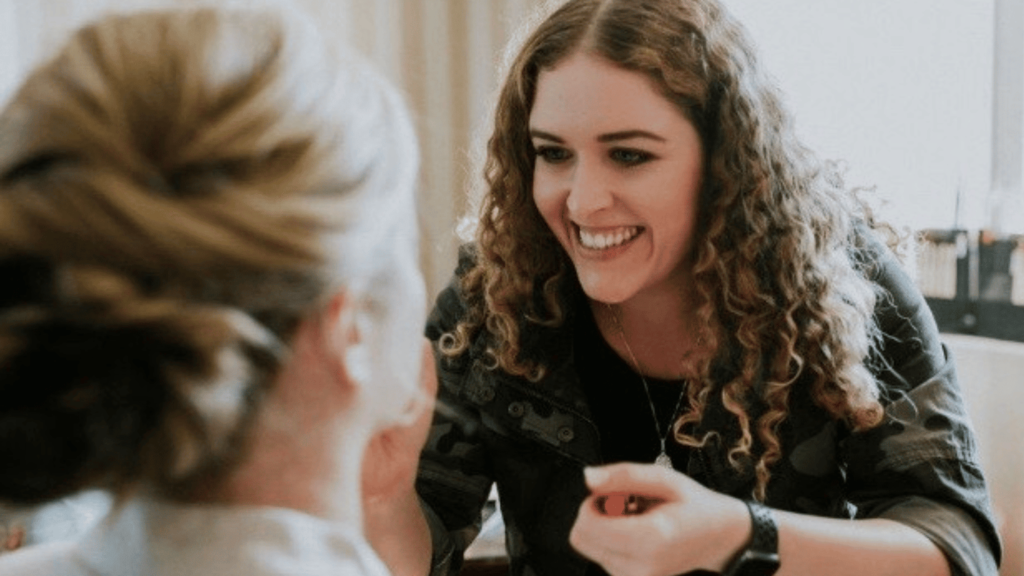
Your photographer controls how your makeup appears in the final gallery, so a short conversation before the wedding pays off. Photographers have different editing styles, and some lean toward bright, airy tones while others prefer deep, moody contrast. Knowing their style helps me choose the right depth and finish for you.
Consider asking these questions:
- Can I see a sample gallery in both color and black-and-white? Look at how skin, lips, and shadows appear in each format.
- Do you use flash during portraits or the reception? Flash can bounce off certain finishes, so I plan the texture and set of your makeup around it.
- What is your editing style? A bright, high-key edit and a deep, high-contrast edit call for different amounts of depth in the makeup.
- When will you take portraits? Midday sun, golden hour, and indoor light all affect how makeup reads, so the portrait schedule helps me plan.
- Which images do you usually convert to black-and-white? Ask which moments they favor, such as close-up portraits or candid reception shots.
- Will you photograph the getting-ready sequence? Tell me if you want those moments captured, because that shapes the order of the morning.
Clear communication between your artist and photographer makes the day smoother. Clients often mention in their reviews that I work well alongside other wedding vendors, and I am happy to coordinate directly with your photographer or planner. Bring the answers to your trial, and we can adjust the plan together.
For production and editorial shoots, I rely on a similar set of skills: controlling shine, keeping color accurate under changing light, and keeping texture looking smooth even in close-up images. Those camera-first habits carry into my bridal work and help your skin look camera-ready in any format. You can see examples of my work in my portfolio, which shows how a natural, glowing look translates on camera.
Plan Your Bridal Makeup
Once your wedding date and venue are confirmed, reach out to discuss your bridal makeup plans and availability. Spring and fall weekends in Orange County and Newport book quickly, so early booking is recommended.
Brittany Brown Beauty offers mobile bridal makeup, with setup taking approximately 15 to 20 minutes. Bridal application typically takes 60 to 90 minutes, while each bridesmaid needs around 45 to 60 minutes. Every bride also receives a complimentary touch-up kit with lipstick, powder, and blotting sheets. You can coordinate your look with the bridal hair and makeup services.
Learn more about Brittany’s experience on the About page or explore additional services on the Brittany Brown Beauty homepage.
Ready to plan your wedding-day look? Contact Brittany Brown Beauty with your date, venue, and makeup preferences to discuss your vision and check availability. Your date is secured with a signed contract and deposit.
Frequently Asked Questions
Start a consistent skincare routine at least four weeks before the wedding. Avoid new skincare products or treatments during the final 10 days. Drink plenty of water in the week before, especially during summer. These are everyday care habits, not medical advice. Check with your skincare professional if you have specific concerns. On the wedding morning, I prep your skin without rushing. A smooth, well-prepared surface helps your makeup look natural in both color and black-and-white photos.
I cannot promise any look will last without a single touch-up. No honest artist can. What I can do is prepare your skin carefully and choose professional products suited to your skin and Southern California conditions. I finish with setting and sealing techniques designed for lasting wear through the ceremony, photos, and reception. Your trial lets us test how the look holds up before the wedding. Every bride also receives a complimentary touch-up kit with lipstick, powder, and blotting sheets for quick refreshes.
Yes. I build every look around your skin, dress, and venue rather than using a fixed package look. Different skin tones, undertones, ages, and skin types need different products and techniques. I adjust each look accordingly. This includes mature skin, where some formulas can settle into fine lines or feel heavy. I choose textures and techniques that suit mature complexions. Your trial lets us test the look on your skin and make any needed adjustments.
Keep the look natural and enhanced rather than heavy. Soft contour, subtle highlights, and lip and cheek colors with different depths help maintain definition in black-and-white photos. Testing is equally important. At your trial, we photograph your makeup in different lighting and convert the images to black-and-white. This shows how your lip, cheek, and eye colors translate. It also helps to ask your photographer for sample galleries in both formats before the wedding.
Yes, I recommend it. Your trial already gives us time to test products and make adjustments. A black-and-white check takes only a few extra minutes. We photograph the look from several angles and in different lighting. Then we convert the images and compare them side by side. If your lip color blends into your cheek or your contour looks too dark, we can adjust it before the wedding day.