
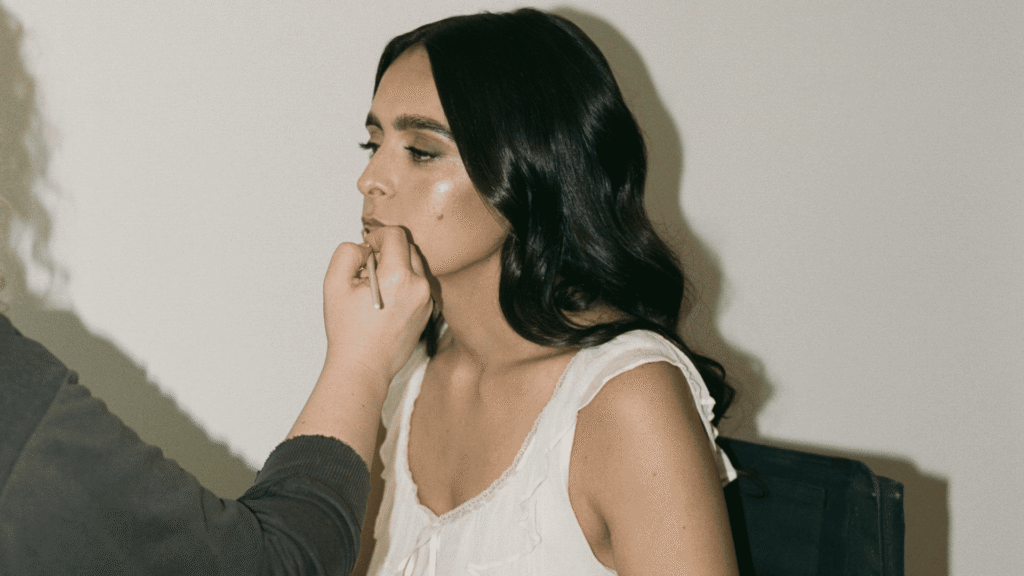
False lashes for brides usually come in two types: strip lashes and individual lash clusters. Strip lashes sit along the lash line as one piece, while clusters let the artist add smaller groups where needed. Both can create a natural or more dramatic look, depending on the style and placement.
Brittany Brown Beauty offers mobile bridal hair and makeup across Orange County, San Diego, and surrounding areas. Brittany focuses on enhancing natural features, so your makeup still feels like you.
The right choice depends on the look you want, how the lashes feel on your eyes, and how they work with your natural lashes. Here’s what to consider before choosing strip lashes or individual clusters for your wedding day.
What Strip Lashes Offer
A strip lash is a single band of lashes made to sit along the natural lash line. The artist fits it to the eye, then attaches it with lash adhesive. Four details set the look: the band, the shape, the length and the density.
- Band: A thin, flexible band tends to sit closer to the lash line. A thicker band can show, so liner or shadow often helps blend it.
- Shape: Longer hairs toward the outer corner lengthen the eye. Even-length hairs open it more evenly.
- Length: Shorter lashes read as natural. Longer lashes add drama.
- Density: Sparse, wispy styles add definition. Dense styles give a fuller, glam finish.
That range runs from subtle definition to a fuller evening look. Lashes also help eyes read in photos taken from a distance, as soft glam versus natural bridal makeup explains.
One strip keeps application simple. The artist places a single piece, so the line stays even across the eye. The artist usually builds the eye makeup first, then places the lash and blends the band with liner or shadow. Expect light pressure along the lid while it sets. The shape you test at the trial is the shape you wear on the wedding day.
Strips have drawbacks too. A visible band can show on brides with short or sparse natural lashes. The outer or inner edges can lift. Some wearers feel the weight, especially with fuller styles.
Strip lashes may suit a bride who wants a fuller, defined look. She also needs enough natural lashes to hide the band. Another option is worth considering if the band shows, the edges keep lifting or the weight bothers her.
What Individual Lash Clusters Offer
Clusters are small groups of a few lashes. The artist applies them along the lash line one at a time. Placement, length and density can change across the eye, so the bride gets a more tailored result.
That control opens several finishes. Lightly spaced clusters can mimic natural lashes. Our look at natural bridal makeup trends describes the wispy, defined-but-not-dramatic style many brides want. Clusters concentrated at the outer corner add emphasis there. Denser, layered placement builds a more defined look.
Careful placement takes time. You will keep your eyes closed or looking down while the artist works close to the lash line. Clusters go in one by one, so the process takes longer than placing a single strip. Wear depends on the product, the adhesive, the application and the conditions on the day. Clusters do not always feel lighter than a strip, and they do not always last longer.
Clusters are also different from semi-permanent lash extensions. Extensions are individual lashes bonded to single natural lashes, and they stay on beyond the wedding day. A lash technician applies them in a separate appointment. This article compares strips and clusters applied as part of bridal makeup. Treat extensions as their own decision.
Comparing Comfort, Appearance, and Wear Time
The table below sets the two options side by side. Results vary with the product and the individual, so read it as a guide, not a ranking.
| Comparison | Strip Lashes | Individual Lash Clusters |
| Overall appearance | An even, continuous line. Styles range from wispy to full. The band can show if it is not blended. | A textured, varied finish. It can look soft and natural or build toward defined. Wide gaps can show. |
| Customization | Pick a style, then adjust the fit and length. The shape of the lash stays fixed. | The artist varies placement, length and density along the lash line. |
| Application | One piece placed along the lash line. Usually the quicker option. | Many small placements. It takes more time and careful spacing. |
| Comfort | Some wearers notice band stiffness or weight, especially with fuller styles. | Often light when placed sparingly. Heavier placement or adhesive sensitivity can still cause discomfort. |
| Potential wear issues | Edges can lift at the corners. The band can shift with rubbing, tears or humidity. | Single clusters can loosen or fall out, leaving gaps. Hold depends on the natural lashes and the adhesive. |
| Removal | Loosen the adhesive and peel the strip away gently. Then clean off residue. | Each cluster is loosened and removed separately. This can take longer. |
| Best suited for | A defined or fuller look in one application, with enough natural lashes to blend the band. | A softer, customized finish, or emphasis in certain areas, with time allowed for placement. |
No lash style is guaranteed to last through a full wedding day. These factors affect wear:
- Tears: Happy tears can loosen adhesive and smudge liner. Dab gently instead of wiping.
- Humidity: Warm, humid air can soften both adhesive and surrounding makeup. Coastal and outdoor weddings face this most.
- Rubbing: Touching or rubbing the eyes can lift edges and shift clusters. Hugs and photos with close faces also test the lash line.
- Eye sensitivity and adhesive tolerance: Redness, itching or watering can mean a reaction. Tolerance varies from person to person.
- Application quality: Clean lashes, careful placement and the right amount of adhesive all matter.
- A long schedule: A morning ceremony and late reception stretch wear over many hours.
For the rest of the eye area, see making bridal makeup last without touch-ups. Ask your artist what small fixes to expect during the day. A loose strip edge may be pressed back down, and a loose cluster may be reseated or removed.
Choosing the Right Lashes for Your Wedding Makeup
Several factors can help you decide between strip lashes and individual clusters. Start with the look you want, then consider your natural lashes, eye shape, and wedding plans. For brides in Orange County, the venue and season can also influence how much definition you want.
What to Consider Before Choosing
- Preferred look: If you are collecting bridal makeup ideas, note how much lash definition you like in each photo.
- Natural lashes: Short or sparse lashes may need more help to achieve fullness. Long, full lashes may need less added volume.
- Eye shape: Placement can lengthen, open, or balance the eyes. Extra length at the outer corners can make round eyes appear longer. On hooded eyes, lashes that are too long may touch the lid fold. Monolids may benefit from careful lash placement for added definition. For more ideas, see bridal eye makeup styles.
- Setting and photography: Outdoor light and distance shots can call for more definition, while an intimate indoor setting may suit a softer look.
- Overall makeup: Full lashes can stand out against soft skin and a natural lip, while heavy lashes, dark shadow, and full coverage create a more dramatic finish.
- Natural lash blending: A light coat of mascara may help blend your natural lashes with the added ones. Ask your artist which approach suits your lash style.
How Different Lash Styles Work With Your Look
A bride who prefers soft, natural makeup may like lightly placed clusters with extra emphasis at the outer corners. Someone who wants more definition may prefer a fuller strip lash. Both options can create different effects depending on the lash design and how the artist applies it.
Think about the eyes, skin finish, and lip color together. Full lashes can become the main feature when paired with fresh-looking skin and a natural lip. Add a bold eye shadow and a stronger lip, and the overall look becomes more dramatic.
Choose a Style That Still Feels Like You
Your lashes should complement your features, not make your eyes look like someone else’s. Brittany brings more than a decade of bridal makeup experience to her work. You can learn more on the About page.
Brittany does not treat one lash style as the right choice for every bride. The best fit depends on your preferences, natural lashes, eye shape, and wedding plans.
Why a Makeup Trial Matters
A trial is the right time to compare strips and clusters before committing. Ask to see both on your eyes if time allows. To see what to expect, read what happens during a bridal makeup trial.
Use the appointment to check four things:
- Light and photos: Look at the lashes in natural light and in photographs.
- Comfort: Wear the lashes for a few hours and notice weight, pulling or irritation.
- Fit with the makeup: Confirm that the lash shape suits the shadow, liner and skin finish.
- Tolerance: Spot any irritation or adhesive concerns well before the wedding.
Tell the artist about previous reactions, eye sensitivities and products you cannot tolerate. Mention contact lens use if it applies. A trial cannot rule out every future reaction, but it gives the artist time to adjust. The list of questions to ask during your bridal makeup trial can help. Browse the portfolio and bring photos of eye looks you like.
Planning Your Bridal Makeup?
Share your wedding date, venue, and preferred makeup style so Brittany can check availability and discuss your lash options. Please mention any sensitivities or past reactions when you get in touch.
Click the button below to contact Brittany Brown Beauty and discuss your bridal makeup plans.
Frequently Asked Questions
Keep a steady skin routine and avoid new products in the final ten days, including near the eyes. The 30-day skin prep guide lays out the timeline. On the day, arrive with clean, dry lids and lashes. Skip heavy eye cream beforehand, since oily products can interfere with adhesive. Tell the artist about any recent treatments.
No one can promise a set time. Wear depends on the product, adhesive, application, your natural lashes, humidity, tears and rubbing. A trial wear test shows how your lashes hold over several hours. Ask your artist what small touch-ups to expect between the ceremony and the reception.
Lash style adjusts to your eye shape, natural lashes and preferred look. Skin tone does not decide adhesive compatibility. Sensitivity and individual tolerance matter more. Skin type can affect wear, since oily lids may shift lashes sooner. Share both with your artist, and use the trial to test.
No. Clusters are applied with your makeup for the event. Semi-permanent extensions are a separate service from a lash technician. Ask your artist which one is being discussed, so you compare like with like.
Go slowly and never pull. Loosen the adhesive first, then ease strips away in one piece. Clusters come off one at a time, which takes longer. Clean off any residue gently. If your eyes feel irritated, stop wearing lashes and ask a professional for advice.