
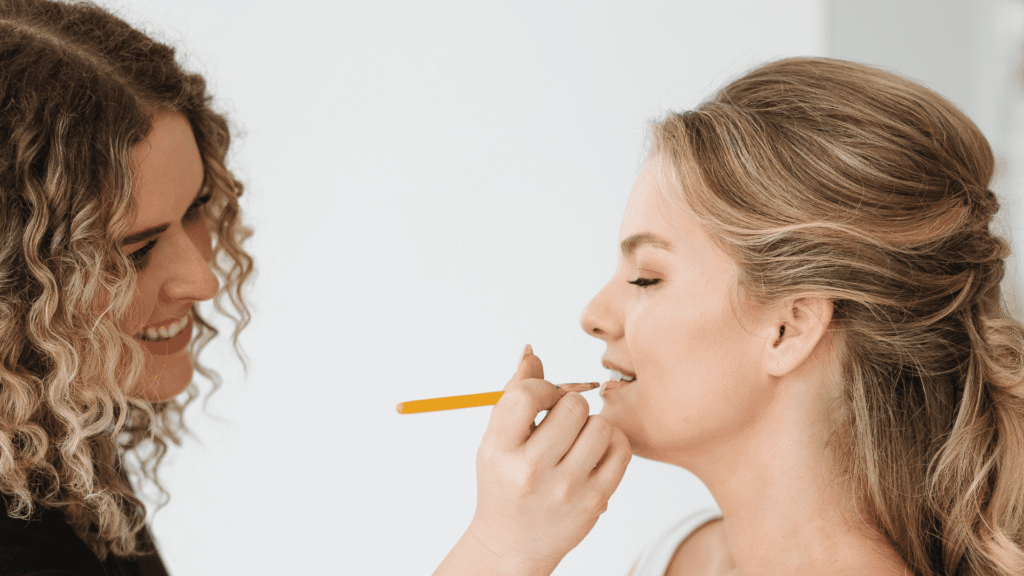
A lip color that looks like a clean, neutral rose in the makeup chair can read closer to orange under a warm tungsten light and noticeably cooler under a cool-balanced LED panel. The product did not change. The light did. Pigment control means managing how much color a makeup look delivers and how that color appears under specific lighting and camera conditions. For photographers, creative directors, and brands, that control can make a real difference when an approved color needs to stay consistent in the final image.
With 12 years of hands-on makeup experience, Brittany Brown brings this attention to color and finish to commercial, editorial, brand, and production work. Each look needs to account for the lighting setup, camera, product formula, pigment intensity, and finish. A color that looks right in person still needs to be checked under the actual production conditions before the makeup is considered final.
Why Color Can Shift Under Different Light Temperatures
Light has a color of its own. Warmer sources lean toward yellow and orange, and cooler sources lean toward blue. Skin and makeup reflect whatever light reaches them, so the same product can look different under each. Reds and pinks can drift warmer or cooler, and neutral skin tones can lean yellow or gray.
Color also bounces. Paper backdrops, painted walls, wardrobe, reflectors, and glossy surfaces all send color back onto the face. A saturated backdrop can add a cast to skin, and a reflective surface can bring out shine or intensify a product’s finish. Skin is not a flat surface either. Its texture and natural oils catch light in different ways, which changes how a pigment reads.
The makeup chair is rarely the final environment. A vanity mirror, a dressing room, and a set each have different light, so a look that is balanced in one place can need adjustment in another. That is why teams benefit from considering the final lighting before makeup is finalized. When we know whether a shoot uses strobes, continuous light, or LED panels, and whether the setup runs warm or cool, we can plan shades and formulas ahead instead of correcting on set.
Several factors decide how color reads under studio lighting:
- The color and quality of the light source.
- The direction and strength of the light on the face.
- Camera settings and exposure.
- Backdrops, wardrobe, and other surfaces that reflect color onto skin.
- Skin texture and the finish of each product.
- Pigment concentration and how many layers are applied.
Techniques for Accurate Pigment
Accurate pigment depends on several factors, including product amount, layering, blending, opacity, formula, placement, texture, and finish. These editorial makeup tips reflect our work on set and apply to most commercial projects.
When color looks weak under studio lights, adding more product may seem like the easiest fix. However, extra layers can create heavy texture, visible buildup, and inconsistent results between frames. Instead, adjust the shade, formula, finish, or placement to improve color without adding unnecessary product. Thin, controlled layers keep the skin looking smooth and make touch-ups easier to repeat consistently.
Light absorption and reflection also affect color accuracy. Some finishes absorb light and appear flat, while others reflect light and look shiny. Balancing the finish helps the pigment appear true to its intended color, without looking too matte or too glossy.
Testing Color Under the Actual Shoot Lighting
The most reliable check is the shoot lighting itself. When access allows, we test key colors under the lighting the production will use, or review early test frames on set, and adjust before the full schedule begins. Close-up and high-resolution work raises the stakes because texture, buildup, and pigment shifts show more clearly. Our article on preparing makeup for 4K video and close-up content covers that in more detail. When a pre-shoot test is not possible, we review the first frames and correct early, and we keep notes on products and steps so the look can be repeated.
Choosing Formulas With Stable Pigment
Formula choice shapes how stable a color stays. Pigment concentration decides how much color a product delivers in a single pass. Sheer formulas often build gradually and blend easily, while opaque formulas deliver more color at once and leave less room for adjustment. Cream and powder products behave differently on skin and under light, and neither category is better in every situation. The right choice depends on the skin, the finish the brand wants, and the lighting.
Formulas also interact. A cream under a powder, or a glossy product over a matte one, can change both the color and the finish. Products that do not sit well together can shift pigment or create texture the camera picks up. Sustained durability depends on these choices too, because color that is built carefully tends to hold more evenly through a long session.
Our article on long-wear techniques used in commercial makeup explains how formulas are chosen and layered for full-day work, and the same thinking applies to color stability.
Adjusting for Warm vs. Cool Studio Setups
Warm and cool setups push the same products in different directions. The table below shows common tendencies by product area. These are patterns, not rules, and the result always depends on the specific light, the camera, and the skin.
| Area | Under warmer light | Under cooler light |
|---|---|---|
| Foundation and complexion | Skin can drift yellow or orange, and a base with extra warmth may look heavier. | Skin can look paler or grayer, and a base with too little warmth may look flat. |
| Blush | Peach and coral can intensify, and rosy shades can warm up. | Pinks and berries can look sharper, and peach can look muted. |
| Contour | A warm contour can read orange. | A cool contour can read ashy or heavy. |
| Eyeshadow | Browns and bronzes can deepen, and cool taupes can warm up. | Cool shades can look stronger, and warm neutrals can look muddy. |
| Lip color | Reds can lean orange. | Reds can lean pink or blue. |
In practice, we adjust the shade, undertone, or intensity ahead of time to match the setup. The goal is to anticipate the final look, not to make every color look identical under every light.
Why This Matters for Brand Color Accuracy
For a brand, color is part of the identity. Beauty, product, and e-commerce campaigns depend on makeup that matches what the product is meant to look like, and a shift on camera can misrepresent a shade. Advertising, editorial, corporate, video, and social content for brands depend on color as well. Small differences in skin tone, highlights, or lip color from one image to the next can weaken a unified look.
Consistency is where pigment control earns its place. A campaign may include multiple lighting setups, a mix of video and stills, close-up and wide frames, and more than one production day. The makeup has to read the same way across all of them. We do not set a brand’s colors. We work to make sure the makeup carries the direction the team has approved.
That direction usually starts with the brand itself. Our article on matching makeup to brand identity in commercial projects explains how a brand’s visual language shapes the finish and color choices.
Pigment control is one part of a larger on-set workflow that runs from the brief through monitoring frames and keeping records. Our article on what happens behind the scenes of a commercial beauty shoot walks through that process.
Discuss Your Project
Brittany Brown Beauty provides commercial makeup services for photography, editorial, brand, and production work in Orange County and surrounding areas. If your project depends on accurate, consistent color, we can talk through your lighting, camera setup, and creative direction before the shoot. Click the button below to discuss your project.
Frequently Asked Questions
Bridal makeup must look good in person and in photos under changing light throughout the day. Commercial makeup is tailored to a specific lighting setup and camera, with colors tested for that environment. The techniques overlap, but the lighting conditions differ.
The process starts with the brand’s desired look, finish, and colors. We choose products, test them under the shoot lighting when possible, and adjust them on set as needed. We confirm the project’s scope and timing before the shoot.
We adjust shade, undertone, intensity, finish, and placement based on the setup. A warmer setup may call for neutralizing certain tones, and a cooler setup may call for a little more warmth so skin does not look flat. Strobes, continuous lights, and LED panels also affect texture and shine differently, so we check the look under the actual lights when possible and refine as the shoot progresses.
Yes. The eye and a camera do not record a scene in the same way. Lighting color, camera settings, and exposure all affect how a color is captured, and the image is then viewed on a screen or in print. Skin texture, finish, and pigment intensity matter as well, because a glossy or shimmery product can reflect light differently in an image than it does in the room. The captured image can represent color and texture differently from what the eye sees, which is why we judge the makeup against the image whenever possible.
In close-ups, color, texture, blending, and buildup are all more visible. A heavy layer that looks fine at conversation distance can show edges, texture, or uneven pigment in a tight frame. Controlled application keeps the look polished without excessive coverage, so skin still reads as skin and the product color stays accurate.