Posted on

Bridal Hairstyles for Different Face Shapes: What Flatters You Most

Many brides save hairstyles they love, then feel something looks “off” when they try it. The style itself isn’t the problem. The fit is.

Your face shape affects how volume, height, and framing show up in photos. The same hairstyle can look balanced on one person and heavy or flat on another.

This guide explains bridal hairstyles for different face shapes and, more importantly, why certain choices flatter your features. When you understand the “why,” it becomes much easier to choose a style that actually works for you.

Why Face Shape Matters More Than Trends

Trends come and go. Your face shape doesn’t.

Hair changes how your face is perceived. A bit of height at the crown can make your face look longer. Volume at the sides can make it look wider. Face-framing pieces can soften or sharpen your features.

The goal is not to fix your face. It is to create balance so your features look natural in both real life and photos.

That’s why copying a trending style without adjusting it often leads to disappointment.

How to Identify Your Face Shape (Simple Method)

You don’t need complicated measurements. You just need to observe a few key points.

Look at the width of your forehead, cheekbones, and jawline. Then compare your face length to its width.

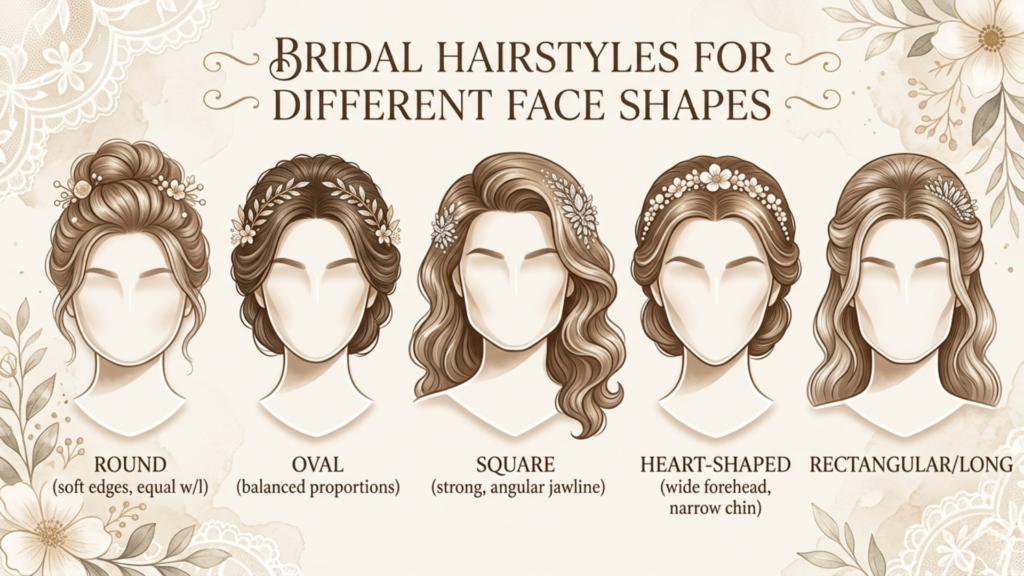
  • If your face is almost equal in width and length with soft edges, it’s likely round
  • If your face is longer than it is wide with balanced proportions, it’s oval
  • If your jawline looks strong and angular, it’s square
  • If your forehead is wider and your chin is narrower, it’s heart-shaped
  • If your face looks noticeably longer than it is wide, it’s long or rectangular

A simple tip is to look at photos of yourself instead of the mirror. Photos give a more accurate view of how others see your face.

Bridal Hairstyles for Round Face Shapes

Key Features

A round face has soft edges and similar width and length. It can appear fuller in photos if the hairstyle adds too much width.

What Works Best

Styles that add height at the crown help elongate the face. Soft waves that fall below the shoulders also create a longer visual line. Half-up styles with volume at the top can work well too.

What to Avoid

Flat hairstyles or tight curls that sit close to the sides can make the face look wider. Very symmetrical styles can also emphasize roundness.

Why These Styles Work

Height draws the eye upward, which visually lengthens the face. At the same time, controlled volume prevents the face from looking too wide.

Bridal Hairstyles for Oval Face Shapes

Key Features

Oval faces are naturally balanced. The length is slightly greater than the width, and the proportions are even.

What Works Best

Most hairstyles suit this face shape. You can wear hair up, down, or half-up without major issues.

What to Be Careful With

Too much height at the crown or very long, flat styles can stretch the face further.

Why Balance Still Matters

Even though oval faces are versatile, extreme styles can still throw off proportions. Keeping the look balanced ensures everything stays harmonious.

Bridal Hairstyles for Square Face Shapes

Key Features

Square faces have strong jawlines and defined angles.

What Works Best

Soft waves, loose curls, and textured updos help soften the structure. Face-framing pieces also reduce the sharpness around the jaw.

What to Avoid

Tight, slicked-back styles or very straight lines can make the face look more angular.

Why Softness Matters

Texture breaks up strong lines. When the hair moves naturally, it softens the overall look and creates a more balanced appearance.

Bridal Hairstyles for Heart-Shaped Faces

Key Features

Heart-shaped faces are wider at the forehead and narrower at the chin.

What Works Best

Styles that add volume near the jawline help balance the face. Side-parted styles and soft half-up looks work well.

What to Avoid

Too much height at the crown can make the forehead look wider.

Balance Strategy

By adding volume lower down, you even out the proportions between the top and bottom of your face.

Bridal Hairstyles for Long or Rectangular Face Shapes

Key Features

Long faces have more length than width, often with straight sides.

What Works Best

Volume at the sides helps create width. Waves, curls, and low buns can shorten the appearance of the face.

What to Avoid

Too much height at the crown or very flat, straight styles can make the face look longer.

Why Width Matters

Adding width balances the length, which creates a more proportioned look in photos.

Face Shape vs Hair Type: Why Both Matter

Face shape gives direction, but hair type decides what’s possible.

For example, a round face may benefit from volume at the crown. However, if your hair is very fine, that volume needs to be built carefully so it holds.

Thick hair can support structured styles more easily, but it may need control to avoid looking too heavy.

Curly hair adds natural volume, which can work well for some face shapes but may need shaping to avoid imbalance.

So, the final hairstyle should match both your face shape and your natural hair behavior.

How Your Dress and Veil Change the Look

Your hairstyle does not exist on its own. It works as part of your full bridal look.

A high neckline pairs better with updos because it keeps the top area clean. A strapless dress allows more flexibility with hair down or soft waves.

Veil placement also changes proportions. A veil placed higher can add height, while a lower placement keeps the look more grounded.

When everything works together, your overall look feels more intentional.

What to Test During Your Bridal Hair Trial

Your trial is where everything comes together.

Try styles that follow your face shape guidelines, then take photos from the front and side. These angles show how balanced the hairstyle looks.

Pay attention to how volume sits. Too much height or width can shift the balance.

Also, check how the style holds after some time. Movement and wear can change how it looks.

Use the trial to refine, not just choose.

Common Mistakes Brides Make

One common mistake is copying a hairstyle without adjusting it to suit their face. Even a small change in volume or parting can make a big difference.

Another mistake is choosing trends over balance. A trending style may not work for your proportions.

Some brides also ignore how hairstyles look in photos. What looks good in person can feel different on camera.

Overdoing volume or flattening the hair too much can also throw off the overall look.

Find a Bridal Hairstyle That Flatters Your Face Shape

Choosing the right hairstyle can feel overwhelming when you’re looking at too many options.

At Brittany Brown Beauty, we help brides choose styles that suit their face shape, hair type, and overall bridal look. During your trial, we adjust the style based on what truly works for you, not just what looks good in photos.

You can also view our portfolio to see real bridal looks we’ve created.

Book your bridal hair consultation to find a look that feels balanced, comfortable, and right for your wedding day.

Frequently Asked Questions

1. How do I know my face shape?

Look at your proportions in photos and compare your forehead, cheekbones, jawline, and face length.

2. What is the most flattering bridal hairstyle?

The most flattering style is one that balances your face shape and works with your hair type.

3. Can I still choose a style I like if it doesn’t match my face shape?

Yes, but it should be adjusted to suit your features so it looks balanced.

4. Do updos suit all face shapes?

Yes, but the structure, volume, and placement need to be adjusted for each face shape.

5. Does hair parting affect face shape?

Yes. A center or side part can change how balanced your face appears, especially in photos.
Related Articles:

  1. How to Prep Your Hair Before Your Wedding Day
  2. How to Choose the Right Bridal Hairstyle for Your Wedding Day
  3. Bridal Hair Trends 2026 in Orange County
  4. What to Ask Your Bridal Makeup Artist Before Booking
  5. Best Bridal Makeup for Oily, Dry, and Acne-Prone Skin
Posted on

How to Prep Your Hair Before Your Wedding Day

Most brides focus on the hairstyle. However, what really determines how your hair looks and holds is the preparation before the wedding.

If your hair is too soft, too oily, too dry, or full of product buildup, even a skilled stylist will struggle to make the style last. On the other hand, well-prepped hair holds better, feels lighter, and looks more polished in photos.

This guide walks you through how to prep your hair before your wedding day, step by step, so your hairstyle not only looks good but also lasts.

Why Hair Prep Matters More Than the Hairstyle

Your hairstyle depends on the condition of your hair.

If your hair is balanced, clean, and properly prepared, it holds shape longer and responds better to styling. If it’s not, you may deal with frizz, flat volume, or styles that fall apart within hours.

Many brides think more product equals better hold. In reality, too much product can make hair too slippery or too heavy.

Good prep creates the right base. That base allows your stylist to build a style that lasts.

4–6 Weeks Before the Wedding: Build the Foundation

This stage is often ignored, but it makes a big difference.

Trim Split Ends (But Don’t Overcut)

A light trim helps your hair look healthier and more even. Split ends can make styles look rough or frizzy, especially in photos.

However, avoid major cuts close to your wedding. Even small length changes can affect how your planned style sits.

Start a Deep Conditioning Routine

Hydrated hair behaves better during styling. It looks smoother, reflects light better, and feels softer without becoming flat.

Focus on consistent conditioning rather than one heavy treatment. Overdoing it can make your hair too soft to hold structure.

Avoid Major Hair Changes

This is not the time to experiment.

Avoid drastic color changes or new haircuts. Even if they look good at first, they can behave differently once styled.

Keep things stable so your stylist knows exactly how your hair will respond.

Plan Color Touch-Ups Properly

If you color your hair, timing matters.

Fresh color done too close to the wedding can look harsh or overly bright in photos. Plan your touch-up about one to two weeks before the wedding so it settles naturally.

1–2 Weeks Before: Final Adjustments

This stage helps you refine everything based on your trial.

Confirm What Worked From Your Trial

Look back at your trial results.

Did your hairstyle hold well? Did anything feel too loose or too heavy? Use that feedback to make small adjustments.

Avoid Trying New Products

It’s tempting to test new shampoos or treatments, but this can backfire.

New products may change how your hair behaves. Stick to what already works for your hair.

Prepare Extensions If You Plan to Use Them

If you’re using extensions, make sure they match your hair color properly.

Test how they feel during your trial and confirm they blend well. Poorly matched or uncomfortable extensions can affect your overall look.

2–3 Days Before: Reset Your Hair Properly

Now your focus should shift to keeping your hair clean and balanced.

Wash Your Hair to Remove Buildup

Use a gentle shampoo to remove product buildup, oils, and residue. This gives your stylist a clean base to work with.

Avoid heavy conditioners that make your hair overly soft or slippery.

Avoid Oils and Heavy Treatments

Oils can weigh your hair down and make it harder for styles to hold.

Even if your hair feels dry, avoid last-minute treatments that can affect texture.

Keep Styling Minimal

Avoid excessive heat styling or tight hairstyles before your wedding.

Let your hair stay close to its natural state so your stylist can work with it more easily.

Should You Wash Your Hair the Day Before or Same Day?

This depends on your hair type and the style you want.

If your hair is fine, washing it the same day can help create volume and freshness.

If your hair is thick or tends to get frizzy, washing it the day before often works better. It gives your hair slight texture, which helps styles hold.

The goal is simple. Your hair should feel clean but not overly soft or oily.

What to Avoid Right Before Your Wedding

Small mistakes here can affect your entire hairstyle.

Avoid overwashing your hair, as it can make it too soft. At the same time, avoid leaving it too oily.

Do not try new products at the last minute. They can change how your hair reacts.

Never sleep with wet hair. It can create uneven texture and dents that are hard to fix.

Also, avoid tight braids or buns before bed, as they can leave marks in your hair.

Morning of the Wedding: Arrive Ready

Your stylist needs the right starting point.

Make sure your hair is completely dry. Damp hair slows down the process and affects results.

Do not apply any extra products unless your stylist tells you to. Clean, product-free hair works best.

Wear something easy to remove, like a button-down shirt or robe. This prevents messing up your hair after styling.

Bring your veil, accessories, and extensions so everything can be styled together.

If You Have Different Hair Types

Hair prep should match your natural hair.

If you have fine hair, avoid heavy conditioners and focus on keeping your roots light. This helps with volume.

If your hair is thick, hydration matters more. However, avoid making it too heavy with products.

If you have curly hair, maintain your natural texture leading up to the wedding. Avoid over-brushing or disrupting your curl pattern.

How Prep Affects the Longevity of Your Hairstyle

Longevity depends on balance.

Hair that is too clean can become too soft and lose structure. Hair that is too oily won’t hold properly.

The right prep creates grip without stiffness. That balance helps your hairstyle last longer, even in heat or humidity.

In many cases, good prep can add several hours to how long your style holds.

Common Hair Prep Mistakes Brides Make

Many brides wash their hair too much right before the wedding. This can make it too soft to hold.

Others apply oils or heavy treatments, which weigh the hair down.

Trying new products last minute is another common mistake. It can change how your hair behaves in unexpected ways.

Skipping the trial or ignoring your stylist’s advice also leads to issues.

Getting Your Hair Wedding-Ready Starts With the Right Plan

Your bridal hairstyle depends on how well you prepare your hair.

At Brittany Brown Beauty, we guide brides through every step, from trials to wedding day prep, so your hair holds well, feels comfortable, and looks right in every photo.

If you want a clear plan based on your hair type and wedding setting, book your bridal hair consultation, and we’ll help you get everything ready the right way.

Frequently Asked Questions

1. When should I start preparing my hair for my wedding day?

It’s best to start at least 2–3 months before your wedding. This gives enough time for trims, treatments, and adjusting your routine so your hair is in its best condition.

2. Do I really need a bridal hair trial?

Yes. A trial helps you test styles, see how your hair holds, and make changes early. It also helps your stylist understand what works best for your hair type and wedding setting.

3. Should I wash my hair on the day of the wedding?

In most cases, it’s better to wash your hair the day before. Slightly lived-in hair holds styles better, but your stylist will guide you based on your specific look.

4. What if my hair doesn’t hold styles well?

This is common. During your trial, your stylist can adjust techniques, products, or suggest prep steps like texture sprays or extensions to improve hold.

5. How do I choose the right bridal hairstyle for me?

The right style depends on your hair type, dress, venue, and weather. A consultation and trial will help match all these factors so your hairstyle looks natural and lasts all day.

Related Articles:

  1. How to Choose the Right Bridal Hairstyle for Your Wedding Day
  2. Bridal Hair Trends 2026 in Orange County
  3. What to Ask Your Bridal Makeup Artist Before Booking
  4. Best Bridal Makeup for Oily, Dry, and Acne-Prone Skin
Posted on

How to Choose the Right Bridal Hairstyle for Your Wedding Day

Choosing your bridal hairstyle sounds simple at first. Then you start looking at Pinterest, and suddenly everything looks good. That’s where most brides get stuck.

The problem is not a lack of ideas. It’s choosing a style that actually works for your face, your dress, your hair type, and your wedding setting.

This guide breaks it down in a practical way so you don’t end up with a hairstyle that looks good in photos but doesn’t hold up on your wedding day.

Start With Your Dress Neckline

Your hairstyle should support your dress, not compete with it. This is one of the biggest mistakes brides make.

If you wear a strapless or sweetheart neckline, you have more flexibility. Soft waves, loose curls, or even a relaxed updo can work well because your shoulders and neckline stay visible.

On the other hand, if your dress has a high neckline or long sleeves, hair down can make the top half look heavy. In this case, an updo or a pulled-back style keeps everything balanced and clean.

For off-shoulder dresses, balance matters. Half-up, half-down styles or soft waves usually work best because they don’t overwhelm the neckline.

If your hairstyle and dress fight for attention, your overall look feels off. When they work together, everything looks more polished without trying too hard.

Consider Your Face Shape

Face shape helps guide your decision, but it should not limit you.

If your face is round, adding height at the crown helps create length. Flat styles can make your face look wider, so avoid those.

If you have an oval face, most styles will suit you. Focus on balance instead of trying to fix anything.

For square faces, soft waves or loose styles work better because they soften strong angles. Tight, pulled-back looks can make those angles more noticeable.

If your face is heart-shaped, you want to balance the wider forehead. Adding volume around the lower half of your hair helps.

That said, don’t get stuck trying to “match rules.” A good stylist adjusts the hairstyle to your features naturally.

Work With Your Hair Type, Not Against It

This is where many brides go wrong. They choose a style based on photos, not their actual hair.

If you have fine or thin hair, very loose styles often fall flat within a few hours. You may need added volume or extensions to hold the shape.

If your hair is thick, it can hold styles well. However, it can also feel heavy if not structured properly. A good style will control volume without making your head feel weighed down.

If you have short hair, you still have options. You can create texture, add accessories, or slightly extend the style. You don’t need long hair to look bridal.

The key point is simple. Choose a hairstyle your natural hair can support. Otherwise, it may not last through the day.

Think About Your Wedding Setting

Your environment affects your hair more than you expect.

If you’re having a beach or outdoor wedding, wind and humidity will play a role. Very loose curls may not hold, and flyaways can become a problem. In this case, a more controlled style works better.

For indoor or ballroom weddings, you have more flexibility. Lighting and weather won’t interfere as much, so both sleek styles and soft waves can work.

If your wedding takes place in hot weather, updos usually hold better. They also keep you comfortable and reduce frizz from sweat and humidity.

So, instead of choosing based on looks alone, think about how your hairstyle will behave in your environment.

Decide Between Hair Down, Up, or Half-Up

Each option has its pros and limitations.

Hair down looks soft and romantic. However, it can lose shape over time, especially in heat or humidity. You may also find yourself adjusting it throughout the day.

Updos last longer. They stay secure, keep hair off your face, and handle weather better. If you want something low-maintenance during the event, this is a strong option.

Half-up, half-down styles give you a balance. You get the softness of wearing your hair down, with some structure to hold it in place. This works well for many dress styles and face shapes.

Instead of choosing what looks best in photos, think about what will still look good after several hours.

Consider Your Veil and Accessories Early

Your hairstyle affects how your veil or accessories sit.

If you plan to wear a heavy veil, your hairstyle needs a strong base to hold it. Loose styles may not support it well.

Hairpins, clips, or tiaras also change the look of your hairstyle. A simple style can look more detailed once you add the right accessory.

So, don’t leave this decision until the last minute. Your stylist needs to plan the hairstyle around it.

Think About Longevity and Comfort

A hairstyle that looks good for one hour is not enough.

You need to ask:

  • Will it stay in place during movement and dancing?
  • Will it feel tight or uncomfortable after a few hours?
  • Will it hold in your wedding conditions?

Many brides choose very soft styles, then spend the day fixing their hair. That takes away from your experience.

So, always balance looks with durability.

What to Test During Your Bridal Hair Trial

Your trial is not just about picking a style. It’s about testing it.

Try one or two styles, not five. Too many options will confuse you.

Once your hair is styled:

  • Move your head and see how it holds
  • Take photos from different angles
  • Wear it for a few hours if possible

This helps you understand how it will actually behave on your wedding day.

If something feels loose, heavy, or uncomfortable, adjust it during the trial. Small changes here can save you stress later.

Common Bridal Hairstyle Mistakes to Avoid

One of the biggest mistakes is choosing a hairstyle based only on photos. What looks good on someone else may not work for your hair or face.

Another mistake is ignoring the weather. A style that works indoors may not survive outdoor conditions.

Skipping the trial is also risky. Without testing, you won’t know how your hair reacts.

Lastly, trying to force your hair into a style it can’t hold usually leads to disappointment.

Simple Tips to Make the Right Choice

Keep your overall look balanced. Your hair, makeup, and dress should work together.

Choose a style that feels comfortable, not just one that looks good. You’ll be wearing it for hours.

Stay realistic about your hair type and conditions. That will help your style last longer.

And finally, listen to your stylist. They can see what will work and what won’t.

Not Sure Which Bridal Hairstyle Will Suit You?

If you feel unsure, that’s completely normal. There are a lot of factors to consider, and small details can change the final result.

At Brittany Brown Beauty, we help brides choose hairstyles that suit their face, dress, and wedding setting. During your trial, we guide you through different options and adjust everything based on how your hair naturally behaves.

Book your bridal hair consultation to find a style that looks good, feels comfortable, and lasts through your entire wedding day.

Frequently Asked Questions

1. How do I choose the best bridal hairstyle?

Start with your dress, hair type, and wedding setting. Then choose a style that balances all three.

2. Should I wear my hair up or down for my wedding?

It depends on your comfort, weather, and how long you need it to last. Updos last longer, while hair down looks softer.

3. What hairstyle lasts the longest?

Structured updos usually last the longest, especially in heat or outdoor settings.

4. Do I need a bridal hair trial?

Yes. A trial helps you test the style and avoid surprises on your wedding day.

5. How should I prepare my hair before the wedding?

Keep your hair clean, avoid heavy products, and follow your stylist’s advice before your appointment.

Related Articles:

  1. What to Ask Your Bridal Makeup Artist Before Booking
  2. Avoid Regret: How to Prep for Your Bridal Hair and Makeup Trial