
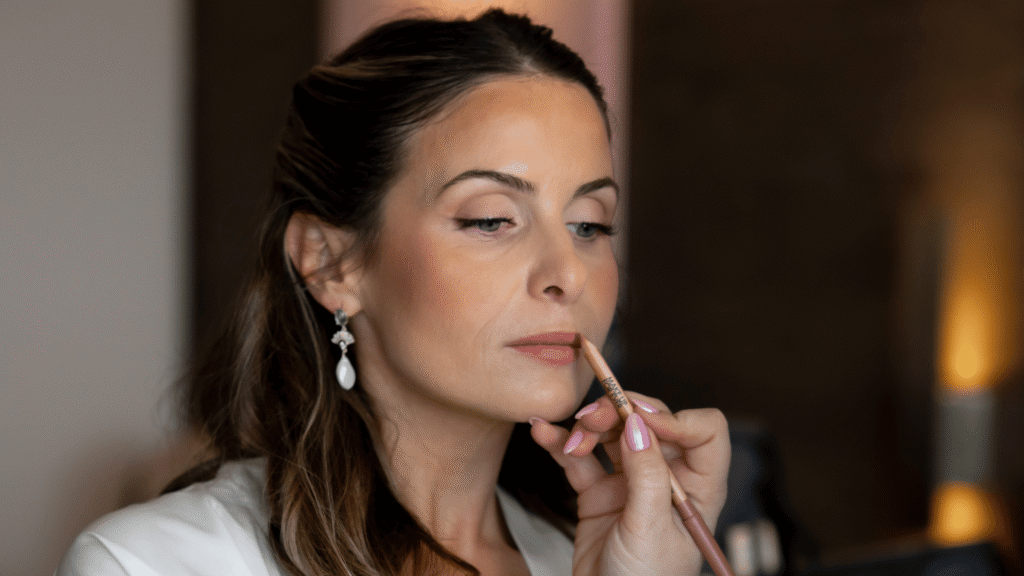
Oily skin can behave unpredictably on a wedding day. Makeup that looks fine at first can break down in a few hours, especially around the T-zone. The goal is not to “remove oil completely,” but to control it so makeup sits evenly and stays stable under heat, lighting, and long wear time.
The prep work starts weeks before makeup is even applied.
Get oil levels under control weeks before the wedding
Oily skin reacts strongly to sudden changes. So the first step is stability, not correction.
Stick to one consistent routine:
Use a gentle gel cleanser twice a day. The focus is removing excess oil without stripping the skin barrier. When skin feels tight after washing, it usually produces more oil later in the day.
Moisturizer is still necessary. Many oily skin types skip it and end up with faster shine. A lightweight gel moisturizer keeps the skin hydrated without heaviness.
Sunscreen is non-negotiable. A matte or oil-control sunscreen helps reduce midday shine and also improves how foundation sits on the skin surface.
Keep everything consistent for at least 3 to 4 weeks before the wedding. Changing products frequently is one of the fastest ways to trigger imbalance. For more skincare and bridal prep guidance, visit the Beauty Tips & Resources page.
Exfoliation matters, but timing matters more
Oily skin often builds up dead skin faster, which mixes with sebum and creates texture under makeup.
Chemical exfoliation works better than scrubs here. Salicylic acid is commonly used because it goes into pores and clears buildup.
Limit exfoliation to 1–2 times per week. More than that can trigger irritation, and irritated skin often becomes oilier as a response.
Avoid exfoliating too close to the wedding day. Skin needs time to settle so makeup applies smoothly.
Stop trying new products right before the wedding
The biggest issue with oily skin before bridal makeup is experimentation.
Introducing new serums, acids, or acne treatments in the final 10–14 days can cause breakouts or uneven texture right before makeup.
Even if a product works for others, your skin might react differently under stress, travel, or weather changes.
At this stage, the focus should be calm skin, not active correction.
Balance oil, don’t fight it
Skin that is stripped of oil often rebounds by producing even more.
That is why aggressive cleansers and harsh toners create a cycle of shine.
Instead, keep oil balanced:
- Use clay masks once a week to reduce surface oil
- Use a hydrating mask once a week to maintain water balance
- Avoid daily deep-cleansing products
Balanced skin always performs better under makeup than overly dried skin.
The final 5 to 7 days before the wedding
At this point, the skin should be left alone as much as possible.
Stick to what is already working. No experiments. No last-minute treatments.
If there is any active breakout treatment, it should already be part of a routine prescribed earlier. Introducing anything new now risks visible irritation on the wedding day.
Sleep, hydration, and low stress matter more than adding products during this stage. Skin responds strongly to internal changes in the final week.
Wedding day skin prep for oily skin
The goal on the wedding day is a clean, controlled base without heaviness.
Start with a light cleanse or simply rinse if skin is not overly oily in the morning.
Apply a very thin layer of moisturizer. It should disappear into the skin within minutes, not sit on top.
Avoid heavy oils or rich creams. They interfere with primer and foundation adherence.
Let skincare fully settle before makeup begins. Rushing this step often leads to separation later in the day.
What actually makes bridal makeup last on oily skin
Long-lasting makeup on oily skin is less about heavy products and more about layering control.
The key approach is:
- Targeted priming only on oil-prone areas like the forehead, nose, and chin
- Thin foundation layers instead of full heavy coverage
- Pressing powder into the skin rather than dusting it on
- Using blotting instead of repeatedly adding powder
Heavy buildup is what causes makeup to break apart under oil. Light layering keeps the surface stable. You can see this approach in action in the portfolio, with real examples of bridal looks across different skin types.
Common mistakes that cause makeup breakdown
A few habits usually create most bridal makeup issues with oily skin:
Over-washing the face before makeup removes too much oil, then the skin overproduces during the event.
Using multiple mattifying products together can make the skin look dry in some areas and oily in others.
Skipping moisturizer completely often leads to uneven foundation application.
Touching up with too much powder during the day creates patchy buildup instead of smooth skin.
Book a Bridal Makeup Consultation for Oily Skin
Oily skin reacts differently under heat, stress, and long hours of wear. Small adjustments in prep can change how makeup holds from morning until night. A makeup artist who regularly works with oily skin does not treat it the same way as dry or combination skin. Primer placement, foundation texture, and setting methods are adjusted based on how the skin produces oil.
This is where experience matters more than product lists.
At Brittany Brown Beauty, bridal prep is based on how the skin behaves, not a fixed routine. Skin is assessed before the wedding so makeup placement, prep steps, and product choices match how it performs throughout a full day.
Many brides share that this approach changed how their makeup lasted and felt on the skin. You can view their experiences on the testimonials page.
If you want a clear plan for both skin prep and bridal makeup, a consultation helps map everything out early so there are no last-minute adjustments on the wedding day.
Frequently Asked Questions
Start at least 4 to 6 weeks before the wedding. This gives the skin time to balance oil levels and settle into a consistent routine. Frequent changes close to the wedding often make oily skin worse, not better.
No. Skipping moisturizer usually leads to more oil production later in the day. A lightweight gel moisturizer helps keep the skin balanced so makeup applies more evenly and stays in place longer.
One to two times per week is enough. Chemical exfoliants like salicylic acid work best for oily skin. Over-exfoliating can irritate the skin and trigger extra oil production, which affects makeup wear.
Common reasons include over-cleansing before makeup, skipping moisturizer, using too many heavy products, or applying thick layers of foundation and powder. Oil buildup combined with product overload is what usually causes separation.
Yes. Product choice, primer placement, layering technique, and setting method all change how makeup holds on oily skin. A trained makeup artist adjusts each step based on how the skin produces oil throughout the day, which improves both longevity and finish.
Related Articles:
- How to Match Bridal Makeup to Your Skin Undertone
- Bridal Eye Makeup Styles: How to Choose the Right Look for Your Wedding
- Bridal Makeup Trends 2026 in Orange County
- How to Make Bridal Makeup Last All Day Without Touch-Ups
- What Happens During a Bridal Makeup Trial? What Brides Should Expect
- Bridal Makeup for Mature Skin: What Works and What to Skip