
Both airbrush and traditional foundation can create a polished bridal base. They apply differently, and they behave differently on the skin, so the comparison deserves more than a quick verdict.
Neither technique is simply better. The right approach depends on your skin, the finish you want, the coverage you need, how the makeup feels, and the conditions on your wedding day. Choosing between airbrush vs traditional bridal foundation works best as a conversation with your artist, ideally at a trial.
At Brittany Brown Beauty, we consider how each foundation method works with your skin, the finish you prefer, and the look you want in person and in photos. The aim is not to choose a technique because it is trending, but to find the one that suits your needs and feels comfortable to wear throughout your wedding day.
How Airbrush Foundation Works
Airbrush foundation for weddings is an application method, not one single type of foundation. The artist uses a small handheld airbrush tool, powered by a compressor, to spray a fine layer of product over the skin.
The fine application lets an artist build coverage gradually, one thin layer at a time. How the finish looks depends on the formula and the technique. Airbrush does not automatically mean heavier or lighter coverage. A light, skin-like layer and a fuller layer are both possible, depending on the formula and how the artist builds it.
Airbrush formulas also differ from one another, so one airbrush foundation does not behave exactly like another. Technique matters too, since the amount of product and the number of layers both change the result. Skin preparation and product selection still shape the outcome. Airbrush does not erase dryness, texture, or uneven areas on its own.
How Traditional Foundation Works
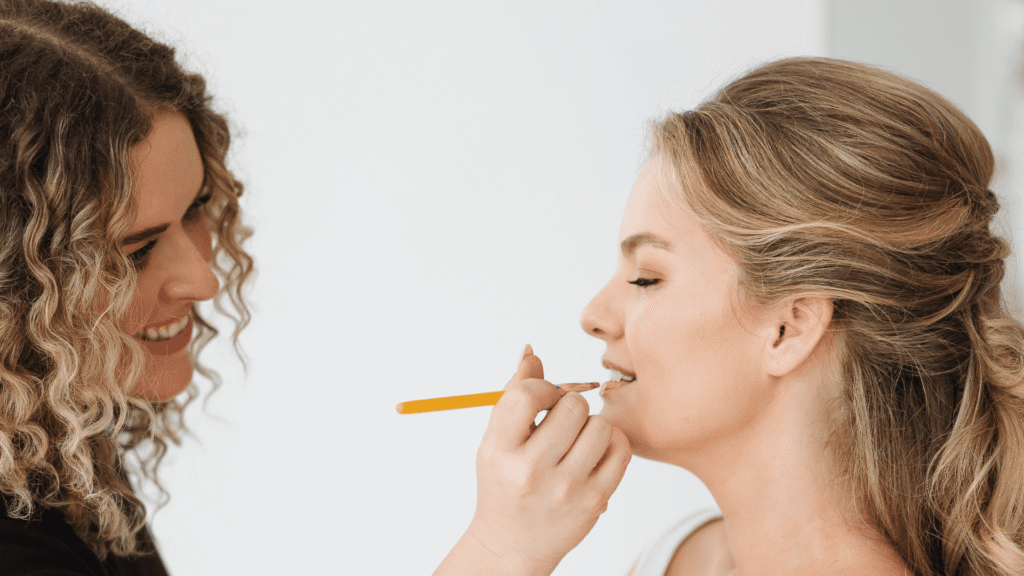
Traditional foundation for bridal makeup is applied with tools such as brushes, sponges, or other professional techniques. The artist works the product into the skin and can adjust the amount, the pressure, and the layering as the face changes from one area to the next.
That flexibility is the main strength of the approach. An artist can add coverage where it is needed, keep other areas lighter, and shift the finish as the application goes. Formula selection matters as much as the method. A matte, satin, or radiant formula changes the look more than the tool does.
Traditional does not mean basic or outdated. A skilled artist can create a very light, natural finish with traditional foundation, and a more polished or fuller finish when the look calls for it. Our article on the best foundation types for bridal makeup explains how different formulas and finishes compare.
Head-to-Head: Coverage, Durability, and Photos
The two approaches overlap more than many brides expect. This table gives a quick overview, and the sections below explain each category.
| Factor | Airbrush foundation | Traditional foundation |
| Application | Product is sprayed in a fine layer with an airbrush tool. | Product is applied with brushes, sponges, or other professional techniques. |
| Coverage | Can be built gradually in thin layers. The level depends on the formula and technique. | Can be adjusted area by area. The level depends on the formula and technique. |
| Finish | Varies with the formula and how it is applied. | Varies with the formula and how it is applied. |
| Targeted adjustments | Can take more planning once the layer is on. | Often easier to make as the application goes. |
| Wear | Depends on skin, prep, formula, layering, setting, and conditions. | Depends on the same factors. |
| Photos and video | Can photograph well when applied for the lighting and camera. | Can also photograph well when applied for the lighting and camera. |
Coverage
Both methods can deliver light, medium, or fuller coverage. The result comes from the formula and the technique, not from the method alone. Airbrush is not automatically lighter, and traditional foundation is not automatically heavier.
There are practical differences. Airbrush application can build coverage in thin layers. Traditional application can make targeted coverage adjustments easier in certain situations, such as around the nose, under the eyes, or over areas that look uneven.
Durability
Wear time depends on much more than the application method. Skin type, skin preparation, the formula, how the makeup is layered, and how it is set all play a part. So do the weather, how often the face is touched, and the length of the wedding day. Tears, hugs, heat, and activity all test makeup.
Some airbrush formulas are designed for wear resistance, and so are some traditional formulas. No method can promise a specific number of hours. A bridal makeup trial helps here, because you can wear the chosen approach for several hours and see how it behaves on your own skin.
Photos and Video
Both airbrush and traditional foundation can photograph well when they are applied for the lighting and the camera. Texture, coverage, and finish all show up differently depending on the light, the camera distance, and whether the day includes close-up photography or video. Flash, for example, can highlight shine or texture. Our article on why bridal makeup looks different in photos covers these factors in more detail.
Some SPF ingredients can cause a white cast in flash photos whichever method is used, so it helps to tell your artist about the products you wear and to share your photographer’s requirements.
Skin Type and Comfort
Skin type and skin condition shape the choice more than either technique does. Bridal makeup for different skin types starts with preparation and product selection, whichever method the artist uses. Neither foundation type automatically works, or fails to work, for a particular skin type.
- Dry areas may need careful preparation and product selection.
- Oily skin may need different preparation and setting.
- Mature skin may benefit from controlled layering and careful texture management.
- Acne-prone or uneven skin may need targeted coverage.
- Sensitive skin should be discussed with your artist before the trial or the wedding.
Comfort matters as well. How makeup feels depends on the formula and the layering, not only the method. If something feels heavy or irritating at a trial, say so.
Which One Brittany Brown Beauty Recommends and Why
We do not treat airbrush or traditional foundation as a one-size-fits-all answer. The recommendation depends on your skin, the coverage and finish you want, and how you normally wear makeup. It also depends on the wedding location, the weather, your photography needs, your comfort, and the overall makeup look.
That is where the philosophy comes in. Enhance, don’t mask means building a base that looks like you rather than covering the skin more than necessary. For some brides, that points to a thin, buildable application. For others, it points to targeted coverage in specific areas. The goal is a finished look that feels like yourself, only more polished, and it should fit alongside the rest of your bridal makeup ideas.
A bridal makeup trial gives you and your artist a chance to compare the approaches on your actual skin. You can see how each looks in different lighting, how it feels, and how it settles over several hours. A trial cannot predict exactly how makeup will behave over an entire wedding day.
Choose the Right Foundation for Your Bridal Look
The best way to compare airbrush and traditional foundation is to talk through your skin, your preferred finish, your coverage needs, and your wedding conditions during a consultation or trial. Brittany Brown Beauty provides mobile bridal makeup in Orange County and adjusts the approach to each bride instead of applying the same foundation technique to everyone. Click the button below to schedule a consultation online.
Frequently Asked Questions
The preparation is similar for both. Keep a consistent skincare routine for roughly four weeks before your trial, avoid new products during the final 10 days before the wedding, and tell your artist about any sensitivity or products that have caused irritation. On the day, arrive with clean, comfortable skin.
No specific wear time can be promised for either method. Skin type, preparation, the formula, layering, setting, weather, and the day’s activity all affect how long makeup lasts. Wearing your look for several hours at a trial shows how it holds up on your skin.
Yes. Shade, formula, coverage, and finish can all be tailored with either method, though the options depend on the specific products used. Share your skin type, your usual makeup routine, and any concerns with your artist, then compare the options at your trial.
It depends. Airbrush and traditional foundation can both photograph well when they are applied for the lighting and the camera. The better choice depends on your skin, the finish you want, and the photography and video planned for the day, and a trial lets you check the look in different light.
You do not need to decide ahead of time. Come with a sense of the finish and coverage you like, and share any photos that show how you want to look. Your artist can recommend an approach, and you can compare options on your skin at the trial.