
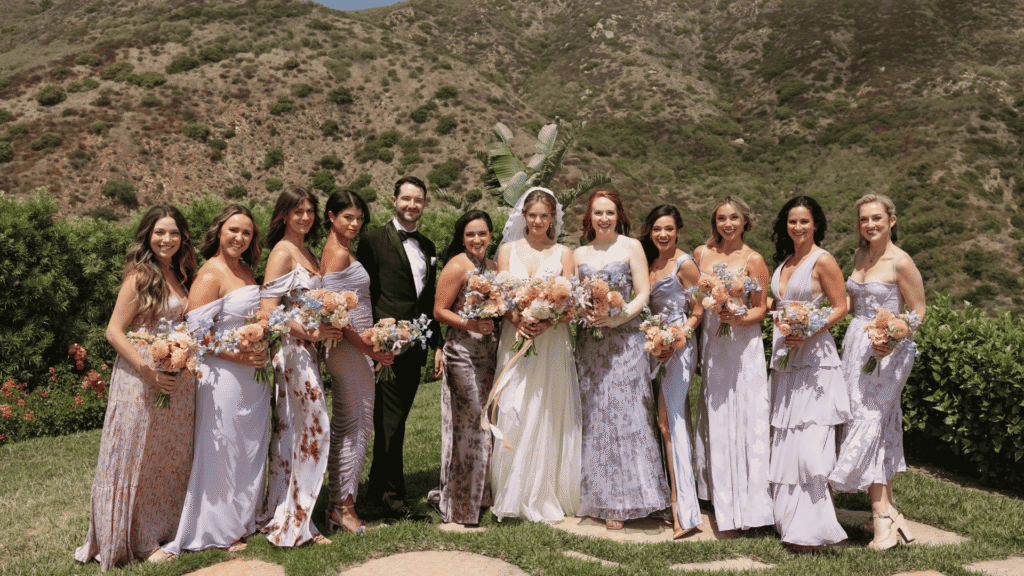
Bridesmaids often have different ideas about wedding makeup. Some prefer light coverage and neutral shades, while others feel more comfortable with defined eyes or stronger lip color. Their skin tones, features, and usual makeup preferences can also vary.
The challenge is bringing these looks together without making everyone wear the same makeup. A shared color palette and overall style can keep the bridal party coordinated. Each person can still have makeup that suits her.
Brittany Brown Beauty provides mobile bridal hair and makeup across Orange County, San Diego, and surrounding areas. Brittany works with the bride to agree on the overall look, then adjusts the makeup for each bridesmaid. This helps the group look coordinated while allowing each person to feel comfortable with her makeup.
Why Cohesion Matters More Than Identical Makeup
Group photos can make differences in makeup intensity more noticeable. A bold lip beside a completely bare lip may look disconnected. Giving everyone identical makeup creates another problem. The same shades and techniques rarely suit every face.
A shared style gives the party a consistent appearance while leaving room for individual choices. Three elements help bring the looks together:
- Color family: Choose warm peach and coral tones or cooler rose and berry shades. Repeat these colors across the cheeks, lips, and eyes.
- Finish: Keep the overall finish consistent, such as satin skin or a softly matte look.
- Intensity: Give everyone a similar level of definition. One bridesmaid can wear more eye makeup without looking completely different from the others.
Using identical products and techniques is unnecessary. Foundation must match each person’s skin tone and undertone. Blush placement also depends on cheekbones and face shape. The shared style should come from the overall appearance, not identical product choices.
The wedding setting also affects the makeup plan. Bright daylight reveals more detail than warm indoor lighting. Dresses and flowers help determine which colors will work together. Blush-pink dresses with white flowers create a different palette from deep green dresses with burgundy blooms. Read about how wedding lighting affects bridal makeup. The guide to matching bridal makeup to your bouquet and color palette offers more color ideas.
Small adjustments help each bridesmaid look balanced. A blush that looks soft on one complexion may appear strong on another. Pale pink lipstick may also look washed out against deeper skin. Adjusting the shade or amount keeps the overall look connected.
Building a Cohesive Look Across Different Features
Three decisions help shape the bridal party’s makeup: the color palette, the level of definition, and the bride’s own look. Each gives the artist room to make individual adjustments.
One Palette, Multiple Skin Tones
A shared palette provides a color direction, not one shade for everyone. The artist can choose different tones within that palette to suit each complexion.
For example, a warm, rosy palette could include:
- Blush: Fair skin may suit a soft rose. Medium skin may suit a warm rose-peach. Deeper skin may look beautiful in a richer rose or berry shade.
- Lips: Choose lip colors with similar warmth rather than identical shades. A rosy nude and a deeper rose can still complement each other.
- Bronzer and complexion products: Match these products to each person’s skin. Some bridesmaids may need only a little warmth, while others may prefer a deeper bronzer. Foundation and concealer should match individual undertones.
- Eyes: Repeat similar colors or finishes across the party. Soft taupe or champagne shades can connect the looks. The artist can adjust their depth to suit each person’s features.
No single shade works equally well on every bridesmaid. The artist should consider each person’s complexion and undertone before choosing products. Read more about matching bridal makeup to your skin undertone.
Adjusting Intensity, Not Concept
The color palette can stay consistent while the makeup intensity changes. Each bridesmaid can choose how much definition she wants within the agreed style.
For example:
- Eyes: One bridesmaid may prefer a light wash of eyeshadow. Another may want more definition along the lash line. Both can use the same color family.
- Lips: Some bridesmaids feel comfortable with a natural lip. Others may prefer a deeper shade from the same palette.
- Lashes and eyeliner: One person may choose natural lashes and softly blended liner. Another may prefer fuller lashes and a more defined line.
Individual features also affect these choices. A bridesmaid with hooded eyes may need different eyeshadow placement. Someone with prominent eyelids may suit another approach. Fuller lips may also need less color to achieve the desired balance.
The artist can adjust the amount of makeup without changing the overall direction. For soft rose tones and satin skin, everyone can follow that style. A bridesmaid who wants more definition can receive additional eye makeup. Someone who prefers less can wear lighter layers.
Looking at the bridal party together helps maintain balance. A makeup style that looks subtle on its own may appear stronger beside another person’s look. The artist should consider how the finished makeup will appear in group photos.
Coordinating With the Bride’s Look
The bride’s makeup provides the starting point for the bridal party. Bridesmaid looks should complement hers without competing for attention. Group photos should feel connected while keeping the bride as the focus.
Start by discussing the bride’s preferred makeup style. Then decide whether the bridesmaids should wear softer makeup or similar levels of definition. The dress colors, bouquets, venue, and photography style can help guide that decision.
Consider a bride who prefers natural makeup, soft eyeshadow, and a sheer lip. Her bridesmaids could wear softly defined eyes and similar lip tones. This keeps the group polished without making their makeup more noticeable than hers.
A bride who prefers defined eyes and a deeper lip creates a different starting point. Her bridesmaids can use the same colors with lighter application. Very understated makeup may look disconnected beside a much bolder bridal look.
Ask the bride whether she wants matching intensity or slightly softer bridesmaid makeup. The wedding setting can help settle the choice. Deep jewel-tone dresses at an evening venue may suit stronger definition. Pastel dresses at a morning garden ceremony may call for softer makeup. This guide to bold bridal makeup vs. soft glam can help the bride choose her preferred style.
Handling Bridesmaid Requests for Something Different
Bridesmaids rarely have identical makeup preferences. Discussing those preferences before the wedding helps avoid last-minute disagreements. It also gives the artist time to plan each look.
Ask each bridesmaid a few simple questions:
- What makeup do you usually wear?
- How much foundation coverage do you prefer?
- Do you feel comfortable wearing false lashes?
- Would you rather have a natural lip, rosy tint, or deeper color?
- Do you prefer no eyeliner, a soft line, or more definition?
- Are there any textures or finishes you dislike?
A bridesmaid who rarely wears makeup may prefer light coverage and a natural finish. Someone who enjoys defined eyes may want stronger liner or fuller lashes. Both preferences can work within the same color palette.
Reference photos can make these conversations easier. Ask the bride to share examples of the overall style she likes. Each bridesmaid can also bring one or two makeup references. Photos show the desired finish and intensity more clearly than words like “natural” or “glam.”
Browse the Brittany Brown Beauty portfolio for examples of finished bridal looks. You can also read about explaining your vision to your makeup artist during a trial.
Give the artist enough time to review everyone’s preferences. A rushed appointment leaves less room for adjustments. Discussing the details beforehand helps the morning run according to plan.
Brittany’s approach focuses on enhancing natural features rather than masking them. She brings that approach to every bridesmaid, regardless of makeup preference. Brittany has more than 11 years of experience in the makeup industry. Read more about her background and approach on the About page.
Preparing for Wedding-Day Makeup
A little preparation helps the bridal party arrive ready for makeup. Share these tips with everyone before the wedding:
- Stick to a familiar skincare routine. Use products your skin already tolerates in the weeks before the wedding. See how to prep your skin 30 days before your wedding for a suggested timeline.
- Avoid new products close to the wedding. A new serum, mask, or treatment can cause unexpected redness or affect how makeup sits. Avoid introducing unfamiliar products during the final 10 days.
- Mention sensitivities and past reactions. Tell the artist about any known sensitivities or previous product reactions. This gives you time to discuss suitable options. Ask your dermatologist about concerns that go beyond makeup.
- Discuss your usual routine and preferences. Let the artist know which skincare products you use and what makeup feels comfortable to wear.
Each person also needs enough time for makeup application. The bride typically needs around 90 minutes. Each bridesmaid usually needs 45 to 60 minutes. For five bridesmaids, one artist may need four to five hours for the bridal party alone. Brittany can arrange additional artists for larger parties. This helps everyone get ready without rushing the bride’s application. She discusses the timing during booking.
A makeup trial can also help, especially when someone has concerns about product comfort or appearance. Brittany strongly recommends a trial for the bride, but it is not required. Bridesmaids can also arrange trials when they want to test a look or discuss specific concerns. The artist can assess the makeup and make adjustments during the appointment. However, a trial cannot guarantee that a reaction will not occur later. Always disclose known sensitivities, even if you have completed a trial.
Brides typically book their wedding date 6 to 12 months in advance. The bridal trial usually takes place 2 to 4 months before the wedding. Read how many bridal trials you actually need for more guidance.
Planning Makeup for Your Bridal Party?
Give Brittany the details of your wedding day, including the date, venue, and number of people needing makeup. Share your preferred bridal party style and any individual preferences too. Brittany Brown Beauty can discuss your makeup plans and check availability. Click the button below to schedule a consultation online.
Frequently Asked Questions
Keep to the routine your skin already knows. Avoid trying unfamiliar products or treatments in the days before the wedding. Share any sensitivities or past product reactions with the artist ahead of time. If you have skin concerns beyond makeup, ask your dermatologist.
No fixed wear time applies to everyone. Wear depends on skin preparation, products, application, skin condition, weather and the day’s schedule. A humid outdoor ceremony asks more of makeup than a cool indoor one. Tell the artist about the venue and schedule so the plan fits. You can also ask what, if anything, to carry for touch-ups.
Yes. The artist chooses shades and formulas for your skin tone, undertone and skin type. The amount and definition adjust to your preferences too. The shared palette stays, and the details change from person to person. No single product suits everyone, so tell the artist if your skin runs dry, oily or sensitive.
Start with one shared direction, such as a color family, a finish and an overall level of definition. Collect each bridesmaid’s preferences on coverage, lashes, lip color and eyeliner before the wedding. Photos of looks each person likes make the plan clearer. The artist then adjusts the amount of product while keeping the direction consistent.
Not every bridesmaid needs one. The bride’s trial usually sets the overall direction. A bridesmaid with concerns about comfort, appearance or wear may benefit from one. A trial lets the artist and client assess the makeup and adjust it. Ask about options when you schedule your consultation.