
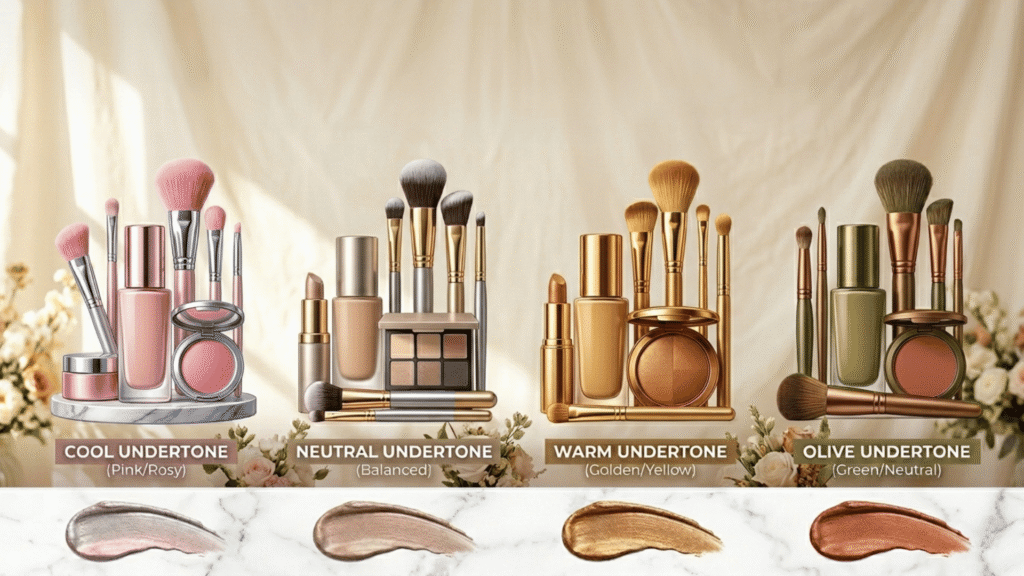
Your wedding day makeup should look natural, balanced, and consistent in every photo. One of the biggest factors behind that result is skin undertone.
Many brides focus only on foundation shade, but undertone affects every part of the makeup look, from blush and bronzer to lipstick and concealer. When undertones are matched correctly, makeup blends naturally into the skin. When they are not, makeup can look too orange, too gray, or flat in photos.
Undertone mismatches are more common than many brides realize. Understanding your undertone helps create bridal makeup that photographs beautifully and still feels like you in person.
Undertone vs. Skin Tone: Why Brides Confuse the Two
Skin tone is what you see on the surface. It is your depth of color, from very fair to very deep, and it shifts throughout the year based on sun exposure, health, and even stress. You might be light in winter and medium in summer. Skin tone is the category that tells a salesperson which row of foundations to start from.
Undertone is different. It sits beneath the surface, and it does not change. Undertone is the subtle cast that your skin reflects back into light, whether that cast is yellow and golden, pink and blue, or a mix of both. Two brides with identical skin tones can have completely different undertones, and that difference determines whether a lipstick reads as coral or as murky orange, whether a blush looks peachy-fresh or washed out.
Most people have been told to look at the veins on their inner wrist to determine undertone. Green-leaning veins suggest warm undertones. Blue or purple veins suggest cool undertones. Both mixed together suggest neutral. That method is a starting point, not a definitive answer. The far more reliable method is seeing how different foundation formulas sit on your skin in person, which is exactly what a bridal trial is designed for.
How to Identify Your Skin Undertone Before Your Wedding
Beyond the vein check, there are several reliable ways to narrow down your undertone at home.
The White Paper Test
Hold a piece of pure white paper next to your bare face in natural daylight, away from warm indoor lighting. Your skin will give you a clearer clue in this light. Yellow or golden tones against the white usually indicate a warm undertone, while pink or rosy tones suggest a cool undertone. If your skin does not clearly lean either way, or it appears slightly gray against bright white, you may be neutral or olive.
The Jewelry Test
Think about which metal makes your complexion look more alive. Gold typically flatters warm and olive undertones because the yellow tones in gold echo what is already in the skin. Silver and white gold tend to complement cool undertones because the clean, blue-silver reflects that pink or rosy quality back. If both metals look equally good on you, you likely have neutral undertones.
The Sun Reaction Test
How your skin responds to sun also gives you clues. Warm and olive skin tones tend to tan easily and rarely burn. Cool undertones are more likely to burn, freckle, or turn red before any golden color develops. These responses are driven by the same underlying pigment chemistry that creates undertone in the first place.
The Foundation Oxidation Test
This one matters for brides specifically. When you apply a foundation and it shifts warmer or more orange within an hour of wear, that is oxidation. It typically happens when a formula contains too much yellow pigment for your skin’s chemistry. Brides with cool undertones are especially prone to this, because the formula fights against the natural blue-pink cast of their skin. Getting the right undertone in a foundation dramatically reduces oxidation.
The Most Common Undertone Mistakes Brides Make
The first mistake is buying foundation based on a swatch on the back of the hand. The hand is not the face. Skin on the hand is often a different tone and has a different surface texture than the face. Foundation must always be tested along the jawline or cheek in person, in natural light, after at least ten minutes of wear.
The second mistake is matching foundation to the neck rather than blending the two. The neck can run cooler than the face, particularly in brides who wear sunscreen on their face regularly. A foundation that matches the neck perfectly may look slightly ashy on the face. The goal is a formula that makes the face look even and healthy, not one that disappears into the neck.
The third mistake is ignoring undertone when choosing lipstick. Brides often pick a lipstick color from a photo without accounting for how that same color will react against their specific skin chemistry. A warm-undertoned nude that looks peachy-beautiful on one bride can look orange and stark on a bride with cool undertones. A cool-toned berry that looks refined on a cool-undertoned bride can turn ashy and gray on warm or olive skin.
The fourth mistake is using a highlighter that conflicts with undertone. Powder highlighters with a strong silver or white base will look chalky or patchy on deeper warm or olive skin tones. The light does not scatter the same way. Gold and bronze highlighters, or liquid formulas with finely milled particles, integrate far better on warmer complexions. Similarly, very golden highlighters can look muddy on fair cool-toned skin.
How Undertones Affect Every Product in Your Bridal Look
Foundation
Foundation undertone is the most technically critical piece of the bridal makeup puzzle. A foundation with too much yellow pigment will look orange on cool-toned skin. A formula with too much pink pigment will look chalky or ashy on warm skin. Neutral formulas exist but they are not universally flattering either. The goal is finding a formula whose undertone complements the natural cast in your skin so the two work together instead of competing.
Beyond the color, formula matters. Dewy foundations can amplify the look of warmth. Matte or satin formulas sit more neutrally. For brides with cool undertones who want a fresh, luminous look, a formula with pearl-based luminosity reads more naturally than one with heavy gold shimmer.
Blush
Blush is where undertone dramatically shifts the final result. Warm-undertoned brides look stunning in peachy, terracotta, and golden-coral blushes because those tones echo what is already in the skin and create dimension. On a cool-toned bride, those same shades can look muddy or too intense against the pink-pink of the skin. Cool-toned brides almost always photograph better in pink, mauve, soft raspberry, or rose blushes that complement the blue-pink undertones naturally present.
Neutral-undertoned brides have more flexibility here, which is both a blessing and a challenge because almost anything can work if the depth and saturation are right.
Lipstick
The lipstick question is the one brides worry about most, and for good reason. The lip is a focal point in every photo. A shade that clashes with your undertone will look off in ways that are hard to describe but very easy to see.
For warm-undertoned brides, the safest lip colors include peachy nudes, warm berries, terracotta reds, and true corals. These shades share the same golden or orange base that already exists in warm skin, so they look cohesive and intentional.
Cool-toned brides look best in pink-based nudes, blue-reds, wine and plum shades, and cool berries. These shades amplify the natural rosy quality of cool skin rather than fighting it. When a cool-toned bride tries a warm orange-red or peachy coral, the result is often a lipstick that looks too orange next to the skin, because there is no warm undertone in the skin to balance it out.
Bronzer
Bronzer has one job in a bridal look: to mimic the appearance of natural warmth, not to add artificial color. For warm and olive-undertoned brides, matte bronze shades with golden or brown bases work beautifully and blend seamlessly with the skin’s natural warmth. For cool-toned brides, the wrong bronzer is a very common mistake. A bronzer that is too orange or too golden will sit on top of cool skin rather than sinking in, creating a patchy or unnatural result. Cool-toned brides need bronzers with a taupe or slightly gray-brown base, which mimics the look of warmth without clashing with the skin’s undertone.
Eyeshadow
The eyes give brides the most creative freedom, but undertone still plays a role. Warm eyeshadows, like terracotta, bronze, copper, and warm brown, naturally complement warm-undertoned brides because they share the same color family as the skin. Cool eyeshadows like dusty mauve, slate, silver, and steel work harmoniously with cool-toned skin without creating visual contrast that pulls attention away from the eye.
Neutral undertones can work across both palettes, though leaning slightly toward the skin’s dominant cast usually produces the most cohesive result.
Highlighter
Highlighter undertone is probably the most overlooked factor in bridal makeup. Gold and warm champagne highlighters sit beautifully on warm and olive skin because they amplify the natural warmth. On very fair cool-toned skin, those same gold tones can look too brassy or heavy. Fair cool-toned brides almost always photograph better with pearl, icy pink, or rose gold highlighters that catch light in a way that reads as natural luminosity rather than added shimmer.
On deeper skin tones with warm undertones, silver and white-based highlighters are a well-known problem. The white base does not integrate with deeper skin pigment, so instead of looking lit from within, the skin looks patchy or ashy where the highlighter was applied. Warm golds and bronzed highlighters, or liquid formulas that melt into the skin, are far more effective.
Bridal Makeup Colors for Warm Undertones
Brides with warm undertones, typically golden, peachy, or yellowish casts in the skin, tend to look most polished when the makeup palette stays in a complementary warm or earthy family.
Foundation: Look for shades described as golden, yellow, beige, or warm. Avoid formulas with pink, rose, or porcelain descriptors, as these will fight against the skin’s warm cast.
Blush: Peachy coral, terracotta, warm rose, apricot. These shades integrate naturally with the warmth already in the skin.
Lips: Warm nudes, peach, coral, terracotta, warm berry, brick red, warm rose. Avoid cool-toned plums or blue-reds, which will look disconnected against warm skin.
Bronzer: Golden brown, warm tan, rich terra. Matte is better for a natural result.
Highlight: Gold, warm champagne, copper. These catch light in a way that looks organic against golden skin.
Eyeshadow: Bronze, copper, warm browns, terracotta, olive green, golden taupe.
Bridal Makeup Colors for Cool Undertones
Cool-undertoned brides have pink, blue, or rosy casts in their skin. The most common complexion types in this category are very fair skin, pink-toned medium skin, and deeper skin with clearly rosy or blue-pink undertones.
Foundation: Look for shades described as pink, ivory, porcelain, cool, or neutral-cool. Avoid anything labeled golden, warm, or yellow, as these will oxidize and turn orange on cool skin.
Blush: Pink, mauve, soft berry, cool rose, plum. These shades amplify the natural flush in cool-toned skin.
Lips: Pink-based nudes, blue-red, berry, wine, plum, cool berry. Avoid orange-based corals or peachy nudes, which will look garish against pink undertones.
Bronzer: Taupe-brown, gray-brown, cool tan. A bronzer with too much orange will not blend into cool skin naturally.
Highlight: Pearl, icy pink, rose gold, silver. These tones catch light without bringing unwanted warmth.
Eyeshadow: Dusty mauve, slate, lavender, cool taupe, smoky gray, plum, steel blue
Bridal Makeup Colors for Neutral Undertones
Neutral undertones are the true in-between, neither definitively warm nor cool. These brides have the most flexibility, but they also face a unique challenge: without a strong undertone pulling in one direction, the wrong shade can tip the overall look either too warm or too cool in an unintended way.
Foundation: True neutral foundations work best, often labeled as nude, natural, or balanced. The skin should not look pinker or more golden after application.
Blush: Neutral peach, warm rose, dusty pink. Avoid extremes on either end.
Lips: Soft nude, warm mauve, dusty rose, natural berry. The versatility here is real. Most shades in the mid-range of warmth and saturation work well.
Bronzer: Warm brown to cool brown. Either can work depending on the overall desired feel of the look.
Highlight: Rose gold, champagne, warm pearl. These sit in the sweet spot between gold and silver.
Eyeshadow: Most palettes work. Choose based on eye color and desired mood.
Why Undertones Matter in Wedding Photography
Wedding photography is not a filter. What your makeup looks like in real life and what it looks like in photos are not always the same thing, and undertone mismatch is often the reason a bride looks off in her photos even when she felt confident in the mirror.
Cameras, particularly digital cameras, read color temperature differently than the human eye. When indoor lighting is warm and yellow, a foundation that already runs warm will photograph even more golden, sometimes crossing into orange territory. When natural outdoor light is cooler and blue, a foundation that already has pink undertones may photograph even more washed out.
A professional bridal makeup artist accounts for this by understanding how each formula performs under different lighting temperatures, not just how it looks in the bridal suite. The goal is a foundation that holds its undertone accurately under both flash and ambient light, which requires real experience with color science and product performance.
Blush and lip color behave similarly. A very warm blush that looks flattering in soft indoor light can photograph too saturated and orange under direct sunlight or outdoor midday light. A cool mauve lip that photographs beautifully in soft candlelight can look slightly gray or washed under harsh flash. Knowing which combinations hold up across conditions is a skill that comes from hundreds of weddings, not just product knowledge.
Read: Why Bridal Makeup Looks Different in Photos and How to Get It Right
How Lighting Changes Your Makeup on the Wedding Day
Most brides get their makeup done indoors, then move through several lighting environments throughout the wedding day. Ceremony venues often use warm, directional lighting. Outdoor photos may happen in direct sun, shade, or golden hour light. Reception spaces commonly mix overhead lighting, uplighting, and candlelight. Each setting changes how makeup appears on the skin.
Warm lighting enhances warm-toned makeup but can wash out cooler shades. Cooler lighting brings out cool tones but can make warm palettes appear too harsh. This is why undertone matters more than trends. Makeup built around the bride’s actual undertone stays more balanced across different lighting conditions.
Flash photography creates another challenge. Camera flash exposes every powder product on the skin. Powders with SPF or silica can create flashback, making parts of the face appear white or gray in photos. Reflective powders may also create an ashy effect on deeper skin tones. A skilled bridal artist chooses products that photograph accurately in both natural light and flash photography.
Why Copying a Pinterest Look Can Work Against You
Pinterest and Instagram give brides endless inspiration, but makeup does not look the same on every person. A bridal look depends on undertone, facial features, lighting, and even photo editing style.
A blush that looks soft and natural on one bride may appear too cool, too orange, or too heavy on another. Many inspiration photos also use filters, professional lighting, and editing that change how colors appear.
That does not make inspiration photos useless. They still help communicate mood and style. However, the goal should not be copying a look exactly. A skilled bridal artist translates the overall feeling of a photo into a version that works for the bride’s own coloring and features.
Many brides bring in inspiration photos that seem completely different from each other. Often, they are not asking for the exact makeup itself. They are asking for a certain feeling, such as soft but polished or glamorous but natural. Creating that balance takes interpretation, not imitation.
Why Bridal Makeup Trials Matter
A bridal makeup trial is one of the most important parts of the makeup process. It allows the artist to test how products, colors, and undertones perform before the wedding day.
During the trial, foundation oxidization, lighting changes, blush tones, and lip colors all get evaluated together. Brides often discover that shades they originally wanted do not work as expected once applied to their own skin tone.
Trials also test wearability. Bridal makeup needs to last through long hours, heat, humidity, tears, and constant photography. The trial helps identify which products stay stable on the skin and which formulas need adjustment.
For brides with concerns like redness, hyperpigmentation, melasma, or oily skin, trials become even more important. These conditions directly affect undertone and product behavior. Using the wrong shade or formula can exaggerate discoloration instead of balancing it.
Read: What Happens During a Bridal Makeup Trial? What Brides Should Expect
Book Your Bridal Makeup Consultation Today
Undertone matching is one of the most nuanced parts of bridal beauty, and it is not something to decide on the morning of your wedding. At Brittany Brown Beauty, every bridal client begins with a consultation that goes beyond face shape and color preferences. We look at your undertone, skin type, how your skin changes across seasons, what has worked or not worked in the past, and how your wedding venue and photography style will influence your final look. This conversation happens before we apply any product, not after.
If you are planning a wedding in Orange County or a nearby area and want makeup that photographs accurately, wears comfortably, and suits your coloring, we would love to connect. Book your bridal makeup consultation today and let’s create a look that feels genuinely yours.
Frequently Asked Questions
Olive skin is often a mix of warm and cool tones with a green or gray undertone. It usually does not fall into a single category. Most olive skin works best with neutral-warm or olive-based foundations. Pink shades can look off, and very yellow tones can look flat. Peachy blushes and soft taupes usually work well depending on depth.
This is oxidation. It happens when foundation reacts with your skin’s oils and changes color over time. It often affects cool or neutral undertones matched with warmer foundations. You can reduce it by choosing a more stable formula, using an oil-controlling primer, or selecting a slightly cooler/lighter shade. A long bridal trial helps catch this early.
You can use it for inspiration, not exact replication. Lighting, editing, undertone, and skin depth all change how makeup looks in photos. A bridal artist should adapt the look to your features and coloring instead of copying it shade for shade.
No. Your undertone stays the same. Only your surface skin tone gets deeper. This is why trials should match your expected wedding-day skin tone. If you plan to tan, it is better to do your trial closer to the wedding.
Yes, and they are even more important. Deeper skin tones still have warm, cool, and neutral undertones, but many products are not designed with that range in mind. The wrong foundation can look ashy or too orange. Highlight and blush choices also matter more for balance. Proper product selection and experience with deeper skin tones are key.
Related Articles:
- Outdoor Wedding Makeup Tips That Last in Heat and Humidity
- What Happens During a Bridal Makeup Trial? What Brides Should Expect
- How to Make Bridal Makeup Last All Day Without Touch-Ups
- How to Prep Your Skin 30 Days Before Your Wedding
- Bridal Makeup Trends 2026 in Orange County: What Brides Are Choosing
- What to Ask Your Bridal Makeup Artist Before Booking