
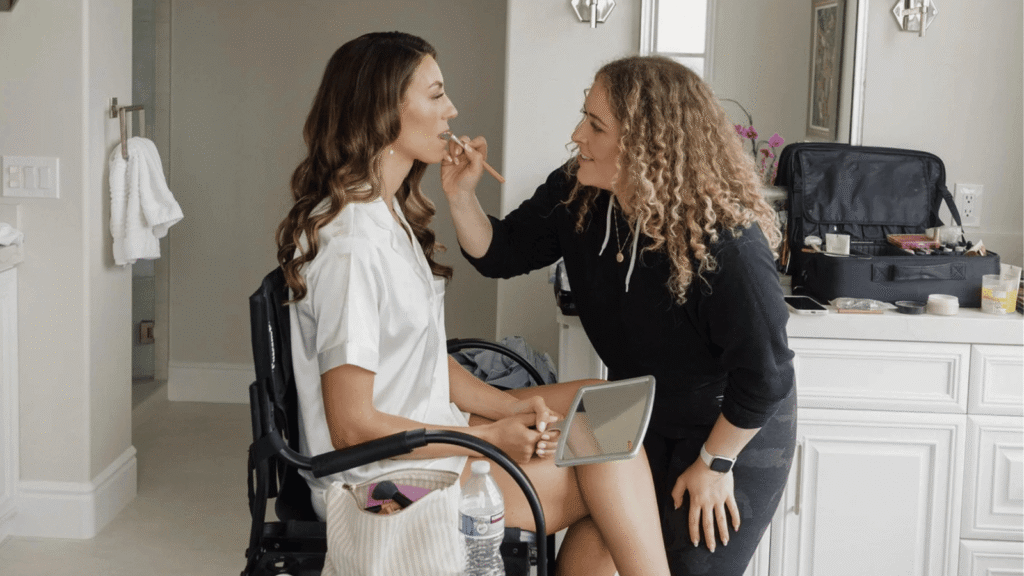
If you are a photographer, brand manager, or producer, you probably know what you want on screen. You may not know what to expect when booking commercial makeup for a production. The process looks different from booking makeup for a personal event. Commercial work revolves around cameras, lighting, shot lists, and a team that depends on one another to hit a schedule.
Brittany Brown Beauty is a mobile makeup artistry business based in Orange County, California. Brittany works with commercial, editorial, and production clients, adapting makeup to the creative direction and requirements of each shoot. This guide walks you through the booking process step by step and explains what to prepare before hiring a commercial makeup artist in Orange County.
How Booking Commercial Work Differs From Booking a Bridal Date
A bridal booking centers on one person, one day, and a look that feels personal. A commercial booking centers on the image. The makeup has to perform under specific lighting, hold up on a specific camera, and match the visual direction of a creative team.
That difference changes almost every part of the conversation. Here are the main points where the two paths split.
- The audience is different: A bride judges the result in the mirror and in her photos. A commercial client judges the result on a monitor, in a final file, or in a finished campaign.
- The technical priorities are different: Bridal work focuses on a natural, radiant finish. Commercial work focuses on how skin reads on camera, including shine, redness, color accuracy, and texture.
- The timeline is different: A wedding morning follows one getting-ready schedule. A production follows a call sheet, and the makeup artist has to fit into it.
- The number of decision-makers is different: One bride makes the choices for her look. A production often involves a creative director, a photographer, a stylist, and a brand representative.
Brittany Brown Beauty approaches these two service lines differently. Production clients receive a camera-focused approach built around accuracy, consistency, and coordination with the creative team. To learn more about the business and its services, visit the Brittany Brown Beauty homepage.
What the Process Looks Like
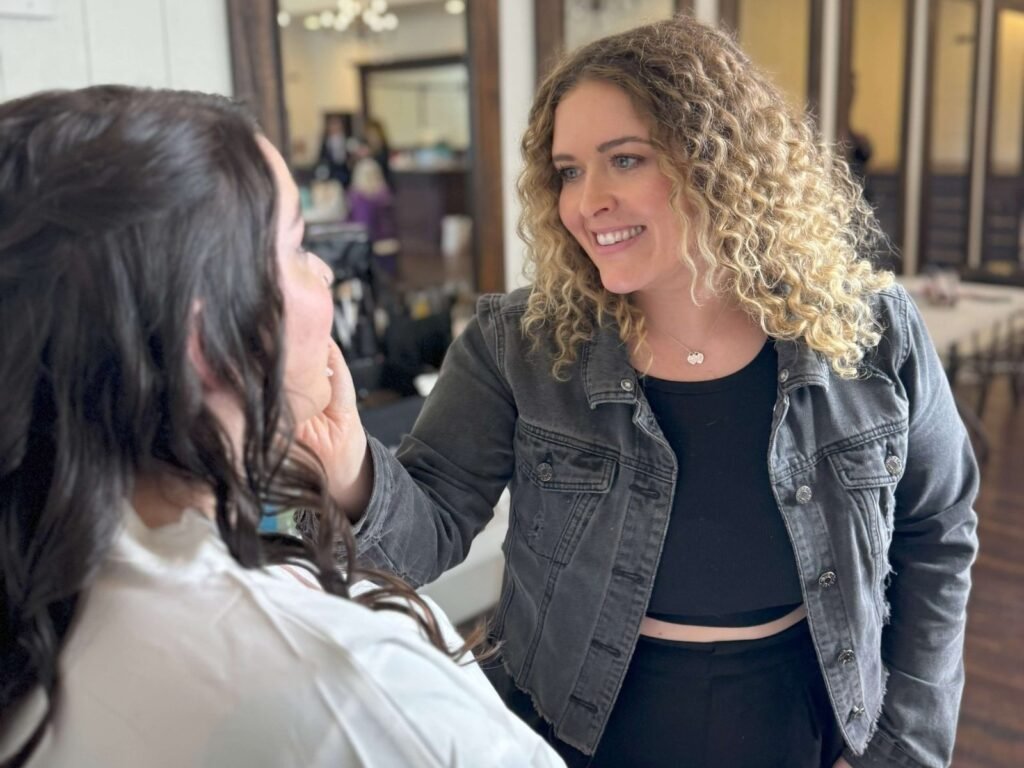
Most commercial bookings follow the same general path. You share the project details, the artist reviews the creative plan, and the team coordinates the setup and the day itself. Each stage below includes a short checklist so you can prepare in advance.
Discussing the Shot List and Creative Brief
The first real conversation covers the creative brief and the shot list. This step matters because decisions about product choice, finish, and touch-up timing depend on the project’s requirements.
Brittany reviews the lighting plan and shot list with the creative team. She considers details that change how she builds the skin. A close-up beauty shot calls for different choices than a wide lifestyle frame. A long outdoor session calls for different choices than a short studio setup.
Have these items ready before you reach out:
- The shoot date, call time, and expected wrap time
- The location, and whether it is a studio, an indoor set, or an outdoor setting
- The number of people who need makeup, including talent and any on-camera team members
- The shot list or a summary of the types of shots, such as stills, video, close-ups, or full-body frames
- Reference images or a mood board that show the intended look
- The lighting plan, if one exists, including whether the shoot uses natural light, strobes, or continuous lights
- The final use of the images, such as a website, a print campaign, social media, or video
The more detail you share early, the more precisely the artist can plan. A vague brief leads to guesswork on set. A clear brief lets the artist show up prepared.
Mood boards are especially useful when the creative direction leans on a specific era or style. Reference images help communicate the finish, makeup placement, and overall visual direction you want to achieve.
When you reach out, it also helps to ask about rates, deposits, and how the schedule is held for your date, so there are no surprises later.
On-Set Logistics and Setup
Brittany Brown Beauty is mobile, so the artist comes to your location. Brittany brings a professional makeup station with lighting and seating, allowing her to prepare talent without relying entirely on the equipment available at the venue.
That setup matters because makeup decisions depend on the light. A station with its own lighting lets the artist check skin under reliable conditions before talent steps in front of the camera. It also helps keep the application process consistent throughout the shoot.
Several practical details deserve attention before the shoot day:
- Space: Give the artist a spot near the set with enough room for a station and a chair. Proximity makes touch-ups faster.
- Access: Share parking, load-in, and entry details ahead of time so the artist arrives without delays.
- Talent readiness: Ask talent to arrive with clean, moisturized skin unless the creative direction says otherwise. Ask them to mention any skin sensitivities or recent treatments in advance.
- Schedule order: Tell the artist who needs to be on camera first. The order of application should follow the order of the shot list, not the order people happen to arrive.
If your production has many people on camera, mention that early. Group size changes the schedule, and a good plan prevents a bottleneck at the makeup station.
Location matters as much as headcount. Outdoor shoots can expose makeup to heat, humidity, wind, and changing light. Sharing the location and expected conditions early helps the artist plan products and finishes that suit the environment.
Day-Of Communication With the Creative Team
On the day of the shoot, the makeup artist works as part of the creative team. Brittany coordinates with creative directors and keeps the lines of communication open as the day moves along.
The most useful habit on set is simple. Check the monitor and talk about what you see. During the shoot, Brittany provides touch-ups while monitoring playback for visual accuracy. If a highlight reads too bright on camera or a tone shifts under the lights, the artist can adjust instead of waiting until the end of the day.
A few things help the day run smoothly:
- Name one point of contact for makeup questions so the artist does not take direction from five different people.
- Tell the artist when the lighting changes, such as moving from a studio setup to an outdoor frame.
- Flag any change to the shot order as early as possible.
- Let the artist know about any wardrobe change, because it can affect the look and the timing.
Planning changes in advance helps the artist make adjustments without disrupting the production schedule.
At wrap, the artist handles agreed-upon talent cleanup and breaks down the kit efficiently. That means your team can move on without waiting on the makeup area.
What Brittany Brown Beauty Brings to a Production
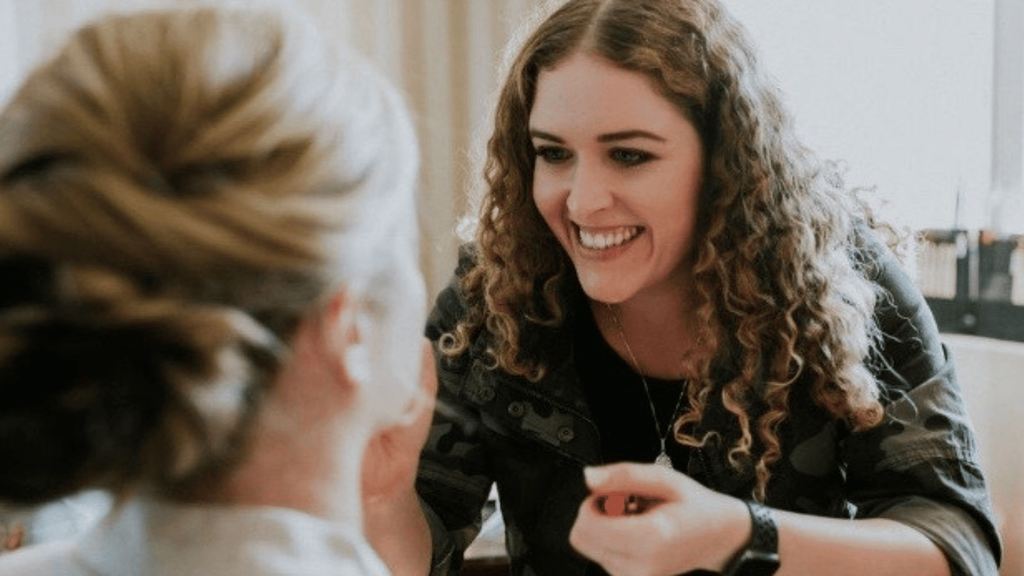
Commercial makeup is a technical craft, and the technical details drive the results. Brittany Brown Beauty approaches production work with a specific set of skills that suit camera-driven projects.
- Light absorption. The artist manages light absorption to neutralize shine and redness. This helps high-resolution stills look clean and can simplify retouching later.
- Light management. Careful product choices help control how light reflects from the skin under camera lighting.
- Pigment control. Color stays accurate under changing studio and natural light temperatures, so skin tones look consistent from frame to frame.
- Texture smoothing. The application is designed to look natural even in close-up photography and video.
- Sustained durability. Product layering helps makeup hold up during longer sessions.
Experience supports all of this. Brittany has worked in the makeup industry for more than a decade. Her first professional test shoot took place in 2014, and she trained at Empire Academy of Makeup in Orange County. She specializes in corrective beauty makeup, print makeup, bridal makeup, and mature makeup. Corrective and print work translate directly to production settings, where small changes to skin can make a big difference on camera.
Her work has also been featured in Voyage LA Magazine and SDVoyager. You can explore her portfolio to see examples of her makeup artistry.
The brand’s philosophy carries into production work too. Brittany believes in enhancing natural features rather than masking them. On a commercial set, that means talent looks polished and camera-ready while still looking like themselves. If you want to learn more about her background and approach, visit the About page.
Book Commercial Makeup for Your Production
Ready to plan your shoot? Start with the checklists above, then share your shoot date, location, shot list, and creative direction with Brittany. She can review your project, discuss availability, and help you plan the makeup services and set up your production needs.
Reaching out early gives you more time to coordinate the schedule and prepare for shoot day, while also giving Brittany a better chance of reserving your preferred date. If you have a lighting plan, mood board, or reference images, include them in your initial message to help her understand the look and creative direction you’re aiming for.
Frequently Asked Questions
The main difference is the goal. Bridal makeup aims for a natural, radiant look that feels personal and holds up through a wedding day. Commercial makeup aims for an accurate, camera-ready result that performs under specific lighting and meets a creative brief.
The booking conversation reflects that difference. A bridal client talks about her dress, her venue, and how she wants to feel. A production client talks about the shot list, the lighting plan, the final use of the images, and the schedule. The commercial artist also coordinates with creative directors and stays on set to provide touch-ups while checking playback.
Prepare the details that shape the look and the schedule. Share the shoot date, call time, and location. Tell the artist how many people need makeup and which shots come first. Send the shot list, the lighting plan, and any reference images or mood boards.
Also describe where the final images will appear. A website banner, a print campaign, and a video each place different demands on skin texture and color. Ask talent to share any skin sensitivities or recent treatments in advance, and plan a spot near the set for the makeup station. With those details in hand, the artist can arrive with a plan instead of building one on the spot.
The artist plans around the lighting before the shoot and adjusts during it. In advance, Brittany reviews the lighting plan and shot list with the creative team. On set, she works at a station with its own professional lighting, which gives her a reliable place to check skin before talent steps in front of the camera.
The adjustments follow the camera’s needs. Light management helps control shine. Pigment control keeps colors accurate as studio and natural light temperatures change. Careful product application helps reduce unwanted shine and redness for high-resolution stills. During the shoot, Brittany monitors playback and provides touch-ups, so small shifts get corrected as they happen.
The main difference is the goal. Bridal makeup aims for a natural, radiant look that feels personal and holds up through a wedding day. Commercial makeup aims for an accurate, camera-ready result that performs under specific lighting and meets a creative brief.
The booking conversation reflects that difference. A bridal client talks about her dress, her venue, and how she wants to feel. A production client talks about the shot list, the lighting plan, the final use of the images, and the schedule. The commercial artist also coordinates with creative directors and stays on set to provide touch-ups while checking playback.
Prepare the details that shape the look and the schedule. Share the shoot date, call time, and location. Tell the artist how many people need makeup and which shots come first. Send the shot list, the lighting plan, and any reference images or mood boards.
Also describe where the final images will appear. A website banner, a print campaign, and a video each place different demands on skin texture and color. Ask talent to share any skin sensitivities or recent treatments in advance, and plan a spot near the set for the makeup station. With those details in hand, the artist can arrive with a plan instead of building one on the spot.