
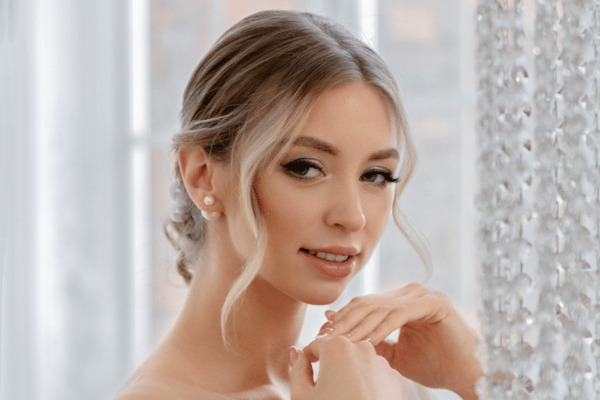
Foundation can look smooth in the mirror at the start of an appointment and different by the time the rest of the makeup is on. A dry patch near the nose shows up once concealer goes over it, or product starts to collect where the face moves when she smiles. The cause is rarely the foundation alone.
The short answer to how skincare and makeup work together for mature skin is that skincare sets the surface, and makeup sits on top of it. The condition of the skin, the routine behind it, and the way products are layered all shape how foundation, concealer, and powder apply, blend, and look hours later. They cannot be treated as separate steps.
Brittany Brown Beauty offers bridal hair and makeup and commercial makeup, and Brittany Brown has made mature and corrective makeup a specialty. As an Orange County makeup artist with hands-on bridal and print experience, she approaches mature skin bridal makeup the same way she approaches every face: enhance, don’t mask. The goal is makeup that works with each person’s skin, features, and preferred finish, not makeup that hides anyone’s age.
Why the Prep Matters as Much as the Products
Makeup takes on whatever the skin surface is doing. Dryness can make foundation look patchy or cling to certain areas. Surface texture can catch light differently once product is on top of it. Changes in how skin feels, such as tightness or sensitivity, can affect both how comfortable a product is to wear and how evenly makeup application goes.
None of that is true of every mature client. Some have oily or combination skin, some have skin that tolerates almost anything, and many have a mix that changes by area and by season. That is why a person’s existing skin condition and preferences matter more than any universal routine.
Adding more foundation is the instinctive fix, and it does not necessarily improve coverage or create a smoother look. Heavy layers can add visible weight, collect where the face moves, and make texture easier to notice. Better preparation, a thinner application, and careful concealer placement often give a more even result than extra product.
A consistent skincare routine helps for a simple reason. When the same products are used day after day, the makeup artist can see how the skin looks and feels on an ordinary day and build the makeup around it. Constant changes make that harder to read.
Good technique also does not require skin to look untouched. Skin has movement and dimension, and a makeup artist can adapt the amount of product, where it goes, and how it is blended so the skin still looks like the client’s own, only more even and more comfortable to wear.
Building the Partnership
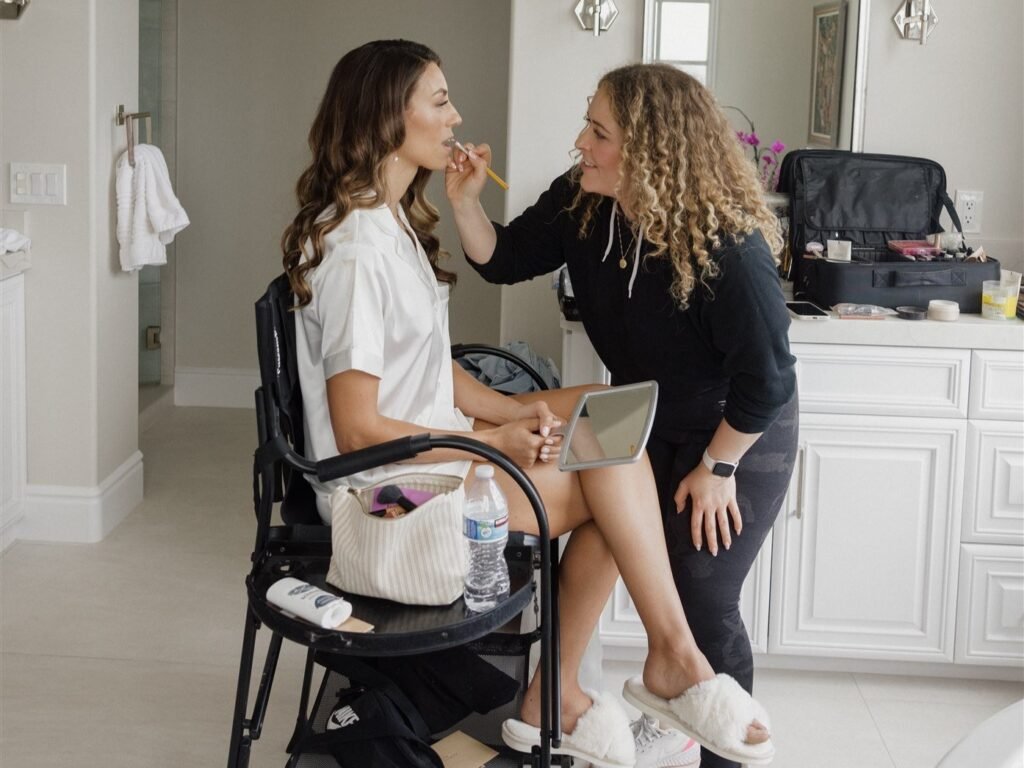
That is how skincare and makeup work together for mature skin in practice: each supports the other. Skincare prepares the surface and keeps the skin comfortable. Makeup adds evenness and definition on top of it. Product selection, the amount applied, and the way makeup is set should all reflect the client’s skin and the finish she wants. The portfolio shows how finishes can differ from one look to the next, and the same idea applies to mature skin: the technique follows the person.
Skincare Routine in the Weeks Before
For a wedding, photo session, or special event, the most useful preparation is usually the least dramatic.
- Keep the routine familiar. Avoid experimenting with several new products just before an important event. A new product can change how skin feels and how makeup sits, and there may not be time to adjust.
- Notice how the skin responds. Pay attention to how the skin feels and looks with the products already in use, including after a full day.
- Skip aggressive last-minute treatments. Strong exfoliation or unnecessary routine changes close to the date can leave skin feeling different on the day.
- Share what the artist should know. Mention known sensitivities and relevant skincare habits so products can be chosen with them in mind.
- Coordinate with the makeup trial. Use the skincare routine planned for the event on the day of the trial, so the artist sees the real combination.
This is general preparation, not medical advice. Anyone with a medical skin concern, or who is thinking about changing a prescribed product, should talk to an appropriately qualified healthcare professional first.
Priming as a Bridge Between Skincare and Makeup
Primer can help create a suitable surface for foundation, which is why it sits between skincare and makeup. It is a preparation step, not a substitute for skincare, and it cannot eliminate pores, lines, or skin texture.
The type and amount of primer should reflect the skin’s condition and the foundation being used. A little is often enough, and more layers do not automatically improve the finish. Stacking several skincare products and primers can make makeup slide or look heavy, especially if each layer has not had time to settle.
Timing matters too. Skincare products usually need a few minutes to settle before makeup goes on, and the right wait depends on the products involved. The artist watches how the skin looks and feels before starting foundation and adjusts.
Because primer and foundation interact differently from client to client, testing the combination at a trial is more reliable than assuming one primer works for everyone.
Setting That Supports, Not Fights, Skin Texture
Powder is not inherently unsuitable for mature skin. The result depends on the product, the amount, where it goes, how the skin was prepared, and how it is applied.
- Set selectively. Instead of covering the whole face with a heavy layer, use powder where it is needed, such as under the eyes if concealer creases, and leave areas that look fine alone.
- Use small amounts. A light application pressed into place usually looks more natural than a layer swept across the skin.
- Think about how the products interact. Foundation, concealer, powder, and setting spray all affect each other. A cream concealer, a liquid foundation, and a powder that do not suit one another can look uneven even when each is applied well.
- Check the finish in the right light. Look at the makeup in natural light and in light similar to the event, since a look can read differently under each. Brittany Brown Beauty travels to the client, so that final check can happen in the actual getting-ready space.
- Balance finish and practical needs. A client may prefer a soft, natural finish, and the makeup still needs to stay comfortable and polished for the occasion. The artist weighs both.
No technique can promise that makeup will never settle into lines, stay unchanged all day, or look identical in every kind of lighting. The aim is a well-prepared base and thoughtful setting that give the makeup its best chance.
What Brittany Brown Beauty Recommends
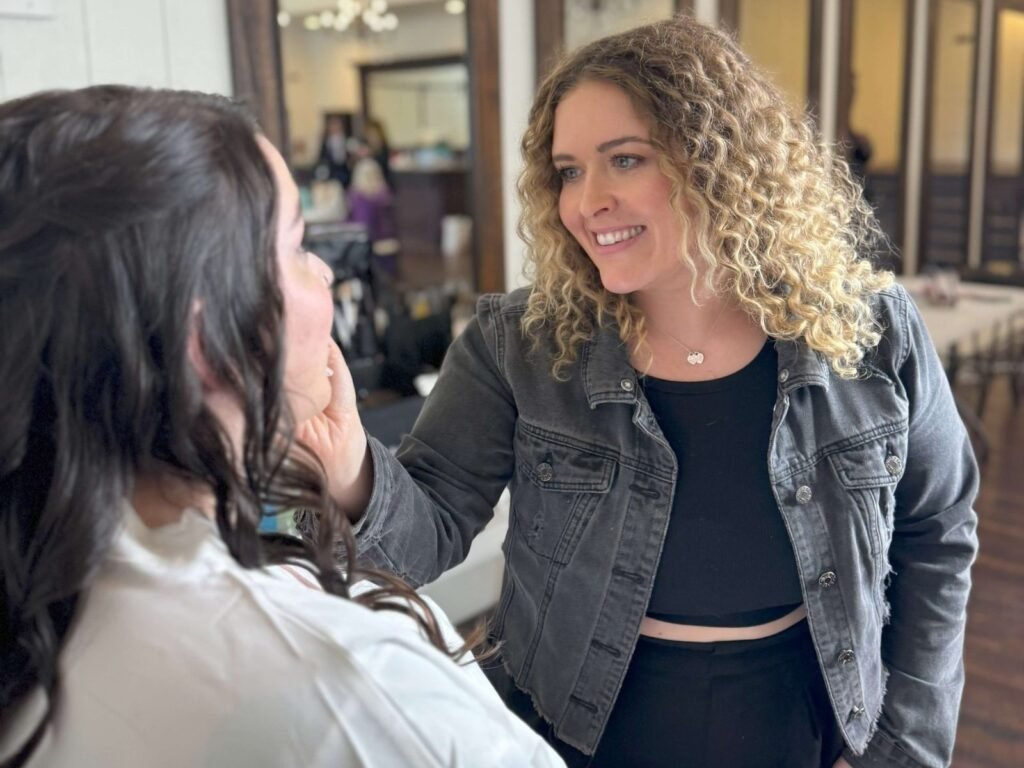
The practical advice comes down to a few connected ideas:
- Treat skincare and makeup as one preparation process. Decisions in one affect the other.
- Choose techniques based on the individual, not on age alone. Two clients of the same age can need very different approaches.
- Use the makeup trial to test the real combination. Bring the skincare routine, and see how primer, foundation, and setting products behave together.
- Share your preferences. Say how much coverage you want, which finish you like, and which features you want to emphasize.
- Approach corrective makeup as thoughtful work with individual features. The purpose is to work with what is there, not to hide anyone’s age.
Brittany Brown brings genuine enthusiasm to mature makeup, and corrective work is one of her strengths. Clients looking for a corrective makeup artist in Orange County can expect technique built around their own skin and preferences. The questions below answer a few specifics that come up before a trial.
Plan Your Mature Skin Makeup Consultation
Skincare and makeup should work together instead of competing, and that starts with a conversation. A consultation gives you the chance to discuss your skincare routine, any sensitivities, your preferred makeup finish, and the features you want to highlight. Your artist can use these details to tailor the bridal trial to your needs. Share those details when you contact Brittany Brown Beauty. Click the button below to schedule a consultation online.
Frequently Asked Questions
The principles are the same: good preparation, careful layering, and a finish the client likes. For mature skin, the emphasis often shifts toward controlling the amount of product, choosing textures that work with the skin’s surface, and testing the full combination at a trial. The approach depends on the individual, not on a rule that mature skin always needs something different.
It depends on the skin and the desired finish. Products that apply in thin, buildable layers and match the skin’s condition tend to be easier to work with, but there is no single product type that suits everyone. A trial shows which skincare, primer, foundation, and powder combination works for you.
Earlier is easier. A trial held well ahead of the event leaves time to adjust the routine, products, or technique if needed. The right timing depends on the event date and availability, so ask when you inquire.
No. Some skin benefits from a hydrating primer or a dewier finish, and some skin looks better with a softer, more skin-like finish or a lighter primer. The choice depends on the skin’s condition, the foundation, and the finish the client prefers, and the trial is the best place to compare them.
Thin layers, careful concealer placement, enough time for skincare to settle, and selective, light powder all help. Checking the makeup while the client smiles and moves her face shows where product may collect. No technique can promise makeup will never settle, but the application can reduce it.