
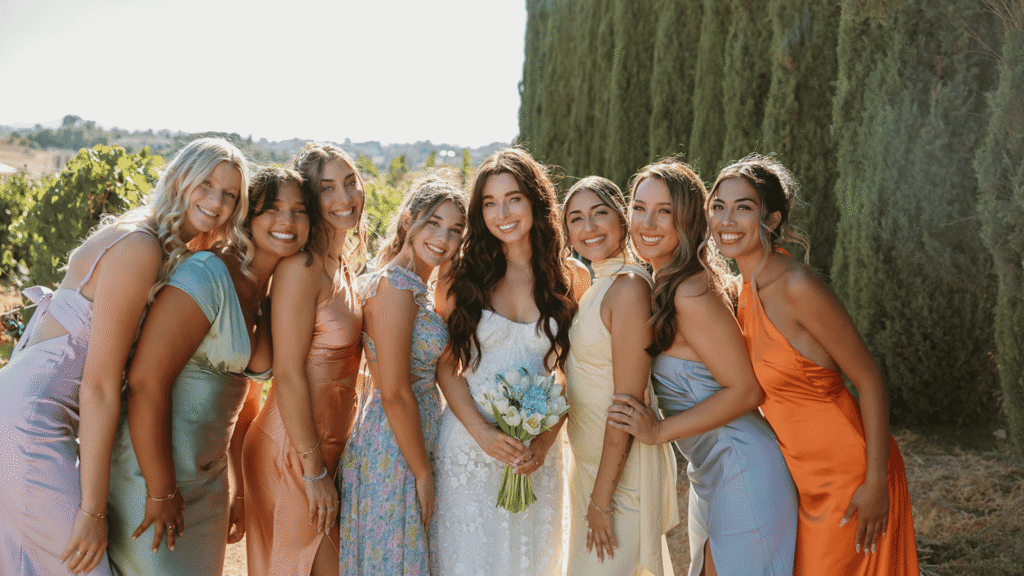
A hairstyle can look finished in the getting-ready room and start changing by the time the ceremony begins. Damp air, a breeze off the water, or a few hours in the sun can all affect styled hair, and the same style can behave very differently indoors than it does outside.
Bridal hairstyles that hold up in Southern California depend on more than the style itself. Hair preparation, styling technique, placement, product selection, and setting all play a part. Conditions vary by location too. A coastal ceremony may bring sea air and wind, while an inland venue may bring heat, dryness, or conditions that change through the day.
At Brittany Brown Beauty, we consider the venue, expected conditions, and wedding-day timeline when planning a bridal hairstyle. A style that works for a sheltered indoor ceremony may need a different approach for a windy coastal setting or a long outdoor celebration. The goal is to choose a style and setting technique that suit the bride’s hair and the conditions it will face.
Why Humidity Is the Enemy of Bridal Hair
Hair takes on moisture from the air, and that can change how styled hair behaves. Smooth sections can turn frizzy. Polished surfaces can lose their sheen and look rougher. Fine flyaways can lift around the hairline and crown. Curls and waves can relax or lose definition, while some textures expand and frizz.
Hair types do not react in the same way. Fine hair may lose volume and go flat. Wavy or curly hair may lose its pattern or swell. Straight hair may lose its smoothness or show flyaways. Thick or coarse hair may hold a style well but resist smoothing. Color treatment, past damage, and extensions can change the picture too.
Coastal conditions add another layer. Sea air carries moisture, and wind moves hair, pulls at loose pieces, and tests pins and attachment points. Even a short walk from the getting-ready room to the ceremony can change how a loose style looks.
Because of this, no single answer fits every bride. The best approach depends on your natural hair texture, the style you want, the venue, the expected weather, and how long the style needs to stay intact.
Styles and Techniques That Hold
Some styles are more forgiving than others in humid or coastal conditions. Wedding hairstyles that hold up in humidity tend to share structure, secure placement, and careful setting, which give hair more to rely on when the air turns damp. No style can be guaranteed to last, but a sound choice and good technique improve the odds.
Preparing Hair for Humid Conditions
Preparation starts before the first pin goes in. Arrive with hair prepared the way your stylist instructs, since clean, dry hair without extra product is usually the starting point. A good base gives the style grip without making it stiff.
Work with your natural texture rather than fighting it without need. A stylist can smooth areas that tend to frizz, such as the hairline, the crown, and the lengths around the face, and keep natural movement elsewhere. Forcing hair far from its natural pattern can make humidity more noticeable.
Products matter, but categories matter more than names. Lightweight priming products, smoothing products, and humidity-resistant styling products each have a role, and none of them makes hair completely humidity-proof. The stylist chooses what to use based on your texture and the conditions you expect. Building the style so it supports its own structure does much of the work.
Styles Less Prone to Frizzing
Several bridal styles tend to be practical in coastal and humid conditions:
- Structured updos. Pinned close to the head, they leave less hair exposed to air and wind.
- Low buns. A secure base sits low and keeps its shape through movement.
- Textured updos. Added texture can blend small flyaways into the style instead of fighting them.
- Braided elements. Braids gather sections and lock them in place.
- Carefully secured half-up styles. They keep softness around the face while anchoring the top.
These wedding hair ideas are starting points, not rules. Hair type, length, extensions, veil or accessories, dress, venue, and personal taste all shape the best choice. If you are still deciding, our article on how to choose the right bridal hairstyle walks through those factors.
Loose waves and fully down styles need more thought in humid or windy settings. Movement and moisture can both change the finished texture, and waves may relax or frizz over several hours. They can still work for some brides, especially with a stylist who plans for the conditions, but they carry more variables than a secured style.
Accessories change the plan as well. A veil adds weight and tension at the point where it attaches, so the style needs to support it. Our article on bridal hair with a veil explains how veil length and hairstyle work together.
Setting Techniques for Wedding-Day Hold
How a style is built matters as much as which style it is. A few parts of the process support hold:
- Build structure before finishing, so the shape does not depend on the final layer of product.
- Secure the style properly, with pins and anchors placed for the style’s weight and for any veil.
- Layer products lightly instead of relying on one heavy application, which can look stiff.
- Give extra support to areas that need it, such as the hairline, the crown, and any pieces left out.
- Check the finished style before the bride leaves the styling area, including how it looks when she moves and turns her head.
Conditions come into it as well. A style for a shaded indoor ceremony needs different planning than one for an open-air ceremony with an ocean breeze, so we set the style with the conditions you will actually face in mind. We do not promise that any style will hold for a set number of hours, but this approach gives it the best chance to hold as long as it can.
What to Expect When Styling Hair Near the Coast
On-location bridal hair for coastal weddings follows a rhythm: arrival, preparation, styling, and setting. Each stage matters more near the water. We arrive, set up in your getting-ready space, and start from the hair as it is that day, with the conditions in the room and outside in mind.
Sea air and wind shape the plan. Wind moves hair, pulls at loose pieces, and tests how secure a style is. Outdoor ceremonies leave hair exposed for longer than an indoor venue does, and the move from a getting-ready room to a ceremony site can mean a quick change in temperature and conditions. We adjust the approach to fit, with more structure, firmer placement, and careful setting when the location calls for it.
Hair and makeup affect each other in these settings. Loose strands can blow onto fresh makeup and undo careful work, which is one reason we plan the two together. Our article on bridal makeup for windy coastal ceremonies covers that side of the plan.
You can make the styling day smoother by following your stylist’s instructions beforehand. Our article on how to prep your hair before the wedding covers washing, products, and what to bring. Good preparation helps the style grip and hold, which matters more in humid or breezy conditions.
Plan Your Bridal Hairstyle
Your wedding location, hair type, desired style, and expected weather all shape the plan, so they belong in the conversation from the start. Bring those details to your consultation, and we will work through bridal hairstyle options that suit your hair, your venue, and the conditions you expect. Click the button below to schedule a consultation online.
Frequently Asked Questions
It depends on hair length and thickness, the style, extensions, any veil or accessories, and how many people are being styled. Your stylist can estimate the time during your consultation or trial. From there, your stylist can build the schedule backward from the ceremony, with a buffer for travel and photos.
Many can, but no stylist can promise it. How well a style holds depends on your hair texture, the style itself, how it is prepared and set, the venue, the weather, and how many hours it needs to last. A trial gives you the chance to test the style and adjust before the wedding.
Secured styles such as low buns, structured updos, braided details, and half-up styles often handle wind better than loose styles. Even so, the best choice depends on your hair type, your veil, and how exposed the ceremony site is. If you want hair down, tell your stylist the venue early so the plan can account for it.
Follow your stylist’s instructions, since the answer can depend on your hair. Washing the day before is often suggested for thick or frizz-prone hair, because slightly settled hair tends to hold a style better. Fine hair sometimes benefits from being washed closer to the appointment. On the morning of, arrive with hair completely dry and without extra products unless your stylist asks otherwise.
Yes, with planning. Tell your stylist how long you will be outside, how open the site is, and whether wind or heat is likely. That lets the stylist choose the structure, placement, and setting that suit those conditions.