
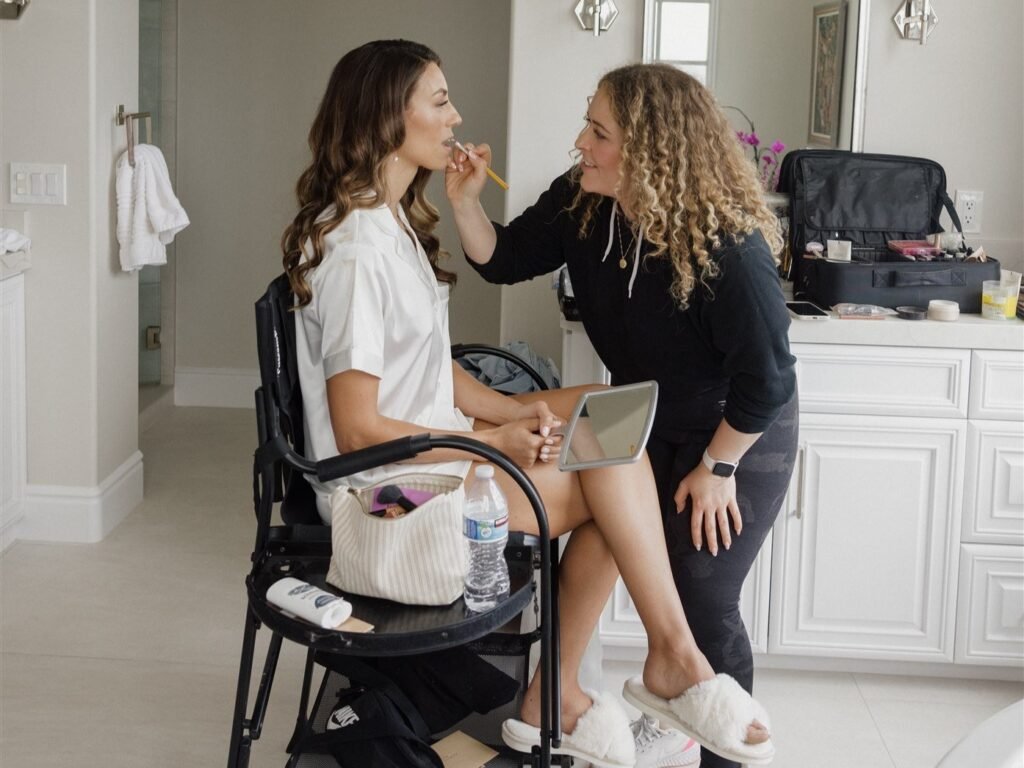
On-set etiquette for makeup artists working with creative directors shapes how smoothly a shoot runs from the first call time to the final frame. Photographers, brands, and production clients hire a makeup artist for skin that photographs well. They also expect someone who fits into a fast-moving set without adding friction.
At Brittany Brown Beauty, commercial and editorial makeup follows a clear set of habits that protect the schedule, the look, and the working relationship.
This guide explains those habits for anyone booking an artist for lifestyle campaigns, editorial shoots, or commercial productions in Orange County and San Diego.
Why On-Set Etiquette Affects the Whole Production
A makeup artist touches nearly every part of a shoot. Talent sits in the chair before the first frame. The same talent returns between setups for touch-ups. The artist also stands close to the camera, the lighting, and the creative director’s monitor for most of the day.
Because of that position, small communication habits carry real weight. A touch-up at the wrong moment can break a take. A look that drifts from the approved reference can mean redoing setups. Clear, calm communication keeps the crew focused and gives the creative director confidence that the look will stay consistent from the first setup to the last.
Experience also matters here. Brittany has worked in the makeup industry for more than 11 years, including print and production work. That time on set teaches an artist when to speak up, when to wait, and how to stay useful without becoming a distraction. You can see the range of this work in the portfolio.
Best Practices
The habits below separate a smooth on-set experience from a stressful one. Each one comes down to preparation, clear communication, and respect for the people leading the shoot.
Reviewing the Shot List Before Applying Makeup
Good on-set work starts before the artist opens a kit. Reviewing the shot list and the lighting plan with the creative director shows which setups come first, which angles land closest to the lens, and where the talent will stand in relation to the light.
That review shapes real product decisions. Studio strobes, natural daylight, and mixed light all treat skin differently, so each calls for its own approach. Brittany’s commercial work focuses on five technical points:
- Light absorption: Neutralizing shine and redness so high-resolution stills look clean and retouching stays simple.
- Light management: Keeping digital sensors from over-highlighting oily areas, which protects the final images.
- Pigment control: Keeping colors accurate across the different light temperatures of studio and outdoor settings.
- Texture smoothing: Creating a finish that stays invisible even in extreme close-up 4K video.
- Sustained durability: Layering formulas so the makeup holds up through long outdoor sessions.
Asking questions at this stage saves time later. Is the look clean and natural or more graphic? Will the shoot move between indoor and outdoor locations? Are there close-up or video deliverables? The answers guide every step that follows.
Communicating Touch-Ups Without Disrupting Flow
Touch-ups matter on a long shoot, but timing matters just as much. An artist who rushes in during a take interrupts the photographer and the talent. An artist who stays out of reach lets shine and fading build up unnoticed.
The best approach is to stay near the set, watch the playback, and step in during natural pauses. Monitoring playback lets the artist check how the makeup reads on camera instead of guessing from across the room. Brittany provides continuous touch-ups through the day and uses the monitor to confirm that the skin still looks accurate on screen.
Short, quiet signals help too. A brief glance or a one-line check-in with the photographer or first assistant tells everyone that a touch-up is coming. The set keeps its rhythm, and the talent stays comfortable.
Respecting the Creative Director’s Vision
The creative director owns the look. The makeup artist brings technical skill, and the creative director sets the direction. Respecting that division is the most important rule of on-set etiquette.
In practice, that means following the approved references, raising concerns privately instead of in front of the crew, and offering alternatives only when a technical issue affects the image. If the lighting makes a chosen shade read differently on camera, a good artist explains the problem briefly and proposes a fix. The creative director then makes the final call.
This approach reflects Brittany’s broader belief that makeup is an art form and a way to express individual style. On a commercial set, that creative range serves the client’s vision first.
What Sets an Experienced On-Set Artist Apart
Experienced artists make a set feel easier. Several qualities show up again and again:
- A complete professional station: Brittany arrives with lighting and seating, so the work does not depend on whatever the location offers.
- Coordination with the creative team: She reviews lighting plans and shot lists with creative directors before the first application.
- Technical range: Her work covers print, production, and editorial looks, along with corrective and mature-skin makeup. Each requires a different eye for skin and light.
- Efficient wrap: At the end of the day, she handles talent cleanup and kit teardown quickly so the crew can move on.
- A public track record: Brittany has been featured in Voyage LA Magazine and SDVoyager.
Clients also describe the experience in their own words. One reviewer, who hired Brittany for shoots and special events, called her a pro who has created many of her favorite hair and makeup looks. Another client, a bride, said Brittany works extremely well with other vendors, a quality that matters on any set where several teams work side by side.
If your next campaign, editorial shoot, or production needs a makeup artist who understands set flow, Contact Brittany Brown to discuss your project. You can learn more about her training and background on the About page.
Frequently Asked Questions
Bridal makeup centers on the client’s feelings and a look that feels like herself, but elevated. Commercial and editorial work centers on the camera, the lighting plan, and the creative director’s vision. The artist also works around other crew members, shares space with the photographer, and touches up in short windows between setups. The emphasis shifts toward light absorption, pigment control, and texture smoothing, because the final judge is the lens and the creative director’s approved look.
Expect a review of the shot list and lighting plan before makeup begins. Brittany brings a complete professional station with lighting and seating. She stays close to set, monitors playback, and handles continuous touch-ups without interrupting the flow of the shoot. At wrap, she handles talent cleanup and kit teardown efficiently.
The artist chooses products and finishes based on the lighting plan. Studio strobes, natural light, and mixed light all affect how skin and color appear on camera. Brittany manages light absorption to control shine and redness, uses pigment control to keep colors accurate across different light temperatures, and layers formulas for sustained durability during long outdoor sessions. She also uses playback to confirm how the skin reads on screen and adjusts as needed.
Makeup artists should focus on texture smoothing and a finish that stays invisible in extreme close-ups. They should also consider how skin appears under the lighting used for the production and check playback to confirm that the makeup reads well on screen.
Makeup artists should review the approved references and understand the creative director’s vision before applying makeup. The look should support the brand’s intended style while accounting for the lighting plan, camera angles, and type of content being produced. Any technical concerns should be communicated clearly so the creative director can make the final decision.