
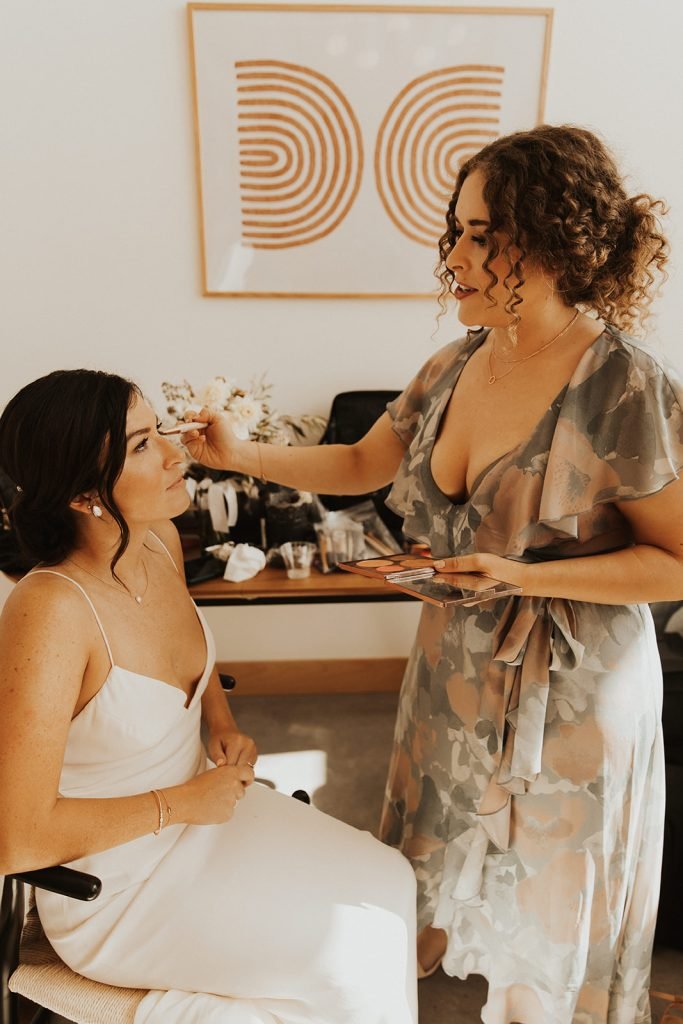
Deep skin holds light differently than lighter skin tones, which means the products and techniques that create a radiant, long-wearing base have to be chosen with real intention. A base that looks flawless in the mirror can turn ashy in flash photography, or a highlighter that reads beautifully on one client can leave another looking chalky by the reception. Getting bridal makeup for deep skin tones right isn’t about following a generic formula. It’s about understanding how pigment, undertone, and finish interact with deep skin specifically, and building from there.
Brittany Brown has spent more than 11 years working hands-on with brides of every skin tone, and that experience shapes an approach built around one core idea: enhance the skin that’s already there, don’t mask it. The goal on a wedding day is never to create a different face. It’s to help a bride look like herself, just elevated, with a base that holds up through vows, portraits, and a full night of dancing.
Why Deep Skin Needs the Right Base Formula
Deep skin tones carry a wide range of undertones, from warm and golden to deep red or cool blue-based, and a foundation that ignores that range tends to oxidize poorly or sit gray on the skin within an hour of application. Standard bridal formulas developed with lighter skin in mind often lack the pigment depth or undertone variety needed to match deep skin accurately, which is why shade-matching and formula selection matter more here than almost anywhere else in the bridal makeup process.
Deep skin also tends to reflect and absorb light differently than lighter skin, particularly under the mixed lighting of a wedding day, morning getting-ready light, ceremony lighting, and evening reception lighting. A base built for deep skin needs to hold its true color and finish across all of it, not just look right under one type of light.
Building Radiance Step by Step
Foundation and Concealer Shade Range
Getting the base right starts with a wide enough shade range to actually match deep skin accurately, along with the undertone knowledge to know which formula direction to go. This is also where a trial run becomes valuable, not just for testing a look, but for confirming how a particular formula wears on a bride’s specific skin over several hours before the wedding day itself. A trial gives room to adjust shade, undertone, and coverage level ahead of time rather than guessing on the morning of.
Highlighting Without Ashiness
Highlighter is where a lot of deep skin bridal looks go wrong, since many mainstream formulas are built with a cool, silvery cast that reads as ashy rather than luminous on deeper skin. The fix is choosing warm-toned, finely milled highlighters and placing them with a light hand in areas where the skin naturally catches light, the high points of the cheekbones, the bridge of the nose, the cupid’s bow, rather than applying heavily across the whole face. Done this way, the radiance looks like it’s coming from the skin itself, not sitting on top of it.
Setting Powder Choices That Don’t Gray the Skin
Setting powder matters just as much as foundation choice, since a powder with the wrong undertone can create a gray or ashy film over an otherwise well-matched base, especially when photographers use flash. Finely milled, well-matched setting powders help the base stay in place for hours when makeup artists apply them only where needed instead of covering the entire face. This approach preserves the skin’s natural depth and warmth without creating a dull finish.
Finishing Touches for Photos
A wedding day isn’t captured in one moment, it’s documented across hundreds of photos under constantly changing light, which means the finishing steps matter as much as the base itself. Setting spray, strategic touch-up planning, and a finish that reads as skin rather than product all help a look hold up consistently from the first getting-ready photo through the last dance. This is also where the “enhance, don’t mask” philosophy shows up most clearly in the final result: brides consistently describe the goal as looking like themselves, just elevated, rather than looking like a different person entirely.
Brides curious about how this approach comes together in practice can browse real bridal work in the portfolio, or read more about Brittany’s background and experience on the About page. For anyone ready to start planning, getting in touch is the best next step to talk through a trial and wedding-day details.
Frequently Asked Questions
Well-moisturized, evenly exfoliated skin gives a base formula the best surface to work with, since dry patches or uneven texture can affect how foundation and highlighter sit on deep skin. Starting a simple hydration routine in the weeks leading up to the wedding, and discussing any specific skin concerns during a trial, helps the makeup artist plan the right base products in advance.
Durability depends on the products and setting techniques Brittany Brown Beauty selects, which is exactly why a trial run matters. Testing a full look ahead of time under conditions similar to the wedding day shows how each formula performs on a bride’s specific skin over several hours, helping Brittany make any necessary adjustments before the actual event rather than during it.
Yes. Deep skin spans a wide range of undertones and skin types, and a trial is the opportunity to fine-tune shade matching, undertone direction, and product choices to a bride’s individual skin rather than relying on a one-size-fits-all approach.