
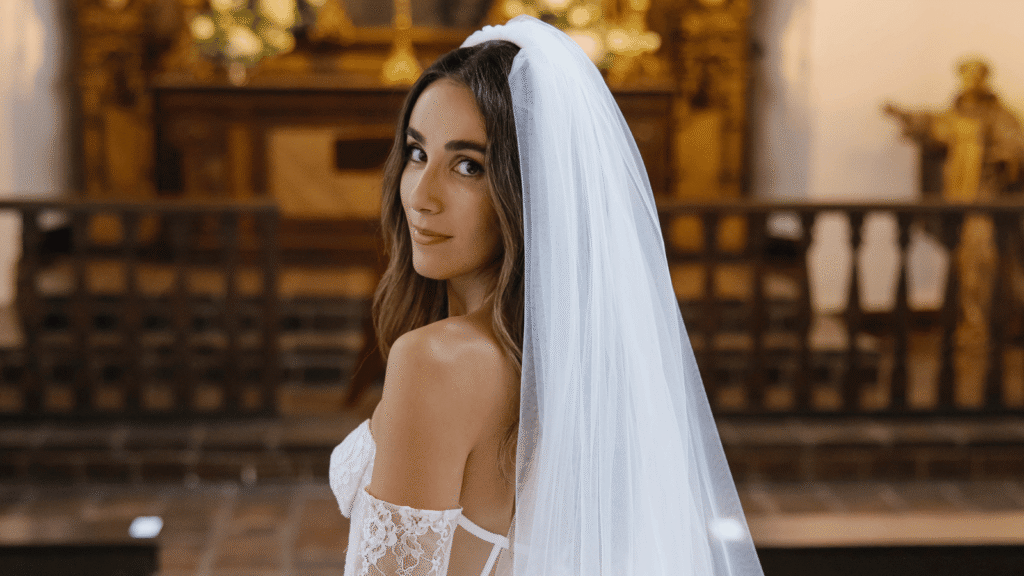
A veil can make or break how a bridal hairstyle photographs, moves, and holds up throughout the wedding day. Yet many stylists don’t decide on veil placement until the final minutes of styling, almost as an afterthought after completing the hairstyle. In Orange County and San Diego, where ceremonies take place on bluffs, beaches, and open-air terraces, that timing matters even more. Sea air, wind, and shifting humidity all affect how a veil sits, and its placement shapes how the entire hairstyle looks on camera.
This guide breaks down veil placement by hairstyle, so the veil supports the style instead of fighting it. At Brittany Brown Beauty, every bridal hairstyle is planned with veil placement in mind from the beginning, not as a last-minute addition.
Why Veil Placement Depends on Your Hairstyle
Veil placement is not one-size-fits-all. Where the comb sits, how many bobby pins anchor it, and how much volume surrounds the base all depend on the hairstyle underneath. A veil pinned into an updo behaves completely differently than one pinned into loose, down curls.
The base of the hairstyle needs to be built with the veil in mind from the very beginning, not added on top of a finished look. That means the stylist should know before the first pin goes in whether the veil will sit high on the crown, low at the nape, or somewhere in between, and how securely it needs to hold through wind, an ocean breeze, or a full evening of dancing.
Southern California adds its own variables. Coastal humidity can soften a style faster than inland heat does, and a breeze off the water can lift a veil that isn’t anchored correctly. A placement that looks perfect standing still indoors may shift the moment a bride steps outside for photos or walks down an oceanfront aisle. Getting the placement right at the start of the arrival and prep process means fewer adjustments later, when there’s no time for a redo.
Placement by Style
Updos and Buns
Updos and buns offer the most flexibility for veil placement because they provide a defined base for the stylist to anchor the veil. With a low bun or chignon, the stylist typically secures the veil just above the bun, combing it into the hair directly behind it so the comb stays hidden and the veil cascades naturally over the style. For a high bun or topknot, the stylist usually positions the veil slightly lower, at the crown or just behind it, so it doesn’t compete with the bun’s height.
Because stylists create updos with more structure and secure them with additional pins, they usually hold veils firmly through wind and movement. That makes them a practical choice for beach and bluff ceremonies along the coast. The stylist must place the veil comb carefully to avoid creating a visible bump or pulling on the updo’s smooth lines. That’s why testing the placement during a hair trial matters. A comb that feels secure in a quiet studio may shift once coastal wind and sea air come into play.
Half-Up Half-Down Styles
Half-up half-down styles are one of the most common bridal looks, and they call for a veil placed at the crown or just behind it, nestled into the pulled-back section of hair. This placement anchors the veil into the most secure part of the style, the gathered section, while still allowing the down portion of the hair to move freely underneath.
The balance here is between security and softness. If the veil sits too far back, it can feel disconnected from the pulled-up section and slip during the day. If it sits too far forward, it can flatten the volume at the crown that gives the half-up style its shape. A well-placed veil in this style should look like it’s part of the hair’s natural part and lift, not pinned on top of it.
Humidity along the coast tends to affect the down portion of a half-up style more than the anchored top section, so setting technique on the lower hair matters just as much as veil placement itself.
Down Styles and Loose Curls
Fully down styles and loose curls require the most secure anchoring, since there’s no bun or gathered section to pin into. The veil comb usually sits at the crown, woven into a small section of hair and backcombed slightly underneath for extra grip before the rest of the curls fall over it.
This is the style most affected by SoCal coastal conditions. Wind off the water can lift a loosely anchored veil away from the head, and humidity can cause curls to relax around the veil’s base, loosening the hold over several hours. A stronger setting approach at the crown, along with a few extra pins placed to disappear into the curl pattern, helps the veil stay put through the ceremony, photos, and a reception that may run late into the evening.
Down styles photograph beautifully with a veil layered through loose waves, but they benefit most from a stylist who accounts for wind and humidity during the setting process rather than after the veil starts to slip.
Every hairstyle is photographed differently depending on where the veil is secured. Browse our bridal portfolio to see how different veil placements complement updos, half-up styles, and loose curls.
Attaching and Removing the Veil for the Reception
Most brides don’t wear the veil for the full day, and planning that transition is part of getting veil placement right from the start. The veil is typically designed to be removed cleanly after the ceremony and formal photos, without disturbing the hairstyle underneath.
A few things make this transition smoother:
- Removable combs over sewn-in attachments. A veil secured with combs, rather than sewn directly into the style, can be lifted out in seconds without pulling hair or loosening pins.
- A plan for where pins go. Since removing a veil often means removing a few supporting pins as well, having a couple of matching pins on hand to close any gaps keeps the hairstyle looking finished for the reception.
- A quick check in the mirror. Volume at the crown can compress slightly under a veil’s weight over several hours. A brief reshape after removal, especially for down styles and loose curls, restores lift before reception photos and dancing begin.
If you’re planning your wedding in Orange County or San Diego and want a hairstyle designed to work seamlessly with your veil, learn more about Brittany Brown and her personalized approach to bridal hairstyling, or contact Brittany Brown Beauty to schedule your bridal hair consultation or trial.
Frequently Asked Questions
Veil placement is usually a quick final step, often taking less than fifteen minutes after the stylist completes the hairstyle. Most of the styling appointment focuses on creating a strong foundation so the veil has a secure, well-hidden anchor point. Brides who book Brittany Brown Beauty’s full bridal hair service can expect veil placement near the end of the appointment, with the stylist making final adjustments to ensure it looks beautiful and moves naturally before everyone heads to the ceremony.
It can, with the right setting technique. Coastal humidity and ocean breezes are common at Orange County and San Diego weddings, and they affect down styles and loosely anchored veils more than secure updos. Backcombing at the base, using enough pins to distribute support, and choosing a placement that complements the hairstyle all help keep the veil secure throughout the ceremony, photos, and reception, even in sea air.
Accessories work best when they complement the veil instead of competing with its anchor point. A hairpiece or comb at the crown pairs naturally with a veil positioned slightly behind it, while a low bun with a veil above it leaves space for a delicate pin or vine along the front hairline. The best combination depends on the veil’s position and how much of the hairstyle the bride wants guests to see after placing the veil.