
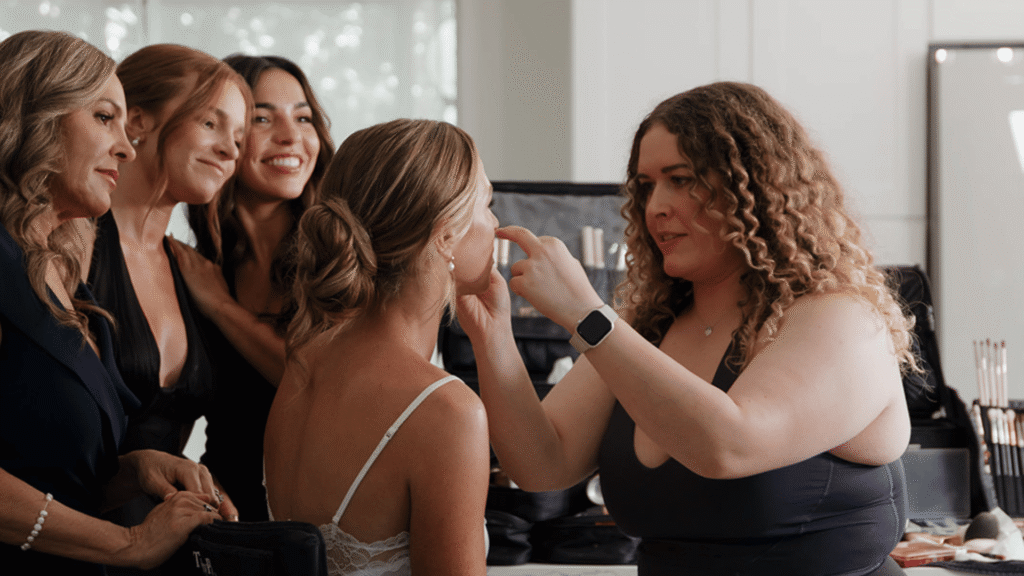
Your bridal makeup should last all day and look good in every photo. However, your skin type plays a big role in how your makeup sits, wears, and photographs.
Many brides focus on the look. Soft glam or natural. But the real issue starts underneath. If your skin prep and product choices don’t match your skin type, your makeup won’t hold up.
This guide breaks it down in a simple, honest way. So you know exactly what works for oily, dry, and acne-prone skin.
Why Your Skin Type Matters on Your Wedding Day
Wedding makeup is not the same as everyday makeup. You’ll wear it for 10 to 12 hours. You’ll also deal with heat, lights, photos, and a lot of movement.
Because of that:
- Oily skin can break down makeup faster
- Dry skin can make makeup look patchy
- Acne-prone skin can show texture if handled wrong
So, the goal is not just to look good at the start. Your makeup needs to stay smooth, even, and fresh the whole day.
How to Know Your Skin Type Before Your Trial
Before you book your bridal makeup trial, take a close look at your skin.
- Oily skin: Your face gets shiny within a few hours, especially around the T-zone
- Dry skin: Your skin feels tight, flaky, or rough
- Acne-prone skin: You deal with frequent breakouts or sensitive areas
A common mistake. Many brides think they have oily skin, but they are actually dehydrated. When your skin lacks water, it produces more oil. That changes how makeup behaves.
So, don’t guess. Check your skin in natural light and see how it reacts during the day.
Bridal Makeup for Oily Skin
What Usually Goes Wrong
Oily skin often struggles with:
- Makeup melting by midday
- Shine showing up in photos
- Foundation separating around the nose and chin
What Actually Works
First, control oil without drying your skin too much.
- Use a lightweight, oil-free moisturizer
- Apply a mattifying primer only where needed (usually T-zone)
- Choose long-wear, soft matte foundations instead of heavy matte formulas
Also, apply thin layers. Thick layers break down faster.
Pro Tips That Make a Difference
- Don’t over-powder your face. It can trigger more oil production
- Use blotting papers instead of adding more powder
- Set your makeup in layers. Light powder, then setting spray, then a final set
This keeps your makeup in place without looking heavy.
Bridal Makeup for Dry Skin
What Usually Goes Wrong
Dry skin can cause:
- Patchy or uneven foundation
- Flakes showing in close-up photos
- Makeup looking dull or flat
What Actually Works
Prep matters more than anything here. Start days before your wedding, not just the morning of.
- Use gentle exfoliation a few days before
- Layer hydration. Serum first, then moisturizer
- Use a hydrating primer to smooth the skin
For foundation, go with a natural or dewy finish. Avoid very matte formulas. They can make dryness more visible.
Pro Tips That Help a Lot
- Use cream products instead of powders where possible
- Apply powder only where needed (under eyes, sides of nose)
- Add glow in a controlled way. Focus on cheekbones, not the whole face
This keeps your skin looking fresh, not greasy.
Bridal Makeup for Acne-Prone Skin
What Usually Goes Wrong
Many brides try to fully cover acne with thick layers. That usually leads to:
- Cakey makeup
- Texture becoming more visible
- Makeup breaking apart during the day
What Actually Works
Start with gentle skin prep.
- Avoid harsh products before your wedding
- Keep your routine simple and consistent
For makeup:
- Use buildable foundation instead of full coverage in one layer
- Spot conceal only where needed
- Use color corrector for redness before foundation
This gives better coverage without adding weight.
Pro Tips Brides Don’t Hear Often
- Thick foundation highlights texture more than it hides it
- Spot concealing looks more natural than full heavy coverage
- Clean tools matter. Your makeup artist should use sanitized brushes and products
This helps protect your skin and improves the final result.
How to Make Your Bridal Makeup Last All Day
No matter your skin type, long-lasting makeup comes down to technique.
- Apply products in thin layers
- Let each layer set before adding the next
- Use both powder and setting spray in the right order
For touch-ups:
- Oily skin. Use blotting papers first
- Dry skin. Use a hydrating mist instead of powder
- Acne-prone skin. Avoid touching your face too often
Small steps like these make a big difference over 10+ hours.
What to Test During Your Bridal Trial
Your trial is where you figure everything out. Don’t rush it.
Make sure to:
- Wear the makeup for a full day
- Take photos in daylight, indoor light, and flash
- Check how your skin looks after a few hours
Also, speak up. If something feels too heavy or too light, say it. Your artist can adjust it.
How to Choose the Right Makeup Artist
Not every artist works well with every skin type.
Look for:
- Real client photos, not just filtered images
- Brides with similar skin to yours
- Consistent results across different lighting
Also, ask questions during your consultation. A good artist will explain what they plan to do and why.
Not Sure What Works for Your Skin?
Choosing the right bridal makeup is not just about picking a look. It comes down to what actually works for your skin type.
The best way to know for sure is to see it on yourself. During a bridal trial, you can test different products, adjust coverage, and see how your makeup holds up throughout the day and in photos.
We work closely with each bride to create a look that fits your skin, your style, and your wedding setting. That way, you don’t have to second guess anything on your wedding day.
Book your bridal makeup consultation to get a customized look that lasts all day and photographs beautifully.
Related Articles:
Frequently Asked Questions
Look for long-wear, oil-free foundations with a soft matte finish. Avoid very thick formulas.
Focus on skin prep. Hydrate your skin well and avoid heavy powders.
Yes. Use light layers and spot concealing instead of full heavy coverage.
Avoid big changes close to your wedding. Stick to what your skin already responds well to.
Start at least a few weeks before. This gives your skin time to adjust and improve.